
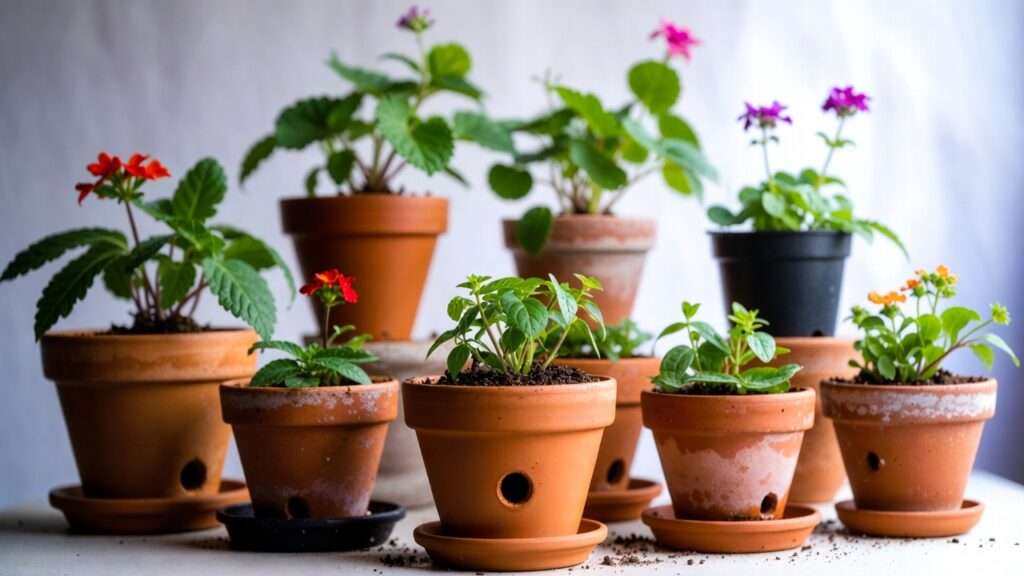
Picture this: You’ve just brought home a stunning fiddle-leaf fig or a vibrant bougainvillea for your Dhaka balcony. You water it carefully, place it in bright indirect light, and watch with excitement as new leaves emerge. But weeks later, the lower leaves yellow and droop, the stem feels soft at the base, and despite your efforts, the plant starts declining. 😢 The topsoil looks dry, yet the roots are drowning in hidden moisture.
The silent culprit? Drainage hole importance in pots — or rather, the lack of them. Poor drainage is the number one reason most potted plants fail, especially in humid climates like ours in Bangladesh where heavy monsoon rains and high humidity make overwatering disasters far too common. Without proper drainage holes, excess water has nowhere to escape, leading to waterlogged soil, oxygen-starved roots, and deadly root rot.
In this comprehensive guide, we’ll dive deep into why drainage holes are essential for healthy roots and thriving plants, how to spot trouble early, smart workarounds for those gorgeous no-hole decorative pots, and expert tips tailored for houseplants, succulents, and even container trees. By the end, you’ll have the knowledge to save your current plants and set every future one up for long-term success. Let’s prevent those heartbreaking losses and help your green friends truly thrive! 🪴💚
What Exactly Do Drainage Holes Do for Your Plants?
Drainage holes aren’t just a minor feature — they’re the foundation of container gardening success. Here’s the science behind why they’re non-negotiable.
Prevent Waterlogging and Allow Oxygen to Reach Roots
Plant roots need both water and air to survive. In nature, excess rainwater percolates through soil, leaving air pockets for oxygen. In a pot without drainage, water fills every pore in the soil mix, displacing air and creating anaerobic (oxygen-free) conditions.
Roots perform aerobic respiration, using oxygen to convert sugars into energy. Without it, they suffocate, weaken, and become susceptible to infection. Proper drainage holes let gravity pull excess water out quickly, maintaining those vital air pockets and preventing soil compaction over time.
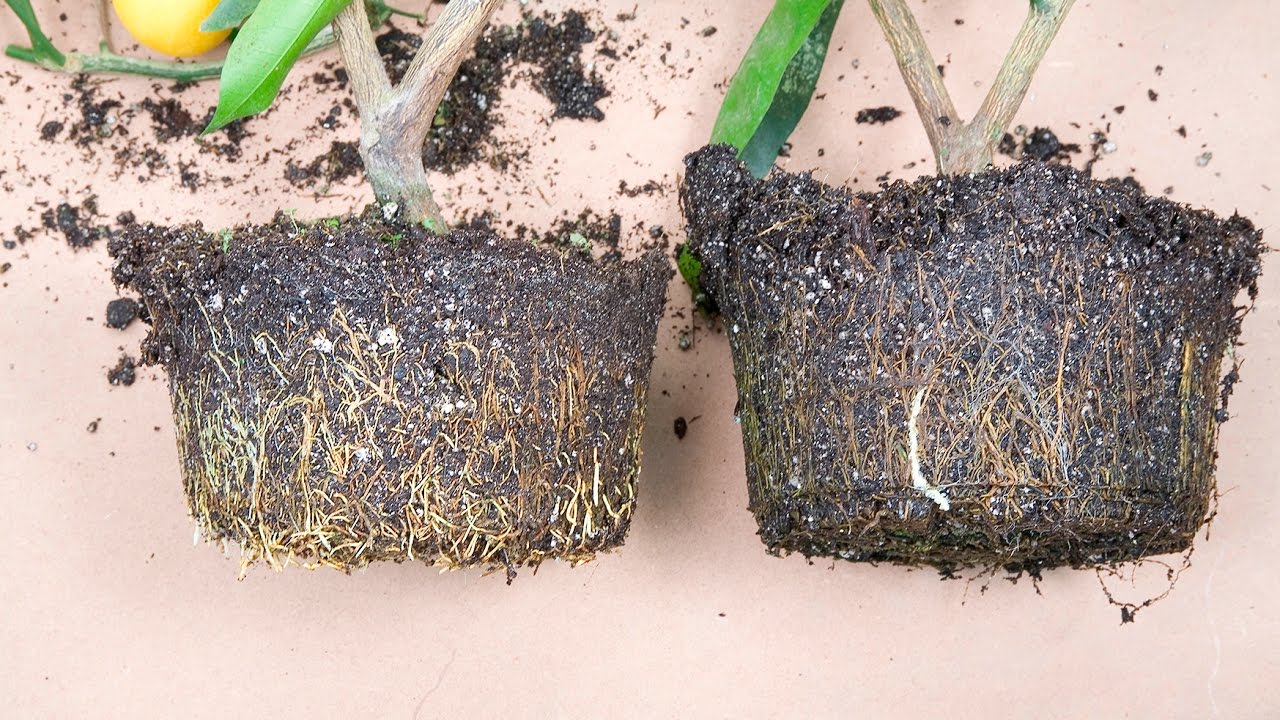
(Left: Healthy white, firm roots full of life. Right: Dark, mushy, rotten roots — a classic sign of prolonged waterlogging.)
Flush Out Harmful Salts from Fertilizers and Tap Water
Dhaka’s tap water often contains minerals and salts, and most fertilizers add more. Over time, these salts accumulate in the soil, causing tip burn, leaf scorch, and stunted growth.
When you water thoroughly (until it runs out the bottom) and the pot has drainage holes, excess salts are flushed away — a process called leaching. Without holes, salts build up unchecked, creating toxic conditions that burn root tips and make nutrient uptake difficult.
Reduce Risk of Fungal Diseases and Root Rot
Root rot pathogens like Pythium and Phytophthora thrive in constantly wet, low-oxygen environments. These fungi attack weakened roots, turning them black and mushy, and can spread rapidly.
In humid tropical climates, the risk is even higher — poor drainage can turn a minor overwatering mistake into a full-blown infection within days. Drainage holes give roots a fighting chance by keeping soil moisture balanced.
Signs Your Potted Plants Are Suffering from Poor Drainage
Catching issues early saves plants! Look for these red flags:
- Yellowing or wilting leaves that don’t perk up after watering 😞
- Leaves dropping prematurely, especially lower ones
- Mushy, brown-black roots (check by gently tipping the plant out)
- Foul, rotten smell from the soil
- Fungus gnats swarming or algae/mold on the surface
- White, crusty buildup on soil or pot rim (salt accumulation)
- Stunted growth or no new leaves despite care

These symptoms often appear gradually — by the time wilting is obvious, root damage may already be severe.
Why Pots Without Drainage Holes Are So Risky (Common Myths Debunked) 😟
Many beautiful decorative pots — especially glazed ceramic, metal, or concrete ones popular in Dhaka markets — come without drainage holes for aesthetic reasons. While they look stunning, they turn container gardening into a high-risk game. Here’s why skipping holes is dangerous, plus the truth behind widespread myths.
The Gravel-at-the-Bottom Myth — Why It Actually Makes Things Worse
One of the most persistent gardening myths is adding a layer of gravel, pebbles, or broken pottery shards at the bottom of a pot without holes to “improve drainage.” Unfortunately, soil science proves the opposite happens.
Water doesn’t jump across the gravel layer — it perches (sits) above it due to capillary action and soil tension until the soil above is fully saturated. This creates an even larger zone of waterlogging right where the roots are, worsening the problem. University extension services (like those from Purdue and Oregon State) have debunked this myth repeatedly through experiments showing pots with gravel layers retain more water longer than those without.
Bottom line: Gravel doesn’t create drainage — only actual holes do. If your pot has no holes, adding gravel just gives false security.
Overwatering Is Easier Without Holes — Even for Experienced Gardeners
Even seasoned plant parents fall victim. The surface soil dries out quickly in humid air, tempting you to water again, while the bottom stays soggy for days or weeks. Without holes, there’s no visual cue (like water in a saucer) to tell you when to stop.
In Dhaka’s monsoon season, this risk multiplies — sudden heavy rains or high humidity slow evaporation, turning minor watering into root-drowning disasters. Plants like monstera, peace lily, or container citrus trees suffer first because they prefer consistent moisture but hate wet feet.
Best Practices: Choosing and Using Pots with Proper Drainage 🌿
Once you understand the “why,” let’s focus on the “how” for success.
Ideal Number, Size, and Placement of Drainage Holes
- Minimum requirement: At least one large hole (about 1/2 inch / 1.3 cm) or 3–5 smaller ones (1/4 inch / 0.6 cm) for pots up to 12 inches wide. Larger pots (for trees or big shrubs) need more — 4–8 holes spread evenly.
- Placement: Holes should be at the lowest point of the base. Multiple holes prevent clogging and allow even drainage.
- Pro tip: Elevate pots on pot feet, bricks, or risers to improve airflow underneath and prevent saucer water from re-entering. This is especially helpful during Dhaka’s rainy months to avoid mosquito breeding too! 🦟
Here’s a close-up of a classic terracotta pot with a well-placed drainage hole — simple yet effective:
(Notice how the hole is central and unobstructed — perfect for quick water escape.)
Pairing with Saucers — Do’s and Don’ts
Saucers catch runoff, protecting floors and furniture (a must for indoor plants in apartments).
- Do: Empty the saucer within 30–60 minutes after watering.
- Don’t: Let the pot sit in standing water — this defeats the purpose of drainage holes.
- Best practice: Water in a sink, bathtub, or outdoors until it stops dripping, then return to the saucer. For large pots, use a turkey baster to remove excess.
Recommended Pot Materials for Optimal Drainage
- Terracotta / Clay: Porous and breathable — wicks away moisture and promotes airflow. Excellent for succulents, cacti, and herbs.
- Plastic: Affordable, lightweight, retains moisture longer — great for moisture-loving plants but needs vigilant watering checks.
- Ceramic / Glazed: Stylish but often non-porous — choose only with pre-drilled holes.
- Wood / Concrete: Breathable if untreated; ensure holes and good mix.
What If Your Favorite Pot Has No Drainage Holes? Smart Solutions 🔧
You don’t have to give up that gorgeous cache pot! Here are practical, proven fixes.
Option 1: Drill Holes Safely (Step-by-Step Guide)
Most ceramic, terracotta, and plastic pots can be drilled.
- Gather tools: Cordless drill, ceramic/tile drill bit (carbide-tipped for glazed pots), masking tape, water spray bottle, safety glasses.
- Mark hole locations with tape (prevents cracking).
- Place pot upside down on a soft surface.
- Spray water continuously (keeps bit cool, reduces dust/cracking).
- Drill slowly at low speed — let the bit do the work. Start with a pilot hole if needed.
- Clean debris and test drainage.
Here are safe drilling steps in action:
:max_bytes(150000):strip_icc()/SPR-how-to-drill-a-hole-in-a-ceramic-pot-8584910-hero-2-2704ad1325bb40e78b52b23ef57b827b.jpg)
(Always wear eye protection — shards can fly!)
Option 2: Double-Potting (Cache Pot Method)
The easiest, no-tools solution:
- Keep the plant in its original nursery/grower pot with holes.
- Place it inside the decorative no-hole pot.
- Add pebbles, activated charcoal, or sphagnum moss at the bottom for aesthetics and minor humidity control (but never let roots touch standing water).
- Lift the inner pot to water and drain fully before replacing.
This method is perfect for trendy woven, ceramic, or metal pots — and it’s reversible!
Examples of beautiful double-potting setups:

Option 3: Bottom Watering for No-Hole Pots (When You Must)
Fill a tray with water and let the pot sit for 20–30 minutes until the top soil moistens. Remove and let excess drain.
- Pros: Reduces overwatering risk on the surface.
- Cons: Doesn’t flush salts; roots may grow downward seeking water. Not ideal long-term — use only occasionally.
Expert Tips to Maximize Drainage and Plant Health 🌱💚
Now that you know the science and solutions, here are battle-tested tips from years of working with potted plants in humid, tropical conditions like Dhaka’s. These small habits make a massive difference in preventing root rot and promoting vigorous growth.
- Always choose (or amend) a well-draining potting mix Standard garden soil compacts and holds too much water. Instead, use a high-quality potting mix designed for containers, and boost drainage by mixing in: – 30–50% perlite, pumice, or coarse sand – Orchid bark or coconut coir chunks for aeration – Activated charcoal (a handful) to reduce odors and absorb impurities For succulents and cacti → even more grit (up to 70%). For moisture-loving plants like peace lilies → lighter amendments. Never use plain topsoil!
- Master the “finger test” (or chopstick trick) Before watering, stick your finger (or a wooden chopstick) 2–5 cm into the soil. Water only when the top feels dry. In Dhaka’s humidity, many plants need watering only every 7–14 days indoors — overwatering is far more common than underwatering.
- Water deeply and infrequently — then let it drain completely The golden rule: Water until you see runoff from the drainage holes, then wait until the saucer is empty. This ensures the entire root zone gets moisture while flushing salts. Shallow, frequent sips keep roots shallow and weak.
- Repot when roots circle the pot or block drainage holes Root-bound plants can’t drain properly — water pools around the dense root mat. Check annually (or every 12–18 months for slower growers). When repotting, gently tease roots apart and refresh with new well-draining mix.
- Special considerations for container trees and large shrubs In Dhaka balconies or rooftops, people love growing citrus, mango saplings, figs, or bougainvillea in pots. These need extra-large pots (at least 45–60 cm diameter) with 6–10 drainage holes minimum. Use a heavy, stable base (add bricks underneath) to prevent tipping in strong winds. Mulch the top with bark to reduce evaporation during dry months, but never pile mulch against the trunk.
- The coffee filter trick (without blocking drainage) Place a small coffee filter, landscape fabric scrap, or piece of fine mesh netting over the drainage hole(s) before adding soil. This stops fine potting mix from washing out while allowing free water flow. A tiny, genius hack!
Here’s an example of a well-draining setup ready for success — notice the multiple holes, elevated pot, and airy mix visible at the surface:
Real-Life Examples and Case Studies
Let’s look at real scenarios many Dhaka plant lovers face:
Case 1: The Overwatered Monstera in a No-Hole Ceramic Pot A friend bought a trendy matte-black ceramic pot without holes for her monstera. She watered when the top looked dry — within a month, yellow lower leaves appeared, then a foul smell. Inspection revealed black, mushy roots. Fix applied: Transferred to a nursery pot with holes, trimmed rotten roots, treated with cinnamon (natural antifungal), and double-potted back into the decorative one. Within 6 weeks, new growth appeared! 🌿
Case 2: Succulents Dying in Monsoon Season Succulents in plastic pots with small/single holes were sitting in saucers full of rainwater after heavy showers. Root rot set in fast. Solution: Moved under cover, switched to terracotta with multiple holes, used gritty cactus mix, and removed saucers during rainy weeks. They bounced back beautifully.
These stories highlight a universal truth: Drainage holes aren’t optional — they’re lifesavers.
Conclusion
Drainage hole importance in pots cannot be overstated. They prevent waterlogging, supply oxygen to roots, flush harmful salts, and dramatically reduce the risk of root rot and fungal diseases — the top killers of potted plants worldwide, especially in humid climates.
Whether you’re nurturing delicate houseplants, trendy succulents, or ambitious container trees on your Dhaka balcony, making drainage a priority will transform your results. Check your current pots today. Drill holes where needed. Switch to double-potting for your favorite decorative pieces. Use the right mix and watering habits. Your plants will reward you with lush growth, vibrant leaves, and years of joy. 🌟
Have you ever lost a plant to poor drainage? Which tip are you trying first? Drop a comment below — I’d love to hear your stories and help troubleshoot! 💬🪴
FAQs
Do all plants need drainage holes? Almost yes. The vast majority of houseplants, herbs, vegetables, and container trees require them. True aquatic plants (e.g., lucky bamboo in water) are the rare exceptions — but even then, most people grow them with drainage and change water frequently.
Can I use pots without holes for succulents or cacti? No — they hate wet feet even more than other plants! Succulents and cacti are adapted to quick-draining, arid soils. No-hole pots are a common reason they rot indoors.
How many drainage holes for large tree pots? Aim for 4–10 holes, depending on pot size (45 cm+ diameter). Spread them evenly across the base so water escapes uniformly and no soggy pockets form.
What if roots grow out of the drainage holes? This is usually a good sign — it means the plant is healthy and exploring! Gently guide roots back inside during repotting or trim only if they’re blocking drainage severely.
Are expensive decorative pots worth the risk? They’re worth it if you use double-potting or drill holes. Aesthetics matter, but plant health matters more. With the cache pot method, you get beauty and safety.











