
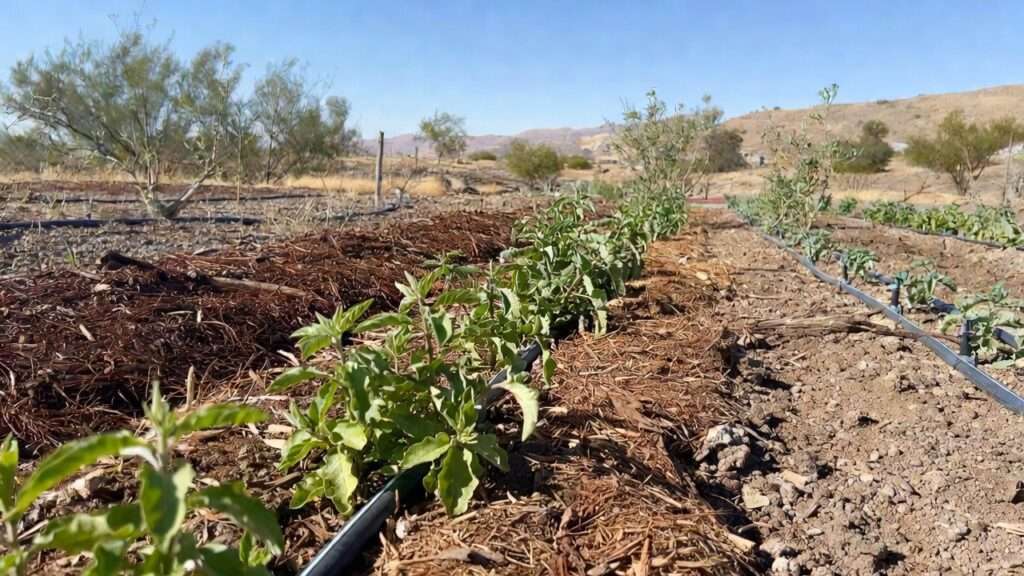
Imagine waking up to yet another scorching day with no rain in the forecast, watching your once-vibrant tomatoes wilt dramatically while your water bill climbs higher than ever. 😓🌞 In many regions, prolonged dry spells, water restrictions, and unpredictable climate patterns are no longer rare events — they’re becoming the new normal, even in areas that used to enjoy consistent rainfall. Home gardeners feel this pressure first: ornamental flowers fade, vegetable yields drop, young trees struggle to establish, and entire beds turn brown.
But here’s the good news: drought preparedness for home gardens doesn’t mean giving up your beautiful, productive space. With proactive planning, you can build resilience into your garden so it thrives through dry periods, uses far less water, and saves you time and money. As a horticulture expert with years of experience in plant and tree care — including guiding homeowners through multi-year droughts — I’ve seen firsthand how simple, science-backed strategies turn vulnerable gardens into tough, low-maintenance oases. 🌱
In this comprehensive guide, we’ll cover everything from assessing your garden’s vulnerabilities to long-term xeriscaping principles. You’ll learn how to protect plants, conserve every drop, and create a resilient landscape that supports pollinators and wildlife too. Let’s dive in and make your garden drought-ready before the next dry spell hits! 🚀
Why Drought Preparedness Matters for Home Gardeners Now More Than Ever 🌍🔥
Climate trends show droughts are intensifying and lasting longer in many parts of the world, affecting even traditionally moist climates. Home gardens suffer disproportionately because they’re often filled with high-water-demand plants like thirsty annuals, exotic ornamentals, or shallow-rooted lawns.
The impacts go beyond aesthetics:
- Plants experience severe stress, leading to reduced photosynthesis, stunted growth, and lower fruit/flower production.
- Trees can suffer branch dieback or long-term decline if young roots dry out.
- Water bills spike from inefficient irrigation.
- Soil erodes more easily without cover, and beneficial microbes suffer.
The mindset shift? Move from reactive “emergency watering” to proactive design. Preparing ahead means your garden uses 30-70% less water (depending on techniques like mulching and efficient irrigation) while staying lush and productive. 💚
:strip_icc()/Reasons-Why-Your-Tomato-Plant-is-Wilting-1417566145-ecbd9565b09943bd97612dada39f3d3f.jpg)
(These show classic signs of drought stress on tomatoes — wilting, curling leaves, and browning — a common sight without preparation!)
Assess Your Garden’s Current Drought Vulnerability (Self-Audit) 📊
Before making changes, evaluate your setup. Grab a notebook and walk your garden:
- Soil type — Sandy soils drain fast (high vulnerability); clay holds water but compacts easily.
- Sun exposure — Full-sun areas dry quickest.
- Plant inventory — List thirsty vs. tolerant species.
- Irrigation — Overhead sprinklers waste water via evaporation; drip is ideal.
- Mulch coverage — Bare soil loses moisture rapidly.
- Root depth — Shallow roots struggle more.
Common red flags:
- Overhead watering that evaporates before reaching roots.
- Non-native, high-water plants in hot spots.
- Bare soil patches.
- Young trees without deep watering habits.
Quick wins: Mulch bare areas today and fix leaks in hoses. This audit takes 30 minutes but saves hours later! 🔍
Build Healthy, Water-Retentive Soil — The Foundation of Drought Resistance 🪴🌱
Healthy soil acts like a sponge, holding water for days instead of hours. Focus here first:
- Add organic matter — Incorporate 2-4 inches of compost annually to improve structure and water-holding capacity (up to 20% more in amended soils).
- No-till methods — Avoid disturbing soil structure; use cover crops like clover in off-seasons.
- pH and nutrients — Test soil; aim for 6.0-7.0 pH. Balanced fertility prevents stress.
- Long-term — Build “living soil” with worms, mycorrhizae, and microbes for better drought tolerance.
Pro tip: Top-dress with compost yearly — it’s like giving your garden a moisture bank! 🌿
Choose and Plant Drought-Tolerant Varieties (The Smart Plant Selection Guide) 🌸🌵
The golden rule: “Right plant, right place.” Select natives or adapted varieties with deep roots, small/silver leaves, or succulent traits.
Here are proven winners (USDA zones approximate; check local extensions):
Perennials & Flowers 🌼
- Lavender (Zones 5-9): Fragrant, silver foliage, low water once established.
- Yarrow (Achillea, Zones 3-9): Tough, colorful blooms, attracts pollinators.
- Coneflower (Echinacea, Zones 3-9): Long-blooming, deep roots.
- Sedum/Stonecrop (Zones 3-9): Succulent, excellent for dry spots.
Vegetables & Edibles 🍅🌶️
- Roma tomatoes: More drought-hardy than beefsteak types.
- Swiss chard, peppers, bush beans: Productive with less water.
- Herbs like rosemary, thyme, oregano: Mediterranean natives thrive in dry conditions.
Shrubs & Trees 🌳
- Crepe Myrtle: Beautiful blooms, tough in heat.
- Junipers or native oaks: Deep roots for stability.
Grasses & Groundcovers
- Blue Fescue or buffalo grass: Low-water lawn alternatives.
| Plant | Zones | Water Needs (Established) | Key Benefits | Pollinator Appeal |
|---|---|---|---|---|
| Lavender | 5-9 | Very low | Fragrant, deer-resistant | High |
| Yarrow | 3-9 | Low | Colorful, spreads gently | Very High |
| Coneflower | 3-9 | Low | Long bloom, medicinal uses | High |
| Rosemary | 7-10 | Very low | Edible, evergreen | Medium |
| Roma Tomato | Annual | Moderate | Heavy yields in dry spells | Low |
Group by “hydrozones” — high-water plants together near the house, low-water farther out. This alone cuts irrigation by 50%! 🌟
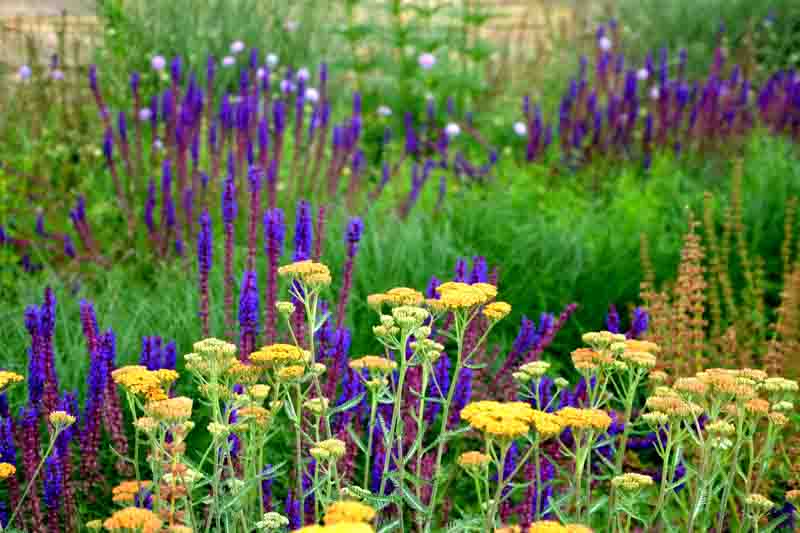
(Beautiful drought-tolerant blooms like lavender and yarrow — vibrant proof that low-water can be stunning!)
Master Water-Saving Irrigation Techniques 💦🚰
Water deeply but infrequently to encourage deep roots:
- Timing — Early morning to minimize evaporation.
- Tools — Drip systems or soaker hoses deliver water directly to roots (up to 50-70% savings vs. sprinklers).
- Rainwater harvesting — Install rain barrels or cisterns for free water.
- Ollas — Bury unglazed clay pots for passive root watering.
- Smart timers — Adjust based on weather.
During restrictions: Prioritize edibles and new plants; let established perennials tough it out.

(Examples of efficient drip irrigation in action — targeted watering at its best!)
Mulch Like a Pro — Your Garden’s Best Drought Shield 🛡️🍂
Mulching is one of the single most effective, low-effort ways to slash water loss and protect plants during dry periods. Studies from university extension services (like those from UC Davis and Colorado State) show that a proper 3–4 inch layer can reduce soil evaporation by 50–70%, keep roots cooler, suppress weeds that steal moisture, and slowly feed the soil as organic mulches break down. 🌱
Best mulch materials
- Organic options (preferred for most home gardens): Wood chips, shredded bark, straw, pine needles, or composted leaves. These improve soil over time.
- Inorganic (long-lasting, low-maintenance): Gravel, river rock, or decomposed granite — great for xeriscape beds and paths. Avoid fresh grass clippings (can mat and smell) or dyed mulches (potential chemicals).
How to apply mulch correctly
- Depth: 3–4 inches for most areas; 2–3 inches around perennials/veggies; up to 4–6 inches around trees/shrubs.
- Keep it away from stems/trunks: Create a 2–4 inch “donut hole” to prevent rot and pests (volcano mulching is a common killer of trees!).
- Refresh annually: Top up as it decomposes.
Common mistakes to avoid: Too thin (no benefit), piling against trunks, or using plastic sheeting (blocks air/water).
Here are some excellent examples of professional mulch application:
(Notice the proper depth and clear space around plant bases — this is the gold standard!)
And a helpful infographic-style breakdown of benefits and depths:
(Wait — that’s a repeat; the benefits visual shows weed suppression, moisture retention, temperature regulation, and more — perfect reminders!)
Additional Smart Strategies to Stretch Every Drop 🌟
Beyond the big four (soil, plants, irrigation, mulch), layer these tactics:
- Aggressive weeding — Weeds compete fiercely for water; hand-pull or hoe early.
- Wise pruning — During drought, prune lightly (remove only dead/diseased); heavy pruning stresses plants more.
- Wind & shade protection — Plant windbreaks (taller shrubs/trees) or use temporary shade cloth over tender veggies.
- Hydrozoning — Group plants with similar water needs: high-water near house/foundation, moderate in middle zones, low-water at edges.
- Closer spacing & succession planting — In veggie beds, tighter planting creates natural shade; follow with quick crops to keep soil covered.
These small habits compound to save significant water!
Protecting Special Garden Features During Drought 🌳🥕
Different areas need tailored care:
- Fruit & ornamental trees — Use watering rings or deep-root feeders to deliver water slowly to the drip line (where feeder roots live). Young trees especially need 10–20 gallons per week during dry spells.
- Vegetable gardens — Trellis vining crops to reduce ground contact/evaporation; use row covers for humidity; succession plant heat-tolerant varieties.
- Containers & raised beds — These dry fastest — add extra mulch, group in shade, or use self-watering pots/ollas.
- Lawns — Shrink turf areas; switch to drought-tolerant grasses (buffalo, Bermuda in warm zones) or convert to clover/meadow mixes.
What to Do When Drought Actually Hits — Emergency Action Plan ⚡
When restrictions tighten or soil is bone-dry:
- Prioritize: Save established trees, edibles, and new plantings first; let mature perennials go dormant if needed.
- Spot signs of stress: Wilting (even after watering), leaf curl, yellowing, early leaf drop.
- Water deeply once a week (if allowed) rather than shallow daily.
- Avoid fertilizing — it pushes growth that needs more water.
- Post-drought recovery: Reintroduce water gradually; add light compost; watch for pests that attack weakened plants.
Many gardens bounce back beautifully with patience!
Long-Term Drought-Proofing: Create a Resilient, Low-Maintenance Garden Forever 🔮
Embrace xeriscaping principles (not zero-water, but wise-water):
- Plan with natives and adapted plants.
- Use hardscaping (paths, rocks) to reduce planted area.
- Incorporate permaculture: Swales, keyhole beds, companion planting.
- Monitor with tools: Soil moisture meters, rain gauges, weather apps for predictive watering.
An annual calendar helps: Spring — mulch/plant; Summer — deep water/check; Fall — amend soil; Winter — plan next year.
Here are inspiring examples of fully drought-resilient home gardens:

(Vibrant colors, texture, and structure — all with minimal water!)
Bonus low-tech hacks: DIY ollas (buried terracotta pots that seep water slowly) and rain barrels for free harvesting.
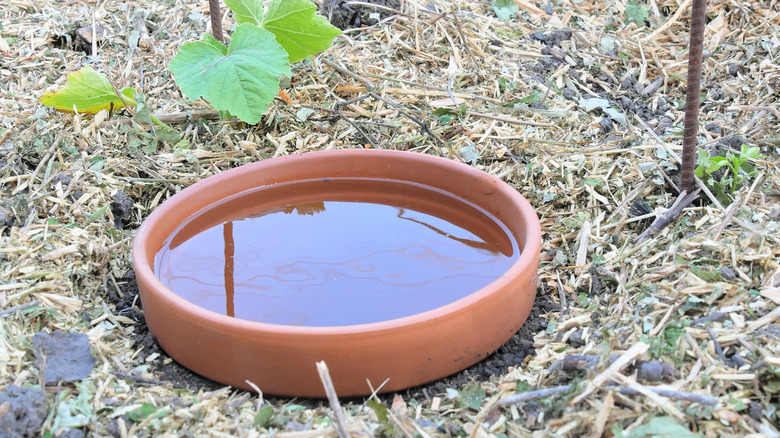
(Simple, effective rainwater collection and olla systems — easy weekend projects!)
FAQs: Your Top Drought Preparedness Questions Answered ❓
- Can I still grow tomatoes in a drought? Yes — choose determinate/Roma types, mulch heavily, use drip, and provide afternoon shade if possible. Yields may be smaller but still delicious!
- Is greywater safe for gardens? Yes, if from laundry/bath (no kitchen/toilet). Use plant-friendly soaps; avoid on edibles touching the water.
- How much mulch is too much? Over 6 inches can suffocate roots or hold too much moisture in wet seasons. Stick to 3–4 inches.
- Do natives really need zero water? No — most need regular water the first 1–2 years to establish; then very little.
- What’s the best low-water lawn alternative? Clover, buffalo grass, microclover mixes, or groundcovers like thyme/ creeping sedum.
- Will my established plants die without water? Many perennials/shrubs go dormant and recover; trees are more vulnerable if young.
- How do I know if my soil holds water well? Dig a hole, fill with water — if it drains in under 1 hour (sandy), amend heavily; over 4 hours (clay), add organics.
- Are smart irrigation controllers worth it? Absolutely — they adjust based on weather/soil, often saving 20–50% more water.
Final Thoughts & Call to Action 🌿💚
Drought preparedness for home gardens is about working smarter, not harder. Start with one or two steps — mulch a bed, install a soaker hose, or swap in a few drought-tolerant plants — and build from there. Your garden will thank you with healthier growth, lower bills, and beauty even when the rain stays away.
What’s your first drought-prep project this season? Share in the comments — I’d love to hear your wins and tips! If you found this helpful, check out our guides on native plant selection, composting for better soil, or water-wise tree care. Happy gardening — stay resilient! 🌟











