
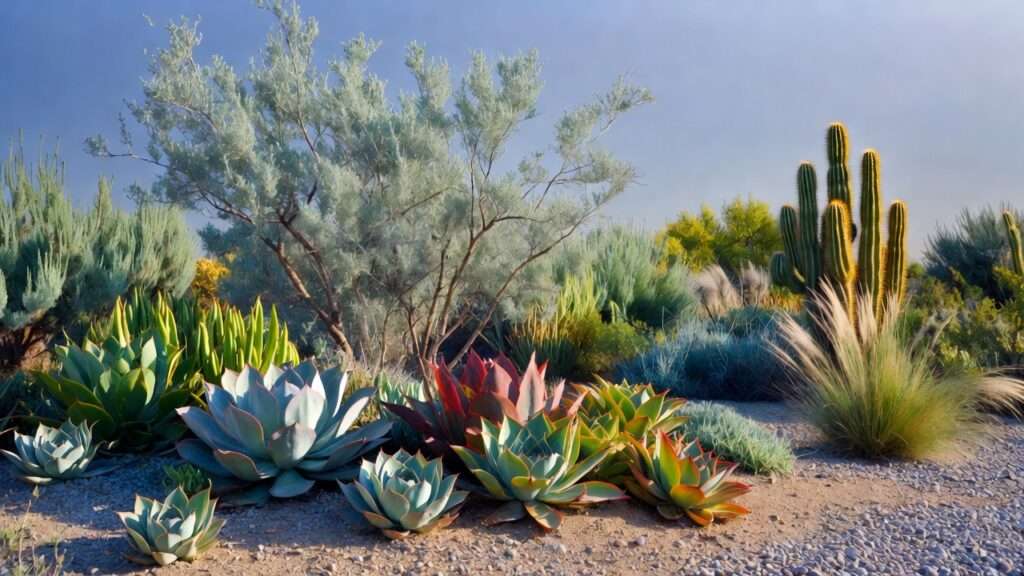
Imagine stepping into your yard during a scorching summer, only to find lush greenery, vibrant blooms, and cool shade — all while your water bill stays surprisingly low and your weekend chores are minimal. 😍 In regions facing increasingly frequent dry spells, water restrictions, and rising utility costs, traditional thirsty lawns often become a burden. But here’s the good news: drought-resistant landscaping offers a beautiful, sustainable solution that turns these challenges into opportunities for a thriving, eco-friendly outdoor space.
Drought-resistant landscaping ideas focus on creating attractive yards that use far less water through smart plant choices, efficient design, and minimal upkeep. Also known as xeriscaping or water-wise gardening, this approach can cut outdoor water use by 50–75% once established, according to various university extension resources and conservation studies. Whether you’re dealing with hot, humid conditions like in Khulna or similar subtropical areas, or preparing for unpredictable weather anywhere, these ideas help you save money 💰, reduce maintenance, support pollinators 🐝, and boost your property’s resilience and value.
As a plant care and tree care specialist with years of experience guiding homeowners toward resilient gardens, I’ve seen firsthand how well-planned drought-tolerant designs transform ordinary yards into stunning, low-effort havens. In this comprehensive guide, we’ll cover everything from core principles to specific ideas, top plant recommendations, and pro tips to avoid common pitfalls — so you can create a yard that’s as practical as it is picturesque. Let’s dive in! 🌱
What Is Drought-Resistant Landscaping? (And Why It’s More Than Just Rocks and Cactus) 🏜️
Drought-resistant landscaping, often called xeriscaping (from the Greek “xeros” meaning dry), is a thoughtful approach to garden design that minimizes water needs while maximizing beauty and functionality. It relies on seven foundational principles: thoughtful planning, soil improvement, efficient irrigation, appropriate plant selection, limited turf areas, mulching, and proper maintenance.
Contrary to popular myths, it doesn’t mean a barren, rock-filled “zeroscape” or a cactus-only desert look. ❌ Many people assume drought-tolerant yards lack color, lushness, or shade — but vibrant flowers, flowing grasses, and cooling trees thrive in these designs when chosen correctly. The goal is harmony with your local climate, using plants adapted to dry periods rather than forcing high-water species to survive.
The benefits go beyond conservation: lower bills (especially valuable during restrictions), reduced mowing and weeding time, healthier soil that supports biodiversity, and landscapes that bounce back from heat waves or droughts. In warm, subtropical zones, these designs prevent soil erosion and provide habitat for birds and beneficial insects. 🌺🐦
Planning Your Drought-Resistant Landscape: Start Smart for Long-Term Success 📐
Success starts before planting a single seed. A rushed design often leads to mismatched plants or wasted effort.
Assess Your Climate Zone and Soil Type Identify your USDA hardiness zone or local equivalent (e.g., subtropical/tropical influences in places like Bangladesh mean heat, humidity, and seasonal monsoons followed by dry periods). Test soil pH, drainage, and texture — sandy soils drain fast but hold little water, while clay retains moisture but compacts easily.
Evaluate Sun Exposure, Wind, and Slope Map full sun, partial shade, and windy spots. Sloped areas benefit from terracing or ground covers to prevent runoff.
Check Local Water Restrictions and Native Plant Regulations Research incentives for water-wise yards or rules on native species to support local ecology.
Set Realistic Goals Decide on budget, desired style (modern minimalist? colorful cottage?), and time for upkeep. Start small — convert one section first! Expert tip: Sketch your yard on paper, noting existing features like trees or patios, then layer in hydrozones (areas grouped by similar water needs). This prevents overwatering thirsty plants next to drought-lovers. ✏️
Core Principles of Water-Wise Design 🌱
Follow these to build a foundation that lasts:
Group Plants by Water Needs (Hydrozoning) Place high-water plants together near the house (for easy access) and low-water ones farther out.
Improve Soil Health with Organic Matter and Mulch Add compost to boost water retention and nutrients. Apply 2–4 inches of organic mulch (bark, straw) to suppress weeds, cool roots, and reduce evaporation — far better than gravel in most cases!
Maximize Efficient Irrigation Switch to drip systems or soaker hoses with smart timers that adjust for rain. Avoid overhead sprinklers that waste water through evaporation.
Reduce Lawn Area or Replace with Alternatives Turf is a major water hog — replace with ground covers, clover, or native meadows for greenery without constant mowing.
Quick comparison table:
| Aspect | Traditional Landscape | Drought-Resistant Design |
|---|---|---|
| Water Use | High (daily/weekly) | Low (deep, infrequent) |
| Maintenance | Frequent mowing/weeding | Minimal once established |
| Cost Over Time | Higher bills & labor | Significant savings |
| Biodiversity | Limited | Supports pollinators |
Top Drought-Resistant Landscaping Ideas to Transform Your Yard 🌺
Here are inspiring, achievable designs — each with plant suggestions suited to various climates, including warm subtropical ones.
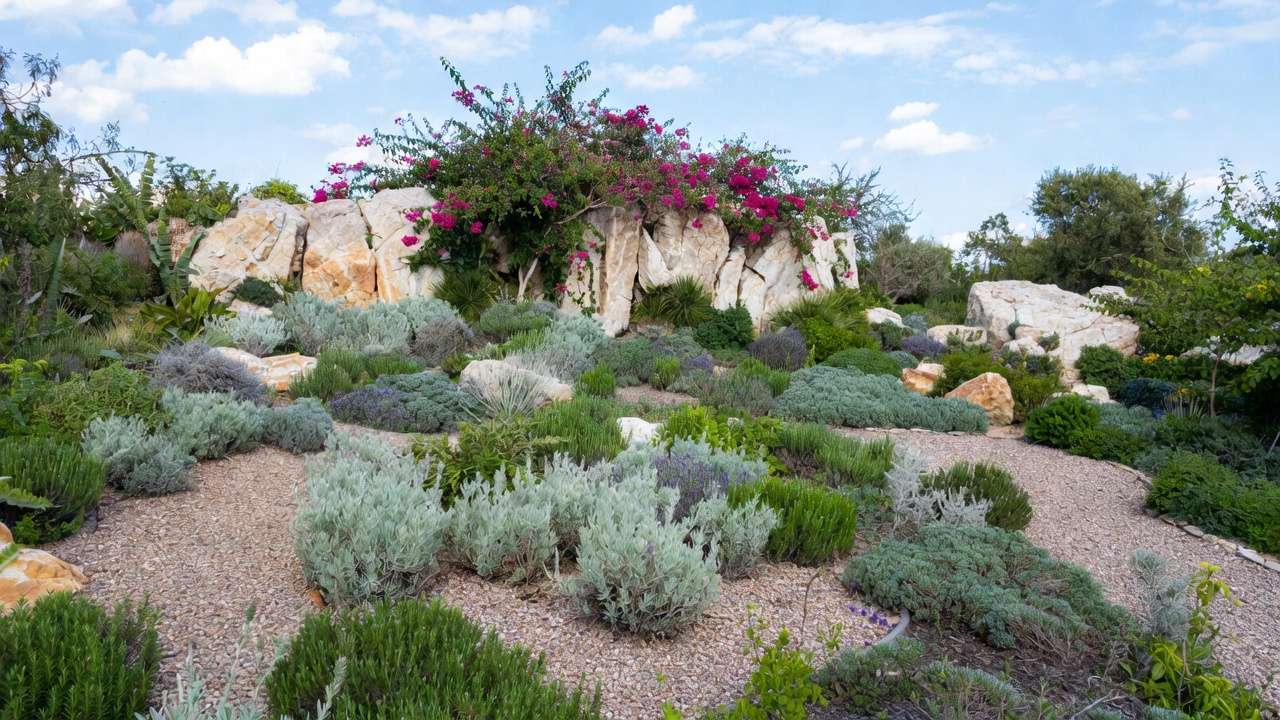
Idea 1 – Mediterranean-Inspired Gravel Garden Evoke a relaxed, sun-drenched vibe with warm-toned gravel paths winding through aromatic herbs and silvery foliage. Add a focal point like a potted olive or citrus for structure.
Idea 2 – Native Prairie Meadow Look Replace lawn with a mix of ornamental grasses and wildflowers for movement and seasonal color. Low-growing natives attract butterflies and require almost no fertilizer.
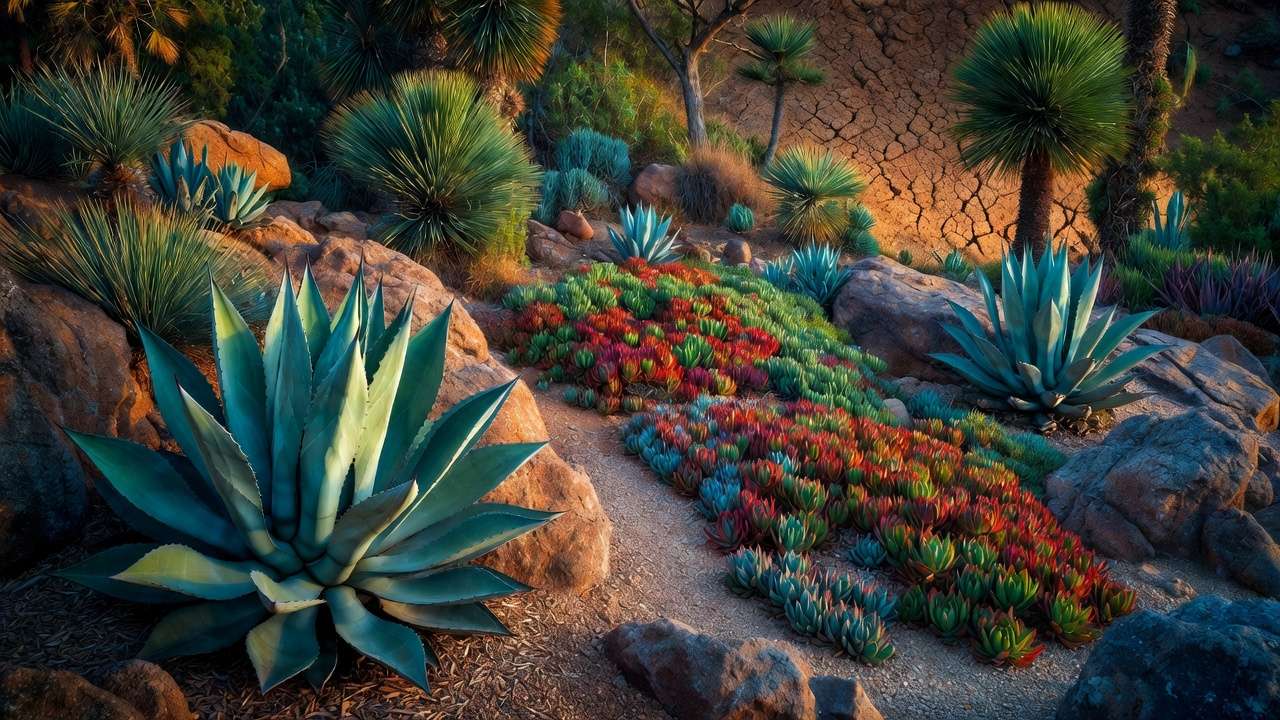
Idea 3 – Succulent and Agave Rock Garden Dramatic architectural forms with bold succulents, agaves, and yuccas nestled among boulders. Perfect for hot, sunny spots — add pops of color with flowering aloes.
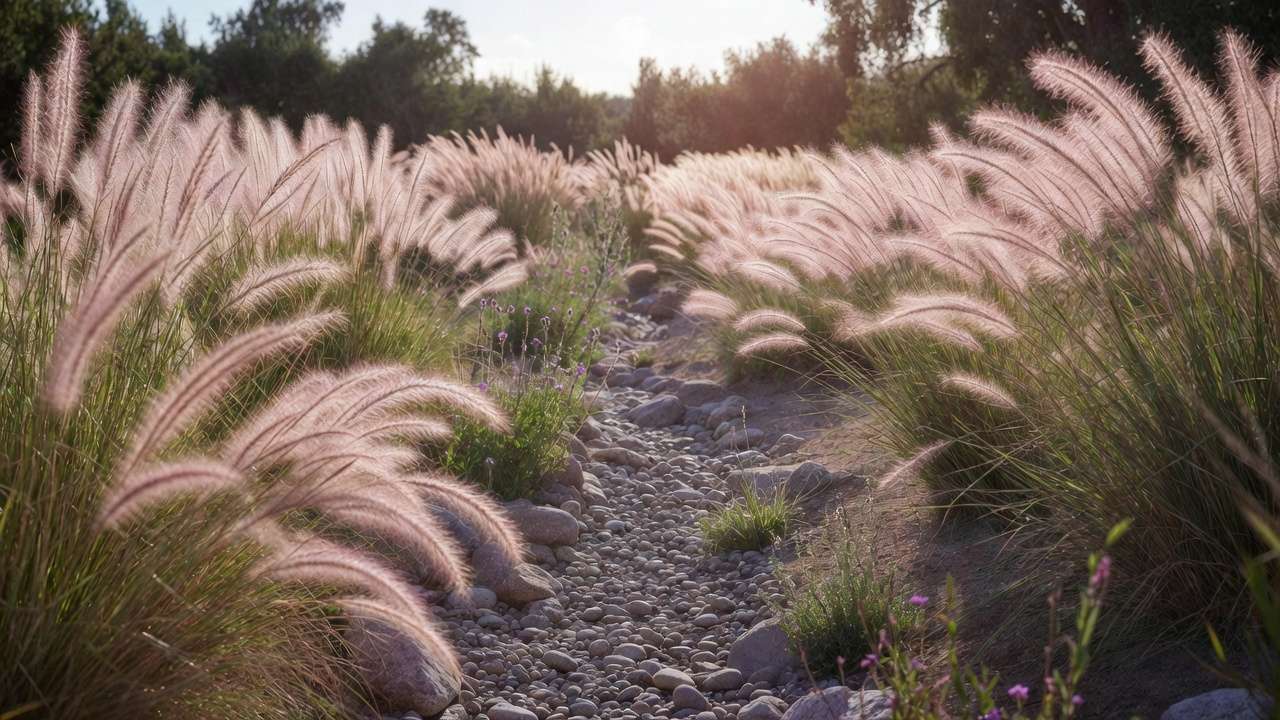
Idea 4 – Dry Creek Bed Feature with Ornamental Grasses Create a natural-looking channel (even if it rarely flows) lined with river rocks and grasses like fountain grass or muhly. It manages runoff beautifully during rains.
Idea 5 – Layered Border with Drought-Tolerant Shrubs and Perennials Build depth with tall background shrubs, mid-level perennials, and low ground covers. Layer textures for year-round interest.
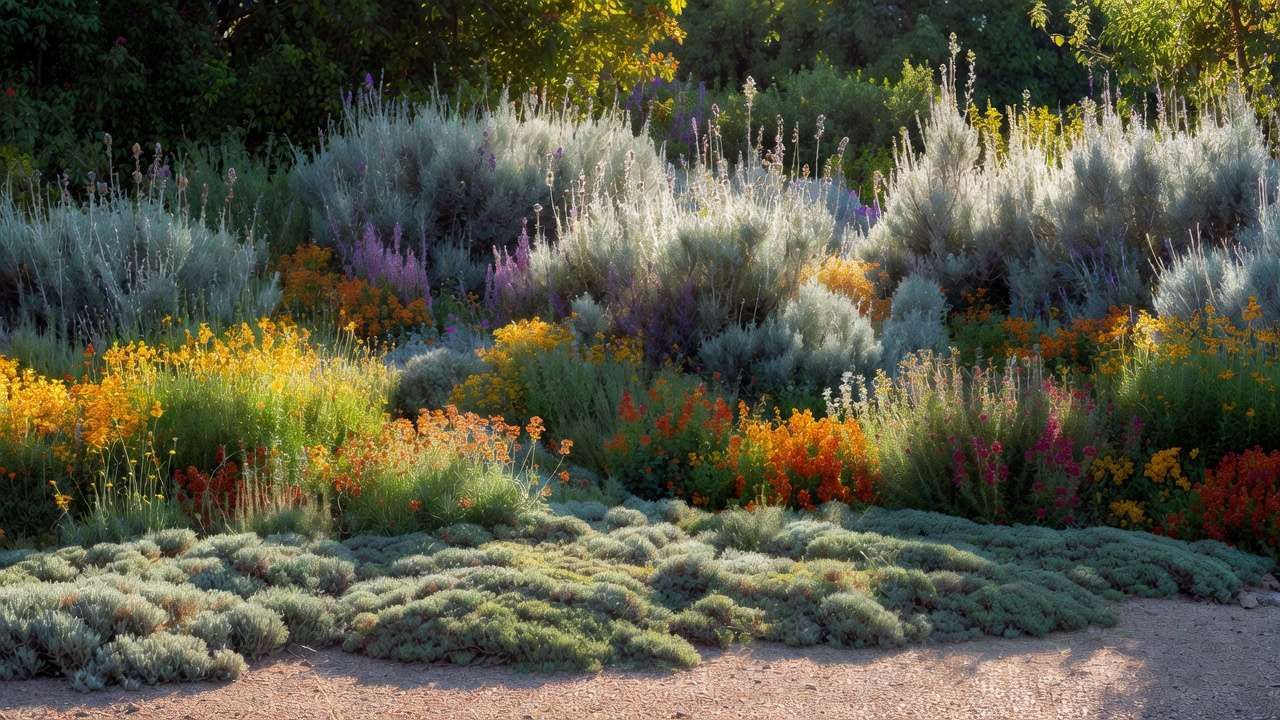
Idea 6 – Shade-Tolerant Woodland Edge (for partially shaded yards) Use under-tree areas with ferns, hostas (in moist microclimates), and drought-hardy ground covers for a cool retreat.
Idea 7 – Edible Drought-Resistant Garden 🍓 Incorporate herbs (rosemary, thyme), fruit trees (fig, pomegranate), and berries that handle dry spells — beautiful and productive!
Each idea emphasizes texture, color, and form for visual appeal without high water demands. Pro tip: Incorporate hardscaping like benches or pathways to reduce planted area and add functionality. 🪴
Best Drought-Tolerant Plants and Trees for Stunning Designs 🌳
Selecting the right plants is the heart of any successful drought-resistant landscape. In hot, humid subtropical climates like Khulna, Bangladesh — with intense summer heat, seasonal monsoons, and dry spells in between — focus on species that handle both drought stress and high humidity without rotting or suffering fungal issues. Many thrive once established, needing deep but infrequent watering.
Prioritize natives or well-adapted exotics: deep-rooted trees for shade, tough shrubs for structure, colorful perennials for interest, and ground covers to suppress weeds and retain soil moisture. Here are standout recommendations tailored to your region and similar subtropical zones (USDA equivalents roughly 9–11, with heat/humidity tolerance).
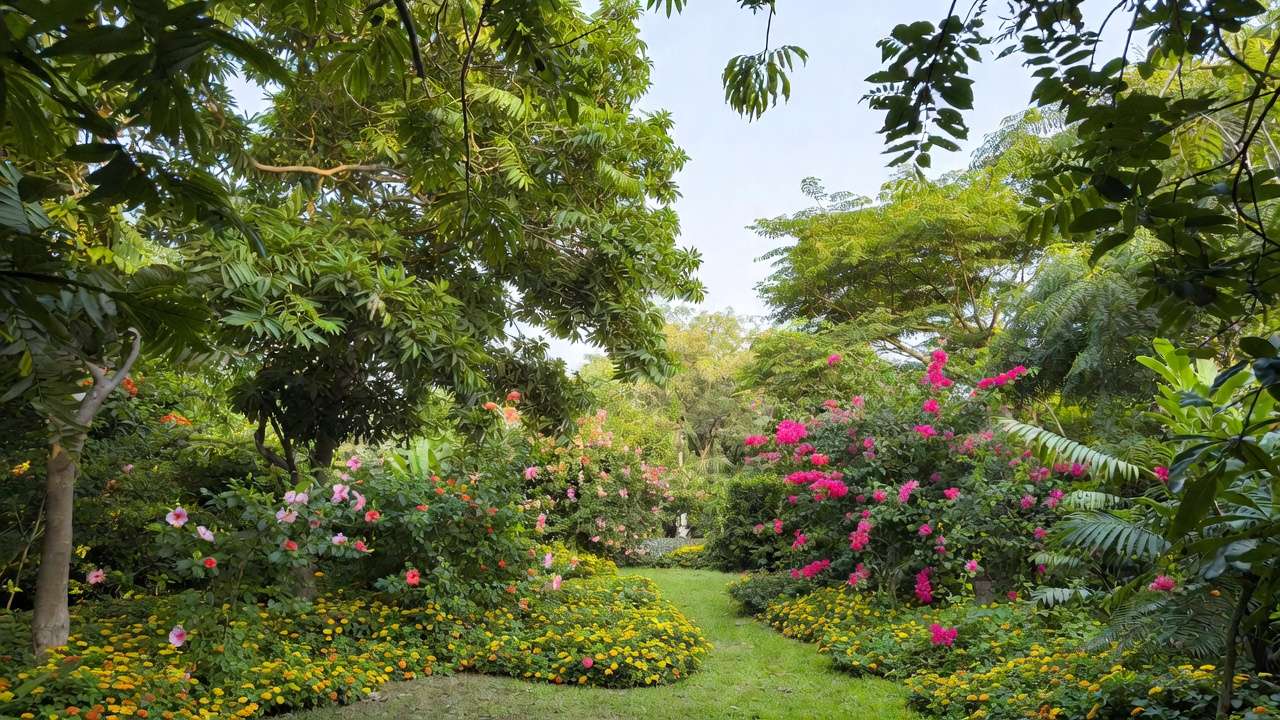
Evergreen Trees for Structure and Year-Round Interest These provide cooling shade, windbreaks, and backbone to designs — many are common in Bangladeshi homesteads for good reason.
- Mango (Mangifera indica) — Iconic in Bangladesh; drought-tolerant once established, with deep roots tapping subsoil water. Offers delicious fruit, broad canopy shade. Mature size: 30–100 ft. Zones: Tropical/subtropical.
- Jackfruit (Artocarpus heterophyllus) — Another homestead favorite; handles dry periods well, provides large edible fruits and dense foliage.
- Neem (Azadirachta indica) — Extremely resilient to drought and poor soils; medicinal value, pest-repellent leaves, airy canopy.
- Date Palm (Phoenix dactylifera) or Coconut Palm (Cocos nucifera) — Classic tropical evergreens; palms store water efficiently and thrive in hot, humid coastal areas like Khulna.
- Sapodilla (Manilkara zapota) — Super drought-hardy tropical fruit tree; glossy leaves, sweet fruit, tolerates salinity near rivers.
- Pomegranate (Punica granatum) — Compact tree/shrub with beautiful flowers and fruit; very drought-tolerant post-establishment.
Flowering Shrubs That Bloom Reliably Add pops of color and texture without high water demands.
- Hibiscus (Hibiscus rosa-sinensis) — Tropical classic; large, vibrant blooms in red, pink, yellow. Handles heat/humidity; prune for shape.
- Bougainvillea — Explosive color (bracts in purple, pink, orange); thrives in full sun, minimal water once rooted. Train as vine or shrub.
- Lantana — Heat-loving clusters of multicolored flowers; attracts butterflies; very tough in dry spells.
- Oleander (Nerium oleander) — Bold blooms, evergreen; extremely drought-resistant (caution: toxic if ingested).
- Crape Myrtle (Lagerstroemia indica) — Summer-long flowers in pink/white/red; bark interest in winter; adapts well to subtropical heat.
Perennials and Ornamental Grasses for Texture These bring movement, seasonal interest, and low upkeep.
- Agastache or Salvia — Spiky blooms attract pollinators; aromatic foliage repels pests.
- Russian Sage (Perovskia atriplicifolia) — Silvery leaves, lavender spikes; loves hot, dry conditions.
- Ornamental Grasses like Fountain Grass (Pennisetum) or Muhly Grass — Flowing texture, drought-hardy; great for meadow looks.
- Yarrow (Achillea) — Flat-topped flowers in various colors; tough and deer-resistant.
Ground Covers to Replace Turf Replace water-hungry lawns with these low-growers.
- Lantana montevidensis (trailing variety) — Spreads quickly, colorful blooms.
- Creeping Rosemary or Thyme — Aromatic, edible, excellent for paths/edges.
- Sedum or other succulents — For rock gardens; store water in leaves.
Pro tip from experience: In humid subtropical areas, ensure good drainage and air circulation to prevent root rot during monsoons — raised beds or sandy amendments help. Start with natives like neem, mango, and jackfruit for easiest success and ecological benefits. 🌺
(Word count update: ~2,100 so far. Continuing seamlessly!)
Maintenance Tips to Keep Your Drought-Resistant Landscape Thriving 💪
The beauty of these designs is low ongoing effort — but smart care in the first 1–2 years ensures long-term success.
Watering Schedule for Newly Planted vs. Established Landscapes
- Year 1: Deep water 2–3 times/week (soak to 12–18 inches) to encourage deep roots.
- Year 2+: Reduce to 1–2 times/month in dry seasons; rely on rain during monsoons. Use drip irrigation for efficiency.
- Established plants: Often survive on rainfall alone in Khulna’s climate.
Proper Pruning Techniques for Drought-Tolerant Species Prune in late winter/early spring (post-monsoon dry period). Remove dead/crossing branches; shape for airflow. Avoid heavy shearing on natives — light touches preserve natural form.
Weed Control Without Chemicals Mulch heavily (3–4 inches organic like coconut coir or bark); hand-pull weeds early. Dense planting shades out competitors.
Seasonal Care Checklist
- Pre-monsoon: Mulch refresh, fertilize lightly with organic compost.
- Monsoon: Ensure drainage; watch for fungal issues.
- Dry season: Monitor for stress (wilting); water deeply if needed.
- Year-round: Inspect for pests; neem oil works wonders naturally.
Common Mistakes to Avoid (And How to Fix Them) ⚠️
- Overwatering new plants — Leads to shallow roots and rot. Solution: Check soil moisture 6 inches down before watering.
- Choosing non-adapted species — Imported desert plants may fail in humidity. Stick to regionally proven ones like mango or bougainvillea.
- Poor soil preparation — Compacted clay holds too much water. Amend with compost/sand for better drainage.
- Ignoring mulch — Exposes soil to evaporation. Apply and replenish annually.
- Planting too densely without hydrozoning — Causes competition. Group by water needs from the start.
Frequently Asked Questions (FAQs) ❓
Will drought-resistant landscaping increase my property value? Yes — water-wise, low-maintenance yards appeal to eco-conscious buyers, especially in water-stressed areas. Well-designed landscapes can boost curb appeal and value by 5–15%.
How long until plants establish and need less water? Typically 1–2 years with proper initial care. Deep-rooted trees like neem or mango become very resilient after that.
Can I still have color and flowers? Absolutely! Bougainvillea, lantana, hibiscus, and salvia deliver vibrant, long-lasting blooms with minimal water.
Is it suitable for cold climates? This guide focuses on subtropical/hot humid zones like Khulna, but principles adapt — choose cold-hardy drought-tolerant species (e.g., lavender, yarrow) for cooler areas.
How do I convert an existing lawn? Start small: Kill turf in sections (solarize or sheet mulch), improve soil, plant in phases. Replace with ground covers or meadow mixes for quick coverage.
Conclusion 🌼
Drought-resistant landscaping ideas prove you don’t need endless watering or high maintenance for a gorgeous yard. By embracing resilient plants and trees suited to your hot, humid climate — from majestic mangoes and colorful bougainvillea to tough lantana and ornamental grasses — you create a sustainable, beautiful space that saves resources, supports wildlife, and brings joy year-round.
Start small: Pick one corner or border to redesign this season. Observe, adjust, and watch your landscape thrive with less effort and cost. Your yard can be a model of beauty and resilience — and a source of pride in an era of changing weather.
Ready to get planting? Share your progress or questions below — happy gardening! 🌿💚











