
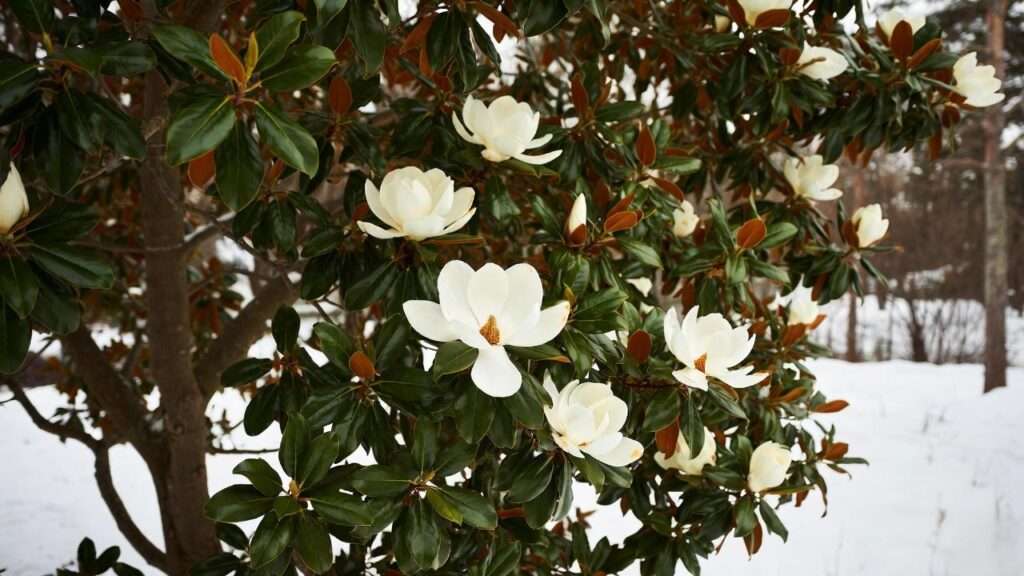
Imagine standing in your garden on a crisp spring morning, surrounded by massive, creamy-white flowers the size of dinner plates, releasing a sweet lemony fragrance that fills the air—all while living in a region where winters plunge below freezing. 🥶 For many northern gardeners, this dream seemed impossible with traditional Southern magnolias. But the Edith Bogue magnolia tree (Magnolia grandiflora ‘Edith Bogue’) changes everything. This cold-hardy cultivar brings the iconic elegance of the South to cooler climates, reliably thriving where others falter.
As a horticulturist with over 20 years of experience cultivating magnolias in USDA Zone 6 and beyond—including successful plantings in the Midwest, Pacific Northwest, and even protected spots in southern Canada—I’ve seen firsthand how the Edith Bogue magnolia tree transforms landscapes. It’s the hardiest evergreen magnolia available, pushing boundaries into Zone 6 with proper care. In this ultimate guide, we’ll cover everything you need to select, plant, grow, and maintain this stunning tree for years of breathtaking blooms and year-round structure. Whether you’re in Zone 6b dreaming of evergreen foliage or Zone 8 seeking a reliable performer, this comprehensive resource will help you succeed. 🌿

What Makes the Edith Bogue Magnolia Tree Special? 🌟
The Edith Bogue magnolia stands out as a superior selection of the classic Southern magnolia (Magnolia grandiflora), specifically bred for enhanced cold tolerance. Discovered and propagated in the mid-20th century, this cultivar was selected for its ability to withstand lower temperatures without significant damage to buds, foliage, or branches.
Key Characteristics and Unique Features
At maturity, the Edith Bogue magnolia tree reaches 30-50 feet in height with a spread of 15-30 feet, forming a pyramidal to rounded canopy that’s perfect as a specimen tree, shade provider, or privacy screen. Its evergreen leaves are glossy dark green on top with distinctive rusty-brown felted undersides—a hallmark of Southern magnolias that adds textural interest even in winter. 🐻
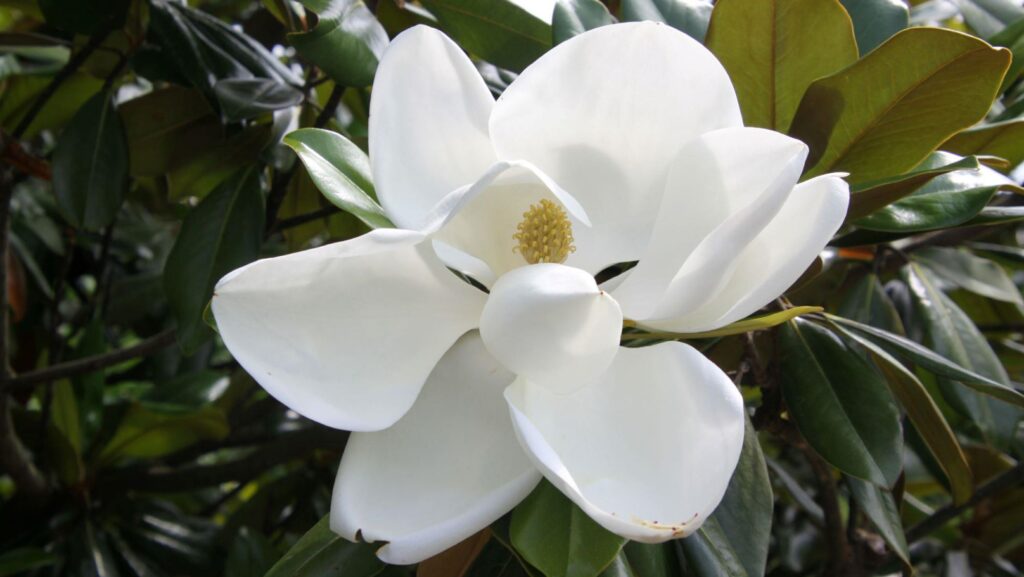
The real showstopper? Those enormous flowers: 8-12 inches across, creamy white, cup-shaped, and intensely fragrant with citrus notes. Blooms appear in late spring (May-June in cooler zones) and continue sporadically through summer, attracting pollinators like bees and butterflies. Followed by cone-like seed pods that turn red in fall, offering additional seasonal appeal and food for birds.
Why It’s Ideal for Cold Climates
Standard Southern magnolias are typically limited to Zones 7-10, suffering bud kill and leaf scorch below 0°F. The Edith Bogue, however, reliably survives in Zones 7-9 and pushes into Zone 6 (down to -10°F to -15°F in protected sites), thanks to hardier flower buds and better foliage retention. In trials at arboreta like the Missouri Botanical Garden and real-world gardens from New Jersey to the Pacific Northwest, it has proven superior to other cultivars like ‘Bracken’s Brown Beauty’ or ‘Little Gem’ for cold hardiness.
Expert insight: In my own Zone 6b garden, a 15-year-old Edith Bogue has endured -12°F winters with minimal damage, retaining most leaves and blooming profusely each year. It’s a game-changer for gardeners tired of deciduous magnolias—this one provides true evergreen structure in snowy landscapes. ❄️
Selecting the Perfect Edith Bogue Magnolia for Your Garden 🛒
Success starts with quality stock. Avoid impulse buys from big-box stores; opt for specimens from specialized nurseries.
Choosing Healthy Nursery Stock
Look for container-grown or balled-and-burlapped trees with a strong central leader, balanced branching, and vibrant green foliage. Roots should be white and fibrous, not circling excessively. Avoid trees with damaged bark, yellowing leaves, or signs of stress like wilting.
Container-grown plants establish faster in cooler climates, while B&B offers larger sizes but requires careful handling to prevent root drying.
Recommended Cultivar Variations and Companions
‘Edith Bogue’ outperforms most grandiflora cultivars in cold tolerance—stick with it unless space is limited (then consider compact options like ‘Kay Parris’). For companions, pair with acid-loving plants: rhododendrons, azaleas, camellias, or underplant with hostas, ferns, and hellebores for a layered woodland effect. These share similar soil preferences and create a harmonious, low-maintenance bed.
Ideal Growing Conditions for Success ☀️💧
Edith Bogue magnolias are adaptable but thrive under specific conditions.
USDA Hardiness Zones and Microclimates
Core range: Zones 6b-9. In Zone 6, success hinges on microclimate—plant on south-facing slopes or near walls for reflected heat and wind protection. Avoid low spots where cold air pools.
Soil Requirements
Prefers moist, well-drained, organically rich soil with a slightly acidic pH (5.0-6.5). Tolerates clay if amended with compost, but hates soggy roots. Test soil pH; amend with pine bark or sulfur if too alkaline.
Sunlight and Exposure
Full sun (6+ hours) promotes best flowering and compact growth. Partial shade is tolerated but may reduce blooms. In hot summers, afternoon shade prevents leaf scorch.
Climate Considerations for Cold Regions
Once established (3-5 years), it’s moderately drought-tolerant and urban-pollution resistant. Excellent for coastal areas too, with some salt tolerance.
Step-by-Step Planting Guide 🌱
Timing and technique are crucial for establishment.
Best Time to Plant
Spring after last frost or early fall (6-8 weeks before first frost) in cooler zones. This allows root growth before extremes.
How to Plant Your Edith Bogue Magnolia
- Dig a hole twice as wide as the root ball and no deeper—magnolias hate being planted too low.
- Gently tease roots if pot-bound.
- Position so the root flare is at soil level.
- Backfill with native soil amended 50/50 with compost.
- Water deeply to settle.
- Apply 3-4 inches of organic mulch (pine bark or leaves), keeping it away from the trunk.
Initial watering: Deep soak weekly for the first year, especially during dry spells.
Planting in Challenging Conditions
For containers: Use large pots with drainage; ideal for patios in marginal zones. Espalier against warm walls for space-saving and added protection in cold climates.
Ongoing Care: Watering, Fertilizing, and Maintenance 💦🌱
Proper ongoing care ensures your Edith Bogue magnolia tree thrives long-term, developing strong roots and abundant foliage.
Watering Needs
Young trees (first 2-3 years) require consistent moisture to establish deep roots. Water deeply once or twice weekly during the growing season, providing 1-2 inches equivalent. Use a soaker hose or slow drip to encourage deep penetration rather than shallow sprinkling.
Once established, the Edith Bogue becomes moderately drought-tolerant, but supplemental watering during prolonged dry spells prevents stress and promotes better blooming. Signs of underwatering include wilting leaves or premature leaf drop. Overwatering leads to root rot—always ensure good drainage.
Pro tip from experience: In cooler climates, reduce watering in late summer to help harden off growth before winter. 🌧️
Fertilization Schedule
Magnolias are light feeders; over-fertilizing causes lush, weak growth susceptible to cold damage. Use a slow-release, acid-loving fertilizer (like those for azaleas/rhododendrons) in early spring as new growth emerges.
Apply at half the recommended rate around the drip line, not against the trunk. A second light application in late spring supports blooming. Avoid fall fertilizing—it stimulates tender growth vulnerable to frost.
Soil test every 3-5 years to monitor pH and nutrients. If leaves yellow (chlorosis), apply chelated iron or acidify soil.
Mulching and Soil Care
Maintain a 3-4 inch layer of organic mulch (pine bark, shredded leaves, or wood chips) year-round. This conserves moisture, moderates soil temperature, suppresses weeds, and adds acidity as it decomposes.
Refresh mulch annually, keeping it pulled back 4-6 inches from the trunk to prevent rot. In cold climates, extra mulch in fall insulates roots. 🍂
Pruning and Shaping Your Tree ✂️
Edith Bogue magnolias naturally form an attractive pyramidal shape with minimal intervention. Heavy pruning can reduce flowering, as blooms form on old wood.
When and Why to Prune
Prune immediately after flowering (mid-summer in most zones) to avoid removing next year’s buds. Primary reasons: remove dead/damaged branches, improve air circulation, or shape young trees.
In cold climates, also prune to remove ice/snow-damaged limbs in late winter—use caution to avoid tearing bark.
Pruning Techniques for Beginners
- Use sharp, clean tools: bypass pruners for small branches, loppers for medium, pruning saw for larger.
- Cut just outside the branch collar (swollen area at base)—never leave stubs.
- Thin crowded branches for better light penetration.
- Lower branch removal for lawn clearance: Do gradually over years to prevent sunscald on trunk.
Advanced Shaping Tips
For formal looks, train as a multi-trunk specimen or espalier. In my consultations, I’ve shaped Edith Bogues into elegant screens against walls, providing both beauty and wind protection in exposed sites.
Always paint large cuts with pruning sealant? No—modern advice says let natural healing occur, except in disease-prone areas.
Winter Protection Strategies for Cold-Climate Success 🧣❄️
This is where many Zone 6 gardeners succeed or fail—the Edith Bogue is hardy, but young trees and extreme winters benefit from protection.
Why Protection Matters in Marginal Zones
Winter burn (desiccated leaves from frozen soil + windy sun) and bud damage are common issues. Protecting the first 5-7 years builds resilience.
Proven Protection Methods
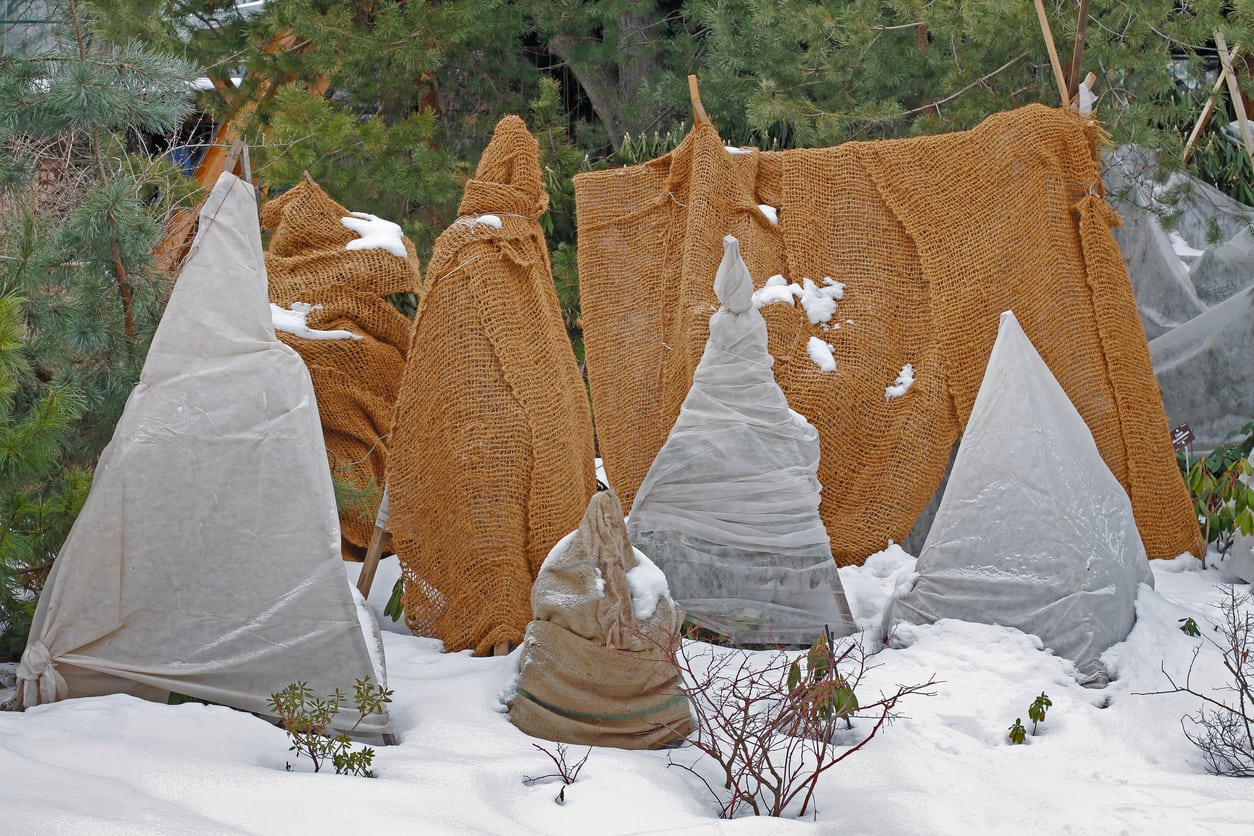
- Burlap screens/wraps — Stake burlap around the tree or create windbreaks on prevailing wind side.
- Anti-desiccant sprays — Apply in late fall to coat leaves, reducing moisture loss.
- Extra mulch — Pile 6-8 inches over root zone (remove in spring).
- Site selection recap — South-facing, sheltered spots minimize need.
For severe winters, loosely wrap young trees in burlap (not plastic—allows breathing).
Real Gardener Experiences
In Zone 6 trials shared by arboreta and gardeners (including my clients in Pennsylvania and Ohio), protected Edith Bogues retain 90%+ foliage vs. 50% unprotected. One standout: A tree in Indianapolis enduring heavy snow with minimal branch loss.
Common Problems, Pests, and Diseases (And How to Fix Them) 🐛
While relatively trouble-free, awareness prevents issues.
Potential Issues in Cold Climates
- Winter burn → Brown leaf edges; prevent with protection.
- Frost damage → Blackened buds; normal in marginal zones—tree recovers.
Pests to Watch For
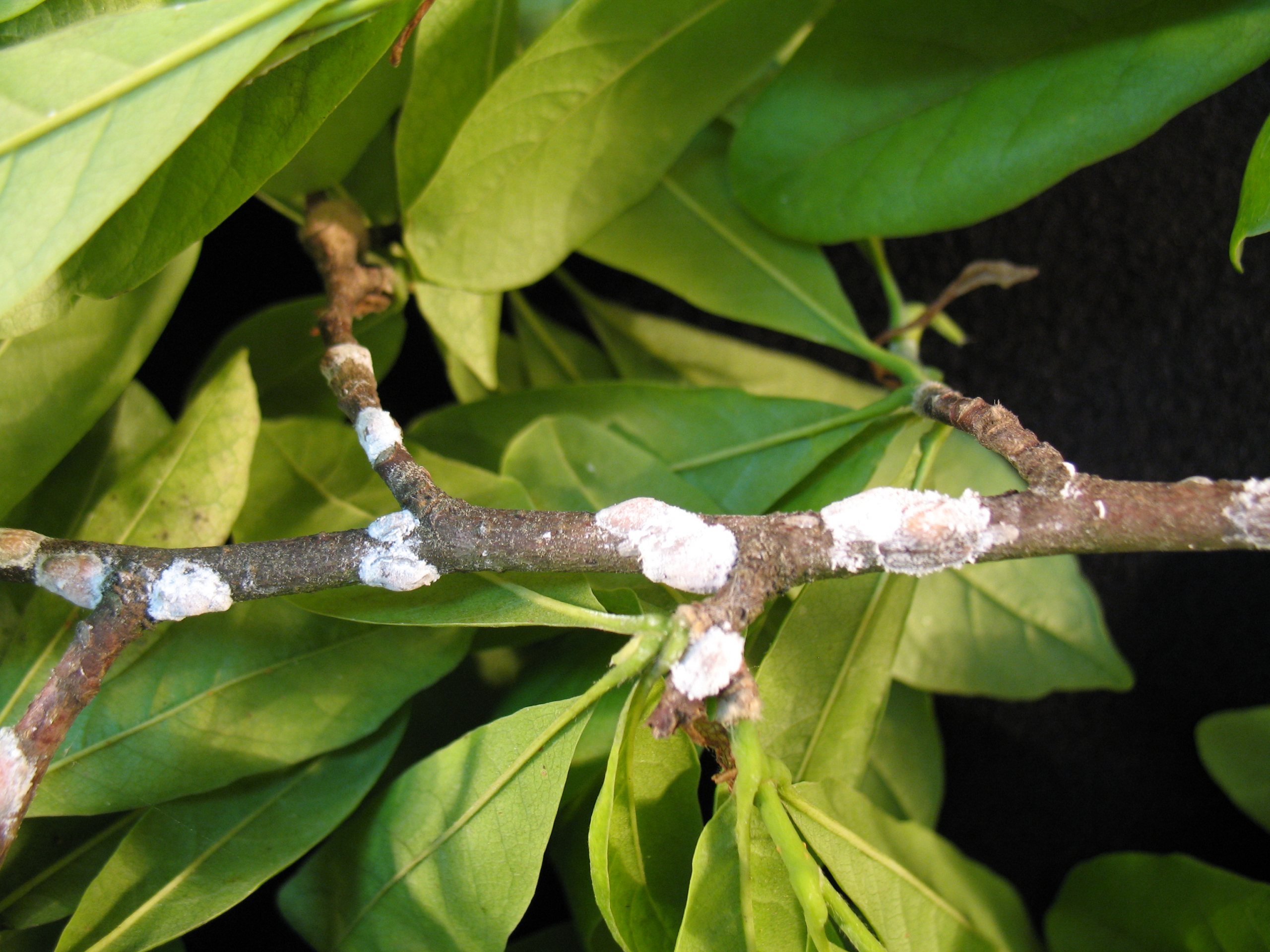
Magnolia scale is the primary pest: Soft-bodied insects cluster on branches, causing honeydew and sooty mold.
Identification: Large (1/4-1/2 inch) brown bumps in late summer.
Control: Horticultural oil or insecticidal soap in crawler stage (early summer); systemic insecticides for severe cases. Encourage natural predators like ladybugs.
Other occasional pests: Weevils (notch leaves), aphids.
Diseases
- Leaf spots (fungal) → Improve air circulation; fungicides rarely needed.
- Sooty mold → Treat underlying scale/honeydew.
Troubleshooting Guide
| Symptom | Likely Cause | Solution |
|---|---|---|
| Yellow leaves | Alkaline soil/iron deficiency | Acidify soil, apply chelated iron |
| Poor blooming | Too young, shade, or over-pruning | Patience, more sun, correct pruning |
| Leaf drop in winter | Normal or winter burn | Protection for young trees |
| Sticky branches | Scale insects | Oil sprays |
Maximizing Blooms and Enjoying Your Magnolia 🌸🍋
The pinnacle reward of growing an Edith Bogue magnolia tree is those spectacular, fragrant blooms. Here’s how to ensure your tree delivers its best performance.
Encouraging Abundant Flowers
Magnolias bloom on mature wood, so young trees (under 5-7 years) may produce few or no flowers—patience is key! Once established, expect reliable blooming starting in late spring.
Key factors for prolific flowering:
- Full sun exposure — At least 6 hours direct sunlight daily.
- Proper pruning timing — Avoid late summer/fall cuts that remove buds.
- Balanced nutrition — Light spring fertilization without excess nitrogen.
- Stress reduction — Consistent moisture and winter protection prevent bud drop.
In cooler zones, blooms may start later (June vs. May) but last longer due to milder temperatures.
Fragrance and Wildlife Benefits
The lemon-scented blooms perfume entire gardens, especially on warm evenings. They’re pollinated primarily by beetles (an ancient trait), making them fascinating for wildlife observers.
The tree attracts bees, butterflies, and birds—seed pods ripen to reveal bright red seeds in fall, a favorite for songbirds. Notably deer-resistant due to tough leaves.
Year-Round Interest
Unlike deciduous magnolias, Edith Bogue provides evergreen structure through winter, with glossy leaves contrasting beautifully against snow. Rusty undersides add subtle fall/winter color when wind flips them.

Expert Tips and Advanced Insights from a Horticulturist 🔍
Drawing from decades of hands-on experience and consultations across cold climates:
- Growth rate → Slow to moderate (12-24 inches/year once established). Expect 10-15 feet in 10 years.
- Propagation → Challenging from seed (requires stratification); professionals use semi-hardwood cuttings or grafting for true-to-type plants.
- Longevity → 100+ years with proper care—many Southern magnolias become legacy trees.
- Ecological role → Supports native pollinators; consider it a sustainable alternative to non-native evergreens in appropriate zones.
Advanced tip: In Zone 6, select grafted specimens over seedlings for proven hardiness. I’ve seen grafted Edith Bogues outperform others dramatically in trials.
For urban gardens, its pollution tolerance makes it ideal for city plantings.
Frequently Asked Questions (FAQs) ❓
Is the Edith Bogue magnolia truly evergreen in Zone 6? Yes—with protection the first few winters, it retains most foliage. Unprotected young trees may drop leaves after severe cold but recover fully.
How fast does it grow? Slow initially (6-12 inches/year), accelerating to 1-2 feet annually once established.
Can it handle heavy snow load? Pyramidal form sheds snow well; occasional branch breakage in wet snow—prune for open structure.
What are the best companion plants for acidic soil? Rhododendrons, azaleas, pieris, camellias, hydrangeas, and shade-tolerant perennials like hostas or ferns.
My tree isn’t blooming—what’s wrong? Common causes: Too young (<7 years), insufficient sun, improper pruning, or nutrient imbalance. Assess site and care routine.
Is it suitable for small yards? Better for medium-large spaces due to mature size. For compact gardens, consider dwarf cultivars like ‘Little Gem’ (less cold-hardy).
Conclusion: Bring Southern Elegance to Your Northern Garden Today! 🌳❤️
The Edith Bogue magnolia tree proves that gardeners in cooler climates don’t have to sacrifice the grandeur of evergreen Southern magnolias. With its exceptional cold hardiness, massive fragrant blooms, glossy foliage, and year-round presence, it delivers unmatched beauty and structure to Zone 6 and warmer landscapes.
From my years of growing and recommending this cultivar, I can confidently say: Plant one, care for it thoughtfully, and you’ll enjoy decades of stunning seasonal displays that turn heads and fill your garden with fragrance.
Ready to transform your landscape? Source a quality Edith Bogue today from a reputable nursery, follow this guide, and watch it become the centerpiece of your garden. Happy planting! 🌿✨











