
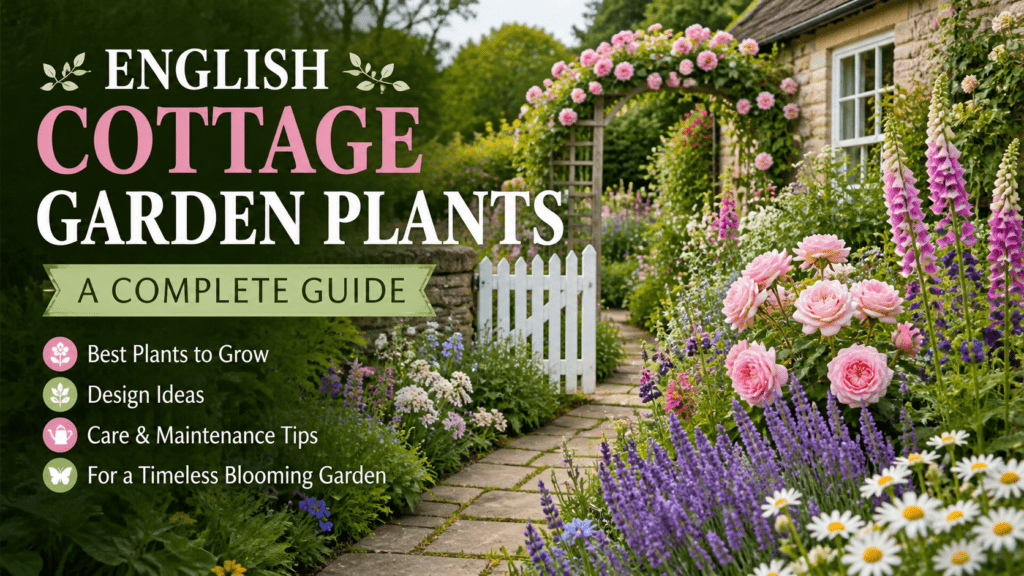
Imagine stepping into your garden and feeling like you’ve wandered into a romantic countryside scene—overflowing flowers, buzzing bees, and soft fragrances drifting through the air 🌿🐝. That’s the magic of english cottage garden plants, a timeless gardening style that blends beauty, abundance, and a touch of wild charm.
But here’s the truth: while cottage gardens look effortlessly natural, creating one that thrives year-round requires thoughtful planning, the right plant choices, and proper care.
If you’ve ever wondered:
- Which plants truly belong in an English cottage garden?
- How do you keep it looking full without becoming messy?
- Can beginners realistically achieve this look?
You’re in the right place 🌸✨
In this expert guide, you’ll learn exactly how to choose, grow, and maintain english cottage garden plants, even if you’re starting from scratch. Whether you have a small yard or a spacious landscape, this guide will help you create a lush, blooming retreat that feels both natural and intentional.
🌷 What Is an English Cottage Garden? (And Why It Still Matters Today)
🌿 Key Characteristics of Cottage Gardens
An English cottage garden is known for its relaxed, informal design. Unlike modern minimalist gardens, this style celebrates abundance and diversity.
Key features include:
- 🌸 Dense planting with little to no bare soil
- 🌿 A mix of flowers, herbs, shrubs, and climbers
- 🌼 A “controlled chaos” look—natural but not neglected
- 🐝 Pollinator-friendly environment
👉 The goal isn’t perfection—it’s harmony through diversity.
🏡 A Brief History
Cottage gardens originated in rural England, where working-class families grew both ornamental flowers and edible plants together 🌱. Over time, this practical approach evolved into the romantic garden style we admire today.
🌸 Why Choose English Cottage Garden Plants Today?
Modern gardeners love this style because it:
- Supports biodiversity and pollinators 🐝
- Works in small and large spaces
- Reduces the need for strict landscaping rules
- Offers long blooming seasons
💡 Expert Insight: Cottage gardens are ideal for gardeners who want maximum visual impact with a natural feel, rather than rigid symmetry.
🌼 Best English Cottage Garden Plants (Top Picks for Every Garden)
Choosing the right plants is the foundation of your garden’s success. Below are expert-recommended options that thrive in cottage-style landscapes.
🌸 Classic Flowering Perennials
These plants return year after year, forming the backbone of your garden.
- 🌹 Roses – The heart of any cottage garden (climbing or shrub varieties)
- 💜 Lavender – Fragrant, drought-tolerant, and pollinator-friendly
- 🌿 Foxgloves – Tall, dramatic spikes for vertical interest
- 💙 Delphiniums – Elegant blooms in shades of blue and purple
- 🌼 Peonies – Large, lush flowers that add romance
💡 Pro Tip: Combine early, mid, and late bloomers for continuous color.
🌻 Easy Annuals for Continuous Color

Annuals fill gaps and provide vibrant seasonal color.
- 🌸 Cosmos – Light, airy blooms perfect for soft textures
- 🌺 Sweet Peas – Climbing flowers with a heavenly scent
- 🌹 Poppies – Add a wild, natural feel
- 🌼 Calendula – Bright and easy to grow
👉 These plants are ideal for beginners looking for quick results.
🌿 Cottage Garden Herbs & Edibles

A true cottage garden blends beauty with function.
- 🌱 Thyme – Great for borders and ground cover
- 🌿 Sage – Adds texture and culinary value
- 🧄 Chives – Edible and decorative flowers
- 🍓 Strawberries – Perfect for small edible patches
💡 Expert Insight: Mixing edibles with ornamentals increases biodiversity and efficiency.
🌼 Climbers & Vertical Interest Plants

Vertical plants add depth and maximize space.
- 🌹 Climbing Roses – Perfect for arches and trellises
- 🌸 Clematis – Long-lasting, colorful climber
- 🍯 Honeysuckle – Fragrant and wildlife-friendly
- 🌿 Ivy – Adds a classic rustic feel
🌸 How to Choose the Right English Cottage Garden Plants
Selecting the right plants isn’t just about aesthetics—it’s about sustainability and long-term success.
🌞 Consider Your Climate & Hardiness Zone
Not all cottage plants thrive everywhere.
- Check your local growing zone
- Choose heat-tolerant or cold-hardy varieties
- Adapt traditional plants to your region
💡 Example: Lavender thrives in dry climates, while foxgloves prefer cooler conditions.
🌱 Soil Type and Preparation
Healthy soil = healthy plants 🌿
- Use compost-rich, well-draining soil
- Test pH levels (most cottage plants prefer neutral to slightly acidic soil)
- Add organic matter regularly
🌼 Plan for Year-Round Blooms
To avoid a garden that looks empty in certain seasons:
- 🌸 Spring: Tulips, foxgloves
- 🌼 Summer: Roses, lavender
- 🍁 Autumn: Asters, dahlias
🐝 Choose Pollinator-Friendly Plants
Support bees, butterflies, and birds 🐝🦋
Best options:
- Lavender
- Coneflowers
- Salvia
- Wildflowers
🌿 Design Principles for a Perfect Cottage Garden Layout
Creating that “effortless” look actually requires smart design.
🎨 Layering Technique (Height & Depth)
Arrange plants in layers:
- Back: Tall plants (delphiniums, hollyhocks)
- Middle: Medium plants (roses, lavender)
- Front: Low-growing plants (thyme, edging flowers)
🌸 Color Combinations That Work
Two popular approaches:
- 🎨 Soft pastels (pink, lavender, white)
- 🌈 Vibrant mixes (reds, yellows, blues)
💡 Stick to a palette for a cohesive look.
🌼 Controlled Chaos: The Secret Formula
- Avoid straight lines
- Let plants self-seed
- Mix plant types naturally
👉 The goal is intentional imperfection.
🪴 Small Space Cottage Garden Ideas
No big yard? No problem!
- Use containers 🌼
- Add vertical trellises 🌿
- Grow climbing plants on walls
🌷 Planting Guide: Step-by-Step for Beginners
🛠️ Prepare Your Garden Bed
- Remove weeds
- Loosen soil
- Add compost
🌱 Planting Techniques
- Group plants in clusters (not rows)
- Space properly to avoid overcrowding
- Mix textures and heights
💧 Watering Best Practices
- Water deeply but less frequently
- Early morning watering is best
- Avoid wetting leaves to prevent disease
🌸 Care & Maintenance of English Cottage Garden Plants
Even low-maintenance gardens need some care 🌿
✂️ Pruning and Deadheading
- Encourages new blooms 🌸
- Keeps plants tidy
🌿 Fertilizing Schedule
- Use organic compost or slow-release fertilizers
- Feed during growing season
🐛 Pest and Disease Management
- Use natural solutions (neem oil, companion planting)
- Encourage beneficial insects 🐞
🌼 Seasonal Care Tips
- 🌸 Spring: Plant and fertilize
- ☀️ Summer: Water and deadhead
- 🍁 Autumn: Prune and mulch
- ❄️ Winter: Protect plants
❌ Common Mistakes to Avoid (Expert Insights for Long-Term Success)
Even experienced gardeners can struggle with maintaining the balance of an English cottage garden. Avoiding these common mistakes will save you time, money, and frustration 🌿
🚫 1. Overcrowding Without Planning
It’s tempting to pack in as many plants as possible—but overcrowding can lead to:
- Poor air circulation 🌬️
- Increased disease risk
- Stunted growth
💡 Expert Tip: Follow recommended spacing, then gradually fill gaps with self-seeding plants.
🚫 2. Ignoring Soil Health
Many gardeners focus only on plants, but soil is the foundation of everything.
Signs of poor soil:
- Weak growth
- Yellowing leaves
- Low flowering
👉 Improve soil with compost, mulch, and organic matter regularly.
🚫 3. Choosing Plants Unsuited to Your Climate
Not all traditional english cottage garden plants thrive in every region.
- Avoid forcing plants into unsuitable conditions
- Opt for locally adapted varieties
💡 Pro Insight: Native alternatives often perform better while maintaining the same aesthetic.
🚫 4. Lack of Maintenance
The “wild” look doesn’t mean neglect.
Without maintenance:
- Plants become invasive
- Flowering declines
- Garden loses structure
👉 Regular pruning and seasonal care are essential.
🌟 Pro Tips for a Truly Stunning Cottage Garden
Want your garden to stand out like a professional design? These expert strategies make all the difference 🌸✨
🌿 1. Mix Textures and Shapes
Combine:
- Spiky flowers (delphiniums)
- Soft blooms (roses, peonies)
- Airy fillers (cosmos)
👉 This creates visual depth and interest.
🌼 2. Let Nature Do Some Work
- Allow plants to self-seed 🌱
- Embrace natural spreading
💡 This reduces effort and enhances authenticity.
🐝 3. Create a Pollinator Haven
Add:
- Water sources 💧
- Native flowering plants
- Shelter areas
👉 A thriving ecosystem keeps your garden healthy.
🪵 4. Add Rustic Elements
Enhance the cottage feel with:
- Wooden fences
- Stone pathways
- Vintage garden decor
🌸 5. Plant in Drifts, Not Lines
Avoid rigid rows. Instead:
- Group plants in clusters
- Repeat patterns naturally
👉 This mimics how plants grow in nature.
🌼 Real-Life Example: A Simple Cottage Garden Planting Plan
Here’s a beginner-friendly layout you can replicate 🌿
🌸 Front Yard Layout (Small Space)
- 🌼 Front border: Thyme, alyssum
- 🌿 Middle layer: Lavender, salvia
- 🌹 Back layer: Roses, foxgloves
🌿 Backyard Layout (Medium Space)
- 🌸 Climbing roses on trellis
- 🌼 Mixed flower beds (cosmos, peonies, delphiniums)
- 🍓 Edible corner with herbs and strawberries
💡 Budget-Friendly Plant List
- Start with seeds (cosmos, calendula)
- Add a few perennials each season
- Divide existing plants to expand your garden
🌸 FAQs About English Cottage Garden Plants
❓ What are the easiest english cottage garden plants for beginners?
Start with:
- Lavender 🌿
- Cosmos 🌸
- Calendula 🌼
- Roses 🌹
These are hardy, low-maintenance, and widely adaptable.
❓ Can I create a cottage garden in a small space?
Absolutely! 🪴
Use:
- Containers
- Vertical gardening
- Compact plant varieties
👉 Even a balcony can become a mini cottage garden.
❓ How do I keep my garden from looking messy?
- Prune regularly ✂️
- Maintain plant boundaries
- Use structured elements (paths, borders)
💡 Think of it as organized chaos, not neglect.
❓ Are cottage gardens really low maintenance?
They are moderate maintenance:
- Less rigid than formal gardens
- But still require regular care
👉 The payoff is a long-lasting, dynamic display 🌸
🌿 Conclusion: Create Your Own Timeless English Cottage Garden
Designing a garden filled with english cottage garden plants is more than just planting flowers—it’s about creating a living, breathing space that evolves with time 🌸🌿
By choosing the right plants, understanding your environment, and applying thoughtful design principles, you can transform any outdoor space into a lush, romantic retreat











