
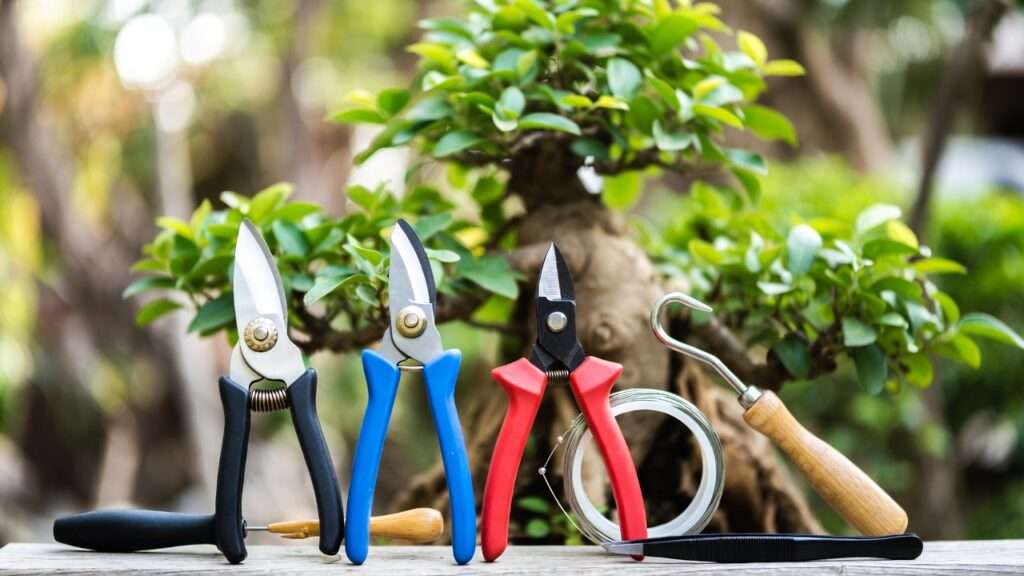
Have you ever brought home your first bonsai tree, full of excitement to style and care for it, only to realize you have no idea which tools are actually necessary? 😅 You’re staring at endless online kits promising “everything you need,” but deep down you worry about wasting money on gadgets that gather dust—or worse, buying cheap tools that damage your precious tree.
If that sounds familiar, you’re in the right place. Essential bonsai tools for beginners are surprisingly few in number, but choosing the right ones makes all the difference between frustrating, messy cuts and clean, professional-looking results that help your tree thrive.
As someone who’s been nurturing bonsai collections for over a decade—starting with a tiny juniper seedling in a Dhaka balcony and growing into mentoring local enthusiasts—I’ve tested countless tools, learned from costly mistakes, and studied insights from masters at Bonsai Mirai, Eastern Leaf, and Japanese suppliers. This guide is the comprehensive, no-fluff resource I wish existed when I started: a curated starter kit, real-world usage tips, budget breakdowns, and pro advice to help you begin confidently without overwhelm. Let’s turn that beginner confusion into calm competence! 🌿💚
Why the Right Tools Matter for Bonsai Beginners 🌟
Bonsai isn’t just about pretty mini trees—it’s a living art that requires precise cuts to direct growth, shape branches, and maintain health. The wrong tool (like dull household scissors) can crush stems, invite disease, or leave ugly scars that take years to heal.
Good tools make clean cuts that callus over smoothly, reduce tree stress, and boost your confidence. Beginners often fall into two traps: buying massive 20+ piece kits filled with rarely-used items, or skimping on low-quality imports that dull quickly and rust.
The sweet spot? Focus on 5–8 core essentials first. With smart choices, you can build a functional starter set for $80–$200 that lasts years. Quality matters more than quantity—sharp Japanese steel holds an edge longer and respects your tree’s delicate tissues. Investing wisely now saves money and heartache later.
Core Essential Bonsai Tools: The Must-Have 7 🔧
Here’s the battle-tested lineup every beginner needs. These cover 90% of daily tasks: pruning foliage, removing branches, wiring for shape, and basic repotting. I’ve prioritized them by frequency of use.
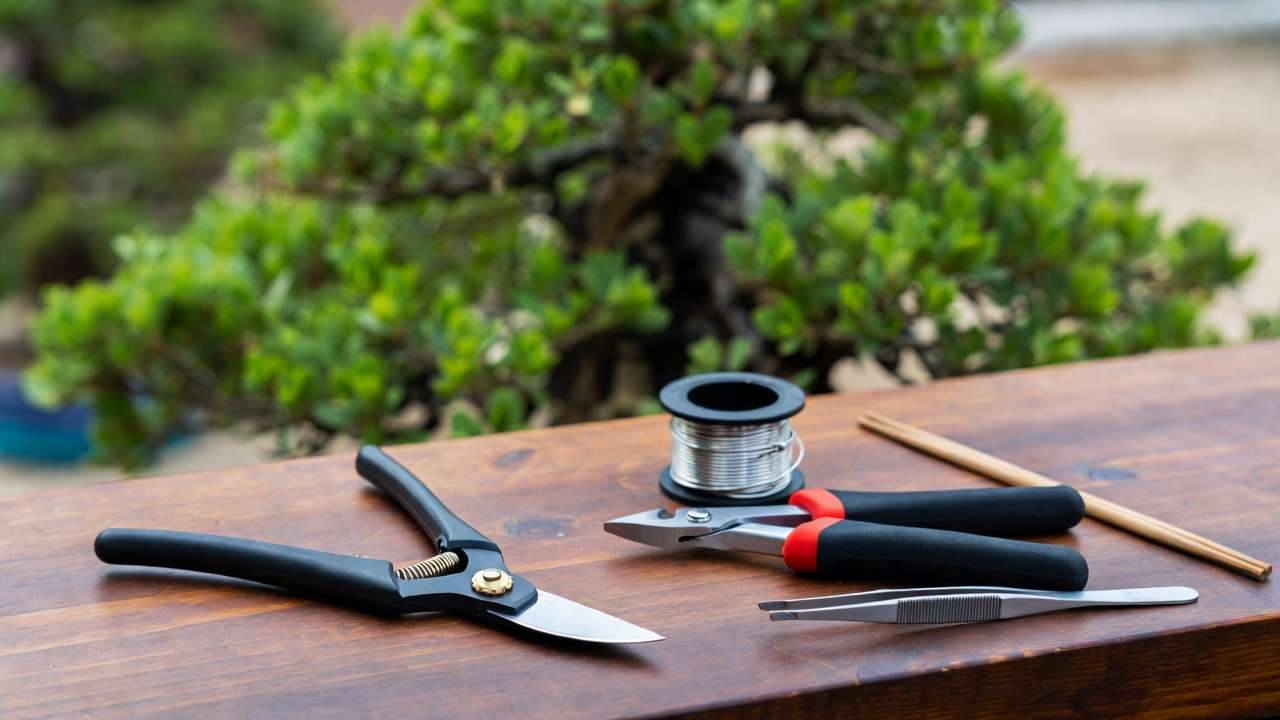
1. Pruning Shears / Bonsai Scissors ✂️
Your #1 tool—the one you’ll reach for almost every session. These specialized shears deliver pinpoint, clean cuts on leaves, twigs, and small branches without crushing.
Key features to seek:
- Sharp, high-carbon or stainless steel blades (Japanese brands excel here)
- Ergonomic handles for comfort during long sessions
- Size around 180–210mm for most hands and trees
How to use:
- For foliage: Pinch-prune new growth to encourage back-budding
- For roots (during repotting): Trim circling roots cleanly
- Technique tip: Cut at a slight angle, close to a node, to promote healing
Budget option (~$15–$30): Stainless steel from reputable Amazon sellers like SOLIGT or Tinyroots. Premium pick: Kaneshin or Masakuni (~$60–$120)—they stay razor-sharp for years with proper care.
Pro tip: Wipe blades with alcohol after use and oil lightly to prevent rust. 🧼✨
2. Concave Branch Cutter (The Real Game-Changer) 🌳
This is the tool that separates amateur from intentional bonsai work. It removes branches flush with a slight concave dip, so the wound heals flat with minimal scarring—no ugly knobs left behind.
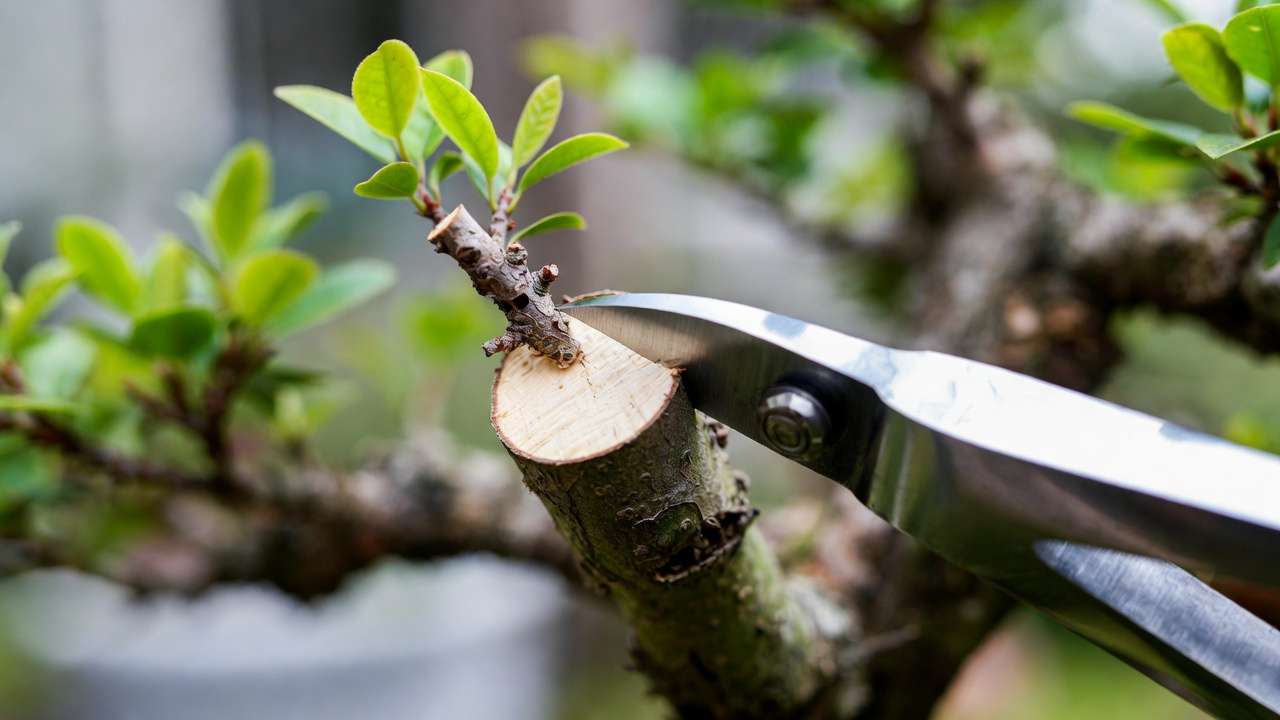
Why it’s essential: Regular pruners or pliers leave protruding stubs that die back and look messy. The concave design promotes fast callusing.
Standard vs. knob/spherical cutter:
- Concave: Best for side branches along the trunk (most versatile for beginners)
- Knob: For removing branch collars or stubs in tight spots (deeper spherical cut)—great upgrade later
Step-by-step use:
- Position blades perpendicular to the branch
- Cut slightly outside the branch collar
- Angle toward the trunk for a natural dip Limit to branches under 1–1.5 cm thick at first
Common mistake: Using household wire cutters—they crush instead of slice. 🚫
Starter sizes: 180–205mm. Brands like Kaneshin, Ryuga, or Roshi offer excellent value (~$40–$90).
3. Wire Cutters (Specialized Bonsai Style) 🔩
Never use regular pliers—they nick bark and make removal painful. Bonsai wire cutters have angled, sharp jaws designed to slice annealed wire cleanly without damaging branches.
Japanese-style vs. compound: Japanese (leveraged) are precise for small work; compound offer more power for thicker wire.
How to use safely:
- Cut wire at an angle away from the branch
- Support the branch while snipping to avoid vibration damage
Pair with aluminum wire for beginners (softer, easier to apply/remove).
4. Bonsai Training Wire (Aluminum or Copper) 🌀
Wiring shapes branches—without it, your bonsai stays stiff and natural-looking (but not artistic!).
Golden rule: Wire thickness should be about 1/3 the branch diameter for good holding power without biting in.
- Aluminum: Beginner-friendly, soft, reusable, anodized colors (easy to spot)
- Copper: Stronger hold, better for conifers, harder to apply/remove (save for later)
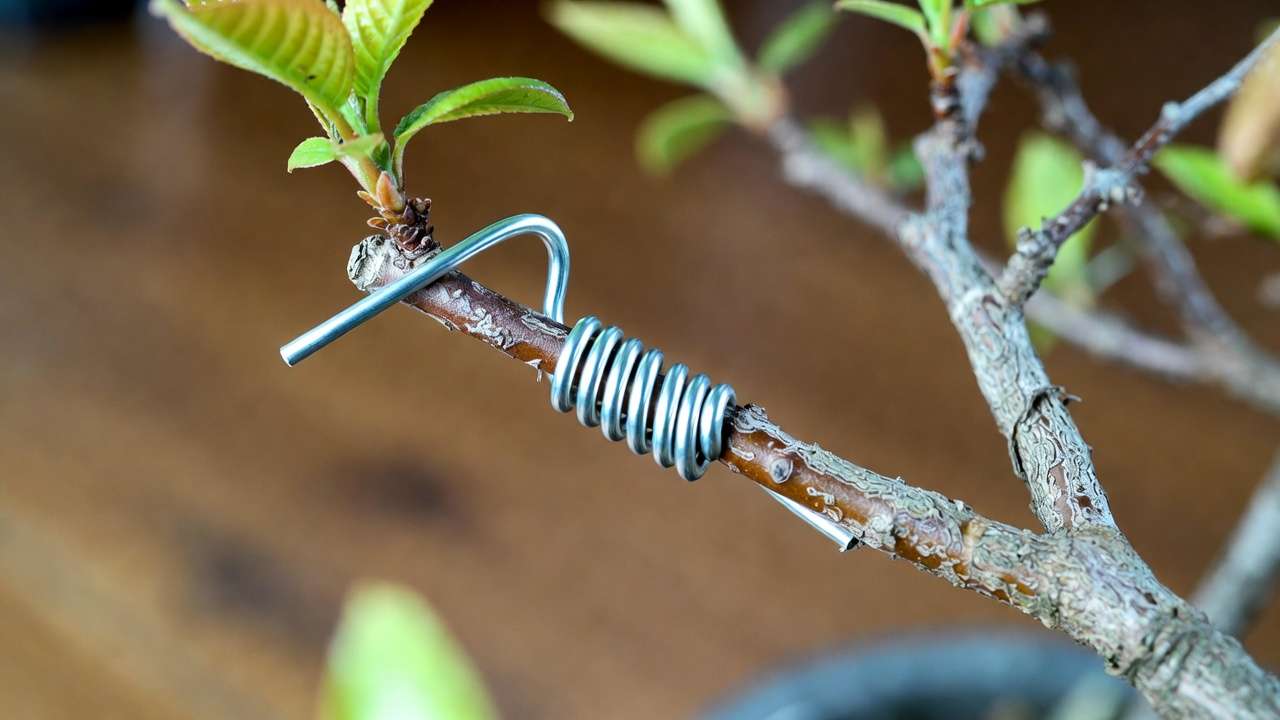
Application tips:
- Anchor at base, wrap at 45° angle
- Remove after 3–12 months (depending on species/growth) before it scars
Buy 1–4mm rolls (~$10–$20 for starters).
5. Root Hook / Rake & Chopsticks (Repotting Heroes) 🏺
Repotting is key to bonsai health—tools here prevent root tearing.
- Bamboo chopsticks: Free/cheap, perfect for gently teasing roots apart and removing old soil
- 3-prong root rake: Combs through roots, removes debris
- Hook: For stubborn compacted soil
Many beginners use just chopsticks successfully at first!
6. Tweezers with Spatula (Detail Work Essential) 🪶
Precision is bonsai’s heart. These angled tweezers pluck needles, remove buds, clean bark crevices, and tamp soil. The spatula end levels soil during repotting.
Multi-use magic tool—cheap (~$10–$25) but indispensable.
7. Turntable / Working Stand (Optional but Game-Changing) 🔄
A rotating base lets you view your tree from all angles without moving it—huge for styling symmetry.
Cheap DIY: Lazy Susan from a hardware store (~$10). Dedicated bonsai turntables (~$30–$80) are sturdy and grippy.
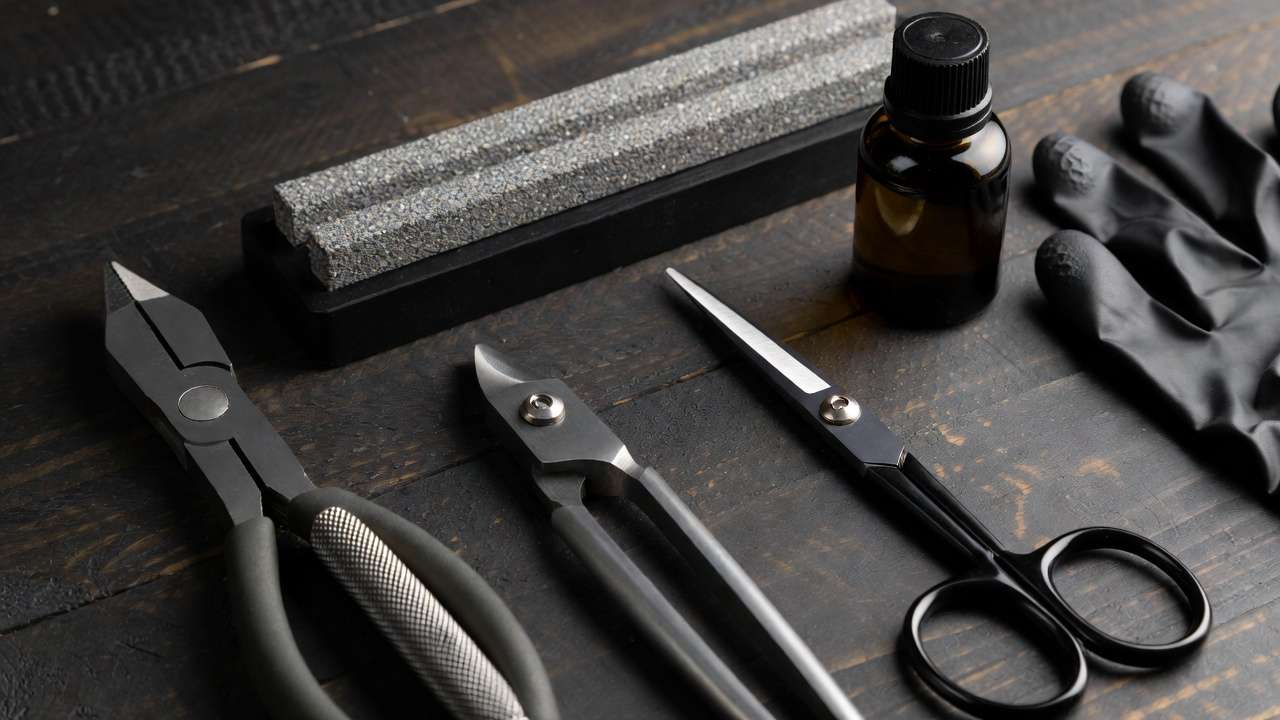
Bonus Helpful Tools for Beginners (Level Up Without Overbuying) 🎁 Once you master the core 7, these extras make sessions smoother and open creative doors—add them gradually as your skills (and budget) grow.
- Jin Pliers (for creating deadwood/jin): These grip and tear bark to mimic natural aging. Fun for shari work, but wait until you’re comfortable with basic styling—improper use can harm live tissue. (~$30–$70, brands like Kaneshin or Roshi)
- Root Shears / Root Cutters: Larger, heavier-duty shears for thick roots during repotting. If your starter shears handle small roots fine, delay this one. (~$40–$90)
- Leaf Cutters / Defoliation Scissors: Tiny, curved blades for precise needle or leaf removal (great for pines/junipers). Not urgent for most deciduous starters. (~$20–$50)
- Tool Care Kit (sharpening stone, camellia oil, cleaning brush): Essential for longevity! A simple 1000/6000 grit combo water stone (~$25–$50) keeps edges razor-sharp. Oil prevents rust on carbon steel.
- Gloves & Apron 👩🌾: Thin nitrile gloves protect hands from sap/resin; a shop apron keeps clothes clean during messy wiring or soil work. Cheap and practical!
Adding these piecemeal prevents overwhelm—many pros started with just the basics and upgraded over years.
Budget Breakdown & Buying Guide 💰
Smart shopping means quality without breaking the bank. Here’s a realistic 2026 roadmap (prices approximate, based on current reputable sources like Bonsai Outlet, Eastern Leaf, Stone Lantern, and Amazon verified sellers).
Starter Setup Under $100 (Bare Essentials – Great for Testing the Hobby):
- Pruning shears: $20–$35 (Eastern Leaf or Roshi stainless)
- Concave cutter: $30–$45 (budget Japanese-style from Tinyroots or Wazakura)
- Wire cutters: $15–$25
- Aluminum wire assortment (1–4mm): $15
- Chopsticks + basic tweezers: $10–$15 Total: ~$90–$135 – Covers pruning, basic wiring, and repotting. Perfect if you’re unsure about commitment.
Mid-Range Sweet Spot ($150–$300) – Lifetime Quality Tools:
- Upgrade to Kaneshin or Ryuga shears & concave (~$80–$150 total for both)
- Better wire cutters (~$40)
- Full wire set + root rake/tweezers (~$50)
- Add a sharpening stone (~$30) Total: ~$200–$300 – These hold edges longer, feel balanced, and rarely need replacement. Many enthusiasts stop here forever.
Premium Path ($400+): Masakuni, Joshua Roth, or full Japanese sets—beautiful but overkill for most beginners.
Recommended Brands in 2025–2026:
- Best Value/Quality Balance: Kaneshin, Ryuga, Roshi, Wazakura, American Bonsai (stainless options resist rust)
- Beginner-Friendly & Affordable: Eastern Leaf, Tinyroots, Bonsai Outlet house brands
- Premium/Traditional: Masakuni, Kikuwa, Fujin (if sourcing from Japan) Avoid no-name Amazon kits under $30—they dull fast and frustrate. Check reviews for “sharp out of box” and “holds edge.”
Tool Kit vs. Individual Purchases:
| Option | Pros | Cons | Best For |
|---|---|---|---|
| Pre-made Kit | Convenient, often discounted | May include extras you skip | Total newbies |
| Buy Individual | Pick exact quality/sizes | Slightly higher upfront cost | Serious starters |
Pro tip: Start individual for the concave cutter and shears—they’re most-used and worth investing in first.
How to Use Your Starter Kit: Step-by-Step Beginner Workflow 🌿
Follow this simple sequence for your first few sessions—practice on sacrificial branches if nervous!
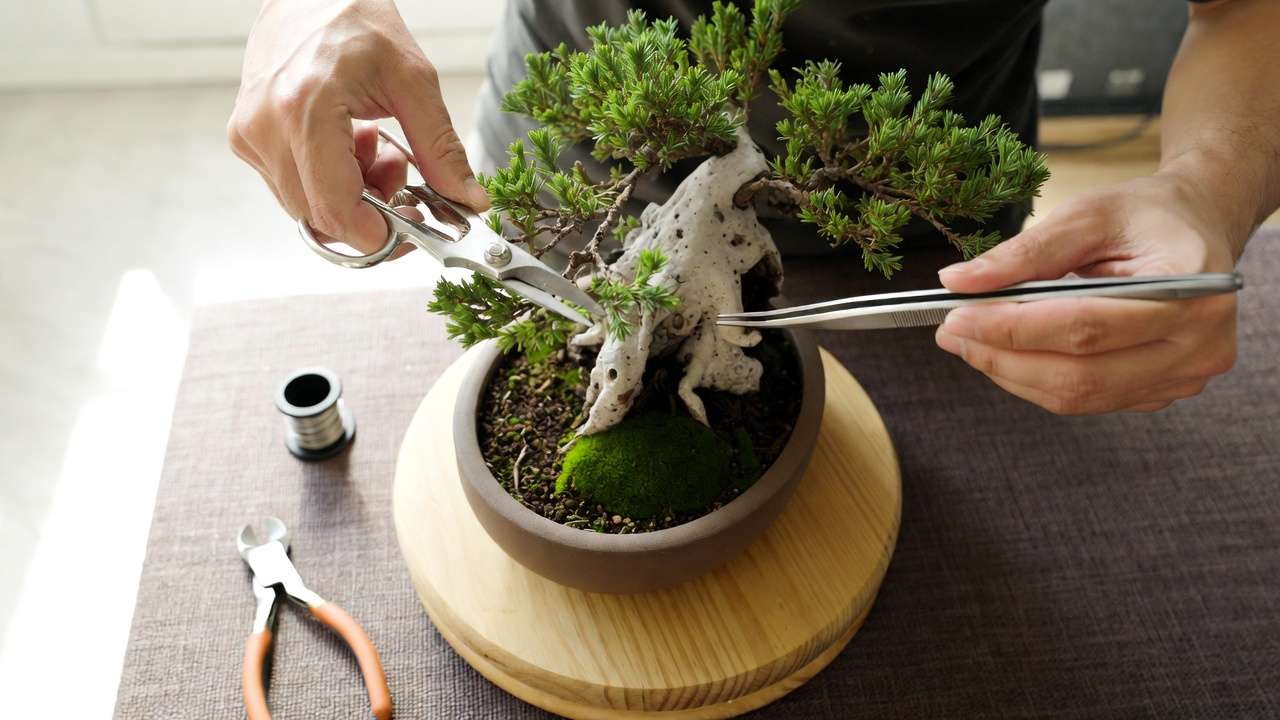
- Initial Inspection & Cleaning 🧹 Use tweezers to remove dead needles/leaves and old soil bits. Wipe trunk with a soft brush.
- Basic Pruning Session ✂️
- Spot long shoots or crossing branches
- Use shears for foliage pinch (thumb & finger technique)
- Switch to concave cutter for thicker side branches (cut flush)
- Wiring Your First Branch 🌀
- Select branch needing bend
- Anchor wire at base, coil at 45° (1/3 thickness rule)
- Bend gently—listen for creaks!
- Trim excess with wire cutters
- Repotting Basics 🏺
- Use chopsticks/root rake to tease old soil
- Trim circling roots with shears
- Level new soil with spatula end of tweezers
- Maintenance Routine (Weekly/Monthly)
- Weekly: Pinch new growth, check wire tightness
- Monthly: Clean tools, oil blades, inspect for pests
Follow this flow and your tree responds beautifully—healthier, denser branching in months!
Common Beginner Mistakes & How to Avoid Them ⚠️
- Buying oversized “pro” tools: Too heavy/awkward for small trees—stick to 180–210mm sizes.
- Skipping sharpening: Dull blades tear instead of cut → disease risk. Sharpen every 10–20 hours of use.
- Wiring too tightly/long: Scars form fast—check monthly and remove before bark embeds.
- Using household scissors on roots: They crush fibers—always use dedicated bonsai shears.
- Overbuying kits: Focus on the 7 essentials first; extras come later.
Avoid these and you’ll progress faster with happier trees!
Expert Insights & Pro Tips from Years of Practice 🌟
From forums, Mirai Live sessions, and personal trial/error:
- “The concave cutter is worth every penny—it’s the one tool that instantly makes cuts look intentional.” (Echoed across Bonsai Nut, Reddit r/Bonsai)
- Seasonal rhythm: Spring/summer = heavy wiring & pruning; fall/winter = tool sharpening & planning.
- Tool longevity secret: Clean sap immediately (alcohol wipe), oil carbon steel weekly, store dry. A $20 sharpening stone pays for itself quickly.
- Upgrade timing: When your current tools feel “dull” even after sharpening, or when handling larger trees—then splurge on premium.
- Personal note (from my Dhaka balcony days): Start small, one tree at a time. Tools are enablers—patience and observation grow the art. 🌳
Frequently Asked Questions (FAQs) ❓
Do I really need Japanese-made tools to start? No—good stainless Chinese brands (Eastern Leaf, Roshi) perform excellently for beginners and cost less. Japanese shine for lifetime use.
What’s the bare-minimum 3-tool starter set? Pruning shears, concave cutter, and aluminum wire + basic wire cutters. Covers most styling needs!
Aluminum or copper wire for beginners? Aluminum—easier to bend/remove, forgiving on young branches.
How do I sharpen bonsai shears at home? Use a 1000-grit water stone: Hold at 15–20° angle, push forward 10–15 strokes per side, finish on 6000 grit for polish. Watch free YouTube tutorials from Bonsai Tonight or Mirai for visuals.
Are expensive kits worth it for total newbies? Not usually—better to buy 4–5 quality individuals than a 20-piece cheap set. Focus on shears & concave first.
Conclusion: Start Your Bonsai Journey with Confidence! 🚀
There you have it—the complete, no-nonsense guide to essential bonsai tools for beginners that solves the overwhelming “what do I buy?” question once and for all. With this curated starter kit, practical workflows, and pro tips, you’re equipped to prune cleanly, shape safely, and watch your mini-tree thrive.
Bonsai rewards patience and care—grab those must-haves, sit with your tree, and enjoy the meditative magic. Your first clean concave cut or perfectly wired branch will feel incredibly satisfying! 🌿
Ready to get started? Drop a comment: What’s your first bonsai species, or which tool are you buying first? I’d love to cheer you on and answer questions. Happy styling! 💚✂️











