
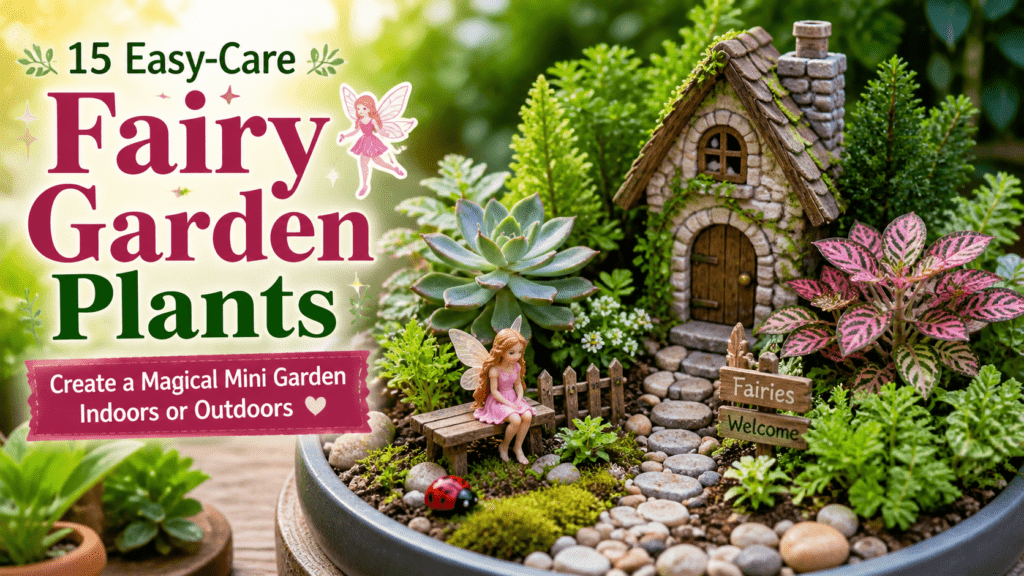
Imagine stepping into your garden or glancing at your windowsill and discovering a tiny, magical world—lush greenery, delicate textures, and miniature landscapes that feel like something straight out of a fairy tale 🌿🧚. That’s the charm of fairy gardens.
But here’s the reality: many beginners struggle because they choose the wrong fairy garden plants—plants that grow too fast, need too much care, or simply don’t thrive in small spaces. The result? A once-beautiful mini garden quickly becomes overgrown or unhealthy.
As someone with years of hands-on experience in plant care and container gardening, I’ve seen firsthand what works—and what doesn’t. In this guide, you’ll discover 15 easy-care fairy garden plants, plus expert design and maintenance tips to help your miniature garden flourish—whether indoors or outdoors.
Let’s turn your vision into a thriving, magical reality 🌸✨
Table of Contents
Toggle🌸 What Are Fairy Garden Plants? 🪴
Fairy garden plants are small, slow-growing, and low-maintenance plants that are perfect for miniature landscapes. They mimic the look of full-sized gardens but on a tiny, decorative scale.
🌱 Key Characteristics:
- 🌿 Compact size – Naturally small or easy to prune
- 🪴 Container-friendly – Thrive in pots, trays, or terrariums
- 💧 Low maintenance – Require minimal care once established
- 🌞 Adaptable – Suitable for both indoor and outdoor setups
🌞 Indoor vs Outdoor Fairy Garden Plants
| Feature | Indoor 🌿 | Outdoor 🌳 |
|---|---|---|
| Light | Bright indirect light | Full sun or partial shade |
| Plant types | Tropical, moss, small foliage | Hardy, drought-tolerant |
| Maintenance | Controlled environment | Weather-dependent |
💡 Expert Tip: The biggest mistake beginners make is mixing plants with different needs—like succulents and moss. Always group plants with similar care requirements.
🧚 How to Choose the Best Fairy Garden Plants 🌿
Choosing the right plants is the foundation of a successful fairy garden. Here’s how to do it like a pro 👇
🌞 Consider Light Requirements
- Indoor gardens need bright, indirect sunlight
- Outdoor gardens can handle full sun or partial shade
👉 Match plants to your light conditions to avoid stress or stunted growth.
💧 Understand Watering Needs
- Succulents need very little water
- Moss and tropical plants prefer consistent moisture
⚠️ Never mix drought-tolerant and moisture-loving plants in the same container.
🌡️ Climate Compatibility
- Outdoor fairy gardens must suit your local climate
- Indoor plants should tolerate stable temperatures
🌍 This is especially important in humid or tropical regions.
🪴 Growth Rate & Maintenance
- Choose slow-growing varieties
- Avoid aggressive spreaders
✂️ This keeps your garden looking neat and proportional.
⚠️ Common Mistakes to Avoid
- Overcrowding plants
- Ignoring drainage holes
- Using regular garden soil instead of well-draining mix
💡 Healthy roots = thriving fairy garden.
🌼 15 Best Fairy Garden Plants (Easy-Care Picks) 🌿✨
Here are the best beginner-friendly plants that actually thrive in miniature gardens:
🌵 Succulents & Drought-Tolerant Plants

1. 🌵 Baby Jade Plant (Portulacaria afra)
- Looks like a tiny tree 🌳
- Perfect for bonsai-style fairy gardens
2. 🌵 Echeveria
- Rosette-shaped and visually stunning 🌸
- Needs minimal watering
3. 🌵 Haworthia
- Great for indoor setups
- Tolerates low light better than most succulents
4. 🌵 Sedum (Stonecrop)
- Fast-spreading but manageable
- Ideal for ground cover
👉 Best for: Beginners who want low-maintenance plants
🌾 Mosses & Ground Covers (Magical Carpet Effect)

5. 🌿 Irish Moss
- Soft, lush, and vibrant green
- Creates a magical “grass” effect
6. 🌿 Scotch Moss
- Slightly yellow-green tone
- Adds color variation
7. 🌿 Baby Tears (Soleirolia soleirolii)
- Delicate and dense
- Perfect for indoor fairy gardens
👉 Best for: Creating a dreamy, fairy-like landscape
🌸 Flowering Mini Plants

8. 🌸 Mini African Violets
- Thrive indoors
- Produce charming purple blooms
9. 🌸 Dwarf Kalanchoe
- Succulent with bright flowers
- Very low maintenance
10. 🌸 Miniature Roses
- Add elegance and realism 🌹
- Need sunlight and care
👉 Best for: Adding color and focal points
🌳 Mini Trees & Structural Plants

11. 🌳 Dwarf Juniper
- Great for outdoor fairy gardens
- Adds structure and height
12. 🌳 Bonsai Ficus
- Perfect indoor tree option
- Easy to shape and maintain
13. 🌳 Small Fern Varieties
- Thrive in shade
- Add soft, woodland vibes
👉 Best for: Creating depth and realism
🍀 Unique & Whimsical Additions

14. 🍀 Polka Dot Plant
- Bright, colorful leaves
- Adds playful charm
15. 🍀 Fittonia (Nerve Plant)
- Unique vein patterns
- Perfect for indoor fairy gardens
👉 Best for: A whimsical, magical aesthetic 🧚
🪴 How to Design a Fairy Garden That Thrives 🏡✨
Creating a fairy garden isn’t just about plants—it’s about storytelling and design.
🧚 Choosing the Right Container
- 🪴 Pots, trays, or repurposed containers
- 🏺 Broken pots for layered designs
- 🌐 Terrariums for indoor setups
🌿 Soil & Drainage Essentials
- Use well-draining potting mix
- Add sand or perlite for aeration
- Ensure drainage holes
💡 Poor drainage = root rot risk
🏡 Layout & Plant Arrangement Tips
- Front: ground cover 🌿
- Middle: medium plants 🌸
- Back: taller plants 🌳
🎨 Think like a landscape designer—balance and proportion matter.
🎍 Decorative Elements
- Mini houses 🏠
- Pebble pathways
- Tiny benches and figurines 🧚
👉 These bring your fairy garden to life!
💧 Essential Care Tips for Fairy Garden Plants 🌱
🌞 Light & Placement
- Indoor: near windows
- Outdoor: adjust based on plant type
💦 Watering Schedule
- Succulents: every 1–2 weeks
- Moss/tropicals: keep moist
✂️ Pruning & Maintenance
- Trim regularly to maintain scale
- Remove dead leaves
🌱 Fertilizing Basics
- Use diluted liquid fertilizer monthly
- Avoid overfeeding
🐛 Pest Control
- Watch for aphids and mites
- Use neem oil if needed
⚠️ Common Problems & How to Fix Them 🚨
| Problem | Cause | Solution |
|---|---|---|
| Yellow leaves | Overwatering | Reduce watering |
| Dry plants | Underwatering | Increase moisture |
| Root rot | Poor drainage | Repot with better soil |
| Leggy growth | Lack of light | Move to brighter spot |
🌍 Indoor vs Outdoor Fairy Gardens 🌿
🏡 Indoor
✔ Controlled environment
✔ Great for small spaces
🌳 Outdoor
✔ More natural growth
✔ Larger design possibilities
💡 Expert Insight: Beginners often succeed faster with indoor fairy gardens.
💡 Expert Tips to Make Your Fairy Garden Stand Out ✨
- 🎨 Mix textures and colors
- 🌿 Rotate plants seasonally
- 🧚 Create themes (forest, desert, beach)
- 📸 Keep it visually appealing for sharing
❓ FAQs About Fairy Garden Plants 🌱
🌿 What plants stay small for fairy gardens?
Succulents, moss, bonsai, and miniature foliage plants are ideal.
🌞 Can fairy garden plants survive indoors?
Yes—many thrive with proper light and care.
💧 How often should I water fairy garden plants?
Depends on plant type—succulents need less, moss needs more.
🪴 Do fairy gardens need special soil?
Yes—well-draining soil is essential.
🌵 Are succulents good for fairy gardens?
Absolutely—they’re low maintenance and visually appealing.
🌟 Conclusion: Start Your Magical Garden Today 🧚✨
Creating a fairy garden isn’t just about decoration—it’s about crafting a tiny world that brings joy, creativity, and calm into your life 🌿💚
By choosing the right fairy garden plants, understanding their needs, and designing thoughtfully, you can build a miniature garden that thrives for years.
Start small, experiment, and let your imagination guide you 🌸✨











