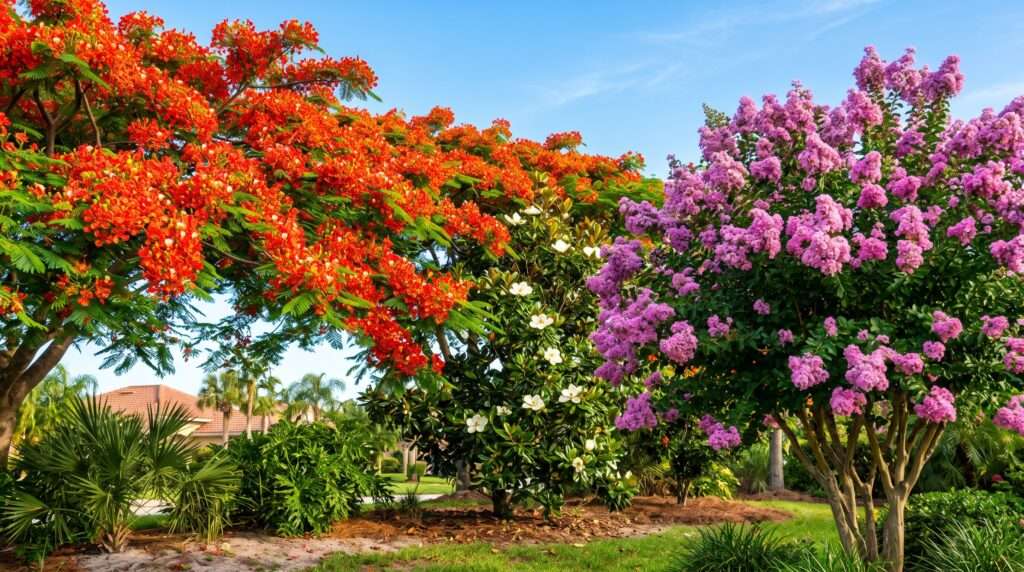
Walk into any big-box garden center in March, and it is almost impossible not to fall in love. Rows of lush, bloom-heavy trees promise to turn your yard into a tropical postcard. Yet by late August, thousands of Florida homeowners are staring at the exact same heartbreak: scorched leaf margins, black fungal spots, dropped flower buds, and trunks slowly succumbing to root rot.
Finding truly reliable FL flowering trees is not about picking the prettiest nursery tag—it is about choosing genetics built to endure relentless UV radiation, 90 percent summer humidity, nutrient-poor sandy soil, and nights that refuse to cool below 78°F.
Drawing on University of Florida IFAS Extension research, Florida-Friendly Landscaping™ principles, and years of hands-on arboriculture experience across the state, this guide cuts through the nursery hype. Below are 10 battle-tested, heat-tolerant flowering trees that do not just survive Florida’s brutal summers—they put on their best show because of them. 🌴✨
🌿 Quick Picks for Busy Homeowners:
Best for North & Central Florida: Southern Magnolia (Magnolia grandiflora) & Fringe Tree (Chionanthus virginicus)
Best for South Florida & Coastal Yards: Royal Poinciana (Delonix regia) & Orange Geiger Tree (Cordia sebestena)
Best for Small Suburban Yards: Dwarf Crape Myrtle & Simpson’s Stopper (Myrcianthes fragrans)
Why Florida’s Climate Breaks Most Flowering Trees (And How to Beat It) 🌡️💧
Florida is not a single gardening zone; it is a patchwork of microclimates stretching from USDA Hardiness Zone 8b in the Northwest Panhandle all the way to Zone 11b in the Florida Keys. Following the most recent USDA Plant Hardiness Zone Map updates, much of the state shifted roughly half a zone warmer—putting metro areas like Orlando and Tampa solidly into Zone 10a and Miami into Zone 11a.
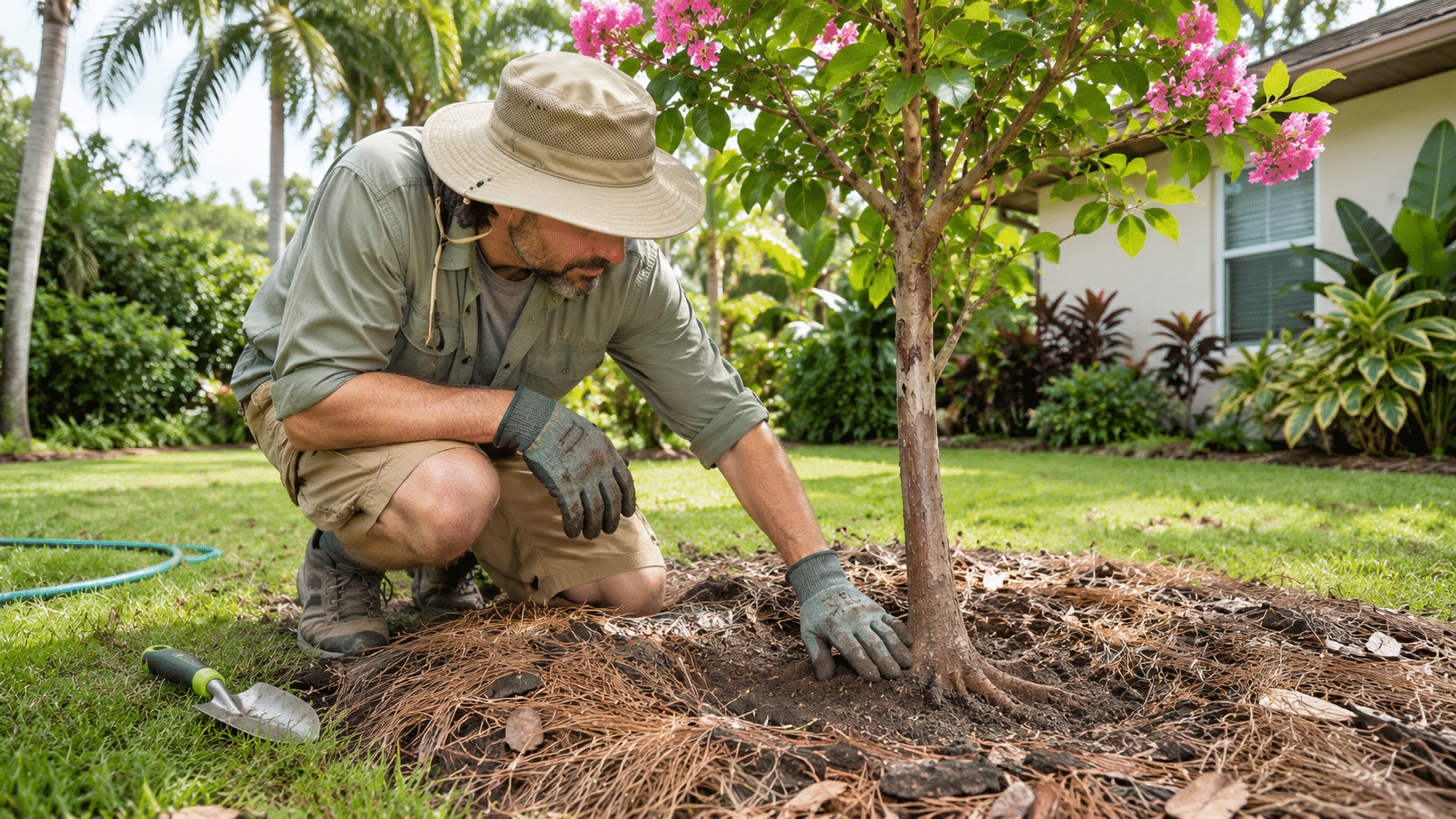
Even if a tree is labeled “sun-loving,” three uniquely Floridian stressors routinely wipe out non-adapted species:
-
Relentless Humidity & Fungal Pressure: In arid western states, heat dries out foliage quickly. In Florida, heavy morning dew and afternoon thunderstorms keep leaves damp for hours in sweltering air—creating an incubator for powdery mildew, Cercospora leaf spot, and sooty mold. Choosing disease-resistant cultivars and trees with naturally airy canopies is non-negotiable. 🍄🚫
-
The Feast-or-Famine Soil Cycle: Much of Florida sits on fast-draining, alkaline or acidic sandy soil that dries out rapidly during spring droughts, only to become waterlogged during daily summer downpours. A resilient tree needs roots that tolerate both dry spells and sudden saturation.
-
Warm Nighttime Temperatures: Many northern flowering trees (like classic lilacs or certain flowering cherries) require cool nights to set flower buds and recover from daytime heat stress. When Florida nights hover near 80°F, unadapted trees burn through their energy reserves faster than they can photosynthesize, leading to chronic bud drop and decline.
Quick-Reference Guide: Comparing the Top 10 FL Flowering Trees 📊🌿
Before you dig a hole, match your property’s USDA zone, available canopy space, and soil moisture to the right species using this side-by-side comparison.
10 Resilient FL Flowering Trees That Thrive in Heat & Humidity 🌸🌴
1. Crape Myrtle (Lagerstroemia indica & hybrids) — The Undisputed Summer Champion 💖
-
Quick Specs: Zones 7–11 | Blooms Late Spring–Early Fall | Height: 10–30 ft (cultivar dependent) | Full Sun | Well-drained soil
If there is a backbone to low-maintenance flowering trees for Florida, it is the Crape Myrtle. While other ornamentals go dormant or sulk in July’s blistering heat, Crape Myrtles burst into massive panicles of white, shell pink, lavender, magenta, and crimson that last for up to 120 days. Once established, their deep root systems shrug off spring droughts, and their smooth, exfoliating bark adds sculptural winter interest.
Why It Survives FL Heat: Crape Myrtles actually require intense heat and full sun to fuel heavy blooming. Modern hybrids bred by the U.S. National Arboretum have been specifically selected for high-humidity environments.
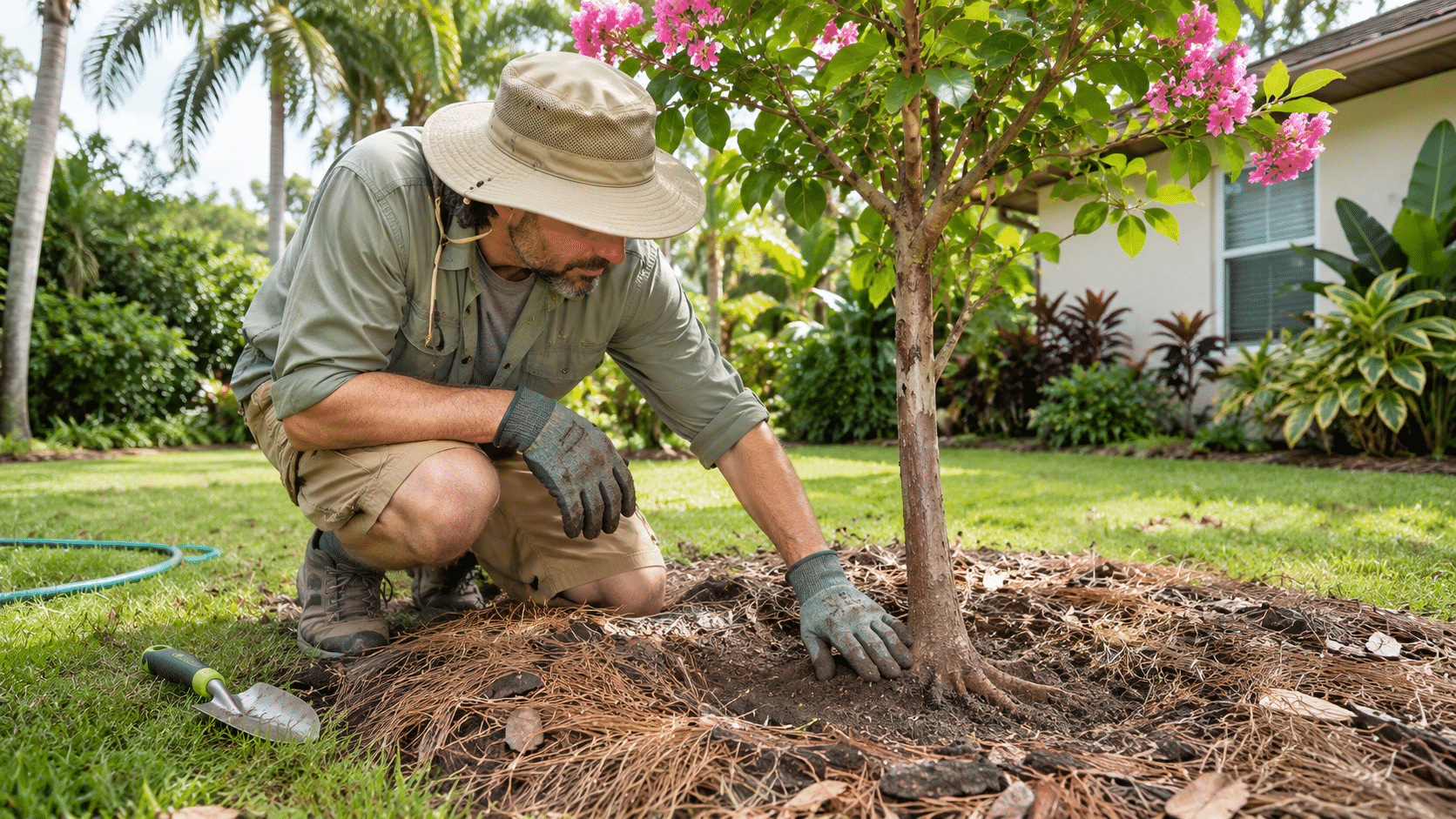
🌱 Expert Arborist Tip: Never commit “crape murder” by chopping the main trunks flat in winter. Topping creates weak, whip-like regrowth that snaps in summer storms and ruins the tree’s natural vase form. Instead, buy a cultivar that fits your space—such as ‘Natchez’ (white, large), ‘Muskogee’ (lavender, large), or ‘Tonto’ (fuchsia, compact)—all of which have superior resistance to powdery mildew in humid Florida summers.
2. Southern Magnolia (Magnolia grandiflora) — The Iconic Evergreen Classic 🤍
-
Quick Specs: Zones 7–10a | Blooms Spring–Summer | Height: 20–80 ft (cultivar dependent) | Full Sun to Part Shade | Moist, well-drained acidic soil
A true Florida native, the Southern Magnolia delivers unmatched curb appeal with its leathery, glossy green leaves backed by warm, rusty-brown fuzz. From late spring into summer, it opens dinner-plate-sized, creamy-white flowers carrying a rich, lemony fragrance that perfumes an entire neighborhood block.
Why It Survives FL Heat: Its thick, waxy leaf cuticles lock in moisture during scorching afternoons while shedding heavy summer rain cleanly, drastically reducing foliar fungal issues.
🌱 Expert Arborist Tip: Standard Southern Magnolias can soar 60 to 80 feet tall and drop heavy leaves and seed cones year-round, making them tricky over manicured turf. For suburban yards, choose ‘Little Gem’ or ‘Teddy Bear’—dwarf cultivars that top out around 20 to 25 feet, bloom at a much younger age, and fit comfortably in modern neighborhood lots.
3. Sweetbay Magnolia (Magnolia virginiana) — Best for Wet, Humid Yards 💦
-
Quick Specs: Zones 5–10b | Blooms Spring–Early Summer | Height: 15–50 ft | Full Sun to Part Shade | Moist to Wet, acidic soil
Many Florida homeowners struggle with low-lying backyard corners or drainage swales where standing water suffocates standard ornamental trees. Sweetbay Magnolia is the native hero built for those exact spots. Slightly more delicate and slender than its Southern Magnolia cousin, it features silver-backed leaves that shimmer in the breeze and fragrant, cup-shaped white blossoms that attract native pollinators.
Why It Survives FL Heat: Naturally found in Florida’s bayheads and swamps, Sweetbay Magnolia thrives in muggy, stagnant air and saturated soils that would trigger fatal Phytophthora root rot in almost any other flowering tree.
🌱 Expert Arborist Tip: Sweetbay Magnolia grows beautifully as a multi-trunk specimen near retention ponds, rain gardens, or septic drain-field perimeters (always check local setback rules). In Central and South Florida, it remains evergreen year-round; in North Florida, it is semi-evergreen.
4. Royal Poinciana (Delonix regia) — South Florida’s Showstopper 🔥
-
Quick Specs: Zones 10–11 | Blooms Late Spring–Summer | Height: 30–40 ft (40–60 ft wide) | Full Sun | Well-drained sandy soil
Few sights in the plant kingdom rival a mature Royal Poinciana in full June glory. Its broad, umbrella-shaped canopy of feathery, fern-like foliage erupts into a solid canopy of fiery scarlet-orange and crimson blooms. It is easily one of the most photographed heat-tolerant flowering trees in South Florida.
Why It Survives FL Heat: Native to Madagascar, Royal Poinciana thrives in blazing tropical sun and sandy coastal soils. Remarkably, high coastal humidity actually helps it hold its blooms longer—often stretching the floral display to six or eight weeks.
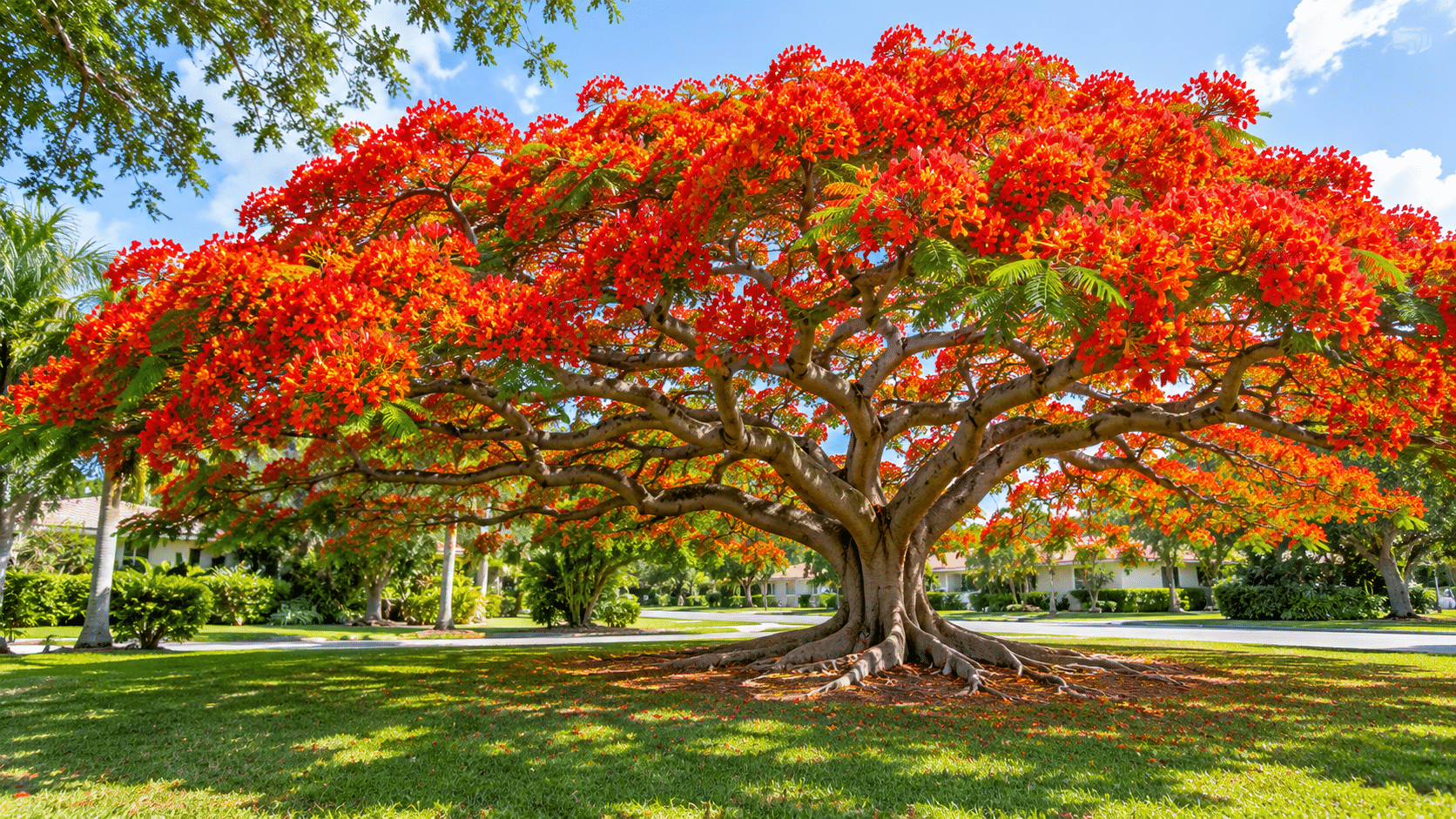
🌱 Expert Arborist Tip: Respect this tree’s footprint. Royal Poinciana develops massive, shallow buttress roots that will eagerly lift sidewalks, crack driveways, and invade pool plumbing if crowded. Plant it at least 20 to 25 feet away from hardscapes and foundations, and give it center stage in an open lawn.
5. Hong Kong Orchid Tree (Bauhinia × blakeana) — Winter Color Without the Mess 💜
-
Quick Specs: Zones 9b–11 | Blooms Late Fall–Early Spring | Height: 20–35 ft | Full Sun | Well-drained soil
While most FL flowering trees peak in spring and summer, the Hong Kong Orchid Tree flips the script, covering its butterfly-shaped, two-lobed leaves in large, fragrant, purplish-pink orchid-like blooms from November through March. It brings vibrant tropical color right when winter landscapes need it most.
Why It Survives FL Heat: It handles intense summer heat, moderate drought, and high humidity without missing a beat, growing rapidly into an airy shade tree.
🌱 Expert Arborist Tip: Always verify the botanical name (Bauhinia × blakeana) before buying. Other orchid tree species, like Bauhinia variegata, produce prolific, messy seed pods and are classified as invasive in Florida because they escape into natural areas. The true Hong Kong Orchid Tree is a sterile hybrid—meaning zero seed pods, less yard cleanup, and zero invasive risk.
6. Orange Geiger Tree (Cordia sebestena) — Coastal & Salt-Tolerant Hero 🧡
-
Quick Specs: Zones 10–11 | Blooms Spring–Fall (sporadically year-round) | Height: 15–25 ft | Full Sun | Dry to moist, well-drained alkaline or sandy soil
If you live near the coast, salty ocean breezes can scorch ordinary flowering trees overnight. Native to the Florida Keys and South Florida, the Orange Geiger Tree laughs off salt spray, baking pavement heat, and alkaline coastal soils. Its clusters of crinkled, brilliant tangerine-orange tubular flowers bloom heavily from spring through fall, acting as a magnet for hummingbirds and butterflies. 🦋
Why It Survives FL Heat: Its rough, sandpapery evergreen leaves are built to withstand high winds, reflective heat from concrete patios, and coastal drought without wilting.
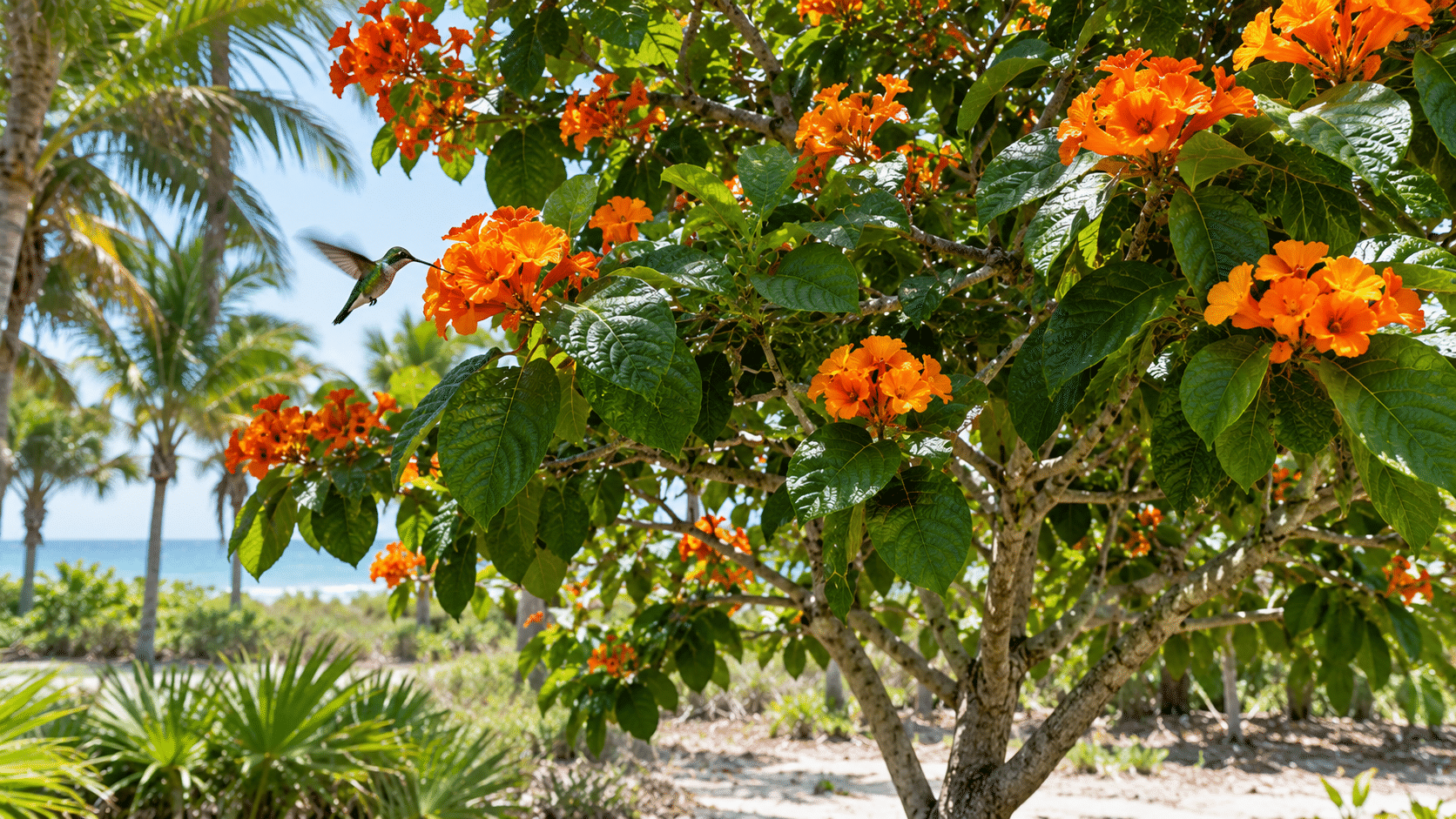
🌱 Expert Arborist Tip: Because it stays compact and has non-invasive roots, the Orange Geiger Tree is one of the best small flowering trees for tight urban courtyards, poolside plantings, and narrow parkway strips in South Florida. Watch occasionally for Geiger tortoise beetles, which chew small holes in leaves—healthy trees easily outgrow minor feeding without harsh pesticides.
7. Fringe Tree (Chionanthus virginicus) — Delicate Spring Beauty for North & Central FL ☁️
-
Quick Specs: Zones 4–9b | Blooms Early–Mid Spring | Height: 12–20 ft | Full Sun to Part Shade | Moist, acidic, well-drained soil
Also known affectionately as “Old Man’s Beard,” this underappreciated Florida native transforms in early spring into a floating cloud of snowy-white, ribbon-like petals with a sweet, lightly spicy fragrance. Female trees follow up in late summer with dark blue, olive-like drupes that songbirds adore.
Why It Survives FL Heat: As a native woodland understory tree, the Fringe Tree handles Florida’s muggy summers effortlessly—and unlike almost every other tree on this list, it blooms reliably even in dappled or afternoon shade.
🌱 Expert Arborist Tip: Fringe Trees leaf out noticeably later in spring than neighboring trees, so do not panic and dig yours up in March thinking it died over winter! Give it patience and a layer of pine straw mulch, and it will reward you with decades of low-maintenance elegance.
8. Simpson’s Stopper (Myrcianthes fragrans) — The Pollinator & Bird Magnet 🐦
-
Quick Specs: Zones 9a–11 | Blooms Spring–Summer | Height: 15–20 ft | Full Sun to Part Shade | Well-drained sandy or limestone soil
Looking for a Florida native flowering tree that pulls double duty as a wildlife sanctuary? Simpson’s Stopper delivers. In spring and summer, it produces fluffy, fragrant white blooms loaded with nectar for native bees and butterflies. Soon after, bright orange-red berries appear, drawing cedar waxwings, mockingbirds, and cardinals straight to your yard.
Why It Survives FL Heat: Its dense, aromatic evergreen foliage and peeling cinnamon-gray bark evolved specifically for Central and South Florida’s hammocks. It exhibits high drought tolerance, good wind resistance, and almost zero pest or disease headaches.
🌱 Expert Arborist Tip: Simpson’s Stopper is slow-growing, which means far less pruning work for you. Leave the lower branches intact for a lush flowering privacy hedge, or selectively limb it up over a few years to showcase its gorgeous, muscular, multi-trunk bark as a patio accent tree.
9. Silver Trumpet Tree (Tabebuia aurea) — Bold Golden Spring Blooms 💛
-
Quick Specs: Zones 9b–11 | Blooms Spring | Height: 20–30 ft | Full Sun | Dry, well-drained sandy soil
When a Silver Trumpet Tree blooms in March or April, it stops traffic. Its silvery-green, elongated leaves virtually disappear beneath an explosion of electric-yellow, trumpet-shaped flowers. Paired with its rugged, deeply furrowed corky bark, it adds year-round architectural character to sunny Central and South Florida yards.
Why It Survives FL Heat: Native to the warm savannas of South America, it loves baking full sun, lean sandy soils, and hot summers, requiring minimal supplemental irrigation once established.
🌱 Expert Arborist Tip: Young Silver Trumpet Trees can grow a bit gangly and top-heavy if ignored. Invest in light structural pruning during the first three to five years to establish well-spaced scaffold branches—this single step dramatically improves their resilience during Florida hurricane season. 🌀
10. Loblolly Bay (Gordonia lasianthus) — Long-Blooming Native Gem 🌼
-
Quick Specs: Zones 7b–9b | Blooms Late Spring–Summer | Height: 30–60 ft | Full Sun to Part Shade | Moist, acidic soil
For homeowners in North and Central Florida who love the look of camellias but want a taller, sun-tolerant evergreen tree, Loblolly Bay is a hidden treasure. This Florida native forms a neat, pyramidal canopy of dark green leaves studded with fragrant, five-petaled white flowers and bright yellow stamens from May all the way into August.
Why It Survives FL Heat: Unlike many ornamental evergreens that hate “wet feet” in humid climates, Loblolly Bay thrives in high humidity and moisture-retentive acidic soils, shrugging off summer heatwaves with ease.
🌱 Expert Arborist Tip: Loblolly Bay struggles in alkaline soils (such as areas with heavy limestone fill or right next to concrete foundations). Test your soil pH first—if it is naturally acidic (below 6.5), top-dress annually with pine straw mulch to keep the roots cool and thriving.
3 Popular Flowering Trees to Avoid in Florida (And Why) 🚫⚠️
Knowing what not to plant is just as important as picking a winner. Several widely sold or commonly spotted flowering trees cause serious ecological or safety headaches in Florida:
-
Golden Raintree (Koelreuteria elegans): While its yellow fall flowers and papery pink seed capsules look charming, UF/IFAS classifies it as an invasive species in Central and South Florida. It drops thousands of viable seeds that invade native woodlands and crowd out local wildlife habitats.
-
Chinaberry (Melia azedarach): Often praised for its fragrant lavender spring blooms, Chinaberry is a Category II invasive plant in Florida with weak, storm-prone wood and toxic berries that pose a hazard to children and pets.
-
Oleander (Nerium oleander): Frequently trained into small flowering trees across the state because it handles heat and salt spray, every single part of the Oleander plant is highly toxic if ingested—and even smoke from burning pruned branches is dangerous. Unless you have zero pets or young children visiting your yard, opt for safer native alternatives like Simpson’s Stopper or Orange Geiger Tree.
How to Plant & Care for FL Flowering Trees So They Actually Thrive 🧤🌱
Even the toughest heat-tolerant flowering trees in Florida will fail if planted like northern trees. Follow these Florida-specific best practices to set your new tree up for decades of blooms.
Mastering Florida’s Sandy Soil & Mulching 🏖️
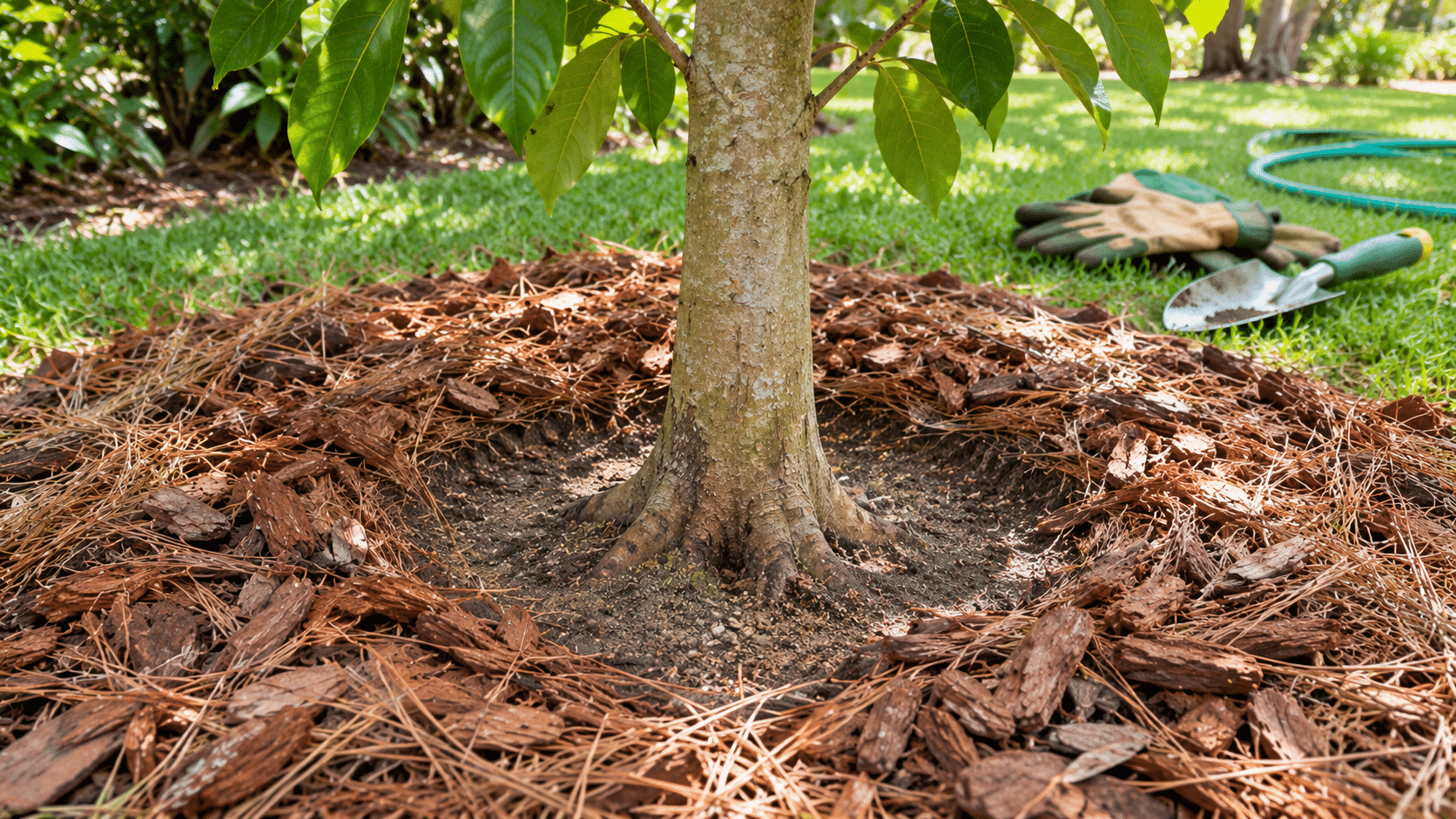
Resist the old gardening myth of filling your planting hole with rich bagged potting soil or heavy compost. In Florida’s sandy soil, creating a “bathtub” of rich soil encourages roots to circle inside the hole rather than branching outward into the native ground—leading to unstable, drought-stressed trees.
-
Dig a hole 2 to 3 times wider than the root ball, but no deeper.
-
Position the tree so the root flare (where the trunk widens at the base) sits slightly above the surrounding soil grade. Planting too deep is the number-one killer of young landscape trees.
-
Spread a 2- to 3-inch layer of pine bark, pine straw, or melaleuca mulch across the root zone to insulate roots from summer soil heat—but pull mulch 3 inches away from the trunk so you never create a rot-inducing “mulch volcano.”
Smart Watering in High Humidity 🚿
Newly planted trees need frequent watering while roots establish (typically daily for the first two weeks, then every other day for a couple of months, tapering off over the first year).
-
Always water deeply at the root zone in the early morning (between 5:00 AM and 9:00 AM).
-
Avoid overhead sprinklers hitting the foliage at dusk or overnight—wet leaves sitting in warm, humid night air practically guarantee powdery mildew and leaf-spot outbreaks.
Hurricane-Smart Structural Pruning 🌀
Florida’s windstorms punish poorly structured trees. According to UF/IFAS urban forestry research, trees pruned for a single dominant trunk (central leader) and evenly spaced branches survive hurricanes at dramatically higher rates than neglected or “lions-tailed” trees.
-
Complete structural pruning before June 1 (the start of Atlantic hurricane season).
-
Focus on thinning interior crossing branches so high winds can pass through the canopy like a screen, rather than hitting it like a solid sail.
-
Never remove more than 25 percent of the live canopy in a single year, as excessive pruning triggers stress sprouts and exposes tender bark to Florida sunscald.
Frequently Asked Questions About FL Flowering Trees ❓💬
What is the fastest-growing flowering tree in Florida?
Crape Myrtle and Royal Poinciana are among the fastest-growing options, routinely putting on 2 to 5 feet of growth per year under full sun and proper watering. Keep in mind that ultra-fast growth sometimes comes with softer wood, so light early structural pruning is essential for storm resilience.
Which FL flowering trees bloom year-round?
True 365-day nonstop blooming is rare for trees, as most require brief rest cycles to regenerate energy. However, in frost-free South Florida (Zones 10–11), the Orange Geiger Tree (Cordia sebestena) and Peregrina (Jatropha integerrima, a small tree-like shrub) bloom nearly continuously throughout the year, with their heaviest flushes occurring in the warm months.
What are the best small flowering trees for Florida yards near sidewalks?
To avoid lifted concrete and crowded rooflines, stick to species under 25 feet tall with non-aggressive root systems: Dwarf Crape Myrtles (like ‘Tonto’ or ‘Pocomoke’), Simpson’s Stopper, Fringe Tree (North/Central FL), and Orange Geiger Tree (South FL).
When is the best time of year to plant flowering trees in Florida?
The ideal planting window across Florida is fall through early spring (October to March). Cooler air temperatures and lower UV intensity reduce transplant shock, giving the root system months to anchor deeply into your soil before the stress of summer heatwaves arrives.
Choosing Your Yard’s Next Showstopper 🌿✨
Great Florida landscaping always comes down to one timeless rule: right tree, right place. When you match a tree’s natural biology to your USDA hardiness zone, soil drainage, and available yard space, you spend far less time fighting fungus, dragging hoses, or worrying about summer storms—and far more time enjoying vibrant blooms right outside your window. 🌺☀️
What Florida USDA zone are you gardening in, and how much space are you working with? Drop a comment below with your yard details, and I will help you pick the exact cultivar that will thrive in your soil! 👇🌴