
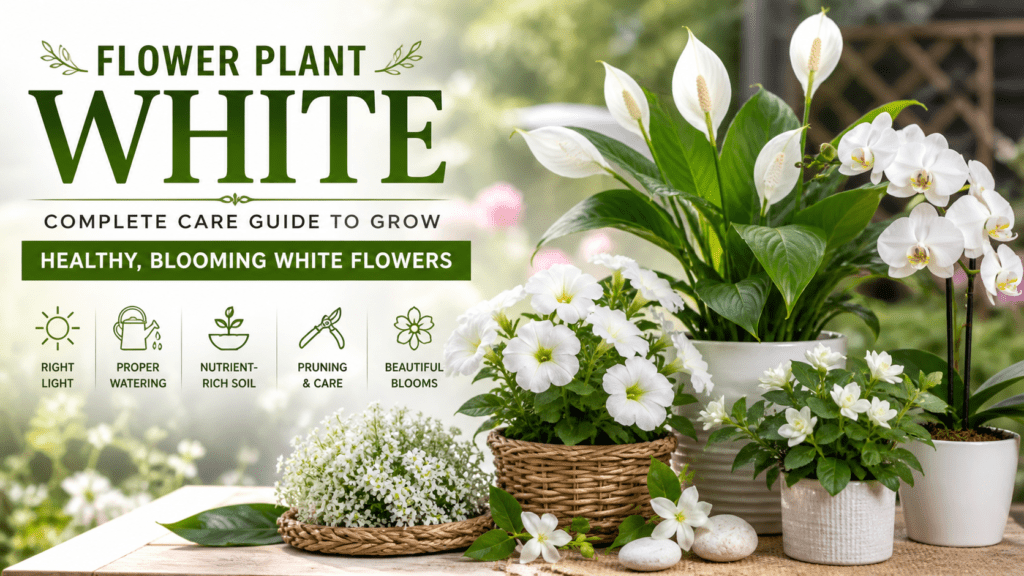
There’s something undeniably calming and elegant about a flower plant white—it brings a sense of peace, purity, and natural beauty that few other plants can match. Whether placed in your living room, balcony, or garden, white flowering plants create a timeless aesthetic that never goes out of style.
But here’s the problem many plant lovers face:
👉 Why do white flowers stop blooming?
👉 Why do leaves turn yellow or buds fall off prematurely?
👉 Why do some plants thrive while others struggle—even with care?
If you’ve ever asked these questions, you’re not alone.
This expert-level guide is designed to solve those exact challenges. Drawing from practical horticulture knowledge and proven plant care techniques, you’ll learn how to:
- Choose the right white flowering plants 🌸
- Create the perfect growing environment 🌿
- Maintain long-lasting, healthy blooms
- Avoid common mistakes that kill flowering plants
By the end, you’ll have the confidence to grow lush, vibrant white flowers—indoors or outdoors—like a pro 🌱✨
🌸 What Is a Flower Plant White? (Understanding the Basics)
🌱 Definition and Characteristics
A white flower plant refers to any flowering plant that produces white blooms, either naturally or through cultivated varieties. These plants range from delicate indoor species to hardy outdoor shrubs and climbers.
🌼 Key characteristics:
- Bright white or creamy petals
- Often fragrant (like jasmine or gardenia)
- Symbolically linked to peace, purity, and simplicity
- Suitable for both decorative and functional uses
White flowers also reflect more light, making them ideal for low-light gardens or indoor spaces 🌞
🤍 Why White Flower Plants Are So Popular
White flowering plants are not just beautiful—they’re incredibly versatile.
✨ Top reasons gardeners love them:
- Create a clean, minimalist aesthetic
- Blend effortlessly with any garden design
- Enhance nighttime garden visibility 🌙
- Often used in meditation and relaxation spaces
They’re also widely used in landscaping to create contrast against colorful plants, making your garden look more dynamic and professionally designed 🌺
🌼 Best White Flower Plants to Grow (Indoor & Outdoor Options)
Choosing the right plant is the first step toward success. Let’s explore expert-recommended options 👇
🏡 Best Indoor White Flower Plants
🌿 1. Peace Lily
- Easy to care for and beginner-friendly
- Thrives in low to medium light
- Also purifies indoor air 🌬️
🌸 2. Orchid (White Variety)
- Elegant and long-lasting blooms
- Requires indirect light and humidity
🌼 3. Jasmine
- Known for its sweet fragrance
- Ideal for sunny windows
🌺 4. Gardenia
- Stunning white blooms with strong fragrance
- Needs consistent care and humidity
🌳 Best Outdoor White Flower Plants

🌹 1. White Rose
- Classic garden favorite
- Requires full sun and pruning
🌺 2. White Hibiscus
- Tropical beauty with large blooms
- Thrives in warm climates
🌼 3. Lily
- Elegant and easy to grow
- Great for borders and containers
🌸 4. Petunia
- Fast-growing and vibrant
- Perfect for hanging baskets
🌱 Low-Maintenance White Flower Plants for Beginners
If you’re just starting out, these plants are forgiving and resilient:
- Peace Lily 🌿
- White Petunia 🌼
- Alyssum 🌸
- Shasta Daisy 🤍
👉 These require less attention but still produce beautiful blooms—perfect for busy plant lovers!
🌞 Ideal Growing Conditions for White Flower Plants
Creating the right environment is the secret to consistent flowering 🌱✨
☀️ Light Requirements

Different plants have different needs:
- 🌞 Full Sun (6–8 hours): Roses, hibiscus
- 🌤️ Partial Shade: Gardenia, lily
- 🏠 Indirect Light: Peace lily, orchid
💡 Expert Tip:
If your indoor plant isn’t blooming, lack of light is often the main cause.
🌡️ Temperature and Humidity Needs
Most white flowering plants prefer:
- 🌡️ Temperature: 18–28°C
- 💧 Moderate to high humidity
👉 Tropical plants like jasmine and gardenia thrive in humid environments. Consider using a humidifier indoors.
💨 Air Circulation Importance
Good airflow prevents:
- Fungal diseases
- Pest infestations
💡 Avoid placing plants in completely closed spaces. Open windows or use fans occasionally.
🌱 Soil, Potting, and Fertilization Guide
Healthy roots = healthy blooms 🌿
🪴 Best Soil Mix for White Flower Plants

The ideal soil should be:
- Well-draining
- Rich in organic matter
- Slightly acidic to neutral
👉 A mix of garden soil + compost + perlite works great.
🌿 Choosing the Right Pot or Garden Spot
- Always use pots with drainage holes 🚰
- Avoid overcrowding roots
- Choose breathable materials like terracotta
🧪 Fertilizing for Maximum Blooms
Use:
- 🌱 Organic compost (monthly)
- 💧 Liquid fertilizer (every 2–3 weeks during growth)
💡 Pro Tip:
Use a fertilizer high in phosphorus to encourage flowering 🌸
💧 Watering Techniques (Avoid Overwatering & Root Rot)

🚿 How Often to Water
- Water when the top inch of soil feels dry
- Adjust frequency based on season
⚠️ Common Watering Mistakes
❌ Overwatering → root rot
❌ Underwatering → dry, dropping buds
💡 Expert Insight:
Consistency matters more than quantity.
✂️ Pruning, Deadheading, and Maintenance Tips
✂️ Why Pruning Is Essential
- Encourages new growth
- Removes diseased parts
🌼 Deadheading for Continuous Flowering
- Remove faded flowers regularly
- Redirects energy to new blooms
🐛 Common Problems and How to Fix Them
🦠 Pests That Affect White Flower Plants
- Aphids
- Spider mites
- Whiteflies
🛠️ Solution:
- Neem oil spray 🌿
- Mild soap solution
🍂 Diseases and Leaf Issues
- Yellow leaves = overwatering
- Brown edges = low humidity
⚡ Why Your White Flowers Are Not Blooming
Top causes:
- Lack of sunlight ☀️
- Poor nutrition 🌱
- Improper pruning ✂️
🌿 Indoor vs Outdoor Care Differences (Master Both Environments Like a Pro) 🏡🌳
Understanding the difference between indoor and outdoor care is crucial if you want your flower plant white to thrive year-round. Each environment presents unique challenges—and opportunities.
🏠 Indoor Care Tips for White Flower Plants

Indoor plants are more controlled—but also more dependent on you.
🌿 Key indoor care practices:
- Place plants near bright, indirect sunlight (east or south-facing windows work best)
- Rotate pots weekly for even growth 🔄
- Maintain humidity using:
- Humidifiers 💧
- Pebble trays
- Clean leaves regularly to improve photosynthesis
💡 Expert Tip:
Indoor plants often suffer from low light and dry air, which directly affects blooming.
🌳 Outdoor Care Tips for White Flower Plants

Outdoor plants benefit from natural conditions—but require protection.
🌼 Essential outdoor care:
- Ensure proper sunlight exposure based on plant type
- Use mulch to retain soil moisture 🌱
- Protect from:
- Heavy rain ☔
- Strong winds 🌬️
- Extreme heat ☀️
💡 Pro Insight:
Outdoor plants bloom more abundantly—but only when seasonal care is done correctly.
🌺 Expert Tips to Boost Blooming Naturally 🌸✨
If your plant is healthy but not blooming—this section is your game changer.
🌿 1. Use Organic Compost Regularly
- Improves soil fertility
- Enhances microbial activity
- Encourages stronger blooms
🌼 2. Optimize Sunlight Exposure
- Flowering plants need energy
- Move pots gradually to brighter areas if needed
🍌 3. Try Natural Bloom Boosters
- Banana peel fertilizer 🍌
- Epsom salt (magnesium boost)
🌱 4. Companion Planting
- Pair with plants that improve soil health
- Helps reduce pests naturally
✂️ 5. Strategic Pruning
- Don’t just prune—prune at the right time
- Encourages fresh flowering cycles
💡 Expert Secret:
Slight stress (controlled dryness or pruning) can sometimes trigger more blooms 🌸
🌼 How to Use White Flower Plants in Home & Garden Design 🎨
White flowers are incredibly versatile in design. Here’s how to make the most of them:
🏡 Landscaping Ideas

✨ Design ideas:
- Create a white-themed garden (moon garden) 🌙
- Use white flowers as borders for colorful plants
- Combine with green foliage for a calming effect
🛋️ Indoor Decoration Ideas

🌿 Styling tips:
- Use white flowers for minimalist interiors
- Place in ceramic or neutral-toned pots
- Ideal for bedrooms and meditation spaces
💡 White flowers naturally enhance mental calmness and focus.
📅 Seasonal Care Calendar for White Flower Plants
Consistency across seasons is what separates average gardeners from experts 🌱
🌱 Spring (Growth & Planting Season)
- Start planting new white flower plants
- Apply compost and fertilizer
- Increase watering gradually
☀️ Summer (Peak Blooming Season)
- Water more frequently 💧
- Provide shade during extreme heat
- Monitor pests closely 🐛
🍂 Autumn (Preparation Phase)
- Reduce watering
- Start pruning ✂️
- Prepare plants for cooler temperatures
❄️ Winter (Dormancy & Protection)
- Move sensitive plants indoors
- Reduce fertilization
- Protect roots from cold
💡 Expert Advice:
Adjust care routines—not just watering—based on seasons.
❓ Frequently Asked Questions (FAQs)
🌼 How do I keep my white flowers blooming longer?
- Provide adequate sunlight
- Fertilize regularly
- Remove dead flowers (deadheading)
🍂 Why are my white flower leaves turning yellow?
- Overwatering is the most common cause
- Check drainage and soil condition
🏠 Can white flower plants grow in low light?
- Some can (like peace lily), but blooming may reduce
🌱 What is the easiest white flower plant to grow indoors?
- Peace lily is the best beginner-friendly option
🧪 How often should I fertilize white flowering plants?
- Every 2–3 weeks during active growth
📌 Final Thoughts: Grow White Flowers with Confidence 🌿🤍
Growing a thriving flower plant white isn’t just about watering and sunlight—it’s about understanding your plant’s needs and responding with care and consistency.
🌸 Key takeaways:
- Choose the right plant for your environment
- Provide proper light, soil, and nutrients
- Avoid overwatering and neglect
- Follow seasonal care routines
With the tips in this guide, you’re not just growing plants—you’re creating a peaceful, beautiful space filled with life and elegance ✨











