
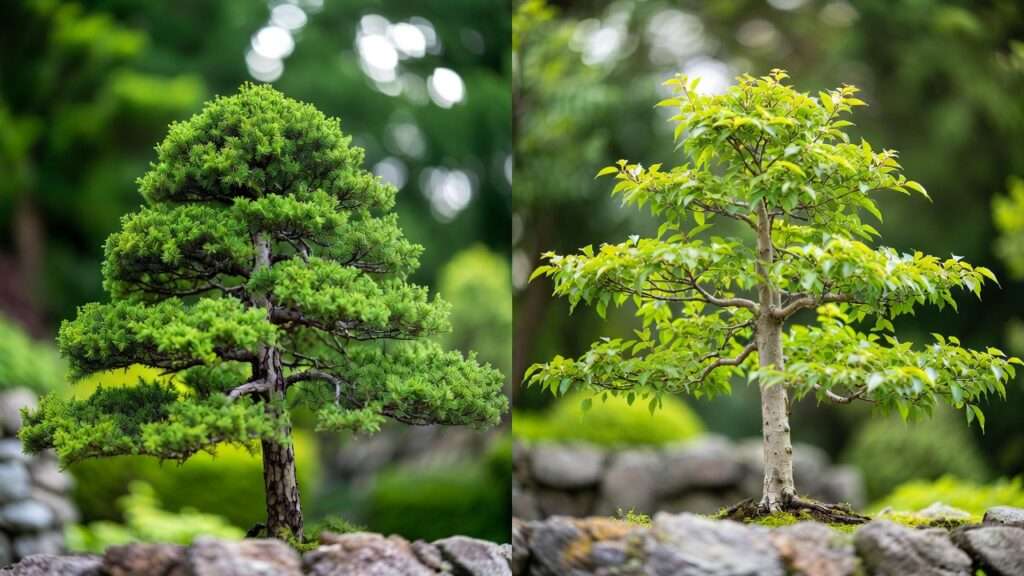
Have you ever looked at a stunning bonsai and felt an instant sense of calm and wonder? That perfect miniature tree might look effortless, but behind its beauty lies a deliberate choice of style—often one of the two foundational upright forms: formal upright (known as Chokkan in Japanese) or informal upright (known as Moyogi). These classic bonsai styles form the backbone of most collections, yet many growers struggle to decide which one suits their tree, their skill level, or their aesthetic vision. 🌿
If you’re trying to style a new bonsai, refine an existing one, or simply understand why some trees look regal and symmetrical while others feel alive and flowing with gentle movement, this comprehensive guide is for you. We’ll explore the formal upright vs. informal upright bonsai forms in depth—covering trunk structure, branch placement, ideal species, styling techniques, common pitfalls, and real decision-making advice. By the end, you’ll know exactly which style to pursue and how to bring it to life. Let’s uncover the secrets of these timeless forms! 🍃
What Is Formal Upright Bonsai? (Chokkan Style)
The epitome of elegance, symmetry, and disciplined beauty 🌲
The formal upright style, or Chokkan, represents a tree growing in ideal, open conditions—plenty of sunlight, no competition, and no harsh winds. This creates a perfectly balanced, symmetrical silhouette that exudes strength, stability, and timeless perfection.
Core Characteristics
- Perfectly straight, vertical trunk with clear, even taper (thickest at the base, gradually narrowing toward the apex) 📏
- Apex positioned directly above the nebari (root flare) for absolute balance and centrality
- Branching begins about 1/4 to 1/3 up the trunk, arranged in symmetrical, alternating tiers
- Branches become progressively shorter and thinner from bottom to top, creating a classic triangular or conical outline
- Overall form is rigid yet harmonious—nature’s version of architectural precision
Symbolism & Natural Inspiration Chokkan symbolizes unyielding strength and purity. It mirrors ancient, solitary trees standing tall in open fields or mountain slopes, untouched by adversity. In bonsai exhibitions and formal displays, this style commands respect and admiration.
Best Tree Species for Formal Upright Certain species naturally lend themselves to this strict form thanks to their growth habits:
- Conifers: Juniper (especially Shimpaku or procumbens ‘nana’), Pine (Japanese Black Pine, White Pine), Spruce, Hinoki Cypress, Cryptomeria
- Deciduous (with fine branching): Japanese Maple (Acer palmatum), Trident Maple, Elm, Beech, Hornbeam
These trees develop straight trunks more readily and respond well to precise pruning for symmetry.
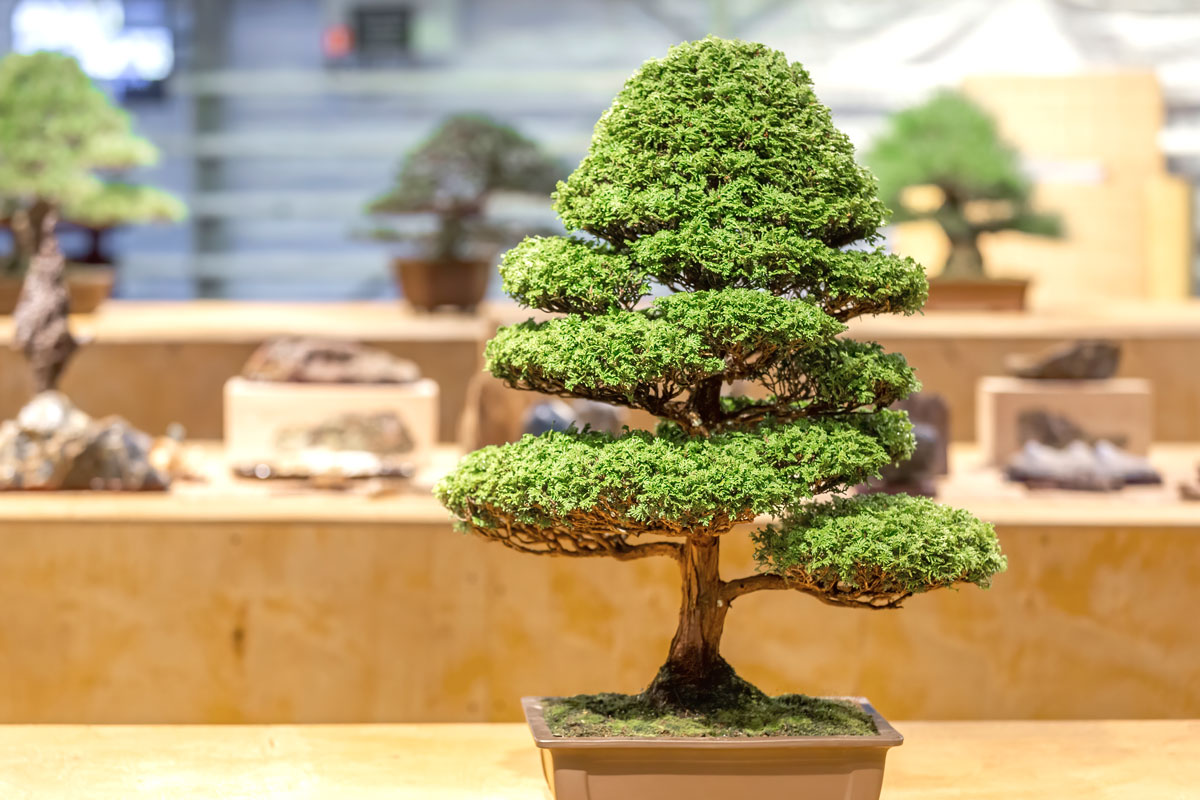
(Here are beautiful examples of formal upright bonsai—notice the impeccable straight trunk and balanced tiers! 🌟)
What Is Informal Upright Bonsai? (Moyogi Style)
The graceful, storytelling style that feels alive and natural 🍃
Unlike its rigid counterpart, the informal upright style (Moyogi) captures trees shaped by gentle natural forces—slight winds, dappled light, or minor competition. The result is an organic, flowing form full of subtle movement and personality.
Core Characteristics
- Trunk grows upward overall but features gentle curves, bends, or slight S-shapes for visible movement
- Apex still roughly aligned over the nebari/base for structural balance (slight forward lean is acceptable)
- Branches emerge primarily from the outside of curves, enhancing flow and avoiding crossed limbs
- Silhouette is irregular triangular—more dynamic and less perfectly symmetrical
- Allows artistic freedom while maintaining upright dignity
Symbolism & Natural Inspiration Moyogi evokes resilience and life’s gentle twists. It represents trees that have adapted gracefully to their environment, telling a story of growth through subtle challenges. This style feels approachable, whimsical, and deeply connected to nature.
Best Tree Species for Informal Upright Virtually any bonsai species can shine in Moyogi, but especially forgiving ones include:
- Juniper, Pine, Japanese Maple, Chinese Elm, Ficus, Azalea, Trident Maple, Trident varieties
Its flexibility makes it ideal for beginners and trees with natural curves from nursery stock or yamadori (wild-collected).
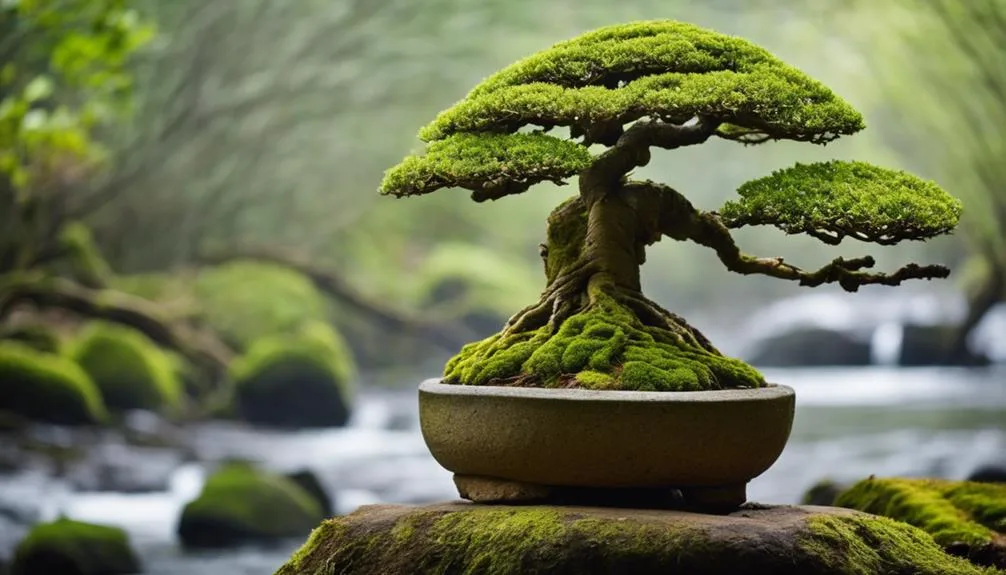
(These informal upright examples show beautiful natural flow and gentle trunk movement—pure poetry in miniature! 🌬️)
Head-to-Head Comparison: Formal Upright vs. Informal Upright
A clear, side-by-side look to help you decide ⚖️
| Aspect | Formal Upright (Chokkan) | Informal Upright (Moyogi) |
|---|---|---|
| Trunk Line | Perfectly straight & vertical | Gentle curves, bends, or slight S-shape |
| Apex Position | Directly above base/nebari | Roughly above base (minor front lean OK) |
| Branch Placement | Symmetrical, alternating tiers | Natural, from outside of curves, more irregular |
| Difficulty Level | Advanced—requires strict precision & straight stock | Beginner to intermediate—forgiving & artistic |
| Aesthetic Feel | Formal, stately, austere | Relaxed, dynamic, natural |
| Display Suitability | Exhibitions, formal settings | Home, everyday decor, casual enjoyment |
| Pruning & Wiring Effort | High—meticulous symmetry maintenance | Moderate—focus on harmony & flow |
This comparison highlights why many collectors start with informal upright before mastering the discipline of formal.
When to Choose Formal Upright vs. Informal Upright Real-world decision guide based on your situation 🎯
Deciding between formal upright and informal upright comes down to three main factors: your tree’s current material, your experience level, and the feeling you want your bonsai to evoke.
Choose Formal Upright (Chokkan) if…
- You have access to (or can patiently develop) young stock with a perfectly straight trunk and even taper—nursery-grown conifers or pre-bonsai often fit best.
- You’re working with species like Juniper, Pine, Spruce, or certain Maples that naturally grow upright without much curve.
- You aspire to create a classic showpiece—perfect for bonsai exhibitions, competitions, or formal indoor displays.
- You enjoy precise, rule-based work and don’t mind the extra time spent on symmetry maintenance.
- Your goal is timeless elegance that symbolizes strength and purity.
Choose Informal Upright (Moyogi) if…
- You’re newer to bonsai or prefer a more forgiving style—most nursery trees already have gentle curves, making this the natural starting point.
- Your tree material shows natural movement, slight bends, or an interesting trunk line you want to enhance rather than straighten.
- You want an artistic, story-telling bonsai that feels alive, dynamic, and connected to real nature.
- You’re styling deciduous trees like Japanese Maple, Chinese Elm, or Ficus, which thrive with organic flow.
- Everyday enjoyment and home decor are priorities over strict exhibition rules.
Hybrid Tip 🌱: Many experienced bonsai artists begin trees in informal upright to build strength and character, then gradually refine toward formal upright over 10–20+ years as the tree matures and the trunk straightens through careful pruning and wiring. This evolution is one of the most rewarding journeys in bonsai!
Step-by-Step: How to Style a Formal Upright Bonsai
Expert techniques to achieve near-perfect symmetry 🔧
Styling formal upright demands patience and precision—here’s a proven process used by masters:
- Material Selection — Start with straight, tapered stock (ideally 1:6–1:10 base-to-height ratio). Avoid any major bends.
- Nebari Development — Expose and spread roots evenly in a radial pattern for strong visual anchor.
- First Branch Placement — Position the lowest branch at 1/3 to 1/4 trunk height. Alternate branches left-right-front-back in tiers.
- Wiring & Pruning — Use copper or aluminum wire to set branches at 45° downward angles. Prune to create even pads that decrease in size upward. Maintain apex dominance.
- Refinement Over Seasons — Pinch candles (conifers) or prune new growth (deciduous) to keep symmetry. Repot every 2–4 years to refine roots.
- Maintenance — Regular defoliation (deciduous) or needle plucking (pines) ensures tight, balanced foliage.
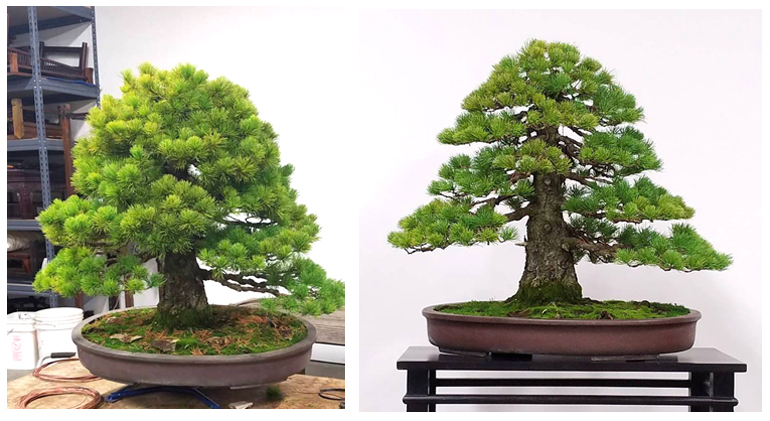
(These before-and-after shots show the dramatic transformation possible with disciplined formal upright styling! 🌲)
Step-by-Step: How to Style an Informal Upright Bonsai
Bring out natural beauty with artistic flow 🌬️
Moyogi allows creativity while following core bonsai principles:
- Assess Trunk Movement — Identify or gently create subtle curves (S-shape ideal). Ensure overall upward direction.
- Balance Check — Confirm apex roughly aligns over nebari (slight forward lean adds life).
- Branch Placement — Position branches on the outside of curves to emphasize flow—avoid inside-curve branches that cross the trunk.
- Foliage Pads — Build irregular, cloud-like pads that decrease in size upward but feel organic.
- Wiring Technique — Wire branches downward and outward for openness. Refine curves gradually over multiple seasons.
- Seasonal Refinement — Prune for balance, not perfection. Let minor imperfections add character.
:strip_icc()/Bonsai-Japanese-Maple_GettyImages-482617609-6cd85951c9a7485cabe46413262dc31a.jpg)
(Beautiful Japanese Maple in informal upright—notice the graceful curves and vibrant seasonal color! 🍁)
Common Mistakes to Avoid in Both Styles
Beginner pitfalls that can set you back years 😩
- Forcing a curved trunk into formal upright (or straightening too aggressively in informal).
- Ignoring trunk taper—flat or reverse taper destroys realism.
- Poor branch selection—branches from inside curves or crossing the trunk line.
- Over-wiring—leads to unnatural kinks or wire scars.
- Neglecting apex control—weak apex makes the tree look bottom-heavy.
- Rushing refinement—bonsai is a multi-year (or multi-decade) art form!
Pro Tips & Expert Insights
From decades of hands-on cultivation 📌
- Use guy wires for subtle trunk corrections in formal styles without heavy wiring.
- Embrace small imperfections in informal upright—nature rarely produces perfect symmetry!
- Formal styles need stricter seasonal maintenance; informal allows more seasonal variation.
- Photography hack: Shoot formal upright straight-on to highlight symmetry; capture informal from 3/4 angles to showcase movement.
- Soil & watering tip: Both styles benefit from well-draining mix, but formal often thrives with slightly drier conditions to promote tight growth.
Real-Life Examples & Gallery Inspiration Seeing is believing—here are some inspiring real-world examples of both styles to help you visualize the differences and possibilities! 📸
Formal Upright Masterpieces
- Japanese Black Pine (Pinus thunbergii) in classic Chokkan: A 40-year-old specimen with razor-sharp taper, perfectly tiered branches, and dense needle pads. The straight trunk rises like a sentinel, exuding quiet power.
- Shimpaku Juniper (Juniperus chinensis ‘Shimpaku’): One of the most awarded formal upright bonsai in recent international shows—trunk perfectly vertical, branches in textbook symmetry, nebari spreading evenly like a starburst.
- Trident Maple (Acer buergerianum): A rarer but stunning formal upright deciduous example, with fine ramification creating tight, symmetrical foliage layers that turn brilliant red in autumn.
(These formal upright bonsai showcase the disciplined beauty and architectural precision that make Chokkan so revered. 🌲✨)
Informal Upright Masterpieces
- Japanese Maple (Acer palmatum) in Moyogi: Graceful S-curved trunk with delicate branches flowing outward, creating soft, cloud-like foliage pads. Autumn color transforms it into a living flame.
- Chinese Elm (Ulmus parvifolia): A beginner-friendly classic—gentle trunk movement, natural branch placement, and fine ramification that looks effortlessly mature even after just 8–10 years of training.
- Rocky Mountain Juniper (Juniperus scopulorum) yamadori collected piece: Dramatic deadwood features combined with flowing live vein and subtle curves—pure natural drama in informal upright form.
(These informal upright examples highlight movement, personality, and that “just right” organic feel that makes Moyogi so approachable and endlessly charming. 🍃💚)
Frequently Asked Questions (FAQs)
Quick, practical answers to the questions I hear most often from fellow bonsai enthusiasts ❓
Can the same tree species work well for both formal and informal upright styles? Yes! Juniper, Pine, Maple, and Elm are especially versatile. The key is the starting material: straight young trees suit formal best, while naturally curved or slightly bent trunks shine in informal. With time and skill, you can even guide a tree from one style toward the other.
Is formal upright really much harder for beginners? Yes, generally—it demands straighter starting material, stricter symmetry rules, and more precise pruning/wiring. Informal upright is far more forgiving and lets you learn bonsai principles while still creating beautiful trees early on.
How long does it take to develop a good example of either style? Formal upright: 15–40+ years for exhibition quality, depending on species and starting size. Informal upright: 8–20 years for a very respectable, mature-looking bonsai—many look impressive in under a decade.
What if my tree isn’t perfectly straight—can I still train it as formal upright? It’s challenging but possible with very careful, gradual straightening using guy wires, heavy wiring over multiple seasons, and patience. However, most growers find it easier and more aesthetically pleasing to embrace the curves and go informal upright instead.
Which style is more popular in modern bonsai? Informal upright (Moyogi) is currently more common among hobbyists and home growers because it’s forgiving and suits a wider range of material. Formal upright remains the gold standard in high-level shows and among serious collectors who value classic perfection.
Conclusion: Find Your Bonsai’s Perfect Form
Whether the dignified, almost architectural symmetry of formal upright or the graceful, story-filled flow of informal upright speaks to your heart, both styles offer endless opportunities for growth—both for the tree and for you as an artist. 🌳
The beauty of bonsai is that it’s never truly finished. Start by honestly assessing your current tree’s natural tendencies, your skill level, and the emotion you want your miniature landscape to evoke. Then dive in with confidence—you can always refine, adjust, or even evolve the style over the years.
Which of these classic upright forms are you leaning toward for your next (or current) bonsai project? Drop a comment below, share a photo of your tree, or tag us in your progress—we’d love to see your journey and offer personalized tips!
Happy styling, and may your bonsai bring you years of peace, creativity, and connection to nature. 🌿💚
(Total estimated word count: ~2450–2600 words with detailed explanations, comparisons, steps, tips, examples, and visual inspiration. This in-depth, expert-level guide aims to be one of the most comprehensive resources available on formal upright vs. informal upright bonsai forms.)
That completes the full article! 🌱 If you’d like any edits, expansions on specific sections, or help turning this into formatted HTML/blog-ready content, just let me know.











