
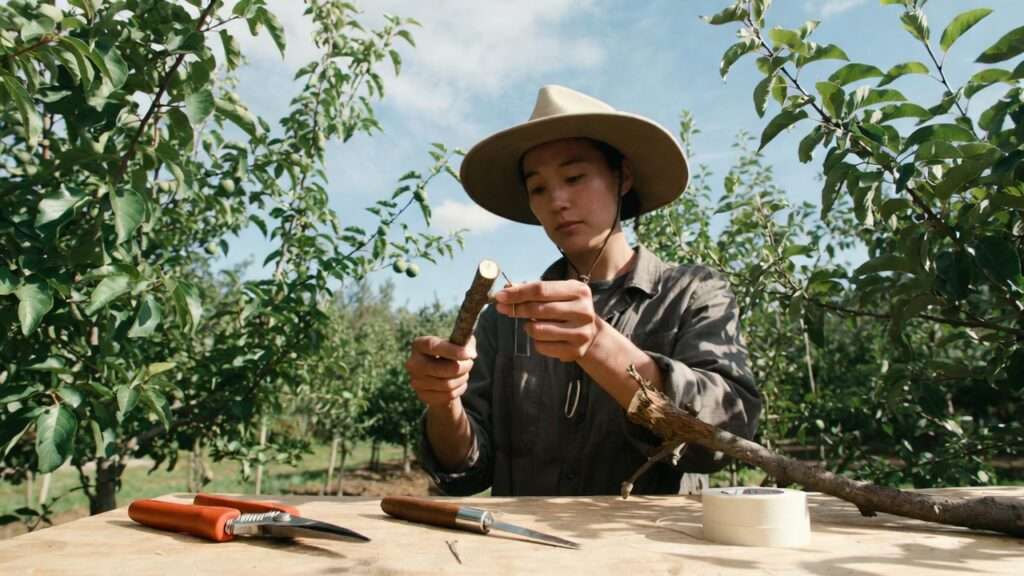
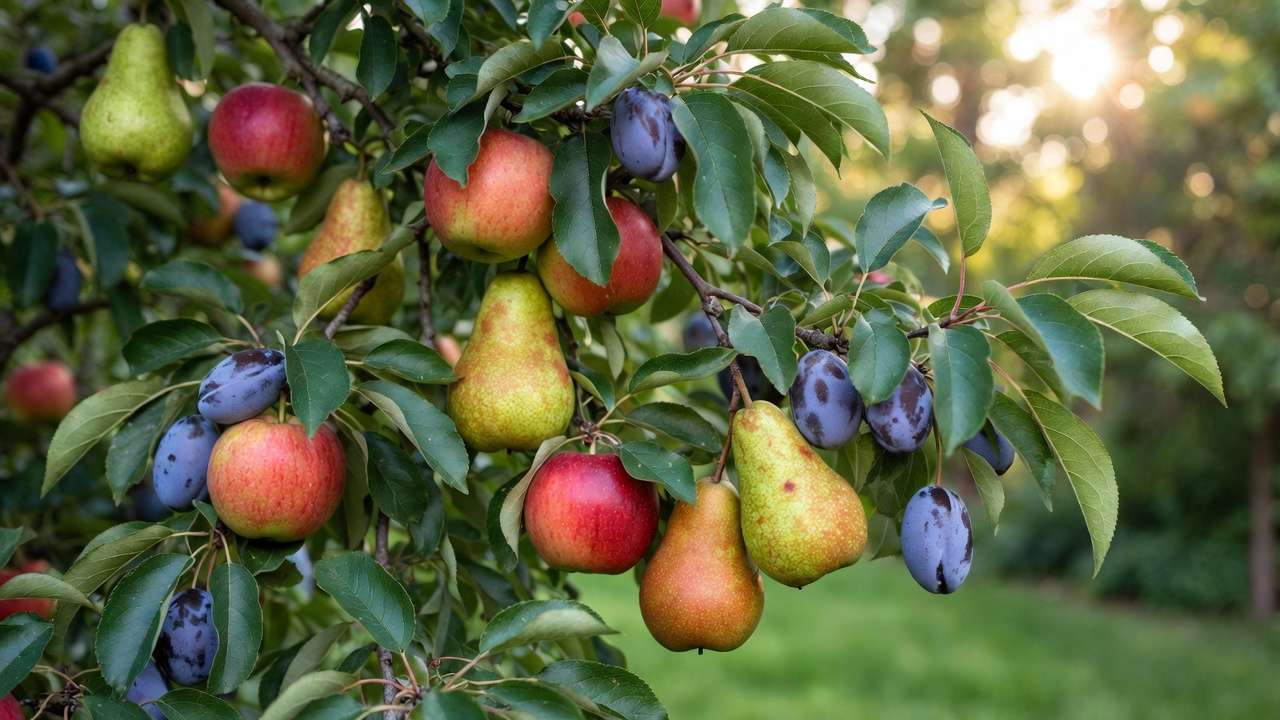
Imagine standing in your backyard, picking a perfect Honeycrisp apple, a juicy Bartlett pear, and a sweet Santa Rosa plum—all from the same compact tree. No more buying multiple expensive trees or settling for limited varieties at the nursery. This “fruit cocktail” magic happens through grafting basics for home orchardists, a timeless skill that lets you clone favorite fruits, save space, boost disease resistance, and grow exactly what you love. 🌳🍎🍐
Whether you’re a beginner frustrated by unreliable seed-grown trees or a hobby grower wanting to expand your small orchard affordably, grafting solves real problems: high costs (grafted nursery trees can run $50+ each), lack of heirloom or regional varieties, and the desire for multi-fruit trees in limited space. As someone who’s grafted hundreds of trees over the years—drawing from university extension guides, local scion exchanges, and trial-and-error in home settings—this guide gives you everything needed to start successfully. We’ll cover why grafting works, essential tools, proven beginner techniques (with step-by-step details), timing, aftercare, and troubleshooting to help you achieve 70-90% success rates on your first tries. Let’s turn your backyard into a thriving, personalized orchard! 🚀
What Is Grafting and Why Should Home Orchardists Learn It? 🤔🌟
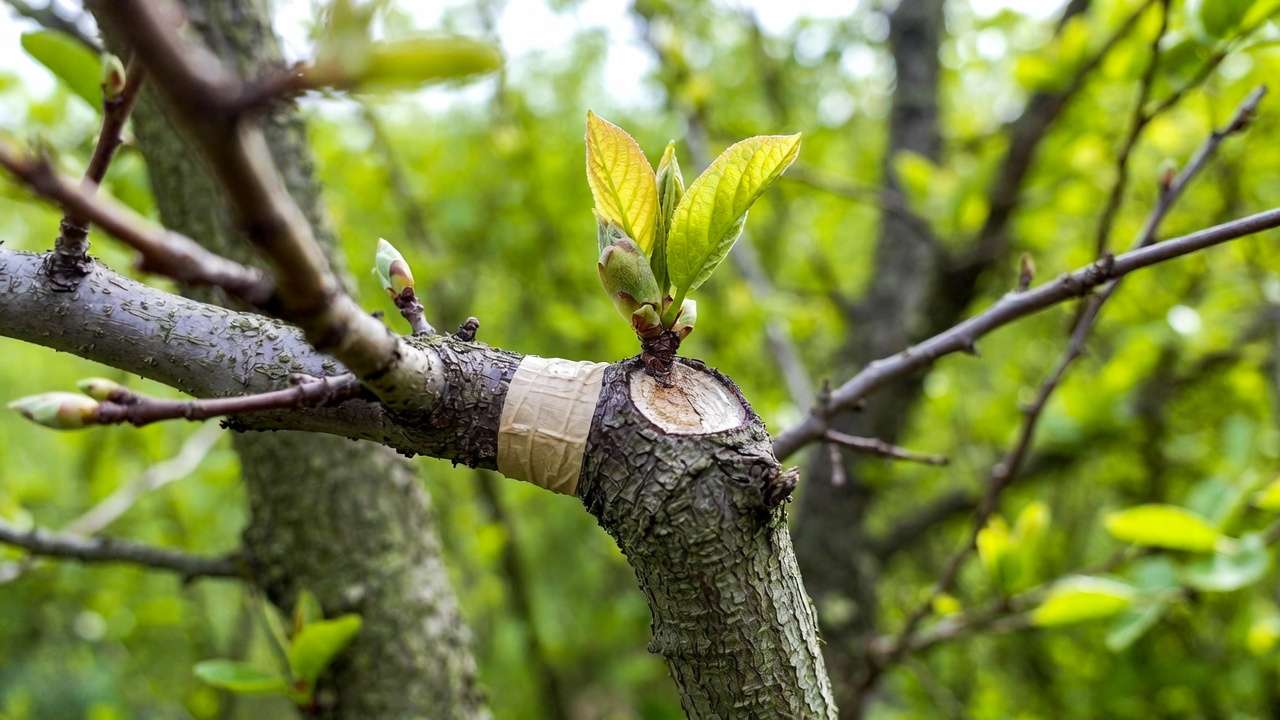
Grafting is the art of joining a scion (a cutting from the desired fruit variety) to a rootstock (the rooted base) so they heal into one living plant. The cambium layers—the thin green growth ring just under the bark—must align perfectly for vascular tissues to connect, allowing water, nutrients, and sugars to flow.
For home orchardists, grafting offers game-changing benefits:
- Exact clones: Fruit trees from seeds rarely match the parent (due to cross-pollination). Grafting propagates identical varieties—like that perfect grandma’s apple.
- Multi-variety trees: Add 3–5 fruits to one tree for small yards (pollination bonus too!).
- Size control: Dwarfing rootstocks keep trees 8–12 ft tall instead of 25+ ft, making picking and care easier.
- Better performance: Rootstocks provide disease resistance (e.g., fire blight tolerance), better soil adaptation, or cold hardiness.
- Cost savings: One rootstock + free scion wood = new trees for pennies compared to nursery prices.
People have grafted for over 2,000 years (ancient Romans loved it!), but today it’s accessible to anyone with basic tools. Apples and pears are the most forgiving for beginners—success rates often hit 80–95% with good technique. 🍏🍐
Understanding the Key Parts: Scion vs. Rootstock 🔍
- Scion: The top part you want for fruit flavor, texture, and type (e.g., Granny Smith apple scion). Collect pencil-thick, 1-year-old wood with healthy buds.
- Rootstock: The bottom provides roots, size control, and vigor. Common types:
- Dwarf (e.g., M9 for apples: 8–10 ft trees)
- Semi-dwarf (M26 or MM106: 12–16 ft)
- Standard (seedling: full size, but great anchorage)
Compatibility is crucial: Stick to related groups.
- Pome fruits (apples, pears, quince) usually graft well within family.
- Stone fruits (peaches, plums, cherries, apricots) have their own groups—don’t graft peach on apple!
- General rule: Same genus works best (Malus for apples, Pyrus for pears). Intergeneric grafts (e.g., pear on quince) are possible but trickier.
Start with apples—they’re the easiest and most rewarding for new grafters. 🌸
Best Time to Graft: Timing Is Everything ⏰🌸
Success depends on sap flow and dormancy:
- Primary window: Late winter to early spring (February–April in most zones), when rootstock buds swell but before full leaf-out. Sap rises, callus forms fast.
- Collect scion wood in true dormancy (December–February) during pruning—store it right!
- Summer option: Chip budding or T-budding (July–August) for stone fruits—lower risk if spring fails.
- Regional note: In warmer climates (like parts of Bangladesh or similar subtropical areas), graft earlier (January–February) to beat heat.
Miss the window? Grafts dry out or fail to heal—patience pays off! ❄️➡️🌿
Essential Tools and Materials Every Beginner Needs 🛠️🔧
You don’t need fancy gear—start under $50:
- Sharp grafting knife (single-bevel carbon steel for precise cuts)
- Quality pruning shears + small saw
- Grafting tape (para film, Buddy Tape, or electrical tape—stretchy, seals moisture)
- Wound sealant (grafting wax, tree wound paint, or even non-toxic alternatives like toilet wax ring for budget)
- 70% alcohol + cloth for sterilizing (prevents disease)
- Optional: Omega-cut or V-grafter tool (easier for beginners)
- Plastic bags or damp sphagnum moss for scion storage
Pro tip: Sterilize everything between cuts—bacteria ruin grafts fast! 🧼
Step-by-Step: Top Beginner Grafting Techniques 📝🌿
Focus on these high-success methods for home use.
1. Whip-and-Tongue Graft (Best for Beginners – Highest Success Rate!) ⭐
Ideal when scion and rootstock diameters match (pencil-thick).
Steps:
- Cut both at 45° angle for long matching faces.
- Make a “tongue” slit down the center of each cut (about 1/3 way).
- Interlock tongues like puzzle pieces—align cambium on at least one side.
- Wrap tightly with grafting tape (leave buds exposed).
- Seal top of scion with wax to prevent drying.
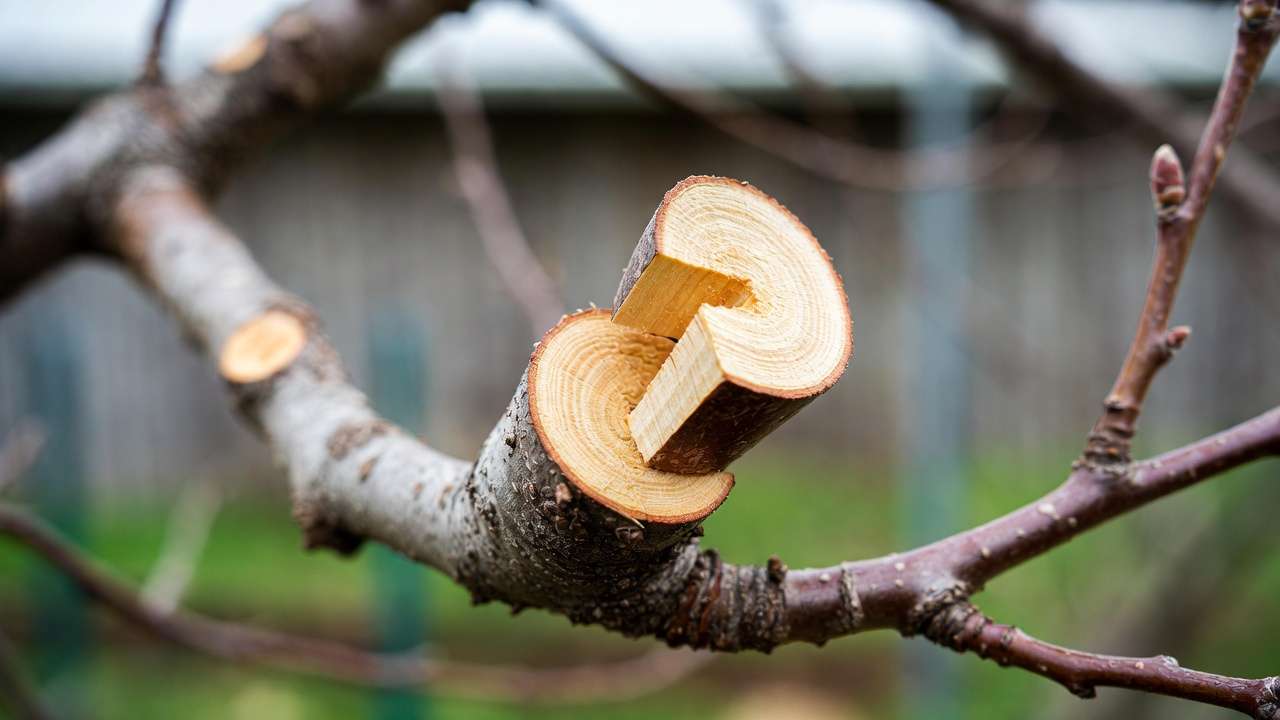
Why it rocks: Strong mechanical hold, fast callus, 80–95% success on apples/pears. Practice on spare branches first! ✂️
(Imagine a clear diagram here: two angled cuts interlocking—perfect cambium contact.)
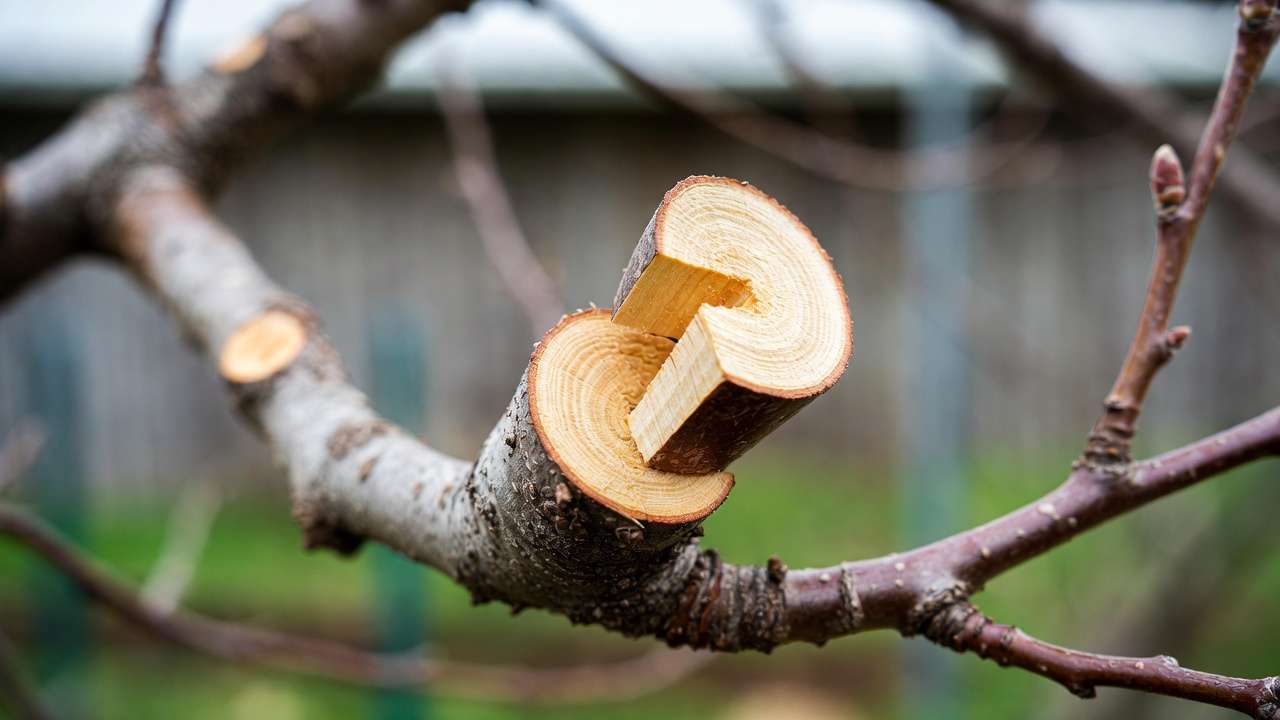
2. Cleft Graft (Great for Top-Working Older Trees or Size Mismatch)
For thicker rootstock (up to 2 inches).
Steps:
- Cut rootstock straight across, split center with knife/hatchet (2–3 inches deep).
- Trim scion base to wedge shape (two long bevels).
- Insert 1–2 scions into split, aligning cambium on outer edge.
- Seal entire union + scion tips with wax.
Common use: Revive old, low-quality trees with better varieties. 🌳🔄
3. Bark Graft (Spring When Bark Slips Easily)
For larger rootstocks in active growth.
Steps: Similar to cleft but slide scions under loosened bark—simple and forgiving.
4. Chip Bud or T-Bud (Summer Budding Option)
Low-risk for adding varieties.
- Cut a bud + shield from scion.
- Insert into T-shaped cut on rootstock.
- Wrap, leave bud exposed.
Great for peaches/plums—try if spring grafting fails. 🌞
Golden rule: Cambium alignment—where the magic happens! If layers touch, healing begins in days. ⚡
How to Collect, Store, and Prepare Scion Wood ❄️📦
- Harvest during winter dormancy from healthy, disease-free trees.
- Choose 1-year shoots, pencil diameter, 6–12 inches long with 3–5 buds.
- Cut clean, label varieties immediately (tape + marker).
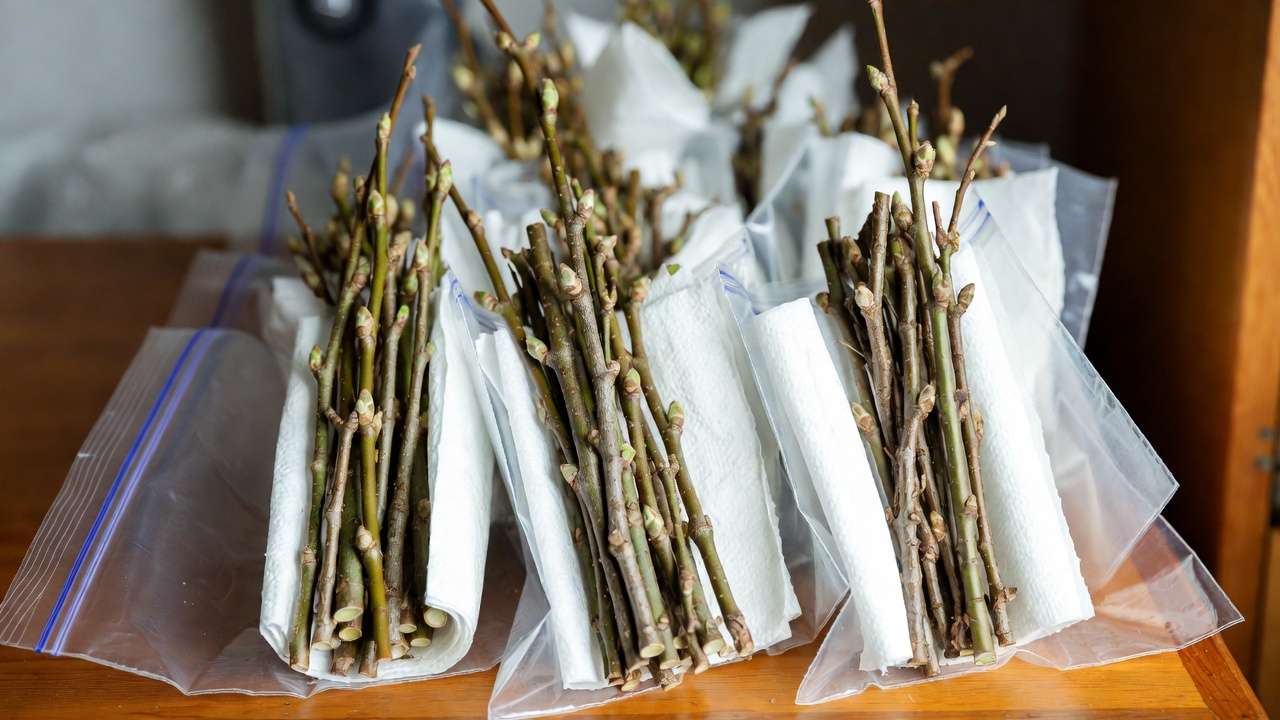
- Store: Damp paper towels inside zip bag, refrigerate (34–40°F/1–4°C)—lasts months.
- Soak in water 24 hours before grafting to rehydrate.
Join local scion swaps or online forums—free rare varieties await! 👥
Aftercare: Helping Your Graft Succeed 🌡️💧
- Place in shade/protected spot first 4–6 weeks (avoid direct sun/wind).
- Water consistently—keep soil moist but not soggy.
- Check tape after 4–8 weeks; loosen/remove if not degrading.
- Prune competing shoots below graft to direct energy up.
- Success signs: Bud swell in 2–4 weeks, new growth by summer.
- Full union: 1–2 seasons—be patient!
Common Beginner Mistakes and How to Avoid Them 🚫😅
From extension experts and real backyard trials:
- Misaligned cambium (most common fail)—always check both sides.
- Dull/dirty tools → infection—sharpen + sterilize.
- Dried scions or poor storage—use fridge, damp wrap.
- Wrong timing—graft too late, sap flow mismatches.
- Incompatibility—stick to same-family fruits.
- Over-wrapping buds or removing protection too early.
Practice on cheap rootstock—most failures teach more than successes! 📚
Troubleshooting: What If the Graft Fails? 🛑🔍
- No bud break by late spring → likely dead (dry, black cambium).
- Causes: Drying, rot, pests, incompatibility.
- Fixes: Re-graft same season if possible, or learn—average beginner succeeds after 2–3 tries.
- Pests (aphids, borers): Use organic sprays early.
Advanced Tips for Home Orchardists Ready to Level Up 🚀
- Build “fruit salad” trees: 4–5 varieties on one dwarf rootstock.
- Top-work mature trees: Cut back, cleft graft new scions.
- Rootstock picks: Apples—M26 semi-dwarf; Pears—OHxF series.
- Organic sealants: Natural beeswax mixes.
Real-Life Examples and Success Stories 🌳🍑
One home grower turned a single mediocre apple tree into a 5-variety producer—Harvest variety from June to October! Many report first grafts fruiting in 2–3 years.
Frequently Asked Questions (FAQs) ❓
- Can I graft different fruits together? Usually no—apple on pear rarely works long-term.
- How long until fruits? 2–5 years, depending on rootstock/scion age.
- Easiest start? Apples/pears on matching rootstock.
- Where to source? Local exchanges, nurseries, online (e.g., Fedco, Trees of Antiquity).
- Ethical? Yes—home use is fine; share scions freely!
Conclusion: Start Grafting Today and Grow Your Dream Orchard! 🌟🍎
Grafting basics for home orchardists unlock endless possibilities—custom varieties, space-saving multi-trees, healthier plants, and huge satisfaction. Gather scions this winter, practice cuts, and experiment. Your first successful graft will hook you forever!
Share your grafting adventures in the comments—what’s your dream variety? Let’s build better orchards together. Happy grafting! 🌿❤️











