
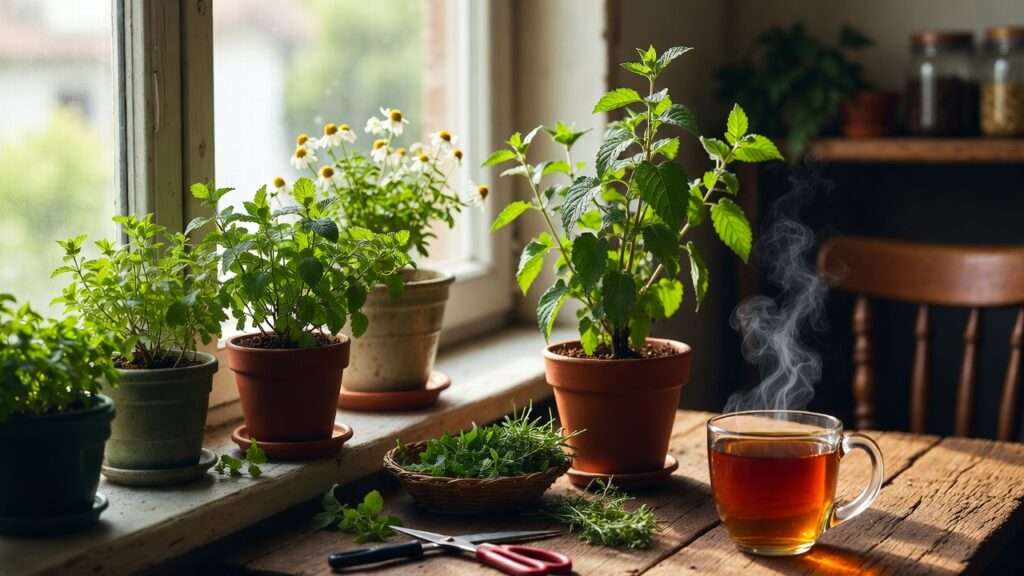
Picture this: It’s a chilly evening in your cozy apartment, rain tapping against the window, and instead of reaching for a dusty tea bag from the pantry, you simply lean over to your sunny windowsill. You pinch a few vibrant green leaves from your very own mint or lemon balm plant, drop them into a mug of hot water, and moments later, you’re sipping the freshest, most aromatic herbal tea imaginable—bright, potent, and completely free of additives. 🌧️🍵
This isn’t a fantasy; it’s the rewarding reality of growing herbal teas from indoor garden plants. More people than ever are discovering the joy (and practicality) of turning small indoor spaces into mini tea gardens. Whether you live in a compact urban flat, face long winters, or simply want fresher, more flavorful brews than store-bought options, an indoor herbal tea setup solves real problems: limited outdoor access, concerns about pesticides in commercial herbs, rising tea costs, and the desire for year-round wellness rituals that feel personal and sustainable.
As a passionate plant care expert who’s nurtured countless indoor herb gardens (and brewed thousands of cups along the way), I’ve seen firsthand how these plants thrive indoors with the right care. In this in-depth guide, we’ll cover everything you need to start your own thriving indoor tea haven—from the absolute best herbs for beginners to setup tips, harvesting secrets, delicious blend recipes, and troubleshooting advice. By the end, you’ll have all the tools to enjoy pure, homegrown herbal infusions any day of the year. Ready to grow your own tea story? Let’s dive in! 🌱✨
Why Grow Your Own Indoor Herbal Tea Garden? 🌱💚
Growing your own herbs for tea isn’t just a hobby—it’s a smart, health-conscious choice with tangible benefits that go beyond convenience.
- Fresher, More Potent Flavors — Homegrown herbs harvested at peak freshness deliver vibrant aromas and tastes that fade quickly in store-bought dried teas (often months or even years old by the time they reach your cup). Fresh leaves release essential oils more readily, making every sip brighter and more satisfying. 🍃
- Full Control Over Quality — Skip the worry about pesticides, additives, or low-grade fillers common in mass-produced tea bags. Your indoor plants are organic by default when you choose natural soil and care methods—no mystery ingredients here!
- Year-Round Access, No Matter the Weather — Perfect for apartment dwellers or regions with harsh winters (like many in cooler climates). With good indoor lighting, you can harvest fresh leaves even in February. ❄️🌿
- Wellness Perks from Nature’s Pharmacy — Many tea herbs offer gentle, evidence-based support: mint for digestion, chamomile for relaxation, holy basil for stress adaptation. Brewing your own lets you customize for your needs, like a calming evening blend or an invigorating morning cup.
- Therapeutic & Mindful Hobby — Tending plants reduces stress, improves air quality indoors, and creates a rewarding daily ritual. Studies show gardening (even small-scale) boosts mood and mindfulness—plus, the satisfaction of sipping something you nurtured is unmatched. 😌
- Budget-Friendly in the Long Run — A few starter plants or seeds cost little compared to ongoing tea purchases. One healthy mint plant alone can provide hundreds of cups over time!
These advantages make indoor herbal tea gardening a perfect fit for plant lovers seeking functional, sustainable homegrown solutions.
Top 10 Easy-to-Grow Indoor Herbs for Delicious Herbal Teas 🌿🥇
I’ve curated this list based on ease of indoor cultivation, reliable flavor for tea, and proven performance in low-to-moderate light apartments. All thrive in pots and deliver excellent results for beginners.
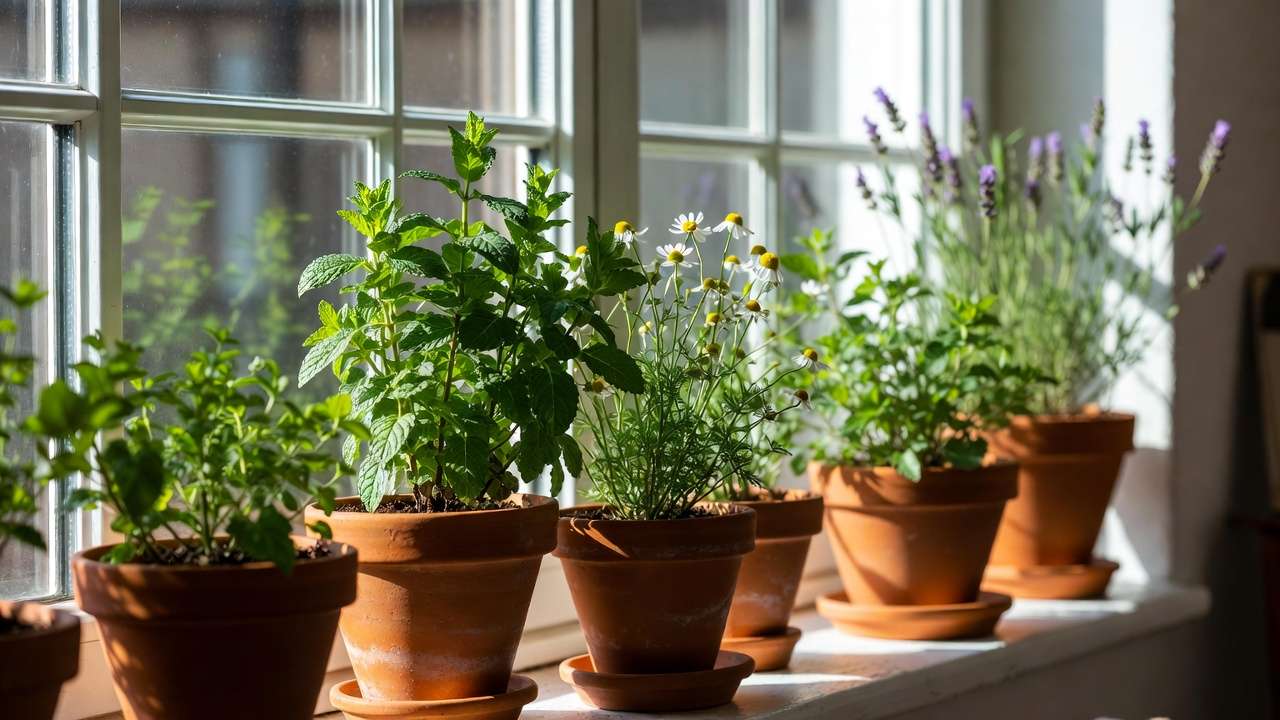
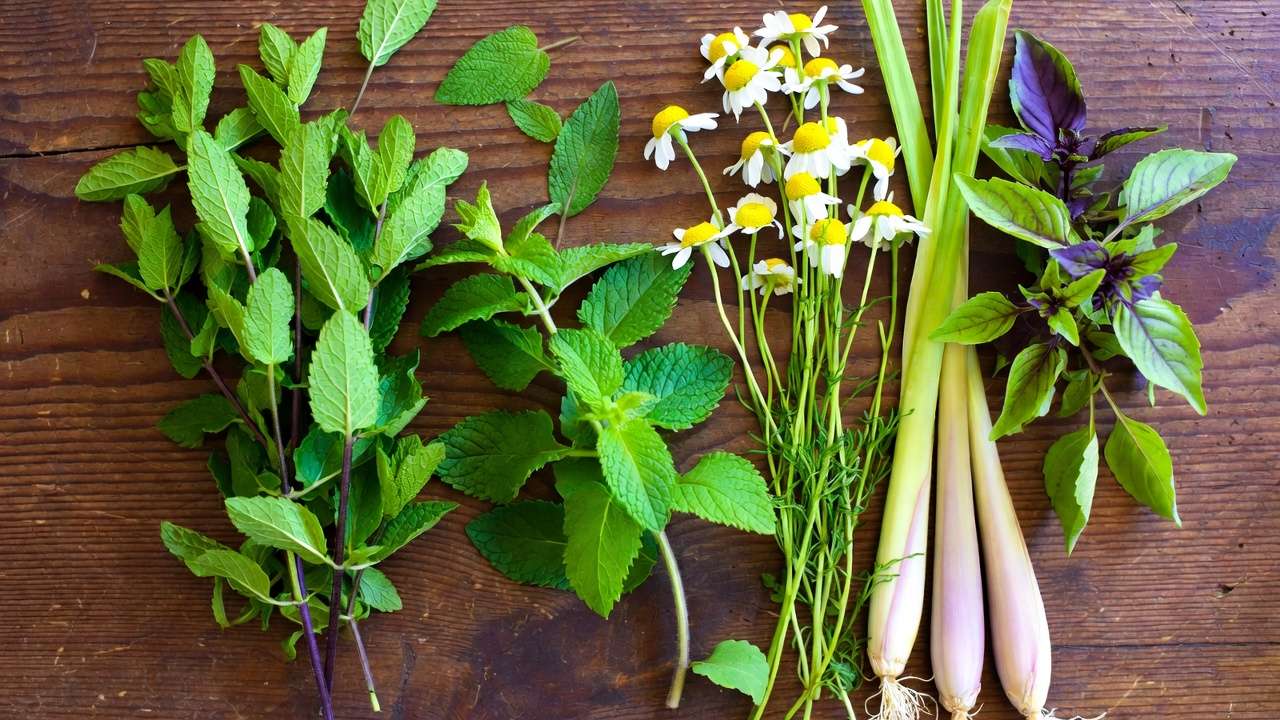
1. Mint (Peppermint & Spearmint) 🌱❄️
The undisputed king of herbal teas—refreshing, cooling, and incredibly versatile. Peppermint offers strong menthol notes for digestion-soothing brews; spearmint is milder and sweeter.
Indoor Growing Tips — Plant in its own pot (it spreads vigorously via runners!). Partial to bright indirect light (4–6 hours); keep soil consistently moist but not waterlogged. Loves humidity—mist occasionally.
Harvest & Brew — Snip stems above a leaf node anytime after 6–8 inches tall. Use 5–10 fresh leaves per cup; steep 5–7 minutes for invigorating mint tea.
2. Lemon Balm 🌿🍋
A mint family member with a delightful mild lemon-citrus scent—calming yet uplifting, perfect for mood-boosting or digestive teas.
Easy Indoors — Tolerates lower light (bright indirect is ideal); trim regularly to prevent legginess and encourage bushiness. Well-draining soil; water when top inch dries.
Bonus — Its gentle lemon flavor brightens blends without overpowering.
3. Chamomile 🌼😴
The classic “bedtime” tea—gentle, apple-like floral notes that promote relaxation and ease stomach discomfort.
Grow Tips — Opt for German chamomile (taller, more prolific indoors). Needs bright indirect light; harvest daisy-like flowers when fully open. Sow seeds directly in pots.
Brew Fresh or Dry — Fresh flowers for mild cups; dried for stronger soothing effects.
4. Holy Basil (Tulsi) 🌿🙏
An adaptogenic powerhouse—earthy, spicy, slightly clove-like flavor that supports stress relief and immunity.
Loves Warmth — Thrives on sunny windowsills (6+ hours light); keep soil evenly moist and provide humidity. Pinch tops for bushier growth.
Excellent Solo or Blended — Adds depth to wellness teas.
5. Lavender 🌸🛀
Floral and relaxing—promotes calm, better sleep, and mild headache relief.
Indoor Success — Demands full sun (supplement with grow lights if needed); excellent drainage to prevent root rot. Use English lavender varieties.
Use Sparingly — Flowers and leaves; 1–2 sprigs per cup to avoid bitterness.
6. Lemongrass 🌾🍋
Bright, zesty citrus-ginger punch—invigorating and great for digestion.
Grow from Stalks — Root store-bought stalks in water, then transfer to soil. Tall but pot-friendly; needs bright light and regular watering.
Steep Stalks — Bruise and chop for bold, refreshing tea.
7. Anise Hyssop 🌿🍬
Sweet licorice-mint flavor—unique, kid-friendly, and aromatic.
Compact Growth — Easy indoors; bright light; attractive purple flowers add beauty.
Flowers & Leaves — Both delicious in teas.
8. Bee Balm (Monarda) 🐝🌺
Citrusy-spicy notes with immune-supporting properties.
Perky & Pretty — Bright light; well-draining soil; harvest leaves/flowers.
Bold Brews — Dry for concentrated flavor.
9. Catnip (for Humans Too!) 😺🌿
Mild lemon-mint taste; naturally calming without drowsiness.
Super Easy — Grows vigorously indoors; extra fun if you have cats!
10. Stevia 🌱🍬
Natural, zero-calorie leaf sweetener—perfect for subtly sweetening herbal blends.
Compact Plant — Bright light; harvest young leaves for best sweetness.
These 10 form a complete indoor tea arsenal—mix and match for endless variety!
How to Set Up Your Indoor Herbal Tea Garden 🪴✨
Success starts with smart basics tailored to indoor conditions.
- Choosing the Right Spot — South- or west-facing window for 6+ hours bright light. Use full-spectrum LED grow lights (12–16 hours/day) in low-light homes.
- Best Containers & Soil — 6–12 inch pots with drainage holes (terracotta for breathability). Use well-draining potting mix amended with perlite or vermiculite.
- Watering & Humidity — Water when top 1 inch of soil feels dry; avoid sogginess. Group plants or use pebble trays for humidity-loving types like mint.
- Fertilizing — Diluted organic liquid fertilizer every 4–6 weeks in growing season (spring–fall).
- Pest Prevention — Inspect regularly; use neem oil spray for aphids or spider mites. Good airflow helps!
With these foundations, your plants will flourish and reward you with abundant harvests.
Harvesting, Drying, and Storing Your Homegrown Tea Herbs 🌾📦
The magic really happens when you harvest — that’s when your indoor garden starts paying dividends in flavor and aroma.
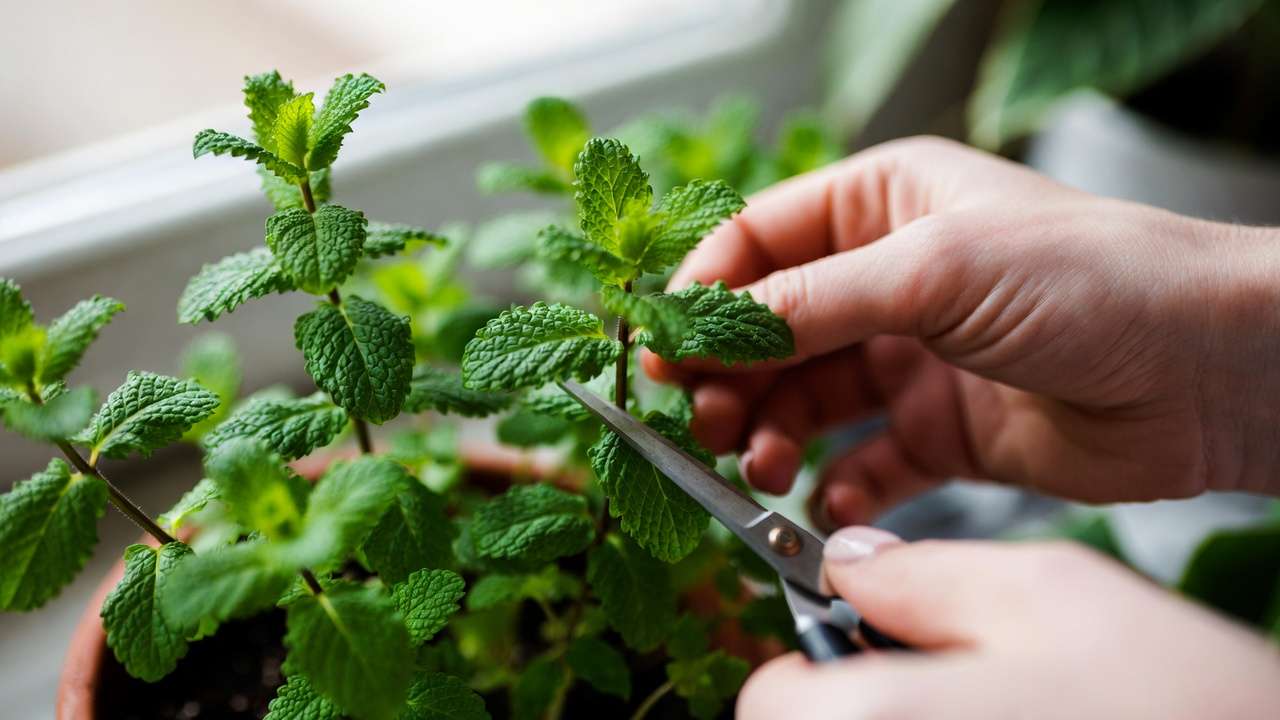
When & How to Harvest for Maximum Flavor The best time is in the morning after the dew has evaporated but before the sun gets too hot. At this point, essential oils are at their peak concentration.
- Use clean, sharp scissors or herb snips.
- Always cut just above a leaf node (set of leaves) — this encourages bushier regrowth and prevents leggy, weak stems.
- Never strip a plant bare: take no more than 1/3 of the foliage at once so it can recover quickly.
- For flowering herbs (chamomile, lavender, bee balm, anise hyssop), harvest blossoms when they are fully open but before they start to fade.
Drying Methods That Preserve Quality Fresh is wonderful, but drying lets you stockpile your harvest for year-round use.
- Air Drying (Traditional & Simple) — Bundle 5–10 stems with twine, hang upside down in a warm (70–80°F), dark, well-ventilated spot (closet, pantry with fan). Takes 1–2 weeks.
- Dehydrator — Best for consistent results. Set to 95–110°F for 2–6 hours depending on herb thickness.
- Oven on Low — Spread leaves/flowers on a parchment-lined tray; set oven to lowest setting (~170°F or less), prop door open slightly, check every 30 minutes.
Pro Tip — Leaves should crumble easily when fully dry but retain color and scent. Over-drying makes them lose potency.
Storage for Long-Lasting Freshness
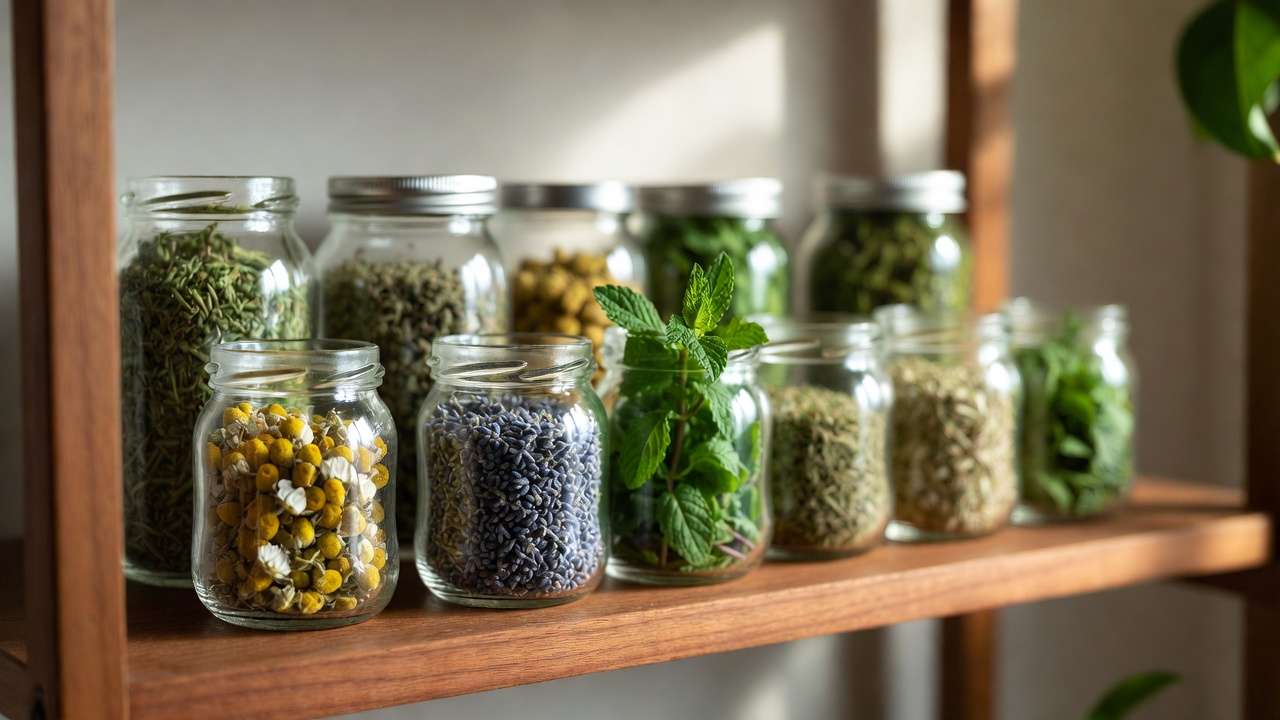
- Store in airtight glass jars (amber or dark to block light) or metal tins.
- Label with herb name and date.
- Keep in a cool, dark cupboard away from heat and humidity.
- Properly stored dried herbs retain excellent flavor for 6–12 months (mint and lemon balm often last longer).
Fresh vs. Dried in Brewing Fresh herbs = brighter, greener taste (ideal for mint, lemon balm, lemongrass). Dried herbs = more concentrated, deeper flavor (perfect for chamomile, lavender, holy basil).
Brewing the Perfect Cup from Your Indoor Harvest ☕🔥
You’ve grown it, harvested it — now let’s make it taste incredible.
Basic Herbal Tea Brewing Method
- Boil fresh, filtered water (avoid reboiling same water multiple times — it becomes flat).
- Use 1–2 teaspoons dried herb or a generous handful (5–10 leaves) of fresh per 8 oz cup.
- Steep covered for 5–10 minutes (longer for stronger flavor, shorter for delicate herbs like chamomile).
- Strain (use a fine mesh strainer or reusable tea infuser).
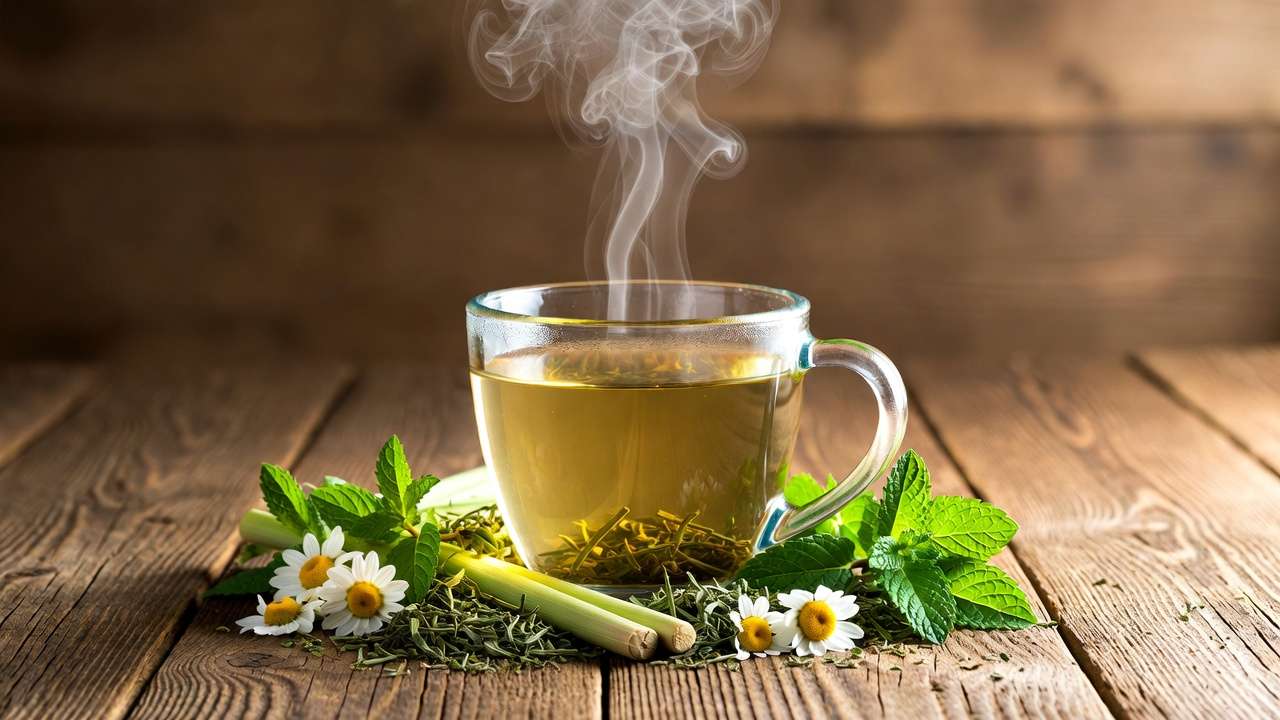
Water Temperature Guide by Herb
- Delicate flowers (chamomile, lavender): 195–205°F (just off boil)
- Leaves & stems (mint, lemon balm, holy basil): 212°F (full boil)
- Tougher stalks (lemongrass): 212°F, bruise/chop first for best extraction
Enhancements for Even Better Flavor
- Add a teaspoon of raw honey or a slice of fresh lemon after steeping.
- Blend with a small amount of black, green, or rooibos tea for caffeine + herbal benefits.
- Experiment with cold brewing: steep in room-temperature water 4–12 hours in the fridge for a smooth, refreshing iced version.
Creative Herbal Tea Blend Recipes to Try 🫖🌈
Here are five beginner-to-intermediate blends using your indoor harvest — each solves a specific need.
- Relaxation Blend (evening wind-down)
- 1 part dried chamomile
- 1 part dried lemon balm
- ½ part dried lavender Steep 7–10 min. Calming, floral, perfect before bed. 😴
- Digestive Delight (after meals)
- 2 parts fresh or dried peppermint
- 1 part lemon balm
- ½ part anise hyssop Bright, soothing, reduces bloating naturally.
- Immune Booster (daily wellness)
- 1 part holy basil (tulsi)
- 1 part bee balm leaves/flowers
- ½ part lemongrass Spicy-citrusy with adaptogenic support.
- Refreshing Minty Morning (energizing start)
- 2 parts spearmint
- 1 part lemongrass
- 2–3 fresh stevia leaves Crisp, naturally sweet, caffeine-free wake-up.
- Cozy Citrus-Spice Blend (fall/winter favorite)
- 1 part lemon balm
- 1 part holy basil
- ½ part lavender
- Pinch of dried stevia Warm, uplifting, mood-lifting.
Feel free to adjust ratios to your taste — that’s the beauty of homegrown!
Common Challenges & Pro Solutions for Indoor Tea Herbs ⚠️🛠️
Even experienced growers hit bumps. Here are the most frequent indoor issues and fixes.
- Leggy, stretched growth → Not enough light. Move closer to window or add a 20–40W full-spectrum LED grow light 12–16 hours/day.
- Yellowing leaves → Usually overwatering or poor drainage. Let soil dry slightly between waterings; ensure pots have holes.
- Pests (aphids, spider mites) → Wipe leaves with damp cloth; spray weekly with diluted neem oil or insecticidal soap.
- Overcrowding / competition → Give each herb its own pot. Mint especially needs isolation to avoid taking over.
- Slow growth in winter → Natural dormancy. Reduce watering, skip fertilizer, maintain light.
Expert Insights & Safety Notes 📚⚕️
- Start Small — Begin with 3–4 plants (mint, lemon balm, chamomile are foolproof). Master those before expanding.
- Propagation Power — Take 4–6 inch stem cuttings of mint, lemon balm, holy basil; root in water then pot up. Free new plants!
- Medicinal Use Caution — While these herbs are generally safe as food, concentrated or daily medicinal use (especially holy basil, lavender) should be discussed with a healthcare provider — particularly if pregnant, breastfeeding, or on medications.
- Sustainability Bonus — Indoor herb gardening reduces packaging waste from store-bought tea and promotes biodiversity in your home ecosystem.
Frequently Asked Questions (FAQs) ❓
Can I really grow herbal teas indoors year-round? Yes — with 6+ hours bright indirect light (or grow lights) and proper care, most of these herbs produce harvestable leaves continuously.
Which herb is easiest for absolute beginners? Mint (especially peppermint) or lemon balm — forgiving, fast-growing, and tolerant of minor mistakes. 🌱
How long until my first harvest? 4–8 weeks from seedling/young plant, depending on species and light conditions.
Are these herbs safe for kids and pets? Most are (mint, chamomile, lemon balm), but catnip will drive cats wild 😺, and lavender/stevia should be given in moderation. Always research individual plants.
Can I use these herbs for anything besides tea? Absolutely! Add fresh leaves to salads, smoothies, desserts, infused water, or homemade herbal syrups.
Ready to transform your windowsill into a living tea bar? Pick one or two of these easy herbs today, give them a cozy spot with good light, and watch your home become a source of daily comfort and flavor. There’s nothing quite like the quiet pride of brewing a cup from plants you raised yourself. Your fresh, homegrown herbal tea journey starts now! 🌿❤️☕











