
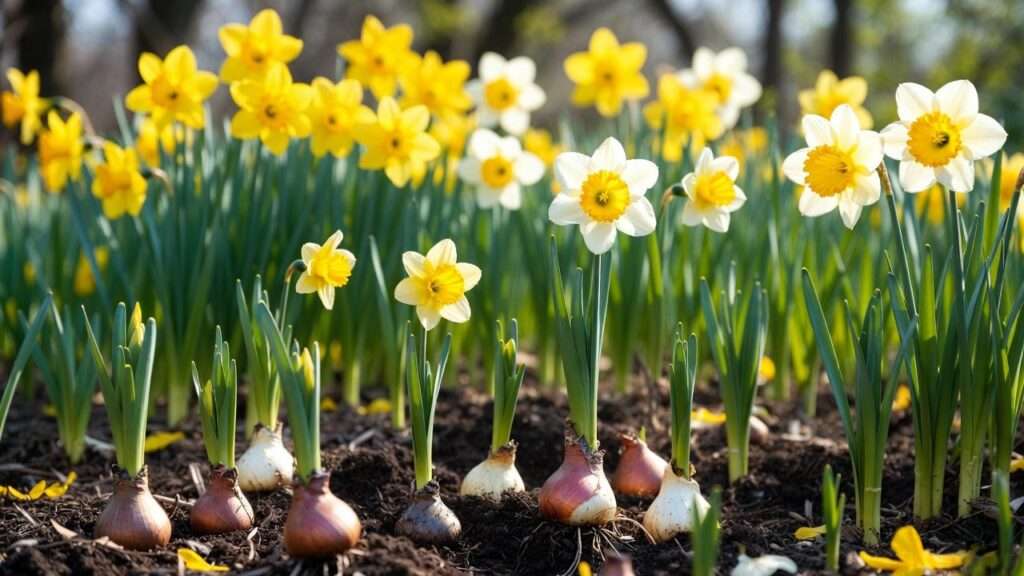
Imagine stepping into your garden on a crisp early spring morning, only to be greeted by a sea of cheerful yellow, white, and orange trumpets swaying in the breeze—the unmistakable sign that winter has finally surrendered. Daffodils (Narcissus) are one of the most reliable harbingers of spring, bringing joy and color when we need it most. But here’s the catch: many gardeners excitedly buy bags of daffodil bulbs in fall, plant them with high hopes, and then wonder why they get weak, floppy stems, few flowers, or no blooms at all the following season.
The secret to those vibrant, long-lasting displays? It’s all about getting one crucial detail right: how deep to plant daffodil bulbs. Plant them too shallow, and they’ll struggle with frost, pests, and instability. Too deep, and they may never emerge strongly enough to flower abundantly. In this comprehensive expert guide, drawing from years of hands-on experience cultivating thousands of daffodils—as well as guidelines from authoritative sources like the Royal Horticultural Society (RHS) and the American Daffodil Society (ADS)—we’ll dive deep into everything you need for success. Whether you’re a beginner or seasoned gardener, you’ll walk away knowing exactly how to achieve perennial, show-stopping blooms year after year. 🌼
:strip_icc()/blooming-daffodils-101561269-0936a6d168f747d3a9854bd94e6012b5.jpg)
Why Planting Depth Matters So Much 🧅
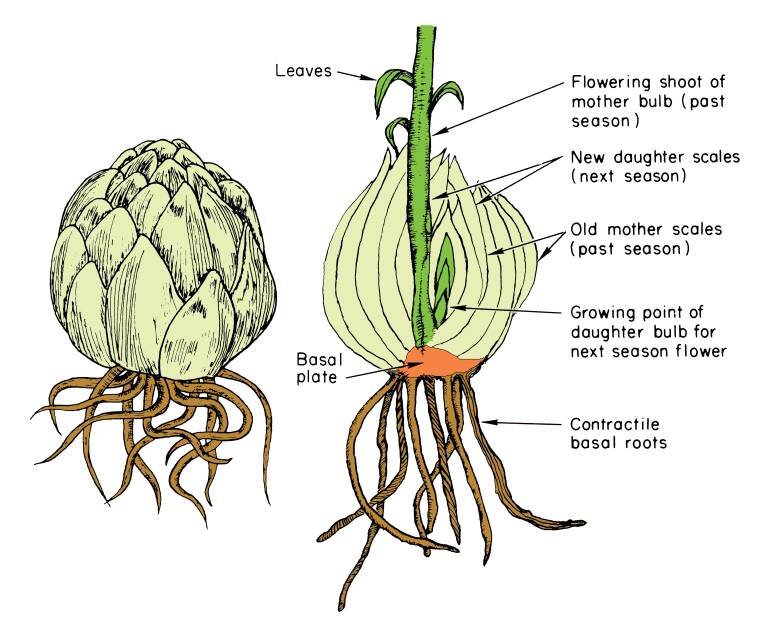
Daffodil bulbs aren’t just inert objects—they’re living storage organs packed with everything needed for next year’s growth and flowers. Understanding their anatomy helps explain why depth is critical.
A daffodil bulb consists of layered scales (like an onion) surrounding a central shoot, with a basal plate at the bottom where roots emerge and a pointed “nose” at the top where the stem will grow. Proper depth ensures:
- Strong root development: Roots need space to anchor and absorb nutrients/water.
- Protection from extremes: Enough soil cover shields from freezing/thawing cycles and summer heat.
- Optimal energy use: Bulbs draw on stored food; wrong depth wastes energy on excessive stem growth or delays emergence.
Consequences of incorrect depth:
- Too shallow (less than 4 inches cover): Bulbs vulnerable to frost heave, drying out, rodent/pest damage, and splitting into small non-flowering offsets. Stems often flop over from poor anchorage.
- Too deep (more than 8-10 inches for standard bulbs): Delayed or weak emergence, reduced flowering (known as “blind” bulbs), and eventual exhaustion of stored reserves.
Authoritative bodies agree: The RHS recommends planting at a depth equivalent to three times the bulb’s height, while the ADS notes deeper planting in sandy soils for better moisture retention. In my experience managing diverse gardens—from clay-heavy Midwest plots to sandy coastal beds—I’ve seen firsthand how nailing this depth transforms lackluster plantings into naturalized masterpieces that multiply beautifully over decades.
The Golden Rule: How Deep to Plant Daffodil Bulbs 🌱
General Guideline
The universally accepted expert rule for daffodil planting depth is 2-3 times the height of the bulb, measured from the base to the tip (nose). This means:
- For a typical large daffodil bulb (2 inches tall): Plant with the nose 4-6 inches below the soil surface (hole depth 6-8 inches, since the bulb occupies space).
- Standard recommendation: Aim for 6-8 inches deep for most varieties in average soil.
This aligns perfectly with RHS advice (“three times the bulb’s height”) and ADS guidelines, ensuring reliable performance. In lighter, sandy soils, go deeper (up to 8 inches) for stability and moisture; in heavy clay, slightly shallower but prioritize drainage to prevent rot.
Always plant pointy end up—roots grow downward from the basal plate!
Factors That Influence Ideal Depth
No two gardens are identical, so adjust based on:
- Bulb size: Larger “king-size” or double-nose bulbs perform best deeper (7-8 inches) for robust roots and bigger blooms.
- Soil type: Sandy/loamy—deeper; clay—shallower with amendments like compost for drainage.
- Climate/USDA zone: In colder zones (3-5), deeper (at least 6-8 inches) for frost protection. Warmer zones (8-10) may use slightly shallower but pre-chilled bulbs.
- Variety: Miniature daffodils (e.g., ‘Tête-à-Tête’)—3-5 inches deep; large trumpet types (e.g., ‘King Alfred’)—6-8 inches.
Pro tip from experience: Use a ruler or bulb planter marked with depths for precision—it’s a game-changer for consistent results.

When to Plant Daffodil Bulbs for Best Results 🍂
Timing is almost as important as depth. Daffodils need fall planting to establish roots before winter dormancy and require a chilling period (vernalization) for blooming.
- Ideal window: September to November, 2-4 weeks before your first hard frost, when soil temperatures cool to around 55-60°F (13-16°C).
- Zone-specific:
- Zones 3-5 (cold winters): Early fall (September-early October).
- Zones 6-7: Mid-October to early November.
- Zones 8-10 (milder): Late November-early December; choose low-chill varieties like jonquils or pre-chill bulbs in the fridge for 8-12 weeks.
Late planting? If the ground isn’t frozen, you can plant into December—blooms may be delayed, but roots will still form. Avoid spring planting; bulbs need that winter chill.
In my gardens across varying climates, fall-planted bulbs consistently outperform any rushed attempts.
Step-by-Step Guide to Planting Daffodil Bulbs 🔧
Choosing and Preparing Bulbs
Start with quality: Select firm, heavy, large bulbs without mold, soft spots, or damage. Bigger bulbs = more flowers initially. Store in a cool, dry place if not planting immediately.
Site Selection and Soil Preparation
Daffodils thrive in full sun (6+ hours) to light afternoon shade, in well-drained, fertile soil (pH 6-7). Avoid low spots prone to waterlogging—rot is the #1 killer.
Prep: Loosen soil to 12-15 inches deep. Incorporate organic matter (compost) and a balanced bulb fertilizer (e.g., bone meal for phosphorus) at the bottom—never direct contact with bulbs.
Planting Techniques
Tools: Bulb planter, auger, trowel, or dibber.
- Dig holes or trenches to proper depth.
- Space 4-6 inches apart for drifts; closer (3 inches) for pots/formal beds.
- Place bulb pointy end up, basal plate down.
- Backfill gently, firm soil, water thoroughly.
For containers: Use pots with drainage holes; plant slightly shallower (4-6 inches) and closer for impact.
After Planting Care
Water well to settle soil. Mulch with 2-3 inches of organic material for winter protection and weed suppression. No further watering needed until spring unless very dry.
Common Mistakes to Avoid (And How to Fix Them) ⚠️
Even experienced gardeners slip up sometimes. Here are the most frequent errors I’ve encountered in client gardens and my own trials—and proven fixes to get things back on track.
- Planting upside down: Bulbs often still sprout (stems bend toward light), but growth is delayed and weaker. Fix: If caught early, gently reposition. Prevention: Remember “nose up, roots down.”
- Too shallow or too deep: As discussed, this leads to frost damage, flopping, or blindness. Fix: Dig up in fall (after foliage dies), measure properly, and replant at 2-3x bulb height.
- Poor drainage causing rot: Waterlogged soil invites fungal diseases like basal rot. Fix: Relocate to raised beds or amend with grit/sand; discard rotten bulbs.
- Cutting foliage too early: Leaves recharge the bulb for next year—snipping prematurely weakens future blooms. Fix: Wait 6-8 weeks until fully yellowed; braid or loop if unsightly.
- Overcrowding without dividing: Clumps become congested after 4-5 years, reducing flowers. Fix: Divide post-bloom (see advanced tips below).
- Ignoring pests/diseases: Narcissus bulb fly larvae hollow bulbs; viral streaks distort leaves.
In my practice, proactive soil testing and annual inspections prevent 90% of issues. Always start with healthy, certified disease-free bulbs from reputable suppliers.
Advanced Tips for Stunning, Long-Lasting Displays 🌸
Once basics are mastered, elevate your daffodil game for magazine-worthy results.
Naturalizing Daffodils in Lawns or Woodlands
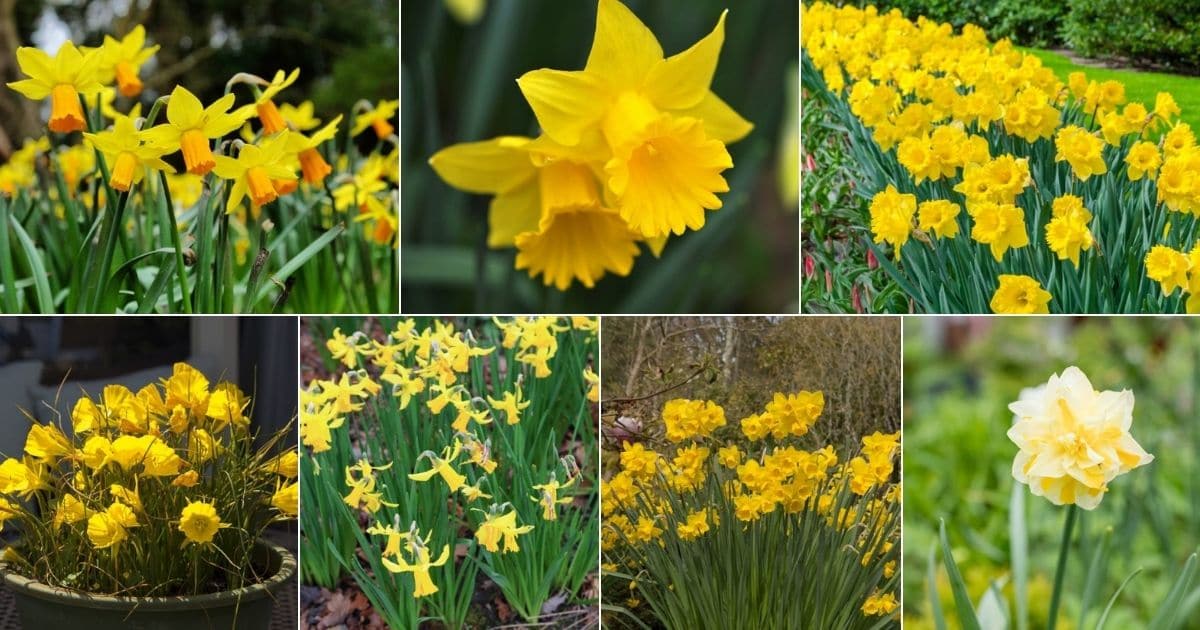
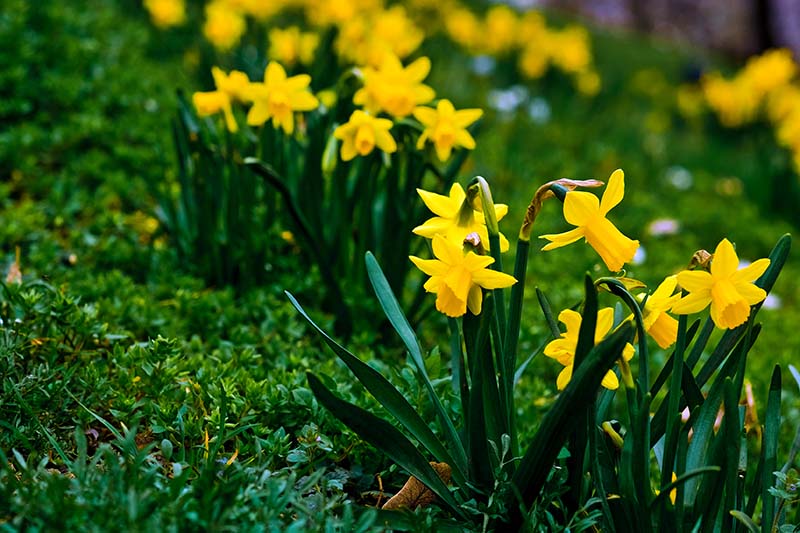
For that effortless “wild meadow” look, naturalize hardy varieties in grass or under deciduous trees. Toss bulbs randomly and plant where they land for organic drifts. Best varieties: ‘Carlton’, ‘Ice Follies’, ‘Thalia’—they multiply reliably.
Mow high in spring; delay first cut until foliage yellows (mid-summer). In woodlands, they thrive in dappled shade with leaf mulch.
I’ve created sweeping naturalized displays that persist 20+ years with zero maintenance beyond initial planting.
Companion Planting Ideas
Hide yellowing daffodil leaves while extending seasonal interest:
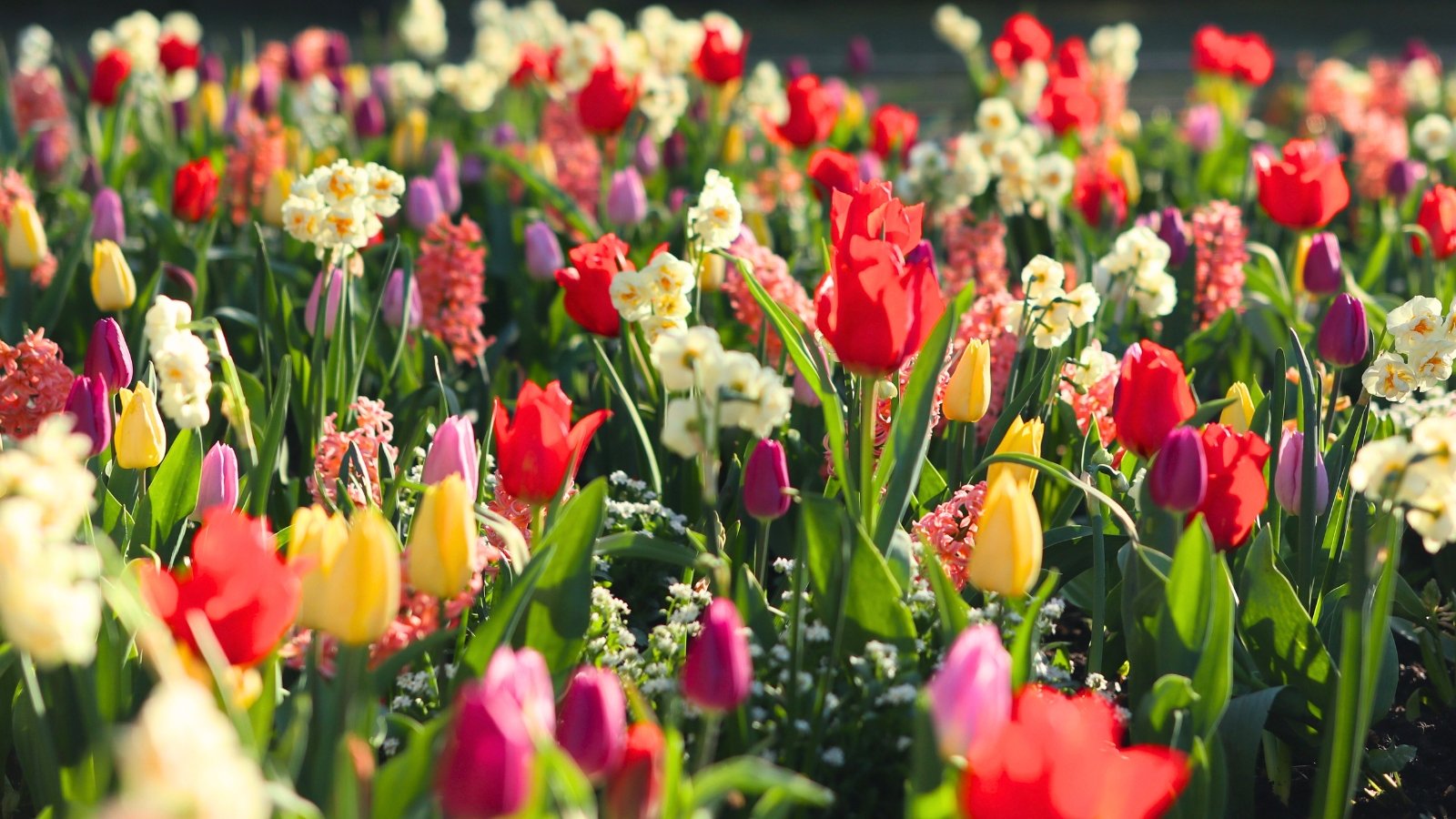
- Early: Pair with grape hyacinths (Muscari) or early tulips.
- Mid-season: Daylilies, hostas, or ferns emerge to cover fading foliage.
- Late: Perennials like peonies, salvia, or catmint for summer color.
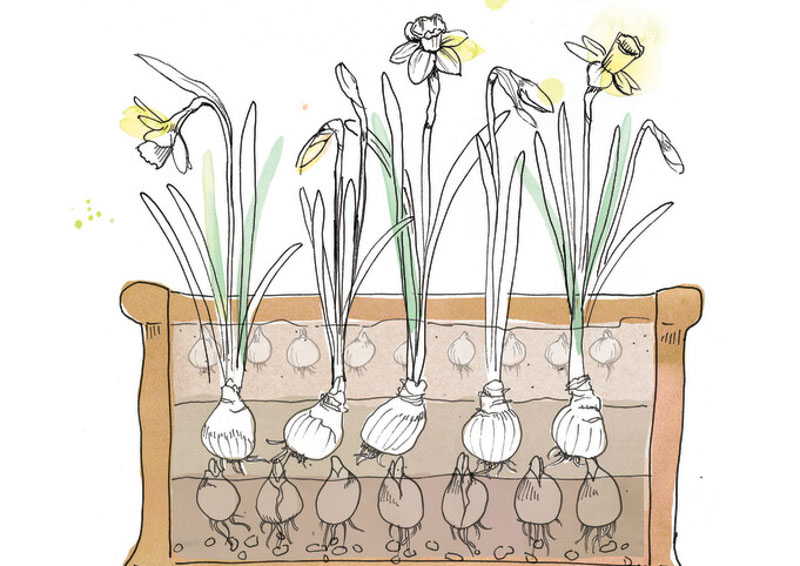
Try “lasagna layering”: Plant daffodils deepest, mid-layer tulips/hyacinths, shallow crocus—an explosion of sequential blooms from one spot.
Deer-resistant daffodils (toxic alkaloids) protect vulnerable companions too.
Forcing Daffodils Indoors
Brighten winter with forced blooms:
- Choose early varieties (e.g., ‘Paperwhite’, ‘Tête-à-Tête’).
- Pot in fall with noses just below surface.
- Chill 12-16 weeks at 40-50°F (fridge or garage).
- Bring into warmth/light—blooms in 3-6 weeks.
Perfect for holiday gifts or midwinter cheer.
:strip_icc()/101918443_preview-bd7a650753774a279b137e3cc690913f.jpg)
Dividing and Replanting Overgrown Clumps
After 4-6 years, flowering declines—time to divide:
- Dig clumps after leaves yellow (late spring/early summer).
- Separate offsets gently; discard small/damaged ones.
- Replant immediately at proper depth, or store cool/dry for fall.
This rejuvenates and multiplies your stock exponentially.
Troubleshooting: Why Aren’t My Daffodils Blooming? 💔
“Blind” daffodils (leaves but no flowers) frustrate many. Common culprits:
- Immature bulbs or overcrowding → Divide and fertilize.
- Nutrient deficiency → Apply bulb food post-bloom.
- Pests: Narcissus bulb fly (grubs inside)—inspect/disc discard affected.
- Diseases: Basal rot (Fusarium)—soft, pink mold at base; improve drainage.
- Environmental stress: Extreme heat/drought after bloom, or premature foliage removal.
In severe cases, soil solarization or fungicides help, but prevention through proper care is best.
Frequently Asked Questions (FAQs) ❓
How deep should I plant miniature daffodils vs. large ones? 🌷 Miniatures (e.g., ‘Tête-à-Tête’): 3-5 inches deep. Large trumpet varieties: 6-8 inches. Always follow the 2-3x height rule.
Can I plant daffodil bulbs in spring? No—spring planting skips essential winter chilling, resulting in poor or no blooms. Stick to fall.
What if my bulbs start sprouting before planting? Plant immediately if possible. If not, store cool (35-50°F) to slow growth.
Are daffodils deer-resistant? Yes! Toxic alkaloids deter deer, rabbits, and rodents—great for wildlife-prone gardens.
How long do planted daffodils last? With proper care, 10-50+ years as perennials, naturalizing and multiplying.
What’s the difference for planting in pots vs. ground? Pots: Slightly shallower (4-6 inches), excellent drainage crucial; bring indoors or protect from hard freezes.
Do daffodils need fertilizer? Yes—incorporate bone meal at planting; top-dress with balanced fertilizer after blooming.
Why are my daffodil leaves yellowing early? Possible overwatering, poor drainage, or disease—check soil moisture.
Best daffodil varieties for naturalizing? ‘Carlton’, ‘Dutch Master’, ‘Mount Hood’, ‘Pheasant’s Eye’.
Can I grow daffodils in shade? Light shade ok, but full sun yields best blooms.
How to store leftover bulbs? Cool, dry, ventilated place until fall planting.
Are daffodils toxic to pets? Highly toxic to dogs/cats—keep away or choose pet-safe alternatives.
Conclusion 🌟
Mastering how deep to plant daffodil bulbs—typically 2-3 times their height, around 6-8 inches for most—unlocks the secret to those vibrant, reliable spring displays we all crave. Combined with proper timing, site prep, and care, your daffodils will reward you with increasing beauty year after year, often naturalizing into breathtaking sweeps.
As someone who’s planted tens of thousands of bulbs across diverse landscapes, I promise: Get the depth right this fall, and you’ll be greeted by pure joy come spring. Happy planting—your future garden self will thank you! 🌼











