
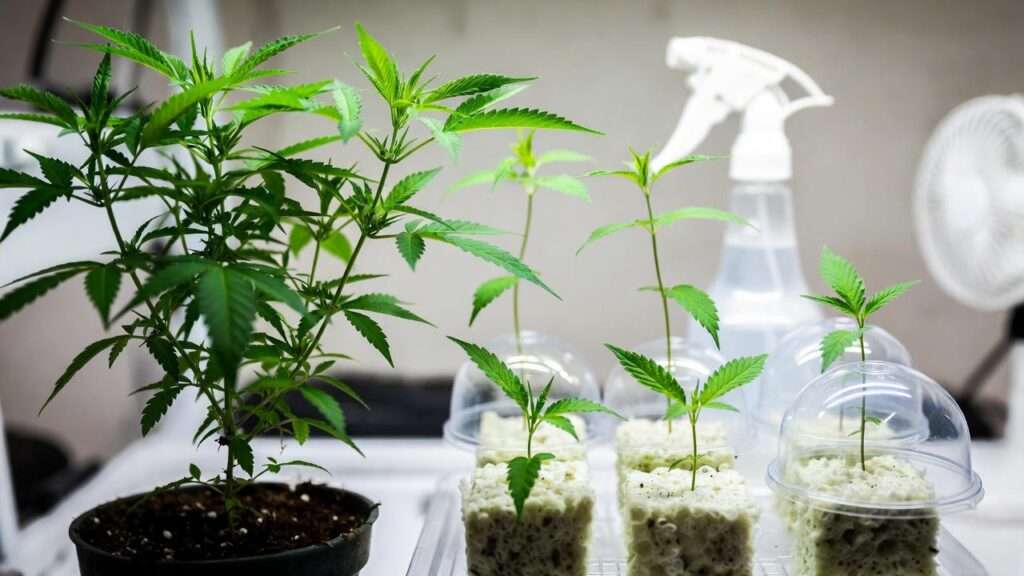
Imagine discovering a cannabis strain that delivers the perfect balance of potency, flavor, and yield—only to realize you might never find it again from seeds. What if you could replicate that exact plant endlessly, ensuring every grow matches your favorite? That’s the power of learning how to clone a weed plant. Cloning, or taking cuttings from a healthy mother plant, allows growers to produce genetically identical copies, preserving elite traits without the variability of seeds. This beginner-friendly guide, based on proven horticultural practices and recent advancements as of 2026, will walk you through the process with a focus on achieving 90%+ success rates. Whether you’re a home enthusiast or scaling up, mastering cannabis propagation through cloning solves the common frustrations of inconsistent genetics and slow starts. Let’s turn one exceptional plant into many! 🚀
Introduction: Why Cloning is a Game-Changer for Cannabis Growers 🌟
Cloning cannabis plants—technically known as asexual propagation via stem cuttings—has revolutionized modern cultivation. By rooting branches from a vigorous “mother” plant in the vegetative stage, you create exact genetic duplicates. This method eliminates the guesswork of germination and sexing plants, guaranteeing female specimens with identical THC/CBD profiles, terpene expressions, aroma, structure, and resilience.
In my years working with plant care and propagation across various species, including cannabis in legal settings, I’ve seen cloning transform hobby grows into consistent, high-quality harvests. Recent guides from sources like Cannabis Training University and Weedmaps emphasize that clean techniques and optimal environments can yield near-100% success. For beginners facing challenges like low germination rates or male plants from seeds, cloning addresses these needs directly: faster veg times, cost savings (no more expensive seeds), and perpetual access to proven genetics.
This comprehensive guide goes beyond basic tutorials by incorporating 2026 updates, such as preferred rooting gels like Clonex (still the industry standard for its IBA formula), advanced VPD monitoring, and natural alternatives for organic growers. We’ll cover everything from mother plant selection to troubleshooting, ensuring you not only clone successfully but excel at it. 🌿
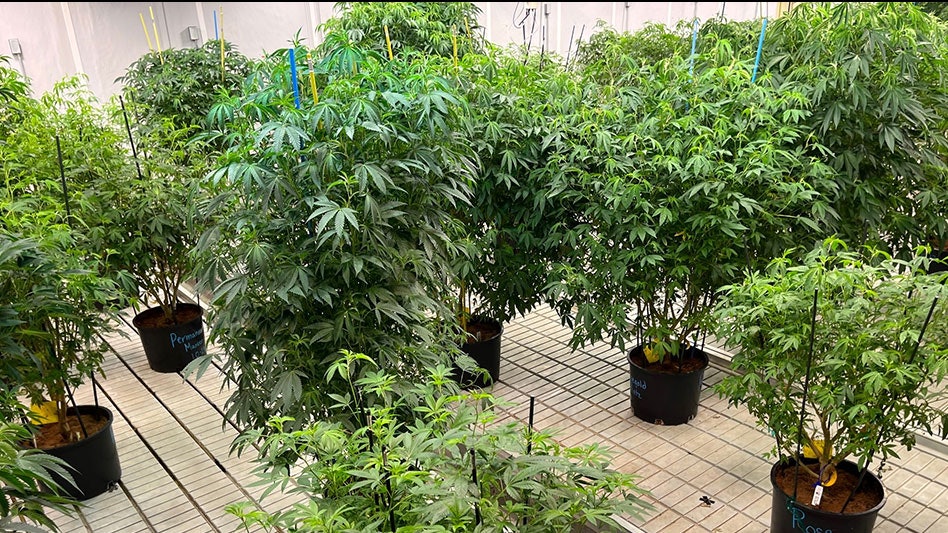
What is Cannabis Cloning and Why Do It? 🤔
Understanding Cannabis Clones
A cannabis clone is a stem cutting removed from a mature plant that develops its own root system, growing into a genetically identical offspring. Unlike sexual reproduction via seeds (which combines male and female genetics), cloning is asexual, producing “daughter” plants that mirror the mother in every way—from cannabinoid content to growth patterns.
Benefits of Cloning Over Seeds
Cloning offers numerous advantages, especially for consistent results:
- Guaranteed Females: From a female mother, all clones are female—no wasted space on males 👩🌾
- Faster Maturity: Clones skip seedling phase, entering veg immediately for quicker harvests ⏩
- Identical Traits: Preserve exact potency, flavors, yields, and pest resistance 🔄
- Cost-Effective: One mother provides unlimited free plants 💰
- Higher Potential Yields: Elite genetics perform reliably 📈
- Disease-Free Start: Easier to maintain clean stock compared to variable seeds
Recent studies and grower reports highlight that clones often outperform seed-grown plants in uniformity, particularly in controlled environments.
Clones vs. Seeds: Quick Comparison
| Aspect | Clones | Seeds |
|---|---|---|
| Genetics | Exact replica of mother | Variable (even in feminized) |
| Time to Harvest | 2-4 weeks faster | Includes germination/seedling |
| Sex Certainty | 100% female (from female mother) | ~99% with feminized |
| Root System | Fibrous, quick establishment | Taproot for potential drought resistance |
| Cost | Low ongoing | Higher per pack |
| Consistency | High | Medium |
Preparing for Success: Tools and Materials You’ll Need 🛠️
Success starts with the right setup. A clean, sterile environment prevents contamination, which is a leading cause of failure.
Essential Cloning Supplies
- Sharp, sterilized pruning shears or razor blade (for clean cuts) ✂️
- Rooting hormone: Gel like Clonex (top-rated in 2025-2026 reviews for adhesion and IBA content) or powders like Hormex 🌿
- Rooting medium: Rockwool cubes (pH-balanced), rapid rooter plugs, coco coir, or aeroponic systems 🪴
- Humidity dome and tray (maintains 80-90% RH) 💦
- Low-intensity lighting: CFL, fluorescent, or LED (blue spectrum preferred) 💡
- pH-balanced water (5.5-6.5) and mild nutrients (optional kelp extracts) 🌊
- Sterilization tools: 70% isopropyl alcohol wipes 🧼
- Optional: Heat mat for bottom warmth (72-78°F roots)
Pro Tip: Budget vs. Advanced Setup
Beginners can start under $50 with rockwool, a dome, and Clonex gel. Advanced growers invest in aeroponic cloners (e.g., Clone King or EZ-Cloner) for 95-100% rates and roots in 5-10 days.
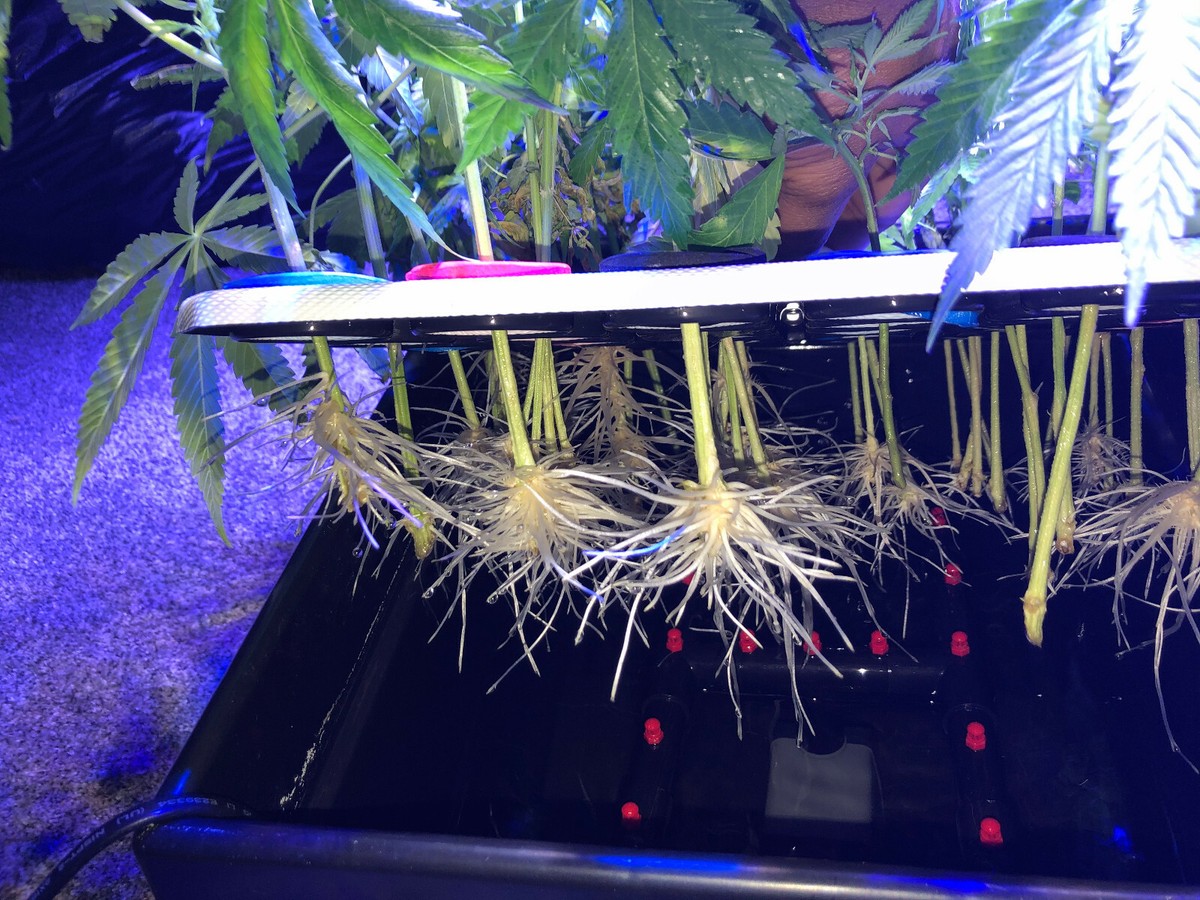
Aeroponic cloning machines like these provide oxygenated mist for ultra-fast rooting.
Selecting and Maintaining the Perfect Mother Plant 👑
The foundation of great clones is a superior mother.
Characteristics of an Ideal Mother Plant
- Vigorous, healthy growth with no pests, diseases, or deficiencies 🛡️
- In perpetual vegetative stage (18/6 light cycle) 🌞
- Proven performance: High potency, yield, aroma, and resilience
- At least 2-3 months old, with solid stems and multiple branches
Avoid young plants (<60 days) or those over 185 days, as they lose vigor.
Mother Plant Care Tips
- Maintain 18/6 lighting indefinitely
- Light feeding: Reduce nitrogen 1-2 weeks before cuttings
- Regular pruning for bushiness and more cutting sites ✂️
- Pest prevention: Neem oil or beneficial insects
- Rotate mothers every 6-12 months for freshness
Expert Insight
Professional cultivators keep mothers for years, harvesting hundreds of cuttings while indexing for viruses. Test for HLVd (Hop Latent Viroid) if scaling up—it’s a common hidden issue reducing yields.
Step-by-Step: How to Take and Root Cuttings 📋
Follow these precise steps for high success.

Step 1: Timing and Selecting Branches
Choose lower or middle branches 4-8 inches long with 2-3 nodes. Cut from healthy, non-flowering areas.
Step 2: Making the Cut
- Sterilize tools with alcohol
- Cut at 45° angle below a node for max surface area ✂️
- Immediately submerge in water to avoid air bubbles
Step 3: Preparing the Cutting
- Remove lower leaves; trim top fan leaves by 50% to reduce transpiration
- Optionally scrape stem lightly for callus formation
Step 4: Applying Rooting Hormone
Dip in Clonex gel (preferred for sealing and hormone delivery)—boosts rooting by 30-50% 🚀
Step 5: Planting in Medium
Insert into pre-soaked, pH’d rockwool or plugs; gentle firming.
Step 6: Creating the Ideal Environment
- Humidity: 80-95% initial (dome vents gradually) 💨
- Temperature: 72-78°F air, warmer roots 🔥
- Light: Low intensity, 18/6 cycle
- Misting: Plain pH water; no nutrients first week
Step 7: Monitoring Root Development
White roots emerge 7-14 days; full system in 2-3 weeks 👀

Different Cloning Methods Compared 🆚
While the rockwool/humidity dome method is the gold standard for most beginners due to its balance of reliability and affordability, several alternatives exist to suit different setups, budgets, and experience levels. Let’s break them down with pros, cons, and real-world success rates based on grower communities and horticultural data as of 2026.
Traditional Medium Methods (Rockwool, Soil, Coco) 🪴
These involve inserting hormone-treated cuttings into a sterile, inert medium.
- Pros: High success (80-95% with good technique), forgiving for beginners, retains moisture well, easy to monitor.
- Cons: Slightly slower rooting (10-21 days), risk of overwatering if not ventilated.
- Best for: Most home growers. Rockwool remains popular for its pH stability and cleanliness.
Aeroponic Cloning 🚀
Cuttings are suspended in a chamber where roots are misted with oxygenated nutrient solution—no medium needed.
Aeroponic systems like the Clone King deliver misted roots for explosive growth—often ready in under 10 days.
- Pros: Fastest rooting (5-12 days), near-100% success, excellent oxygenation prevents rot.
- Cons: Higher upfront cost ($100-300), requires electricity/pumps, louder operation.
- Best for: Serious growers wanting speed and scale.
Water Cloning (Simple Cup Method) 🥤
The ultra-budget approach: Place dipped cuttings in plain or lightly supplemented water.

Water cloning is perfect for testing a few cuttings—change water daily and watch roots form.
- Pros: Zero cost beyond hormone, simple, great for small batches or emergencies.
- Cons: Slower (14-28 days), higher failure if water stagnates, roots more fragile for transplant.
- Best for: Absolute beginners or when traveling/light setup.
Advanced: Tissue Culture/Micropropagation 🔬
Lab-based sterile propagation using growth media and hormones—used commercially for disease-free stock.
- Pros: Massive scale, eliminates pathogens/viruses like HLVd.
- Cons: Requires sterile lab, expensive equipment, steep learning curve.
- Best for: Commercial operations or preserving rare genetics long-term.
Transplanting Your Rooted Clones 🌱➡️🪴
Once roots are established (white, healthy, 1-3 inches long), it’s time to move clones to their permanent medium. Rushing this step causes shock and stunted growth.

Gently transplanting from rockwool to soil—keep the cube intact to minimize root disturbance.
When Are Clones Ready?
- Roots visible outside medium
- New vegetative growth at tips
- Typically 14-21 days post-cutting
Step-by-Step Transplant
- Harden Off: Gradually reduce humidity over 3-7 days by venting dome more each day.
- Prepare Pots: Use light, well-aerated soil/coco mix with mild veg nutrients.
- Transplant Gently: Make a hole slightly larger than the rooting plug; plant at same depth.
- Water In: Use pH’d water with rooting stimulator (e.g., kelp) to settle medium.
- Environment: Keep under veg lights, 70-80°F, moderate humidity initially.
Tip
Avoid direct strong light or heavy feeding first week—clones are sensitive post-transplant.
Healthy transplanted clones explode with growth once established—vibrant green and bushy.
Common Cloning Mistakes and How to Avoid Them ⚠️
Even experienced growers encounter issues. Here’s how to sidestep the most frequent pitfalls.
Examples of common problems: wilting from low humidity, stunting from pathogens, or rot from poor conditions.
Top Pitfalls
- Overwatering/Saturated Medium → Stem rot (Pythium/Fusarium)
- Insufficient Humidity → Wilting and drying out
- Poor Sterilization → Bacterial/fungal infections
- Cuttings from Stressed Mothers → Weak, slow-rooting clones
- Extreme Temperatures → Slow growth or death
- Too Early Transplant → Root damage and shock
Troubleshooting Table
| Problem | Likely Cause | Quick Fix |
|---|---|---|
| Wilting/Drooping | Low humidity or drying | Increase dome time, mist frequently 💦 |
| No Roots After 3 Weeks | Wrong temp, no hormone, poor oxygen | Warm roots to 75°F, re-dip in gel |
| Yellowing Leaves | Overwatering or nutrient burn | Let medium dry slightly, plain water |
| Mold/Fungus on Stems | Poor airflow, high humidity | Vent dome, add small fan, clean setup |
| Blackened Stem Base | Rot (damping off) | Start over with sterile tools/medium |
| Slow New Growth | Shock or low light | Gradual hardening, increase light slowly |
Advanced Tips for 95%+ Success Rates 💪
To push beyond beginner results:
- Boost with Additives: Use aloe vera gel or willow water as natural rooting aids alongside synthetic hormones.
- Optimize VPD: Aim for 1.0-1.2 kPa (vapor pressure deficit) using apps/monitors for perfect transpiration.
- Oxygenate: Air stones in water cloners or peroxide in mediums prevent anaerobic bacteria.
- Strain-Specific Tweaks: Some indicas root faster in warmer conditions; sativas prefer slightly cooler.
- Mother Prep: Flush with plain water 3 days before cutting to reduce salts.
- Lighting Upgrade: Full-spectrum LEDs with far-red promote faster rooting per recent studies.
FAQs: Your Cloning Questions Answered ❓
How long do cannabis clones take to root? Typically 7-21 days. Aeroponic: 5-12 days; rockwool: 10-18; water: 14-28.
Can I clone autoflowering plants? Yes, but they continue their life cycle from the mother’s age—limited veg time.
Do clones produce less yield than seeds? No—properly managed clones from elite mothers often yield more due to uniformity.
Is rooting hormone absolutely necessary? Not strictly, but it increases speed and success by 40-60% on average. Natural alternatives work but slower.
Can I clone during flowering? Technically yes (“monster cropping”), but success drops dramatically. Re-veg first for best results.
What’s the biggest beginner mistake? Poor sterilization—always work clean!
Legal Note 🌍 Cannabis cultivation laws vary widely. This guide is educational only—ensure compliance with local regulations in your jurisdiction.
Conclusion: Start Cloning Today and Multiply Your Favorites! 🎉
Mastering how to clone a weed plant unlocks endless possibilities: preserve that once-in-a-lifetime phenotype, fill your garden with proven winners, and save hundreds on seeds year after year. With the detailed steps, comparisons, troubleshooting, and pro tips in this guide, you’re now armed with everything needed for consistent, high-success cloning—even on your first try.
Start small: Select a healthy mother, take 5-10 cuttings, and apply these techniques. Track your results, refine your environment, and watch your skills (and garden) grow exponentially. Happy cloning, and may your harvests be bountiful! 🌿✨











