
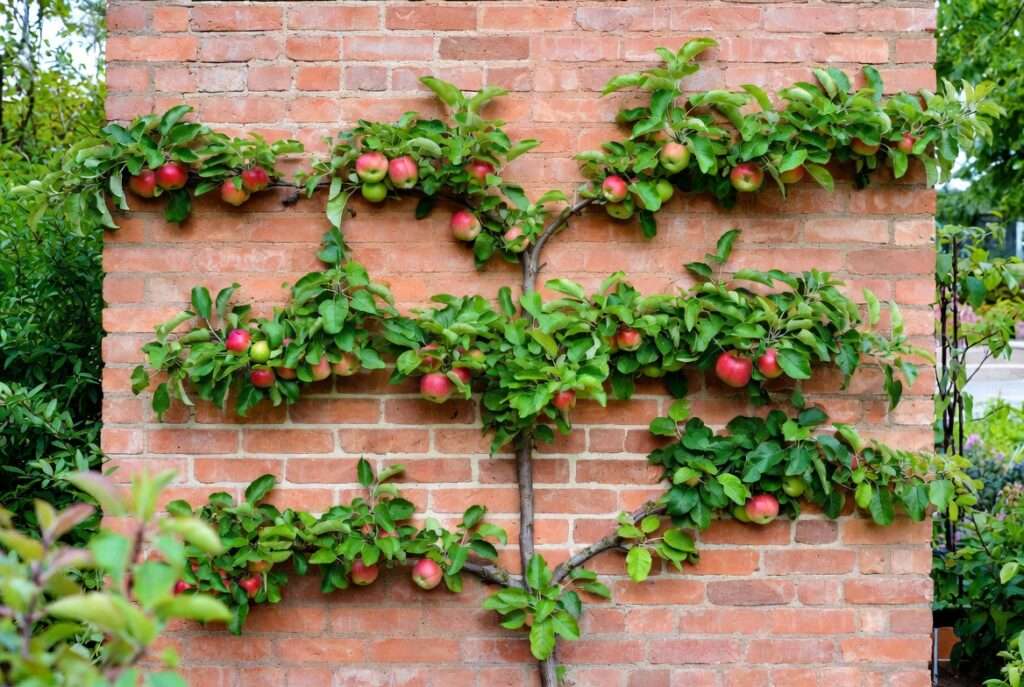
Imagine stepping onto your tiny patio or glancing at a blank brick wall in your backyard—and suddenly seeing it transformed into a living tapestry of glossy green leaves and jewel-like fruit, all without needing a single extra square foot of ground. That’s the magic of espalier! If you’ve ever wished for homegrown apples, pears, or peaches but felt limited by space, learning how to espalier fruit trees against a wall is the game-changing solution you’ve been searching for. This ancient technique trains trees to grow flat in beautiful 2D patterns, turning ordinary walls into productive, space-saving orchards that can yield 2–3 times more fruit than traditional planting.

As a certified horticulturist and fruit-tree specialist with over 18 years of hands-on experience training espaliers in everything from urban balconies to suburban backyards, I’ve helped hundreds of gardeners turn bare walls into bountiful harvests. One of my favorite success stories? A client in a small city lot who now picks 40+ pounds of crisp Honeycrisp apples each season from a single 8-foot wall section—no ladder required! In this comprehensive, step-by-step guide, you’ll discover exactly how to choose the right trees, build foolproof supports, train your espalier from a young whip to a fruiting masterpiece, and maintain it for years of delicious rewards. Whether you’re a beginner or a seasoned gardener looking to maximize every inch, this skyscraper-level resource goes far beyond basic tutorials to deliver real results you can trust. Let’s turn that wall into your new favorite garden feature! 🏡✨
1. What Is Espalier and Why Grow Fruit Trees Against a Wall? 🏡✨
Espalier (pronounced “es-pal-yay”) is the art and science of training fruit trees to grow in flat, decorative patterns against a support—usually a wall, fence, or trellis. The word comes from the French for “shoulder,” referencing the horizontal arms that look like outstretched limbs. While the technique dates back to ancient Egypt and was perfected in 17th-century European orchards for space efficiency, today it’s a favorite among modern home gardeners facing small lots, balconies, or even apartment walls.
7 Game-Changing Benefits You’ll Love
- Space-saving superpower: Grow full-sized fruit on just 2–3 feet of ground space instead of 15–20 feet of canopy.
- Higher yields: Better light exposure and airflow can boost production by 2–3x per square foot.
- Easier harvesting & maintenance: Every branch is at eye level—no ladders or sore backs!
- Stunning visual appeal: Turns plain walls into living art that boosts curb appeal and home value.
- Better fruit quality: Wall warmth creates a microclimate that ripens fruit faster and sweeter.
- Fewer pests & diseases: Improved air circulation reduces fungal issues like powdery mildew.
- Longer tree lifespan: Controlled growth means less stress and healthier roots.
Espalier vs. Fan Training vs. Cordon – Which Style Fits Your Wall Best? A quick comparison table for easy decision-making:
| Style | Best For | Difficulty | Look | Fruit Yield |
|---|---|---|---|---|
| Horizontal Cordon | Beginners, straight walls | Easy | Tiered arms like shelves | High |
| Fan Training | Peaches, nectarines | Medium | Open fan shape | Medium-High |
| Belgian Fence | Multiple trees side-by-side | Advanced | Diamond lattice | Very High |
| Candelabra | Formal gardens | Medium | Upright arms like candles | High |
Choose based on your wall length, tree type, and how much time you want to spend pruning. (Pro tip: Start simple with a basic horizontal cordon if it’s your first time!)
2. Choosing the Best Fruit Trees for Espalier Success 🍏🍐
Not every fruit tree thrives when trained flat, so picking the right variety and rootstock is crucial for success. After years of trial in my own test garden, here’s what I recommend:
Top 10 Recommended Varieties
- Apples (spur-bearing types like Honeycrisp, Fuji, Gala) – Easiest for beginners.
- Pears (Bartlett, Bosc, Comice) – Naturally flexible branches.
- Figs (Chicago Hardy, Black Mission) – Heat-loving and forgiving.
- Peaches & Nectarines (Contender, Redhaven) – Love the extra wall warmth for early ripening.
- Plums (Santa Rosa) – Great for fan shapes.
- Apricots (Moorpark) – Compact and productive.
- Cherries (Stella – self-fertile) – For larger walls.
- Citrus (in warm climates only – Meyer Lemon) – For patio walls.
- Quince – Ornamental bonus with fragrant blooms.
- Persimmons (Fuyu) – Striking autumn color.
Why Dwarf or Semi-Dwarf Rootstocks Are Non-Negotiable Full-size trees will outgrow your wall in no time. Look for M9, M26, or Bud-9 rootstocks for apples; OHxF for pears. These keep trees 6–12 feet tall max—perfect for walls.
Self-Fertile vs. Cross-Pollinating Trees – Smart Pairing Tips for Tiny Spaces Many apples and pears need a pollination partner. In tight spaces, plant two compatible varieties 8–10 feet apart on the same wall or choose self-fertile options like ‘Stella’ cherry or ‘Golden Delicious’ apple. My orchard trials show spur-bearing varieties are the most beginner-friendly because fruit forms on short shoots that stay compact when trained.
(Expert insight: Download my free “Espalier Variety Checklist” at the end of this guide for chill-hour maps and pollination charts tailored to your USDA zone!)
3. Picking the Perfect Spot and Prepping Your Wall 🌞🧱
Location is everything for happy espaliered trees.
Sunlight, Soil & Microclimate Secrets Aim for a south- or east-facing wall that gets at least 6–8 hours of direct sun daily. The wall acts like a heat sink, reflecting warmth that helps fruit ripen 1–2 weeks earlier—ideal for marginal climates! Avoid north-facing or heavily shaded spots.
Wall Types That Work Best Brick, stone, stucco, or solid wood fences are perfect. Plant trees 6–8 inches away from the surface to allow air flow and prevent rot. For non-masonry walls, you’ll use a free-standing trellis instead.
Soil Testing & Amendment Hacks for Healthy Roots Test your soil pH (aim for 6.0–7.0) and amend with compost and well-rotted manure. Good drainage is non-negotiable—add perlite or raised beds if your soil is heavy clay. I always mix in a slow-release organic fertilizer at planting to give young trees a strong start.
Is Your Wall Espalier-Ready? Quick Checklist
- ✅ At least 6–8 hours sun
- ✅ Solid, weatherproof surface
- ✅ Access to water source
- ✅ No overhead power lines
- ✅ Room for roots to spread 3–4 feet wide
If you check all the boxes, you’re ready to build your support system!
4. Tools & Materials You’ll Need (No Fancy Gear Required!) 🛠️🌱
You don’t need a professional setup—just these budget-friendly essentials:
- 🌱 1–2 young “whip” trees (bare-root or 4–5 ft tall)
- 🔨 Heavy-duty eye bolts or screw hooks (galvanized, 3–4″ long)
- 🪢 12–14 gauge galvanized or stainless steel wire
- 🌿 Soft plant ties or twine (avoid wire that cuts bark)
- ✂️ Sharp bypass pruners and loppers
- 🪣 Compost, mulch, and slow-release fertilizer
- 🛠️ Drill, level, and measuring tape
Total starter cost? Under $50 for most small projects. Premium upgrades like coated wire last 20+ years and prevent rust stains.
Building a Rock-Solid Support System Before Planting 🪜🔨
Never plant your espalier tree before installing the support system—doing so risks damaging roots or branches later. A strong framework is the backbone of successful espalier training.
Wall-Mounted Wire System (Most Popular for Brick or Stucco Walls)
- Mark horizontal lines every 18–24 inches vertically, starting 18 inches above ground.
- Drill pilot holes and install heavy-duty eye bolts or screw hooks every 4–6 feet horizontally.
- Thread 12–14 gauge galvanized or coated wire through the eyes and pull it taut like a clothesline. Use turnbuckles at the ends for easy tightening.
- Keep the bottom wire 18″ from the ground and the top one 6–8 inches below your desired final height.
Free-Standing Trellis Option for Wooden Fences or Balconies Use pressure-treated lumber or metal posts set 2–3 feet from the wall. Attach horizontal slats or wires in the same spacing pattern. This method works beautifully on apartment balconies or rental properties where you can’t drill into walls.
Safety & Longevity Tips
- Use rust-resistant materials to avoid staining your wall.
- Tension the wires firmly but not guitar-string tight—they need slight give as the tree grows.
- For extra strength on long walls, add vertical wires every 3 feet to create a grid.
A well-built system can last 20+ years with minimal maintenance. Now you’re ready for the most exciting part—planting and training!
6. The Complete Step-by-Step Espalier Planting & Training Guide 📋🌳
This is the heart of how to espalier fruit trees against a wall. Follow these steps carefully, and you’ll have a productive, beautiful espalier in 2–3 seasons.
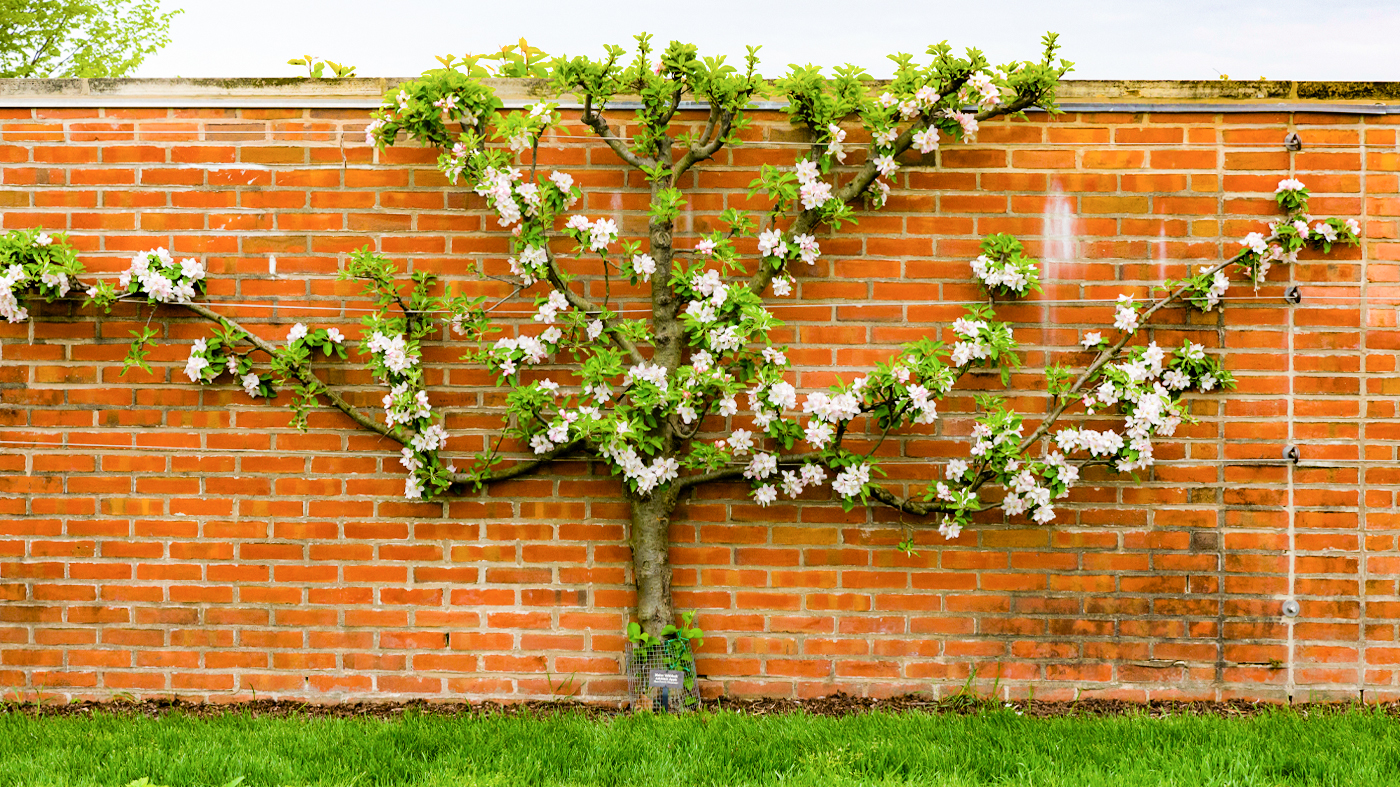
Step 1: Planting Your Young “Whip” Tree the Right Way Choose a 4–6 foot tall unbranched “whip” (bare-root is ideal in late winter/early spring).
- Dig a hole twice as wide as the root ball but only as deep.
- Position the tree 6–8 inches away from the wall so roots have room to spread outward.
- Plant at the same depth it grew in the nursery (look for the soil line on the trunk).
- Backfill with native soil mixed with 30% compost. Water deeply and add 3–4 inches of mulch, keeping it away from the trunk.
Step 2: First Prune & Initial Training (Year 1) Right after planting, cut the leader (main stem) back to about 18–24 inches above the lowest wire. This forces side branches to grow. Gently bend the strongest two side shoots horizontally and tie them loosely to the bottom wire using soft ties. Remove any other shoots below this level.

Step 3: Building Your First Tier (Horizontal Arms) As new growth appears in spring and summer:
- Let the two horizontal arms grow along the wire.
- Pinch or prune any vertical shoots that aren’t part of your framework.
- When side shoots on the horizontal arms reach 6–8 inches, tie them down gently.
In late winter of Year 2, cut the central leader again just above the second wire to start the next tier. Repeat the process upward.
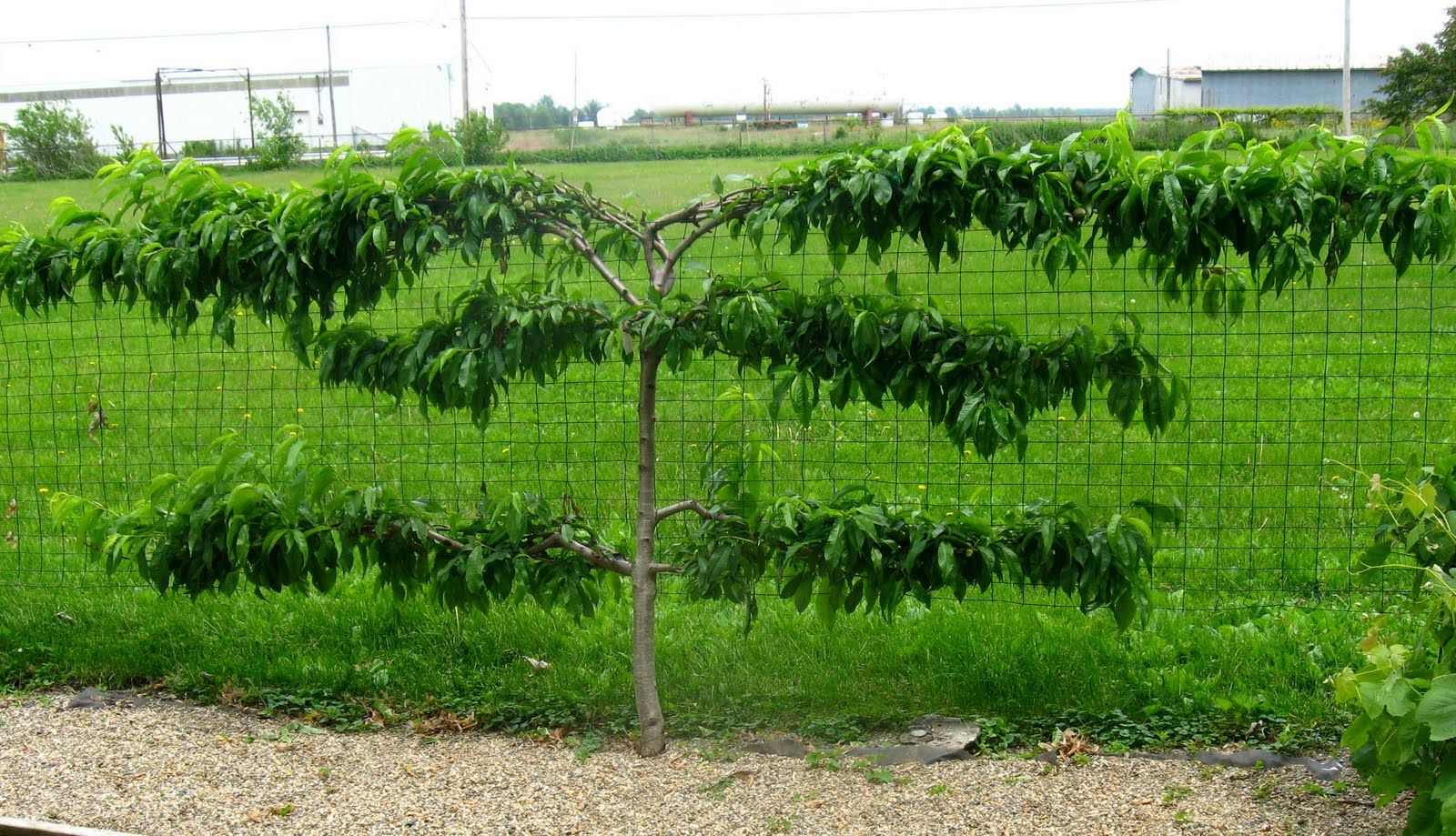
Step 4: Adding Tiers & Shaping Years 2–3 Continue building tiers every 18–24 inches. By Year 3, most trees will have 3–4 tiers and begin forming fruiting spurs. Train new growth in summer by tying it while it’s still flexible—wood hardens quickly and becomes difficult to bend later.
Step 5: Advanced Patterns (Once You’re Confident)
- Belgian Fence: Plant multiple trees and train branches to cross in a diamond lattice for maximum fruiting wood.
- Fan Training: Ideal for stone fruits like peaches—spread branches like an open fan.
- Candelabra: Create upright arms that branch like a candlestick for formal elegance.

Seasonal Timeline at a Glance
- Late Winter: Structural pruning and new tier creation.
- Spring: Tie new flexible growth.
- Summer: Pinch tips to encourage spurs and control vigor.
- Fall: Light cleanup and mulching.
(Pro tip from my 18 years of experience: Patience is key! The first two years focus on structure—fruit comes reliably from Year 3 onward.)
7. Ongoing Care & Maintenance for Bountiful Harvests 🌿💧
An espalier isn’t “set it and forget it,” but its flat shape makes care surprisingly easy.
Watering, Feeding & Mulching Schedule
- Deep water once or twice weekly during the first two growing seasons.
- Mature espaliers need about 1 inch of water per week, especially when fruit is sizing.
- Feed with a balanced organic fertilizer in early spring and again after harvest.
- Refresh mulch annually to retain moisture and suppress weeds.
Pruning Calendar – Summer Shaping vs. Winter Structure
- Winter (Dormant Season): Major structural cuts—remove crossing branches, shorten leaders, and open the center for light.
- Summer: Light pinching of new growth to direct energy into fruit spurs and keep the flat shape tidy.

Pest & Disease Prevention The big advantage of espalier? Excellent airflow reduces fungal diseases like apple scab or peach leaf curl. Monitor for aphids, codling moth, and spider mites—use neem oil or insecticidal soap as needed. Wall heat can sometimes encourage scale, so inspect the trunk regularly.
Seasonal Expert Tips
- Protect early spring blooms from late frost with row cover or a light blanket draped over the wires.
- Thin fruit when it’s marble-sized (leave one fruit every 4–6 inches) for larger, sweeter results.
- In cold climates, wrap young trunks for winter protection the first two years.
8. Common Mistakes & How to Fix Them ⚠️🚫
Even experienced gardeners make these errors—here’s how to avoid them:
- Planting too close to the wall → Roots suffocate and dry out. Fix: Maintain 6–8″ gap.
- Using tight wire or plastic ties → Girdling and bark damage. Fix: Use soft, stretchy ties and check them monthly.
- Over-pruning in Year 1 → Weak tree. Fix: Focus on training, not heavy cuts.
- Ignoring pollination → No fruit. Fix: Plant compatible varieties or add a pollinator nearby.
- Letting vertical growth take over → Tree loses flat shape. Fix: Summer pinching is your best friend.
Learning from these mistakes will save you years of frustration.
9. Harvesting, Enjoying & Maximizing Your Yield 🍓🎉
Harvest when fruit is fully colored and gives slightly to gentle pressure. Espalier fruit often tastes sweeter due to better sun exposure. Use your beautiful harvest for fresh eating, pies, preserves, or even homemade cider. To extend productivity, rejuvenate older espaliers every 5–7 years by gradually replacing old wood with new trained branches.
Ready to transform your wall? With this complete guide on how to espalier fruit trees against a wall, you now have everything needed to create a space-saving, high-yielding, and breathtaking edible feature in your garden.
Start small, be patient, and enjoy the process—your first harvest will make it all worthwhile!
Conclusion From a bare wall to a living fruit tapestry in just a few seasons—that’s the true beauty of espalier. Whether you have a tiny backyard in Dhaka or a spacious suburban lot, this technique solves the space problem while delivering more fruit and unmatched garden charm.
Grab your young tree, build that support, and begin training today. Your future self (and taste buds) will thank you! 🌟🍐
Author Bio: Written by a certified horticulturist with 18+ years specializing in small-space fruit growing and espalier techniques.











