
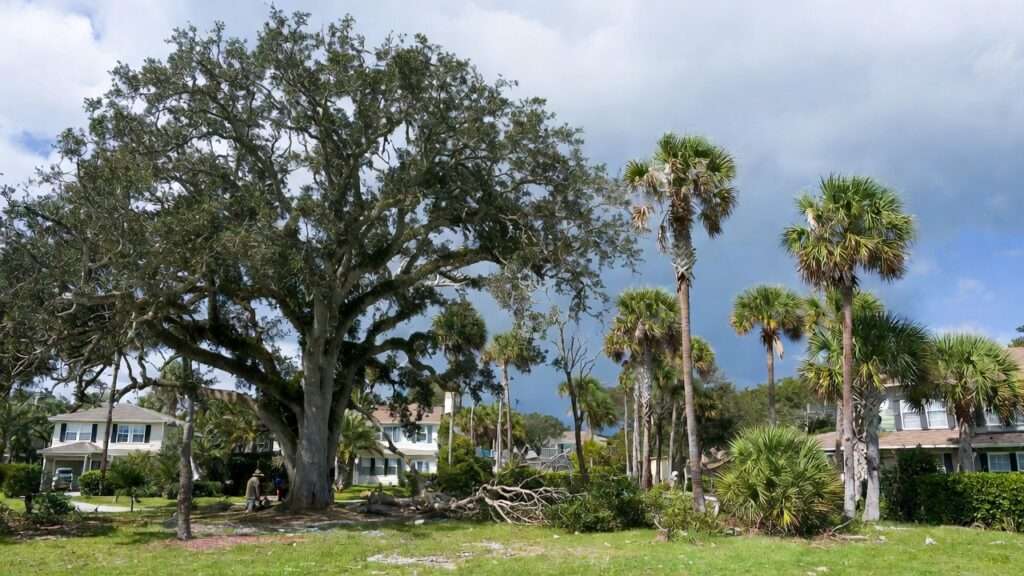
Imagine this: A Category 3 hurricane barrels toward your coast with 120 mph winds, torrential rain, and the threat of widespread flooding. Your backyard trees—those majestic live oaks or graceful palms that provide shade, beauty, and habitat—are suddenly potential hazards. One wrong gust, and a massive branch crashes onto your roof, or an entire tree uproots, blocking your driveway and endangering your family 😟.
This nightmare scenario plays out every hurricane season for unprepared homeowners in storm-prone regions like Florida, the Gulf Coast, and beyond. But here’s the empowering truth: how to prepare trees for hurricanes isn’t about hoping for the best—it’s about smart, proactive steps that dramatically increase survival rates.
Drawing from decades of post-hurricane research by the University of Florida’s Institute of Food and Agricultural Sciences (UF/IFAS), observations from certified arborists, and lessons from major storms like Andrew, Katrina, Irma, and recent ones like Milton, this in-depth guide equips you with everything needed to make your trees more resilient. Healthy, well-structured trees not only survive—they help shield your home, reduce debris hazards, and bounce back faster 🌿⚡.
Whether you’re dealing with mature shade trees near your house or planning new plantings, these evidence-based strategies will protect your landscape, save on costly repairs, and preserve the irreplaceable value trees bring to your property 🏡🌳.
Why Trees Fail During Hurricanes – And How to Prevent It 🔍
Hurricanes unleash multiple destructive forces: high-velocity winds, saturated soils from heavy rainfall, and flying debris. Trees fail in predictable ways, but understanding these helps you target prevention effectively.
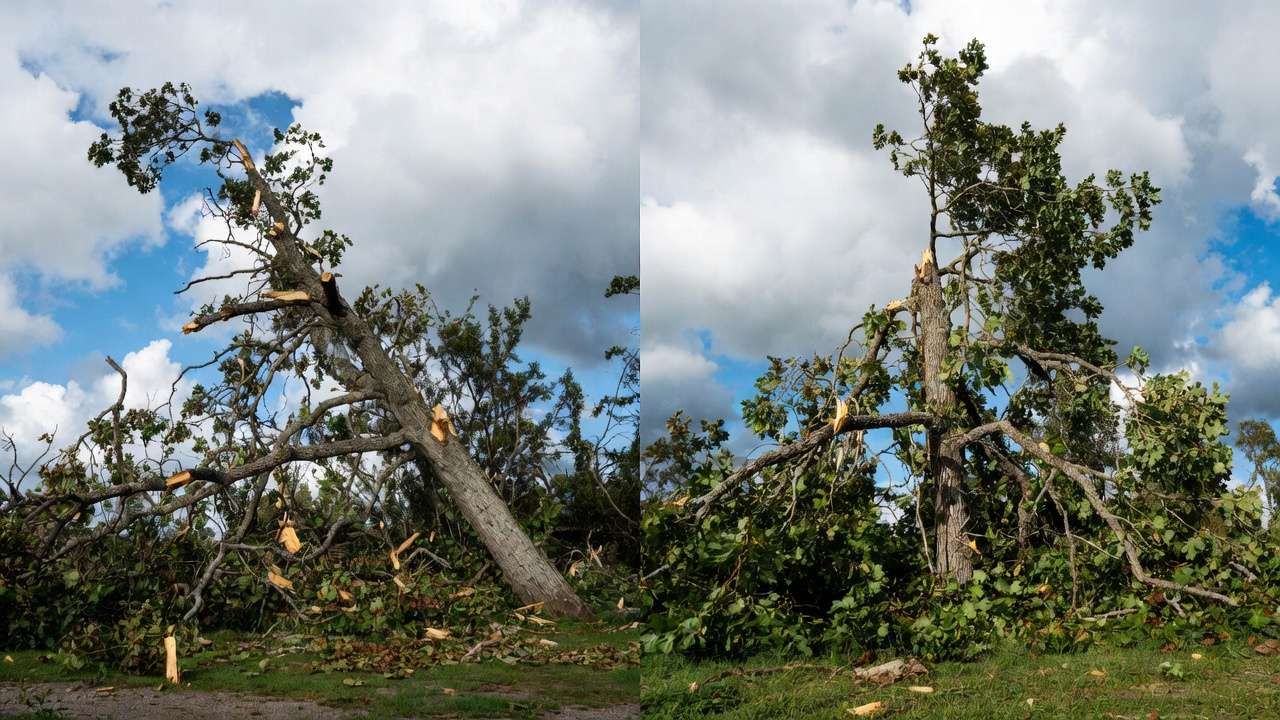
- Uprooting — The most frequent cause of tree loss. Occurs when root systems can’t anchor against wind loads, especially in waterlogged soil or with shallow/compacted roots. Young trees (under 5–10 years) are particularly vulnerable due to underdeveloped root plates 🌱.
- Stem or Branch Breakage — Weak unions (like V-shaped crotches), internal decay, or overextended limbs snap under pressure. Dense canopies act like sails, increasing drag and torque.
- Leaning or Toppling — Often from poor planting (girdling roots, poor structure), soil erosion, or high centers of gravity in unbalanced trees.
Prevention boils down to three pillars: structural strength, root health, and canopy aerodynamics. UF/IFAS studies after multiple hurricanes show that properly pruned, well-anchored trees in good health suffer far less damage than neglected ones. The goal? Create compact, low-center-of-gravity trees with flexible yet strong wood that bends rather than breaks 🌬️.
1. Assess Your Trees Early – Don’t Wait for a Watch ⚠️
The single biggest mistake? Waiting until a hurricane watch is issued. Start inspections 3–6 months before peak season (ideally late winter or early spring in subtropical areas).
Walk your property methodically:
Signs of Trouble to Look For
- Dead, hanging, cracked, or diseased branches (these become deadly projectiles)
- Cavities, vertical seams, butt swell, or fungal conks signaling internal decay
- Co-dominant trunks (two or more competing leaders) or tight V-shaped crotches prone to splitting
- Leaning trunks or exposed roots from past erosion
- Girdling or circling roots at the base (common in nursery stock—prevents root flare development)
- Dense, heavy canopies or “top-heavy” appearance that catches excessive wind
Expert Tip 💡: For trees taller than 15 feet, near structures, or showing any red flags, hire an ISA-certified arborist (find one at treesaregood.org). They use tools like resistographs or sonic tomography for accurate risk assessment—far better than visual checks alone. Many arborists offer pre-season hurricane prep consultations, often saving thousands in potential damage.
Document everything with dated photos. This helps with insurance claims if the worst happens 📸.
2. Choose and Plant Wind-Resistant Trees (Long-Term Strategy) 🌱
The foundation of hurricane resilience is selecting species proven to perform well in high winds. UF/IFAS wind-resistance ratings (based on post-storm observations) are gold-standard for subtropical areas.
Top Wind-Resistant Species
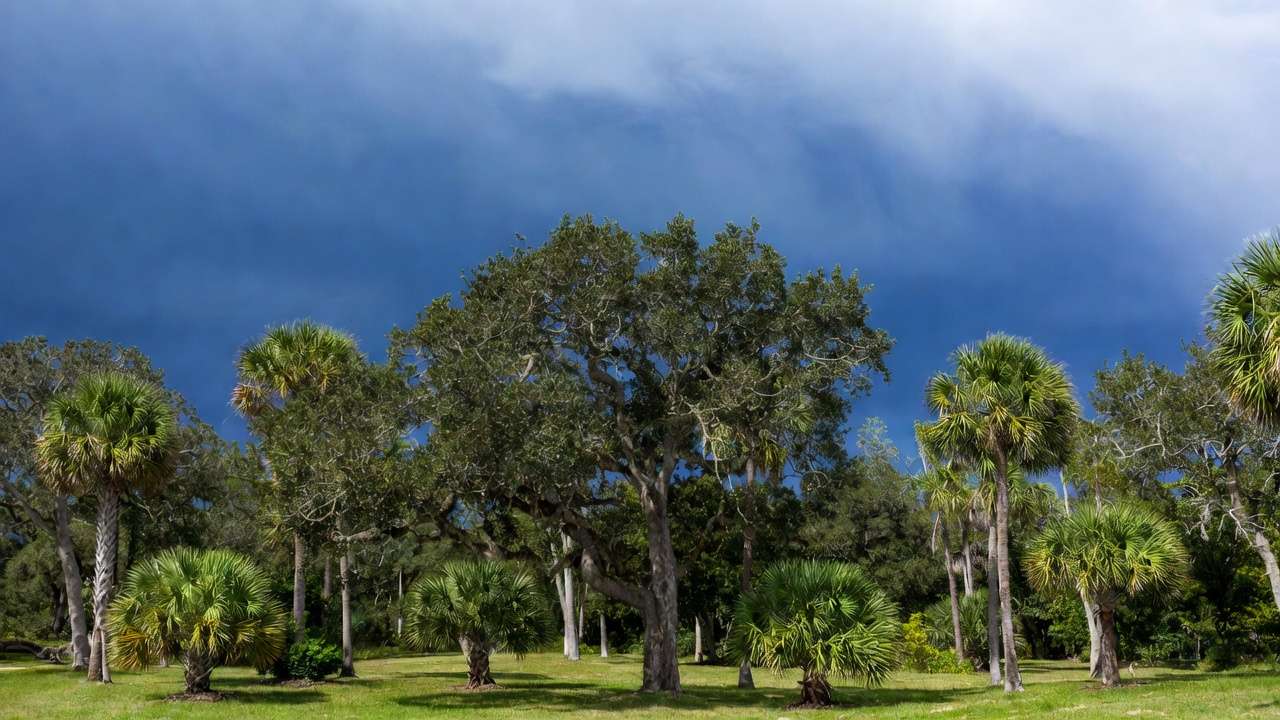
- Highest Resistance: Live oak (Quercus virginiana), sand live oak (Quercus geminata), gumbo limbo (Bursera simaruba), flowering dogwood (Cornus florida), sabal palm (Sabal palmetto), southern magnolia (Magnolia grandiflora), bald cypress (Taxodium distichum)
- Medium-High Resistance: American holly (Ilex opaca), sweetgum (Liquidambar styraciflua), crape myrtle (Lagerstroemia indica), black gum (Nyssa sylvatica)
Avoid brittle or shallow-rooted species like many pines, water oaks, or Bradford pears in exposed sites.
Smart Planting Practices for Maximum Stability
- Match species to site conditions: soil type, drainage, salt tolerance (coastal areas), and space.
- Provide ample rooting volume: Small trees need at least 3m x 3m unobstructed; large ones 10m x 10m. Keep away from sidewalks, foundations, and utilities.
- Plant in groups (3–5+ trees) rather than solitarily—mutual support reduces individual wind load.
- Choose high-quality nursery stock: Single dominant trunk, well-spaced branches, no circling roots. Plant at proper depth (root flare visible) and mulch correctly.
Long-term payoff: Trees planted thoughtfully today become your strongest assets tomorrow 🌳❤️.
3. Prune Properly – The #1 Way to Storm-Proof Trees ✂️
Certified arborists and UF/IFAS experts agree: proper pruning is the single most effective action homeowners can take to reduce hurricane damage. Well-pruned trees develop strong structure, reduced wind resistance (sail effect), and fewer weak points that could lead to breakage or failure.
When to Prune
- Ideal timing: Late winter to early spring (dormant season) — wounds heal faster, and trees have months to recover before peak hurricane season (June–November).
- Young trees (under 10–15 years): Prune annually or every 2 years to establish good form.
- Mature trees: Every 3–5 years, depending on species and growth rate.
- Critical rule: Never prune during or right before a hurricane watch/warning — fresh cuts stress trees and invite disease. Avoid major pruning within 4–6 weeks of expected storms.
Key Pruning Techniques for Hurricane Resilience
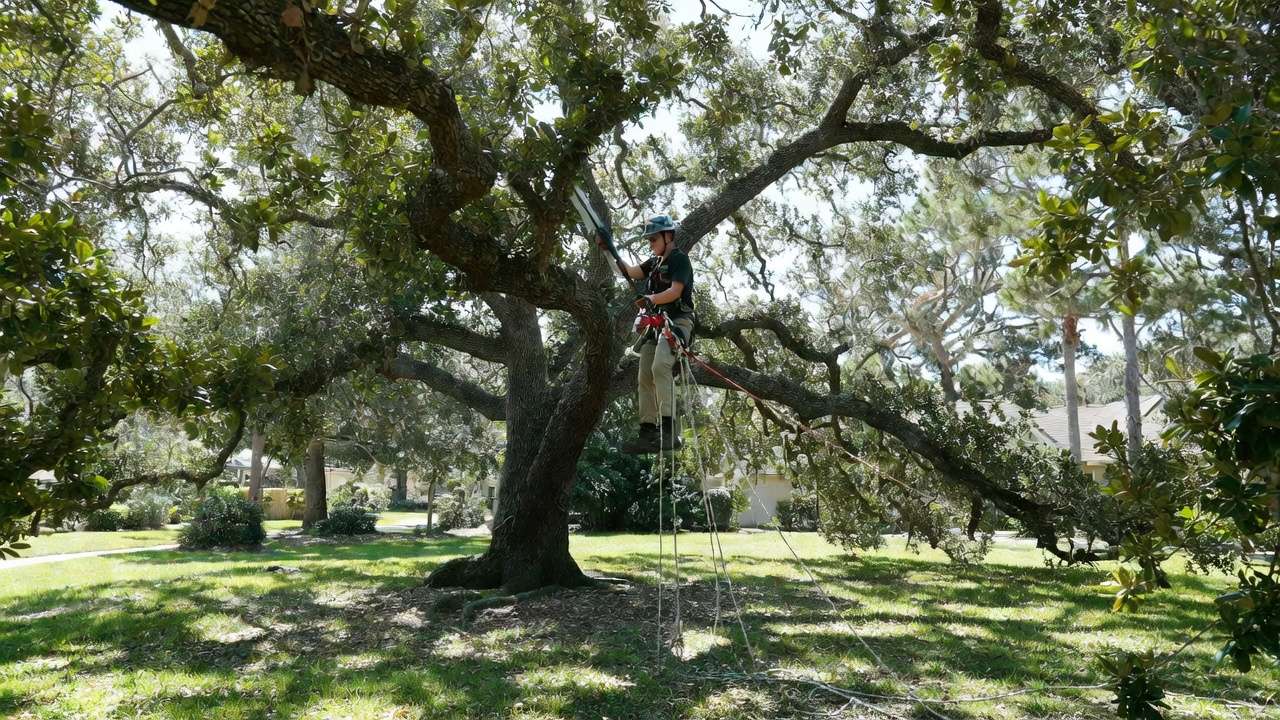
Follow ANSI A300 pruning standards (used by certified arborists) to avoid common mistakes:
- Remove the 3 Ds first — Dead, diseased, or damaged branches. These are the most likely to break and become dangerous projectiles.
- Thin the canopy selectively — Aim to remove 15–25% of live foliage max in one session. Create openings so wind passes through rather than pushing against a solid sail. Focus on:
- Crossing/rubbing branches
- Branches growing inward or toward structures
- Overly long, pendulous limbs
- Develop strong structure — Promote a single dominant leader (central trunk) with well-spaced lateral branches (at least 18–36 inches apart vertically). Eliminate or subordinate co-dominant stems (competing leaders) early to prevent weak V-crotches.
- Raise the crown if needed — For trees near roofs or power lines, raise lower branches gradually (no more than 20% of total height in one go).
- Crown reduction (not topping!) — For very large limbs over structures, reduce length back to a lateral branch at least 1/3 the diameter of the removed portion. This maintains tree health and aesthetics.
Pro Warning 🚫: Never “top” or “hat-rack” trees — indiscriminate heading cuts create weak, fast-growing sprouts that are highly prone to failure in future storms. Topping is condemned by arborists worldwide and often violates local tree ordinances.
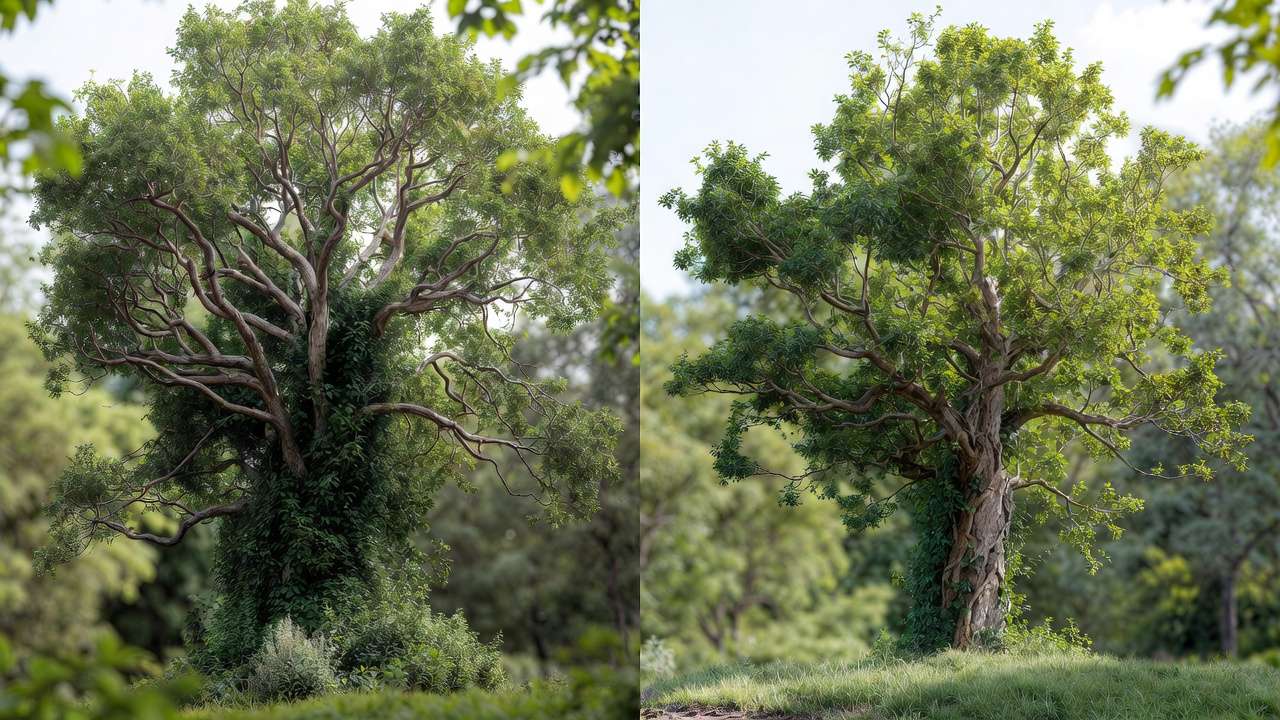
Expert Insight 💡: Hire an ISA-certified arborist for large or high-risk trees. They use drop-crotch cuts, proper branch collar techniques, and tools like ropes/cranes to avoid bark tears and ensure clean work. Many offer seasonal hurricane prep packages.
4. Strengthen Roots and Soil Health for Better Anchorage 🌿💧
Even the best-pruned tree will uproot in saturated soil if roots are weak or restricted. Healthy roots provide the anchor against wind loads.
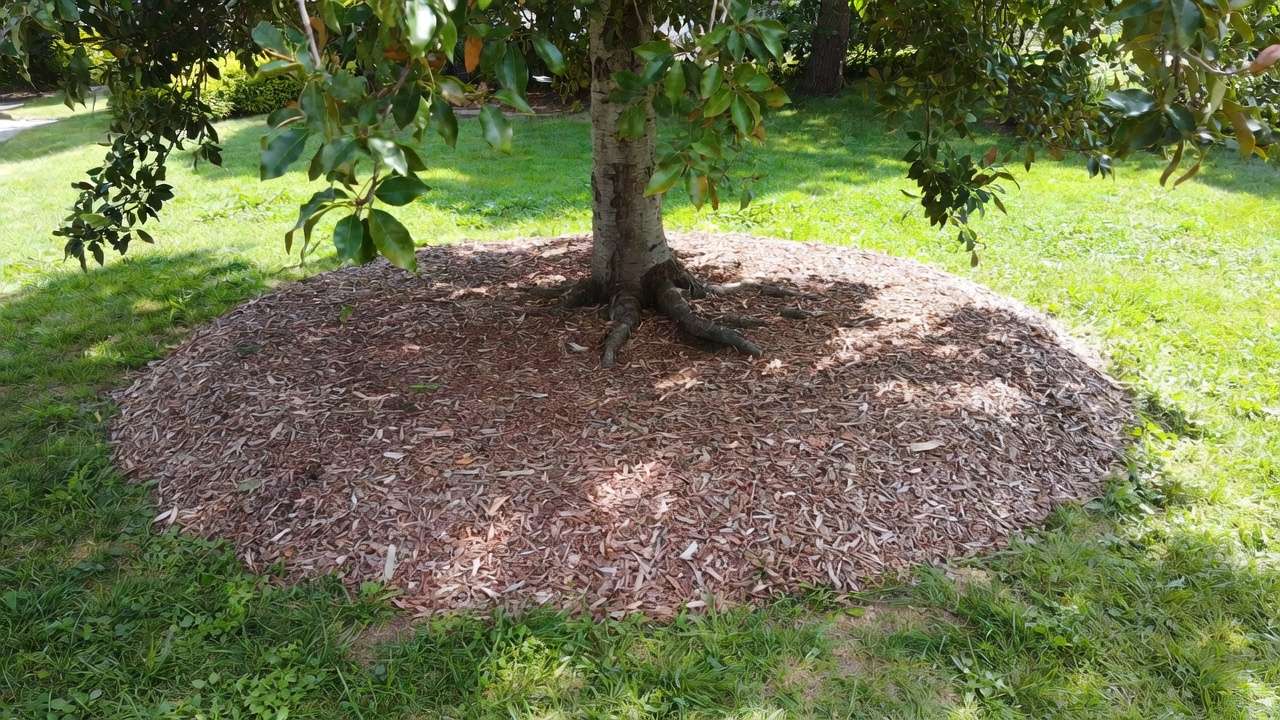
- Mulch correctly — Apply 3–4 inches of organic mulch (pine bark, hardwood chips) in a wide ring around the base, extending to the drip line if possible. Keep mulch 2–4 inches away from the trunk to prevent rot and pests. Mulch conserves moisture, moderates soil temperature, and suppresses weeds.
- Water deeply and infrequently — During dry spells, provide 1–2 inches of water per week (more for young trees). Deep watering encourages roots to grow downward rather than shallowly. Avoid frequent shallow watering that promotes surface roots.
- Fertilize wisely — Conduct a soil test (kits available from local Extension offices) to determine needs. Use slow-release, balanced fertilizers low in nitrogen to promote root growth without excessive top growth. Avoid heavy fertilization right before storms — lush new growth is vulnerable.
- Protect soil structure — Prevent compaction from vehicles, foot traffic, or construction near the root zone. Use barriers or reroute paths if needed.
Bonus Tip 🌱: In coastal areas, choose salt-tolerant species and rinse soil after storm surges to remove salt buildup.
5. Additional Protective Measures for High-Risk Trees 🛡️
Some trees benefit from extra support, especially those with known structural weaknesses.
- Cabling and bracing — Install steel cables or rods (by certified arborists only) to reinforce weak unions or overextended limbs. These are not guarantees but can reduce splitting risk in moderate storms.
- Temporary trunk wrapping — In rare cases, wrap trunks with breathable material to protect against flying debris (remove immediately after storm).
- Staking young trees — Only if necessary for wind or establishment. Use flexible ties and remove after 1–2 years to avoid girdling. Most trees develop stronger trunks without staking.
6. Last-Minute Prep When a Storm Approaches ⏳
When a watch is issued (48+ hours out):
- Clear loose debris, tools, or yard items around tree bases that could become projectiles.
- Ensure good drainage — clear gutters/downspouts so water doesn’t pool at roots.
- Secure or move potted plants, hanging baskets, and lightweight furniture.
- Take close-up photos of your trees for insurance documentation.
- Bring in bird feeders, decorations, or anything that could impact branches.
7. After the Storm – Assessing and Helping Trees Recover
Safety first: Wait for official all-clear and avoid downed power lines.
- Inspect carefully — Look for cracked trunks, leaning, hanging branches, or lifted root plates.
- Don’t rush removal — Many damaged trees recover if pruned properly. Remove only hazards (hanging limbs, leaning dangerously).
- Prune broken branches correctly — Cut back to the branch collar; avoid flush cuts or stubs.
- Water if flooded — Flush excess salts; monitor for root rot.
- Watch for secondary issues — Stressed trees are prone to pests (borers, scale) and diseases. Apply preventive treatments if recommended.
- Mulch and fertilize lightly in recovery phase to aid regrowth.
Real-World Note 🌪️: After Hurricanes Irma, Ian, and Milton, many UF/IFAS-documented live oaks and sabal palms re-leafed vigorously within 1–2 seasons when given proper post-storm care.
Common Mistakes to Avoid ❌
- Topping or lion-tailing (over-thinning inner branches)
- Pruning too heavily at once (>25% live foliage)
- Ignoring professional help for large/structural trees
- Planting shallow-rooted or brittle species (e.g., many non-native pines, water oaks) in exposed sites
- Neglecting young trees — early training prevents lifelong weaknesses
FAQs About Preparing Trees for Hurricanes ❓
Q: Can any tree be made completely hurricane-proof? A: No — extreme Category 4–5 storms can damage even the healthiest trees. But proper care increases survival odds dramatically (UF/IFAS data shows 80–95% survival for well-maintained wind-resistant species vs. 50–70% for neglected ones).
Q: How much will professional prep cost? A: Varies widely ($200–$2,000+ per tree depending on size, location, and work). Far cheaper than post-storm cleanup, roof repairs, or tree removal.
Q: Are palms different from other trees? A: Yes — palms are naturally flexible and wind-resistant. Focus on removing dead fronds/s skirts; avoid over-pruning green fronds.
Q: What if my tree is already leaning? A: Consult an arborist immediately — leaning often indicates root issues or past damage. Removal or cabling may be needed.
By implementing these steps — from early assessment and species selection to expert pruning, root care, and post-storm recovery — you’ll create a more resilient landscape that withstands hurricanes better, protects your home, enhances property value, and supports local wildlife 🌳❤️. Stay proactive, consult professionals, and enjoy your storm-ready yard with peace of mind!











