
🌟 Picture this: Your precious bonsai—carefully shaped over months or even years—suddenly starts dropping leaves, turning yellow, or wilting dramatically. Heartbreaking, right? The sad truth is that improper watering causes over 80% of bonsai deaths, especially for beginners.
Learning how to water bonsai correctly is the single most important skill you can master to keep your miniature tree alive, healthy, and truly thriving. In this in-depth guide, we’ll cover everything from soil science and timing cues to pro techniques, common pitfalls, species-specific advice, and troubleshooting. Whether your bonsai is a resilient Ficus indoors or a classic outdoor Juniper, you’ll gain the confidence to water like an experienced bonsai artist. Let’s save (and beautify) your tree together! 🌿✨

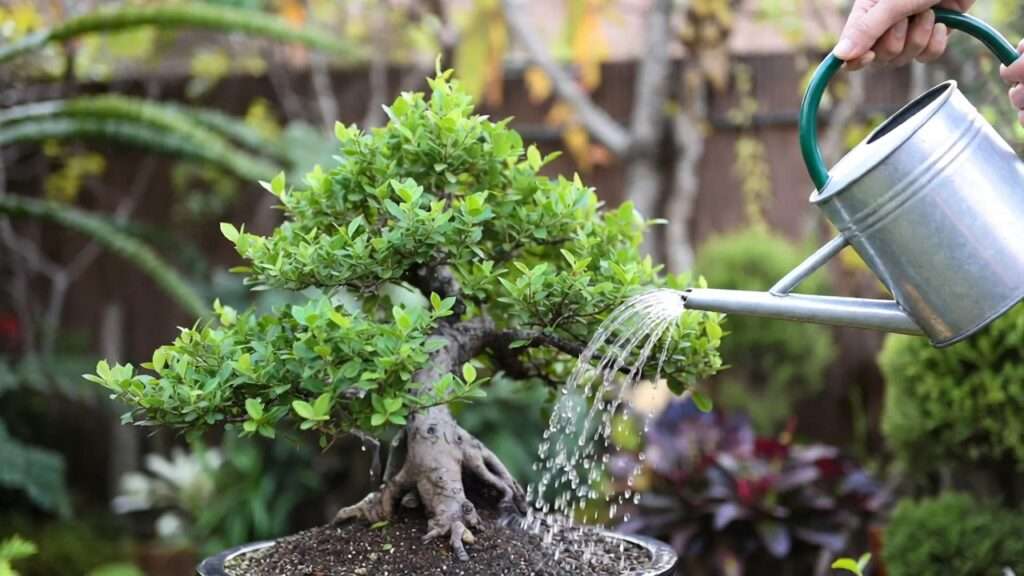
(These show classic examples of proper bonsai watering setups with fine-spout cans—notice the gentle flow that prevents soil disturbance!)
Why Proper Watering Is the Foundation of Bonsai Success
Bonsai live in extremely confined root spaces—often just a few inches of soil in a shallow pot. This creates a delicate balance: too little water → dehydration and death; too much water → suffocated roots, fungal issues, and root rot.
Unlike regular houseplants, bonsai can’t “tell” you they’re thirsty until it’s often too late. Proper watering ensures roots get both moisture and essential oxygen, promoting strong nebari (surface roots), vibrant foliage, and resistance to pests like spider mites or scale. Master this, and your tree rewards you with denser branching, better color, and longevity that can span decades. 🌱💚
Understanding Bonsai Soil and Its Impact on Watering
Bonsai soil is engineered for fast drainage and aeration—nothing like dense garden dirt or generic potting mix.
Typical inorganic mixes include:
- Akadama (baked clay from Japan) – excellent moisture retention with good airflow
- Pumice – super-draining volcanic rock
- Lava rock / Hyuga – adds structure and prevents compaction
- Organic additions (pine bark, sphagnum) in some mixes for beginners
Particle size matters hugely: larger grains (4–6 mm) drain faster and need more frequent watering; finer mixes hold moisture longer.
Quick check: If your soil stays soggy for days or dries out in hours, it’s time to repot or adjust the mix. Poor soil is the hidden reason many people struggle with watering consistency.
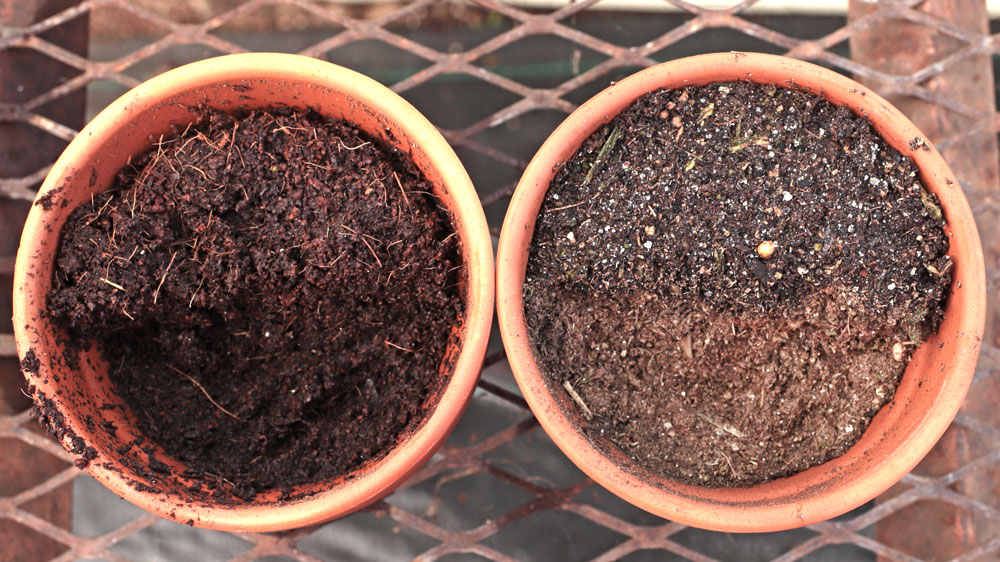
(Example of soil comparison—left: overly organic/retentive mix; right: ideal gritty bonsai blend for perfect drainage.)

(Beautiful top-dressing with kiryuzuna or similar—helps retain surface moisture while looking aesthetic!)
When to Water Your Bonsai: Timing Is Everything
Rule #1: Never water on a fixed schedule! 🌞
Bonsai needs change daily based on temperature, humidity, wind, sunlight, pot size, and tree health. Water only when the soil needs it.
Daily Checks – Simple & Reliable Methods
- Lift test: Pick up the pot. Light = dry and needs water; heavy = still moist.
- Finger test: Poke your finger 1–2 cm into the soil. Dry? Water. Damp? Wait.
- Chopstick trick: Insert a wooden chopstick; pull it out—if soil sticks heavily, wait; if clean and dry, water time!
- Moisture meter (optional but helpful for collections): Aim for the needle to drop into the “dry” zone before watering.
Visual cue: When the top soil lightens from dark brown/black to pale grayish, it’s usually ready.
Seasonal Variations
- Spring & fall (moderate growth): Water every 1–3 days depending on weather 🌸🍂
- Summer (peak transpiration): Often daily or twice daily during heatwaves—check twice a day! ☀️🔥
- Winter (dormancy for most outdoor species): Every 4–10 days; only when soil dries out ❄️⛄
Species-Specific Watering Needs
- High thirst — Ficus, Chinese Elm, Trident Maple, Jade: Keep evenly moist (but never soggy)
- Moderate — Juniper, Pine, Azalea: Allow slight drying between waterings
- Drought-tolerant once established — Mature pines, junipers: Prefer drier cycles to encourage fine roots
Deciduous trees (maple, beech) drink more in leaf than evergreens. Always observe your individual tree—it will teach you its preferences! 🌳
How to Water Bonsai Correctly: Step-by-Step Techniques
Now that you know when to water, let’s master how to do it properly. The goal is always thorough, even saturation without drowning the roots or compacting the soil.
The Thorough Soak Method (Most Recommended)
This is the gold standard used by most bonsai professionals for reliable results.
- Confirm dryness first — Use the lift test, finger test, or chopstick method from earlier. Never assume!
- Prepare good water — Room-temperature rainwater is ideal (soft, slightly acidic, no chlorine). If using tap water, let it sit out for 24 hours to off-gas chlorine, or use a dechlorinator.
- Water gently from above — Use a watering can with a fine rose spout to mimic gentle rain. Start at the edges and work inward to avoid washing soil away from the trunk.
- Soak until runoff — Pour slowly until water flows freely from the drainage holes (usually 10–30 seconds depending on pot size).
- Repeat 2–3 times — Wait 1–2 minutes between pours. This is the famous “three-water” technique: first pass wets the surface, second penetrates deeper, third ensures full saturation and flushes salts.
Your pot should feel noticeably heavier afterward, and the soil should look uniformly dark and moist.
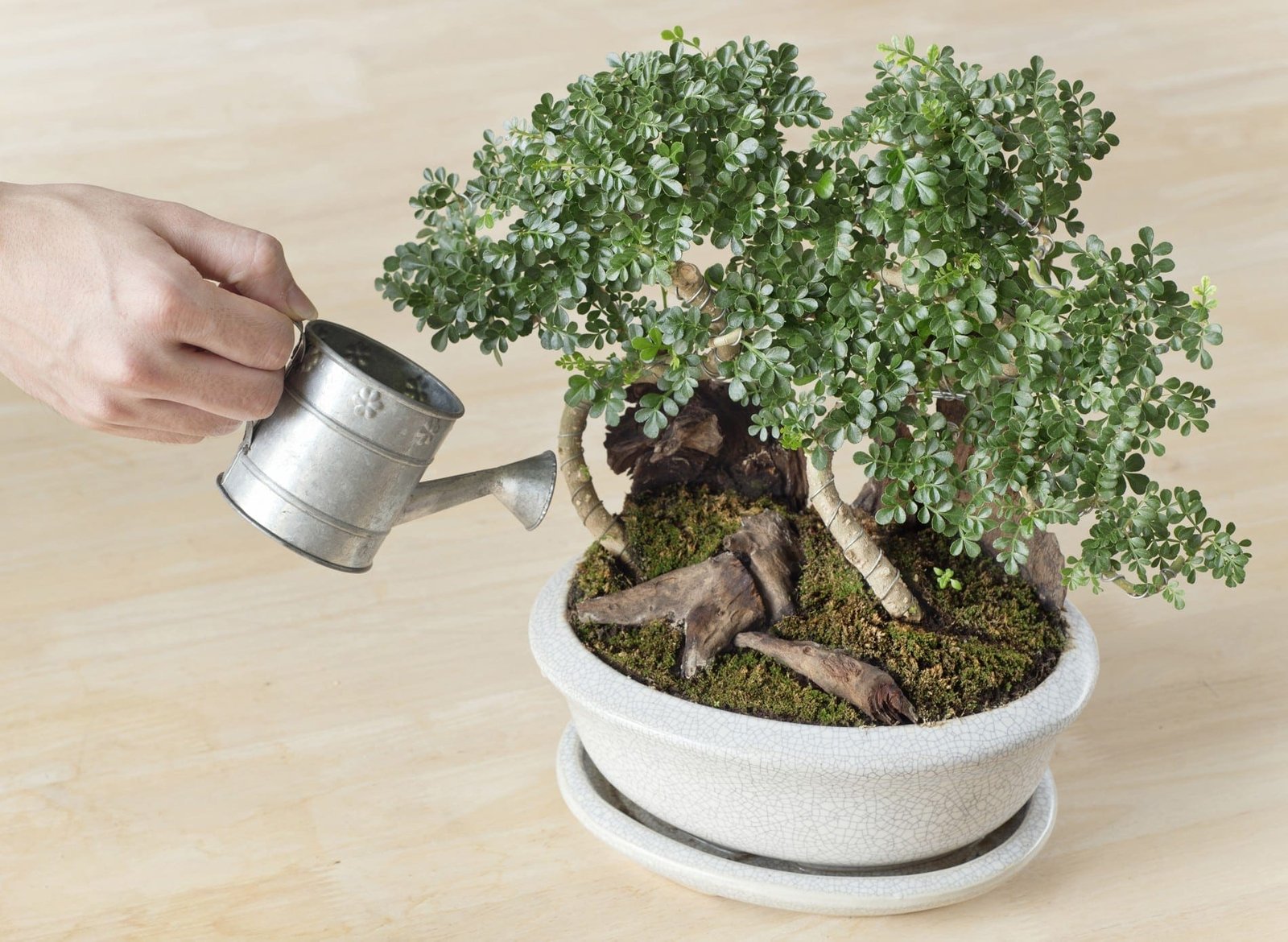
(Perfect example of the thorough soak with a classic fine-spout watering can—gentle flow preserves soil structure and reaches deep roots! 🌿)
(Another view showing careful top-watering technique on a healthy bonsai.)
Alternative Techniques
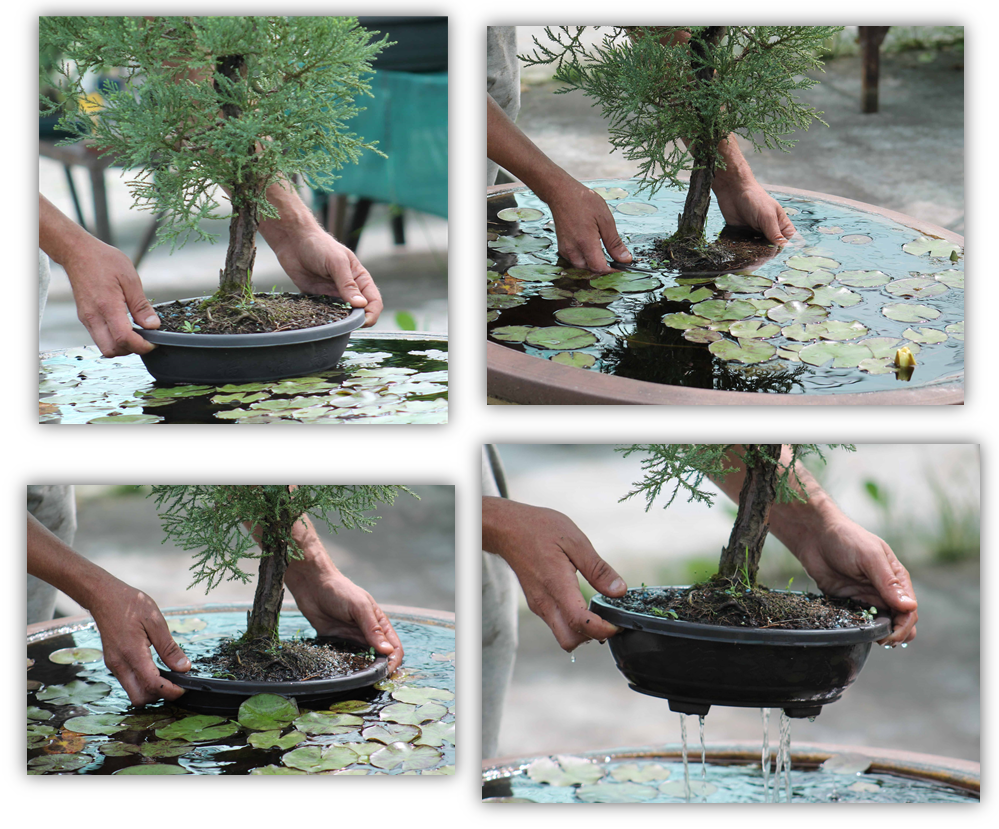
- Submersion / Soaking Method — Ideal when the root ball has dried out completely (common after vacations or repotting). Fill a bucket, sink, or large tray with room-temperature water, submerge the entire pot up to the soil line (never above the trunk to avoid rot), and let it soak 5–15 minutes until bubbles stop rising. Lift out, let drain fully. This revives dehydrated roots evenly without air pockets.
(Step-by-step submersion: Place pot in water, watch bubbles escape, then drain—excellent for rescuing dry bonsai! 💦)

(Illustration of sink submersion for a dramatic cascade-style bonsai—great visual for beginners.)
- Bottom Watering — Place the pot in a shallow tray of water for 10–20 minutes. Capillary action pulls moisture up evenly. Useful for very dry soils or to avoid disturbing surface moss.
- Misting / Foliar Watering — Lightly mist leaves in the morning during hot, dry days to reduce transpiration stress. Use sparingly—over-misting indoors can encourage fungal issues.
Tools & Accessories That Make Watering Easier
- Fine-rose watering can (1–2 liter size) — Essential for control.
- Hose with mist nozzle — For larger collections outdoors.
- Automatic drip systems — Great for vacations (timer + emitters).
- Humidity trays — With pebbles and water (pot sits above water line) to boost local humidity without overwatering soil.
- Moisture meters — Affordable digital ones help confirm dryness, especially for indoor bonsai.
Common Watering Mistakes and How to Avoid Them
Even experienced bonsai enthusiasts occasionally slip up. Here are the most frequent watering errors I see (and have made myself over 15+ years of growing bonsai), plus practical fixes to keep your tree safe.
- Overwatering due to poor drainage (the #1 killer) Myth: “I’m killing it by watering too much.” Reality: You’re usually killing it by watering into soil that can’t drain or breathe. Fix: Always ensure 2–3 large drainage holes and use a fast-draining inorganic mix. Tilt the pot slightly after watering to let excess run off. Repot every 1–3 years depending on species and growth rate.
- Watering on autopilot / fixed schedule “I water every Monday and Thursday.” → Disaster in changing weather! Fix: Rely on the tree’s signals (lift test, finger test, color change). Check daily in summer, every 2–3 days in cooler months.
- Using hard, chlorinated, or cold water Hard tap water leaves white mineral crust on soil and pot rims, eventually harming roots. Cold water shocks tropical species. Fix: Collect rainwater in barrels, use filtered water, or let tap water sit 24–48 hours. Always use room-temperature or lukewarm water.
- Underwatering – especially during heatwaves or vacations Leaves curl, tips burn, entire branches die back quickly. Fix: Increase checks during hot/dry periods. For vacations, use a capillary mat, wick system, or ask a trusted friend to use the submersion method. Group pots together to create a micro-humid zone.
- Watering only the surface (shallow watering) Roots stay dry deep down → weak root system and instability. Fix: Always water until you see strong runoff from the bottom (repeat 2–3 times).
- Ignoring repotting needs When roots completely fill the pot and block drainage holes, even perfect watering fails. Fix: Repot in spring (most species) when roots circle the pot or push soil up. Trim 1/3–1/2 of the root mass and refresh soil.
(Root-bound bonsai showing circling roots blocking drainage – classic sign it’s time to repot and improve watering success! ⚠️)
(White mineral buildup on pot rim from hard water – easy to prevent with better water quality.)
Water Quality: What Your Bonsai Really Drinks
Bonsai are surprisingly sensitive to water chemistry because of their small soil volume and frequent watering cycles.
- Best choice: Rainwater (naturally soft, slightly acidic ~pH 5.6–6.5, no chlorine/fluoride)
- Very good alternatives: Reverse-osmosis (RO) water, distilled water, or rainwater barrel collections
- Tap water management:
- Let it sit uncovered 24–48 hours → chlorine evaporates
- Use a carbon filter pitcher or hose-end dechlorinator
- Test pH occasionally (aim for 5.8–6.8 for most species)
- Avoid: Softened water (high sodium), heavily chlorinated pool/spa water, very alkaline well water
Over time, poor water quality causes salt/mineral buildup → brown tips, stunted growth, weakened immunity. Flush the soil thoroughly every 4–6 weeks with extra water to leach salts.
(Rain barrel setup – simple, free, and one of the best upgrades for serious bonsai growers! 🌧️)
Troubleshooting Water-Related Problems
Even with the best intentions, water issues can appear. Here’s how to diagnose and correct the most common symptoms quickly and effectively.
- Yellow leaves / widespread leaf drop Usually overwatering + poor drainage → root rot beginning. Action steps:
- Stop watering immediately.
- Gently remove the tree from the pot and inspect roots: healthy = white/firm; rotten = brown/black/mushy/smelly.
- If rot is present → emergency bare-root repot: trim all rotten roots, dust with fungicide (e.g., cinnamon powder or sulfur), repot in fresh dry bonsai soil, water very sparingly for 2–3 weeks.
- If no rot but soil is soggy → let dry out completely, improve drainage long-term.
- Dry, crispy leaf tips / edges turning brown Classic underwatering or low humidity + heat. Action steps:
- Submerge the entire pot in room-temperature water for 10–20 minutes (rescue soak).
- Mist foliage daily in the morning for 1–2 weeks.
- Move to partial shade temporarily if outdoors.
- Increase frequency of checks and watering going forward.
- Wilting despite “recent” watering Often means hydrophobic (water-repellent) dry soil or severe root damage. Action steps:
- Try the submersion method even if you think it’s wet—dry pockets can hide inside.
- If no improvement in 24 hours → check for root issues (repot if necessary).
- Moss / algae / white fuzzy growth on soil surface Sign of chronic overwatering + poor airflow. Action steps:
- Scrape off the top 1 cm of soil and replace with fresh mix.
- Increase sunlight and airflow around the pot.
- Water less frequently and ensure thorough drying between waterings.
- White crust on soil or pot rim Mineral/salt buildup from hard water or over-fertilizing. Action steps: Flush soil with 3–5× pot volume of rainwater or RO water every 4–6 weeks to leach salts. Switch to better water source.
(Healthy white roots vs. rotten brown roots – visual guide every bonsai owner should know! ⚠️)
(Example of brown tip burn from underwatering – notice the crispy edges typical in hot, dry conditions.)
Advanced Tips from Bonsai Professionals
After two decades working with bonsai (from tiny mame to large specimen trees), here are insider habits that separate good growers from great ones:
- Observe micro-changes daily: Slight wilting in late afternoon is normal in summer—don’t panic-water. True thirst shows earlier in the day.
- Match watering to pot material: Unglazed terracotta dries fastest → more frequent checks. Glazed or plastic holds moisture longer.
- Coordinate with fertilizing & pruning: Water thoroughly before and after liquid fertilizer to prevent root burn. Prune in cooler months when water needs are lower.
- Build a “bonsai diary”: Note weather, watering dates, and tree response for 1–2 seasons—you’ll quickly learn your specific microclimate patterns.
- Vacation-proof your collection: Use automatic drip emitters on timers, capillary mats in trays, or group pots in shade with a wet towel underneath for humidity.
FAQs: Your Most Common Bonsai Watering Questions Answered
- How often should I water my indoor bonsai? No fixed schedule—check daily with finger/lift test. Most indoor tropicals (Ficus, Serissa) need watering every 1–3 days depending on light, heat, and humidity.
- Can I use tap water safely? Yes, if you let it sit 24–48 hours or filter it. Rainwater or RO is better long-term to prevent mineral issues.
- What if I’m going on vacation? Move to shade, group pots together, use capillary mats or wick systems, or set up a simple drip irrigation timer. Ask a friend for submersion watering every 3–5 days.
- Is it possible to overwater in inorganic soil? Yes—if drainage is blocked by compacted roots or debris in holes. Always repot on schedule.
- How do I revive an underwatered bonsai? Submerge pot fully for 15–30 min, drain well, mist leaves, keep in bright indirect light, and water more frequently for the next 2 weeks while monitoring closely.
- Best time of day to water? Morning is ideal—allows foliage to dry before night (reduces fungal risk). Avoid midday in full sun (water droplets can scorch leaves like tiny lenses).
Conclusion: Master Watering and Watch Your Bonsai Thrive
You’ve now got the complete roadmap: understand your soil, read your tree’s signals, apply the right techniques, avoid pitfalls, and troubleshoot fast. Watering bonsai isn’t about memorizing rules—it’s about building a relationship with your living miniature tree. It will literally “talk” to you through leaf color, soil weight, and growth patterns.
Practice these steps consistently, and you’ll see stronger roots, richer foliage, and a bonsai that becomes the envy of any collection. Your tree is counting on you—now go give it the perfect drink! 🌿💚
Feel free to share your own watering wins, struggles, or photos in the comments below—I love hearing from fellow bonsai lovers. Subscribe for more in-depth tree care guides, seasonal checklists, and pro techniques to take your bonsai journey to the next level. Happy watering! ✨











