
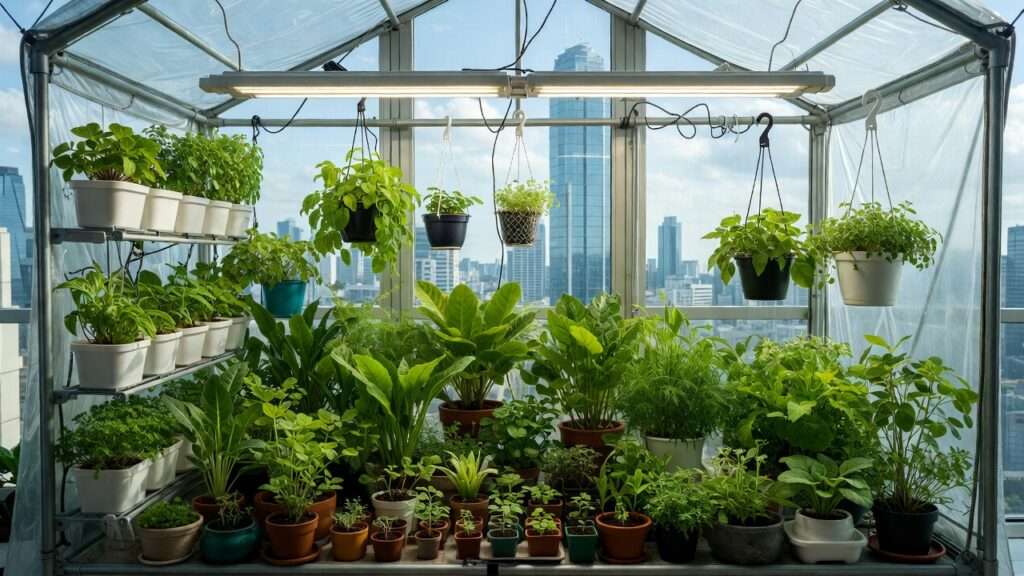
Imagine stepping into your tiny apartment kitchen in the heart of a bustling city like Dhaka or any urban hub, and plucking vibrant basil leaves 🍃 or crisp lettuce right from your own little green oasis—no grocery run required, no wilted store-bought herbs, just pure, homegrown freshness at your fingertips. 😍
For millions of urban dwellers, this dream feels out of reach. Concrete jungles, tiny balconies (or none at all), low natural light from high-rises, dry air from AC units, and seasonal extremes make traditional gardening seem impossible. Yet, an indoor greenhouse for urban dwellers changes everything. It creates a controlled microclimate that delivers stable humidity, warmth, and protection from drafts—allowing you to harvest fresh herbs and veggies 365 days a year 🌞❄️.
As a horticulturist with over 15 years of experience guiding city gardeners through space-limited setups, I’ve seen firsthand how these compact systems boost mental wellness 🧘♀️, improve indoor air quality 🌬️, cut grocery costs 💰, and foster sustainable self-sufficiency. Recent trends show urban gardening booming in 2025–2026, with more apartment residents turning to vertical and indoor solutions for food production and eco-living.
In this ultimate guide, you’ll get expert, step-by-step advice on choosing, setting up, and maintaining an indoor greenhouse tailored for small urban spaces—so you can overcome common challenges and enjoy thriving, productive plants no matter your constraints. Let’s turn your apartment into a year-round micro-farm! 🚀
Why Urban Dwellers Need an Indoor Greenhouse (Problem-Solution Section) 🤔🌱
City life throws plenty of hurdles at aspiring gardeners: no outdoor space, limited sunlight blocked by buildings, fluctuating temperatures from heating/cooling systems, dry indoor air (often below 40% humidity), urban pollution, and pests sneaking in through windows. Traditional windowsill pots struggle here—plants get leggy from insufficient light, dry out quickly, or succumb to temperature swings.
An indoor greenhouse solves these issues by enclosing your plants in a protective environment. The clear cover traps warmth and humidity (ideal 50–70% for most edibles), blocks drafts, and creates a stable microclimate. This means consistent growth even during winter monsoons or scorching summers.
Beyond basics, the perks are huge:
- Year-round harvests 🌱 — No more seasonal gaps; enjoy fresh produce nonstop.
- Better nutrition & taste 🍅 — Homegrown veggies picked at peak ripeness beat store-bought every time.
- Air purification & stress relief 🌬️ — Plants filter toxins and boost mood—studies link indoor greenery to reduced anxiety.
- Cost savings 💸 — Cut herb/veggie bills while reducing food miles and plastic packaging.
- Eco-impact ♻️ — Support sustainable living in water-scarce or polluted cities.
Quick comparison:
| Setup | Light Control | Yield Potential | Ease for Urban Spaces | Year-Round Reliability |
|---|---|---|---|---|
| Windowsill Pots | Poor | Low | High | Low |
| Balcony Containers | Variable | Medium | Medium | Seasonal |
| Indoor Greenhouse | Excellent (with LEDs) | High | High (compact models) | Excellent |
If you’re tired of limp supermarket greens, this is your game-changer.
Choosing the Best Indoor Greenhouse for Small Urban Spaces (Buyer’s Guide) 🛒
Not all greenhouses suit apartments—focus on compact, portable, and feature-rich options under 4 ft wide/tall. Prioritize vertical designs to maximize shelves without eating floor space.
Key features for urban success:
- Size & design — Tabletop (counter/kitchen-friendly), 4-tier shelving (vertical gold), pop-up tents (easy storage), or cabinet-style (discreet & stylish).
- Grow lights — Full-spectrum LEDs (essential for low-light apartments; 12–16 hrs/day).
- Ventilation — Built-in fans/vents to prevent mold and ensure airflow.
- Humidity & temp control — Zipper doors, trays for water, optional heat mats.
- Materials — Sturdy metal/PVC frames, thick PE covers for durability.
- Extras — Wheels for mobility, adjustable shelves, timers.
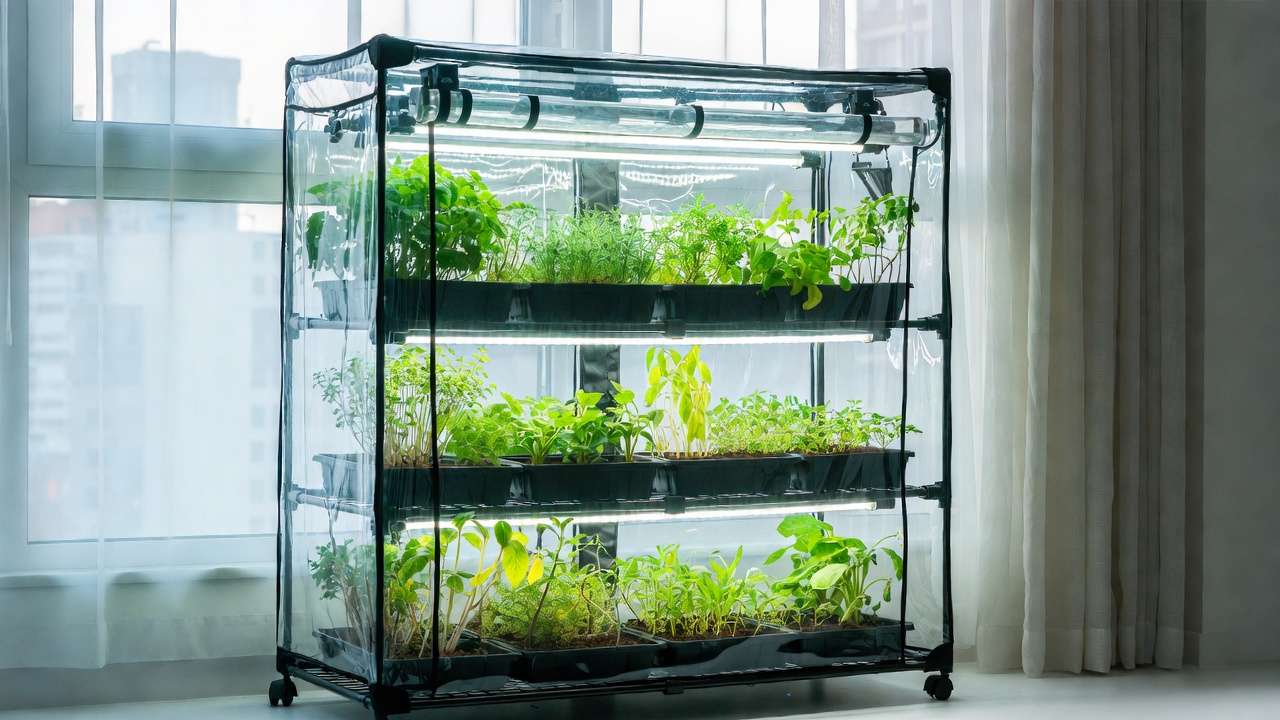
Top recommendations (based on 2025–2026 reviews & performance):
- Meonum Tabletop Mini 🌟 — Best for tiny counters; compact, affordable (~$40–60), great for beginners/herbs.
- Ahopegarden Hydroponic — Ideal for clean, soilless herb/lettuce growing; low-maintenance, perfect for apartments.
- Barrina or Ohuhu 4-Tier — Vertical powerhouse (~$50–210); adjustable shelves, optional LEDs, high capacity (16–24 plants).
- EAGLE PEAK Pop-up — Portable & quick-setup; fits tight corners, reusable.
- Carpathen with Lights — Premium all-in-one; dimmable LEDs, heat mats for winter.
Budget tips: Entry-level $50–150 for basics; premium $200+ includes lights/timers. Measure your spot first—corners, kitchens, or closets work wonders! Always check for outlet proximity.
Step-by-Step Setup Guide for Your Indoor Greenhouse (Hands-On) 🛠️
Setting up an indoor greenhouse is straightforward and rewarding—even for complete beginners. With the right steps, you’ll create a thriving micro-environment in under an hour. Here’s my expert walkthrough based on years of helping urban gardeners in space-challenged homes like apartments in Barisal or Dhaka.
- Choose the Perfect Location 📍 Pick a spot with these priorities:
- Near a power outlet for grow lights and fans.
- Away from heating/AC vents, radiators, or drafty windows to avoid temperature swings.
- In a corner, kitchen nook, unused closet, or against a south-facing wall (if available) for bonus natural light.
- Ensure at least 2–3 feet of clearance around for easy access and airflow. Pro tip: In humid Bangladeshi climates, avoid overly enclosed spots to prevent excess moisture buildup.
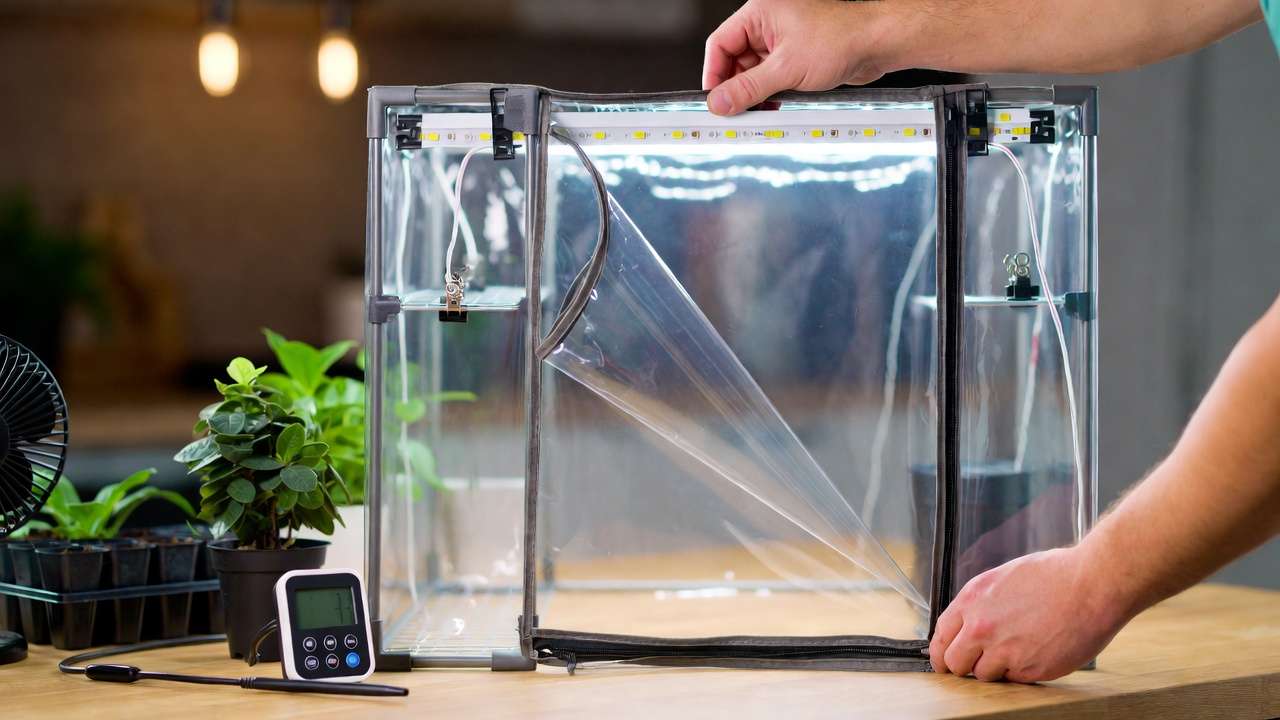
- Unbox and Assemble the Frame 🔧 Most models (like Barrina, Ohuhu, or Meonum) are tool-free:
- Snap or clip poles together to form the frame.
- Attach shelves—adjust heights for taller plants like cherry tomatoes on bottom tiers.
- Drape and secure the clear PE cover with zippers or Velcro. Tighten for a snug seal that traps humidity. Time estimate: 15–30 minutes. Test stability by gently shaking—no wobbles!
- Install Essential Add-Ons for Success ⚡ These turn a basic unit into a high-performance system:
- Full-spectrum LED grow lights 🌟 — Hang or clip above shelves (e.g., Barrina or Carpathen strips). Use 12–16 hours/day on a timer for consistent photosynthesis. LEDs are energy-efficient (low heat, long life) and mimic sunlight’s blue/red spectrum—crucial for low-light urban apartments.
- Small oscillating fan — Promotes gentle airflow to strengthen stems and prevent mold/fungal issues. Run on low 24/7 or timed.
- Humidity tray or mat — Place water-filled trays under pots; evaporation boosts levels to 50–70%.
- Digital thermometer/hygrometer — Monitor temp (ideal 65–75°F/18–24°C) and humidity inside.
- Optional: Heat mat for seedlings in cooler months.
- Lighting Deep Dive: Why LEDs Are Non-Negotiable 💡 Natural window light often falls short in cities—buildings block sun, and short winter days limit growth. Full-spectrum LEDs provide:
- High PAR (Photosynthetically Active Radiation) for photosynthesis.
- Adjustable height: Keep 6–12 inches above plants to avoid burn (closer for seedlings, farther for mature).
- Spectrum tips: Blue-heavy for leafy herbs/greens (bushy growth); red-heavy for fruiting veggies like tomatoes/peppers (flowering). Use a smart plug/timer to automate—plants thrive on routine!
- Initial Setup Checklist ✅
- Assemble frame & cover 🌿
- Add shelves & pots
- Install lights + timer (start at 14 hours)
- Place fan for circulation
- Fill humidity trays
- Check readings: 60–75°F, 50–70% humidity
- Wait 24 hours to stabilize before planting
Follow this, and your greenhouse will feel like a cozy tropical pocket in your urban home. Next up: Picking the right plants!
Best Herbs and Veggies to Grow in Your Indoor Greenhouse (Plant Picks) 🌶️🥬
Focus on compact, fast-growing, high-yield edibles that love controlled conditions. These thrive in small spaces and reward beginners with quick wins.
Top Beginner-Friendly Herbs 🌿
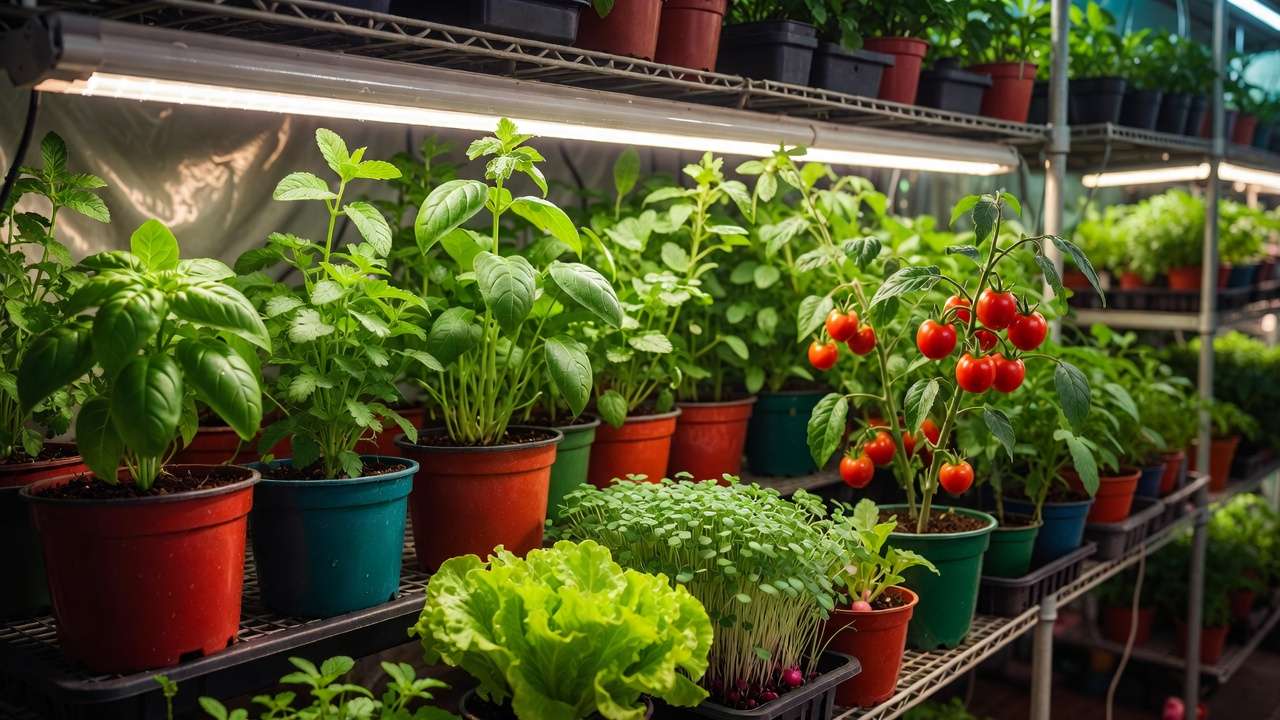
- Basil 🍃 — King of indoor herbs! Pinch tops for bushy growth; harvest continuously. Loves warmth & humidity.
- Mint — Vigorous & forgiving; contain in pots to prevent takeover. Great for teas.
- Chives — Mild onion flavor; cut-and-come-again. Low light tolerant.
- Cilantro/Coriander — Fast-growing; succession plant every 2 weeks.
- Parsley, Thyme, Oregano — Hardy, flavorful; slower but steady.
Easy Veggies for Urban Harvests 🥗
- Leafy Greens (Lettuce, Spinach, Kale, Arugula) — Cut-and-come-again magic; harvest outer leaves forever.
- Microgreens — Ready in 10–14 days; pack nutrition in tiny space (radish, broccoli, pea shoots).
- Radishes — Super-fast (20–30 days); shallow roots fit small pots.
- Baby Carrots or Mini Peppers — Compact varieties; fun & productive.
- Cherry Tomatoes — Dwarf/patio types (e.g., Tiny Tim); need support & more light.
Quick reference table:
| Plant | Light Needs (hrs/day) | Harvest Time | Expert Tips 😊 |
|---|---|---|---|
| Basil | 14–16 | Ongoing | Pinch flowers to extend life |
| Mint | 12–14 | Ongoing | Keep moist; great companion |
| Lettuce/Spinach | 12–14 | 30–45 days | Succession sow for nonstop |
| Microgreens | 12–16 | 10–14 days | Dense seeding = big yield |
| Cherry Tomatoes | 14–18 | 60–80 days | Hand-pollinate indoors |
| Radishes | 12–14 | 20–30 days | Loose soil prevents forking |
Succession Planting Strategy — Sow new seeds every 2–3 weeks in batches. This ensures continuous supply—no gaps! Avoid large vines (e.g., full cucumbers) unless you train vertically with trellises.
These picks suit small urban setups perfectly—fresh, organic, and satisfying!
Care and Maintenance Tips for Thriving Plants (Expert Secrets) 💚
Once your indoor greenhouse is set up and planted, consistent care turns good growth into abundant harvests. Here are the proven routines I teach urban gardeners to keep everything lush and productive.
Watering Wisely 💧 Overwatering is the #1 killer of indoor plants—especially in enclosed greenhouses where humidity is already high.
- Use the finger test: Water only when the top 1–2 inches of soil feel dry.
- Bottom-watering method: Place pots in a tray of water for 10–15 minutes; roots soak up what they need, reducing fungal risk.
- Self-watering pots or wicking systems work beautifully in small spaces—great for busy urban lifestyles.
- In humid Bangladeshi apartments, you may water less often—check daily but act only when needed.
Nutrients & Soil Guide 🌱
- Start with high-quality organic potting mix (well-draining, with perlite/vermiculite for aeration).
- Feed every 2–4 weeks with a balanced liquid fertilizer (e.g., 10-10-10 or organic fish emulsion diluted to half strength).
- For fruiting plants like cherry tomatoes or peppers, switch to higher-potassium formulas (e.g., 5-10-10) once flowering begins.
- Hydroponic bonus: If using an Ahopegarden-style system, follow their nutrient schedule—cleaner, faster growth, no soil mess.
- pH check: Aim for 6.0–6.8; most urban tap water in Bangladesh is fine, but test occasionally.
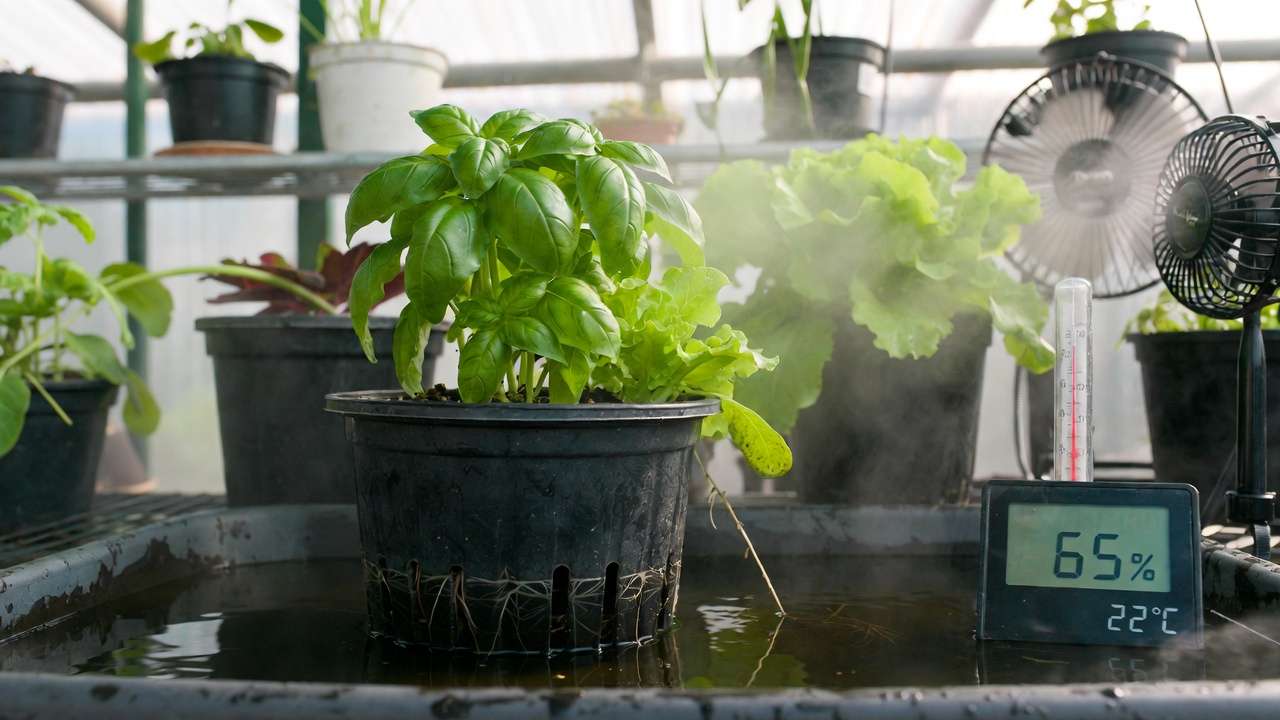
Pest & Disease Prevention 🛡️ Urban apartments can still get aphids, spider mites, or fungus gnats.
- Inspect new plants before adding them—quarantine for 7–10 days.
- Maintain good airflow with your fan—stagnant air invites trouble.
- Natural remedies: Neem oil spray (weekly preventive), insecticidal soap for soft-bodied pests, or yellow sticky traps for gnats.
- Early signs: Yellow leaves (nutrient deficiency or overwatering), leggy growth (not enough light), white powdery spots (mildew—reduce humidity & increase air movement).
Seasonal Adjustments for Bangladesh Climates ☀️🌧️
- Monsoon season: Increase ventilation to prevent mold; wipe condensation off cover daily.
- Winter (Nov–Feb): Add a small heat mat under seedling trays if temps drop below 18°C at night.
- Summer heat: Open vents/zippers during the day; shade cloth if direct sun hits too hard.
Follow these habits, and your plants will reward you with steady, healthy production.
Advanced Tips and Hacks for Maximum Yield in Tiny Spaces (Pro Level) 🔧
Ready to level up? These techniques squeeze every possible harvest from limited square footage.
- Vertical Gardening Mastery 📏 — Use every inch: Hang small pots from upper frame bars, add tension-rod shelves across corners, or install side netting for climbing mini tomatoes/peppers.
- Companion Planting 🤝 — Grow basil near tomatoes (repels whiteflies naturally), marigolds (deter nematodes), or chives (discourage aphids).
- DIY Upgrades 🛠️
- Line interior walls with reflective mylar or aluminum foil to bounce light back to plants.
- Boost CO₂ cheaply: Place an open container of yeast + sugar + warm water inside (fermentation releases CO₂—refresh weekly).
- Automate watering: Add inexpensive drip emitters or a small reservoir system connected to a timer.
- Pruning & Training ✂️ — Regularly pinch herb tops for bushiness; stake or trellis fruiting plants to keep them upright and air circulating.
- Sustainability Wins ♻️ — Compost kitchen scraps for future soil amendment; collect condensation runoff to reuse for watering.
These hacks can easily double your yield without adding more floor space.
Real Urban Success Stories & Case Studies (Inspiration) 📖
- Rina from Dhaka — In a 400 sq ft flat with no balcony, she started with a $60 4-tier greenhouse. Six months later: weekly harvests of basil, mint, lettuce, and microgreens—enough to skip buying herbs entirely and share with neighbors.
- Karim in Barisal Division — Used a tabletop model on his kitchen counter. Focused on succession planting of cilantro and radishes. Result: Fresh garnishes for every meal, plus a noticeable mood lift during long office days.
- Common wins I see: Most beginners report their first real harvest within 4–6 weeks, and many expand to a second unit within a year.
Your story starts the moment you plant that first seed.
Frequently Asked Questions (FAQs) ❓
Can I grow without grow lights if I have a bright window? Yes, but results are limited—especially in winter or north-facing apartments. Supplement with LEDs for 4–6 hours daily to prevent leggy, weak growth.
How much electricity do grow lights use? Modern full-spectrum LEDs are very efficient: a 4-tier setup with 100–200W total usually costs $3–8/month (depending on local rates and hours).
Is an indoor greenhouse worth the investment? Absolutely for frequent herb/veggie buyers. Most people recoup costs within 6–12 months through reduced grocery bills, plus the priceless joy of homegrown food.
What’s best for absolute beginners? Start with a tabletop model + easy herbs (basil, mint, chives). Add lights and a timer—set it and forget it!
How do I keep pets or kids from bothering the plants? Place on a higher shelf or use cabinet-style greenhouses with doors. Many models have child-safety zippers.
Conclusion & Call to Action (Motivational Close) 🎉
Living in a compact urban apartment doesn’t mean you have to give up fresh, flavorful, homegrown herbs and veggies. With the right indoor greenhouse for urban dwellers, you can enjoy year-round harvests, cleaner air, lower stress, and a deeper connection to your food—even in the middle of a busy city like Mathba or anywhere else.
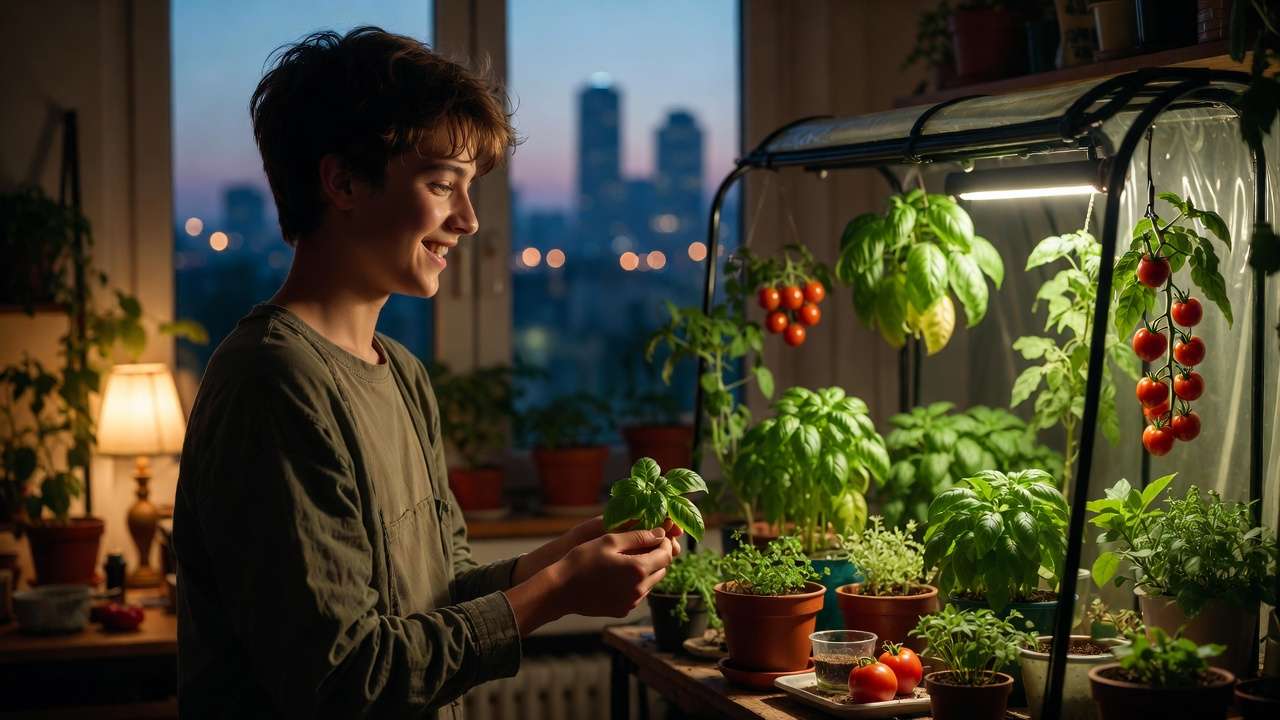
Start small: Pick one compact model, plant a few easy herbs, and watch your tiny green space come alive. Your first homegrown basil leaf will hook you for life! 🌿
Ready to get growing? Grab your greenhouse, follow this guide, and share your progress in the comments below—I’d love to see your urban micro-farm setups! Subscribe for more practical plant care tips tailored for city gardeners. Happy planting! 🚀🥬











