
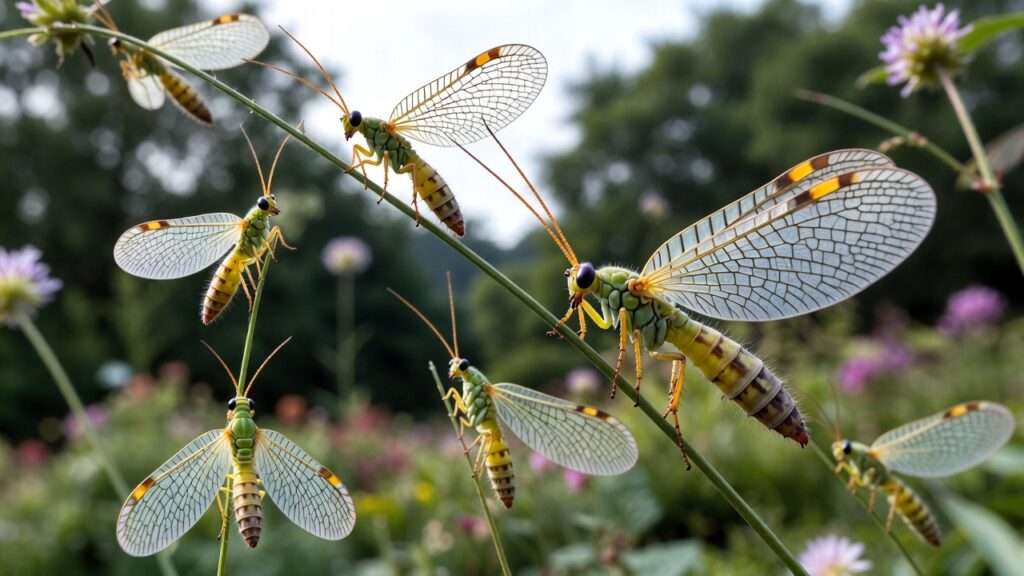
Picture this: Your beautiful roses, vibrant vegetables, and fruit trees suddenly overrun by clusters of tiny green aphids, sticky honeydew coating leaves, and plants looking wilted and stressed. 😩 Instead of grabbing a bottle of harsh chemical spray that could harm bees, butterflies, and your family, imagine unleashing nature’s own tiny superheroes — lacewings — to devour those pests naturally and restore balance. These delicate, iridescent-winged insects (especially the green lacewing, Chrysoperla species) offer one of the most effective, eco-friendly solutions for biological pest control in home gardens and orchards.
Introducing lacewings into your garden is a game-changer for plant lovers seeking sustainable gardening practices. Their hungry larvae, often nicknamed “aphid lions,” can consume hundreds of soft-bodied pests like aphids, thrips, spider mites, mealybugs, whiteflies, scale insects, and even small caterpillar eggs during their short but ferocious predatory stage. 🐛💪 By bringing lacewings in — whether by attracting them naturally or releasing purchased ones — you reduce reliance on pesticides, protect pollinators and beneficial insects, promote healthier soil and plants, and create a thriving, self-regulating ecosystem. In fact, a single lacewing larva may eat 100–400+ aphids or pest eggs in just 2–3 weeks!
This comprehensive guide draws from university extension research (like Cornell, UC IPM, and WSU), commercial biocontrol guidelines, and real-world gardener experiences to show you exactly how to introduce lacewings successfully. Whether you’re dealing with recurring aphid outbreaks on your fruit trees or want proactive organic pest management for your veggies and ornamentals, you’ll find step-by-step strategies, timing tips, release rates, habitat-building advice, and troubleshooting here — more detailed and actionable than most online articles. Let’s turn your garden into a lacewing-powered paradise! 🌱
What Are Lacewings? Understanding Your Garden Allies 🧐
Lacewings belong to the order Neuroptera and are among the most valuable beneficial insects in integrated pest management (IPM). Their name comes from the intricate, lace-like veining on their transparent wings.
The Life Cycle of Lacewings – From Egg to Predator to Adult 🔄
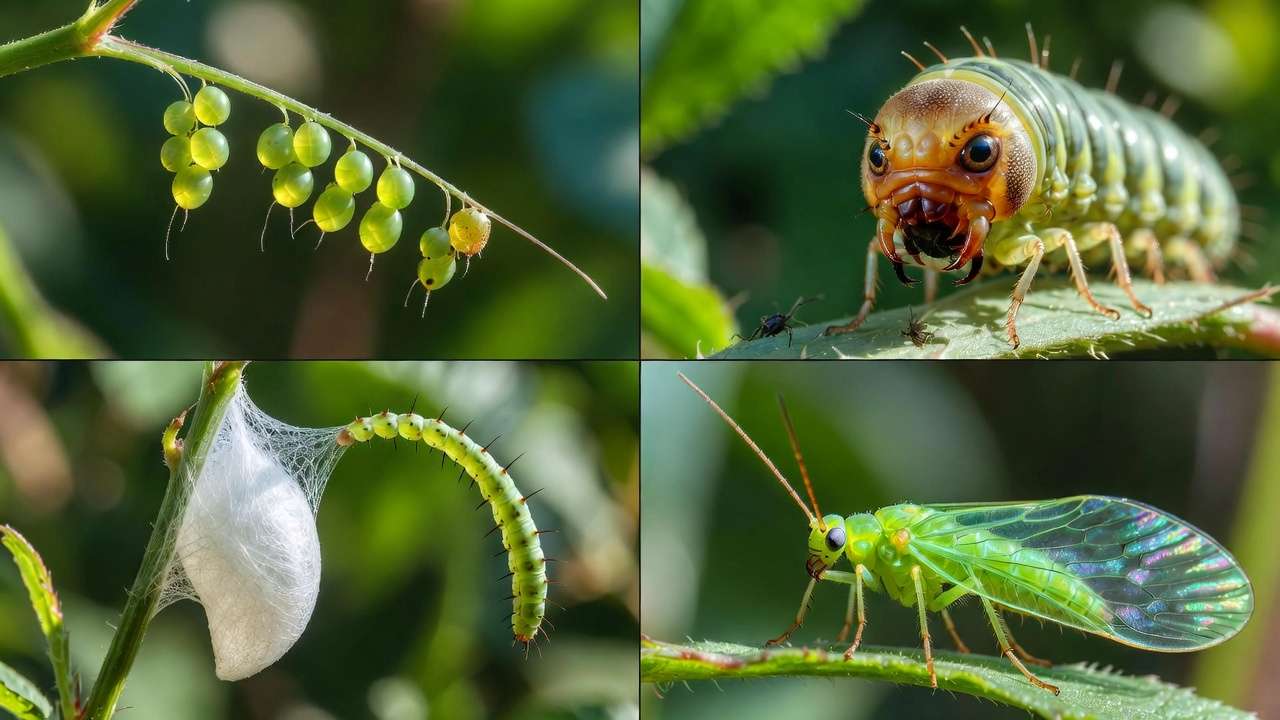
Lacewings undergo complete metamorphosis with four stages:
- Eggs 🥚: Females lay 100–300+ tiny, oval eggs, often on slender silken stalks (in green lacewings) to prevent cannibalism among hatching siblings. These stalks look like tiny lollipops on leaves — adorable and functional!
- Larvae 🐛: The real stars! Hatching in 3–5 days, these alligator-like “aphid lions” have large, sickle-shaped jaws for grasping and sucking fluids from prey. They grow through three instars, reaching up to 1/3 inch, and devour pests voraciously for 2–3 weeks.
- Pupae 🐛➡️🦋: Larvae spin round, silken cocoons (like tiny cotton balls) attached to leaves or bark. Pupation lasts 5–14 days depending on temperature.
- Adults 🦋: Delicate fliers emerge, living 4–6 weeks. They feed on nectar, pollen, and honeydew (not pests), focusing on mating and egg-laying.
Multiple generations occur yearly in warm climates, with development speeding up above 75°F (24°C).
Green vs. Brown Lacewings – Which One for Your Garden? ⚖️
- Green lacewings (Chrysoperla carnea and similar): Most commonly sold commercially. Adults are bright green with golden eyes; larvae are pale to brownish. Excellent for warm-season control; larvae do nearly all the predation while adults eat sweets. Widely available as eggs/larvae.
- Brown lacewings (Hemerobius spp.): Smaller, brownish adults and larvae. Both stages are predatory (adults eat pests too!), making them great for early/late season or cooler conditions. Often naturally occurring in wooded or diverse gardens.
Expert tip: For most home gardens targeting aphids on plants and trees, start with green lacewings for quick impact, then support natural brown lacewing populations for sustained balance.
Why Introduce Lacewings? The Powerful Benefits for Plant and Tree Health 🌟
Introducing lacewings addresses a core need for eco-conscious gardeners: effective, non-toxic pest suppression that preserves biodiversity.
- Targeted, natural pest control — Larvae attack soft-bodied pests without broad harm to bees, ladybugs, or earthworms.
- Broad effectiveness — Proven against aphids (roses, veggies), thrips (onions, flowers), mites (fruit trees), mealybugs/scale (citrus, ornamentals), and more.
- Long-term ecosystem health — Encourages biodiversity, reduces pest resistance buildup, and minimizes chemical runoff.
- Cost-effective — One good release plus habitat support often outperforms repeated sprays.
- Safer for families/pets — No toxic residues; ideal for organic certification or child/pet-friendly yards.
Real-world example: In orchards following IPM, lacewing releases combined with habitat plants have suppressed early aphid outbreaks, cutting insecticide use by 50%+ (per extension studies).
Two Proven Ways to Introduce Lacewings: Attract Naturally vs. Purchase & Release 🌸 vs. 📦
Option 1 – Attracting Lacewings Naturally (Sustainable & Free!) 🌼
The best long-term approach — build habitat so lacewings arrive and stay!
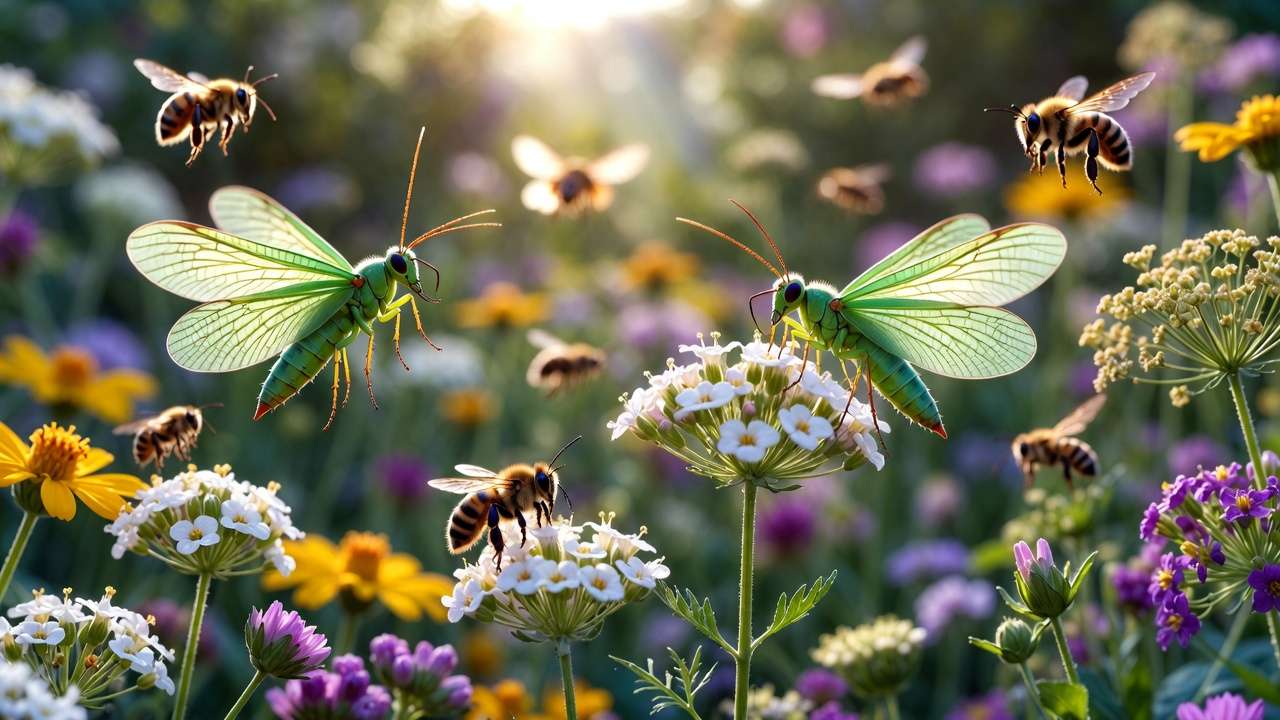
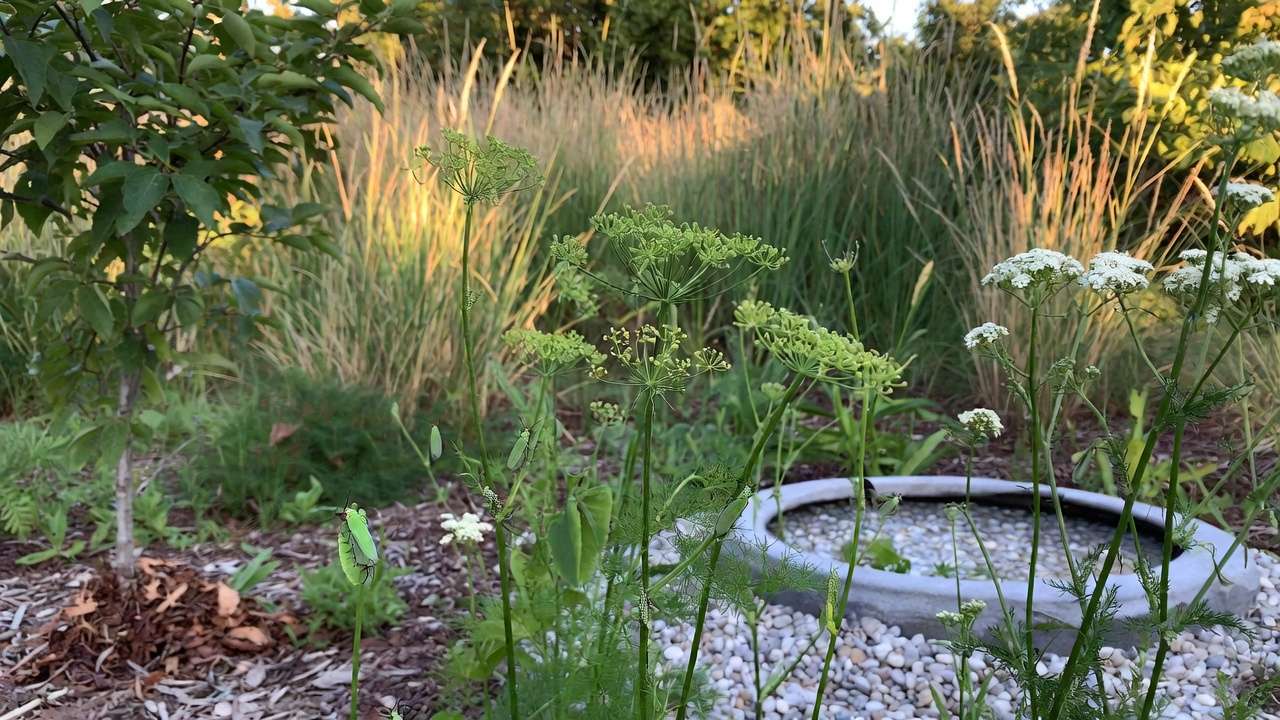
- Plant nectar/pollen-rich “insectary” flowers: Adults need these for egg production. Top attractors include dill, fennel, cilantro/coriander, cosmos, alyssum, yarrow, coreopsis, Queen Anne’s lace, sunflowers, angelica, caraway, and tansy.
- Provide shelter: Tall grasses, shrubs, leaf litter, or bark piles for overwintering.
- Avoid broad-spectrum pesticides; tolerate low early pest levels to draw adults.
- Reduce ants (they protect aphids) with barriers or baits.
Success tip: Succession planting ensures continuous blooms from spring to fall.
Option 2 – Purchasing and Releasing Lacewings (Fast Results for Heavy Infestations) 🚀
For quick knockdown:
- Buy from reputable suppliers (eggs in carriers, pre-hatched larvae, or adults).
- Pros: Rapid pest reduction. Cons: May disperse without habitat; repeat releases needed.
Combine both methods for best results — attract naturally while boosting with releases.
Step-by-Step Guide: How to Release Lacewings Effectively ⏰🪲
Releasing purchased lacewings gives you fast, targeted pest control — especially when infestations are already heavy on your plants or trees. But success depends on perfect timing, proper handling, and smart application. Follow these expert-backed steps (drawn from biocontrol suppliers like Arbico Organics, Koppert, and university IPM programs) to maximize survival and impact.
Timing – When to Introduce Lacewings for Maximum Impact ⏳
- Best temperature range: 60–85°F (15–29°C). Lacewings thrive in mild to warm weather; below 55°F (13°C) development slows dramatically, and above 90°F (32°C) survival drops.
- Seasonal window: Early to mid-growing season, as soon as pest populations appear but before they explode. In most temperate and subtropical climates (including Bangladesh’s warm, humid conditions), this means:
- Spring/early summer (March–June) for aphids on roses, veggies, and young fruit trees
- Monsoon/early post-monsoon (July–October) for thrips, mites, and whiteflies
- Daily timing: Release in the early morning or late afternoon/evening when temperatures are cooler, humidity higher, and wind is minimal. Avoid midday sun and strong winds that can blow delicate adults or larvae away.
- Pest threshold rule: Release when you see the first clusters of aphids, thrips, or mites — don’t wait for severe damage. A small prey population keeps released larvae from dispersing or cannibalizing each other.
Pro tip for Bangladesh gardeners 🌴: In Barisal Division’s hot, humid climate, focus releases during cooler morning hours (6–9 AM) and after light rains when humidity helps larvae survive longer.
Release Rates & Application Best Practices 📏
Release rates vary by pest pressure, garden size, and life stage purchased. Here are reliable guidelines from commercial biocontrol standards:
- Eggs (on cards or loose in carrier):
- Small garden/raised beds: 1,000–2,000 eggs per 1,000 sq ft (about 100 m²)
- Medium yard with trees: 5,000–10,000 eggs total
- Heavy infestation: Double the rate and repeat every 7–10 days (2–4 releases)
- Larvae (pre-hatched, often in bottles or trays):
- Preventive: 1–3 larvae per sq ft
- Active infestation: 5–10 larvae per sq ft or 1,000–5,000 per acre
- Fruit trees/orchards: 10,000–50,000 larvae per acre depending on canopy size and pest load
- Adults (less common, but available):
- 500–1,000 per 1,000 sq ft for quick egg-laying boost
How to apply:
- Shake or sprinkle eggs/larvae directly onto infested plants, focusing near pest colonies (undersides of leaves, growing tips, fruit clusters).
- For egg cards: Hang or staple them low on plants or tree trunks, out of direct sun.
- Mist lightly with water before and after release to increase humidity (critical in dry spells).
- Avoid releasing during rain or strong wind.
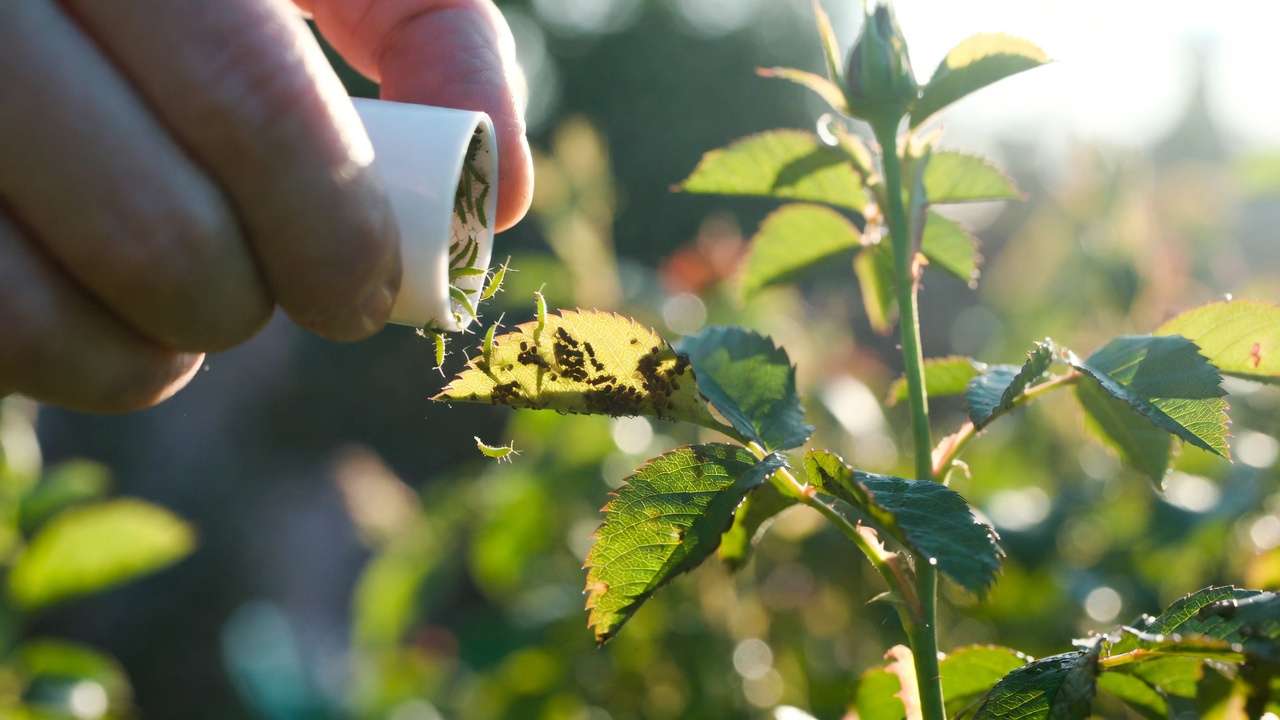
Sequential releases (every 10–14 days, 2–4 times) are far more effective than one big dump — they match the pest life cycle and account for some dispersal.
Storage & Handling Tips to Prevent Cannibalism ❄️
- Eggs: Store at 45–55°F (7–13°C) in the refrigerator for up to 1–2 weeks if you can’t release immediately. Do NOT freeze!
- Larvae: Release the same day or next day — they are cannibalistic and will eat each other if crowded.
- Keep containers in a cool, dark place until release; never leave in a hot car.
Expert insight: Many gardeners lose 30–50% of their lacewings due to poor handling. Treat them like live goldfish — gentle, cool, and fast to the garden!
Creating a Lacewing-Friendly Garden Habitat for Long-Term Success 🏡🌸
Releases give a quick boost, but habitat turns short-term visitors into permanent residents. Here’s how to build a lacewing sanctuary:
-
Continuous bloom calendar (key for adult feeding & egg-laying):
Season (Bangladesh context) Recommended Nectar Plants Bloom Time Spring–Early Summer Dill, Cilantro, Fennel, Cosmos Mar–Jun Monsoon Alyssum, Yarrow, Sunflower, Marigold Jun–Sep Post-Monsoon–Winter Queen Anne’s lace, Coreopsis, Zinnia Oct–Feb Plant in clusters near problem areas (rose beds, veggie patches, fruit tree bases).
-
Water & humidity: Place shallow dishes with pebbles and water; refresh every few days. Lacewings drink from leaf surfaces — morning dew helps too.
-
Shelter & overwintering: Leave leaf litter, tall native grasses, mulch piles, and loose bark around tree bases. Avoid heavy fall clean-ups.
-
Pesticide-free zone: Use only targeted organic sprays (neem oil at dusk, insecticidal soap on pests only) if absolutely necessary — and never during release week.
Bonus for tree owners: Plant dill or fennel under mango, guava, or citrus trees — lacewings love the humidity and shade while controlling scale and mites.
Common Mistakes to Avoid When Introducing Lacewings ⚠️
Even experienced gardeners can lose their lacewing investment due to a few common pitfalls. Here are the top mistakes — and how to dodge them:
- Releasing without prey present Lacewing larvae need food immediately after hatching. If you release eggs or larvae into a pest-free garden, they’ll either disperse quickly in search of food or turn cannibalistic. Always scout for at least light infestations (a few aphids or thrips per plant) before releasing.
- Releasing in extreme weather Midday heat above 90°F (32°C), freezing nights, heavy rain, or strong winds kill delicate larvae and blow adults away. Stick to early morning or evening releases on calm, mild days.
- Using broad-spectrum pesticides too soon (or ever!) Many common garden sprays (even some “organic” ones like pyrethrin or rotenone) are lethal to lacewings. If you must treat, wait at least 7–10 days after release and use only highly targeted options (e.g., horticultural oil on scale insects at dusk).
- Expecting overnight miracles Lacewings work gradually. Larvae take 1–2 weeks to noticeably reduce pest numbers. Don’t panic and re-treat chemically if you don’t see instant results — give them time!
- One-and-done mentality A single release rarely establishes a permanent population. Without habitat support, most released lacewings fly off or die within weeks. Plan for 2–4 sequential releases plus nectar plants for lasting control.
- Overcrowding release points Dumping thousands of larvae onto one heavily infested rose bush leads to cannibalism and poor distribution. Spread them evenly across the garden.
Avoid these traps, and your success rate can jump from 20–30% to 70–90%!
Monitoring Success & Troubleshooting 🕵️♂️
Once you’ve introduced lacewings, track progress to know what’s working and when to adjust.
Signs of success:
- You start seeing lacewing larvae (small, brownish-green “alligators” with sickle jaws) crawling on leaves and stems.
- Pest populations (especially aphids) decline noticeably within 10–21 days.
- Fewer curled leaves, less honeydew, and healthier new growth on plants and trees.
- Adult lacewings fluttering around flowers in the evening.
Simple monitoring methods:
- Weekly visual inspections: Count aphids or thrips on 10–20 sample leaves or shoots before and after releases.
- Take close-up photos of problem areas over time — the difference is often dramatic!
- Use a hand lens (10x magnification) to spot tiny lacewing eggs on stalks or young larvae.
Troubleshooting common issues:
- Lacewings disappear quickly → Boost habitat with more nectar flowers and water sources; re-release if pests remain.
- No larvae appear after egg release → Eggs may have been eaten by ants, birds, or spiders — place cards higher or in protected spots next time.
- Pests rebound after initial drop → This is normal in the first season. Continue sequential releases and strengthen plant health (proper watering, mulch, balanced fertilizer) to reduce stress that attracts pests.
- Larvae eating each other → Space releases better and ensure plenty of prey is available.
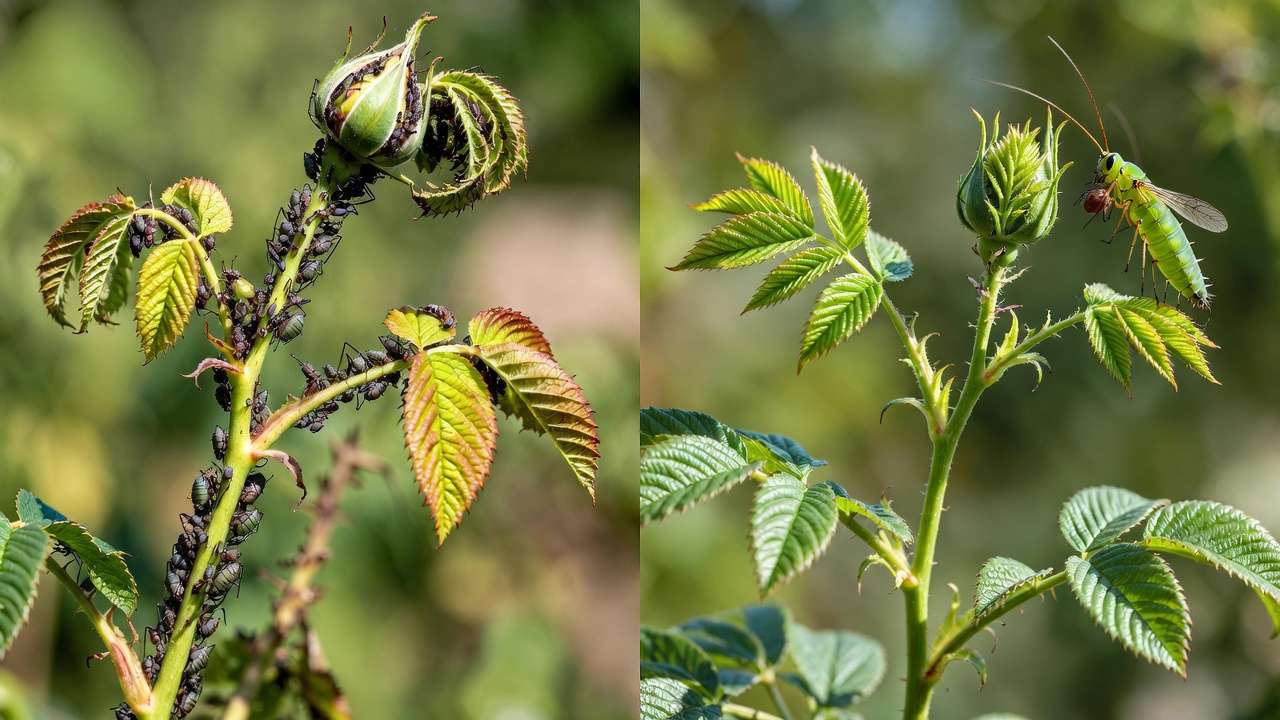
With patience and observation, most gardeners see lacewings become a reliable part of their natural defense system within 1–2 seasons.
Frequently Asked Questions (FAQs) ❓
Do lacewings bite humans or pets? No! Adults are completely harmless — they don’t sting or bite. Larvae have strong jaws for sucking pest fluids, but they can’t penetrate human skin. Totally safe around kids, dogs, cats, and wildlife. 🐶🌸
How long do released lacewings stay in my garden? Without good habitat, most disperse within days to weeks. With nectar plants, water, and shelter, populations can become self-sustaining, with multiple generations per year in warm climates like Barisal Division.
Can I use lacewings on indoor plants or in a greenhouse? Yes! They’re excellent for houseplants, potted ornamentals, and greenhouses. Release larvae directly onto infested leaves (aphids love indoor conditions too). Just ensure good ventilation and avoid very dry air.
Are lacewings safe for organic gardening certification? Absolutely. They’re a classic biological control agent approved for certified organic production worldwide.
What’s the best lacewing species for hot, humid climates like Bangladesh? Green lacewings (Chrysoperla carnea or local strains) perform very well in tropical/subtropical conditions. Brown lacewings can supplement during cooler months. Look for regionally adapted suppliers when possible.
How much do lacewing releases cost? In 2025–2026 prices, expect $15–40 USD for 1,000–5,000 eggs/larvae (enough for a medium home garden). Many online biocontrol suppliers ship internationally — check shipping times and live arrival guarantees.
Conclusion: Build Your Balanced, Lacewing-Powered Garden Today! 🌱🦋
Introducing lacewings into your garden is one of the smartest, most rewarding steps you can take toward sustainable, low-maintenance plant and tree care. Whether you start by planting a patch of dill and cilantro this season or order your first batch of eggs for an aphid outbreak on your mango or rose bushes, you’re inviting nature’s most efficient little predators to work for you.
Start small: Add a few nectar-rich flowers near your problem plants, scout for early pests, and try one targeted release when the time is right. Observe, adjust, and enjoy watching pest pressure drop while your garden buzzes with beneficial life.
Your plants and trees will thank you with stronger growth, fewer diseases, and that satisfying “naturally healthy” glow. And the best part? Once established, lacewings keep coming back year after year — turning your yard into a self-regulating, eco-friendly oasis.
Ready to get started? Plant one attractant flower this week, or place your first lacewing order. Then come back and share your progress — we gardeners love hearing success stories! 🌿











