
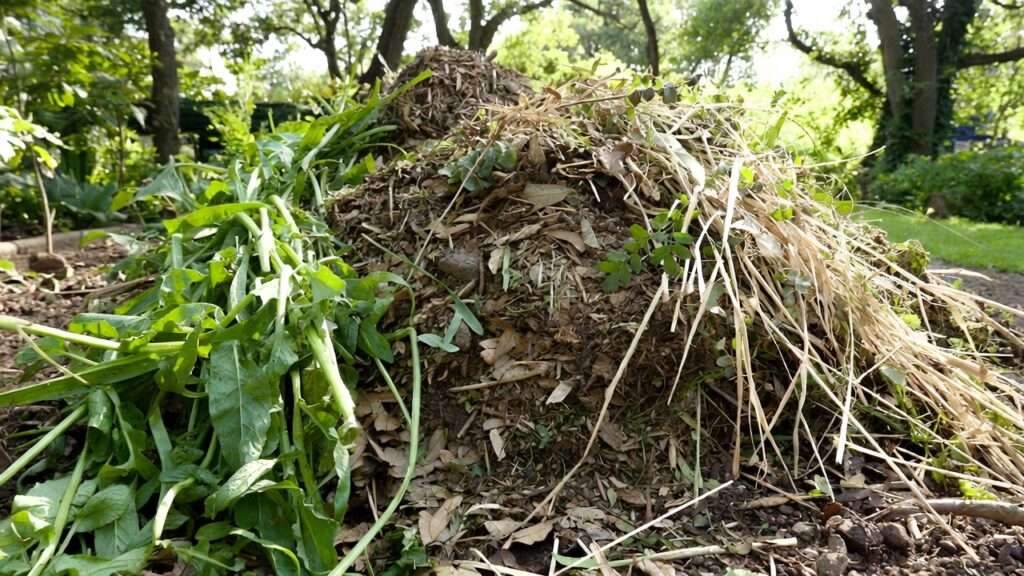
Picture this: You’ve just spent a sweaty afternoon yanking stubborn weeds from your vegetable patch and around your favorite fruit trees, piling them up like green trophies. But as you stare at the heap, doubt creeps in. “If I toss these into my compost bin, will I just be sowing a fresh crop of invaders next spring? 😩” It’s one of the most common dilemmas home gardeners face — and for good reason. We’ve all heard horror stories of dandelions or bindweed exploding from what was supposed to be “finished” compost.
The good news? Yes, it is okay to compost weeds — and doing so can transform your garden “waste” into nutrient-rich gold that feeds your plants, trees, and soil naturally. When handled correctly, composting weeds closes the nutrient loop, reduces yard waste heading to landfills, and builds healthier, more resilient garden ecosystems. But the key phrase is correctly. Skip the right techniques, and you risk spreading viable seeds or regenerating perennial roots.
In this in-depth guide, we’ll dive into the science of why heat matters, proven safe methods (backed by university extension research), which weeds play nice in the pile and which demand extra caution, pro tips to avoid common pitfalls, and real solutions so you can compost confidently without creating more work for yourself. Whether you’re tending a small backyard plot or caring for mature trees and shrubs, these strategies will help you recycle garden debris safely and sustainably. Let’s turn those weeds from enemies into allies! 🔥
Why the Question Matters: The Real Risks of Composting Weeds Wrongly 🚫
Composting weeds isn’t inherently dangerous — but doing it carelessly can backfire spectacularly. The two biggest threats are:
- Viable weed seeds that survive the process and germinate when you spread the finished compost on beds, borders, or around tree roots.
- Perennial roots and rhizomes (like those of bindweed or quackgrass) that remain alive and regrow vigorously.
Many annual weeds produce hundreds or thousands of seeds per plant, and some can stay dormant in soil for years before sprouting. Perennials often propagate from tiny root fragments — snap off a piece while weeding, and it can root anew. Cold, passive piles (the “forget it in the corner” method) rarely generate enough heat to kill these survivors, leading to frustrating reinfestations.
The myth? “Compost always sterilizes everything.” Reality: Only properly managed hot composting reliably destroys most weed propagules. Understanding this risk is the first step to safe, effective weed composting.
The Science Behind Safe Weed Composting: Heat Is Your Best Friend 🔥
Composting is a biological process driven by microorganisms — bacteria, fungi, and actinomycetes — breaking down organic matter. When conditions are right, these microbes generate intense heat in a thermophilic (heat-loving) phase.
University extension services like Texas A&M AgriLife and NC State emphasize temperature as the critical factor:
- Most annual weed seeds die at sustained temperatures of 130–140°F (54–60°C) for several days.
- Tougher species (and many perennial roots) require 145°F (63°C) or higher for 3–30 days, depending on the weed.
- Edges and surfaces of piles often stay cooler, so turning the material regularly ensures even heating.
A well-built hot pile steams visibly, feels uncomfortably warm (don’t hold your hand in too long!), and can be monitored with a long-stem compost thermometer. Turning introduces oxygen, restarts the heating cycle, and prevents anaerobic odors.
Quick comparison:
- Cold composting → Slow, low heat (under 100°F), seeds often survive.
- Hot composting → Fast, 130–160°F peaks, kills most seeds/roots.
- Tumbler or insulated systems → Easier to achieve and maintain heat for beginners.
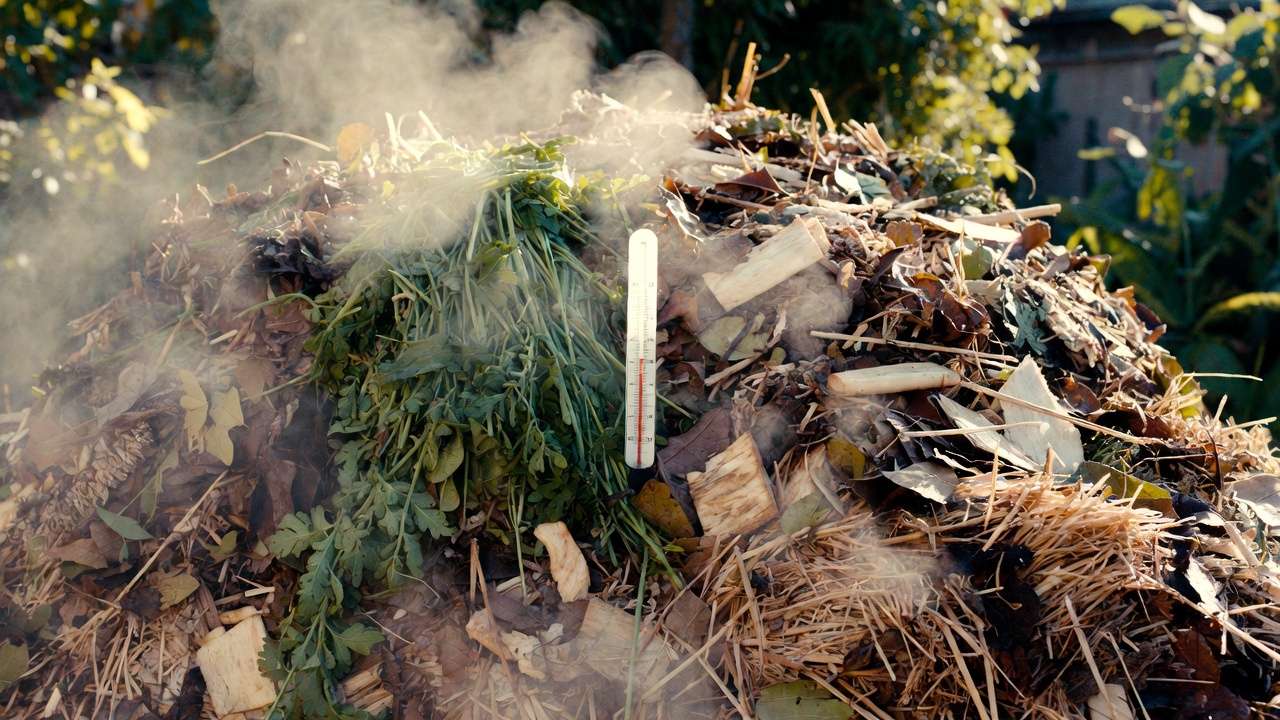
Master this heat science, and your compost becomes a weed-killing machine instead of a seed bank.
Safe Methods to Compost Weeds: Step-by-Step Guide 🛠️
Method 1: Classic Hot Composting (The Gold Standard)
The Berkeley method (or 18-day hot composting) is a favorite among serious gardeners for reliably killing weed seeds.
- Build a big enough pile: Minimum 3 ft x 3 ft x 3 ft (1 m³) for heat retention. Smaller piles lose heat too quickly.
- Balance carbon and nitrogen: Aim for 25–30:1 C:N ratio. Greens (weeds, grass clippings, kitchen scraps) provide N; browns (leaves, straw, cardboard) provide C.
- Layer and moisten: Start with coarse browns at the bottom for aeration. Add weeds chopped into small pieces (increases surface area for faster breakdown and heat exposure). Keep moisture like a wrung-out sponge — 40–60%.
- Turn regularly: Every 3–7 days to mix and reoxygenate. This sustains heat waves.
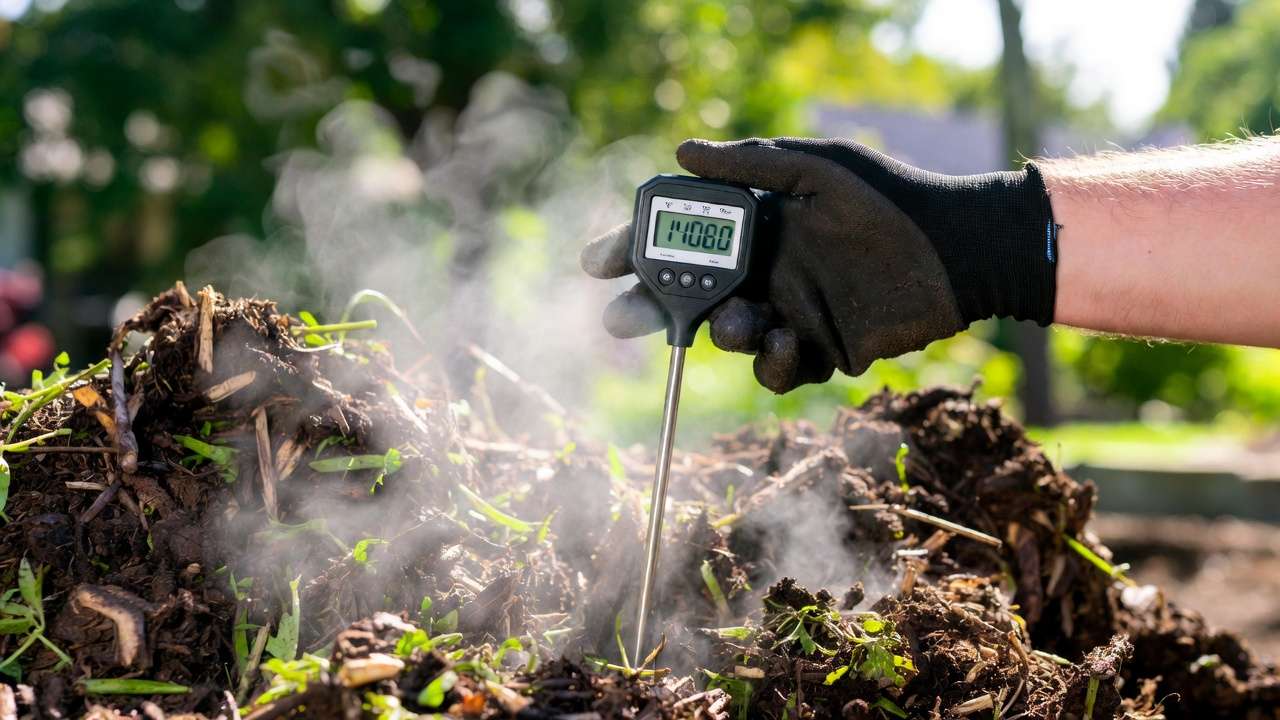
- Monitor temperature: Insert thermometer into the center. Target multiple 130°F+ cycles.
- Cure phase: After 2–4 weeks of turning, let mature 1–2 months. Finished compost is dark, crumbly, earthy-smelling — and weed-free.
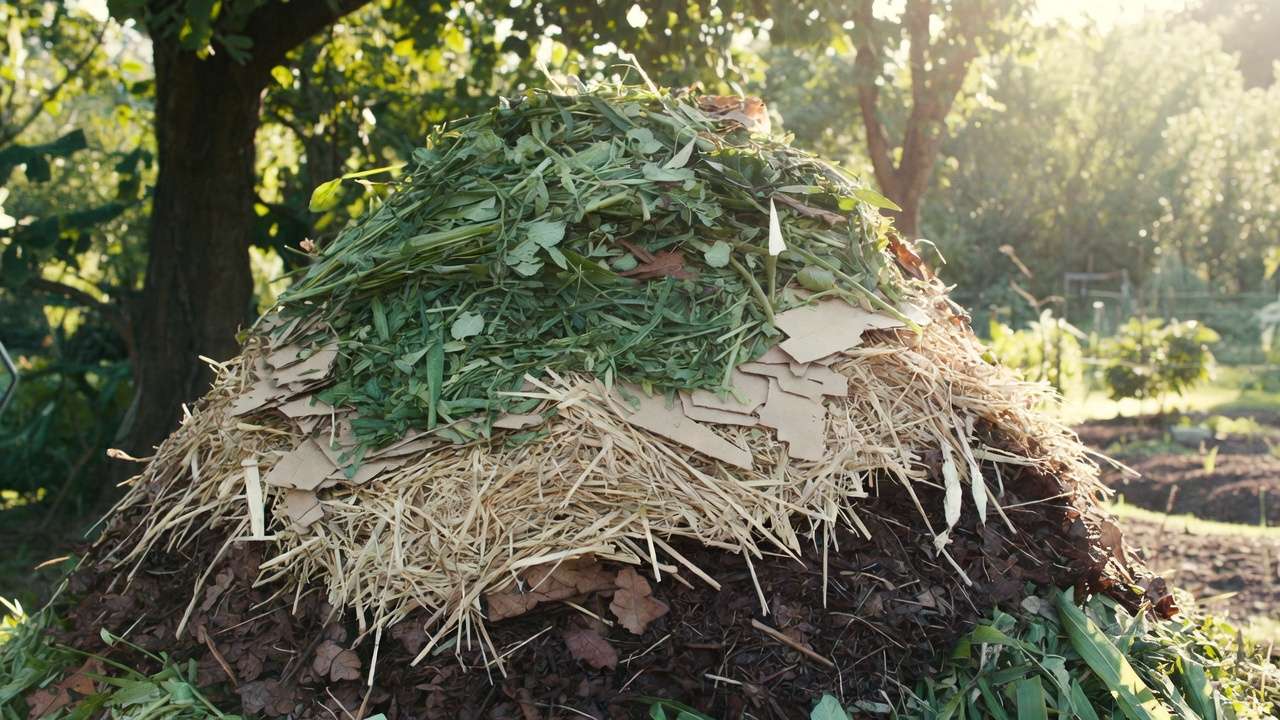
Pro tip: Add high-nitrogen activators like fresh manure or coffee grounds to jumpstart heat. 🌡️
Method 2: Solarization / Solar Drying for Risky Weeds ☀️
For weeds gone to seed or with tough roots:
- Spread them thinly on a hot, sunny surface (black plastic, concrete, or metal sheet).
- Cover with clear or black plastic to trap heat (solarization effect reaches 140°F+).
- Leave 2–4 weeks until completely dry and brittle.
- Then add as “browns” to your hot pile — viability drops dramatically.
Great for dandelion heads or bindweed vines without full hot composting risk.
Method 3: “Weed Tea” or Liquid Fertilizer 💧
A no-heat workaround:
- Fill a bucket with chopped weeds and cover with water.
- Let steep 2–4 weeks (stir occasionally; it gets smelly!).
- Strain liquid, dilute 1:10 with water, and use as foliar feed or soil drench.
- Seeds and roots mostly drown and decompose — nutrients release without spreading propagules.
Ideal for small batches or when heat isn’t feasible.
Method 4: Special Bins for Tough Cases (Insulated or HOTBIN-Style)
Enclosed, insulated composters reach and hold higher temperatures faster, even with smaller volumes. They excel at processing perennial weeds safely if monitored.
These methods give you options based on your setup, time, and weed types — ensuring safe composting every time.
Which Weeds Can You Compost Safely — And Which to Avoid? ✅❌
Not all weeds are created equal when it comes to composting. Some break down easily and pose almost no risk once heated properly, while others are notorious survivors that demand special handling (or should be excluded entirely to protect your garden).
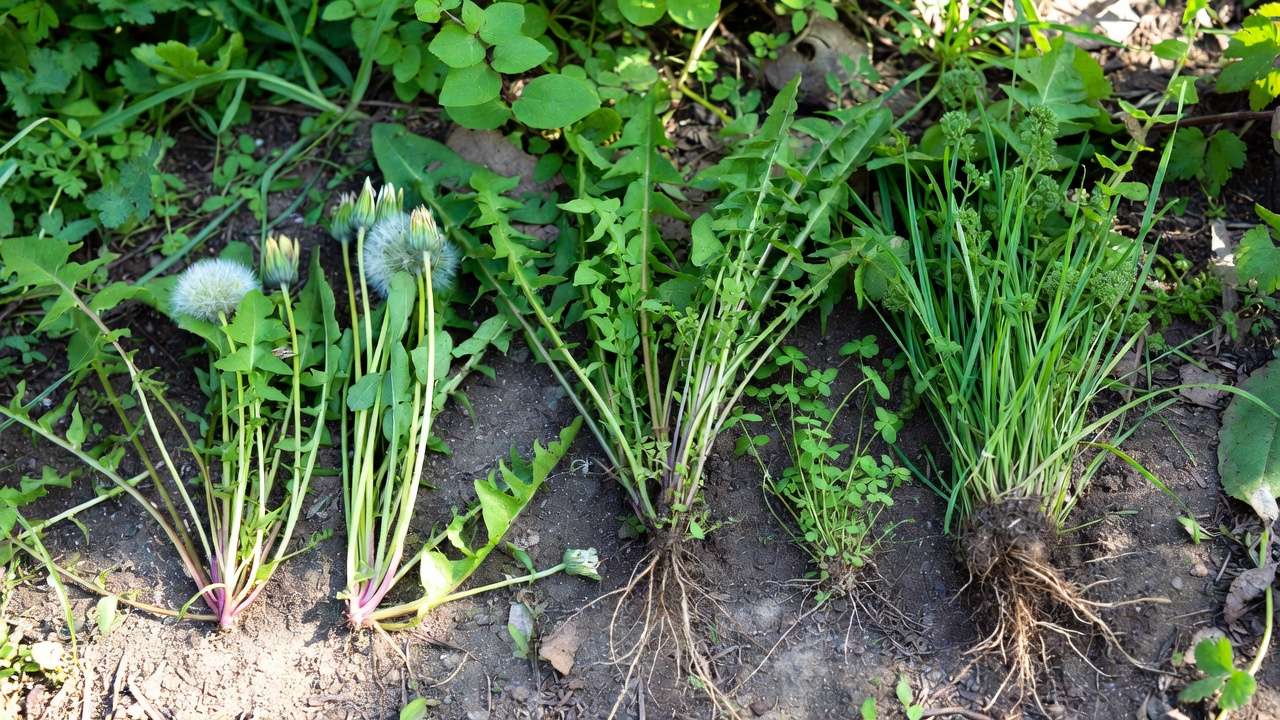
Here’s a practical, gardener-tested breakdown:
Safe to Compost (with Hot Composting or Pre-Treatment) 🌿 These common weeds usually lose viability after reaching proper hot-compost temperatures:
- Annuals before seeding: Chickweed, purslane, lambsquarters, pigweed, crabgrass (young plants)
- Dandelions (remove flower heads or solarize first — the fluffy seeds are hardy!)
- Clover, plantain, henbit, deadnettle
- Annual grasses and most broadleaf summer weeds
Proceed with Caution (Extra Steps Recommended) ⚠️
- Weeds that have already flowered and set seed: Bag flowering tops separately, solarize/dry them thoroughly, or bury deep in a very hot pile center.
- Perennial taproots like dandelion, burdock, or thistle: Chop finely, ensure multiple heat cycles above 145°F.
- Bindweed or morning glory vines: Extremely resilient rhizomes — solarize for weeks first or use weed tea method only.
Generally Avoid Composting (Dispose of in Trash or Burn Where Allowed) 🚫 These invaders are masters of survival and can turn your compost into a propagation nursery:
- Japanese knotweed (extremely aggressive rhizomes)
- Horsetail (Equisetum) — spores and deep roots survive almost anything
- Quackgrass / couch grass (Elymus repens) — razor-sharp rhizomes regrow from fragments
- Canada thistle (deep roots + wind-dispersed seeds)
- Garlic mustard or other biennials with heavy seed loads in late stages
- Noxious/invasive species on your local watch list (check with your regional extension office)
Quick-reference tip: If in doubt, do the “germination test” — spread a thin layer of your finished compost in a pot, keep it moist and sunny for 3–4 weeks, and watch for surprises. No seedlings? You’ve nailed it! 🌱
Expert Tips & Common Mistakes to Avoid 💡
After years of managing community gardens, backyard piles, and teaching composting workshops, here are the real-world tweaks that make the biggest difference:
- Always chop or shred weeds before adding — scissors, lawn mower, or pruners work wonders. Smaller pieces heat up faster and expose more surface to microbes.
- Bury questionable material deep in the hottest center of the pile (at least 18–24 inches from edges).
- Maintain consistent moisture — too dry and heat stalls; too wet and it turns anaerobic (smelly!).
- Use a compost thermometer — inexpensive long-stem models ($10–25) are game-changers. Track those 130–160°F spikes.
- Layer strategically — sandwich weed-heavy greens between thick brown layers to trap heat.
- Avoid these rookie mistakes:
- Adding large clumps of perennial roots without chopping
- Turning too infrequently (heat crashes)
- Letting piles get too small or too dry in winter
- Spreading unfinished compost around young trees or beds
Bonus pro move: Mix in finished hot compost from previous batches — it inoculates the new pile with beneficial microbes and accelerates heating. 🌡️
Benefits of Composting Weeds the Right Way 🌟
When you master safe weed composting, the rewards go far beyond just “not making more weeds”:
- Nutrient recycling — Many weeds are dynamic accumulators, pulling deep minerals (potassium, calcium, phosphorus) into their leaves and roots. Composting returns those nutrients to your soil for free.
- Free, high-quality organic matter — Improves soil structure, water retention, and microbial life around trees, shrubs, perennials, and veggies.
- Reduced waste & lower carbon footprint — Keeps green material out of landfills where it produces methane.
- Healthier garden ecosystem — Builds disease-suppressive soil and feeds beneficial fungi and bacteria that help plants and trees thrive naturally.
In short: Properly composted weeds become one of the best amendments you can give your garden — no bags of expensive store-bought compost needed!
FAQs: Your Top Questions Answered ❓
Is it okay to compost weeds with seeds? Yes — if you use hot composting and sustain 130–145°F+ for several days. Most seeds die at those temperatures. For extra safety, solarize seeding weeds first.
How hot does compost need to get to kill weed seeds? University research (e.g., Cornell, Oregon State) shows:
- 130°F (54°C) for 3+ days kills most annual seeds.
- 145°F (63°C) for 1–3 days handles tougher ones and many perennial roots.
Can I compost perennial weeds like dandelions or crabgrass? Dandelions: Yes, if you remove flowers/seeds or hot compost properly. Crabgrass: Usually safe as an annual. Tough perennials (bindweed, quackgrass): Only in very hot, well-managed systems — otherwise avoid or solarize first.
What if my pile never gets hot enough? Add more nitrogen (fresh grass clippings, manure, kitchen scraps), build a larger pile, turn more frequently, insulate with straw bales, or switch to an enclosed tumbler/HOTBIN. Cold composting is still valuable — just don’t add seeding weeds or perennials.
Will worms/vermicomposting kill weed seeds? Worm composting (vermicomposting) runs cool (55–85°F) and rarely kills seeds. Keep seeding weeds and perennials out of worm bins — use hot composting for those instead.
Conclusion: Turn Weeds into Garden Gold — Start Today! 🎉
So, is it okay to compost weeds? Absolutely yes — as long as you respect the science of heat, choose appropriate methods, and take a few smart precautions. By doing so, you’re not just disposing of garden debris; you’re creating a closed-loop system that nourishes your plants and trees season after season.
Grab that compost thermometer, sharpen your pruners, and start building that hot pile today. Your soil (and your back) will thank you when those weeds become free, rich compost instead of next year’s headache.
Happy composting — may your piles steam, your garden thrive, and your weeds finally work for you instead of against you! 🌳✨











