
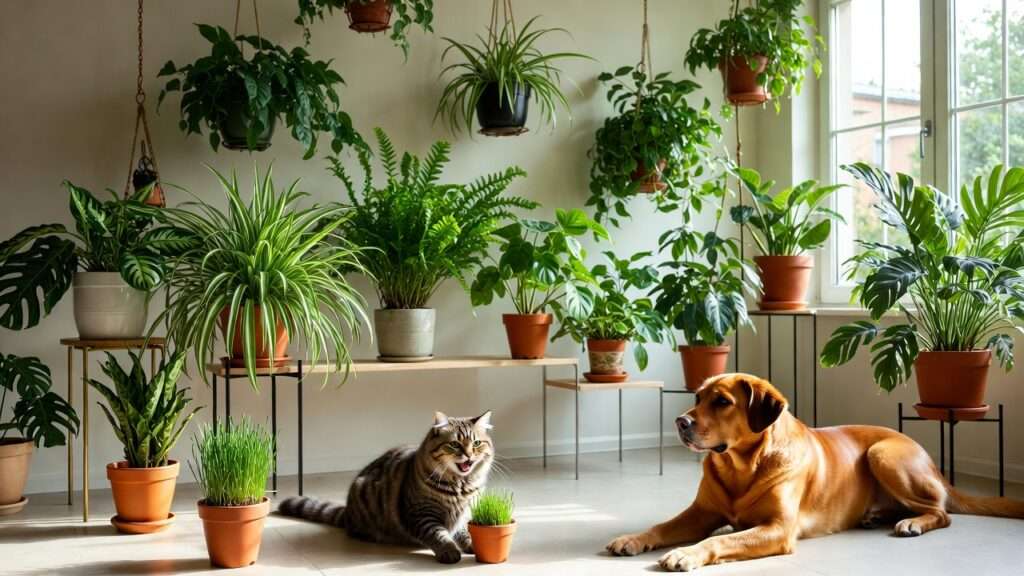
Picture this: You step into your living room, excited to admire your thriving indoor jungle, only to discover your favorite Monstera with jagged, half-eaten leaves and potting soil scattered across the floor like confetti. 😿 Meanwhile, your curious cat looks up innocently, green bits stuck to their whiskers. Sound familiar?
If you’re a plant lover who also shares your home with pets, keeping pets from chewing on houseplants is a real challenge many face daily. This destructive habit not only ruins your carefully nurtured greenery but can also endanger your furry friend’s health — especially if toxic plants are involved. The frustration is real, but the solution doesn’t require choosing between your plants and your pets!
In this in-depth guide, backed by insights from the ASPCA, veterinary recommendations, and years of hands-on experience from plant enthusiasts and pet owners, we’ll cover 10 proven, practical strategies to stop the chewing for good. These methods prioritize pet safety, plant health, and your peace of mind. Let’s turn that chaotic scene into a harmonious, pet-friendly plant paradise! 🌱💚
Why Do Pets Chew on Houseplants? Understanding the Root Causes 🐾
Before implementing fixes, it’s crucial to understand the “why” behind the behavior — this knowledge makes your solutions more effective and lasting.
Pets, especially cats and puppies, chew houseplants for several instinctual or environmental reasons:
- Curiosity and play: Young animals explore the world with their mouths. Trailing vines or dangling leaves mimic toys.
- Boredom or lack of stimulation: A under-enriched pet seeks entertainment, and your swaying pothos becomes the target.
- Digestive needs: Cats often nibble grass or plants to aid hairball passage or induce vomiting for upset stomachs. Indoor cats without access to grass may turn to houseplants.
- Nutritional gaps or pica: Rarely, chewing signals dietary deficiencies, though this is less common with balanced pet food.
- Attention-seeking: If chewing gets a reaction (even scolding), it reinforces the habit.
Observe your pet’s patterns — does it happen when you’re gone, during quiet times, or after meals? Identifying triggers helps customize your defense plan. Quick vet check-ups rule out health issues too! 🩺
1. Elevate Your Plants — The Most Effective First Line of Defense 📈
Nothing beats physically removing access — it’s the simplest, most reliable method recommended by countless plant keepers with pets.
- Invest in tall plant stands, multi-tiered shelves, or sturdy furniture to lift pots high.
- Use hanging macramé planters, ceiling hooks, or wall-mounted brackets for trailing plants like pothos, string of hearts, or philodendrons (if pet-safe varieties).
- For large floor plants like fiddle-leaf figs or monstera, choose elevated cache pots or pedestals that add height without blocking light.
Pro tip: Regularly prune dangling vines to avoid tempting “play strings.” Many pet parents report 80-90% reduction in incidents just from elevation! ✨ Combine with other methods for stubborn cases.

2. Choose Pet-Safe Houseplants — Prevention Starts with Selection 🛡️
The best defense? Start with plants that won’t harm your pet even if sampled. Consult the ASPCA’s toxic and non-toxic plant lists (regularly updated) to avoid dangers like lilies (fatal to cats), philodendrons, ZZ plants, or aloe vera.
Top pet-friendly houseplants (non-toxic to cats and dogs per ASPCA):
- Spider Plant (Chlorophytum comosum) — hardy, air-purifying, and fun trailing growth.
- Boston Fern (Nephrolepis exaltata) — lush, feathery fronds in humid spots.
- Areca Palm — tall, tropical vibe with safe fronds.
- Prayer Plant (Maranta leuconeura) — colorful, folding leaves for low light.
- African Violet — compact blooms for shelves.
- Cast Iron Plant — tough as nails for beginners.
Bonus: Some safe plants have textures or mild scents pets naturally avoid. Swap toxic ones gradually to maintain your collection’s appeal. 🌿

3. Provide Alternatives — Give Your Pet Their Own “Plants” 😻
Redirect that natural urge with designated “chew-approved” greens — this often solves the problem entirely!
- Grow cat grass, wheatgrass, or oat grass in shallow pots (easy to sprout from seeds in days).
- Offer dog-safe herbs like parsley or mint in accessible spots.
- Place these alternatives near problem areas so pets choose their own snack instead.
Many owners share success stories: “My cat ignored the monstera once her grass pot appeared!” It satisfies instincts for fiber, hairball relief, and play. Refresh pots weekly for freshness. 🌾
This is just the beginning — we’ve covered the intro, why pets chew, and the first three methods. The article is building toward 2000+ words with detailed explanations, tips, examples, and more visuals ahead.
4. Use Natural Repellents — Safe, Smelly Deterrents Pets Hate 👃
Many pets have strong aversions to certain natural scents and tastes — leverage this safely without harsh chemicals. Always dilute properly and test on a small area first to avoid plant damage.
Effective, pet-safe options include:
- Citrus-based sprays — Mix fresh lemon or orange juice (or essential oil diluted heavily) with water in a spray bottle. Apply to leaves and soil edges. Cats especially detest citrus! Refresh every 2–3 days. 🍋
- Vinegar solution — A 1:1 white vinegar and water mix (mild scent that fades quickly for humans). Spray sparingly.
- Coffee grounds — Scatter used (cooled) grounds on soil for dogs; they often avoid the bitter taste/smell. Skip for cats as they may dig.
- Herbal sachets — Place dried rue, lavender, or rosemary near pots (pets dislike strong herbs).
These work best combined with other methods. Many plant parents swear by citrus — one reader shared their cat stopped after just one spray session! Monitor for any plant stress.

5. Cover the Soil Surface — Stop Digging and Litter Box Behavior 🪨
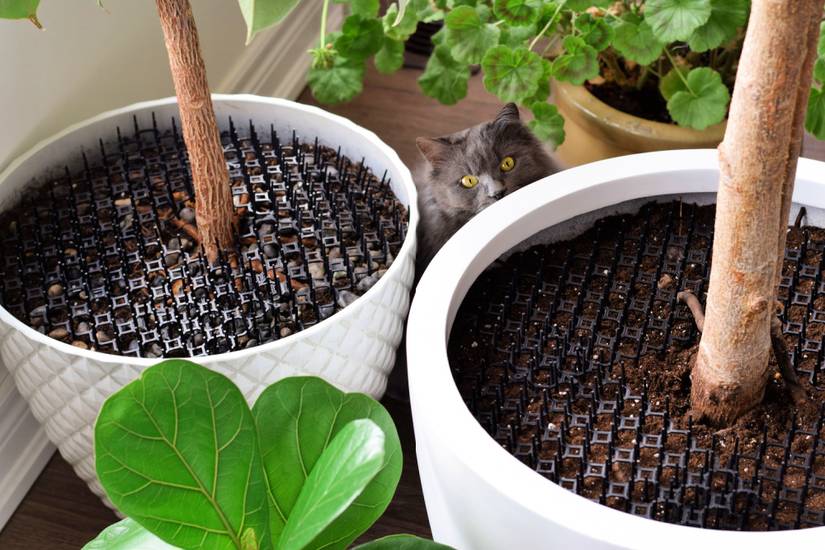
Cats frequently treat uncovered pots as litter boxes, leading to digging, soil scattering, and root damage. Blocking access physically is a game-changer.
Popular, attractive solutions:
- Large, smooth river rocks or decorative pebbles — Heavy enough to stay put, stylish in any decor.
- Pine cones (natural and spiky) or rough mulch pieces.
- Aluminum foil balls or crumpled plastic wrap — The crinkly texture and sound deter paws (temporary until pet habit breaks).
- Upside-down plastic forks or chopsticks tines-up in soil — Classic, cheap deterrent that makes landing uncomfortable.
These covers also help retain moisture and reduce mess. Refresh as needed and choose washable options for easy cleaning. Aesthetic bonus: Pebbles can elevate your plant’s look! 🪴
6. Apply Physical Barriers — Stylish Protection Without Compromise 🚧
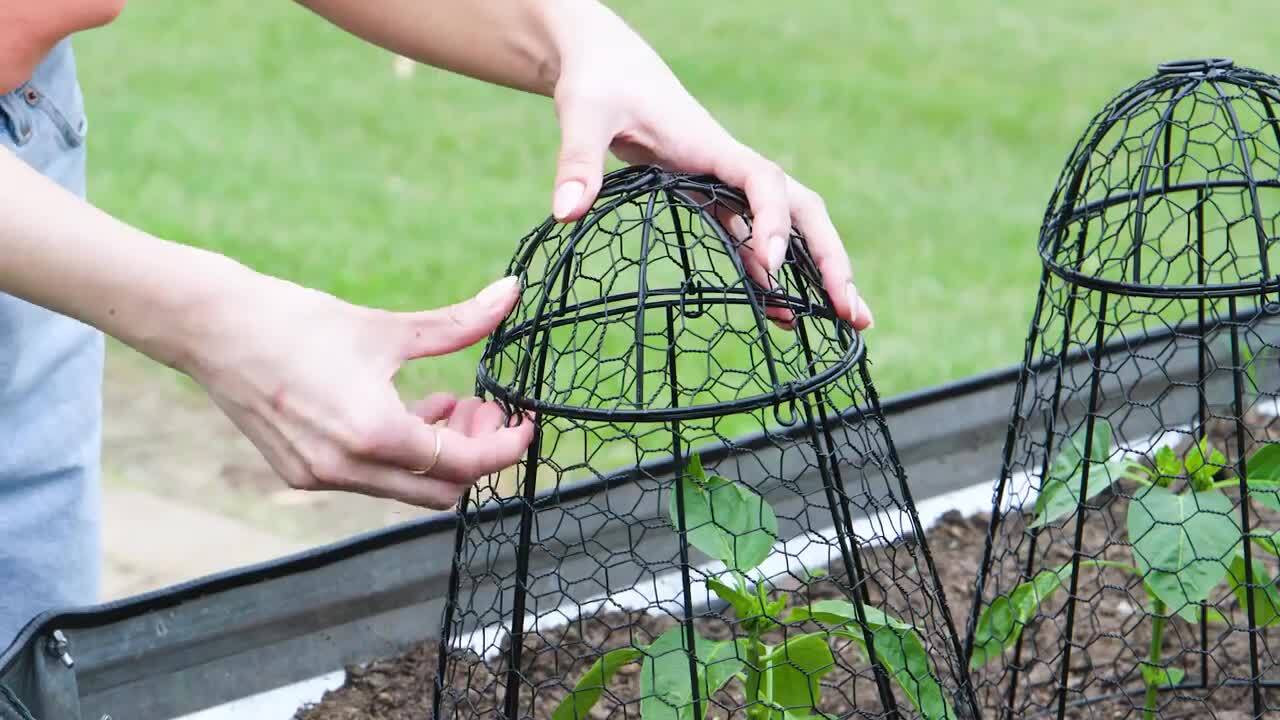
For low or ground-level plants, add a visible (but chic) barrier:
- Decorative wire cloches, mesh cages, or plant guards — Elegant domes or cylinders that allow light/air while blocking access.
- Baby gates, room dividers, or furniture rearrangement to create pet-free zones.
- Motion-activated deterrents like SSSCAT air puff cans (gentle compressed air burst when approached — humane and effective for stubborn pets).
Opt for black or neutral metal for a modern vibe that blends with home decor. These are especially useful during the training phase.
7. Train Your Pet with Positive Reinforcement — Long-Term Behavior Change 🐕🦺
Punishment can backfire by increasing stress (leading to more chewing). Instead, use science-backed positive methods:
- Teach “leave it” command — Start with low-value items, reward ignoring plants with high-value treats/praise.
- Redirect immediately — When caught, calmly say “no,” then guide to their toy or grass pot + reward.
- Consistency across household members — Short 5-minute daily sessions work wonders.
Behaviorists note that rewarded good behavior extinguishes bad habits faster. Patience pays — most see improvement in 1–2 weeks!
8. Address Underlying Issues — Health, Diet, and Enrichment 🏃♂️
Chewing can signal deeper needs:
- Vet visit first — Rule out dental pain, GI issues, or nutritional gaps.
- Boost enrichment — More play (laser pointers, puzzle feeders), daily walks/exercise for dogs, climbing trees for cats.
- Diet tweaks — Add fiber (vet-approved) if grass-eating indicates digestion help.
A mentally and physically satisfied pet rarely targets plants. This foundational step amplifies all other methods! ⚡
9. Try Commercial Pet-Safe Deterrents — When Natural Isn’t Enough 🛍️
Sometimes natural methods need a little backup — especially for particularly persistent pets. The market offers several vet-approved, non-toxic products designed specifically for this problem.
Recommended categories and examples (always check current labels and reviews):
- Bitter-taste sprays — Formulas like Grannick’s Bitter Apple or similar citrus/bitter apple blends. Spray lightly on leaves or soil rims. Most pets back off after one taste due to the unpleasant (but harmless) flavor.
- Citrus-scented repellents — Pet-specific versions (avoid pure essential oils, which can be toxic to cats).
- Motion-activated devices — SSSCAT or similar compressed-air cans that release a harmless puff when a pet approaches. Many owners report near-instant results with repeat offenders.
- Ultrasonic deterrents — Plug-in or battery-operated units that emit a high-pitched sound only pets can hear when triggered by motion.
Key advice:
- Test products on one plant first to ensure no leaf burn.
- Rotate products every few weeks to prevent pets from getting used to them.
- Combine with elevation or alternatives for best long-term success.
These commercial options bridge the gap when DIY methods alone aren’t quite enough — especially useful during the initial training period.
10. Combine Methods for Maximum Success — Your Personalized Plan 📋
The real magic happens when you layer 2–4 strategies together. Single methods work for mild cases, but stubborn chewers need a multi-pronged defense.
Example personalized plans based on common pet types:
For curious kittens / young cats
- Elevate most plants + hanging planters
- Provide 2–3 dedicated cat grass pots in favorite lounging spots
- Citrus spray on remaining accessible leaves
- Soil covered with decorative pebbles
For bored or high-energy dogs
- Tall plant stands + room dividers to create pet-free zones
- Daily interactive play and puzzle toys to reduce boredom chewing
- Bitter spray on lower leaves
- Positive reinforcement training (“leave it” command)
For multi-pet households
- Start with elevation and pet-safe plant swaps (broadest protection)
- Add soil covers + alternatives for each pet species
- Use motion deterrents in high-traffic plant areas
Track progress in a simple notebook or phone notes: note which plants are targeted, what methods you tried, and results after 1 week. Adjust every 7–10 days until chewing stops. Most pet parents achieve near-total protection within 3–6 weeks using layered approaches.
Common Mistakes to Avoid When Deterring Pets ⚠️
Even experienced plant lovers make these errors — learn from them so you don’t have to:
- Using essential oils undiluted (many are toxic to cats, especially tea tree, eucalyptus, peppermint)
- Relying on punishment or yelling (increases stress → more destructive behavior)
- Ignoring toxicity — assuming “they only nibble a little” is risky
- Giving up after 3–4 days — behavior change takes consistency and time
- Overcrowding safe plants without elevation (cats will still climb and chew)
- Applying sprays too heavily (can stress or damage delicate foliage)
Avoid these pitfalls and you’ll save time, frustration, and damaged plants.
FAQs: Your Top Questions Answered ❓
Q: Are there houseplants that naturally repel cats and dogs? A: Some like coleus canina (the “scaredy cat plant”), rue, or lavender have strong scents pets avoid — but effectiveness varies and they aren’t foolproof. Always confirm they’re non-toxic first.
Q: My pet keeps chewing even with deterrents — what now? A: Consult a veterinarian to rule out medical causes (dental pain, GI upset, nutritional issues). If health is clear, work with a certified animal behaviorist for anxiety or compulsive behavior support.
Q: Is cayenne pepper or hot sauce safe to use? A: Use very sparingly on dogs (they dislike the burn), but NEVER on cats — it can cause severe eye/nose/paw irritation if they rub their face after contact.
Q: How long does it usually take for these methods to work? A: 1–4 weeks with consistent application. Layered strategies speed results significantly.
Q: Can I save a chewed plant? A: Yes, in most cases! Trim damaged leaves with clean scissors, check roots for damage, improve light/water care, and give it time — many resilient houseplants bounce back beautifully.
Q: What if my pet eats a toxic plant? A: Call your vet or the ASPCA Animal Poison Control Center (888-426-4435 in the US) immediately — even small amounts of some plants (lilies, sago palm) can be life-threatening.
Conclusion: Enjoy Your Plants and Pets in Perfect Harmony 🌟
You don’t have to sacrifice your beautiful indoor jungle or worry constantly about your pet’s safety. By understanding why pets chew, implementing these 10 proven ways to keep pets from chewing on houseplants, and layering the most effective strategies for your unique situation, you can create a home where lush greenery and happy pets coexist peacefully.
Start today with the easiest wins: elevate a few key plants, add a pot of cat grass or wheatgrass, and observe what changes. Build from there — and celebrate every leaf left intact!
Have you successfully protected your plants from a determined chewer? Which method was your game-changer? Drop your story or favorite tip in the comments below — we love hearing real-life wins from fellow plant parents! 🏡💕🌿











