
Have you ever bought a beautiful plant, watered it faithfully, placed it in bright sunlight… and still watched it slowly decline? 😟
The problem might not be your watering routine or fertilizer schedule — it could actually be the pot itself.
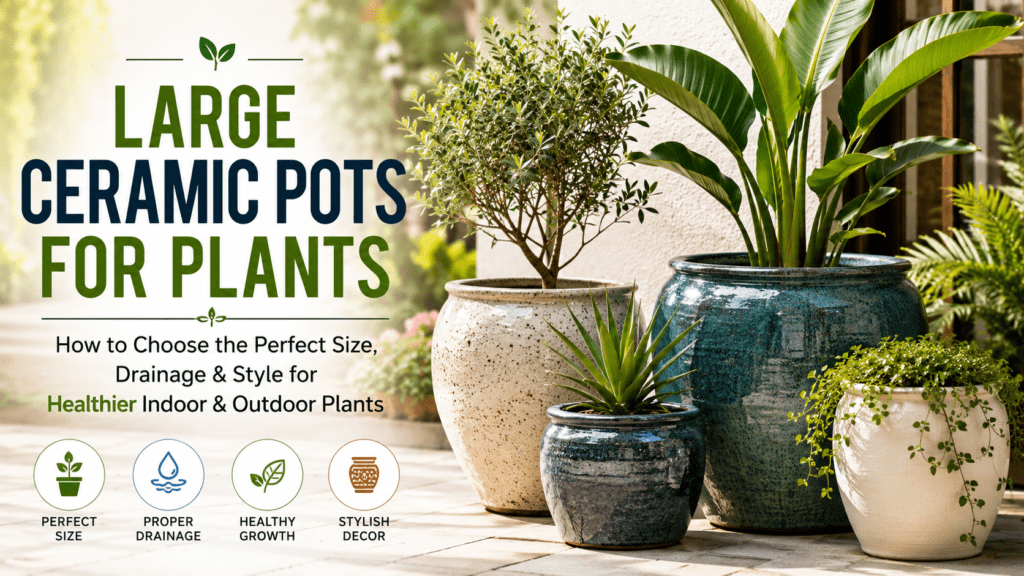
Choosing the right large ceramic pots for plants can dramatically improve root health, moisture balance, plant growth, and even the lifespan of your favorite indoor or outdoor greenery. Many gardeners focus entirely on the plant while overlooking one of the most important factors in successful container gardening: the planter.

Large ceramic planters are more than decorative containers. They help regulate soil temperature, reduce water stress, stabilize tall plants, and elevate the overall beauty of your home or garden. 🌱
But there’s a catch…
Choosing the wrong ceramic pot size, poor drainage, or low-quality materials can lead to root rot, cracked pots, unhealthy plants, and wasted money.
In this complete expert guide, you’ll learn:
- How to choose the perfect ceramic pot size 🪴
- Why drainage matters more than most gardeners realize 💧
- The best plants for large ceramic containers 🌴
- Indoor and outdoor styling ideas 🏡
- How to avoid expensive mistakes 🚫
- Professional tips for long-lasting healthy plants 🌿
Whether you’re decorating a patio, upgrading your indoor jungle, or planting a statement tree, this guide will help you make the best choice confidently.
🌱 Why Large Ceramic Pots Are a Smart Choice for Plant Lovers
Large ceramic planters have become a favorite among professional landscapers, interior designers, and experienced gardeners — and for good reason.
Unlike cheap plastic containers, ceramic pots combine beauty, durability, and plant-friendly functionality in one package.
🌿 Benefits of Large Ceramic Pots for Plants
1. Better Moisture Retention 💧
Ceramic naturally helps regulate moisture levels in the soil. This is especially beneficial for:
- Tropical houseplants
- Flowering shrubs
- Large foliage plants
- Outdoor container gardens
Glazed ceramic pots hold moisture longer than terracotta or plastic, helping reduce watering frequency during hot weather.
2. Improved Root Insulation 🌡️
Large ceramic containers protect roots from sudden temperature fluctuations. This matters more than many gardeners realize.
Healthy roots = healthier plants.
Ceramic acts as insulation against:
- Summer heat
- Cold nights
- Rapid soil drying
- Root stress
3. Excellent Stability for Tall Plants 🌴
Large plants can become top-heavy quickly.
Ceramic pots are heavier than plastic, which helps stabilize:
- Indoor trees
- Bird of Paradise plants
- Olive trees
- Monsteras
- Fiddle leaf figs
This reduces tipping risks indoors and outdoors.
4. Long-Term Durability 🏺
High-quality ceramic pots can last for years — sometimes decades — with proper care.
Premium glazed ceramic planters resist:
- UV damage
- Fading
- Wear and tear
- Moisture deterioration
5. Beautiful Decorative Appeal ✨
Large ceramic pots instantly elevate any space.
They work beautifully with:
- Minimalist interiors
- Modern patios
- Mediterranean gardens
- Scandinavian decor
- Japandi plant styling
A stunning ceramic planter can turn an ordinary plant into a focal point.
🏡 Indoor vs Outdoor Ceramic Pots
Not all ceramic pots are designed for the same environment.
Understanding the difference helps prevent expensive mistakes.
🌿 Indoor Ceramic Pots
Indoor planters focus more on:
- Decorative appearance
- Moisture control
- Furniture protection
- Compact drainage systems
Popular finishes include:
- Glossy glazed ceramic
- Neutral matte finishes
- Minimalist white pots
- Earth-tone planters
☀️ Outdoor Ceramic Pots
Outdoor ceramic pots must handle:
- Rain
- UV exposure
- Wind
- Temperature fluctuations
Look for:
- Frost-resistant materials
- Thick ceramic walls
- Drainage holes
- Weatherproof glazing
Outdoor ceramic planters are typically heavier and more durable.
🚫 Common Problems Ceramic Pots Help Prevent
Many plant problems are actually container problems in disguise.
Here’s what large ceramic pots can help solve:
| Problem | How Ceramic Pots Help |
|---|---|
| Soil drying too quickly | Better moisture retention |
| Root overheating | Insulated walls |
| Plants tipping over | Heavy stable base |
| Root crowding | More growing space |
| Decorative mismatch | Stylish finishes |
🪴 How to Choose the Right Size Large Ceramic Pot
One of the biggest gardening mistakes is choosing the wrong pot size.
Bigger is not always better.
A properly sized container supports healthy root growth without creating moisture problems.

🌱 Understanding Pot Size and Root Growth
Plants need enough room for root expansion — but too much soil can become dangerous.
Why?
Excess soil holds extra moisture that roots cannot absorb quickly enough. This can lead to:
- Root rot
- Fungus gnats
- Soil mold
- Slow growth
🌿 Expert Rule of Thumb
Choose a pot that is:
- 2–4 inches wider than the current root ball
- Deep enough for future root growth
- Stable enough for the plant’s mature size
🌴 Best Pot Sizes for Different Plant Types
🪴 Small Indoor Plants
Recommended size:
- 6–10 inch ceramic pots
Best for:
- Pothos
- Snake plants
- Peace lilies
🌿 Medium Tropical Plants
Recommended size:
- 12–16 inch planters
Best for:
- Monstera Deliciosa
- Rubber Plant
- Calatheas
🌴 Large Statement Plants
Recommended size:
- 18–24 inch ceramic containers
Best for:
- Fiddle Leaf Fig
- Bird of Paradise
- Indoor olive trees
🍋 Dwarf Fruit Trees
Recommended size:
- 20–24 inch pots
Best for:
- Lemon trees
- Fig trees
- Dwarf citrus
🌱 Signs Your Plant Needs a Larger Ceramic Pot
Plants often tell you when they’re root-bound.
Watch for these warning signs:
🚩 Roots Growing Through Drainage Holes
This means roots have run out of space.
🚩 Soil Dries Out Extremely Fast
Crowded roots absorb water too quickly.
🚩 Stunted Growth
Even healthy plants stop growing when roots become compacted.
🚩 Wilting Despite Regular Watering
Root-bound plants struggle to absorb nutrients properly.
🚩 Cracked Plastic Nursery Pots
Strong roots can actually deform thin containers.
💧 Drainage Matters: How to Prevent Root Rot in Ceramic Pots
Drainage is one of the most overlooked aspects of container gardening.
Even the most beautiful ceramic pot becomes dangerous without proper drainage.
🌿 Why Drainage Holes Are Essential
Healthy roots need oxygen.
Without drainage holes:
- Water becomes trapped
- Soil stays soggy
- Roots suffocate
- Fungal diseases develop
Root rot is one of the leading causes of houseplant death.
Always prioritize drainage over appearance.
🪴 Best Drainage Setup for Large Ceramic Pots
Professional gardeners follow a few simple drainage principles.
✅ Use Pots With Drainage Holes
This is non-negotiable for long-term plant health.
✅ Use High-Quality Potting Mix
Avoid heavy garden soil.
Use mixes designed for:
- Container gardening
- Indoor plants
- Tropical species
- Succulents
✅ Skip the Gravel Myth 🚫
Contrary to popular belief, rocks at the bottom do NOT improve drainage.
Instead, they:
- Raise water tables
- Reduce soil depth
- Increase root moisture problems
Use proper soil instead.
✅ Elevate Outdoor Pots
Pot feet improve:
- Airflow
- Water drainage
- Freeze protection
⚠️ Warning Signs of Poor Drainage
Watch for these symptoms:
| Symptom | Possible Cause |
|---|---|
| Yellow leaves | Overwatering |
| Mushy stems | Root rot |
| Moldy soil smell | Waterlogged soil |
| Fungus gnats | Excess moisture |
| Black roots | Oxygen deprivation |
Early detection can save your plant.
🌺 Best Plants for Large Ceramic Pots
Some plants thrive exceptionally well in ceramic containers because of stable moisture and root insulation.
🏡 Best Indoor Plants for Large Ceramic Containers
🌿 Fiddle Leaf Fig
Thrives in stable ceramic containers with moderate moisture retention.
🌿 Monstera Deliciosa
Large leaves and aerial roots benefit from spacious planters.
🌿 Rubber Plant
Ceramic pots help stabilize this tall-growing plant.
🌿 Bird of Paradise
Loves large containers with excellent drainage.
☀️ Best Outdoor Plants for Ceramic Pots
Excellent choices include:
- Lavender 🌸
- Boxwood shrubs 🌿
- Hydrangeas 🌺
- Dwarf citrus trees 🍋
- Olive trees 🌳
These plants benefit from ceramic’s moisture balance and stability.
🌴 Best Tall Plants for Statement Planters
Want dramatic visual impact?
Choose:
- Bamboo palms
- Dracaena
- Snake plants
- Elephant ears
- Kentia palms
Tall plants paired with oversized ceramic pots create luxurious designer-style spaces.
🎨 Choosing the Best Material and Finish
Not all ceramic planters are created equal.
Material quality affects:
- Durability
- Water retention
- Weight
- Weather resistance
✨ Glazed vs Unglazed Ceramic Pots
🌿 Glazed Ceramic Pots
Benefits:
- Retain moisture longer
- Decorative appearance
- Easier to clean
- Less porous
Best for:
- Indoor plants
- Tropical plants
- Decorative patios
🌿 Unglazed Ceramic Pots
Benefits:
- Better airflow
- Faster drying
- Rustic appearance
Best for:
- Succulents
- Cacti
- Mediterranean herbs
❄️ Frost-Resistant Ceramic Pots for Cold Climates
Outdoor ceramic pots can crack during winter if they absorb water and freeze.
Look for:
- Frost-proof labels
- High-fired ceramic
- Thick durable walls
Winter tips:
- Elevate pots off frozen ground
- Reduce watering
- Move delicate ceramics indoors when possible
🏡 Styling Ideas Using Large Ceramic Pots Around Your Home
Large ceramic planters are functional décor pieces.
They add elegance, texture, and structure to any space.
🌿 Modern Indoor Styling Ideas
Popular trends include:
- Neutral ceramic pots
- Matte white finishes
- Black minimalist planters
- Earth-tone textured ceramics
Style tips:
- Pair tall plants with oversized floor pots
- Use odd-number groupings
- Combine different heights for visual balance
☀️ Patio and Balcony Decor Inspiration
Large ceramic pots can transform small outdoor spaces into lush retreats.
Ideas include:
- Framing seating areas with tall planters
- Using matching ceramic pots for symmetry
- Creating privacy screens with bamboo or palms
🌱 How to Properly Plant in Large Ceramic Pots
Planting correctly is just as important as choosing the right planter. Even premium ceramic pots cannot compensate for poor planting techniques.
The goal is to create a healthy root environment that promotes:
- Strong growth 🌿
- Balanced moisture 💧
- Nutrient absorption 🌱
- Long-term plant stability 🪴

🪴 Step-by-Step Guide to Planting in Large Ceramic Pots
1. Choose the Right Potting Mix 🌿
Never use garden soil in containers.
Garden soil becomes:
- Dense
- Compacted
- Poorly draining
Instead, choose a quality potting mix designed for container gardening.
🌱 Recommended Soil Types
| Plant Type | Best Soil Mix |
|---|---|
| Tropical plants | Moisture-retaining potting mix |
| Succulents | Fast-draining cactus mix |
| Flowering plants | Organic enriched container soil |
| Citrus trees | Sandy well-draining mix |
2. Check the Drainage Holes 💧
Always confirm the pot has:
- At least one large drainage hole
- Proper airflow underneath
- No blockages
For extra protection:
- Place mesh screening over holes
- Use pot feet outdoors
This prevents soil loss while improving drainage.
3. Add Soil Carefully 🌱
Fill the pot partially before positioning the plant.
Avoid:
- Compacting the soil too tightly
- Overfilling the container
- Burying stems too deeply
Healthy roots need oxygen pockets within the soil.
4. Position the Plant Correctly 🌿
The root ball should sit:
- Slightly below the pot rim
- Centered evenly
- Upright and stable
Leave approximately 1–2 inches of space at the top for watering.
5. Water Thoroughly After Planting 💦
Initial watering helps:
- Remove air pockets
- Settle soil naturally
- Reduce transplant shock
Water until moisture drains freely from the bottom.
💧 How Often Should You Water Plants in Ceramic Pots?
One of the biggest advantages of ceramic containers is moisture regulation.
However, watering frequency still depends on:
- Plant type 🌿
- Pot size 🪴
- Climate ☀️
- Sun exposure 🌞
- Indoor vs outdoor placement 🏡
🌱 General Watering Guidelines
Indoor Plants
Usually every:
- 7–14 days
Outdoor Ceramic Pots
Usually every:
- 2–5 days during summer
Tropical Plants
Prefer:
- Consistently moist soil
Succulents
Prefer:
- Soil drying fully between watering
🚫 Signs You’re Overwatering
Watch for:
- Yellow leaves
- Mushy stems
- Fungus gnats
- Moldy soil
- Drooping despite wet soil
Overwatering is far more common than underwatering.
🌿 Expert Watering Tip
Instead of watering on a schedule, check soil moisture first.
Insert your finger 2 inches into the soil:
- Dry = water
- Damp = wait
This simple method prevents most container gardening problems.
🍂 Caring for Large Ceramic Pots Throughout the Year
Proper maintenance helps ceramic pots last for years while keeping plants healthy.

🧼 How to Clean Ceramic Pots Properly
Over time, mineral buildup, algae, and salts can collect on ceramic surfaces.
Regular cleaning keeps pots:
- Attractive ✨
- Hygienic 🌱
- Long-lasting 🪴
🌿 Cleaning Steps
For Empty Pots:
- Remove old soil
- Scrub with warm water
- Use mild soap if needed
- Rinse thoroughly
- Allow to dry completely
For Mineral Deposits:
Use:
- White vinegar solution
- Soft brush or sponge
Avoid harsh chemicals that may harm plants later.
❄️ Winter Care Tips for Outdoor Ceramic Pots
Cold weather is one of the biggest threats to ceramic containers.
Water trapped inside ceramic material expands when frozen — causing cracks.
🌿 How to Protect Ceramic Pots in Winter
✅ Elevate Pots
Prevent direct contact with frozen surfaces.
✅ Reduce Watering
Wet soil increases freeze damage risk.
✅ Empty Saucer Trays
Standing water accelerates cracking.
✅ Move Delicate Pots Indoors
Especially:
- Thin ceramic pots
- Decorative glazed planters
- Non-frost-resistant containers
🚫 How to Prevent Ceramic Pots From Cracking
Many cracked planters result from preventable mistakes.
Common Causes of Cracks
| Cause | Solution |
|---|---|
| Freeze-thaw cycles | Use frost-resistant pots |
| Sudden temperature changes | Avoid rapid exposure shifts |
| Poor drainage | Ensure proper drainage holes |
| Heavy impacts | Move carefully |
| Waterlogged soil | Improve drainage setup |
High-quality ceramic pots can last decades with proper care.
🚫 Common Mistakes to Avoid When Using Large Ceramic Pots
Even experienced gardeners make mistakes with oversized planters.
Avoiding these issues saves plants, time, and money.

❌ Choosing Style Over Function
Beautiful pots are tempting…
But functionality matters more.
Always prioritize:
- Drainage
- Material quality
- Frost resistance
- Proper sizing
A stunning planter is useless if it harms your plant.
❌ Using Pots Without Drainage Holes
This is one of the most dangerous mistakes.
Decorative cachepots are fine ONLY if:
- Plants remain in nursery containers
- Excess water can drain separately
Otherwise, trapped moisture leads to root rot quickly.
❌ Overwatering Large Containers
Large pots hold more soil.
More soil = more retained moisture.
Many gardeners continue watering too frequently, causing:
- Oxygen deprivation
- Root disease
- Slow growth
❌ Ignoring Pot Weight ⚠️
Large ceramic planters become extremely heavy after watering.
Before planting, consider:
- Placement location
- Floor strength indoors
- Mobility needs
- Accessibility
Using rolling plant caddies can help tremendously.
❌ Using the Wrong Soil Type
Heavy soil suffocates roots.
Always match soil type to the plant’s needs.
Example:
- Succulents need fast drainage
- Tropical plants prefer moisture retention
🛒 Expert Buying Guide: What to Look for Before Purchasing
Not all ceramic planters offer the same quality.
A smart purchase prevents future problems.
🌿 Questions to Ask Before Buying
Before purchasing large ceramic pots for plants, ask:
✅ Does It Have Drainage Holes?
Essential for healthy roots.
✅ Is It Frost-Resistant?
Necessary for outdoor climates with freezing temperatures.
✅ Is the Ceramic Thick and Durable?
Thin ceramics crack more easily.
✅ How Heavy Will It Become?
Large wet ceramic pots can become difficult to move.
✅ Is the Glaze UV-Resistant?
Prevents fading and deterioration outdoors.
✨ Best Features in High-Quality Ceramic Pots
Premium planters often include:
- Reinforced bases
- Thick ceramic walls
- High-temperature firing
- Weatherproof glazing
- Elevated drainage systems
Investing in quality usually saves money long term.
💰 Budget vs Premium Ceramic Planters
Budget Ceramic Pots
Pros:
- Affordable
- Stylish options available
Cons:
- More fragile
- Less weather resistant
- Shorter lifespan
Premium Ceramic Planters
Pros:
- Exceptional durability
- Better insulation
- Frost resistance
- Designer finishes
Cons:
- Higher upfront cost
For long-term gardening, premium pots are often worth the investment.
❓ Frequently Asked Questions About Large Ceramic Pots for Plants
🌿 Are ceramic pots better than plastic pots?
In many cases, yes.
Ceramic pots provide:
- Better insulation
- Improved stability
- Enhanced appearance
- More balanced moisture retention
Plastic pots are lighter and cheaper, but ceramic often supports healthier long-term growth.
💧 Do large ceramic pots need drainage holes?
Absolutely.
Drainage holes prevent:
- Root rot
- Waterlogging
- Fungal disease
- Oxygen deprivation
Never plant directly into sealed ceramic containers.
❄️ Can ceramic pots stay outside during winter?
Only frost-resistant ceramic pots should remain outdoors in freezing conditions.
Otherwise, freezing moisture may crack the container.
🌱 What plants grow best in large ceramic pots?
Popular choices include:
- Monstera Deliciosa
- Fiddle Leaf Fig
- Olive trees
- Lavender
- Citrus trees
- Snake plants
🪴 Why are my ceramic pots cracking?
Common reasons include:
- Freeze damage
- Poor drainage
- Thin ceramic construction
- Sudden temperature changes
🏡 Should I put rocks in the bottom of ceramic pots?
No.
Contrary to popular belief, rocks often worsen drainage problems.
Use proper potting mix instead.
🌿 Final Thoughts: Choosing the Right Ceramic Pot Can Transform Your Plants
The right planter does far more than hold soil.
A thoughtfully chosen ceramic pot helps create the ideal environment for:
- Strong root development 🌱
- Balanced moisture 💧
- Stable growth 🌿
- Beautiful indoor and outdoor spaces 🏡
By understanding:
- Proper sizing
- Drainage essentials
- Material quality
- Seasonal maintenance
- Plant compatibility
…you can avoid common mistakes and enjoy healthier, more beautiful plants for years to come.
Whether you’re growing tropical houseplants, decorative trees, patio flowers, or statement greenery, investing in high-quality large ceramic pots for plants is one of the smartest upgrades you can make for your garden and home. 🌸











