
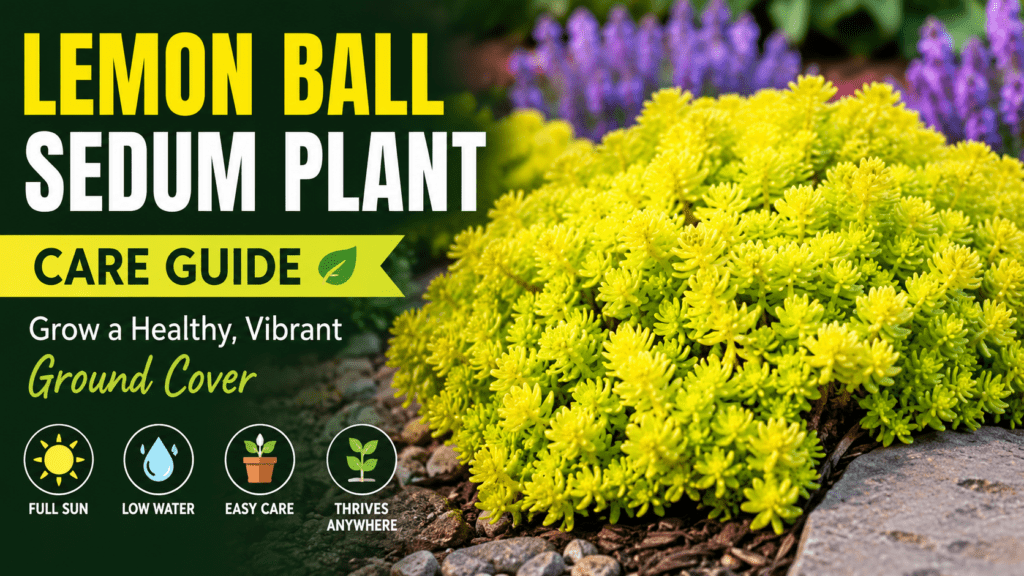
Looking for a plant that adds vibrant color to your garden without demanding constant attention? The lemon ball sedum plant might be exactly what you need. With its eye-catching golden foliage, drought tolerance, and incredibly easy-care nature, this cheerful succulent has become a favorite among beginner gardeners and landscape professionals alike. 🍋🌱
Whether you want a low-maintenance ground cover, a bright accent for containers, or a hardy plant that thrives in hot, dry conditions, lemon ball sedum delivers impressive results with minimal effort. But while it’s considered easy to grow, many gardeners still struggle with issues like root rot, fading color, leggy growth, or seasonal damage.
In this complete guide, you’ll learn everything you need to know about growing a healthy, lush, and vibrant lemon ball sedum plant — from sunlight and watering needs to propagation, troubleshooting, landscaping ideas, and expert care tips. By the end, you’ll know exactly how to keep this stunning succulent thriving year-round. 🌟
🌿 What Is a Lemon Ball Sedum Plant?
🍋 Botanical Overview
The lemon ball sedum plant is a colorful succulent ground cover known for its vivid chartreuse-yellow foliage and compact spreading growth habit. It belongs to the Sedum genus, a large group of drought-tolerant succulents prized for their resilience and ornamental appeal.
Quick Facts 📋
| Feature | Details |
|---|---|
| Common Name | Lemon Ball Sedum |
| Botanical Genus | Sedum |
| Plant Type | Succulent perennial |
| Mature Height | 4–6 inches |
| Spread | 10–18 inches |
| Sun Needs | Full sun to partial shade |
| Soil Type | Well-draining sandy soil |
| USDA Zones | 5–9 |
| Water Needs | Low |
This fast-growing succulent forms soft mounds of tiny needle-like leaves that resemble glowing golden cushions in the garden. During warm seasons, the foliage becomes especially bright and vibrant. 🌞
🌼 Why Gardeners Love Lemon Ball Sedum
There’s a reason this plant appears in modern landscapes, rock gardens, and container arrangements everywhere.
🌟 Key Benefits
- Extremely low maintenance
- Drought and heat tolerant
- Excellent for beginners
- Adds year-round color
- Fast-spreading ground cover
- Deer resistant
- Suitable for containers and borders
Unlike many ornamental plants that require frequent watering and pruning, lemon ball sedum thrives even with a bit of neglect. That makes it perfect for busy homeowners or gardeners living in dry climates.
🌱 Lemon Ball Sedum vs Other Sedum Varieties
Many sedum varieties exist, but lemon ball sedum stands out because of its unique bright yellow-green foliage.
Comparison Highlights
| Variety | Foliage Color | Growth Habit |
|—|—|
| Lemon Ball Sedum | Golden yellow | Compact mound |
| Blue Spruce Sedum | Blue-green | Spreading |
| Autumn Joy Sedum | Green with pink blooms | Upright |
| Dragon’s Blood Sedum | Dark red-green | Creeping |
If your goal is to brighten landscapes with cheerful color and texture, lemon ball sedum is one of the best choices available. 🍋✨
🌞 Benefits of Growing a Lemon Ball Sedum Plant
💧 Perfect for Low-Maintenance Gardens
One of the biggest reasons gardeners choose this succulent is its simplicity. Once established, it requires minimal watering and very little ongoing care.
This makes it ideal for:
- Busy homeowners
- Beginner gardeners
- Vacation homes
- Xeriscaping projects
- Water-wise landscapes
🌵 Drought-Tolerant and Water-Wise
Lemon ball sedum stores moisture inside its fleshy stems and leaves, helping it survive long dry periods.
Compared to thirsty lawn grass or delicate flowering plants, it dramatically reduces water usage in the landscape. 🌎💦
🌸 Excellent Ground Cover
Its spreading growth habit creates a dense mat that helps:
- Suppress weeds
- Reduce soil erosion
- Fill empty garden spaces
- Soften hard landscape edges
The golden foliage also creates beautiful contrast against dark mulch, rocks, and green plants.
🐝 Pollinator-Friendly Landscape Plant
While grown mainly for foliage, sedums can also attract beneficial pollinators like:
- Bees
- Butterflies
- Hoverflies
Adding pollinator-friendly plants helps create a healthier garden ecosystem.
☀️ Ideal Growing Conditions for Lemon Ball Sedum
Understanding the proper environment is the key to keeping your plant vibrant and healthy.
🌞 Sunlight Requirements
☀️ Full Sun Is Best
Lemon ball sedum thrives in at least:
- 6–8 hours of direct sunlight daily
More sunlight equals brighter golden foliage.
What Happens in Too Much Shade?
Insufficient light often causes:
- Leggy growth
- Faded green color
- Weak stems
- Sparse appearance
If planted indoors, place it near a bright south-facing window.
🌱 Best Soil Type
🌵 Well-Draining Soil Is Essential
This succulent hates soggy roots.
The ideal soil should be:
- Sandy
- Loose
- Fast-draining
- Slightly rocky
Recommended Soil Mix
For containers, use:
- Succulent soil mix
- Cactus potting mix
- Added perlite or pumice
Avoid dense clay soil because it traps moisture and increases root rot risk.
🌡️ Temperature and Climate Preferences
Lemon ball sedum performs best in warm climates but tolerates moderate cold.
Ideal Conditions
| Condition | Preferred Range |
|---|---|
| Temperature | 65–80°F |
| USDA Zones | 5–9 |
| Humidity | Low to moderate |
It handles summer heat beautifully, making it perfect for sunny gardens.
🌿 How to Plant Lemon Ball Sedum Correctly

📍 Choose the Right Location
Select an area with:
✅ Excellent drainage
✅ Full sun exposure
✅ Good airflow
Avoid low spots where rainwater collects.
🪴 Step-by-Step Planting Instructions
1️⃣ Prepare the Soil
Loosen the soil and mix in:
- Sand
- Gravel
- Perlite
This improves drainage significantly.
2️⃣ Space Plants Properly
Leave about:
- 10–12 inches between plants
This allows healthy spreading without overcrowding.
3️⃣ Water After Planting
Water lightly after planting to help roots establish.
After that, reduce watering frequency.
🏡 Container vs Garden Bed Planting
🌿 Container Growing
Perfect for:
- Patios
- Balconies
- Small spaces
Use pots with drainage holes only.
🌸 Garden Beds
Works beautifully in:
- Rock gardens
- Border edges
- Dry slopes
- Walkway plantings
Its cascading habit softens hard landscaping naturally.
🌺 Best Companion Plants for Lemon Ball Sedum
Pairing complementary plants creates stunning visual contrast.
Great Companion Choices
- Lavender 💜
- Blue fescue grass 🌾
- Echeveria 🌵
- Black mondo grass 🖤
- Coneflowers 🌸
- Salvia 🌿
Purple and blue plants especially enhance the golden foliage.
💧 Lemon Ball Sedum Plant Care Guide
🚿 Watering Schedule Explained
Overwatering is the #1 mistake gardeners make with sedums.
General Watering Rule
Water only when the soil feels completely dry.
Typical Schedule
| Season | Watering Frequency |
|---|---|
| Spring | Every 10–14 days |
| Summer | Weekly during extreme heat |
| Fall | Reduce watering |
| Winter | Minimal watering |
🚨 Signs of Overwatering
Watch for:
- Mushy stems
- Yellow leaves
- Black spots
- Root rot smell
If these appear, stop watering immediately.
🌵 Signs of Underwatering
While drought tolerant, extremely dry conditions can cause:
- Wrinkled foliage
- Dry stem tips
- Slow growth
Deep watering occasionally keeps plants healthier.
🌱 Fertilizing Tips
Lemon ball sedum does not need heavy feeding.
Too much fertilizer often causes:
- Weak floppy growth
- Reduced color intensity
- Faster legginess
Best Fertilizer Option
Use:
- Balanced diluted succulent fertilizer
- Once in spring only
That’s usually enough for the entire year.
✂️ Pruning and Maintenance
Minimal pruning keeps the plant neat and compact.
Pruning Tips
- Trim leggy stems in spring
- Remove dead growth seasonally
- Shape lightly after spreading
This encourages fuller growth.
🍂 Mulching Recommendations
Use light inorganic mulch like:
- Gravel
- Pebbles
- Small stones
Avoid thick organic mulch that retains moisture.
🚨 Common Lemon Ball Sedum Problems and Solutions

🍂 Why Is My Lemon Ball Sedum Turning Brown?
Brown patches usually result from:
- Overwatering
- Poor drainage
- Winter damage
- Extreme humidity
Solution ✅
- Improve soil drainage
- Reduce watering
- Remove damaged growth
💛 Yellowing or Mushy Leaves
This almost always indicates excess moisture around the roots.
Quick Fix
- Let soil dry completely
- Repot if necessary
- Use faster-draining soil
🦠 Root Rot Prevention
Root rot is the most serious issue for succulents.
Prevention Tips
✅ Never let soil stay wet
✅ Use drainage holes
✅ Avoid compact soil
✅ Water deeply but infrequently
🌿 Leggy Growth and Faded Color
Usually caused by insufficient sunlight.
Fix It Fast ☀️
Move the plant to:
- A sunnier location
- Full direct sunlight
Within weeks, color often improves dramatically.
🐛 Common Pests
Thankfully, lemon ball sedum is fairly pest resistant.
However, occasional problems may include:
- Aphids
- Mealybugs
- Slugs
- Snails
Natural Pest Solutions 🌱
- Neem oil spray
- Insecticidal soap
- Hand removal
- Improved airflow
🌱 How to Propagate Lemon Ball Sedum
Propagation is one of the easiest and most rewarding parts of growing sedum.
✂️ Propagating from Stem Cuttings
Simple Method
1️⃣ Cut a healthy stem
2️⃣ Let the cut dry for 24 hours
3️⃣ Place in dry succulent soil
4️⃣ Mist lightly until rooted
Roots often appear within 1–2 weeks. 🌱✨
🌿 Propagation by Division
Mature plants can also be divided.
Simply:
- Dig up the clump
- Separate rooted sections
- Replant individually
This method quickly creates fuller garden coverage.
📅 Best Time to Propagate
Ideal seasons:
- Spring 🌸
- Early summer ☀️
Warm temperatures encourage faster rooting.
❌ Common Propagation Mistakes
Avoid:
- Overwatering cuttings
- Planting in dense soil
- Using unhealthy stems
- Propagating during freezing weather
🍂 Seasonal Care Tips for Lemon Ball Sedum
🌸 Spring Care
Spring is the active growing season.
Tasks to Do
✅ Remove winter damage
✅ Light pruning
✅ Check soil drainage
✅ Apply light fertilizer
☀️ Summer Care
Lemon ball sedum thrives in summer heat.
However, during extreme heat waves:
- Water deeply occasionally
- Watch container plants closely
- Avoid soggy conditions
🍂 Fall Care Tips for Lemon Ball Sedum
As temperatures begin cooling, lemon ball sedum naturally slows its growth. Fall is the perfect time to prepare your plant for colder months ahead while keeping it healthy and attractive. 🌿
✅ Essential Fall Maintenance Tasks
✂️ Trim Damaged Growth
Remove:
- Brown stems
- Dead foliage
- Overcrowded sections
This improves airflow and reduces disease risk.
💧 Reduce Watering Frequency
Cooler weather means slower evaporation.
Continue watering only when the soil becomes fully dry. Excess moisture during fall often leads to fungal problems and root rot.
🍁 Refresh Decorative Gravel or Mulch
A thin layer of:
- Decorative pebbles
- Gravel
- Crushed stone
helps regulate soil temperature while keeping the succulent crown dry.
❄️ Winter Care and Frost Protection
One reason gardeners love lemon ball sedum is its surprising cold tolerance. However, winter care still matters — especially in regions with heavy frost or prolonged freezing temperatures.

🌡️ Can Lemon Ball Sedum Survive Winter?
Yes — in USDA Zones 5–9, this succulent can survive outdoors year-round with proper drainage.
The biggest winter threat is usually not cold itself, but wet soil combined with freezing temperatures.
🛡️ How to Protect Lemon Ball Sedum During Winter
For Outdoor Plants
✅ Improve drainage before winter
✅ Avoid heavy mulch directly over the crown
✅ Remove soggy debris around plants
✅ Keep watering minimal
For Container Plants 🪴
Container-grown sedums are more vulnerable because pots freeze faster than garden soil.
Move pots to:
- A covered patio
- Garage with light
- Cold greenhouse
- Sunny indoor window
This protects roots from severe freezing damage.
🏡 Indoor vs Outdoor Lemon Ball Sedum Care
Many gardeners wonder whether lemon ball sedum can thrive indoors. The answer is yes — but there are important differences in care.
🌞 Growing Lemon Ball Sedum Outdoors
Outdoor growing generally produces:
- Brighter color
- Denser growth
- Faster spreading
- Better drought tolerance
This plant especially shines in:
- Rock gardens
- Border edges
- Dry landscapes
- Sloped gardens
Outdoor sunlight intensifies its famous golden foliage. ☀️
🪴 Growing Lemon Ball Sedum Indoors
Indoor growth is possible when the plant receives enough light.
🌿 Indoor Care Requirements
Bright Direct Light Is Essential
Place near:
- South-facing windows
- West-facing windows
- Grow lights if necessary
Without sufficient light, the plant becomes stretched and pale.
💨 Improve Indoor Airflow
Indoor humidity can sometimes create fungal issues.
To prevent problems:
- Avoid overcrowding
- Use breathable pots
- Ensure good ventilation
🚿 Indoor Watering Tips
Indoor plants require less water because evaporation happens more slowly.
Always allow the soil to dry completely before watering again.
🌿 Landscaping Ideas Using Lemon Ball Sedum
One of the greatest strengths of lemon ball sedum is its versatility in landscape design. Its vivid color and soft texture instantly brighten outdoor spaces. 🌼

🪨 Rock Garden Inspiration
Lemon ball sedum thrives in rocky, dry conditions.
Its bright yellow foliage contrasts beautifully with:
- Natural stone
- Gravel pathways
- Boulder arrangements
- Alpine plants
This creates a modern, low-maintenance landscape aesthetic.
🌸 Border and Edging Designs
Use lemon ball sedum along:
- Walkways
- Garden borders
- Raised beds
- Patio edges
Its soft mounding growth creates a clean yet natural appearance.
🏺 Stunning Container Arrangements
This succulent pairs beautifully with colorful drought-tolerant plants.
🌿 Great Container Companions
- Echeveria
- String of pearls
- Lavender
- Purple fountain grass
- Blue chalk sticks
The contrast between gold, purple, silver, and blue foliage looks especially striking. ✨
🌵 Xeriscaping and Water-Wise Gardening
As water conservation becomes more important, xeriscaping continues gaining popularity.
Lemon ball sedum is ideal for:
✅ Dry climates
✅ Minimal irrigation gardens
✅ Sustainable landscaping
✅ Eco-friendly gardens
Its low water needs make it both beautiful and practical.
⭐ Expert Tips for Keeping Lemon Ball Sedum Bright and Healthy
After years of growing sedums successfully, experienced gardeners consistently follow a few simple rules that make a huge difference.
☀️ Prioritize Sunlight Above Everything
If your plant loses its bright lemon color, sunlight is usually the issue.
Expert Recommendation
Aim for:
- At least 6 hours of direct sun daily
Morning and afternoon sunlight produce the best foliage color.
💧 Avoid Overwatering at All Costs
Most sedum failures happen because gardeners treat succulents like regular garden plants.
Golden Rule 🌱
“When in doubt, don’t water.”
Dry soil is far safer than constantly wet soil.
🌿 Encourage Fuller Growth
To create dense, lush growth:
- Pinch back leggy stems
- Trim lightly during spring
- Increase sunlight exposure
This encourages side branching and compact mounding.
🌎 Improve Drainage Naturally
If your garden soil holds water, amend it using:
- Coarse sand
- Small gravel
- Perlite
- Crushed stone
Drainage is the secret to long-term sedum health.
🌡️ Protect Color During Extreme Heat
Although heat tolerant, intense summer heat can occasionally dull foliage color temporarily.
Simple Solutions
- Water deeply during prolonged drought
- Avoid reflective heat near concrete
- Use light gravel mulch
Plants usually rebound quickly once temperatures moderate.
❌ Common Mistakes to Avoid When Growing Lemon Ball Sedum
Even easy-care plants can struggle if basic needs are ignored.
Understanding these common mistakes helps prevent problems before they start.
🚫 Planting in Heavy Clay Soil
Dense soil traps water around the roots.
This often causes:
- Root rot
- Yellowing
- Mushy stems
- Plant collapse
Always improve drainage before planting.
🌑 Too Much Shade
Shade leads to:
- Faded foliage
- Weak stems
- Sparse growth
- Reduced spreading
For best color, prioritize full sun.
🧪 Overfertilizing
Too much fertilizer creates:
- Fast weak growth
- Reduced drought tolerance
- Less vibrant foliage
Sedums thrive with minimal feeding.
💦 Watering Too Frequently
New gardeners often overcare for succulents.
Remember:
- Sedums prefer dry periods
- Constant moisture damages roots
- Wet soil is more dangerous than drought
🌬️ Poor Air Circulation
Crowded plantings increase humidity and fungal risk.
Space plants properly to allow airflow around stems and foliage.
❓ Frequently Asked Questions About Lemon Ball Sedum

🌱 How Fast Does Lemon Ball Sedum Grow?
Lemon ball sedum grows relatively quickly during warm seasons.
Under ideal conditions, it spreads steadily and forms a dense ground cover within one growing season.
🌼 Does Lemon Ball Sedum Come Back Every Year?
Yes. It’s a perennial succulent in suitable climates and returns annually with proper care.
❄️ Can Lemon Ball Sedum Survive Frost?
Light frost is usually tolerated well.
However, prolonged freezing combined with wet soil may damage roots and stems.
🐶 Is Lemon Ball Sedum Toxic to Pets?
Most sedums are considered mildly toxic if consumed in large amounts.
To stay safe:
- Keep away from curious pets
- Monitor chewing behavior
Consult a veterinarian if ingestion occurs.
💧 How Often Should I Water Lemon Ball Sedum?
Water only when soil becomes completely dry.
Frequency varies depending on:
- Temperature
- Humidity
- Pot size
- Sun exposure
In most cases, less watering is better.
🌞 Why Is My Lemon Ball Sedum Losing Its Bright Color?
The most common cause is insufficient sunlight.
Move the plant to a brighter location for stronger golden coloration.
🌟 Final Thoughts
The lemon ball sedum plant proves that beautiful landscaping doesn’t have to be difficult or time-consuming. With its glowing golden foliage, drought tolerance, and easy-care nature, this succulent has earned its place as one of the best low-maintenance ground covers for modern gardens. 🍋🌿
Whether you’re designing a rock garden, filling containers, edging pathways, or building a water-wise landscape, lemon ball sedum offers year-round beauty with very little effort.
The key to success is simple:
✅ Give it plenty of sunlight
✅ Use fast-draining soil
✅ Avoid overwatering
✅ Let it thrive naturally
Once established, this cheerful succulent rewards gardeners with vibrant texture, color, and resilience season after season. 🌼✨
If you’re searching for a beginner-friendly plant that combines beauty, durability, and versatility, lemon ball sedum is truly hard to beat











