
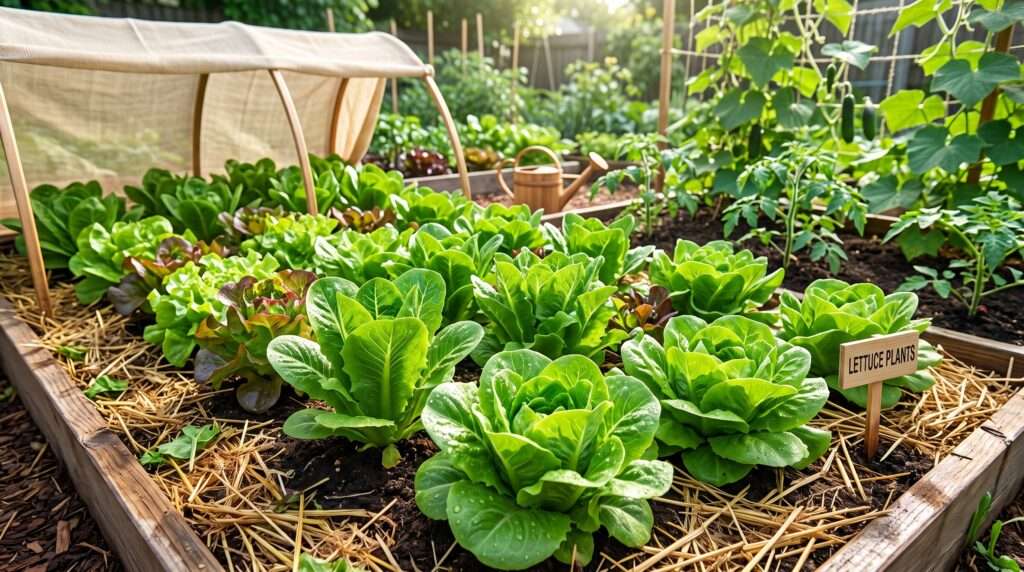
Picture this: you’ve spent weeks lovingly nurturing a beautiful, vibrant patch of greens in your backyard garden. The leaves look lush, bright, and ready for the salad bowl. But when you snap off a leaf one sunny afternoon and pop it into your mouth, your face instantly puckers. Instead of a refreshing, sweet crunch, the leaf is incredibly bitter, rubbery, and practically inedible.
If this sounds familiar, you have encountered the absolute biggest heartbreak in vegetable gardening: bolting.
Growing lettuce plants is incredibly rewarding, but their delicate nature means they require a specific environment to thrive. When the conditions aren’t just right, these leafy greens will quickly abandon their leafy growth and shift into seed-producing mode—a biological process that ruins the flavor of your harvest almost overnight.
After years of testing different climates, soil types, and watering schedules across multiple growing zones, I’ve discovered that sweet, crunchy salads aren’t a matter of luck. They are the result of strategic husbandry. In this comprehensive guide, I am sharing the ultimate expert blueprint to keep your greens crisp all season long. You’ll learn the science-backed prevention methods, watering secrets, and shading tactics necessary to guarantee a long, delicious harvest.
Let’s dig in and save your salads! 👩🌾🚜
The Heartbreak of Bolting: Why Do Lettuce Plants Go to Seed? 💔🌱
Before we can stop bolting, we need to understand exactly what is happening on a biological level. Gardening is science in action, and understanding your plant’s natural instincts is the first step toward extending your harvest.

What Exactly is Bolting? (The Science of Bitterness) 🔬
Bolting is a plant’s survival mechanism. When a lettuce plant senses that its ideal growing season is coming to an end, it panics. It rapidly shifts its energy away from vegetative growth (making those tender, delicious leaves we love) and transitions entirely into reproductive growth (making flowers and seeds to ensure the next generation).
As the plant pushes up a tall central stalk to bloom, it fundamentally changes its internal chemistry. It begins to produce high amounts of a milky, white sap containing a compound called lactucin. While lactucin is completely safe to eat, it is intensely bitter. In nature, this bitterness is meant to deter pests and herbivores from eating the plant while it focuses all its energy on creating seeds. For the home gardener, however, it means the harvest is officially over.
The 3 Primary Triggers of Bolting 🌡️
To keep your lettuce plants crisp and sweet, you must protect them from the three main environmental triggers that signal the plant to bolt:
-
Heat Stress: Lettuce is fundamentally a cool-weather crop. It thrives in temperatures between 60°F and 70°F (15°C to 21°C). When daytime temperatures consistently creep above 75°F (24°C), the plant’s internal alarm bells ring, signaling that summer is here and it’s time to reproduce.
-
Moisture Fluctuation: Plants crave consistency. If your garden beds experience drought stress—where the soil dries out completely—followed by heavy, sudden watering, this stress induces panic. The plant assumes the environment is becoming hostile and rushes to go to seed.
-
Day Length (Photoperiodism): This is a lesser-known but highly critical factor. Lettuce is sensitive to photoperiodism, meaning it reacts to the number of daylight hours. The long, drawn-out days of late spring and mid-summer naturally trigger the plant’s flowering hormones, even if the weather remains relatively cool.
Pre-Planting Strategy: Choosing Bolt-Resistant Varieties 🛡️🥬
Your defense against bitter, bolted greens actually begins before you even touch the soil. Seed selection is at least half the battle. If you plant a delicate, cold-loving spring variety in late May, no amount of shade or water will save it.
To achieve a crisp, long-lasting harvest, you need to select cultivars that have been bred specifically for heat tolerance and slow-bolting characteristics.
Best Crisphead and Romaine Varieties for Heat ☀️
Romaine and crisphead varieties offer that satisfying “snap,” but they can be tricky in warm weather. Look for these proven winners:
-
Jericho: Originally bred in Israel, this romaine variety is a champion of heat tolerance. It retains its sweet flavor and crisp texture long after other romaines have turned bitter.
-
Coastal Star: A large, dark-green romaine that is notoriously slow to bolt, making it perfect for late-spring sowing.
-
Saladin: A crisphead (iceberg type) that forms tight, crunchy heads while successfully resisting both tip-burn and early seeding.
Top Loose-Leaf and Butterhead Options 🧈
Loose-leaf and butterhead (Bibb) lettuces are generally easier to grow and offer incredibly tender, buttery textures:
-
Slobolt: The name says it all! This heirloom loose-leaf variety is famous for keeping its sweet flavor up to three weeks longer than standard varieties in the summer heat.
-
Buttercrunch: A classic, reliable butterhead that tolerates warmth surprisingly well while maintaining a luscious, velvety texture.
-
Red Sails: Not only does this red-tinged loose-leaf add gorgeous color to your garden, but it is also one of the slowest-bolting red varieties on the market.
💡 Expert Insight Box: Genetics Matter Trying to force a cool-weather spring lettuce to grow in mid-July is a losing battle. Seed genetics dictate the plant’s baseline heat tolerance. When planning your garden, always check the seed packet for keywords like “bolt-resistant,” “heat-tolerant,” or “long-standing.” Choosing the right genetics is your first and strongest line of defense against bitterness.
The Perfect Foundation for Crisp, Sweet Leaves 🪴🌱
Even the best seeds will struggle if they are planted in poor conditions. A robust, healthy root system is essential for delivering the intense hydration required to keep lettuce leaves plump and crispy.
Soil Requirements for Maximum Hydration 🪱
Lettuce plants have shallow, fibrous root systems, which means they cannot reach deep into the earth to find water during a dry spell. Because of this, they rely entirely on the top 6 to 8 inches of soil.
Your garden beds must feature loamy, well-draining soil that is rich in organic matter. Before planting, aggressively amend your soil with high-quality compost or well-rotted manure. This organic matter acts like a sponge, holding moisture right at the root zone where the plant needs it most. Furthermore, incorporating a balanced, nitrogen-rich fertilizer early in the season encourages lush, leafy vegetative growth, sending a signal to the plant to prioritize making leaves rather than flowers.
The Magic of Mulch for Lettuce Plants 🍂
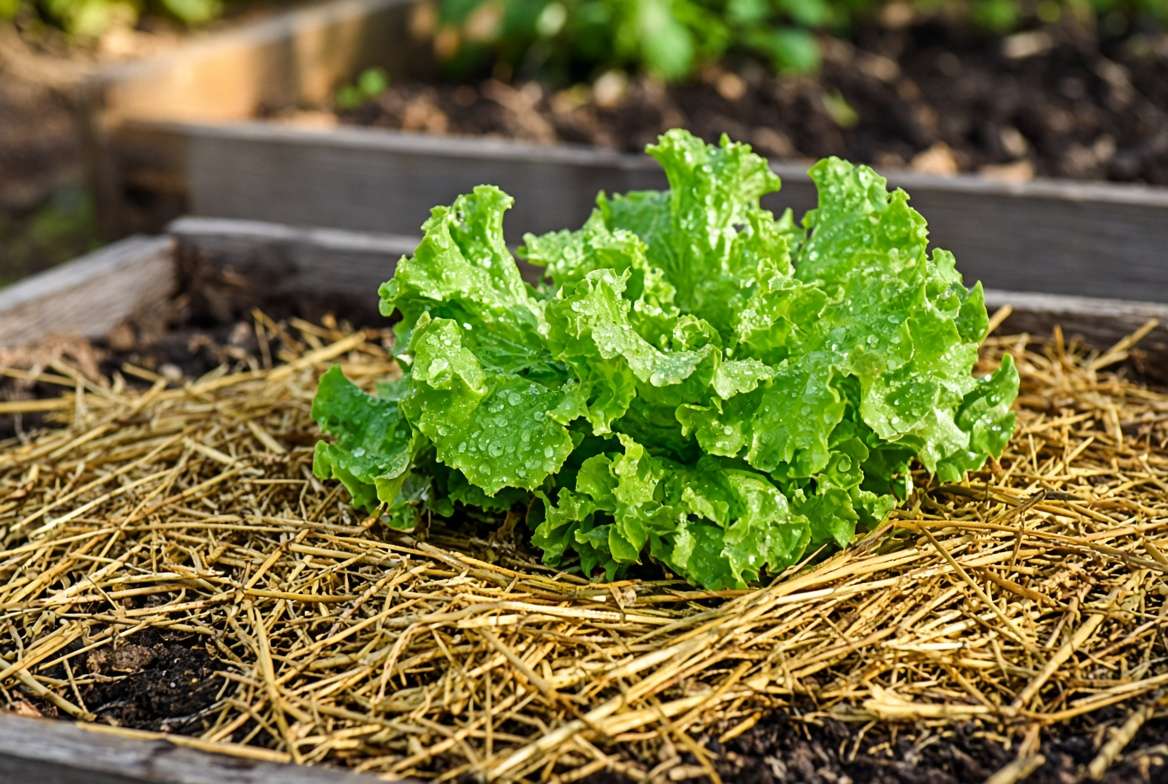
If you aren’t mulching your lettuce, you are missing out on one of the easiest ways to prevent bolting.
Applying a 2-inch layer of organic mulch—such as clean straw, shredded leaves, or herbicide-free grass clippings—around the base of your plants performs two vital functions. First, it completely shades the soil, keeping the root zone several degrees cooler than the ambient air temperature. Second, it locks in moisture, preventing the rapid evaporation that leads to the moisture fluctuation stress we discussed earlier.
Strategic Spacing for Airflow 🌬️
It is incredibly tempting to broadcast lettuce seeds thickly and let them grow into a dense jungle of greens. However, overcrowding is a massive stressor.
When plants are crammed together, they aggressively compete for water and soil nutrients. Worse, dense planting traps heat and humidity at the soil level, raising the micro-climate temperature and drastically increasing the risk of fungal diseases. Follow the spacing guidelines on your seed packet (typically 8 to 12 inches apart for heading varieties) to allow for cooling airflow and proper root development.
Watering Mastery: The Secret to the “Snap” 💧💦
Lettuce leaves are composed of roughly 95% water. If you want that satisfying, restaurant-quality “snap” when you bite into a salad, you must become a master of soil moisture. Inconsistent watering is the quickest way to induce stress and send your lettuce plants into early seed production.

How Much Water Do Lettuce Plants Really Need? 🚿
As a general rule, lettuce requires 1 to 2 inches of water per week, depending on your climate and soil type. However, because their root systems are so shallow, they do not benefit from the “deep, infrequent” watering methods used for deep-rooted crops like tomatoes.
Instead, leafy greens thrive on shallow, frequent watering. The goal is to keep the top few inches of the soil consistently moist (like a wrung-out sponge) but never waterlogged. During hot, dry spells, this might mean watering lightly every single day to prevent the soil surface from crusting over and drying out.
Morning vs. Evening Watering 🌅
Timing is everything in the vegetable garden. The absolute best time to water your lettuce plants is early in the morning, right around sunrise. Watering in the morning hydrates the plant’s cells, preparing it to withstand the heat and evaporation of the midday sun.
Watering in the evening should be avoided whenever possible. Because nighttime temperatures drop, water left sitting on the leaves won’t evaporate. This creates a cool, damp environment that is an open invitation for fungal diseases like powdery mildew and downy mildew, as well as a beacon for slugs and snails.
🔍 Pro Tip Box: The “Knuckle Test” How do you know if your lettuce actually needs water? Use the Knuckle Test! Simply press your index finger into the soil near the base of the plant up to your first knuckle (about 1 inch deep). If the soil feels dry at that depth, it’s time to water. If it feels cool and damp, hold off for another day. This simple trick prevents both root rot and drought stress.
Temperature Control & Shade Tactics (Beating the Summer Heat) ⛱️😎
When late spring turns into scorching summer, you have to play defense. If you want to keep growing cool-weather crops in warming weather, you must physically alter their microclimate to keep the soil and ambient air cool.
How to Use Shade Cloth Effectively ⛺
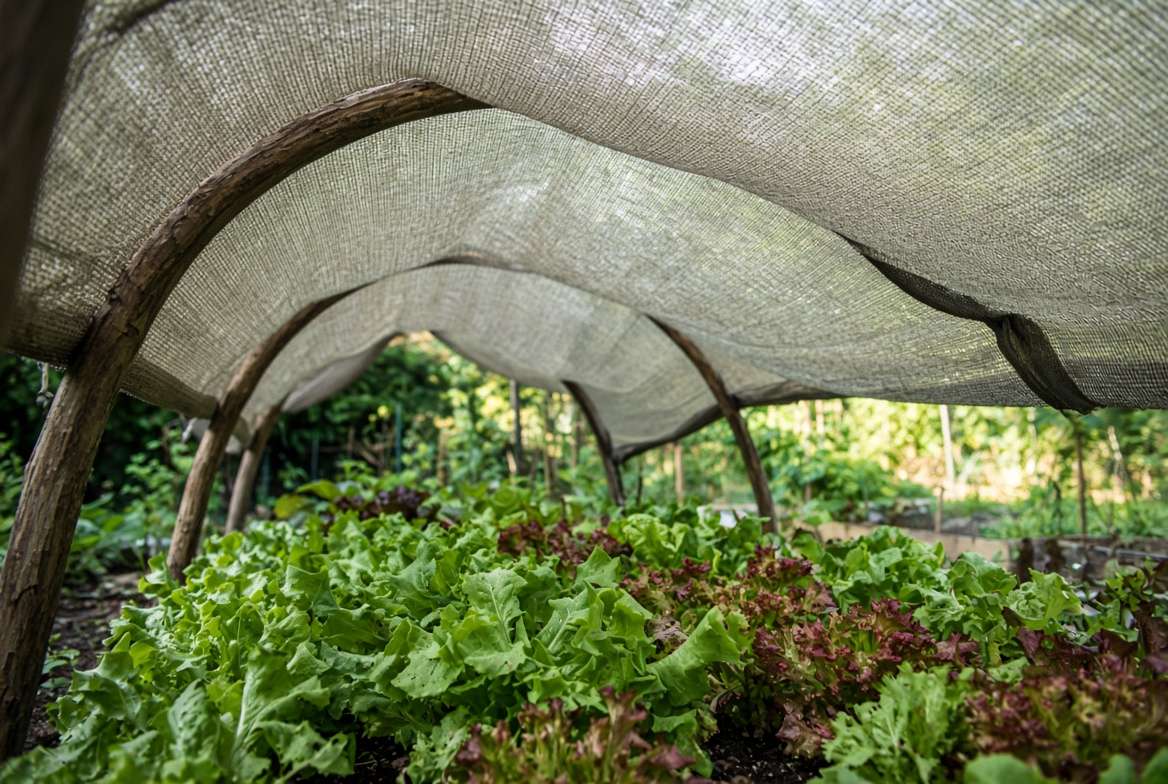
A shade cloth is a gardener’s best friend. This woven, UV-resistant fabric blocks a percentage of the sun’s rays, dramatically cooling the air beneath it.
For lettuce plants, you want to purchase a shade cloth rated at 30% to 40%. Anything heavier will block too much light and cause the plants to grow leggy and weak. Suspend the cloth on hoops or a simple PVC frame a few feet above the bed. Ensure the sides are open so breeze can easily pass through; if you drape the cloth directly over the plants like a blanket, you will trap the heat and accidentally cook your greens!
Companion Planting for Natural Shade 🌽🍅
If you prefer a natural approach, use companion planting to create living shade. Plant your lettuce on the north or east side of taller, sun-loving crops.
Trellised cucumbers, pole beans, towering tomato plants, or sweet corn will soak up the harsh afternoon sun, casting a cool, protective shadow over your delicate leafy greens below. This not only prevents bolting but maximizes your garden space through smart interplanting.
Succession Planting for a Continuous Harvest 🔄
Rather than planting 50 heads of lettuce all at once and watching half of them bolt before you can eat them, utilize succession planting.
Sow a small pinch of seeds every two to three weeks starting in early spring. As you harvest the mature plants, the next batch is just reaching its prime. However, as an expert grower, you must know when to stop: once daytime temperatures consistently threaten to break 80°F (27°C), stop sowing your lettuce seeds until late summer for your fall harvest.
Harvesting Techniques for Peak Crispness ✂️🥗
You’ve successfully grown beautiful, bolt-free lettuce. Now, how you harvest and store it dictates whether it stays crisp on your plate.
The Golden Hour for Harvesting ⏰
Never harvest lettuce in the middle of a hot afternoon. By noon, the plant is actively transpiring (sweating) to stay cool, leaving the leaves limp and dehydrated.
The “golden hour” for harvesting is before 9:00 AM. During the cool night, the plant absorbs water and plumps up its cells. Harvesting early in the morning guarantees maximum turgidity (crispness) and a sweeter flavor profile.
“Cut-and-Come-Again” vs. Whole Head Harvesting 🔪
Instead of waiting for a massive head to form and harvesting the whole plant at once, utilize the “cut-and-come-again” method.
Using clean, sharp scissors, carefully snip the older, outer leaves about an inch above the base, leaving the tight inner rosette intact. The plant will continue to push out new growth from the center. By constantly harvesting the mature outer foliage, you actively delay the bolting process and can harvest from a single plant for weeks.
Post-Harvest: Storing Lettuce to Lock in the Crunch 🧊
Once harvested, get those greens out of the sun immediately! If your leaves feel slightly wilted, give them an ice-water bath. Submerging them in freezing water for 10-15 minutes shocks the cells and forces them to rehydrate, restoring their crisp texture.
To store, thoroughly dry the leaves in a salad spinner. Place them in a sealed container or airtight plastic bag lined with a slightly damp paper towel. The paper towel regulates humidity, keeping the lettuce crisp in the refrigerator for up to two weeks without turning slimy.

SOS! What to Do When Your Lettuce Plants Start to Bolt 🚨🥬
Sometimes, despite your absolute best efforts, Mother Nature wins and a sudden heatwave triggers the bolting process. Knowing how to spot it early can save your current harvest.
Early Warning Signs You Shouldn’t Ignore ⚠️
Watch your garden closely for these three telltale signs:
-
Towering: The center stem begins to elongate rapidly, stretching upward like a miniature Christmas tree.
-
Leaf Shape Changes: The new leaves emerging from the center will look different. They often become narrower, more triangular, or develop jagged, spiky edges.
-
Milky Sap: If you snap a leaf and see a thick, white, milky sap ooze out immediately, the lactucin is flowing, and bitterness has arrived.
Can You Reverse Bolting Once It Starts? 🛑
Here is the honest, expert truth: No. You cannot reverse bolting once the physiological change has started.
Many beginner gardeners try to pinch off the top of the flower stalk, hoping the plant will revert to making sweet leaves. It won’t. The chemical shift has already happened, and the leaves will remain intensely bitter. If you catch it at the very first sign of towering, immediately harvest the entire plant. The leaves might be slightly bitter, but usually still edible.
Don’t Toss It! Creative Uses for Bitter, Bolted Lettuce 🍲
Just because it’s too bitter for a raw salad doesn’t mean it belongs in the compost bin!
-
Cook It: Heat breaks down the bitter compounds. Sauté bolted lettuce with garlic and olive oil, or toss it into a hot soup just like you would spinach or Swiss chard.
-
Feed the Pollinators: Let the plant bloom! Lettuce flowers look like tiny dandelions and are an absolute magnet for beneficial insects, particularly ladybugs and hoverflies, which will stick around to eat aphids on your other crops.
-
Save the Seeds: Let the flowers dry on the stalk until they form fluffy white heads (like a dandelion clock). Snip them off, dry them indoors, and you’ll have hundreds of free seeds perfectly adapted to your microclimate for next year.
Frequently Asked Questions (FAQs) About Lettuce Care 🙋♂️🌱
Can I grow lettuce plants indoors to completely avoid bolting? Yes! Because you control the temperature (keeping it consistently around 65°F/18°C) and the lighting, indoor hydroponic or potted lettuce is virtually immune to bolting. Just ensure they get 10-12 hours of grow-light exposure to thrive.
Why are the edges of my lettuce leaves turning brown? (Tipburn vs. Sun scald) If the very edges of the inner leaves are black or brown, it is likely “tipburn,” caused by a calcium deficiency usually brought on by inconsistent watering. If the large, outer leaves are turning white and papery, it is sun scald from intense UV exposure—time to break out the shade cloth!
Are there any lettuce plants that grow well in 90-degree heat? While true lettuces (Lactuca sativa) will struggle heavily at 90°F (32°C), you can switch to heat-loving salad greens that mimic lettuce. Try growing Malabar spinach, New Zealand spinach, or Amaranth greens during the peak of summer.
Will watering my lettuce with ice water stop it from bolting? This is a common gardening myth! While pouring ice water on the soil temporarily cools the roots, it doesn’t change the ambient air temperature or the day length (photoperiodism). It might delay bolting by a day or two in a mild heatwave, but it is not a sustainable long-term solution.
Conclusion: Your Roadmap to a Flawless Salad Garden 🗺️🏆
Growing your own crisp, sweet leafy greens is one of the greatest joys of backyard gardening. By understanding the biology of lettuce plants and respecting their need for a cool, consistent environment, you can finally put an end to the heartbreak of premature bolting.
Remember the golden rules for a flawless salad garden: start with bolt-resistant seed varieties, ensure consistent soil moisture to keep those leaves plump, utilize mulch and shade cloth to fight the summer heat, and always harvest early in the morning. Even the most experienced master gardeners lose a few plants to bolting during an unexpected heatwave—it is all part of the beautiful learning curve of working with nature.
Now, I’d love to hear from you! What is your absolute favorite bolt-resistant lettuce variety to grow? Drop your recommendations in the comments below, or tag us in a picture of your beautiful salad garden on social media! 🥗💚











