
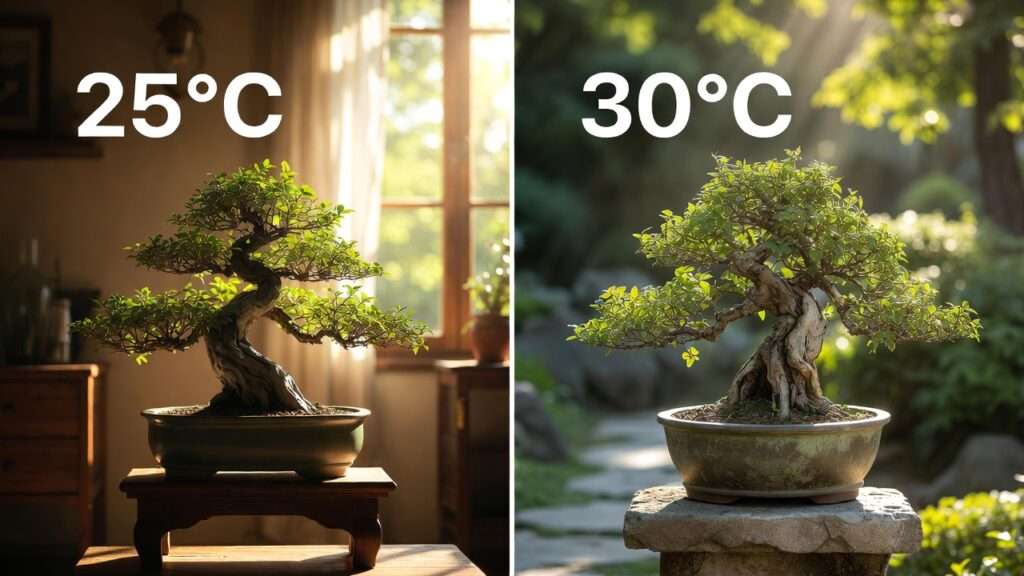
Imagine this: You’ve just brought home a beautiful juniper bonsai, its needles a vibrant green, full of promise. You place it proudly on your sunny windowsill, thinking, “This is perfect — bright light and cozy room temperature!” Weeks later, the tree starts stretching leggily, needles yellow and drop, and the once-compact form looks weak and sad. 😔 Sound familiar? This heartbreaking scenario plays out for countless bonsai enthusiasts every year, and the root cause is almost always the same: misunderstanding the dramatic light and temperature differences for indoor vs. outdoor bonsai.
As a bonsai practitioner with over 15 years of hands-on experience caring for hundreds of trees — from hardy junipers in freezing winters to tropical ficus in humid apartments — I’ve seen firsthand how getting these two environmental factors right (or wrong) can mean the difference between a thriving miniature tree and one that slowly declines. In this essential guide, we’ll break down exactly why light intensity outdoors can be 50–100 times stronger than even your brightest indoor spot, how temperature cycles trigger vital dormancy in temperate species, and practical steps to match your bonsai’s needs to your space. Whether you’re a beginner wondering why your tree isn’t compact anymore or an intermediate grower optimizing for health, you’ll walk away with the knowledge to prevent common killers and help your bonsai flourish into a living masterpiece. 🌳❤️
Why Light and Temperature Matter So Much for Bonsai Health 🌞❄️
Bonsai are not houseplants in the traditional sense — they’re full-sized trees genetically scaled down through root restriction and pruning. Their physiological needs remain tied to their natural origins.
Light drives photosynthesis, the process that fuels energy production, strong cell structure, vibrant foliage color, and dense branching. Without adequate intensity and duration, trees etiolate (stretch weakly toward light), produce pale or small leaves, and become prone to pests and disease due to reduced vigor.
Temperature regulates metabolism, hormone production, root activity, and seasonal cycles. Too constant warmth prevents dormancy in temperate species, leading to weak spring growth, while extreme swings or dry indoor heat stress roots and cause needle/leaf drop.
Mismatches here are the #1 silent killer of bonsai — more than over- or under-watering combined. Getting them aligned prevents stress, promotes back-budding, and extends lifespan dramatically.
:max_bytes(150000):strip_icc()/growing-juniper-bonsai-508312-01-d20b5d68bd784efd8a8ccfe8474c685b.jpg)
(These show healthy outdoor juniper bonsai thriving in full natural sun — notice the dense, compact growth!)
Understanding Light: Indoor vs Outdoor Environments Compared 💡☀️
Natural Outdoor Light — The Gold Standard
Outdoors, bonsai receive full-spectrum sunlight up to 100,000+ lux on clear days, with 10–14+ hours in peak summer. This complete range (including UV and far-red) builds tough cell walls, enhances resin production in conifers (for pest resistance), and encourages short internodes and back-budding.
Benefits include:
- Compact, ramified branching
- Intense needle/foliage color
- Natural seasonal hardening
Most hardy species (juniper, pine, maple) crave 6+ hours of direct sun daily for optimal health.
Indoor Light Reality — Why Most Windows Fall Short
Even a bright south-facing window in the Northern Hemisphere typically delivers only 2,000–10,000 lux — often 1/10 to 1/50 of direct outdoor sun. North-facing windows drop to under 1,000 lux, barely enough for low-light houseplants, let alone bonsai.
Additional challenges:
- One-sided exposure → phototropism (leaning toward light)
- Winter reduction: 50–80% less intensity + shorter days
- Glass filters out much UV, weakening structure
Artificial lights help bridge the gap, but only full-spectrum LEDs with proper PAR/PPFD (Photosynthetic Active Radiation) mimic nature effectively.
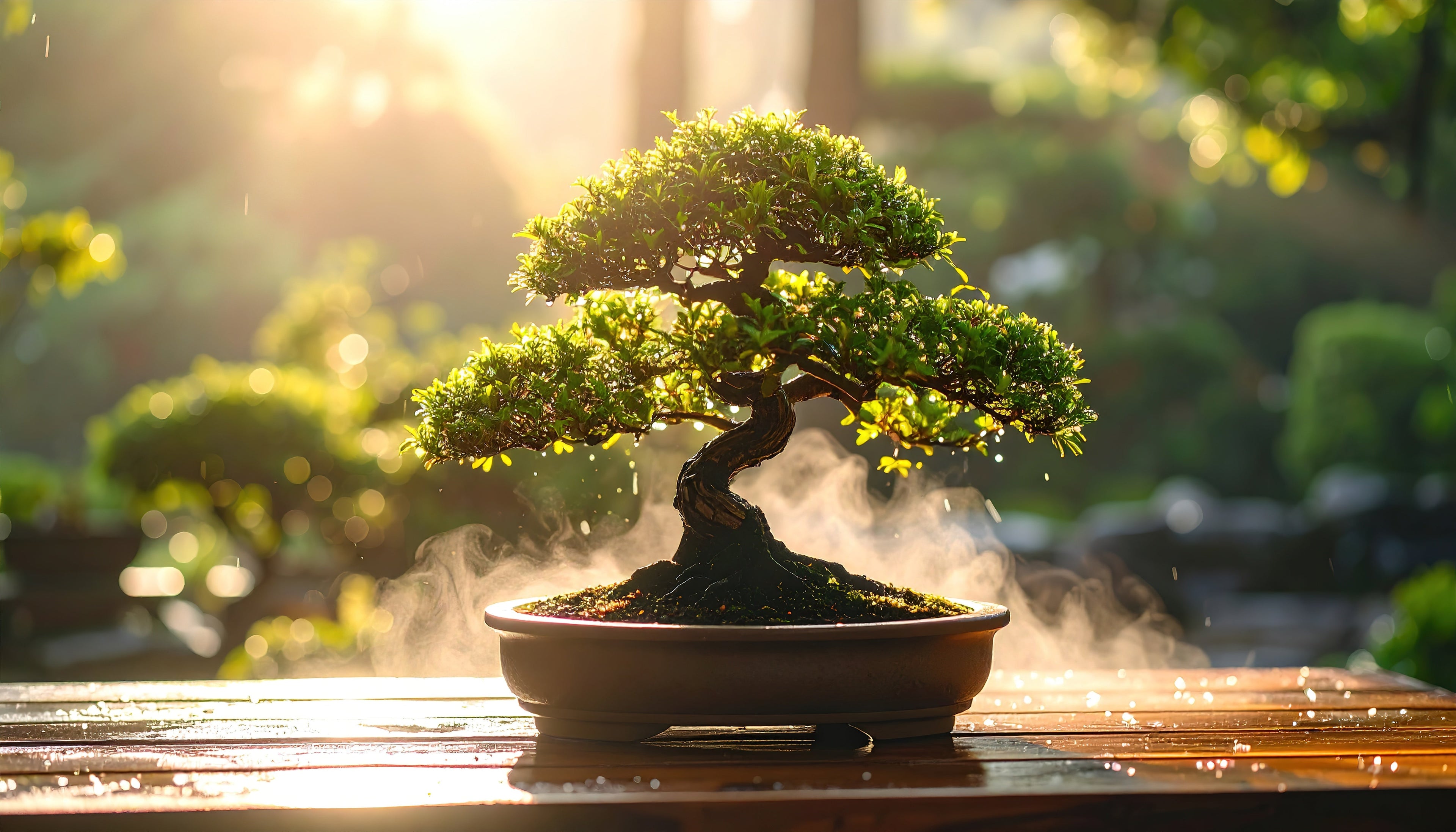
(Outdoor vs shaded/indoor examples — see how light shapes form!)
Direct vs Indirect Light — What Your Bonsai Actually Needs
Direct sun: Full, unshaded beams for sun-loving species (most outdoor types). Indirect: Bright but diffused — suitable for some tropicals but insufficient for conifers. Symptoms guide you: Scorched tips = too much sudden direct sun; leggy, pale growth = too little.

(This jade bonsai shows vibrant color from good light balance!)
Measuring Light for Bonsai — Easy Tools & Apps 📱
Don’t guess — measure! Free smartphone apps (like “Light Meter” or “Photone”) use your camera to estimate lux. For precision, affordable handheld meters cost $20–50.
Aim for:
- Outdoor hardy: 30,000+ lux direct
- Indoor tropical: 5,000–15,000 lux bright indirect
- Supplemental lights: Position 6–12 inches above canopy, 12–16 hours/day
:max_bytes(150000):strip_icc()/GettyImages-2155904457-6e3de2ca2b864a36abae617ac02d7c03.jpg)
(Real light meter examples — super helpful for troubleshooting!)
Temperature Differences: Stability vs Seasonal Cycles 🌡️
Outdoor temperature follows nature’s rhythm — daily swings of 20–30°F (11–17°C) between day and night, plus dramatic seasonal changes. For temperate species, prolonged cold below 50°F (10°C) — often weeks of near-freezing — triggers dormancy, a vital rest period where the tree conserves energy, strengthens roots, and prepares for explosive spring growth. This cycle builds resilience against pests, improves back-budding density, and prevents weak, elongated shoots.
Indoors, central heating or AC creates unnatural stability — often a constant 68–75°F (20–24°C) year-round with low humidity from dry air. This tricks temperate trees into staying active through winter, depleting stored reserves and leading to poor spring performance, dieback, or eventual death. Tropical species fare better with steady warmth, but even they suffer from drafts, cold windowsills at night, or hot radiator proximity.
Key insight from experience: Many “indoor bonsai” failures stem from forcing hardy species into perpetual growing mode — they simply weren’t evolved for tropical apartment life.
Ideal Temperature Ranges by Bonsai Type
- Tropical/Subtropical (best for consistent indoor): Day 70–85°F (21–29°C), night 60–75°F (15–24°C). Avoid below 55°F (13°C) to prevent leaf drop.
- Temperate/Hardy (outdoor essential): Summer 60–90°F (15–32°C), winter 20–50°F (-7–10°C) for dormancy. Brief freezes are usually fine if roots are insulated; prolonged sub-zero without protection risks cracking pots or root death.
Head-to-Head Comparison Table: Indoor vs Outdoor at a Glance 📊
| Factor | Indoor Bonsai | Outdoor Bonsai | Key Impact on Health |
|---|---|---|---|
| Light Intensity | 2,000–10,000 lux (bright window) | 50,000–100,000+ lux (direct sun) | Indoor often causes weak, leggy growth; outdoor builds compact structure |
| Light Duration | 8–12 hours artificial or window | 10–14+ hours natural seasonal | Outdoor promotes strong photosynthesis cycles |
| Temperature Stability | Very stable (heating/AC) | Daily & seasonal swings | Stability prevents dormancy in hardy species → weakened vigor |
| Humidity Influence | Low (dry indoor air) | Natural high in many climates | Low humidity stresses leaves/needles indoors |
| Seasonal Changes | Minimal unless moved | Full dormancy & growth flush | Outdoor triggers natural hardening & budding |
| Common Problems | Etiolation, pale leaves, no dormancy | Sunburn, winter freeze damage | Mismatch kills more trees than watering errors |
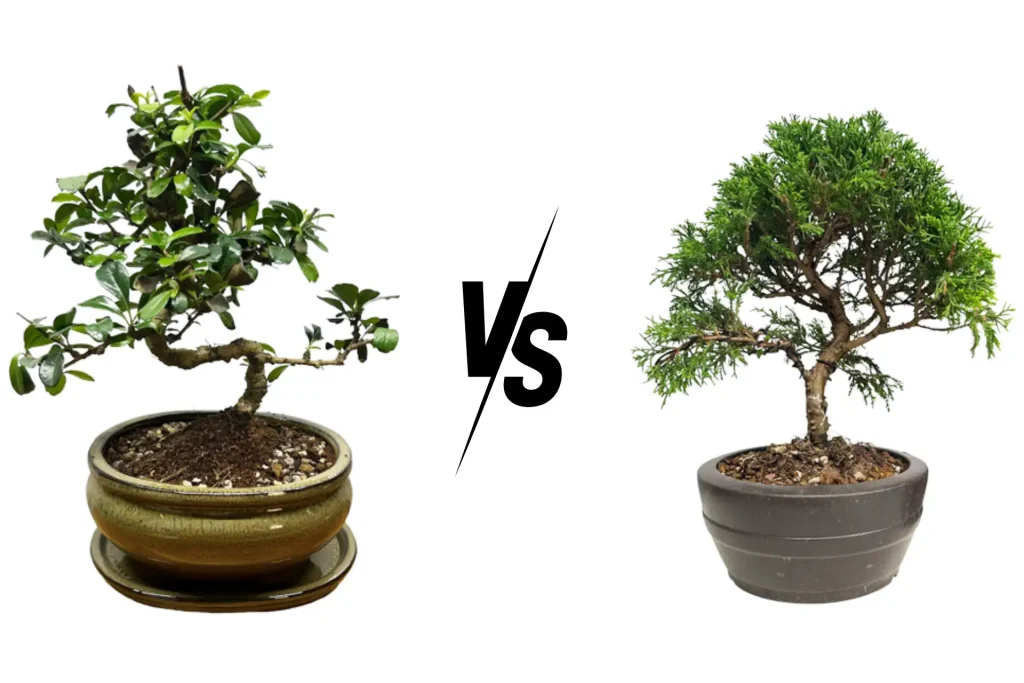
(Visual comparison: Indoor tropical like ficus vs outdoor hardy juniper — notice the leaf density and color differences driven by light/temp!)
Best Species Choices — Matching Bonsai to Your Environment 🌱
Top Indoor-Friendly (Tropical/Subtropical) Bonsai Species
These tolerate lower light (5,000–15,000 lux) and steady warmth:
- Ficus retusa / benjamina — Forgiving, grows well under grow lights; prune aggressively for shape.
- Serissa japonica (Tree of a Thousand Stars) — Needs bright indirect + high humidity.
- Carmona microphylla (Fukien Tea) — Loves warmth but drops leaves if too dry or cold.
- Schefflera arboricola (Hawaiian Umbrella) — Easy, tolerates medium light.
- Portulacaria afra (Elephant Bush / Dwarf Jade) — Succulent-like, very drought-tolerant once established.
Tips: Rotate weekly, use pebble trays for humidity, and supplement light in winter.
Classic Outdoor (Temperate/Hardy) Bonsai Species
These demand full sun and seasonal cold:
- Juniper (Procumbens Nana, Shimpaku) — Full sun lover; indoor year-round = death sentence.
- Pine (Black, White, Japanese Red) — Needs winter chill for needle health.
- Maple (Japanese, Trident) — Stunning fall color outdoors; etiolates badly indoors.
- Elm (Chinese, Siberian) — More flexible but thrives outdoors.
- Azalea (Satsuki) — Acid-loving, outdoor shade in hot summers.
Forcing these indoors shortens life dramatically — I’ve rescued many by moving them outside permanently.
Borderline / Flexible Species
- Chinese Elm (Ulmus parvifolia) — Can handle indoor with strong supplemental light + occasional outdoor vacations.
- Fukien Tea — Borderline; better outdoors in mild climates.
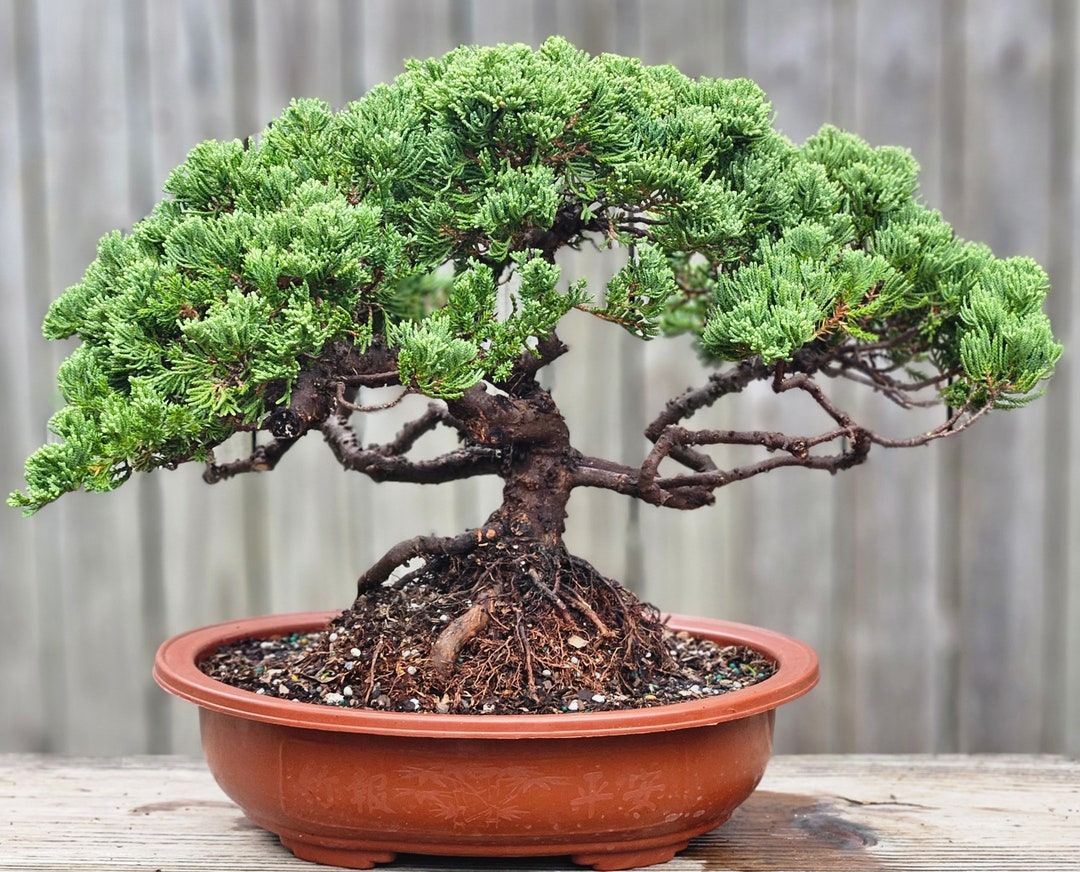
(Thriving outdoor junipers and pines — dense, healthy growth from proper light and temp cycles!)
Practical Solutions & Optimization Tips for Each Setup 🔧
Getting the environment right doesn’t require moving to a sunnier climate — it means smart adjustments wherever you are. Here are battle-tested strategies I’ve used on my own collection and helped dozens of students implement successfully.
Maximizing Light Indoors — Pro-Level Hacks
- Choose the Best Window First South-facing (Northern Hemisphere) or north-facing (Southern Hemisphere) for maximum intensity. East for gentle morning sun; west for hotter afternoon rays (good for heat-tolerant species but watch for burn).
- Rotate Regularly Turn the tree ¼ turn every 3–5 days to prevent leaning and promote even growth.
- Supplemental Full-Spectrum Grow Lights
- Use LEDs rated 400–700 nm (full PAR spectrum, including red/blue peaks).
- Recommended models: Spider Farmer SF-1000, Mars Hydro TS series, or budget-friendly Sansi bulbs.
- Distance: 6–12 inches above canopy (closer = stronger but risk of burn).
- Duration: 12–16 hours/day for tropicals; 10–14 for borderline hardy species.
- PPFD target: 200–400 µmol/m²/s at canopy level (many phone apps now estimate this). Pro tip: Use a timer and hang lights on adjustable chains for easy height changes as the tree grows.
- Reflective Boosters Place white foam board or Mylar behind/around the tree to bounce light back to shaded sides.
- Clean Windows & Prune Strategically Dust blocks 10–30% of light — wipe monthly. Light pruning opens the canopy so inner branches get more exposure.
Managing Temperature Indoors Without Stressing Your Tree
- Keep away from heat sources (radiators, vents) and cold glass at night (use insulation boards behind pots in winter).
- Increase humidity: Place on pebble trays with water (never let pot sit in water), or use small humidifiers nearby. Target 50–70% for tropicals.
- Monitor with digital thermometer/hygrometer combo — cheap and essential.
- For borderline species: Give “summer vacation” outdoors in warm months (gradual acclimation over 7–10 days to avoid shock).
Outdoor Placement Mastery — Protecting from Extremes
- Ideal Spot: Morning sun + afternoon shade in hot climates (prevents midday scorch). Full sun all day in cooler/moderate zones.
- Summer Protection: Use 30–50% shade cloth during heatwaves (>95°F/35°C) for young trees or thin-foliaged species.
- Winter Hardening:
- Bury pots in ground or mulch heavily.
- Use cold frames, unheated greenhouse, or garage with window light (above freezing).
- Never bring fully dormant trees into warm indoors — they’ll break dormancy prematurely and weaken.
- Wind & Rain: Shelter from strong drying winds; ensure excellent drainage to prevent root rot from constant wet.
Hybrid Approaches — Moving Trees Seasonally (Best of Both Worlds!)
Many growers (including me) use this strategy for maximum health + display enjoyment:
- Keep tropicals indoors year-round with strong lights.
- Move temperate species outdoors from spring through fall (after last frost), then bring into cool (40–55°F/4–13°C), bright garage/shed for winter dormancy.
- Or display hardy bonsai indoors under lights for short periods (1–2 weeks max) during special occasions — never year-round. This balances vigor from natural cycles with the convenience of indoor viewing.
(Examples of outdoor summer placement with shade cloth + indoor grow light setup — practical and effective!)
Common Mistakes & How to Fix Them (Troubleshooting Guide) ⚠️
Mistake #1: Keeping temperate bonsai indoors year-round → Symptoms: Weak spring flush, needle drop in winter, no back-budding. Fix: Move outdoors permanently (or cool overwintering spot). Rescue by gradual hardening and heavy feeding in spring.
Mistake #2: Assuming any window provides “enough” light → Symptoms: Long internodes, pale/small leaves, sparse branching. Fix: Measure lux, add grow lights immediately, prune back leggy growth to force denser ramification.
Mistake #3: Ignoring dormancy needs → Symptoms: Tree looks tired, reduced vigor over years, eventual decline. Fix: Provide true winter chill (below 50°F for 6–10 weeks) for hardy species.
Mistake #4: Over-relying on artificial lights without proper spectrum/distance → Symptoms: Burnt tips or still weak growth. Fix: Upgrade to full-spectrum, adjust height/duration, monitor PPFD.
Mistake #5: Sudden moves without acclimation → Symptoms: Leaf scorch or massive drop. Fix: Always transition gradually over 7–14 days.
Expert Insights & Pro Tips from Years of Bonsai Experience 🌟
After two decades and hundreds of trees, here’s what stands out:
- Insufficient light causes more bonsai deaths and disappointments than any other factor — even skilled waterers lose trees to etiolation.
- The single best investment for indoor growers is a quality grow light setup — it turns marginal success into thriving specimens.
- Case study: A client’s 15-year-old juniper was fading indoors for years. After moving it outside full-time (with winter protection), it produced the densest back-budding I’ve seen in a single season.
- Rule of thumb: If your tree isn’t getting at least 4–6 hours of direct outdoor sun (or equivalent strong artificial), it’s compromising long-term health.
Use tools religiously: Light meter app + thermometer/hygrometer. Track changes over weeks — small tweaks yield big results.
(Leggy indoor growth vs compact outdoor — the light/temp difference is crystal clear!)
Frequently Asked Questions (FAQs) ❓
Here are the questions I hear most often from bonsai enthusiasts struggling with placement decisions — answered clearly and based on real-world results.
Can all bonsai survive indoors with powerful grow lights? No — not reliably long-term. While strong full-spectrum grow lights (400+ µmol/m²/s PPFD) can keep tropical and subtropical species healthy indefinitely, temperate/hardy species (juniper, pine, maple, larch, etc.) almost always suffer over years without true seasonal cold dormancy. Artificial light cannot replicate the physiological “reset” that weeks of chill provides. You might get 2–5 years of okay appearance, but vigor fades, branching weakens, and decline sets in. Best practice: reserve grow lights for tropicals and borderline species.
How many hours of direct sun do outdoor bonsai really need? Most hardy species thrive on 6–10+ hours of direct sunlight daily during the growing season (spring–fall). Junipers and pines can handle full all-day sun in moderate climates; maples and azaleas often prefer morning sun + dappled afternoon shade to avoid leaf scorch. In very hot regions (>95°F/35°C regularly), 4–6 hours direct + afternoon protection works better. Watch your tree: vibrant color and short internodes = good amount; pale or burnt foliage = adjust.
What if I live in a low-light apartment — which species should I choose? Prioritize true tropical/subtropical bonsai: Ficus (retusa, benjamina, microcarpa), Portulacaria afra (Dwarf Jade), Schefflera arboricola, Carmona, Serissa, or Brazilian Raintree. Supplement with a quality LED grow light 12–16 hours/day positioned close to the canopy. Avoid junipers, pines, maples, and most elms unless you can give them seasonal outdoor time. Low-light apartments can produce beautiful bonsai — just match the species to reality.
Is it okay to bring outdoor bonsai inside temporarily for display? Yes, but only short-term (1–2 weeks maximum) and during mild seasons. Sudden moves from full sun/low humidity outdoors to dim/dry indoors shock the tree — expect some needle/leaf drop. Acclimate gradually if possible (start with shaded porch → brighter indoor spot over days). Never do this during winter dormancy (warm indoors breaks dormancy prematurely) or peak summer heat (indoor dryness + low light stresses them fast).
How do I know if my bonsai is getting enough light? Observe these reliable signs:
- Healthy = short internodes (close node spacing), deep green/vivid color, dense foliage, strong new buds even on inner branches.
- Too little = long/stretched shoots, small/pale leaves, sparse inner growth, weak overall vigor.
- Too much sudden = scorched tips, yellowing, leaf drop. Bonus: Use a lux meter app weekly. If consistently under 10,000–15,000 lux for tropicals or 30,000+ for hardy, it’s time to act.
Can I use regular household LED bulbs instead of grow lights? They help a little but fall short. Standard white LEDs lack sufficient red/blue peaks for optimal photosynthesis and miss far-red/UV that influence structure and pest resistance. Invest in purpose-built full-spectrum grow lights (CRI 90+, 400–700 nm coverage) for noticeably better results — the difference in compactness and color is dramatic.
Conclusion: Choose Wisely for Lifelong Bonsai Success 🎉
The single biggest “aha” moment for most bonsai growers comes when they finally accept this truth: light and temperature differences for indoor vs. outdoor bonsai aren’t minor details — they’re the foundation of health, form, and longevity.
Outdoors delivers nature’s full power: intense, full-spectrum sunlight and seasonal temperature rhythms that build strong, compact, resilient trees. Indoors offers convenience and year-round display but demands careful species selection and serious supplementation to even approach that ideal.
Your action plan is simple:
- Assess your space honestly — measure actual light, note temperature stability, check humidity.
- Match species to conditions (tropical/indoor-friendly or temperate/outdoor-essential).
- Optimize ruthlessly — add grow lights, rotate trees, provide winter chill when needed, use hybrid seasonal moves.
- Observe and adjust — bonsai tell you exactly what they need through their growth patterns.
When you align environment with the tree’s genetic blueprint, something magical happens: weak, stretched specimens transform into dense, vibrant miniature forests that bring joy for decades. Your bonsai isn’t just surviving — it’s thriving as a living work of art. 🌳❤️











