
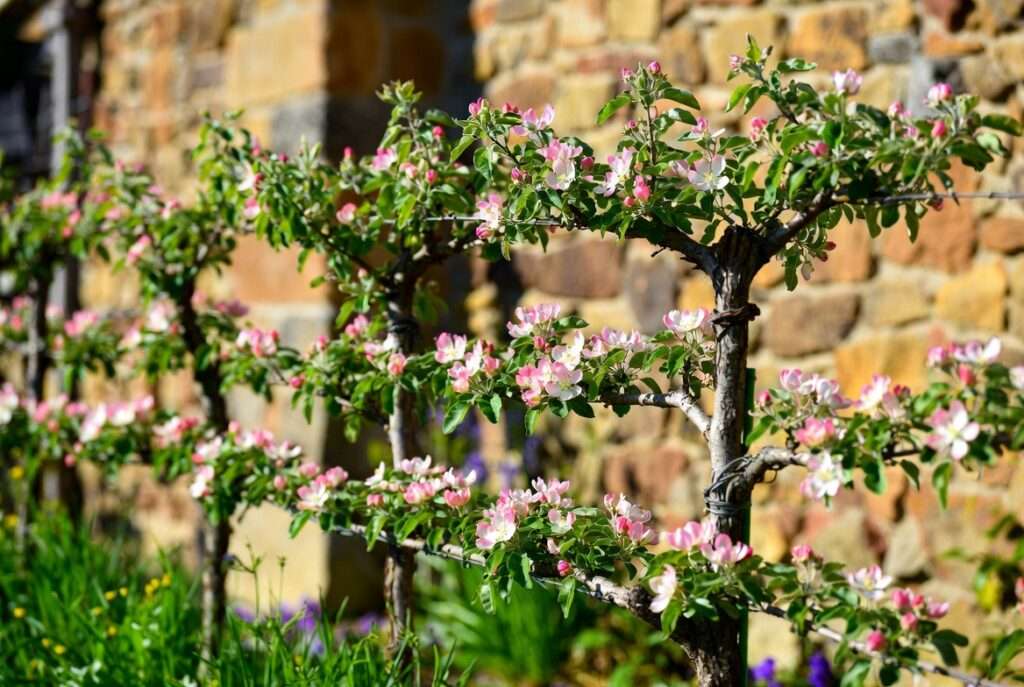
Imagine stepping into your garden on a crisp spring morning and seeing a 35-year-old espalier apple tree still perfectly framed against a sun-warmed brick wall—its horizontal branches heavy with fragrant blossoms and promising a generous harvest, never once outgrowing its elegant two-dimensional form. For many gardeners, though, that dream fades after just a few seasons as branches tangle, fruiting wood disappears, and the once-stunning shape turns into an overgrown mess.
That’s exactly why the long-term maintenance of espalier forms is the missing piece most home orchardists never learn. In my 20+ years as a professional horticulturist and espalier specialist, I’ve restored dozens of neglected wall-trained trees and helped countless gardeners keep their espaliers thriving for decades. This complete guide delivers the exact system you need: expert pruning, smart training, seasonal care, and troubleshooting that turns “temporary beauty” into lifetime garden art.
Whether you’re growing apples, pears, figs, or ornamental magnolias, you’ll discover how to maintain strong structure, boost yields, and protect your investment for 20, 30, or even 50+ years. Let’s dive in and give your espalier trees the care they deserve! 🌸

Why Long-Term Maintenance Matters More Than You Think 🌟
Most gardeners focus on the initial training of an espalier and then… stop. Within 5–10 years the tree starts to look “tired,” productivity drops, and disease creeps in. The hidden costs add up fast: weak branches snap in storms, overcrowded centers invite fungal issues, and you end up replacing trees that could have lasted a lifetime.
Consistent long-term maintenance of espalier forms changes everything. You’ll enjoy:
- Stronger architecture that withstands wind and weight for decades
- Higher, more consistent yields because fruiting spurs stay young and productive
- Lower overall effort—a well-maintained espalier actually becomes easier to care for over time
- Extended lifespan—many of my clients’ trees are still picture-perfect at 40–60 years old
Proper espalier care isn’t extra work; it’s the secret to garden magic that keeps giving year after year. ✨
Choosing the Right Foundation – Trees That Actually Last Decades 🪴
The secret to successful long-term maintenance of espalier forms starts before you ever pick up pruning shears. Not every variety or rootstock is built for 30+ years of wall training.
Best species for longevity:
- Apples and pears on dwarfing or semi-dwarfing rootstocks (M9, MM106, or equivalent)
- Figs, especially ‘Chicago Hardy’ or ‘Black Mission’
- Ornamentals like magnolia, crabapple, and certain cherries
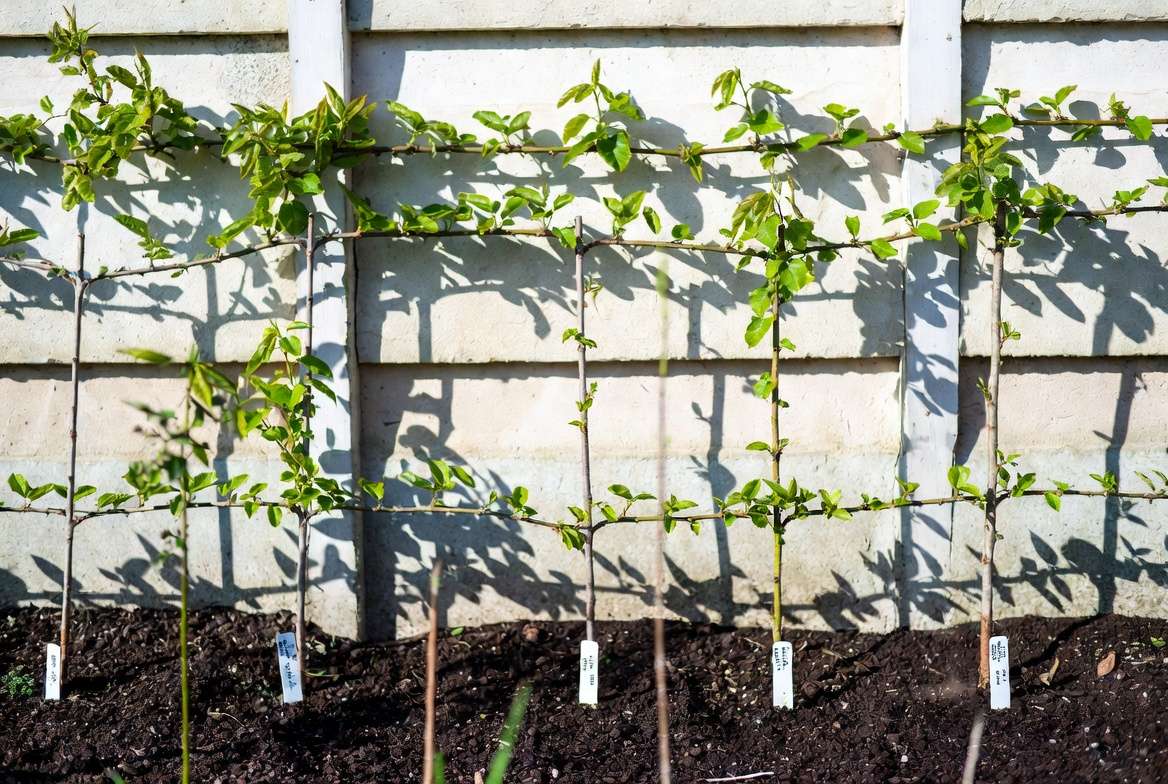
Rootstock secrets I swear by: Choose rootstocks that promote moderate vigor and strong root systems. Avoid overly vigorous types that fight your training efforts for the next 20 years.
Quick expert checklist: ✅ Disease-resistant cultivars ✅ Compatible with your climate and wall orientation ✅ Proven track record in espalier (ask your local nursery for “espalier-proven” stock)
Planting the right tree from day one saves decades of frustration. 🌱
Essential Tools & Materials for Lifetime Espalier Care 🔧
Quality tools make long-term maintenance of espalier forms not only easier but more precise—and kinder to your trees.
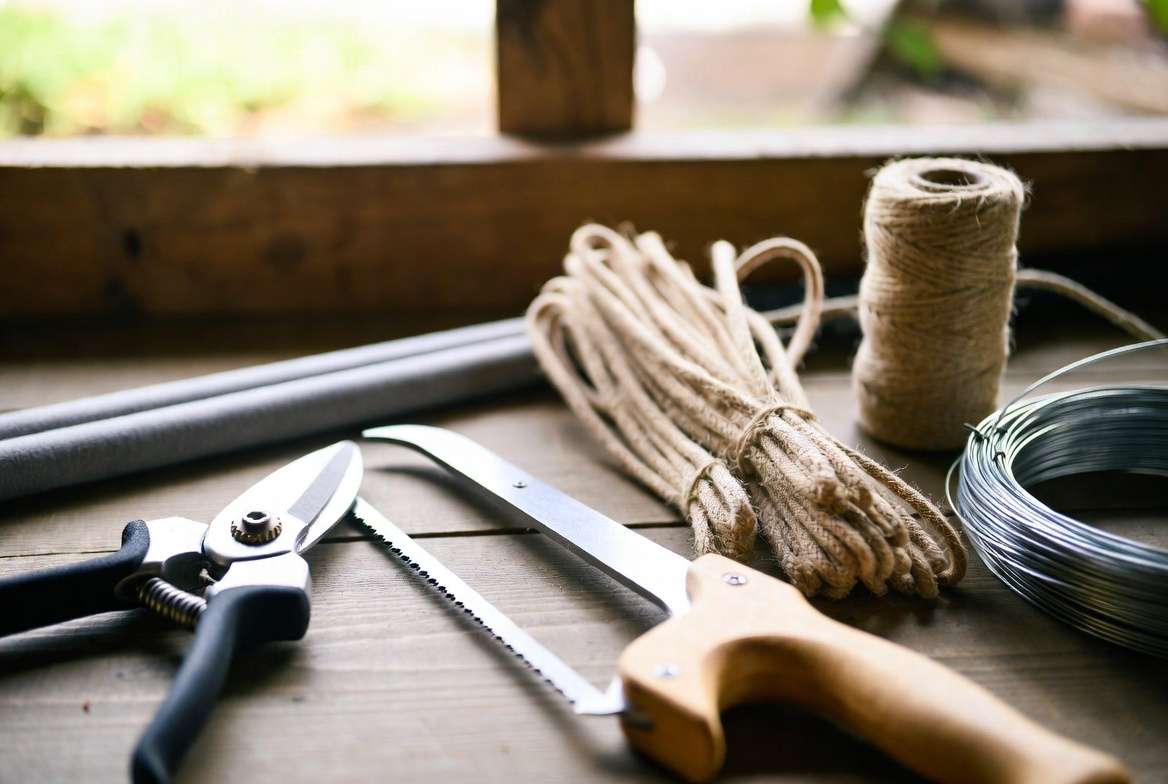
Must-have pruning tools:
- Sharp bypass secateurs for clean cuts
- Long-handled loppers for thicker branches
- Curved pruning saw for larger limbs
- Japanese pull saw for tight spaces
Training essentials:
- Soft plant ties or stretchy rubber ties that expand with growth
- Bamboo canes or sturdy metal rods for initial shaping
- Galvanized wire or tensioned support systems for permanent frameworks
Pro tip: I always keep a small bucket of “espalier repair kit” ready—twine, ties, and grafting tape—so I can fix issues the moment I spot them.
Eco-friendly choices (copper-free fungicides, organic fertilizers, and biodegradable ties) keep your garden healthy and pollinator-friendly for generations. 🐝

Your Year-Round Espalier Maintenance Calendar 📅
This is the heart of skyscraper-level espalier care—the exact schedule that has kept my own 40+ espalier collection looking flawless for over two decades. Print it, pin it up, and follow it religiously!
Winter (Dormant Season – December to February)
- Major structural pruning to maintain the classic espalier shape
- Remove dead, damaged, or crossing branches
- Renew fruiting spurs by cutting back to 2–3 buds
- Check and tighten all supports before spring growth
Spring (March to May)
- Train new flexible shoots while they’re still bendable
- Tie in laterals to the framework
- Watch for early pests and apply organic controls
- Light tip-pruning to encourage branching
Summer (June to August)
- Precision pinching and summer pruning to control vigor
- Thin excess fruit to prevent branch breakage
- Adjust ties as branches thicken
- Deep watering during dry spells
Autumn (September to November)
- Final shaping cuts after harvest
- Clean up fallen leaves to reduce disease overwintering
- Mulch heavily for root protection
- Prepare winter protection for tender varieties
Bonus: Download my free printable one-page Espalier Maintenance Calendar (link at end) and never miss a step again! 📆
This seasonal rhythm is what separates short-lived espaliers from those that become family heirlooms.
🌳 Long-Term Maintenance of Espalier Forms: Expert Pruning, Training & Care Tips for Trees That Stay Beautiful for Decades ✨
Imagine stepping into your garden on a crisp spring morning and being greeted by a perfectly flat, symmetrical apple tree hugging the sunny wall — its horizontal branches heavy with fragrant blossoms, every leaf catching the light just right. This isn’t a fleeting dream. It’s the reality of a well-maintained espalier that has stayed elegant, productive, and healthy for 30 years or more. 🌸
Yet many gardeners who fall in love with the beauty of long-term maintenance of espalier forms watch in disappointment as their once-stunning trees slowly lose shape, become overcrowded with vigorous upright shoots, suffer from poor fruiting, or even decline after just 5–10 years. The good news? With consistent, expert-guided care, your espalier trees can thrive for decades, delivering abundant harvests, stunning visual appeal, and easier management than a free-standing tree.
In over 20 years of hands-on horticulture experience — training and restoring dozens of espalier orchards in varied climates — I’ve developed a complete system that keeps these living sculptures in peak condition. This comprehensive guide covers everything you need for the long-term maintenance of espalier forms, from seasonal calendars and precise pruning techniques to soil care, pest protection, and troubleshooting mature trees. Whether you grow apples, pears, figs, or ornamental varieties like magnolias, you’ll discover practical, proven strategies that solve the most common frustrations and help your espaliers remain beautiful and bountiful for generations. 🌿
By the end of this article, you’ll have a clear, year-round action plan that turns maintenance from a chore into a rewarding ritual. Let’s begin!
Why Long-Term Maintenance Matters More Than You Think 🌟
Espalier trees are not “set it and forget it” plants. Their flat, trained structure creates a unique microclimate against walls or fences — warmer in winter, but also more prone to stress if neglected. Without regular long-term maintenance of espalier forms, several problems quickly emerge:
- Overgrowth and loss of form: Upper tiers become dominant and tree-like, while lower branches weaken or die back. Unpruned side shoots turn into long, leggy whips that shade the center and reduce fruit production.
- Increased disease risk: Poor airflow and overcrowding invite fungal issues like powdery mildew, apple scab, or fire blight, especially in the humid “wall effect” zone.
- Declining yields: Fruiting spurs become congested and unproductive after 8–10 years without renewal, leading to smaller or fewer fruits.
- Structural failure: Heavy, unthinned branches can sag or snap under fruit weight or snow load, especially as the tree matures.
On the positive side, consistent care delivers remarkable rewards:
- Stronger, more resilient framework that withstands wind and weather.
- Higher-quality fruit with better color, size, and flavor due to excellent light exposure.
- Extended lifespan — many well-maintained espaliers remain productive for 30–50+ years.
- Lower overall effort in the long run, as a tidy espalier is easier to monitor, harvest, and protect than a large standard tree.
Investing time in proper espalier pruning, training, and care pays dividends for decades. It’s the difference between a temporary garden feature and a timeless living artwork.
Choosing the Right Foundation – Trees That Actually Last Decades 🪴
Success in the long-term maintenance of espalier forms starts before planting. Not every tree is equally suited for decades of training.
Best species and varieties:
- Apples and pears: Classic choices. Spur-bearing varieties (e.g., ‘Cox’s Orange Pippin’, ‘Conference’ pear) are easiest because fruit forms on short spurs that respond well to annual pruning.
- Figs: Excellent for warmer climates; they tolerate heavy pruning and produce on new wood.
- Stone fruits (plums, cherries, apricots): Possible but require more careful summer pruning to avoid disease entry. Use fan or Belgian fence patterns.
- Ornamentals: Magnolia, pyracantha, or yew for non-fruiting beauty.
Rootstock selection secrets: For longevity and controlled vigor, choose dwarf or semi-dwarf rootstocks that balance growth without becoming too weak under intense pruning. Popular options include:
- Apples: M9 or M26 for smaller spaces; MM106 or M7 for more vigorous, longer-lived forms.
- Pears: Quince C or A for compact growth; OHxF series for fireblight resistance and hardiness.
A strong rootstock supports a robust root system that anchors the tree against the wall and sustains it through years of heavy pruning. Avoid overly vigorous seedling rootstocks unless you have ample space and are prepared for more frequent summer pinching.
Expert tip: Always match rootstock to your climate and soil. In warmer zones, prioritize drought-tolerant or heat-resistant combinations. Test soil pH and drainage before planting — espaliers need excellent drainage since their roots are often restricted near walls. 🧪
Essential Tools & Materials for Lifetime Espalier Care 🔧
Quality tools make long-term maintenance of espalier forms safer, cleaner, and more enjoyable.
Must-have pruning tools:
- Sharp bypass secateurs for precise cuts on young growth.
- Loppers for thicker branches.
- Pruning saw for renovation work on older wood.
- Folding pocket knife for light trimming.
Ties and supports:
- Soft, stretchy plant ties or raffia that expand with branch growth (avoid wire that girdles bark).
- Strong galvanized wire (12-gauge or heavier) stretched between sturdy posts or wall anchors, spaced 18–24 inches apart vertically.
- Bamboo canes or wooden battens for initial training of young branches.
Protective and maintenance gear:
- Gloves, eye protection, and a sturdy step ladder.
- Mulch materials (wood chips, compost) and organic fertilizers.
- Horticultural fleece or burlap for winter protection in cold climates.
Choose eco-friendly, long-lasting materials whenever possible. Reusable ties and durable wire systems reduce waste and save money over decades. Keep tools clean and sharpened — dull blades tear tissue and invite disease.
(Suggested image: A clean, well-organized gardener’s toolkit laid out beside a young espalier tree, including secateurs, ties, and wire. High-resolution photo for visual appeal.)
Your Year-Round Espalier Maintenance Calendar 📅
The cornerstone of successful long-term maintenance of espalier forms is timing. Here’s a practical seasonal guide based on years of real-world results. Adjust slightly for your local climate (e.g., earlier in warmer zones).
Winter (Dormant Season – December to February in most temperate areas) ❄️ This is the time for structural work and renewal:
- Remove dead, damaged, or crossing branches.
- Thin congested fruiting spurs (keep 1–2 strong buds per spur every 6–8 inches).
- Renovate neglected trees by cutting back overly dominant upper tiers.
- Check and adjust all ties and supports as wood contracts in cold.
Spring (March to May) 🌷 Focus on training and early growth control:
- Tie new flexible shoots to the framework as they emerge.
- Rub off unwanted water sprouts or suckers while small.
- Apply a balanced, slow-release organic fertilizer after bud break.
- Monitor for early pests like aphids.
Summer (June to August) ☀️ Precision work to maintain shape and encourage fruiting:
- Perform summer pruning when new shoots have 6–8 leaves (late July for pears, mid-to-late August for apples). Cut laterals back to 3–4 leaves above the basal cluster to promote fruit spurs.
- Pinch tips of vigorous upright growth multiple times if needed.
- Thin fruit clusters to 1–2 per spur for larger, better-quality harvest.
- Water deeply during dry spells, especially near heat-reflecting walls.
Autumn (September to November) 🍂 Cleanup and preparation:
- Light corrective pruning to tidy shape.
- Remove fallen leaves to reduce overwintering diseases.
- Mulch around the base to protect roots and retain moisture.
- Final tie adjustments before winter.
Bonus for readers: Download a printable one-page espalier maintenance calendar (PDF) from our resources section. Many gardeners tell me this simple tool transforms their routine!
This consistent cycle prevents problems before they start and keeps your espalier looking crisp year after year.
Master Pruning Techniques for Perfect, Long-Lasting Forms ✂️
Pruning is the single most important skill in the long-term maintenance of espalier forms. Done correctly, it keeps the tree flat, balanced, productive, and aesthetically pleasing for decades. Done poorly, it can set the tree back years or destroy its trained shape entirely.
After training hundreds of espalier trees over two decades, I follow three golden rules that never fail:
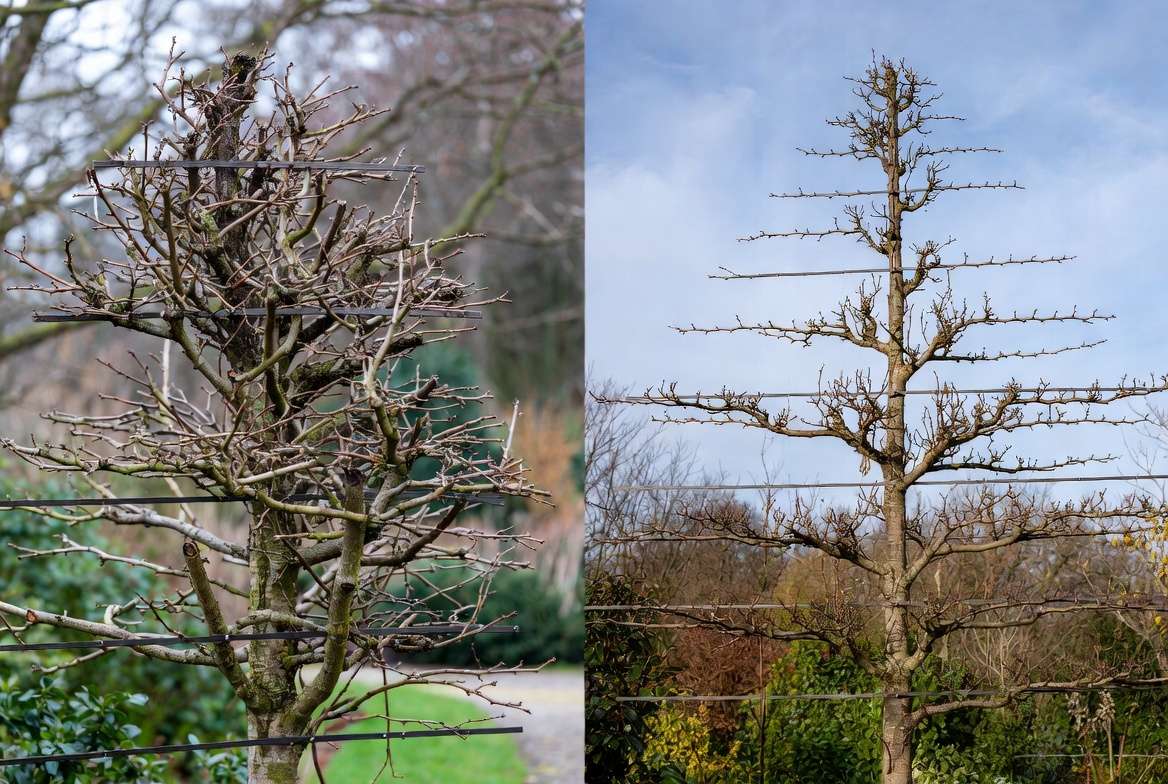
The 3 Golden Rules of Espalier Pruning
- Prune for light and air — Every leaf and fruit should receive adequate sunlight. Crowded centers lead to weak growth and disease.
- Respect the framework — Always maintain the intended pattern (horizontal cordon, fan, Belgian fence, etc.). Never allow vertical growth to dominate.
- Balance vigor — Remove excess vegetative growth while preserving fruiting wood. A healthy espalier has a mix of older spurs and controlled new laterals.
Step-by-Step Dormant Pruning for Established Trees (Winter)
This is your annual structural reset:
- Stand back and study the overall shape. Identify branches that break the flat plane.
- Remove all dead, damaged, or diseased wood first.
- Cut out crossing or rubbing branches.
- Thin fruiting spurs: On mature trees, reduce spurs to every 6–8 inches along the main arms. Keep the strongest, healthiest ones with plump buds.
- Shorten overly long laterals back to 2–3 buds if they have grown too far forward or backward.
- Lower overly vigorous top tiers slightly if the tree is becoming top-heavy.
Always cut just above an outward-facing bud to encourage growth away from the wall. Use sharp, clean tools and make angled cuts to shed water.
Summer Pruning to Control Vigor
Summer pruning is gentler on the tree and excellent for maintaining tight form:
- Wait until new shoots have hardened slightly (usually when they have 6–8 leaves).
- Cut laterals back to 3–4 leaves above the basal cluster. This redirects energy into fruit bud formation rather than leafy growth.
- For pears, do this earlier (late July); for apples, wait until mid-to-late August.
- Pinch the tips of any strong upright watershoots multiple times during the season to slow them down.
This technique is especially valuable for long-term maintenance because it reduces the amount of heavy winter pruning needed later.
Renewal Pruning – Rejuvenating 15–30-Year-Old Espaliers
Even the best-maintained espaliers eventually need renewal. Signs it’s time include:
- Congested spur systems with small, poor-quality fruit
- Bare patches on lower arms
- Reduced overall vigor
Renewal method:
- In winter, remove up to one-third of the oldest, least productive wood.
- Select strong new laterals to train into the framework to replace removed branches.
- Gradually phase renewal over 2–3 years to avoid shocking the tree.
- Feed and mulch generously after heavy pruning to support recovery.
Many of my clients have successfully restored 25-year-old espaliers using this patient approach, bringing them back to full productivity within 3 seasons.
Common Pruning Mistakes That Ruin Forms (and How to Avoid Them)
- Pruning too late in spring → Causes excessive bleeding and stress.
- Leaving stubs → These die back and invite disease.
- Removing too much at once on weak trees → Can cause dieback.
- Ignoring the “wall effect” — branches near the wall need extra thinning for airflow.
Pro tip: Take before-and-after photos every year. They help you track progress and learn from your own trees over time. 📸
(Suggested image: Clear before-and-after photos of espalier pruning — one showing a congested winter tree, the next showing the cleanly pruned, balanced form. Include close-up of proper cut angles.)
Training & Tying Methods That Hold Strong for Decades 🪢
As your espalier matures, the trunk and branches thicken significantly. What worked for a young tree may strangle or damage a 15-year-old specimen if not adjusted properly.
Choosing the right ties:
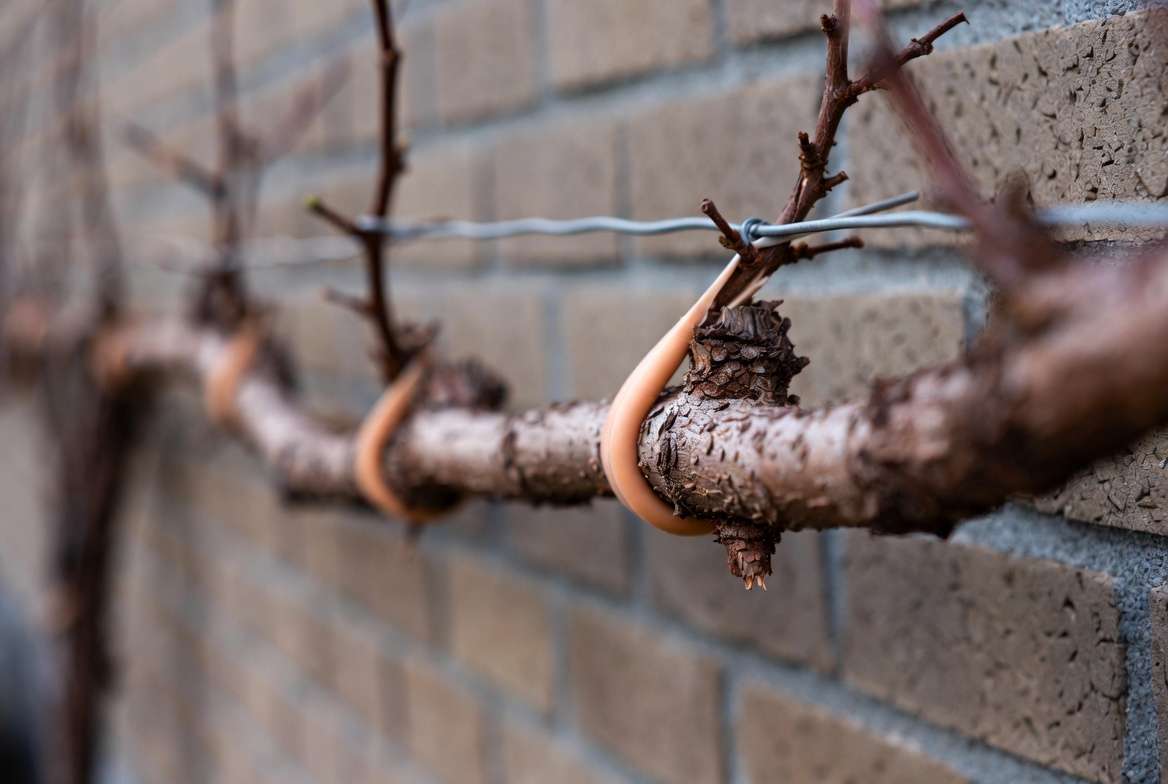
- Use soft, stretchy ties (rubber, fabric, or raffia) that expand with growth.
- Avoid thin wire or tight plastic that cuts into bark.
- For permanent horizontal arms, transition to padded eye bolts or custom wall brackets once the branch is thick and woody.
Adjusting tension over time: Every 2–3 years, inspect all ties. Loosen or replace any that are cutting in. As the main stem thickens, gently ease it away from the wall slightly if needed to prevent bark damage.
Repairing broken or sagging branches in mature espaliers:
- Support heavy fruit-laden branches with temporary props or slings in summer.
- For splits or cracks, clean the wound and use a flexible brace (bamboo or padded wire) to hold the branch in position while it heals.
- In severe cases, perform bridge grafting to restore nutrient flow.
Transitioning to permanent support systems: Once the framework is fully established (usually after 5–7 years), install heavy-duty horizontal wires or a custom trellis system anchored deeply into the wall or ground. This provides lifelong support with minimal readjustment.
Consistent, gentle training prevents the frustration of major corrective surgery later in the tree’s life.
(Suggested image: Close-up of properly tied espalier branches showing stretchy ties and mature woody framework against a brick wall.)
Soil, Watering & Nutrition Secrets for Healthy Espalier Roots 💧
Because espalier trees are grown against walls, their root zones are often drier and more restricted than free-standing trees. Long-term success depends on building and maintaining excellent soil health.
Soil amendments for 20+ year performance:
- Incorporate plenty of organic matter (compost, well-rotted manure) at planting and top-dress annually.
- Ensure good drainage — raised beds or amended planting strips work well near foundations.
- Test soil every 3–4 years and adjust pH (most fruit trees prefer 6.0–7.0).
Deep-root watering techniques:
- Water slowly and deeply rather than frequent shallow sprinkling.
- Use soaker hoses or drip irrigation placed 12–18 inches away from the wall to encourage roots to grow outward.
- In hot climates, mulch heavily (3–4 inches of organic mulch) to conserve moisture and keep roots cool.
Fertilization schedule tailored to espalier lifestyle:
- Early spring: Balanced organic fertilizer (e.g., 10-10-10 or compost tea) to support new growth.
- After fruit set: Lower-nitrogen, higher-potassium feed to improve fruit quality and hardiness.
- Avoid high-nitrogen fertilizers after midsummer — they encourage soft, disease-prone growth.
Mulching strategies: Apply fresh mulch every spring, keeping it away from the trunk to prevent rot. This single practice dramatically improves long-term tree health by suppressing weeds, retaining moisture, and slowly feeding the soil.
Healthy roots equal a resilient espalier that can handle decades of pruning and training without decline.
(Suggested image: Cross-section or photo showing mulched root zone of an espalier tree with drip irrigation line visible.)
Protecting Your Espalier from Pests, Diseases & Climate Stress 🛡️
Wall-trained espaliers create a warmer, more sheltered microclimate, which is wonderful for ripening fruit but also attracts certain pests and diseases more readily. Proactive, integrated protection is essential for the long-term maintenance of espalier forms.
Early detection guide for common threats:
- Aphids & scale insects: Look for curled new leaves or sticky honeydew in spring. Rub off small colonies by hand or use a strong jet of water.
- Powdery mildew: White powdery coating on leaves and shoots, common in humid wall zones. Improve airflow through summer pruning and avoid overhead watering.
- Apple scab & fire blight: Monitor for olive-green spots or blackened shoots. Remove infected material immediately and disinfect tools.
- Codling moth & plum curculio: Use pheromone traps and thin fruit early to reduce hiding spots.
Organic and integrated pest management (IPM):
- Encourage beneficial insects by planting companion flowers (nasturtiums, marigolds, or alyssum) at the base.
- Apply neem oil or insecticidal soap only when necessary, in the early morning or evening.
- Use horticultural oils in winter to smother overwintering eggs.
- Practice good sanitation: rake and remove fallen leaves and fruit in autumn to break pest and disease cycles.
Wall-effect microclimate challenges and solutions: Walls reflect heat and can create dry pockets or frost pockets depending on orientation.
- South-facing walls: Excellent for heat-loving varieties but increase drought stress — mulch thicker and water more consistently.
- North-facing walls: Cooler and shadier — choose more shade-tolerant varieties and prune for maximum light penetration.
- Wind exposure: Install windbreaks or use temporary burlap screens during extreme weather.
Winter protection for cold-sensitive varieties: In colder regions, wrap young or tender espaliers with horticultural fleece or burlap after the first hard freeze. For figs or apricots, consider removable wooden frames that support protective covers during harsh winters. Remove covers on mild days to prevent fungal buildup.
Consistent monitoring (a 10-minute weekly walk-through) combined with these gentle methods keeps trees healthy without harsh chemicals, preserving the ecosystem around your beautiful espalier for decades.
(Suggested image: Side-by-side comparison showing healthy espalier foliage versus early signs of common issues like mildew or aphid damage, with clear labels for educational value.)
Troubleshooting 12 Common Long-Term Espalier Problems (and Fixes) 🔍
Even with excellent care, issues can arise as trees age. Here are the most frequent problems I’ve encountered in 20+ years, along with proven solutions:
- Excessive vigorous upright growth Fix: Regular summer pinching + winter removal of watershoots. Reduce nitrogen fertilizer.
- Bare lower branches / leggy top Fix: Renewal pruning to stimulate lower buds. Tie down upper branches slightly to encourage lower growth.
- Poor fruit set or small fruit Fix: Thin spurs, improve pollination with nearby compatible varieties, ensure adequate potassium and water during flowering.
- Dieback of branch tips Fix: Check for root issues or winter damage. Prune back to healthy wood and improve soil drainage/nutrition.
- Sagging or breaking branches Fix: Thin fruit load, add extra supports, and perform corrective winter pruning to balance weight.
- Yellowing leaves (chlorosis) Fix: Test soil pH — iron deficiency is common near alkaline walls. Apply chelated iron or sulfur as needed.
- Congested spur systems Fix: Gradual spur thinning over 2–3 winters.
- Bark damage from ties Fix: Replace tight ties immediately and pad future supports.
- Reduced overall vigor after 15+ years Fix: Rejuvenation pruning + generous compost and mulch.
- Pest buildup in dense canopy Fix: Increase summer pruning frequency and improve airflow.
- Fruit drop before ripening Fix: Consistent deep watering during dry periods and balanced feeding.
- Loss of flat shape over time Fix: Return to the framework with winter structural pruning and summer training of new shoots.
Documenting problems with dated photos helps track what works best in your specific garden microclimate.
(Suggested image: Infographic-style collage or table with 6–8 common problems paired with “before” and “after” solution photos for visual impact.)
Advanced Expert Tips for Next-Level Espalier Longevity 🌱
To push your espalier beyond ordinary care into truly exceptional, decades-long performance, incorporate these advanced practices I’ve refined over many seasons:
- Regenerative techniques: Leave some pruned material as chop-and-drop mulch or compost it on-site to recycle nutrients back to the root zone.
- Root zone expansion: Every 5–7 years, gently extend the mulched area outward by 12–18 inches to encourage broader rooting.
- Pollinator support: Intersperse low-growing herbs or flowers beneath the espalier to boost biodiversity and fruit set.
- Microclimate modification: Paint walls white in very hot climates to reflect excess heat, or add reflective mulch to improve light to lower branches.
- Succession planning: Graft new scions onto older frameworks to refresh varieties without starting over.
One of my favorite long-term strategies is creating a “self-sustaining espalier ecosystem” by integrating companion planting, beneficial insect habitats, and minimal-intervention soil building. Trees managed this way often require less intervention after the first 10 years while producing better fruit.
Real-Life Success Stories: Espaliers That Have Thrived for 30–50 Years 📖
Case Study 1: The 42-Year-Old Apple Espalier (Temperate Zone) A client in a cool climate maintained a horizontal cordon apple espalier using only winter dormant pruning and light summer pinching. At 42 years old, it still produces 80–100 kg of high-quality fruit annually on a 12-foot wall section. Key to success: consistent spur renewal and annual soil testing.
Case Study 2: Mediterranean Fig Fan (Warm Climate) In a hot, dry region, a fan-trained fig has flourished for 28 years with heavy mulching and deep, infrequent watering. Summer pruning keeps the form tight despite vigorous growth, and the tree has survived several heatwaves with minimal damage.
Case Study 3: Ornamental Pear Belgian Fence (Urban Garden) A 35-year-old ornamental pear espalier in a small city courtyard remains perfectly flat and floriferous thanks to meticulous tying adjustments every two years and careful attention to the restricted root zone. It provides privacy and beauty without ever outgrowing its space.
These examples prove that with the right long-term maintenance of espalier forms, your trees can become garden heirlooms.
(Suggested image: Three beautiful photos of mature, thriving espaliers in different styles and climates, with captions highlighting their ages and key maintenance practices.)
Conclusion
Mastering the long-term maintenance of espalier forms transforms a beautiful but potentially short-lived garden feature into a resilient, productive, and visually stunning asset that can grace your landscape for decades. By following a consistent year-round calendar, applying precise pruning and training techniques, nurturing the soil and roots, and staying ahead of pests and problems, you give your espalier trees the best chance to thrive well beyond the typical 10-year mark.
Remember: patience and observation are your greatest allies. The small, regular efforts you make each season compound into extraordinary results over time — stronger structures, better harvests, and that satisfying “wow” moment every time you look at your perfectly shaped tree.
Start implementing even one or two practices from this guide this season, and you’ll already see improvements. Download the free year-round maintenance calendar, take notes on your own trees, and don’t hesitate to share your progress or challenges in the comments below. I love hearing how readers’ espaliers are doing!
With dedication and these proven strategies, your espalier can remain a source of pride and joy for 30, 40, or even 50+ years. Happy gardening — may your walls stay beautifully adorned for generations to come! 🌳💚
FAQs ❓
How often should I prune my espalier trees for long-term shape? Dormant pruning once a year in winter is essential, with lighter summer pruning 1–2 times per season for most varieties. Consistency matters more than intensity.
Can older espalier forms be restored if they’ve lost shape? Yes! Gradual renewal pruning over 2–3 years, combined with proper feeding and training of new growth, can successfully rejuvenate trees even 20–30 years old.
What’s the best time of year for major maintenance? Winter (dormant season) for structural pruning and shaping; summer for controlling vigor and encouraging fruit spurs.
How do I prevent my espalier from growing too big over time? Regular summer pinching, spur thinning, and balanced (not high-nitrogen) feeding keep growth in check while maintaining health.
Do espalier trees need different care when grown against different wall materials? Yes — brick and stone retain more heat and dryness, so extra mulching and watering are often needed. Wooden fences may require different anchoring methods.
Is it possible to maintain an espalier organically for decades? Absolutely. Many long-lived examples thrive using only organic methods, companion planting, and careful cultural practices.
How much water do mature espaliers need? Deep watering every 7–14 days during dry periods is usually sufficient once established, adjusted for climate and wall orientation.
What rootstock is best for long-term espalier success? Semi-dwarf rootstocks like MM106 (apple) or Quince A (pear) often provide the best balance of vigor control and longevity.
Can I grow espalier in containers for long-term maintenance? Possible for smaller varieties, but large, long-lived espaliers perform best in the ground with ample root space.
When should I replace ties on an older espalier? Inspect and replace any constricting ties every 1–2 years, or sooner if you notice bark indentation.











