
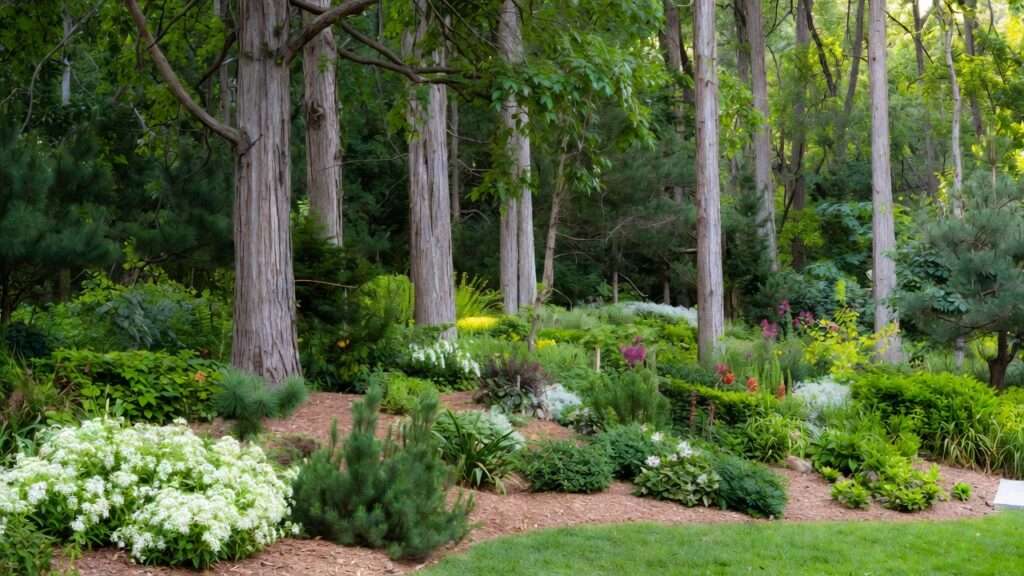
Picture this: Your backyard, once a weekly chore demanding gas-powered mowers, endless watering, and chemical fertilizers, now buzzing with birds, butterflies, and beneficial insects. It looks lush and inviting, yet it quietly works as a powerful ally against climate change—sequestering more carbon than it emits while slashing your maintenance time and bills. Sounds like a dream? It’s entirely achievable with the right low carbon footprint landscaping tips focused on smart plant and tree choices! 🌱✨
Traditional lawns and high-maintenance landscapes contribute surprisingly to greenhouse gas emissions. A single gas lawn mower can emit around 80–100 pounds of CO₂ per year (plus other pollutants equivalent to driving thousands of miles), while synthetic fertilizers and over-watering add even more. On the flip side, strategic planting of trees and native plants turns your yard into a carbon sink: a mature tree can sequester up to 48 pounds of CO₂ annually, and native prairies or deep-rooted perennials store tons in the soil over time.
As experts in plant care and tree care, we’ve helped countless homeowners create resilient, beautiful spaces that support biodiversity, conserve resources, and actively combat climate change. This in-depth guide shares proven, actionable low carbon footprint landscaping tips centered on plants and trees—drawing from university extensions, ecological research, and real-world results. Whether you’re starting fresh or upgrading an existing yard, these strategies deliver genuine value: lower emissions, healthier ecosystems, and a stunning outdoor retreat. Let’s turn your landscape into a climate-positive haven! 🌳💚
Why Your Yard’s Carbon Footprint Matters
Your outdoor space isn’t just for relaxation—it’s part of the global carbon equation. Everyday landscaping practices like frequent mowing with gas tools, applying synthetic fertilizers, and maintaining large turf areas release significant CO₂ and other greenhouse gases. For context, gas-powered lawn equipment across the U.S. emits tens of millions of tons of CO₂ yearly—more than some major cities!
But yards can flip the script. Plants absorb CO₂ through photosynthesis, storing carbon in biomass (stems, leaves, wood) and roots. Trees excel here: long-lived species lock carbon away for decades or centuries. Native perennials and grasses build deep root systems that deposit carbon into the soil, where it can remain stable for years—sometimes sequestering 1 ton or more per acre annually in prairie-like settings, far outpacing typical lawns.
University of Maryland Extension and similar sources emphasize that sustainable practices reduce emissions while boosting sequestration, improving air quality, supporting pollinators, and enhancing resilience to droughts and floods. Bonus perks? These changes often cut water use by 50%+, minimize chemical runoff, and increase property appeal. By focusing on plant and tree care, you’re not just greening your yard—you’re contributing to a healthier planet. 🌍🌸
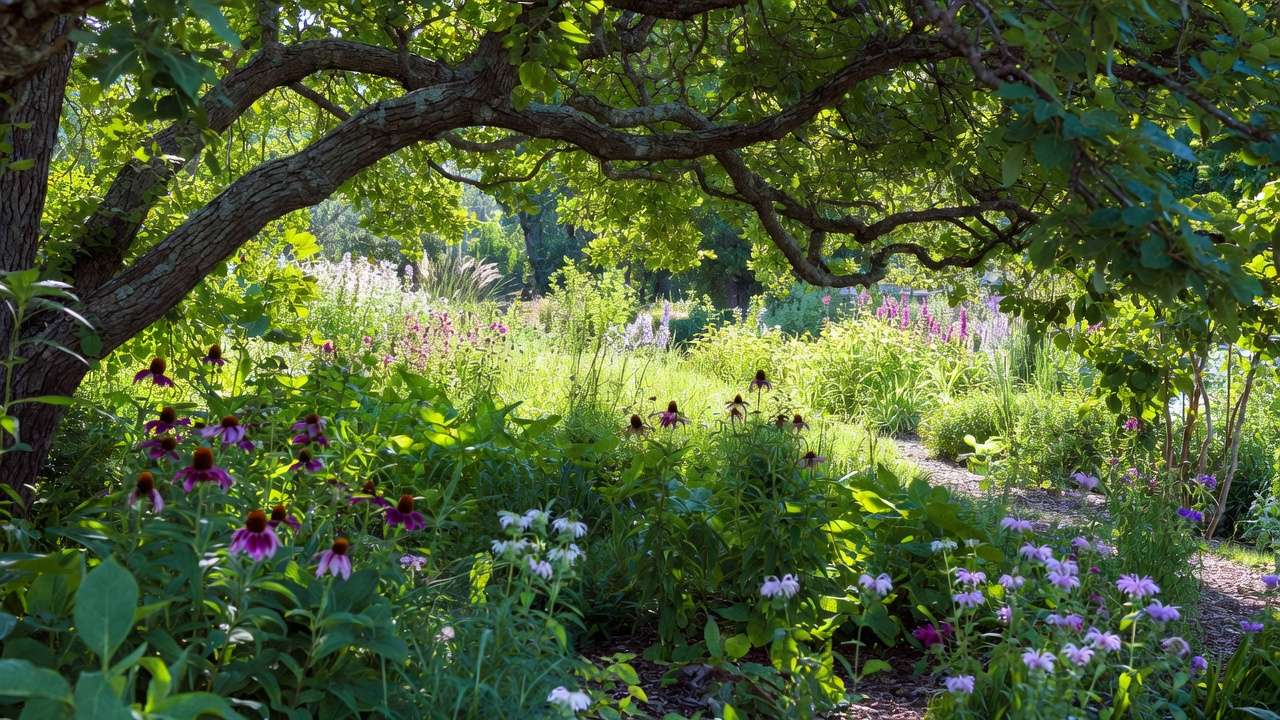
Understanding Low Carbon Landscaping: Emissions vs. Sequestration
To create a truly eco-friendly yard, balance the scales: minimize emissions while maximizing sequestration.
Emissions sources include:
- Gas-powered tools (mowers, blowers, trimmers) — one hour of mowing can produce as much pollution as a car driven hundreds of miles.
- Synthetic fertilizers — production and application release nitrous oxide (a potent greenhouse gas).
- Over-watering and bare soil — leads to erosion and lost carbon.
- Excessive hardscaping (concrete patios) — high embodied carbon from manufacturing.
Sequestration heroes shine through:
- Trees: Store carbon in dense wood and large canopies; strategic placement shades homes, cutting energy use for cooling/heating by up to 25–30%.
- Native plants and perennials: Deep roots (often 10+ feet) transfer carbon underground, building soil organic matter.
- Healthy soil: Acts as a massive sink—practices like mulching and composting lock carbon long-term.
The goal? Design a “carbon-positive” landscape that sequesters more than it emits. Tools like the Climate Positive Design Pathfinder help estimate your yard’s impact—input site details for personalized years-to-carbon-neutral projections. Start small: calculate your current footprint, then apply these low carbon footprint landscaping tips to watch the numbers improve! ⚖️🔍
Top Low Carbon Footprint Landscaping Tips: Core Strategies
1. Prioritize Native Plants – The Ultimate Low-Effort Carbon Champions 🌼
Native plants are adapted to your local climate, soil, and pests—meaning they thrive with minimal inputs like water, fertilizer, or pesticides, slashing emissions dramatically.
Research from sources like the University of Minnesota shows one acre of prairie planting can store about 1 ton of carbon yearly in roots and soil—far surpassing turfgrass. Native perennials outperform lawns because their deep roots (sometimes 5–15 feet) deposit carbon deep underground, where it’s protected from quick decomposition.
Benefits recap:
- Require 50–75% less water and maintenance.
- Support pollinators and wildlife (boosting biodiversity).
- Build soil health naturally.
How to start: Assess your site (sun exposure, soil type, moisture). Remove invasives gradually (sheet mulching works wonders—no digging needed!). Aim for 70%+ natives, as recommended by University of Maryland Extension. Examples: Milkweed, coneflowers, black-eyed Susans, and native grasses like little bluestem. Plant in clusters for impact and easier care. Your yard becomes a low-carbon powerhouse almost effortlessly! 🐝
2. Plant Trees Strategically for Maximum Carbon Sequestration 🌳
Trees are the MVPs of carbon storage—nothing sequesters more per plant! A mature tree absorbs ~48 lbs of CO₂ yearly, and over its lifetime (50–100+ years), that adds up massively.
Best choices: Focus on natives with dense wood and large canopies for long-term storage. Top performers include:
- Oaks (white, red, bur) — excellent long-term sinks.
- Maples (sugar, red) — fast growth + broad shade.
- Tulip poplar (yellow poplar) — one of the fastest carbon capturers in many studies.
- Other regionals: Douglas fir or pines in cooler areas; live oaks in warmer zones.
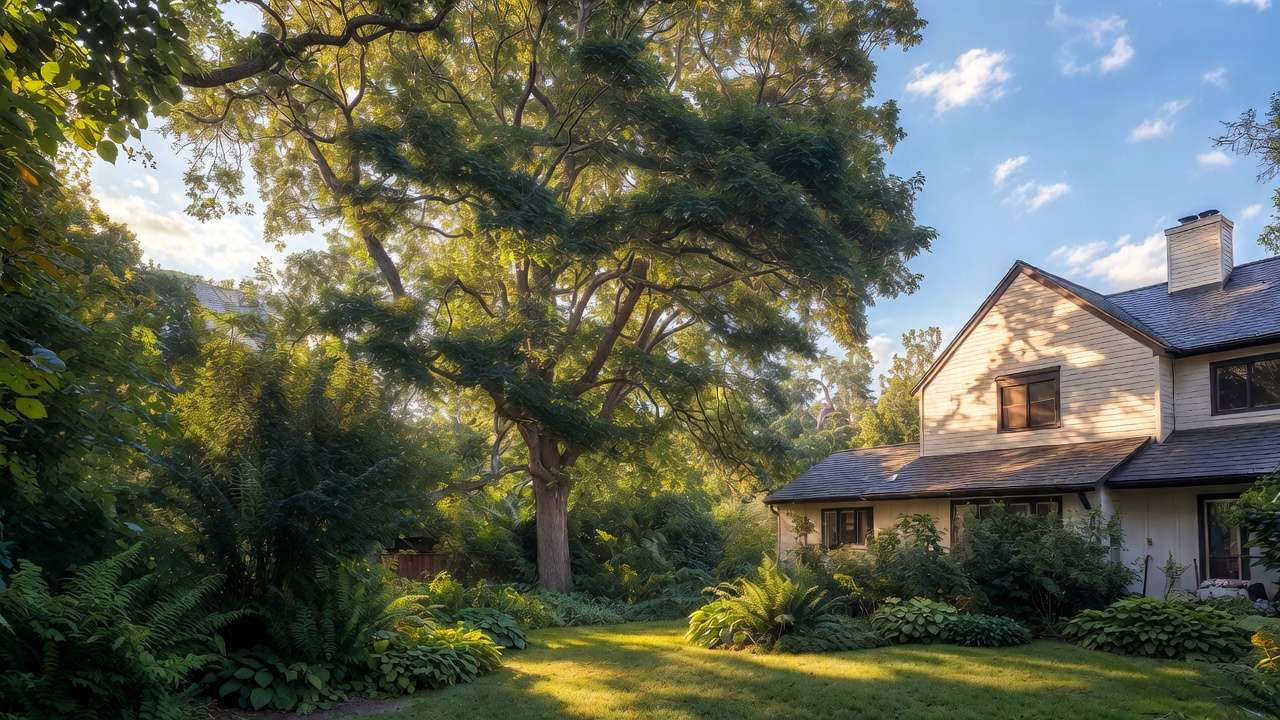
Placement tips:
- Shade south/west sides of your home to reduce AC needs (energy savings = indirect CO₂ cuts).
- Plant windbreaks to block winter winds.
- Use in rain gardens to manage stormwater and prevent erosion.
Planting & care guide: Dig wide holes, amend with compost (not fertilizer), mulch generously, and water deeply but infrequently first year. Proper tree care ensures they thrive and maximize sequestration for decades. Plant one this season—you’ll see (and feel) the difference! 🌲💪
3. Reduce or Replace Lawns with Low-Maintenance Alternatives 🌿
Traditional turf lawns are among the highest-emission landscape features. They require frequent mowing (often with gas equipment), heavy irrigation, and regular fertilization—leading to substantial CO₂ output and minimal carbon storage due to shallow roots and constant disturbance.
By shrinking or replacing portions of lawn, you can achieve dramatic reductions in emissions while creating more attractive, biodiverse spaces. Studies from the EPA and various university extensions show that converting even 25–50% of lawn to native groundcovers or meadows can cut maintenance-related emissions by 40–70%.
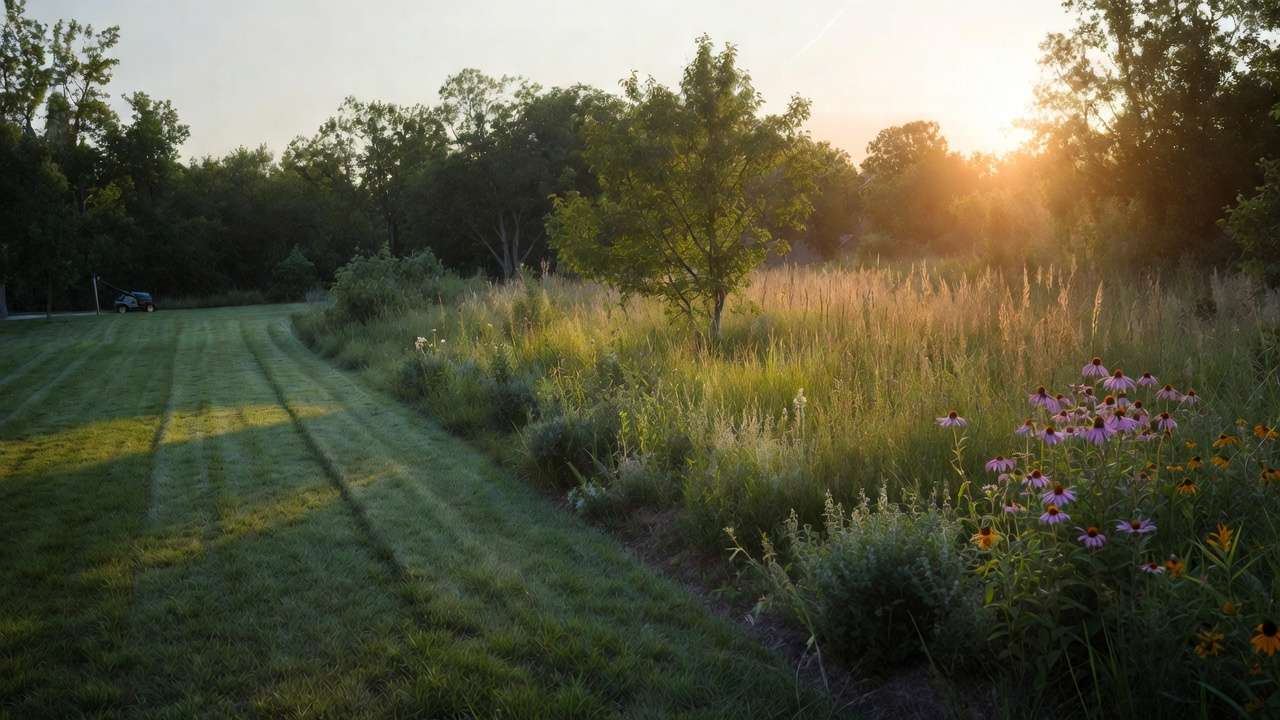
Popular low-carbon lawn alternatives:
- Native meadow mixes — tall grasses and wildflowers that need mowing only 1–2 times per year.
- Clover lawns — nitrogen-fixing, drought-tolerant, and bee-friendly; stays green with minimal water.
- No-mow fescues or buffalo grass — slow-growing natives that thrive on neglect.
- Groundcover beds — creeping phlox, sedum, wild ginger, or low-growing natives that suppress weeds naturally.
- Mulched woodland edges — leaf litter and wood chips under trees create a forest-floor look with zero mowing.
Step-by-step conversion process:
- Map out areas to convert (start with high-traffic or sunny trouble spots).
- Smother existing grass using cardboard or newspaper layers + 4–6 inches of mulch/compost (sheet mulching—no tilling, preserves soil carbon).
- Plant plugs, seeds, or small plants in fall or early spring for best establishment.
- Water consistently the first season, then taper off as roots deepen.
Real example: A ¼-acre suburban yard reduced mowing from weekly to twice yearly after converting 60% to native meadow and clover patches—saving ~150 lbs of CO₂ emissions annually while increasing pollinator sightings tenfold. Your yard can look intentional and polished, not “wild and messy.” 🌼🐝
4. Build Healthy Soil to Lock Away Carbon Long-Term 🪴
Soil is one of the planet’s largest carbon reservoirs—healthy, living soil can store enormous amounts of carbon for decades or centuries when undisturbed. Disturbed or compacted soil (common in traditional lawns) releases stored carbon and sequesters very little.
Key soil-building practices for carbon sequestration:
- No-till gardening — avoid digging or tilling to preserve fungal networks and root structures that store carbon.
- Mulching generously — use shredded leaves, wood chips, or straw (2–4 inches deep) to feed soil microbes, retain moisture, and suppress weeds. As mulch breaks down, it adds stable organic matter.
- Compost everything — turn yard waste (leaves, grass clippings, prunings) into black gold instead of sending it to landfills where it produces methane. Home composting sequesters carbon while improving plant health.
- Cover crops & living mulches — plant winter rye, clover, or buckwheat in bare spots to prevent erosion and add biomass below ground.
- Avoid synthetic fertilizers — they disrupt soil biology; use slow-release organic options or rely on compost and nitrogen-fixing plants instead.
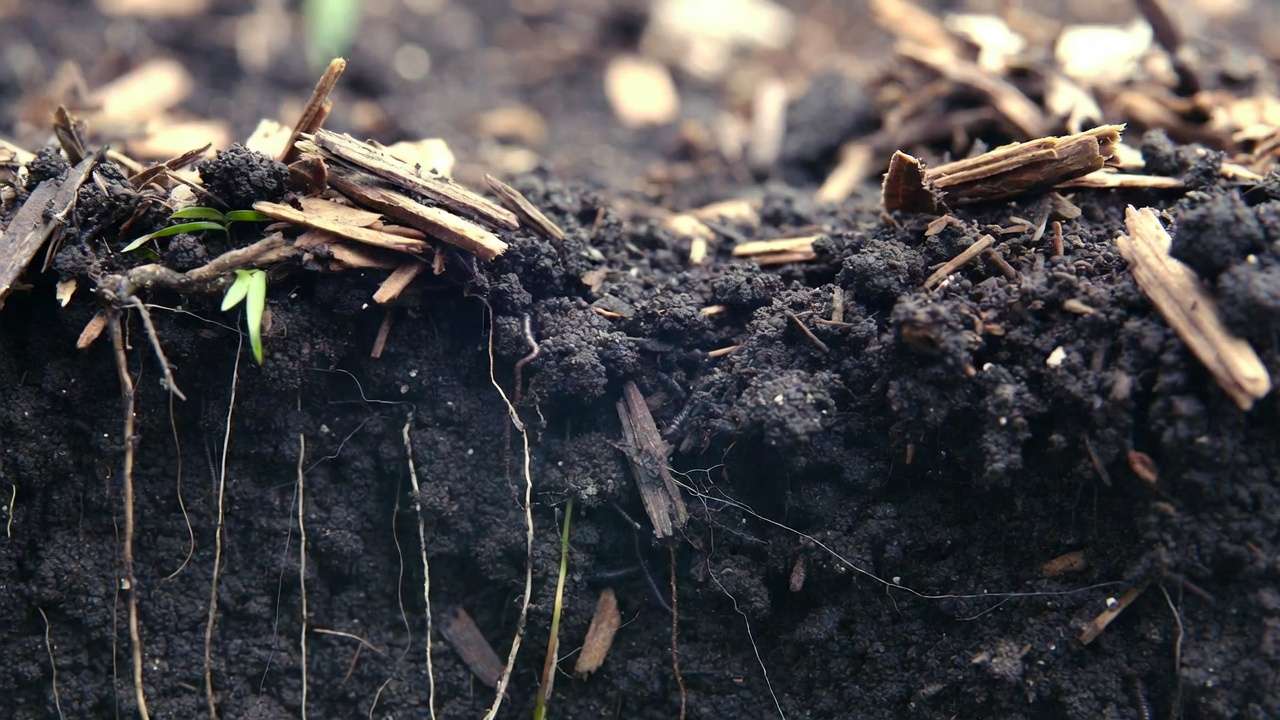
Pro tip: Test your soil every 2–3 years (simple home kits or local extension services) and aim to increase organic matter by 1%—this alone can sequester several tons of CO₂ per acre over time. Healthy soil means healthier plants, fewer inputs, and a dramatically lower carbon footprint. 🌱🧑🌾
5. Switch to Low-Emission Maintenance Tools & Practices 🔧
Even the greenest plant choices need occasional care—make those tasks low-carbon too!
High-impact swaps:
- Replace gas mowers with battery-electric or manual reel mowers (zero emissions at point of use). Modern battery models handle medium yards easily and are quieter.
- Use hand tools (pruners, loppers, rakes) instead of blowers—leaf blowers are among the worst offenders for emissions and noise.
- Mow less frequently and higher (3–4 inches) — taller grass shades soil, retains moisture, and needs less frequent cutting.
- Install rain barrels or cisterns + drip/soaker hose irrigation to capture free rainwater and deliver it efficiently.
- Xeriscape principles — group plants by water needs (“hydrozoning”) to eliminate wasteful overhead sprinklers.
These small habit changes compound: switching to electric tools alone can cut landscape emissions by 30–50% for the average homeowner. Combine with smart plant choices and the impact multiplies beautifully. ⚡🌧️
6. Incorporate Perennials, Shrubs & Groundcovers for Year-Round Benefits 🌸
Annuals require replanting every year (more disturbance, more emissions). Perennials, shrubs, and woody plants provide lasting structure and superior carbon storage.
Standout choices:
- Deep-rooted perennials (e.g., blazing star, Joe-Pye weed, switchgrass) — excellent soil carbon builders.
- Nitrogen-fixing shrubs (e.g., New Jersey tea, bayberry, alder) — naturally fertilize surrounding plants.
- Evergreen shrubs and small trees for winter interest and year-round sequestration.
- Pollinator superstars — combine beauty with function (e.g., bee balm + goldenrod + asters for late-season nectar).
Layer plants vertically: tall perennials in back, medium shrubs in middle, low groundcovers in front. This creates dense, low-maintenance beds that outcompete weeds and maximize photosynthesis (and carbon capture) throughout the seasons. Your yard becomes a living, breathing ecosystem that gives back more than it takes. 🌺🦋
Real-Life Examples & Case Studies
Seeing is believing! Here are a few inspiring transformations that show how these low carbon footprint landscaping tips play out in real yards—complete with estimated environmental wins.
Example 1: Suburban Backyard Makeover (Maryland, USA) A family replaced 70% of their 0.3-acre lawn with native meadow plantings (little bluestem, switchgrass, coneflowers, bee balm) plus three strategically placed red oaks and two serviceberry shrubs.
- Before: Weekly gas mowing + sprinkler irrigation + synthetic fertilizer = ~220 lbs CO₂ emissions/year.
- After: Mowing reduced to once per year, no irrigation after year one, no synthetic inputs.
- Result: ~180 lbs CO₂ emissions avoided annually + sequestration from trees (~120 lbs/year) and soil carbon buildup (~0.4 tons/year estimated from prairie conversion studies). Net positive impact within 3 years.
- Bonus: Butterfly and bird populations exploded; water bill dropped 60%. The yard now feels like a peaceful wildlife sanctuary rather than a chore zone. 📸🌾
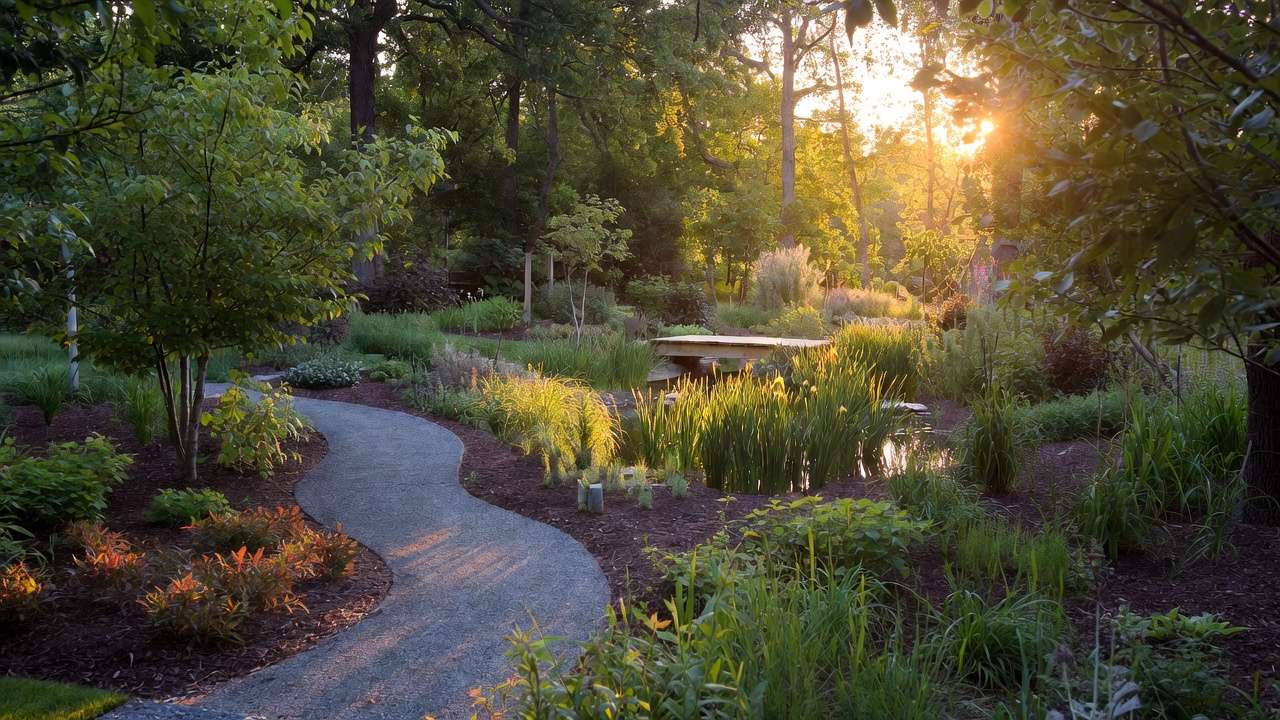
Example 2: Small Urban Front Yard (Pacific Northwest) A city homeowner converted a tiny 800 sq ft front lawn into layered native beds: vine maple tree for shade, salal and Oregon grape as understory shrubs, sword ferns and bleeding heart perennials, plus a rain garden with sedges.
- Carbon win: Eliminated gas mower use entirely + tree sequestration (~40 lbs/year) + deep-root perennials building soil carbon.
- Practical perks: No more weekly upkeep; stormwater runoff reduced by ~80% during rainy seasons.
- Visual appeal: Year-round texture and color—evergreens in winter, blooms in spring/summer. Neighbors now ask for plant lists! 🏡🌳
Example 3: Drought-Prone Backyard (Southwest-inspired adaptation) In a hotter, drier climate, a homeowner planted drought-tolerant natives (e.g., black-eyed Susan, yarrow, buffalo grass patches) around a central honey locust tree, mulched heavily with wood chips, and installed drip irrigation fed by rain barrels.
- Impact: Water use cut by 75%, no gas tools needed after initial establishment, tree + perennials sequestering carbon while shading the house (lower AC bills). These real-world results prove that smart plant and tree choices deliver beauty, function, and measurable climate benefits—no matter your yard size or region. 🌍💚
Common Mistakes to Avoid & Pro Tips from Experts
Even well-intentioned eco-landscapers can stumble. Here are pitfalls to dodge:
- Mistake #1: Planting non-native ornamentals that require heavy care → they become emission sources instead of sinks. Fix: Always check your region’s native plant list first (e.g., via Lady Bird Johnson Wildflower Center or local extension services).
- Mistake #2: Over-clearing or tilling soil → releases stored carbon and disrupts microbial life. Fix: Use sheet mulching or no-dig methods to preserve soil structure.
- Mistake #3: Planting trees too close to structures or power lines → leads to removal later and lost sequestration. Fix: Follow mature-size spacing guidelines (most trees need 15–30 ft from foundations).
Expert insights (paraphrased from arborists, ecologists, and extension specialists):
- “Focus on woody plants and deep-rooted natives—they provide the biggest long-term carbon bang for your buck.” — Tree care professional
- “Layering plants vertically (canopy → understory → groundcover) maximizes photosynthesis and habitat while minimizing bare soil.” — Native plant landscaper
- “Start with just one corner of your yard. Small wins build momentum and confidence.” — Sustainable gardening educator
Avoid these traps and lean on these pro tips—you’ll set yourself up for lasting success. 🚀🌱
Step-by-Step Implementation Plan
Ready to get started? Here’s a realistic, low-pressure roadmap to transform your yard over 1–2 years:
Month 1–2 (Planning & Prep)
- Walk your yard: note sun/shade, soil type, drainage.
- Research region-specific natives (use free tools like Plant NOVA Natives or your state’s extension database).
- Calculate rough current footprint (hours of gas tool use + lawn size).
Month 3–4 (Small Start)
- Pick one bed or corner: sheet mulch to kill grass, plant 5–10 native perennials + one small tree or shrub.
- Install a rain barrel and mulch heavily.
Month 5–8 (Build Momentum)
- Expand to another section: add more natives, reduce lawn further.
- Switch at least one tool to electric/manual.
Year 2+ (Scale & Maintain)
- Aim for 50–70% native coverage.
- Add strategic trees for shade/sequestration.
- Monitor: track water use, maintenance time, wildlife sightings. Celebrate progress!
Budget tip: Many natives are inexpensive as plugs or seeds; propagate from friends’ gardens; look for native plant sales in spring/fall. Start small, stay consistent, and watch your eco-friendly yard grow. 📅✨
FAQs: Answering Your Top Questions
Q: How much carbon can my average yard really offset? A: It varies, but converting half an acre of lawn to native plants + 3–5 mature trees can sequester 0.5–2 tons of CO₂ per year while eliminating most emissions—equivalent to taking a car off the road for months! Use online calculators for your specific setup.
Q: Are native plants really low-maintenance forever? A: Yes, after establishment (1–2 years of occasional watering). They’re adapted to local conditions so need far less care than exotics or turf.
Q: What are the best beginner trees for carbon sequestration? A: Fast-establishing natives like red maple, river birch, or serviceberry (smaller yards); bur oak or tulip poplar for larger spaces.
Q: Will my yard look “messy” if I go low-carbon? A: Not at all! Thoughtful design—clean edges, layered plantings, mulched paths—creates intentional beauty that neighbors often admire.
Q: Can I do this in a rental or small space? A: Absolutely—container natives, vertical gardens, front-yard beds, or even balcony pots with dwarf natives make a difference. Every plant counts! ❓🌿
Conclusion: Your Eco-Friendly Yard Awaits!
You now have a complete toolkit of low carbon footprint landscaping tips centered on the most powerful tools nature gives us: smart plant and tree choices. By prioritizing natives, building healthy soil, reducing turf, planting strategic trees, and adopting low-emission habits, you can transform your yard from a net emitter into a carbon-sequestering, wildlife-supporting, water-saving oasis.
The best part? These changes pay dividends year after year—in beauty, time saved, lower bills, and the deep satisfaction of knowing your outdoor space is part of the climate solution.
Start today: plant one native perennial, mulch a bed, or add a young tree. Small steps create big impact. Your eco-friendly yard isn’t just possible—it’s within reach, and it’s going to be gorgeous. 🌟
We’d love to hear about your journey! Share your progress, favorite native finds, or before-and-after photos in the comments. Together, beautiful, low-carbon yards help build a greener, healthier planet—one garden at a time. 💚🌍🌳











