
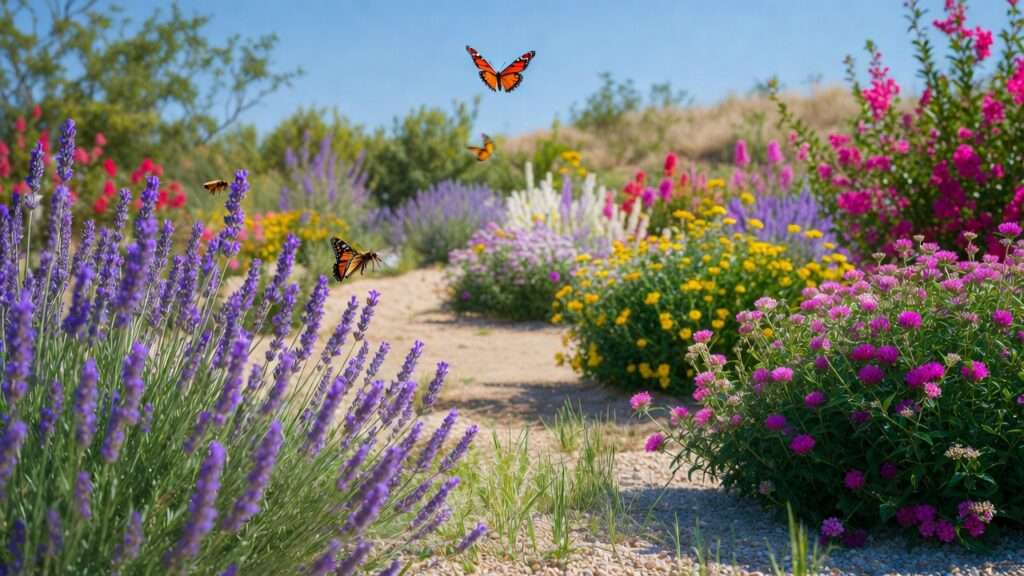
Imagine this: It’s the middle of summer. Your water bill has spiked again. The lawn is turning brown despite your best efforts. Restrictions on outdoor watering are in place… yet you still dream of a garden bursting with color — vivid pinks, purples, sunny yellows, soft lavenders, and snowy whites dancing in the breeze. 🌺
If this sounds familiar, you’re not alone. Millions of gardeners across dry and semi-dry regions (and even in areas facing increasingly unpredictable rainfall) face the same dilemma: how to have a beautiful, colorful garden without becoming a full-time water manager.
The good news? You can have both — stunning color and dramatically reduced water use.
Low-water flowering shrubs for color are among the most powerful tools in modern sustainable landscaping. Once established, these resilient beauties thrive on far less water than traditional flowering shrubs, often surviving on rainfall alone after their first year or two. They bring long seasons of bloom, support pollinators 🐝, add structure and texture to the garden, and — perhaps most importantly — give you back your weekends.
As a horticulturist who has designed and maintained drought-tolerant gardens in hot-summer climates for over 15 years, I’ve seen firsthand how the right selection of low-water flowering shrubs can completely transform a landscape from dull and thirsty to vibrant, fragrant, and nearly carefree.
In this comprehensive guide, you’ll discover:
- The very best low-water flowering shrubs that deliver the most satisfying color payoff
- Exactly how drought-tolerant they really are (and what “low-water” actually means)
- Pro tips for planting, care, and design that most articles skip
- Regional considerations so you choose shrubs that truly thrive where you live
- Common mistakes that kill even tough plants (and how to avoid them)
Ready to build a colorful, water-wise garden that looks amazing and feels effortless? Let’s dive in. 🌿
Why Choose Low-Water Flowering Shrubs? The Real Benefits 🌟
Switching to drought-tolerant flowering shrubs isn’t just about saving water — although that’s a huge part of it. Here are the most meaningful benefits gardeners experience when they make the shift:
1. Dramatic Water Savings 💧 Most traditional flowering shrubs (hydrangeas, roses, lilacs, etc.) demand consistent moisture — often 1–2 inches of water per week during summer. Many of the best low-water flowering shrubs can thrive on one-quarter to one-tenth of that amount once established.
2. Lower Maintenance = More Enjoyment ⏰ Deep, infrequent watering + natural pest and disease resistance = far fewer chores. You spend less time dragging hoses and more time actually enjoying your garden.
3. Climate Resilience 🔥 These plants are adapted to heat, poor soil, and dry periods. As summers grow hotter and droughts become more frequent in many regions, these shrubs become future-proof choices.
4. Pollinator & Wildlife Support 🦋🐦 Most drought-tolerant flowering shrubs are rich in nectar and pollen. They attract bees, butterflies, hummingbirds, and even beneficial insects that help control pests naturally.
5. Year-Round Garden Interest 🍂 Many offer more than just flowers: silvery or blue-green foliage, fragrant leaves, colorful winter berries, attractive bark, or structural form that holds the garden together even in the off-season.
6. Xeriscape & Sustainable Landscaping Style Low-water flowering shrubs are cornerstones of modern xeriscape design — beautiful landscapes that work with nature rather than against it.
Understanding Drought Tolerance in Flowering Shrubs 🔍
Before we look at specific varieties, it’s helpful to understand what “low-water” or “drought-tolerant” actually means in the plant world.
True drought tolerance usually develops through one or more of these adaptations:
- Deep or wide-ranging root systems that seek out moisture
- Small, thick, waxy, or hairy leaves that lose less water
- Ability to go dormant or semi-dormant during the hottest, driest months
- Origins in Mediterranean, semi-arid, or dry-summer climates
- Efficient water storage in leaves, stems, or roots
Important distinction: Establishment phase vs. mature phase
Almost all drought-tolerant shrubs need regular watering during their first 1–2 growing seasons while they develop a strong root system. After that, most can survive and bloom beautifully on very little supplemental water — especially if you follow good planting and mulching practices.
Hardiness zones matter Always check the USDA zone range for each variety. A plant that’s extremely drought-tolerant in zone 9 may struggle in zone 5 due to winter cold, not summer drought.
Soil drainage is non-negotiable Even the toughest drought-tolerant shrubs will rot and die in heavy, waterlogged clay. Good drainage is more important than any other soil factor.
Top 15+ Best Low-Water Flowering Shrubs for Stunning Color 🌷
Here are the absolute standouts — shrubs that consistently deliver long seasons of vivid color with minimal water once established.
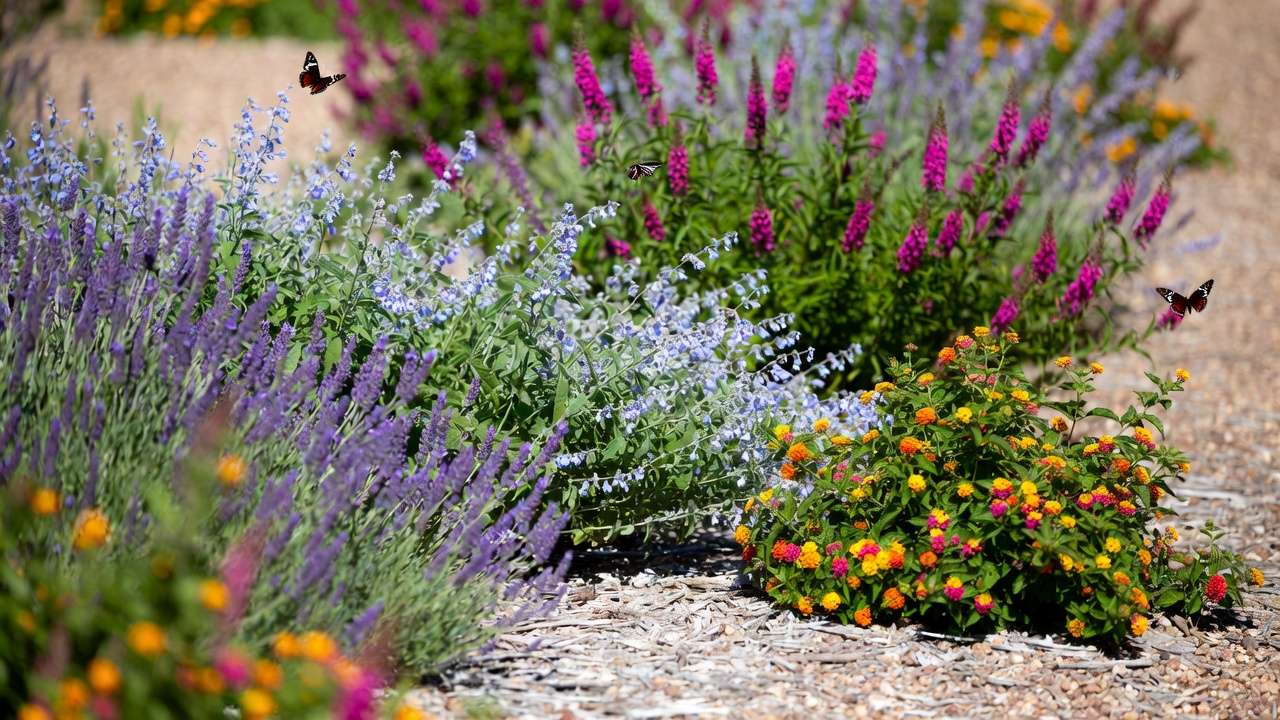
1. Lavender (Lavandula angustifolia & hybrids) 💜
- Bloom color: Purple, violet, blue, pink, white
- Bloom time: Early summer – early fall (especially long with deadheading)
- Height: 1–3 feet
- Zones: 5–9 (some hybrids to zone 4)
- Why it’s great: Fragrance, silvery foliage, extremely drought-tolerant once established, beloved by bees
- Best varieties for color: ‘Hidcote’, ‘Munstead’, ‘Phenomenal’, ‘Ellagance Sky’
2. Russian Sage (Perovskia atriplicifolia) ☁️
- Bloom color: Airy lavender-blue
- Bloom time: Mid-summer – fall
- Height: 3–5 feet
- Zones: 4–9
- Why it’s great: Long season of soft color, silvery stems and leaves, very tough, looks beautiful en masse
- Top cultivars: ‘Blue Spire’, ‘Little Spire’, ‘Taiga’
3. Butterfly Bush (Buddleja davidii & compact hybrids) 🦋 (continued)
- Best varieties for smaller gardens or containers: ‘Pugster Amethyst’, ‘Pugster Blue’, ‘Lo & Behold Pink Micro Chip’ — these stay compact (2–3 ft) while delivering massive flower power.
- Pro tip: In very hot, humid areas (like parts of South Asia), choose heat-tolerant cultivars and ensure excellent drainage to prevent root issues during monsoons.
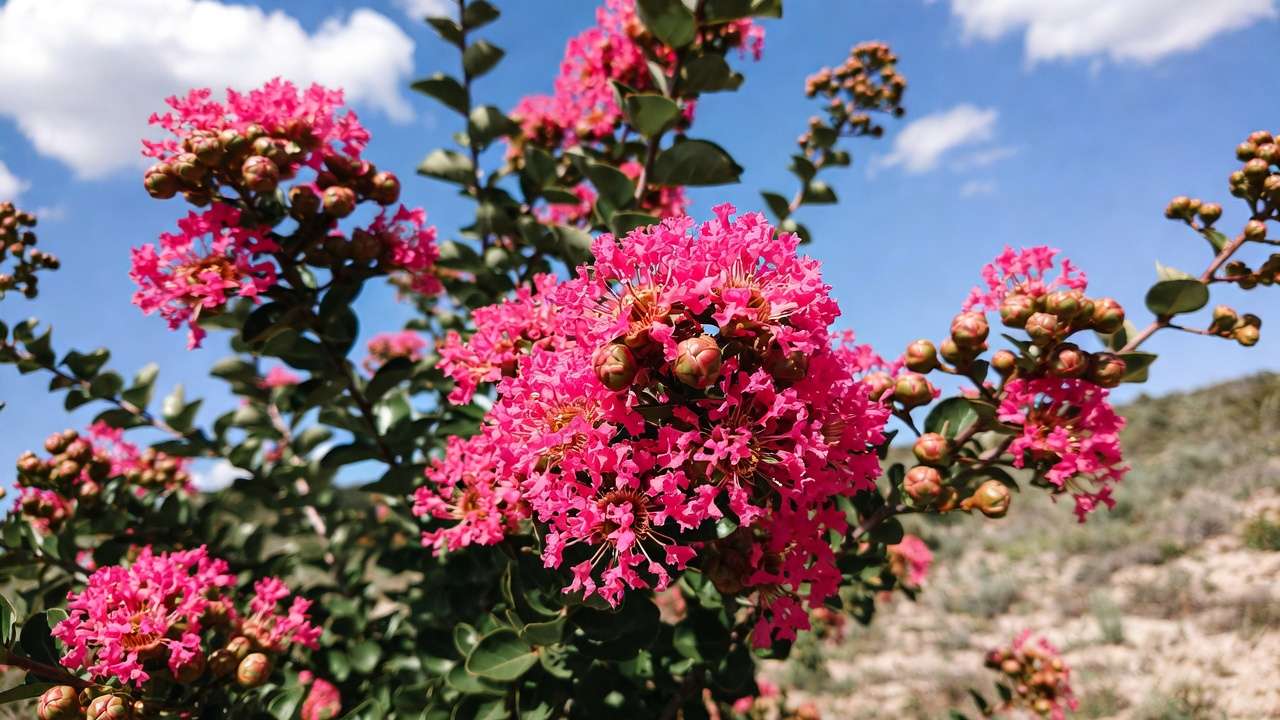
4. Crape Myrtle (Lagerstroemia indica & hybrids) 🎆
- Bloom color: Vibrant pink, red, purple, lavender, white — often with multi-toned flowers
- Bloom time: Midsummer to fall (some rebloom)
- Height: 3–20 ft (dwarf varieties available for low borders)
- Zones: 6–9 (some hardy to zone 7 with protection)
- Why it’s great: Showy, crepe-paper-like blooms last for months, colorful fall foliage, attractive exfoliating bark in winter, extremely heat- and drought-tolerant once established
- Top picks: ‘Natchez’ (white), ‘Tuscarora’ (coral-pink), ‘Pocomoke’ (compact dwarf pink), ‘Delta Jazz’ (burgundy foliage)
5. Rock Rose (Cistus spp.) 🌹
- Bloom color: White, pink, magenta with yellow centers — papery, rose-like
- Bloom time: Late spring to summer
- Height: 2–5 ft
- Zones: 8–10 (some to zone 7)
- Why it’s great: Evergreen or semi-evergreen, highly aromatic foliage, thrives in poor, rocky soil, excellent for Mediterranean-style gardens
- Favorites: Cistus × purpureus ‘Brilliancy’ (magenta), C. ladanifer (white with maroon blotch)
6. Santolina (Lavender Cotton) ✨
- Bloom color: Bright yellow or creamy white button-like flowers
- Bloom time: Summer
- Height: 1–2 ft
- Zones: 6–9
- Why it’s great: Silvery-gray aromatic foliage provides year-round color and texture, extremely drought-tolerant, great for edging or low hedges
- Varieties: S. chamaecyparissus (yellow), S. rosmarinifolia ‘Lemon Queen’ (pale yellow)
7. Jerusalem Sage (Phlomis fruticosa) 🟡
- Bloom color: Whorls of hooded golden-yellow flowers
- Bloom time: Late spring to summer (often reblooms)
- Height: 2–4 ft
- Zones: 7–10
- Why it’s great: Fuzzy gray-green leaves, architectural form, very tough in heat and dry soil
- Related: Phlomis lanata (smaller, more compact)
8. Blue Mist Spirea / Bluebeard (Caryopteris x clandonensis) 🌤️
- Bloom color: Sky-blue to deep violet clusters
- Bloom time: Late summer to fall — fills the gap when other shrubs fade
- Height: 2–4 ft
- Zones: 5–9
- Why it’s great: Late-season color, aromatic when brushed, attracts bees and butterflies, compact habit
- Top cultivars: ‘Dark Knight’ (deep blue), ‘Sunshine Blue’ (yellow foliage)
9. Potentilla (Potentilla fruticosa) 🌼
- Bloom color: Cheerful yellow, orange, pink, white
- Bloom time: Early summer to frost — non-stop!
- Height: 1–4 ft
- Zones: 2–7 (very cold-hardy)
- Why it’s great: One of the longest-blooming shrubs, ultra-tough, deer-resistant
- Favorites: ‘Goldfinger’ (bright yellow), ‘Pink Beauty’
10. Gaura (Oenothera lindheimeri, formerly Gaura lindheimeri) 🩰
- Bloom color: White to pink dancing wand-like flowers
- Bloom time: Late spring to fall
- Height: 2–4 ft
- Zones: 5–9
- Why it’s great: Airy, butterfly-attracting blooms on slender stems, drought-tolerant perennial-like shrub in warm zones
- Varieties: ‘Whirling Butterflies’, ‘Siskiyou Pink’
11. Autumn Sage / Cherry Sage (Salvia greggii & Salvia microphylla) ❤️
- Bloom color: Red, pink, purple, coral, white
- Bloom time: Spring to frost (especially long in mild climates)
- Height: 2–3 ft
- Zones: 7–10
- Why it’s great: Hummingbird magnets, fragrant foliage, blooms almost year-round in warm areas
- Hot picks: ‘Hot Lips’ (red/white), ‘Furman’s Red’
12. Abelia (Abelia × grandiflora & hybrids) 🍃
- Bloom color: Tubular white to pink
- Bloom time: Summer to fall
- Height: 3–6 ft
- Zones: 6–9
- Why it’s great: Semi-evergreen, glossy leaves, fragrant flowers, attracts pollinators
- Compact options: ‘Kaleidoscope’ (variegated foliage)
13. California Lilac (Ceanothus spp.) ⚡
- Bloom color: Intense blue to purple clusters
- Bloom time: Spring (some evergreen types rebloom)
- Height: 3–10 ft
- Zones: 7–10 (best in mild winters)
- Why it’s great: Spectacular spring show, evergreen options, nitrogen-fixer for soil health
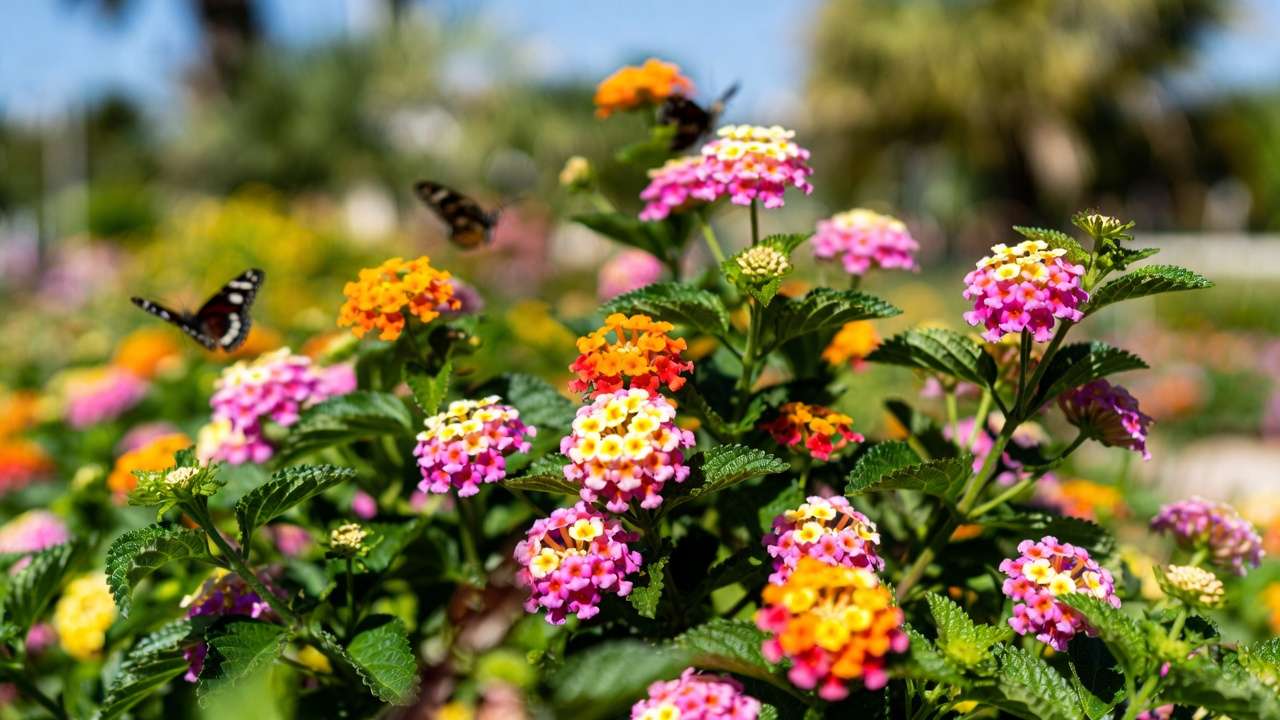
14. Lantana (Lantana camara & hybrids) 🌈
- Bloom color: Multicolored clusters (yellow, orange, pink, purple — often changing)
- Bloom time: Summer to frost
- Height: 1–6 ft (dwarf to trailing types)
- Zones: 8–11 (grown as annual elsewhere)
- Why it’s great: Insanely heat- and drought-tolerant, nonstop color, butterfly favorite (Note: Can be invasive in warm, humid tropics — check local rules)
15. Bonus Heat-Loving Picks for Hotter Climates (e.g., South Asia-friendly) 🔥
- Oleander (Nerium oleander) — Pink/red/white, extremely tough (toxic — handle with care)
- Bottlebrush (Callistemon citrinus) — Red “brushes,” attracts birds
- Hibiscus syriacus (Rose of Sharon) — Large blooms, late summer color
(These thrive in hot, humid conditions with good drainage.)
How to Choose the Right Low-Water Flowering Shrubs for Your Garden 🛠️
- Match your USDA zone (or equivalent climate): Use zone maps or local extension services. For hot, tropical areas like Khulna, Bangladesh (roughly equivalent to USDA 10–11), prioritize heat-loving options like lantana, salvia greggii, or bottlebrush.
- Sun exposure: Most need full sun (6+ hours) for best blooms.
- Soil: Well-drained is key — amend heavy clay with grit/sand if needed.
- Bloom season staggering: Plant early (lavender), mid (crape myrtle), late (bluebeard) bloomers for continuous color.
- Size & purpose: Dwarf for borders, taller for screens/focal points.
Planting & Care Tips for Long-Term Success 🌱
- Plant in spring or fall — avoid peak summer heat.
- Dig wide, not deep — encourage spreading roots.
- Water deeply but infrequently during year 1–2.
- Mulch 2–3 inches (organic or gravel) to retain moisture and suppress weeds.
- Prune lightly after bloom for shape (avoid heavy cuts on lavender/rock rose).
- Fertilizer? Minimal — light compost in spring is usually enough.
Designing a Vibrant, Low-Water Garden with Flowering Shrubs 🎨
Creating a colorful, low-maintenance garden isn’t just about picking plants — it’s about thoughtful placement and layering for maximum impact with minimal effort.
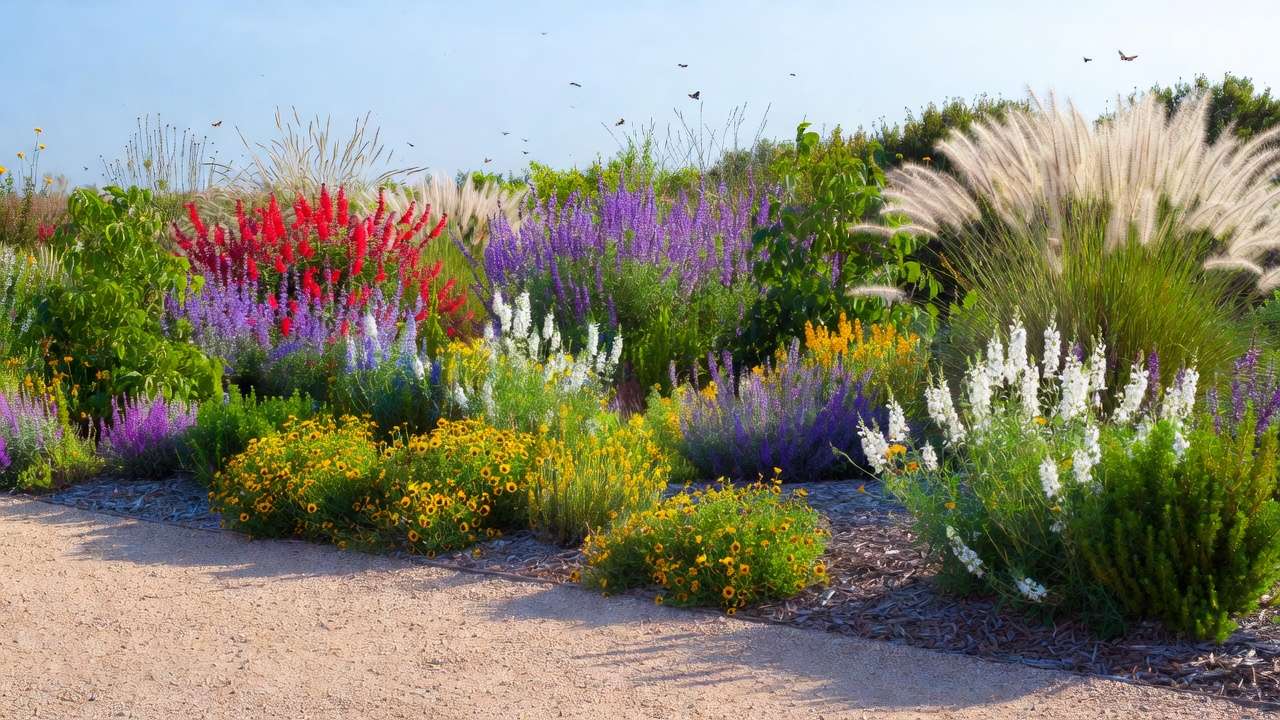
Core Xeriscape Principles (adapted for hot, humid monsoon climates like Khulna, Bangladesh 🌧️):
- Group plants by water needs (hydrozoning) — keep the thirstiest near the house or in shadier spots.
- Use mulch generously (2–4 inches of organic mulch like coconut coir, dried leaves, or gravel) to retain soil moisture, suppress weeds, and moderate soil temperature.
- Incorporate hardscaping (paths, rocks, raised beds) to reduce lawn area.
- Focus on deep-rooted, resilient plants that handle both dry spells and heavy monsoon rains.
Companion Planting Ideas for Enhanced Beauty & Function:
- Pair low-water flowering shrubs with drought-tolerant perennials like Lantana, Pentas (star-shaped clusters loved by butterflies), Salvia, Verbena, Portulaca (moss rose — super colorful and heat-proof), and Gaillardia (blanket flower).
- Add texture with ornamental grasses (e.g., Fountain grass or native grasses) or silvery foliage plants like Artemisia or Santolina.
- For tropical flair in humid areas: Mix in Hibiscus (Chinese hibiscus — very common and colorful in Bangladesh), Bougainvillea (vining but can be shrub-trained, explosive color), Ixora (evergreen with bright red/orange/yellow clusters), and Oleander (tough, flowering, but note: toxic — keep away from pets/kids).
- Pollinator paradise 🐝: Combine Butterfly bush, Salvia greggii, Lantana, and Pentas for non-stop hummingbird and bee activity.
Color-Themed Garden Ideas:
- Purple Haze Retreat — Russian sage + lavender + salvia + blue mist spirea + ceanothus (in milder spots).
- Sunny Yellow Explosion — Potentilla + santolina + Jerusalem sage + coreopsis companions.
- Hot Pink & Red Drama — Crape myrtle (dwarf varieties) + autumn sage + lantana + hibiscus.
- Tropical Monsoon Vibes (perfect for Khulna’s climate) — Bougainvillea + hibiscus + lantana + ixora + oleander for bold, humidity-loving color that bounces back after rains.
Small-Space & Container Magic 🪴:
- Use large pots with excellent drainage for dwarf crape myrtle, compact butterfly bush, or lantana.
- Trailing lantana or gaura spill beautifully over edges.
- Group 3–5 pots of matching colors for instant impact on balconies or patios.
Curb Appeal Boost:
- Plant taller shrubs (crape myrtle, oleander) as focal points near the entrance.
- Edge borders with low-growers like santolina or potentilla for neat definition.
Common Mistakes to Avoid with Drought-Tolerant Shrubs ⚠️
Even tough plants can fail if these pitfalls happen:
- Overwatering after establishment — Leads to root rot, especially in heavy monsoon soils. Once established (1–2 years), water only during prolonged dry spells.
- Poor drainage — The #1 killer. If soil stays soggy after rains, amend with sand, perlite, or plant in raised beds.
- Planting in too much shade — Most need full sun (6+ hours) for best blooms and drought resistance.
- Skipping mulch — Exposes roots to heat and evaporation.
- Heavy fertilizer — Encourages weak, leggy growth. Use sparingly or not at all.
- Ignoring local invasiveness — Lantana and some salvias can spread aggressively in tropical areas — monitor and contain if needed.
- Wrong zone choices — In hot-humid Khulna (roughly USDA 10–11 equivalent), prioritize heat/humidity lovers over cold-hardy types like Russian sage.
Expert Insights & Reader Q&A 💡
From years of working with gardeners in hot, variable climates (including tropical monsoon regions):
- “My #1 pick for Bangladesh-like humidity + heat? Lantana and ixora — nonstop color, laugh at drought between rains, and butterflies adore them.” — Local horticulturist observation
- Success story: A Khulna gardener transformed a waterlogged yard by raising beds, adding bougainvillea + hibiscus + lantana — now vibrant with almost no extra watering post-monsoon.
- Pro tip: In monsoon-heavy areas, plant on slight slopes or mounds to prevent waterlogging during heavy rains.
Frequently Asked Questions (FAQ) ❓
What is the most colorful low-water shrub? Lantana or dwarf crape myrtle — both offer months of multi-colored blooms with very little water once established.
Do these attract deer? Many (lavender, salvia, potentilla, santolina) are deer-resistant due to strong scents or fuzzy leaves. Lantana and oleander are usually avoided too.
Can I grow them in pots? Yes! Dwarf varieties of butterfly bush, potentilla, lantana, and salvia thrive in containers with good drainage — perfect for patios in urban Khulna homes.
How much water do they really need after year 1? In most cases, rainfall alone suffices in monsoon climates. Supplement only during extended dry periods (deep soak every 10–14 days).
Best ones for beginners? Lantana, hibiscus, ixora, potentilla — forgiving, colorful, and widely available locally.
Are any evergreen with flowers? Yes — ixora, oleander, some abelia hybrids, and bougainvillea (semi-evergreen in tropics) keep foliage year-round while blooming.
Conclusion: Transform Your Landscape Today 🌟
You don’t need endless watering or constant upkeep to enjoy a garden full of vibrant, eye-catching color. Low-water flowering shrubs prove that beauty and sustainability go hand-in-hand — delivering long seasons of blooms, fragrance, pollinator support 🐝, and structure while slashing your water use and maintenance time.
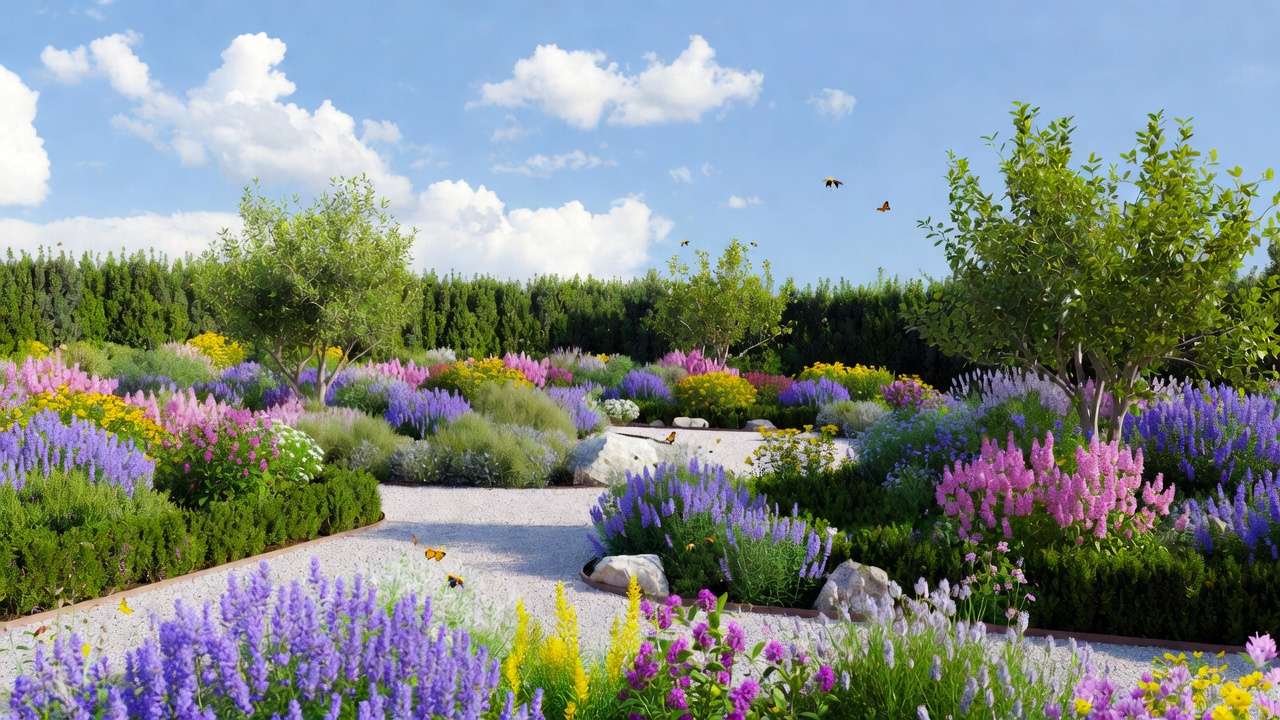
Start small: Pick 2–3 favorites that match your space, sun, and soil (lantana + hibiscus + ixora make an unbeatable tropical trio for Khulna gardens 💚). Plant properly, mulch well, and give them time to establish. Before you know it, your yard will burst with color — even through the hottest, driest stretches — and you’ll wonder why you ever stressed over thirsty plants.
Your low-water, high-color oasis awaits. What will you plant first? Share your picks or garden photos in the comments — I’d love to hear your success stories! 🌸✨











