
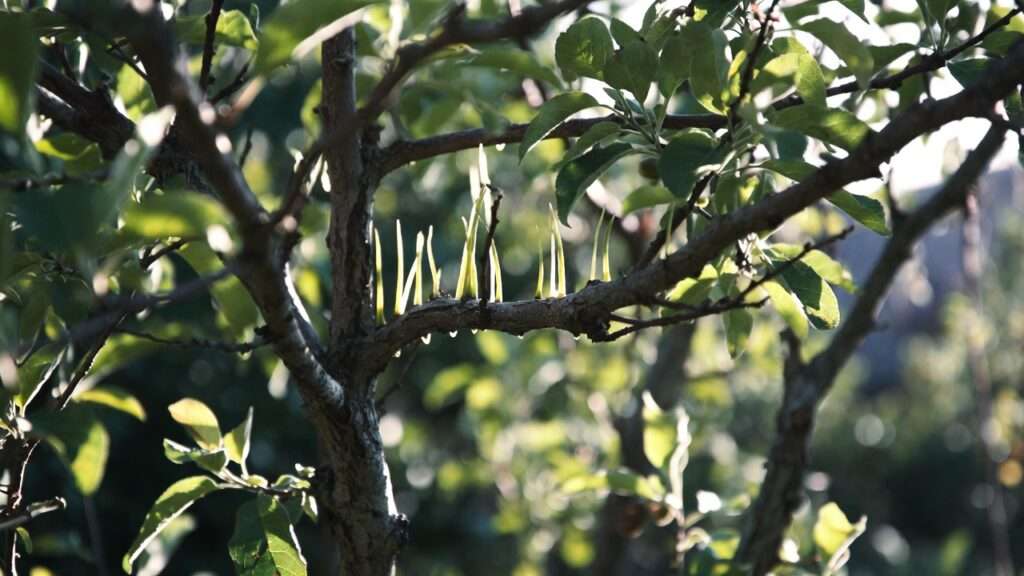
Have you ever stepped into your backyard orchard, excited to check on your fruit trees, only to find a jungle of tall, straight-up shoots exploding from the branches and trunk? 😱 These vigorous vertical growths — known as water sprouts — can turn a promising apple, peach, or citrus tree into a messy, low-yielding disappointment almost overnight.
They’re not just an eyesore; they rob your tree of precious energy, block sunlight and airflow, increase disease risk, and dramatically cut fruit production 🍎. The great news? Managing water sprouts on fruit trees is straightforward once you understand why they appear and how to handle them properly.
As a passionate horticulturist with years of hands-on experience caring for home orchards (and advising fellow gardeners worldwide), I’ve seen countless trees transformed from sprout-overloaded chaos to bountiful producers. In this comprehensive guide, we’ll dive deep into identification, causes, safe removal techniques, prevention strategies, tree-specific advice, and more — all backed by trusted sources like university extensions, RHS guidelines, and real grower insights.
By the end, you’ll have the tools to reclaim your trees and enjoy healthier growth plus bigger, tastier harvests year after year! Let’s get started. ✨
What Are Water Sprouts? (And How Do They Differ from Suckers?) 🌱
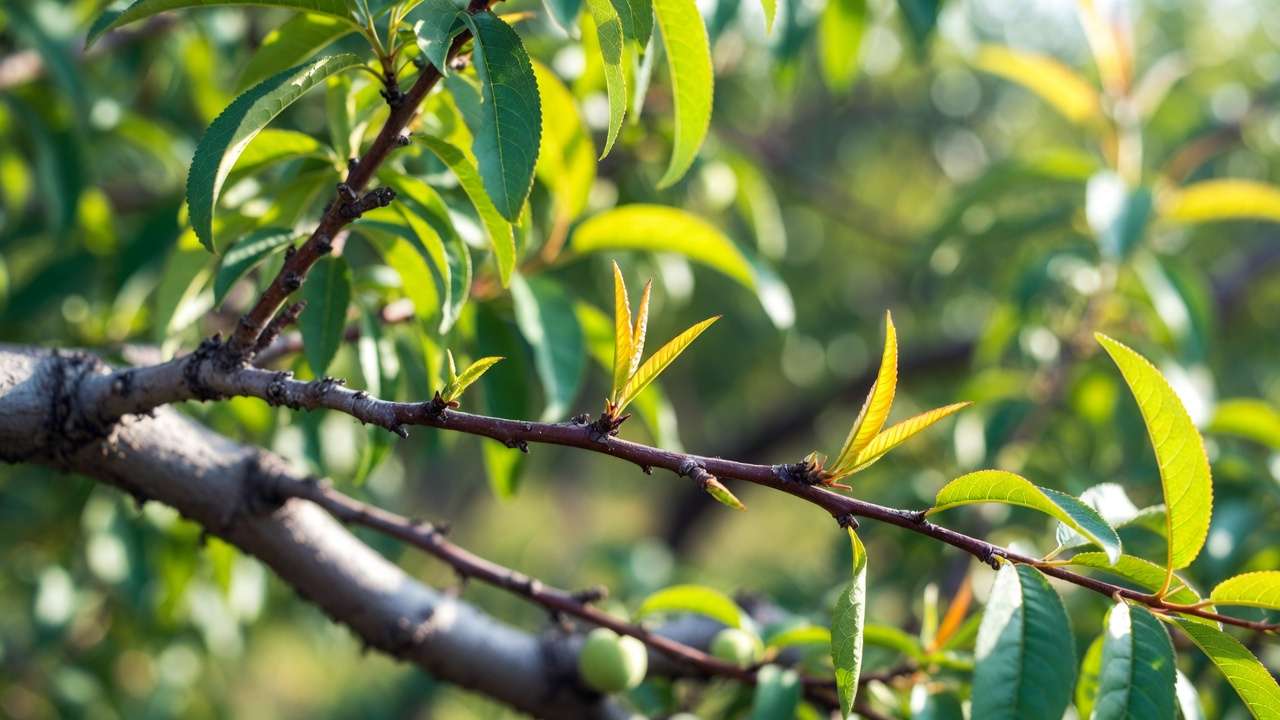
Water sprouts, sometimes called watershoots or epicormic shoots, are fast-growing, upright stems that burst from dormant buds on the trunk, main branches, or older wood of fruit trees. They’re typically thin, flexible, and bright green, with larger, softer leaves than normal branches. In a single growing season, they can shoot up 3–6 feet or more 🚀, often at near-right angles to the parent branch.
These shoots get their name because they appear when the tree is trying to “drink up” resources quickly to recover from stress — like gulping water after a drought or injury.
Key characteristics to spot them:
- Vertical or near-vertical growth
- Rapid elongation in spring/summer
- Weak attachment point (they snap easily in wind)
- Rarely form quality fruiting wood
Water sprouts vs. suckers — a common mix-up!
- Water sprouts grow above ground from the trunk or branches (epicormic growth from latent buds in the bark).
- Suckers (or root suckers) emerge from the roots or below the graft union, often from the rootstock. They’re a bigger issue on grafted trees because they can outcompete the desired variety and produce inferior (or no) fruit from the rootstock.
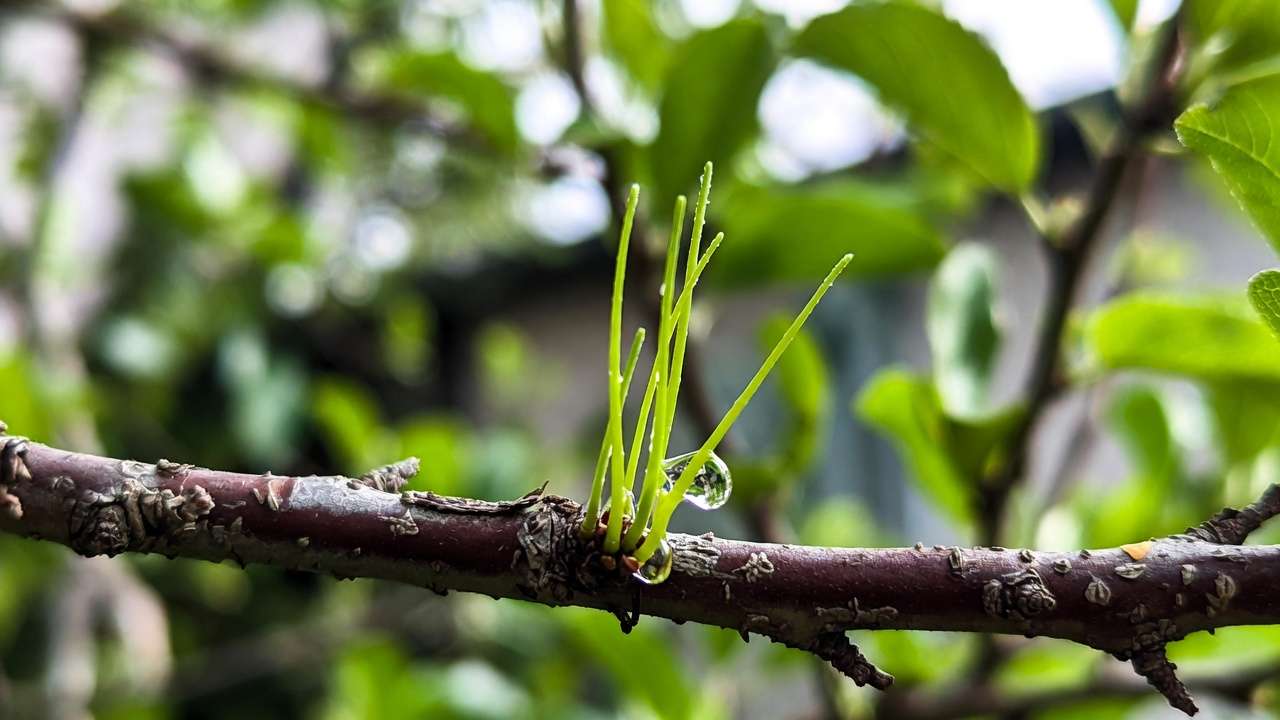
Always remove suckers immediately — they steal nutrients from your chosen scion (the fruiting part). Water sprouts are more of a canopy management issue.
Common fruit trees prone to water sprouts include apples 🍏, pears 🍐, peaches 🍑, nectarines, apricots, plums, cherries, and citrus 🍊 — especially after heavy pruning or stress.
Why Do Water Sprouts Appear? Common Causes & Triggers ⚠️
Water sprouts aren’t random; they’re the tree’s emergency response to imbalance. Understanding the “why” is crucial for effective managing water sprouts on fruit trees and stopping them from returning.
Primary triggers include:
- Heavy or improper pruning — Removing more than 25–30% of the canopy in one session (especially topping or heading cuts) shocks the tree, prompting it to push out vigorous shoots to restore leaf area fast.
- Storm or mechanical damage — Broken branches, hail, wind, or lawn mower/string trimmer wounds stimulate dormant buds near injury sites.
- Tree stress factors — Drought followed by heavy rain, overwatering, poor soil drainage, root compaction, nutrient imbalances, or transplant shock.
- Excessive nitrogen fertilization — High-nitrogen feeds push lush vegetative growth over fruiting, leading to weak, sprout-prone shoots.
- Neglected or old trees — Sudden renovation pruning on overgrown trees often triggers a massive sprout response the next season.
- Species and variety tendencies — Apples and pears top the list due to their spur-bearing habits; stone fruits like peaches fruit on new wood and can sprout aggressively after cuts.
Pro tip: Water sprouts are a symptom, not the root problem. Fix the underlying stress (e.g., improve watering consistency or avoid over-pruning), and you’ll see far fewer next year! 🔧
The Impact of Water Sprouts: Why You Must Manage Them 🚫
Ignoring water sprouts might seem harmless at first, but the consequences add up quickly:
- Energy diversion — These vigorous shoots hog water, nutrients, and carbohydrates that should go to developing flowers, fruit, and strong branches. Result? Fewer blooms, smaller fruit, and lower overall yields.
- Poor light and air penetration — Dense upright growth shades the inner canopy, leading to weak, shaded fruit that’s poorly colored, flavored, or slow to ripen. It also traps humidity, raising risks of fungal issues like powdery mildew, fire blight (especially on apples/pears), or brown rot on stone fruits.
- Structural weakness — Water sprouts attach poorly and break easily in wind, storms, or under fruit weight, creating open wounds that invite pests and pathogens.
- Aesthetic and maintenance nightmare — Trees look unkempt and overgrown, making harvesting, pest monitoring, and future pruning much harder.
On the flip side, proper management delivers huge rewards:
- Redirected energy boosts fruit size, quality, and quantity 🍎
- Better airflow and sunlight reduce disease pressure
- Stronger, balanced structure for long-term tree health
- Easier care and a more beautiful orchard!
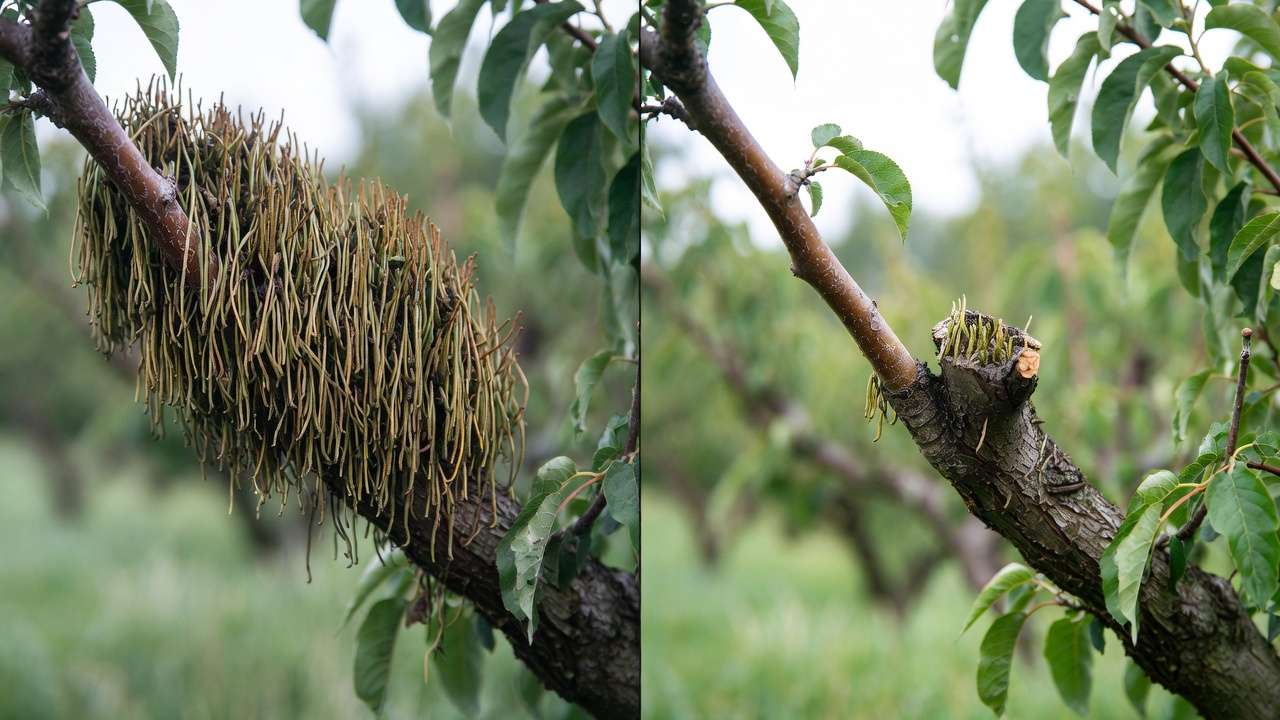
The Impact of Water Sprouts: Why You Must Manage Them 🚫
Left unchecked, water sprouts create a cascade of problems that affect both short-term appearance and long-term productivity. These vigorous shoots act like energy vampires, pulling water, nutrients, and carbohydrates away from where you want them most: developing buds, flowers, and fruit. On heavily infested trees, you might see fruit yields drop by 30–50% or more, with remaining fruit often smaller, less colored, and lower in flavor due to shading.
Shading is a big issue too — the dense upright growth blocks sunlight from reaching the inner canopy, leading to weak, spindly branches inside the tree and poor fruit development in shaded areas. Reduced airflow creates humid microclimates that invite fungal diseases like powdery mildew (common on apples and peaches), fire blight (a serious threat to pears and apples), brown rot (stone fruits), or citrus greening vectors in warmer climates.
Structurally, water sprouts are weakly attached at their base, making them prone to snapping in wind, heavy rain, or even under their own weight if fruit sets (rarely, but possible on some). Broken sprouts leave jagged wounds that become entry points for pests (borers, aphids) and pathogens, compounding stress.
The good news? Removing them properly redirects that energy back to productive wood, improves light penetration for better fruit quality and ripening, enhances disease resistance through better airflow, strengthens overall structure, and makes your tree easier to harvest and maintain. Many growers report noticeably larger, tastier harvests within 1–2 seasons of consistent management. Your orchard will look tidier and feel more balanced too! 🍏✨
When Is the Best Time to Remove Water Sprouts? Timing Tips ⏰
Timing is everything in managing water sprouts on fruit trees — prune at the wrong moment, and you risk stimulating even more regrowth or stressing the tree unnecessarily.
- Early summer (late spring to midsummer, when sprouts are 2–12 inches long): This is often the gold standard for most fruit trees. Young sprouts are tender and can be rubbed or pinched off by hand with minimal wound — the tree heals quickly, and regrowth is dramatically reduced because energy reserves are already committed to summer growth. Sources like Stark Bro’s, RHS, and university extensions (UNH, UMd) strongly recommend this window for lowest stress and best control.
- Mid-summer maintenance: For larger sprouts or light thinning, summer pruning works well on vigorous trees (especially peaches, nectarines, apricots). It curbs size without the heavy regrowth winter cuts can trigger. Avoid extreme heat waves to prevent sunburn on newly exposed bark.
- Late winter/early spring (dormant season): Ideal for structural pruning on apples, pears, and other deciduous trees. Remove larger water sprouts then if needed, but pair it with overall canopy balancing. Dormant cuts heal slowly, so only tackle if the tree isn’t overly stressed.
- Avoid fall pruning: Late-season cuts stimulate tender new growth vulnerable to early frosts or winter damage ❄️. It also increases disease risk in wet conditions.
Pro tip: Inspect trees weekly during spring/summer growth flushes. Catching sprouts early (under 6 inches) lets you hand-remove them effortlessly — no tools, no scars, minimal regrowth! 👀 For severely neglected trees, spread removal over 2–3 years to avoid shocking the tree into another sprout explosion.
Step-by-Step Guide: How to Remove Water Sprouts Properly ✂️
Safe, effective removal prevents regrowth and protects tree health. Always prioritize clean tools and technique.
Tools you’ll need:
- Sharp bypass pruners or loppers (for clean cuts)
- Pruning saw (for thicker sprouts)
- Gloves and eye protection
- Disinfectant (1:10 bleach-water or rubbing alcohol) to wipe blades between cuts 🧼
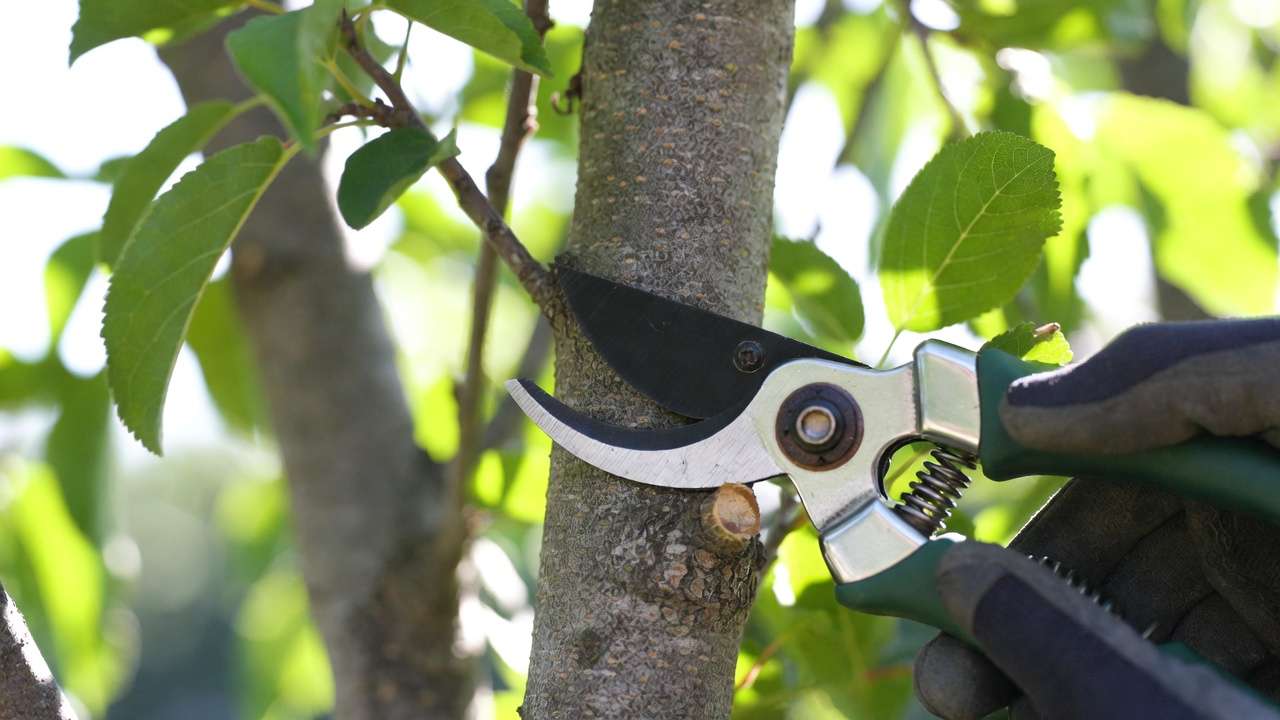
Step-by-step process:
- Identify targets — Look for thin, vertical/upright shoots emerging from trunks, main branches, or older wood. Ignore desirable lateral growth or potential fruiting wood.
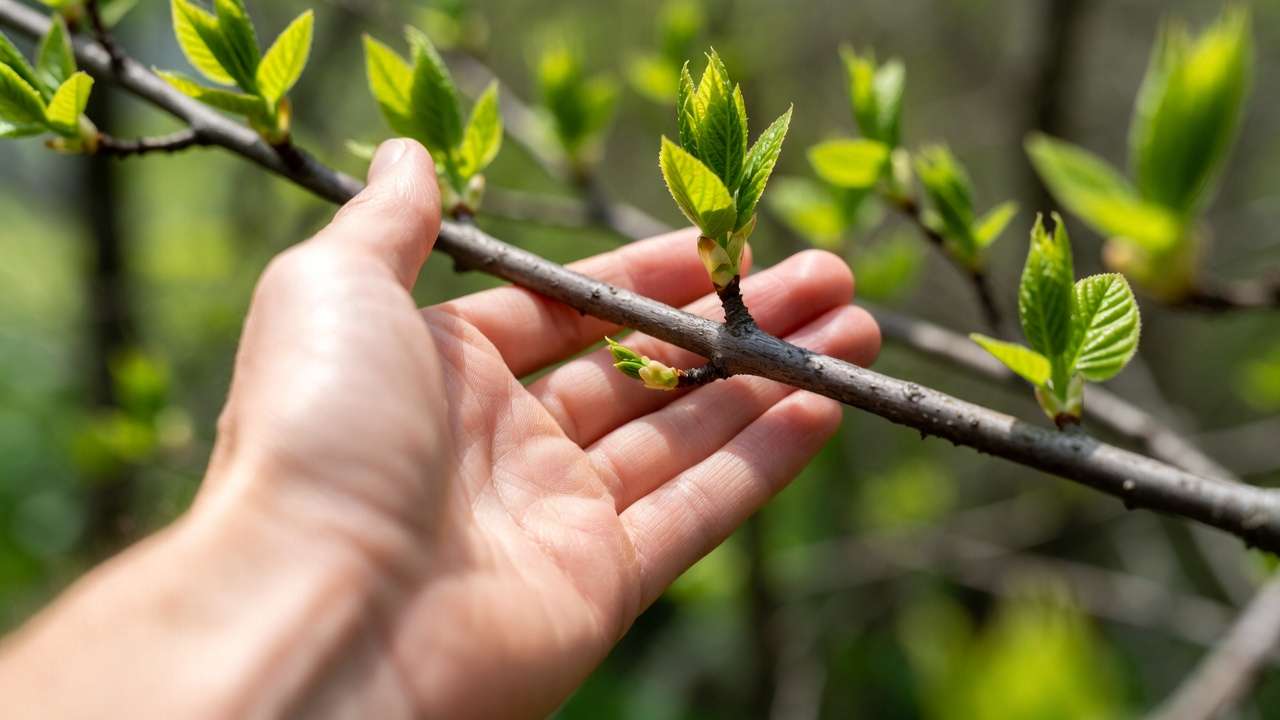
- Hand removal for small sprouts (<6–8 inches): Pinch or rub off at the base with fingers/thumb — easiest in early summer, leaves no wound, and discourages regrowth best.
- Prune larger sprouts: Cut flush to the parent branch/trunk, right at the branch collar (swollen area where sprout meets branch — don’t cut into it or leave stubs). Angle cuts at 45° to shed water and promote healing.
- Avoid stubs — Stubs invite rot, pests, and multiple new sprouts (like a hydra!). Cut inside any buds that might regrow.
- Selective thinning for heavy infestations — Don’t remove all at once if there are dozens on one branch — take out no more than 1/3 to avoid shock. Space remaining sprouts evenly; in sparse areas, you might leave a few to train into new fruiting branches over time (especially on renovated old trees).
- Clean up — Disinfect tools after each tree (or between major cuts) to prevent spreading diseases like fire blight. Dispose of clippings (don’t compost if diseased).
Bonus for severe cases: On neglected old trees, plan a 3-year renovation: Year 1 remove dead/diseased + 1/3 sprouts; Year 2 structural shaping; Year 3 fine-tune. This gradual approach minimizes stress while rebuilding strong framework.
Prevention Strategies: Stop Water Sprouts Before They Start 🛡️
The best way to win the battle against water sprouts is to prevent them from appearing in the first place. Prevention focuses on reducing stress, pruning intelligently, and maintaining overall tree vigor so the tree has no need to send out those emergency vertical shoots.
Here are the most effective long-term strategies recommended by university extension services (such as Cornell, UC Davis, and Oregon State) and experienced orchardists:
- Prune gradually and correctly — Never remove more than about 25–30% of the canopy in a single season. Avoid “topping” (cutting branch ends flat) or heading cuts on mature trees — these are classic triggers for massive sprouting. Instead, use thinning cuts (removing entire branches back to their origin) and follow species-specific fruit tree pruning guides. For example, open-center (vase) shapes work best for peaches, while modified central-leader shapes suit apples and pears.
- Time major pruning for dormancy — Perform heavy structural pruning in late winter/early spring when the tree is dormant. This minimizes shock compared to growing-season cuts.
- Maintain consistent tree health —
- Water deeply and infrequently (1–2 inches per week during dry periods, adjusted for soil and climate) rather than shallow daily watering.
- Apply 2–4 inches of organic mulch (wood chips, compost) in a wide ring around the base (keeping it away from the trunk) to conserve moisture, moderate soil temperature, and suppress weeds.
- Test soil every 2–3 years and apply balanced, slow-release fertilizer only if needed — avoid high-nitrogen lawn fertilizers near fruit trees.
- Protect against physical stress — Keep lawn mowers, string trimmers, and vehicles away from the trunk to prevent bark wounds. Install tree guards on young trees to shield from sunscald, rodents, and mechanical damage.
- Summer maintenance pinching — During early to mid-summer, regularly pinch or rub off any emerging water sprouts when they’re just a few inches long. This light, frequent intervention is far less stimulating than one big removal later.
- Choose wisely when planting — Select varieties and rootstocks known for lower sprout tendency when possible (e.g., semi-dwarf or dwarf rootstocks often produce fewer water sprouts than vigorous standard ones). Ask local nurseries for recommendations suited to your climate zone.
Implementing even a few of these habits can cut water sprout occurrence by 70–90% over a couple of seasons. Consistency is key! 🌱
Special Considerations for Different Fruit Trees 🍏🍑🍊
Not all fruit trees respond the same way to water sprouts or pruning — tailoring your approach maximizes results.
- Apples & Pears (spur bearers) These classic trees produce most fruit on short spurs along older wood. Water sprouts rarely bear quality fruit, so remove them aggressively. Focus winter pruning on opening the canopy and maintaining strong scaffold branches. Summer sprout removal helps preserve spur wood and improves fruit color/size.
- Peaches, Nectarines, Apricots (fruit mostly on 1-year-old wood) These stone fruits can handle (and often need) more aggressive annual pruning to stimulate fresh fruiting wood. However, they sprout vigorously after heavy cuts. Remove water sprouts promptly in summer, but don’t fear leaving a few strategically placed laterals to become next year’s fruit bearers.
- Plums & Cherries European plums and sweet cherries tend toward more upright growth and sprout moderately; Japanese plums and tart cherries are often more vigorous. Thin sprouts selectively and maintain open centers to reduce shading and disease (especially brown rot).
- Citrus (lemons, oranges, mandarins, etc.) Citrus water sprouts often appear after cold damage, heavy pruning, or nutrient flushes. Remove them as soon as noticed to maintain compact shape and direct energy to fruit. Be gentle — citrus bark is thin and sunburns easily if suddenly exposed.
Always match your pruning style to the tree’s natural bearing habit and growth rate for the best long-term health.
Common Mistakes to Avoid ❌
Even experienced gardeners fall into these traps:
- Topping trees like a hedge → creates dozens of new water sprouts the next season (the infamous “hydra effect”).
- Waiting too long to remove small sprouts → they grow into thick, woody branches that are harder to eliminate cleanly.
- Removing every single sprout on a stressed tree in one go → can cause severe shock and even more sprouting the following year.
- Using dull or dirty tools → leads to torn cuts, disease spread, and poor healing.
- Applying high-nitrogen fertilizer in late summer → fuels soft, succulent growth vulnerable to winter damage and sprouting.
Avoid these pitfalls and your management efforts will be far more effective.
Expert Insights & Pro Tips 💡
From decades of extension research and grower experience:
- “Water sprouts are the tree telling you it’s out of balance — listen to the symptom and correct the cause.” (Adapted from Cornell Cooperative Extension)
- In old, neglected trees, some experts actually select a few strong water sprouts during renovation to train into new scaffold limbs — turning a problem into an opportunity.
- Regular light summer pinching is one of the lowest-effort, highest-reward habits for sprout control.
- If fire blight is present in your area, sanitize tools religiously and remove sprouts early to limit bacterial spread.
Frequently Asked Questions (FAQs) ❓
Q: Will removing water sprouts hurt or stress my tree? A: Done correctly and gradually — no. Proper removal actually reduces stress by redirecting energy to fruit and strong wood.
Q: Can I use chemicals or growth inhibitors to stop them? A: Not recommended for home orchards. Cultural methods (pruning + health care) are safer, more sustainable, and usually more effective.
Q: My old apple tree is covered in water sprouts after years of neglect — how do I fix it? A: Use a 2–3 year renovation plan: remove dead/diseased wood first, then gradually thin sprouts while opening the canopy. Address any soil, water, or pest issues simultaneously.
Q: Do water sprouts ever produce usable fruit? A: Almost never quality fruit. They’re mostly vegetative and weakly attached — better to remove and let energy go to established fruiting wood.
Conclusion 🌳🍎
Mastering managing water sprouts on fruit trees is one of the highest-leverage skills any home orchardist can develop. By understanding why they appear, removing them at the right time with proper technique, and preventing recurrence through smart cultural care, you’ll enjoy dramatically healthier trees, better light and air circulation, fewer disease problems, and significantly higher-quality — and more abundant — fruit harvests.
Start today: grab a cup of tea, walk around your trees, and rub off any young sprouts you spot. Small, consistent actions now pay off with big rewards for years to come. Your future self (and your family’s fruit bowl) will thank you! ✨
Have you battled water sprouts on your trees? What worked best for you — or what surprises did you encounter? Drop your experiences in the comments below — I’d love to hear and help others learn from real stories! 👇











