
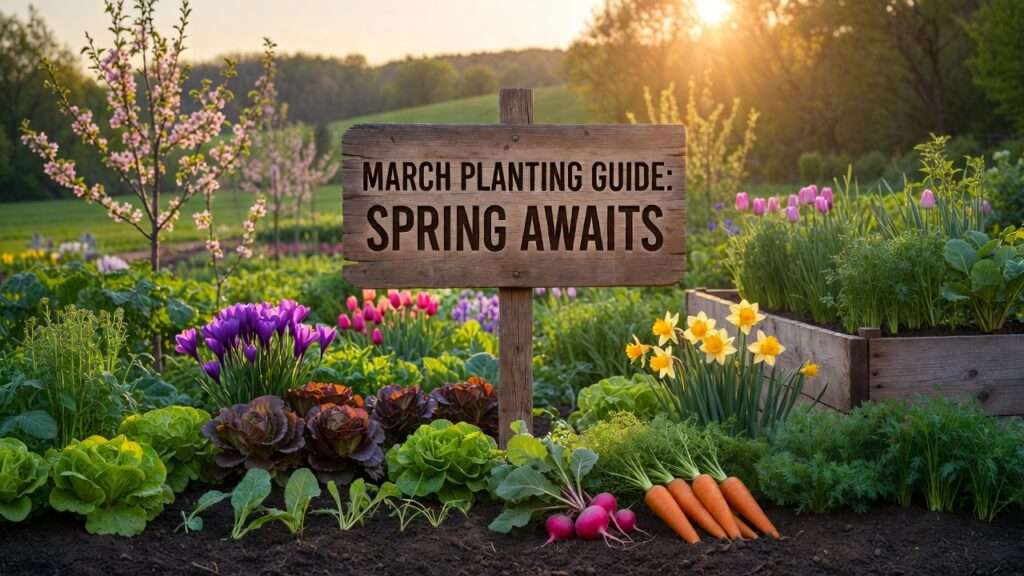
Spring isn’t just arriving—it’s already knocking at your garden gate in March! 🌸 Imagine harvesting crisp peas and vibrant greens weeks earlier than your neighbors, enjoying a riot of colorful blooms that attract buzzing bees and butterflies 🐝🦋, and setting up sturdy trees that will provide shade, fruit, and beauty for decades. This transitional month is the perfect time to kickstart your planting season, turning cool early days into a foundation for a thriving, productive garden through summer and beyond.
Whether you’re battling late frosts in cooler zones or enjoying milder weather in warmer regions, getting your timing right now prevents common pitfalls like bolting crops, weak transplants, or missed opportunities for early growth. In this comprehensive March planting guide for spring, we’ll cover zone-specific recommendations (using the latest 2023 USDA Plant Hardiness Zone Map), step-by-step planting tips, soil prep secrets, and expert insights to help you build a vibrant vegetable patch, stunning flower beds, and resilient trees. By following this advice, you’ll maximize your space and effort for the best results—earlier harvests, brighter blooms, and healthier landscapes. Let’s dig in! 🧑🌾
Why March Is the Ideal Time to Plant for Spring Success
March is the magic month when soil begins warming up, daylight stretches longer, and the last frost approaches for many areas. 🌡️ Starting now gives plants a head start: roots establish deeply before summer heat arrives, cool-season crops mature before bolting, and trees/shrubs settle in during mild conditions with less transplant shock.
Key benefits include:
- Extending your harvest window by weeks or months.
- Building stronger root systems for drought resistance later.
- Attracting early pollinators to boost overall garden health.
Common mistakes to avoid: Ignoring your local last frost date (which can vary widely even within zones), planting tender crops without protection, or skipping soil testing. Always check the official USDA Plant Hardiness Zone Map (updated in 2023) for your area—many regions have shifted warmer half-zones due to recent climate data. Pro tip: Use tools like frost date calculators by ZIP code for precision! ❄️→☀️
Understanding Your USDA Hardiness Zone & Last Frost Dates
The USDA Plant Hardiness Zone Map (2023 edition) divides the U.S. into zones based on average annual minimum winter temperatures. It now includes higher-resolution data and new warmer zones (12-13 in tropical areas).
Quick overview:
- Zones 3-4: Very cold (last frost often May or later).
- Zones 5-6: Moderate (last frost mid-April to early May).
- Zones 7-8: Mild (last frost late March to mid-April).
- Zones 9+: Warm/subtropical (last frost February or earlier, sometimes none).
How to find yours: Visit planthardiness.ars.usda.gov and enter your ZIP code. Average last frost dates (approximate, 30% probability threshold):
- Zone 5: April 7-30
- Zone 6: April 1-21
- Zone 7: March 22-April 3
- Zone 8: March 13-28
Why it matters: It dictates indoor starts vs. direct sowing, frost protection needs, and crop choices. Monitor 10-day forecasts—soil temperature (ideally 40-50°F+ for cool crops) is often more critical than air temp! 🌡️
Preparing Your Garden for March Planting
Soil Preparation Essentials
Healthy soil is the foundation of success. Test pH (aim for 6.0-7.0 for most plants) and nutrients using a home kit or lab service. Amend with compost, aged manure, or organic matter to improve drainage, fertility, and structure—especially in clay or sandy soils.
Raised beds warm faster in spring and offer better control over moisture. Incorporate 2-4 inches of compost and lightly till or fork it in. No-till? Layer cardboard and mulch to suppress weeds while building soil biology.
Tools & Supplies You Need Right Now
Stock up on:
- Quality seeds/seedlings from reputable sources.
- Pots, trays, grow lights for indoor starts.
- Frost blankets, cloches, row covers for protection 🌬️.
- Mulch (straw, wood chips) to retain moisture and moderate temperature.
- Hand trowel, gloves, watering can with rose attachment.
Watering & Weather Considerations
Water deeply but infrequently—keep soil moist (not soggy) for germination. Use rain barrels for sustainable supply. Watch for cold snaps; have covers ready to protect tender starts overnight.
Best Vegetables to Plant in March for a Bountiful Spring & Summer Harvest 🥕🥬
March is prime for cool-season crops that love chilly nights and for starting warm-season favorites indoors.
Cool-Season Crops (Direct Sow or Transplant – Great for Most Zones)
These thrive in cool soil and provide early harvests:
- Peas (Zones 5-10): Sugar snap, snow, shelling—direct sow now for sweet pods in late spring! Support with trellises.
- Lettuce, spinach, kale, Swiss chard, arugula: Succession sow every 2 weeks for continuous greens.
- Radishes, carrots, beets: Fast roots; thin seedlings for best size.
- Broccoli, cauliflower, cabbage: Transplant hardened seedlings or start indoors in colder zones.
Warm-Season Stars (Start Indoors in Cooler Zones, Direct in Warmer)
- Tomatoes, peppers, eggplant: Start indoors 6-8 weeks before last frost for sturdy transplants.
- Cucumbers, squash, beans: Wait for warmer soil or use protection.
- Corn, melons: Direct sow late March in Zones 8+.
Zone-Specific Vegetable Recommendations
- Zones 3-5: Indoor starts for cabbage family, onions; hardy greens outdoors under cover.
- Zones 6-7: Direct sow peas, potatoes, roots; warm crops indoors.
- Zones 8+: Tomatoes/peppers outdoors; harvest winter crops while planting summer ones.
Expert insight: Succession planting every 2-3 weeks ensures non-stop supply all season! 📅 Companion plant marigolds with tomatoes for natural pest control.
Here are some inspiring images of early spring vegetable gardens to motivate you:
(These show thriving pea rows, fresh greens beds, and radish patches—perfect for March starts!)
Best Flowers to Plant in March for Vibrant Spring Color & Pollinator Heaven 🌼🐝
March planting sets up early color and supports pollinators awakening from winter.
Hardy Annuals & Perennials (Direct Sow or Transplant)
- Sweet peas, calendula, pansies, snapdragons: Cold-tolerant for instant cheer.
- Cosmos, zinnias, nasturtiums: Start indoors in cooler zones for summer blooms.
- Wildflowers & natives: Broadcast for low-maintenance beauty and bee support.
Cut-Flower Favorites
Ammi, ranunculus, dianthus—deadhead for continuous vases.
Zone-Specific Flower Tips
- Colder zones: Hardy annuals outdoors; divide perennials.
- Warmer zones: Heat-lovers like marigolds, sunflowers early.
Bonus: These early bloomers create a buzzing ecosystem! 🦋
(Visual inspiration coming up—imagine these in your yard!)
Best Trees & Shrubs to Plant in March for Long-Term Garden Beauty 🌳
March is prime for planting trees/shrubs—dormant or budding roots establish before summer stress.
Why March is Prime Tree-Planting Season
Bare-root or container plants available; mild weather reduces shock.
Top Recommendations
- Fruit trees: Apple, pear, cherry, fig (Zones 7+).
- Ornamental: Dogwood, redbud, serviceberry for spring blooms.
- Shrubs: Blueberries, raspberries for edibles; lilac, forsythia for color.
Planting & Care Tips
Dig wide holes (2-3x root ball), plant at same depth, stake if windy. Mulch 2-3 inches, water deeply weekly first year. Skip fertilizer year one—focus on roots!
Pro advice: Choose disease-resistant, zone-suited varieties for longevity. 🍎
Here are beautiful examples of young trees and flowering shrubs planted in spring:
(These showcase flowering dogwoods, fruit trees in bloom, and lush shrub borders!)
Advanced Tips & Expert Insights for Maximum Success
- Companion planting: Marigolds with tomatoes, nasturtiums with squash for pest deterrence.
- Organic pest prevention: Neem oil, row covers early.
- Season extension: Cold frames, hoop houses.
- Sustainable practices: No-till, cover crops, rainwater use. ♻️
Common March Planting Mistakes & How to Fix Them
- Too early without protection → Row covers save the day!
- Poor soil prep → Amend first.
- Overwatering seedlings → Finger-test moisture.
Here are some inspiring images of early spring vegetable gardens to motivate you:
These show thriving pea rows, lush greens beds, crisp lettuce heads, and structured veggie plots—perfect examples of what March planting can achieve with the right start! 🥗
Best Flowers to Plant in March for Vibrant Spring Color & Pollinator Heaven 🌼🐝
March planting sets up early color bursts while supporting pollinators awakening from winter dormancy. Early blooms provide vital nectar when food sources are scarce, boosting biodiversity and future crop pollination.
Hardy Annuals & Perennials (Direct Sow or Transplant)
- Sweet peas: Fragrant climbers—direct sow or start indoors; they handle light frost beautifully.
- Calendula (pot marigold): Edible petals, bright orange/yellow blooms, great for pest repulsion.
- Pansies & violas: Instant color in cool weather; transplant for quick impact.
- Snapdragons: Tall spikes in pastel shades; pinch tips for bushier growth.
- Cosmos, zinnias, nasturtiums: Start indoors in cooler zones (Zones 3-6) for summer explosions; direct sow in Zones 7+ once soil warms.
- Wildflowers & natives: Broadcast seed mixes (black-eyed Susan, coneflower, coreopsis) for low-maintenance beauty and bee/butterfly support.
Cut-Flower Favorites
Top picks for bouquets: Ammi (Queen Anne’s lace lookalike), ranunculus (rose-like layers), dianthus (carnation scent). Plant in succession and deadhead regularly to encourage continuous blooms throughout spring and early summer.
Zone-Specific Flower Tips
- Colder zones (3-5): Focus on hardy annuals outdoors under protection; divide and replant established perennials now while dormant.
- Warmer zones (8+): Introduce heat-tolerant flowers like marigolds, sunflowers, and celosia early for extended color.
Bonus: These early bloomers create a buzzing ecosystem—watch for the first bees and butterflies arriving! 🦋
Here are beautiful examples of vibrant spring flower beds:

Imagine these colorful sweet pea explosions and mixed annual borders in your own yard—pure joy in March!
Best Trees & Shrubs to Plant in March for Long-Term Garden Beauty 🌳
March is one of the best times for planting trees and shrubs because they’re often still dormant or just breaking bud. Roots can establish in cool, moist soil without the stress of summer heat or winter freeze.
Why March is Prime Tree-Planting Season
Bare-root stock is widely available and affordable; container-grown plants transplant easily. Mild temperatures reduce shock, and rainfall (in many areas) helps settle roots naturally.
Top Recommendations
- Fruit trees: Apple (disease-resistant varieties like Honeycrisp), pear, cherry, fig (Zones 7+ for figs). Choose dwarf/rootstock suited to your space.
- Ornamental trees: Flowering dogwood (white/pink bracts), eastern redbud (purple blooms), serviceberry (edible berries + fall color).
- Shrubs: Blueberries (acid-loving, Zones 4-8), raspberries/blackberries (trellised edibles), currants/gooseberries; ornamental like lilac (fragrant spring blooms), forsythia (bright yellow early flowers).
Planting & Care Tips
- Dig holes 2-3 times wider than the root ball (but no deeper) to encourage outward root spread.
- Plant at the same depth as in the nursery (look for the root flare).
- Stake only if necessary (windy sites) and remove after 1 year.
- Mulch 2-3 inches deep (keep away from trunk) to retain moisture and suppress weeds.
- Water deeply 1-2 times per week the first year; avoid fertilizer in year one—let roots focus on establishment.
Pro advice: Always select disease-resistant, zone-hardy varieties from reputable nurseries. This minimizes issues like fire blight or powdery mildew long-term. 🍎🌸
Here are stunning examples of young trees and flowering shrubs planted in spring:
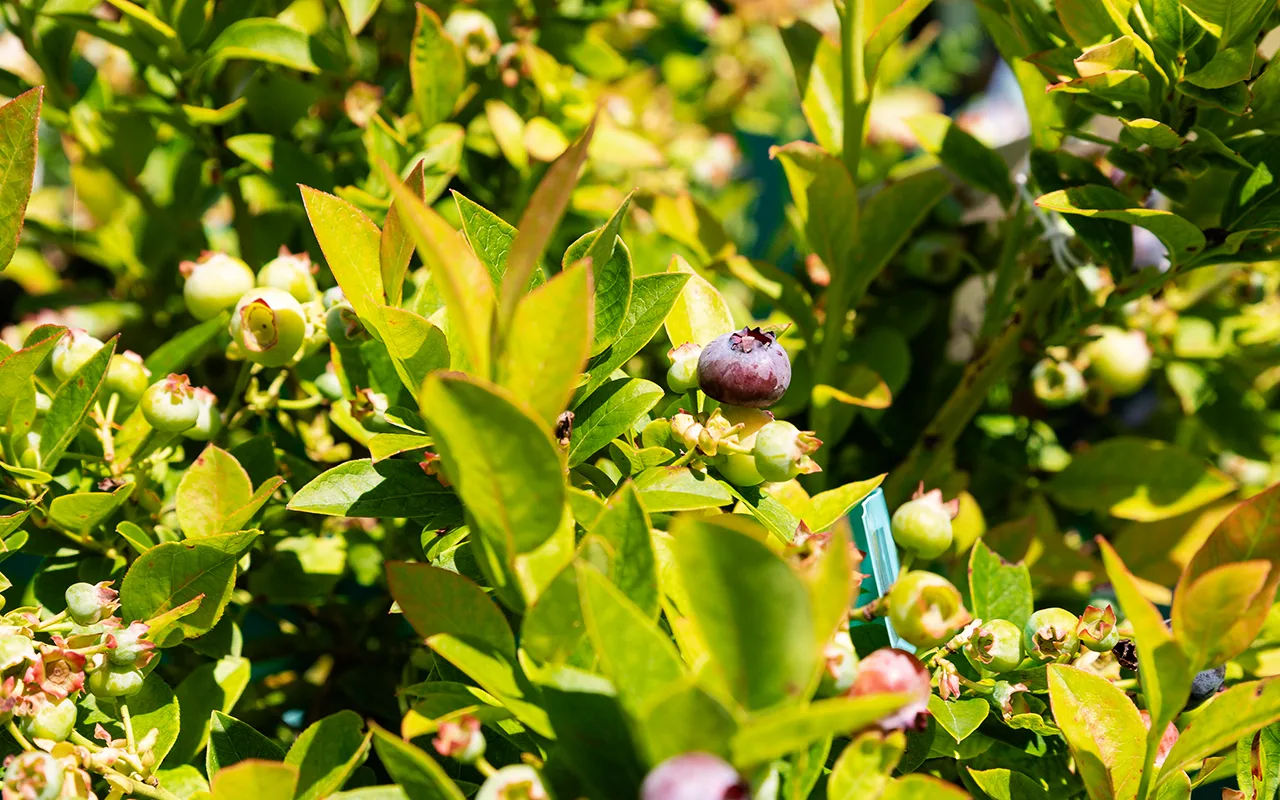
These lilac clouds and blueberry bushes show the rewarding future your March efforts can bring!
Advanced Tips & Expert Insights for Maximum Success
- Companion planting ideas: Marigolds or nasturtiums near tomatoes/squash to deter aphids and beetles naturally; basil with peppers for flavor and pest confusion.
- Organic pest & disease prevention: Apply neem oil or insecticidal soap early; introduce beneficial insects like ladybugs.
- Extending the season: Use cold frames, hoop houses, or floating row covers to protect plants from late frosts and jump-start growth by 2-4 weeks.

These protective setups (DIY cloches to hoop houses) are game-changers for March planting in variable weather!
- Sustainable practices: Adopt no-till methods to preserve soil structure, plant cover crops (clover, rye) in fallow areas, and harvest rainwater for eco-friendly watering. ♻️
Common March Planting Mistakes & How to Fix Them
- Planting too early without protection → Solution: Always have row covers or cloches ready; check forecasts obsessively.
- Skipping soil prep → Solution: Test and amend at least 2 weeks before planting for best nutrient uptake.
- Overwatering seedlings → Solution: Use the finger-test—water only when top inch feels dry.
- Crowding plants → Solution: Follow spacing guidelines on seed packets to avoid competition and disease.
Frequently Asked Questions (FAQs)
Can I plant tomatoes outdoors in March? It depends on your zone—only in Zones 9+ with no frost risk. In Zones 3-8, start indoors now and transplant after last frost.
What if we get a late frost? Cover tender plants overnight with frost blankets, old sheets, or even upside-down buckets. Water soil beforehand (moist soil retains heat better).
Best beginner vegetables/flowers/trees for March? Veggies: Peas, radishes, lettuce. Flowers: Pansies, calendula. Trees/shrubs: Serviceberry or lilac—forgiving and rewarding.
How do I know my soil is ready? It should crumble easily (not sticky or rock-hard) and be at least 40-45°F. A simple soil thermometer helps!
Conclusion: Get Planting & Watch Your Spring Garden Thrive!
March is your launchpad to a spectacular growing season—act now for earlier harvests, brighter blooms, and stronger trees that pay dividends year after year. Grab your seeds, check your zone, prep that soil, and start creating the garden of your dreams. With the right timing and care, you’ll enjoy fresh salads, fragrant bouquets, and homegrown fruit sooner than you think. Happy planting! 🌿💚
Share your March garden progress in the comments—what are you starting first this season? I’d love to hear and offer personalized tips!











