
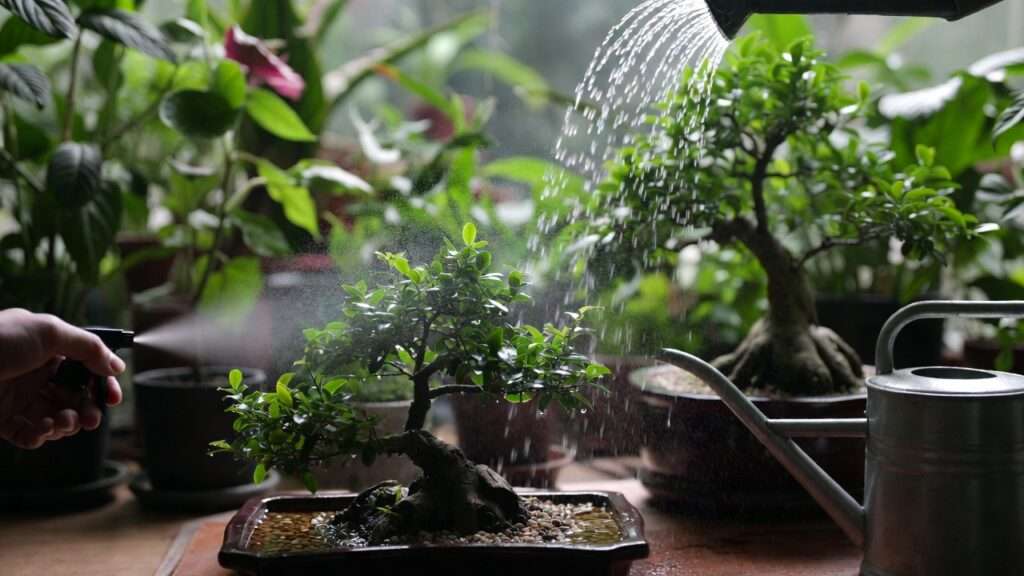
Imagine this: You wake up every morning, grab your cute little spray bottle, and gently mist your precious bonsai, thinking you’re giving it the love and hydration it craves. 😊 But weeks later, the leaves start yellowing, the branches droop, and despite your daily ritual, the tree looks stressed. Sound familiar? 😔
You’re not alone. Many bonsai enthusiasts — especially beginners in dry indoor environments like apartments in Dhaka — fall into the common trap of relying too heavily on misting vs. overhead watering for bonsai. The confusion is real: Does misting actually water the tree? Is overhead soaking the only way to go? Or is there a perfect balance?
In this in-depth guide, we’ll cut through the myths, draw from decades of expert bonsai cultivation (including insights from Bonsai Empire, professional growers, and community consensus on platforms like r/Bonsai), and give you clear, practical answers. By the end, you’ll know exactly how to hydrate your tree properly, boost its health, and avoid common pitfalls that kill more bonsai than any other care mistake. Let’s dive in and help your miniature masterpiece thrive! 🌳❤️
Understanding the Basics: What Misting and Overhead Watering Actually Do
To solve the debate around misting vs. overhead watering for bonsai, we first need to understand what each method truly achieves.
What Is Misting? (Foliar Spraying) 🌬️
Misting involves using a fine spray bottle to create a light cloud of water droplets over the foliage and branches. It’s quick, relaxing, and feels nurturing.
The primary purposes include:
- Temporarily boosting local humidity around the leaves (helpful in low-humidity indoor settings).
- Cleaning dust, pollutants, or minor pests from the foliage.
- Providing a brief cooling effect during hot days.
However, the effect is short-lived — often lasting just 10–30 minutes before evaporating, especially in air-conditioned rooms or during Dhaka’s dry winters. Importantly, misting delivers negligible water to the roots; most droplets run off the leaves or evaporate without penetrating the soil.

(Here’s a classic example of gentle misting in action — notice the fine spray focusing on leaves, not drenching the soil! 🌫️)
What Is Overhead Watering? 💧
Overhead watering means thoroughly soaking the soil from above using a watering can with a fine rose nozzle, a hose with a gentle shower setting, or even a specialized bonsai can. The goal is full saturation of the root ball until water drains freely from the drainage holes.
Key benefits:
- Delivers essential hydration directly to the roots for nutrient uptake and overall vitality.
- Flushes out excess salts and toxins built up from fertilizers.
- Oxygenates the soil as water percolates through.
- Mimics natural rainfall, which most bonsai species evolved with.
This is the core hydration method recommended by experts worldwide.
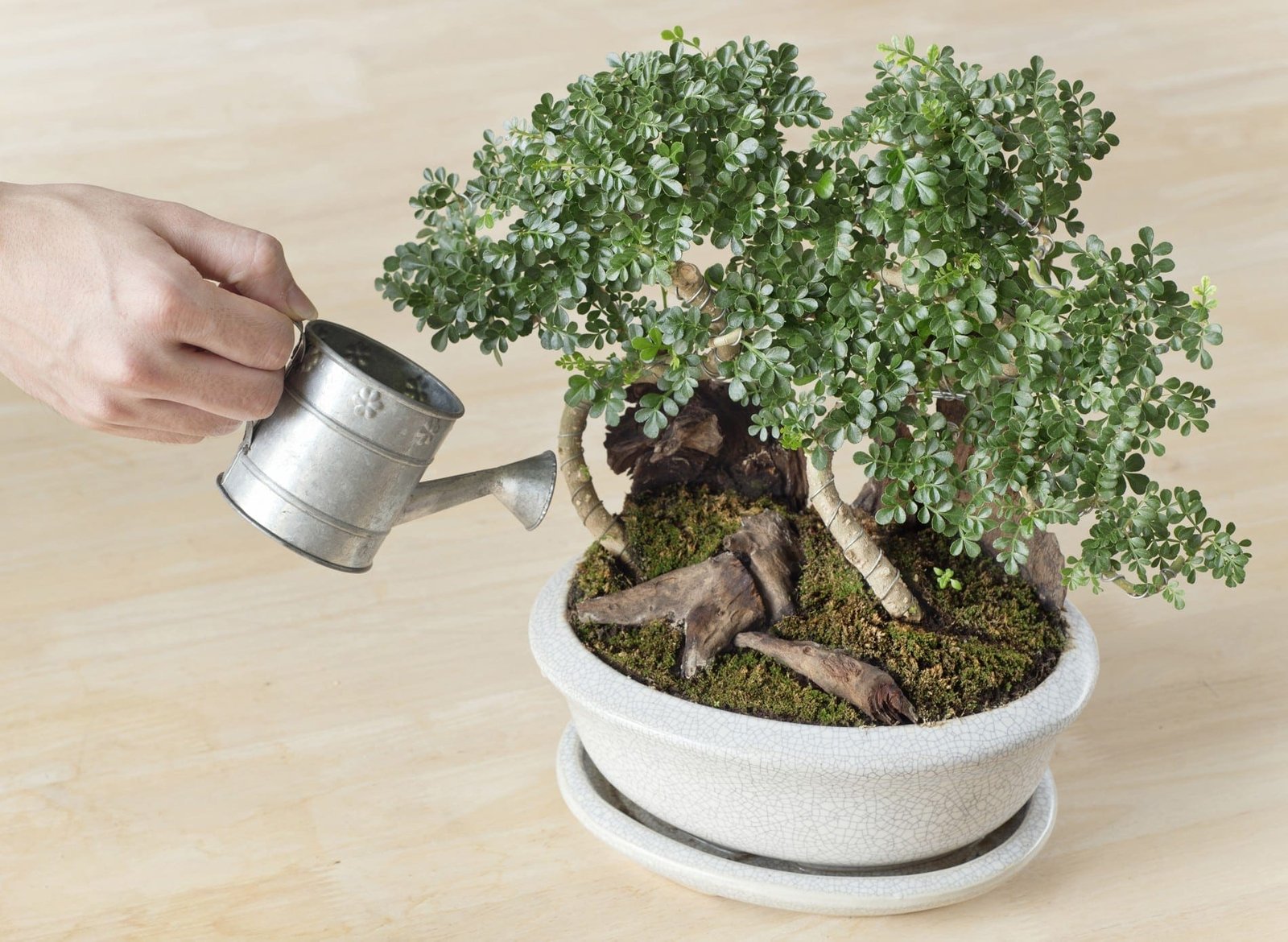
(Look at this beautiful overhead technique — gentle flow ensuring even saturation without soil erosion! 🌧️)
The Great Myth Debunked: Does Misting Replace Watering? 🚫💦
One of the biggest misconceptions in bonsai care is that misting provides meaningful root hydration. The short answer: No, it does not.
Misting wets the leaf surface but almost none reaches the soil in usable amounts. Excess water often runs off into the pot unevenly, creating a perpetually wet surface layer while the deeper roots stay dry — a perfect recipe for weak growth or root rot.
Experts from Bonsai Empire and Bonsai4Me emphasize this strongly: Frequent misting without proper soil watering leads to “performative” care that looks good but harms the tree long-term. Many beginners report trees dying “despite daily misting” — the roots simply starved while leaves appeared temporarily perky. 😢
For indoor tropical species, misting might give a quick visual boost, but it’s no substitute for thorough root-zone moisture.
Pros and Cons: Head-to-Head Comparison
Let’s break it down clearly so you can see the trade-offs.
Pros & Cons of Misting for Bonsai
Pros:
- Cleans leaves of dust and deters some pests 🧼
- Brief humidity spike for foliage health
- Enjoyable daily ritual that connects you to your tree 😊
Cons:
- Extremely temporary humidity effect
- Runoff leads to uneven soil moisture
- Overuse promotes fungal issues (especially evenings or poor airflow)
- Does not hydrate roots meaningfully
Pros & Cons of Overhead Watering for Bonsai
Pros:
- Deep, even root hydration 💪
- Prevents dry soil pockets in tiny pots
- Flushes salts and mimics nature 🌧️
- Essential for long-term survival
Cons:
- Risk of soil displacement if spray is too forceful
- Can spread fungal spores if tree has existing issues and airflow is low
- Takes a bit more time for large collections
The verdict? Overhead watering is non-negotiable for root health; misting is a nice-to-have supplement at best.
Which Is Better? It Depends — Real-World Scenarios & Recommendations 🌟
The honest truth about misting vs. overhead watering for bonsai? Neither wins outright — they serve different roles. The key is using each for its true purpose while prioritizing what your tree actually needs to survive and thrive: consistent root hydration.
For Root Health & Primary Hydration → Overhead Watering Wins 💪
Bonsai live in extremely small volumes of soil compared to their root mass. This means the roots demand full, even saturation to absorb water and nutrients properly. Overhead watering achieves this best by allowing water to percolate slowly through the entire root ball until it runs out the drainage holes (the famous “runoff” sign of thorough watering).
Expert consensus (from Bonsai Empire, Masakuni tools tradition, and modern growers) is clear: Water when the top 1–2 cm of soil feels dry to the touch or a chopstick inserted comes out mostly clean/dry. In hot Dhaka summers, this could mean daily (or even twice-daily for small pots); in cooler months, every 2–4 days.
Best practices for overhead watering:
- Use room-temperature rainwater, filtered, or dechlorinated tap water (let it sit 24 hours).
- Employ a watering can with a fine rose nozzle for gentle, even flow — avoid high-pressure hoses that can compact soil or erode surface roots.
- Water in the morning so foliage dries before night (reduces fungal risk).
- Always water until clear runoff appears — this prevents salt buildup from fertilizers.

(Traditional Japanese overhead watering with a classic long-spout can — precision and gentleness in action! 🌿)
(Modern gentle nozzle technique ensuring deep penetration without disturbing the soil — perfect for collections! 🌧️)
For Humidity & Foliage Health → Use Misting as a Supplement 🌫️
Many indoor bonsai (especially tropicals like Ficus) suffer in low-humidity Dhaka homes or air-conditioned spaces (<40–50% RH). Here, light misting can help keep leaves clean, reduce minor pest issues, and provide short-term humidity relief.
However, misting alone won’t maintain consistent humidity — better long-term solutions include:
- Humidity trays (pebble trays): Place the pot on a tray filled with gravel/pebbles and water (pot sits above water level so roots don’t sit wet).
- Grouping plants together to create a microclimate.
- A small room humidifier during dry seasons.
Safe misting guidelines:
- Morning only, using a fine mist bottle (not drenching).
- Use clean, room-temp water to avoid leaf spotting.
- Limit to 1–3 times per week — more often risks fungal problems if airflow is poor.
- Never rely on it as primary watering.
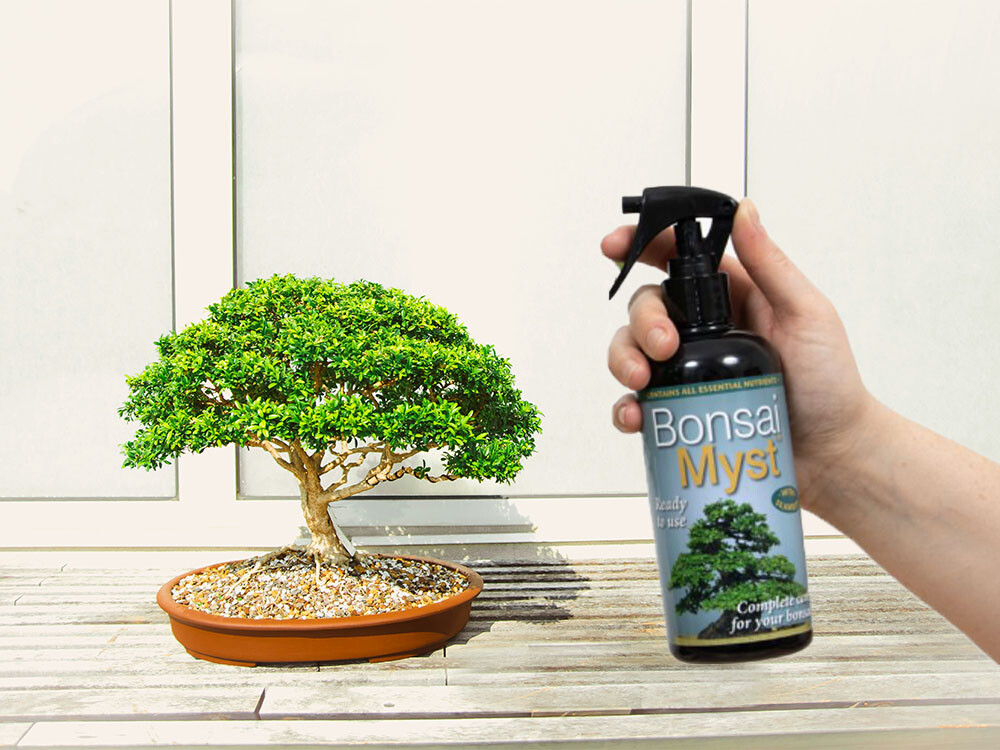
(Gentle foliar misting — notice the fine droplets focusing on leaves for cleaning and brief humidity boost! 😊)
(A simple but effective humidity tray setup — pebbles keep the pot elevated while evaporating water boosts local humidity naturally! 🪴)
Combined Approach: The Expert’s Winning Strategy
Most successful bonsai growers use this balanced routine:
- Primary hydration — Thorough overhead watering whenever needed (check daily with finger/chopstick test).
- Foliage/humidity support — Light misting 1–3× weekly + permanent humidity tray or humidifier.
- Seasonal tweaks — More frequent overhead in hot/monsoon periods; reduce misting in high-humidity rainy seasons; ease off both in cooler, dormant winters.
This combo prevents the two extremes: underwatered roots from mist-only care, or overly wet foliage from excessive spraying.
Species-Specific Advice: Tailoring Your Method
Different bonsai types have evolved different tolerances — here’s a quick guide:
- Outdoor evergreens (Juniper, Pine, Spruce) 🌲: Minimal misting (they prefer drier air). Focus almost entirely on deep overhead watering. Indoors they suffer — keep them outside year-round if possible.
- Indoor tropicals (Ficus, Carmona, Jade, Serissa): More forgiving of light misting + humidity tray essential in dry air. Overhead remains the main hydration method.
- Deciduous (Japanese Maple, Chinese Elm, Beech): Overhead primary; occasional misting helpful during hot, dry spells but avoid excess to prevent leaf scorch or fungus.
Quick-reference table (adapt to your local Dhaka climate):
| Species Type | Primary Method | Misting Frequency | Best Humidity Aid |
|---|---|---|---|
| Juniper/Pine | Overhead | Rare (1×/week max) | Natural outdoor air |
| Ficus retusa | Overhead | 2–4×/week | Humidity tray + grouping |
| Japanese Maple | Overhead | Occasional | Shade + tray in heat |
| Jade (Crassula) | Overhead (sparing) | Light, infrequent | Low humidity tolerant |

(Thriving indoor Ficus bonsai — notice lush foliage from balanced care including humidity support! 🌳)

(Healthy Juniper outdoors — proof that minimal misting + proper overhead keeps evergreens happy! 🌲)
Common Mistakes & How to Fix Them 🚫🌱
Even experienced bonsai keepers slip up sometimes. Here are the most frequent watering-related errors we see in Dhaka’s bonsai community (and worldwide), plus simple fixes.
- Mistaking misting for actual watering Symptom: Soil stays dry deep down while leaves look “happy” temporarily → eventual yellowing, leaf drop, weak new growth, or death. Fix: Always do the finger/chopstick test before assuming the tree is watered. Make overhead soaking your non-negotiable primary step. Misting is the cherry on top, never the main course. 😅
- Using too forceful overhead watering Symptom: Soil surface erodes, fine roots exposed, potting mix compacts over time, poor drainage. Fix: Invest in a watering can with a fine “rose” head (shower-like pattern) or use a hose-end mist nozzle on the gentlest setting. Water slowly and let it absorb — patience prevents problems.
- Evening or night misting Symptom: Leaves stay wet overnight → fungal spots, black mold, powdery mildew, especially on denser tropical species. Fix: Mist only in the morning so foliage dries quickly in daylight and airflow. If humidity is critically low, rely on trays or humidifiers instead.
- Ignoring runoff (no leaching) Symptom: White crust on soil surface, leaf tip burn, stunted growth from salt/toxin buildup. Fix: Water until you see 10–20% of the pot volume running out the bottom every time. Do this with plain water monthly to flush accumulated minerals.
- Using very cold tap water straight from the pipe Symptom: Root shock → sudden leaf drop, especially in winter. Fix: Let water sit overnight to reach room temperature and lose chlorine. Rainwater (collected during monsoons) is ideal when possible!
Pro tip: Keep a small notebook or phone note tracking when you last watered each tree — it removes guesswork and helps spot patterns early. 📝
Advanced Tips for Better Results in 2026 🛠️✨
Bonsai care keeps evolving with better tools and climate awareness. Here are up-to-date recommendations tailored for urban growers in places like Dhaka:
- Automated watering options Overhead micro-sprinklers or mist systems on timers work well for collections, but drip systems often leave dry pockets in bonsai pots. Most pros still prefer manual overhead for the control and runoff check — automation is best as a backup for vacations.
- Recommended tools (2026 favorites)
- Watering cans: Haws Brass “Fine Rose” or Japanese long-spout stainless models (~BDT 2,500–6,000).
- Mist bottles: Continuous-spray models (e.g., Flairosol or bonsai-specific brands) for even, fine mist without hand fatigue.
- Moisture meters: Affordable digital probes (XLUX or Sustee) give instant root-zone readings — great teaching tool for beginners.
- Hygrometers: Small digital ones with min/max memory to track your home’s humidity swings.
- Climate-smart adjustments for Dhaka
- Monsoon (Jun–Sep): Reduce misting dramatically; overhead every 2–4 days as soil stays moist longer.
- Dry winter (Nov–Feb): Increase humidity tray use + occasional light misting; check soil daily as indoor heating/AC dries air fast.
- Heatwaves (Apr–May): Morning + evening overhead if needed; light midday mist for cooling (but never soak foliage in full sun).
- Soil & pot considerations Well-draining akadama/pumice/lava mixes dry faster → more frequent overhead checks. Shallow pots need more careful watering than deeper training pots.
Frequently Asked Questions (FAQs) ❓
Is misting bonsai every day good? No — daily heavy misting often causes more harm (fungal risk, uneven moisture) than good. Limit to 2–4 times weekly as a supplement only.
Can overhead watering cause root rot? Only if drainage is poor, soil stays soggy for days, or you water when soil is already wet. Always check first and ensure pots have good drainage holes + free-draining mix.
What’s better for indoor bonsai: misting or humidity tray? Humidity tray wins hands-down for consistent, long-lasting humidity without wetting leaves excessively. Misting is short-term help at best.
How do I know if my bonsai needs water? Finger test (top 1–2 cm dry), chopstick test (comes out clean/dry), or moisture meter. Lift the pot — lighter weight usually means it’s thirsty.
Does misting help during summer heatwaves? Light misting can cool foliage briefly, but thorough overhead watering in the morning is far more important to keep roots hydrated.
Should I mist my juniper bonsai? Very sparingly (once a week max). Junipers prefer lower humidity and suffer needle blight from excess leaf wetness.
Is it okay to mist in the evening? Avoid it — wet leaves overnight invite fungus. Morning is safest.
Can I use tap water for misting? Yes, but let it sit 24 hours to off-gas chlorine. Filtered or rainwater is even better to prevent leaf spotting over time.
Conclusion 🌳❤️
After breaking down misting vs. overhead watering for bonsai in detail, the takeaway is simple yet powerful:
Prioritize thorough overhead watering to keep roots alive and thriving — this is non-negotiable for any bonsai’s long-term health. Use misting sparingly as a foliage refresher and minor humidity helper, never as a replacement. Combine both thoughtfully, add a humidity tray for indoor trees, and adjust seasonally to your local Dhaka climate — and your bonsai will reward you with vibrant growth, beautiful ramification, and decades of joy.
You’ve got this! Start by checking your current routine today: When did you last give a full overhead soak? How’s the soil moisture right now? Experiment, observe how your tree responds, and feel free to drop a comment below with your species and setup — I’d love to help fine-tune it further.
Happy watering, and may your bonsai flourish! 🌿✨











