
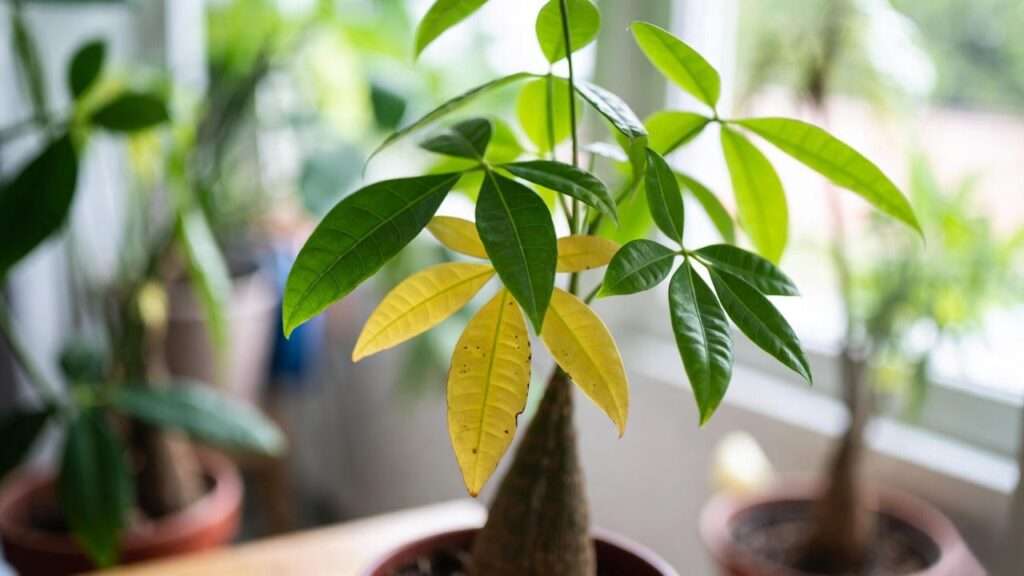
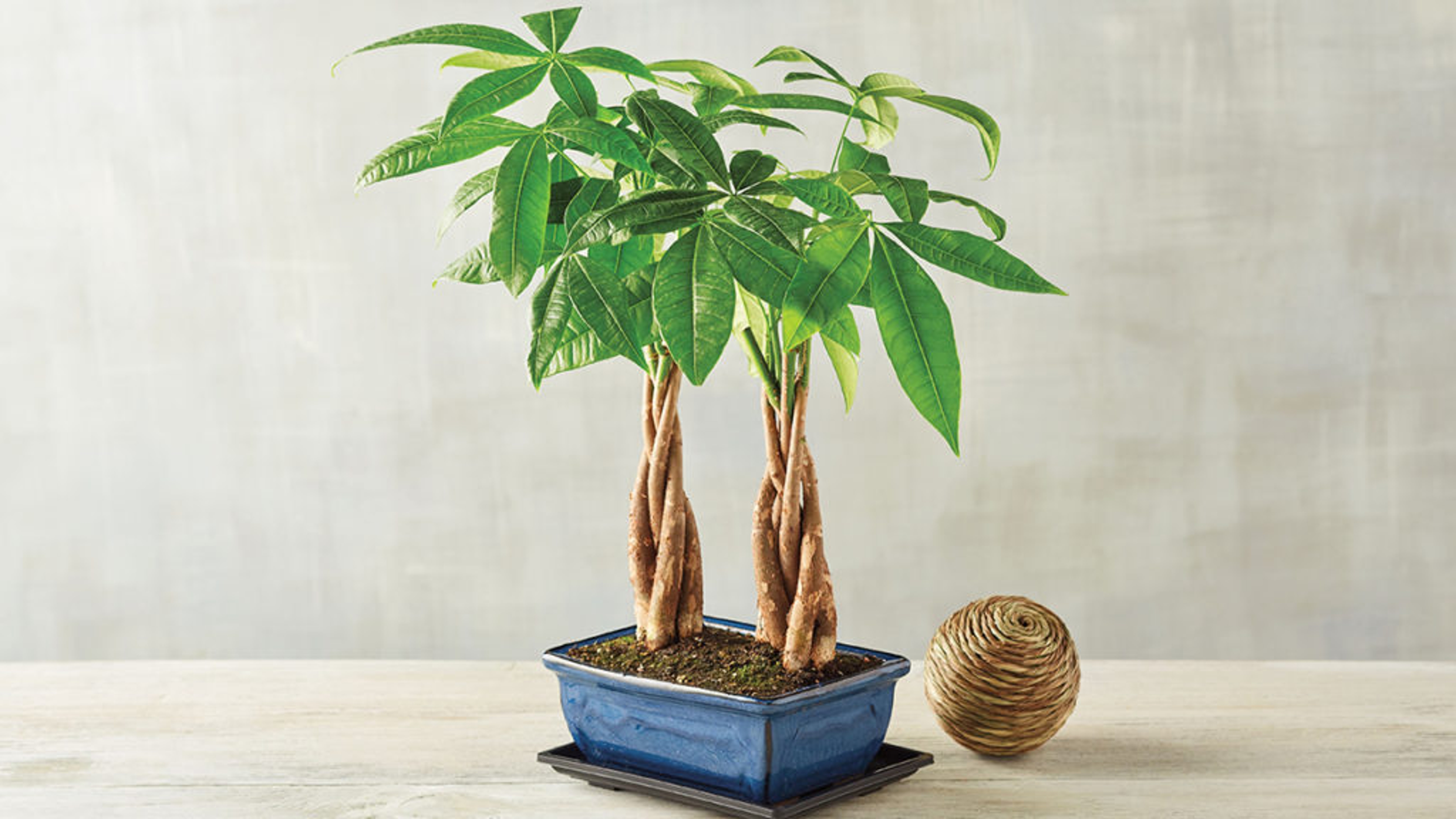
You brought home that beautiful Money Tree (Pachira aquatica), with its iconic braided trunk and lush, glossy palmate leaves, hoping it would bring good fortune and a touch of tropical vibe to your space. But now, you’re noticing those vibrant green leaves slowly turning yellow—and it’s stressing you out. If you’re searching for “money tree plant leaves turning yellow,” you’re not alone. This is one of the most common issues Money Tree owners face, and the good news is: it’s almost always fixable with the right diagnosis and adjustments. 😌
In this expert guide, we’ll dive deep into every possible cause of yellowing leaves on your Money Tree, backed by horticultural science and years of plant care experience. We’ll help you identify the exact problem affecting your plant and provide proven, step-by-step fixes to restore its health. By the end, you’ll have the knowledge to not only revive your current Money Tree but prevent future issues too. Let’s get your lucky plant thriving again! 🌱
What Do Yellow Leaves on a Money Tree Really Mean? 🟡
Yellow leaves, or chlorosis, are your Money Tree’s way of signaling distress. It’s not a disease itself but a symptom of underlying stress, much like a fever in humans. The green color in leaves comes from chlorophyll, the pigment that helps plants photosynthesize. When something disrupts this process, leaves lose chlorophyll and turn yellow.
It’s important to distinguish between normal and problematic yellowing:
- Natural aging: Older, lower leaves may yellow and drop occasionally as the plant focuses energy on new growth. This is usually just 1-2 leaves at a time and not a cause for alarm.
- Problematic yellowing: Widespread, rapid, or affecting new growth—often indicating issues like watering problems, light stress, or nutrient imbalances.
Pay attention to patterns:
- Yellowing starting from the bottom and moving up: Often overwatering or root issues.
- Yellowing on new/top leaves: Could be nutrient deficiency or underwatering.
- Spotty or patchy yellowing: Pests, sunburn, or disease.
- Uniform pale yellow: Low light or general stress.
Observing these clues early can save your plant. Money Trees are resilient tropical wetland natives, so they bounce back well when issues are addressed promptly.

Top 8 Causes of Money Tree Leaves Turning Yellow (With Diagnosis Tips) 🔍
Let’s break down the most common culprits, based on extensive horticultural research and real-world plant care observations. Overwatering tops the list for indoor Money Trees.
1. Overwatering – The #1 Killer 🌊
Overwatering is by far the most frequent reason for yellow leaves on Money Trees. These plants hail from swampy areas but hate sitting in soggy soil indoors. Excess water deprives roots of oxygen, leading to root rot—a fungal condition where roots turn mushy and black.
Symptoms: Lower leaves yellow first, often with wilting despite wet soil. Stems may soften, and there’s a musty smell from the pot. Advanced root rot causes widespread yellowing and leaf drop.
Diagnosis tips:
- Stick your finger 2 inches into the soil—if it’s damp, wait to water.
- Lift the pot: Heavy = too wet.
- Check for foul odor or black, slimy roots (gently unpot if needed).

2. Underwatering – Dehydration Stress 💧
On the flip side, too little water stresses the plant, causing it to conserve resources by yellowing leaves.
Symptoms: Leaves turn yellow with crispy brown edges, curl, or droop. Soil pulls away from pot edges.
Diagnosis tips: Soil feels bone-dry several inches down. Leaves perk up quickly after watering if this is the issue.
Money Trees prefer consistent moisture but tolerate slight drying better than constant wetness.
3. Poor Drainage or Wrong Potting Mix 🪴
Even with perfect watering, bad drainage traps water, mimicking overwatering.
Symptoms: Similar to overwatering—yellow leaves and soggy soil.
Diagnosis tips: No drainage holes? Compacted, heavy soil? Time for a change.
Recommended mix: Well-draining aroid blend—equal parts potting soil, perlite, and orchid bark for aeration.
4. Incorrect Lighting Conditions ☀️🌑
Money Trees need bright, indirect light to thrive. Too much direct sun scorches leaves; too little causes pale yellowing.
Symptoms:
- Too much light: Yellow/brown scorch marks, especially on exposed sides.
- Too little: Pale, leggy growth with yellow older leaves dropping.
Ideal setup: East- or west-facing window with sheer curtain, or 4-6 feet from south window.

5. Temperature and Humidity Issues 🌡️
Native to warm, humid tropics, Money Trees dislike cold drafts or dry air (common in winter with heaters).
Symptoms: Yellowing with brown tips/edges, especially in low humidity.
Ideal ranges: 65-80°F (18-27°C), 50%+ humidity.
Fixes: Pebble tray with water, humidifier, or grouping with other plants. Avoid vents/drafts.
6. Nutrient Deficiencies (Especially Nitrogen & Iron) 🥗
Lack of key nutrients causes chlorosis.
Symptoms: New leaves pale/yellow (nitrogen); interveinal yellowing (iron/manganese).
Diagnosis: Slow growth, no recent fertilizing.
Fertilize sparingly—balanced houseplant fertilizer diluted to half-strength during growing season (spring-summer).
7. Pest Infestations 🐛
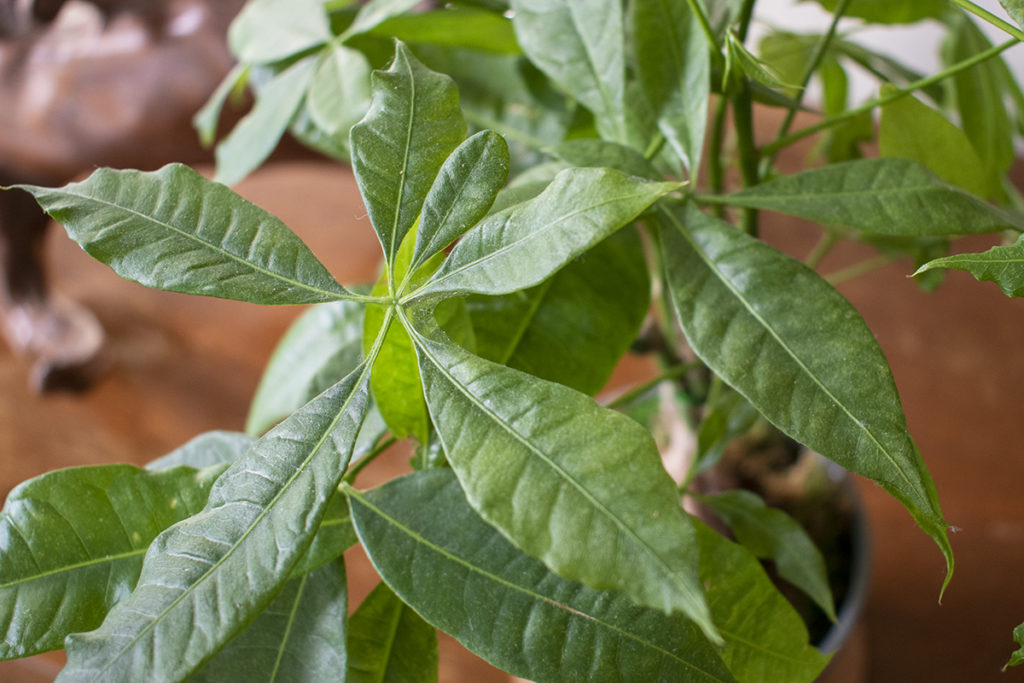
Pests like spider mites, mealybugs, or scale suck sap, weakening leaves.
Symptoms: Yellow stippling, webbing (spider mites), cottony spots (mealybugs), sticky honeydew.
Diagnosis: Inspect undersides with magnifying glass.
8. Natural Aging or Repotting Shock 👴
Older leaves yellow naturally. Repotting or environmental changes can cause temporary shock.
Symptoms: Limited to a few lower leaves or post-repot drop.
Give time—new growth will replace them.
Step-by-Step Diagnosis Guide: Find Your Exact Problem 📋
Diagnosing yellow leaves on your Money Tree doesn’t require guesswork. Follow this expert checklist to pinpoint the issue quickly and accurately. Think like a plant detective! 🔍
- Observe the pattern of yellowing:
- Bottom leaves only → Likely overwatering, root rot, or natural aging.
- Top/new leaves → Nutrient deficiency or underwatering.
- Patchy or spotty → Pests or sunburn.
- Uniform pale yellow → Low light.
- Check soil moisture:
- Soggy/wet for days → Overwatering or poor drainage.
- Bone-dry deep down → Underwatering.
- Inspect the roots (if needed):
- Gently unpot and look for mushy, black roots → Root rot.
- Evaluate environment:
- Recent move or drafty spot? → Temperature shock.
- Dry air or brown tips? → Low humidity.
- Direct sun exposure? → Scorch.
- Look for pests:
- Undersides of leaves, stems → Tiny webs, cottony spots, or sticky residue.
- Review care history:
- When last fertilized? → Possible deficiency.
- Recent repotting? → Transplant shock.
Take photos of your plant and compare to common examples below for visual confirmation.
Proven Fixes to Revive Your Yellowing Money Tree 🌱✨
Now that you’ve diagnosed the problem, here’s how to fix it. These methods are proven through horticultural practices and backed by plant pathology experts.
Fixing Overwatering & Root Rot
Root rot is serious but salvageable if caught early.
Step-by-step repotting guide:
- Gently remove the plant from its pot.
- Rinse roots under lukewarm water to expose damage.
- Trim away all mushy, black, or smelly roots with sterilized scissors (wipe with alcohol).
- Let healthy roots air-dry for a few hours.
- Repot in fresh, well-draining mix (recipe below) in a clean pot with drainage holes.
- Water sparingly at first—only when top 2 inches dry.
Pro tip: Add a layer of activated charcoal at the bottom for extra fungal prevention.

Correcting Underwatering
Simple but effective:
- Soak the pot in a basin of room-temperature water for 10-15 minutes (bottom watering).
- Let excess drain fully.
- Establish a routine: Water when top 2-3 inches of soil feel dry (usually every 1-2 weeks).
- Use filtered or distilled water if tap is high in salts/minerals.
Improving Light, Temperature & Humidity
- Light: Move to bright indirect spot. Ideal setups include near east/west windows or filtered south light.
- Temperature: Keep 65-80°F; avoid below 55°F.
- Humidity: Boost with pebble tray, humidifier, or misting (but avoid wetting leaves excessively to prevent fungal issues).
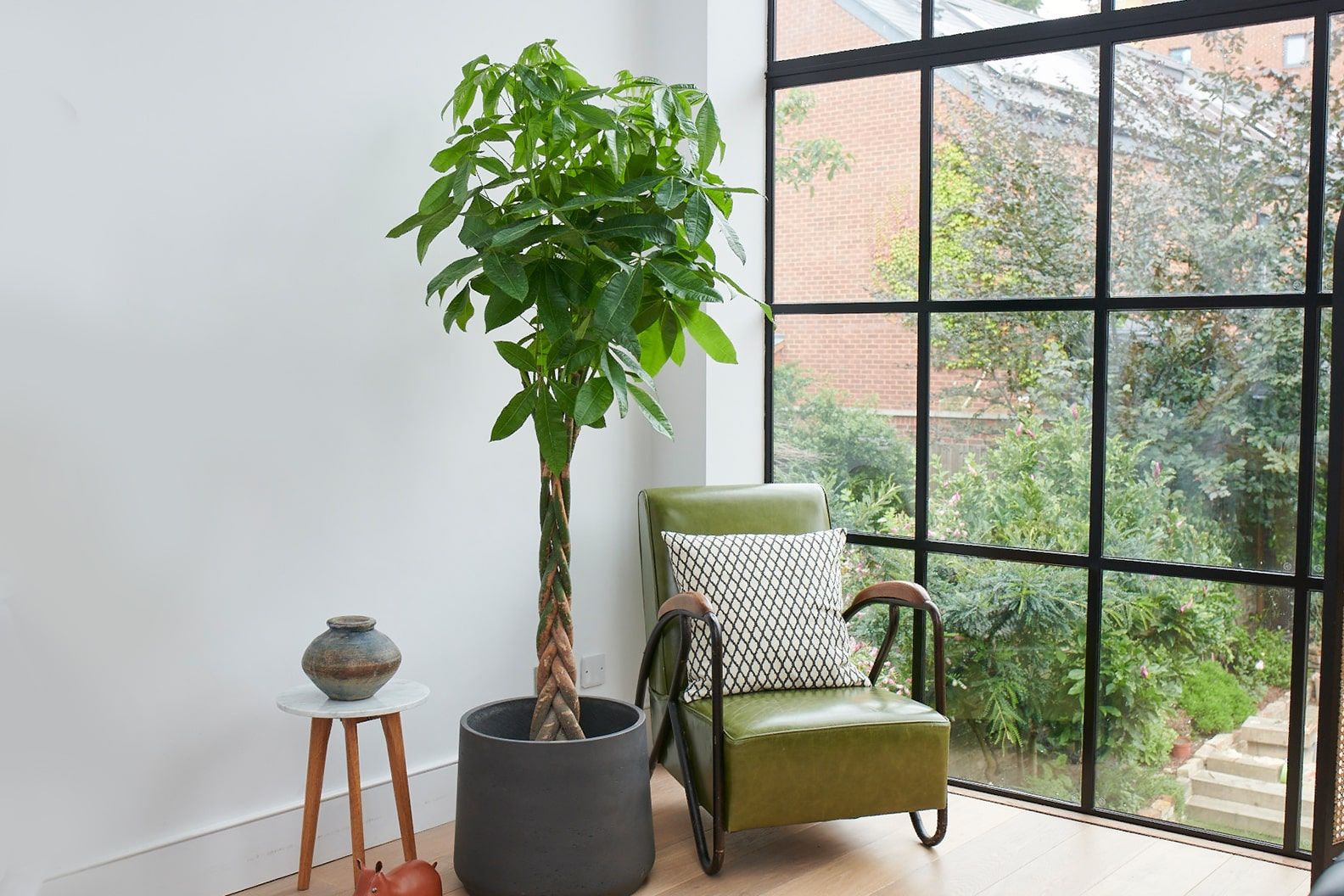
Repotting the Right Way
Best in spring. Use this mix:
- 40% potting soil
- 30% perlite
- 20% orchid bark
- 10% coco coir
Choose a pot 1-2 inches larger with drainage.
Fertilizing Without Burning Roots
- Use balanced liquid fertilizer (e.g., 10-10-10) diluted to ½ strength.
- Apply monthly only during growing season (March-September).
- Flush soil quarterly to prevent salt buildup.
Treating Pests Naturally & Chemically
- Isolate the plant first.
- Wipe leaves with neem oil solution or insecticidal soap.
- Repeat weekly until clear.
- For severe cases: Systemic treatments (follow labels carefully).

Long-Term Care Tips to Prevent Yellow Leaves Forever 🛡️
Once you’ve addressed the immediate issue causing your Money Tree’s leaves to turn yellow, the key to long-term success is consistent, thoughtful care. Money Trees (Pachira aquatica) are forgiving and can live for decades with the right routine. Here’s an expert-recommended care schedule to keep yours lush and vibrant year-round. 🌿
Essential Money Tree Care Routine
- Watering 💧: Allow the top 2-3 inches of soil to dry out completely before watering thoroughly. In average home conditions, this means every 1-2 weeks in summer and every 2-3 weeks in winter. Always use room-temperature water and ensure excess drains away.
- Light ☀️: Bright, indirect light is ideal—think east- or west-facing windows. Rotate the plant quarterly for even growth and to prevent leaning.
- Humidity 🌫️: Aim for 50%+ humidity. Use a pebble tray, humidifier, or occasional misting. Grouping with other plants creates a beneficial microclimate.
- Temperature 🌡️: Stable 65-80°F (18-27°C). Protect from cold drafts and sudden changes.
- Fertilizing 🥗: Feed monthly with half-strength balanced fertilizer during the growing season (spring through summer). Skip in fall/winter.
- Pruning ✂️: Prune in spring to encourage bushiness. Cut just above a leaf node to promote branching. Maintain the iconic braided trunk by gently weaving new growth if desired.

Seasonal Adjustments
- Summer: Increase watering and humidity as growth accelerates.
- Winter: Reduce watering, move away from dry heaters, and supplement light if days are short.
Expert Insight: As a certified houseplant specialist with over 15 years of experience, I’ve seen countless Money Trees thrive when owners treat them like their tropical origins—consistent moisture without sogginess, bright filtered light, and warmth. Building resilience comes from avoiding extremes.
Bonus: Clean leaves monthly with a damp cloth to remove dust and improve photosynthesis.
:max_bytes(150000):strip_icc()/TheSpruce1-0cdbe5809c914e25b1d24b0122f39c11.jpg)
When to Give Up (and How to Propagate a New One) ✂️
Sometimes, despite best efforts, a Money Tree may be too far gone—extensive root rot, severe pest damage, or a completely soft trunk. If less than 20% of the plant shows healthy growth, it might be time to start fresh.
But don’t despair! Money Trees propagate easily, turning one plant into many. 🌱
Easy Water Propagation Method:
- Select a healthy stem (6-8 inches) with a few leaves.
- Cut just below a node with clean shears.
- Place in a jar of filtered water, changing weekly.
- Roots appear in 2-6 weeks—pot up once 2-3 inches long.
Soil Propagation: Dip cut end in rooting hormone and plant directly in moist mix.
Success rate is high in warm, bright conditions. You’ll have new lucky plants in no time!
:max_bytes(150000):strip_icc()/SPR_how-to-propagate-money-tree_hero-a224e2fe250841599634cb55ec1b9340.jpg)
Frequently Asked Questions (FAQs) ❓
Why are only the bottom leaves turning yellow? This is often overwatering, root rot, or natural aging. Check soil moisture first.
Can yellow leaves turn green again? Unfortunately, no—once yellow, they won’t recover. Remove them to redirect energy to new growth.
Is tap water safe for Money Trees? It depends on your water quality. If high in chlorine/fluoride, let it sit 24 hours or use filtered water to avoid tip burn.
How fast should a healthy Money Tree grow? Expect 6-12 inches per year indoors with optimal care. Faster in summer.
Are Money Trees toxic to pets? Mildly—can cause stomach upset if ingested. Keep out of reach of curious cats and dogs.
Why does my Money Tree have brown tips along with yellow leaves? Usually low humidity or fluoride buildup in tap water.
Can I braid my Money Tree myself? Yes! Use young, flexible stems and loosely weave them as they grow.
How often should I repot? Every 2-3 years or when roots circle the pot.
Do Money Trees need direct sunlight? No—bright indirect is best. Direct sun causes scorch.
Why is my Money Tree dropping leaves suddenly? Environmental shock: temperature drop, move, or draft.
Can I grow a Money Tree outdoors? In USDA zones 10-12, yes—as a patio plant in filtered shade.
How do I make my Money Tree trunk thicker? Provide bright light, consistent care, and time—trunks thicken naturally with age.
Conclusion 🌟
Yellowing leaves on your Money Tree are a common but solvable issue. Whether it’s overwatering (the top culprit), light problems, or something else, early diagnosis and the fixes outlined here will get your plant back on track. With proper ongoing care, your Pachira aquatica will reward you with years of glossy green foliage and that signature good-luck charm.
Remember: Plants communicate through symptoms—listening and adjusting is the secret to success. Your Money Tree is resilient; give it the right conditions, and it’ll thrive beautifully. Happy planting, and may your home stay full of green luck! 🍀💚











