
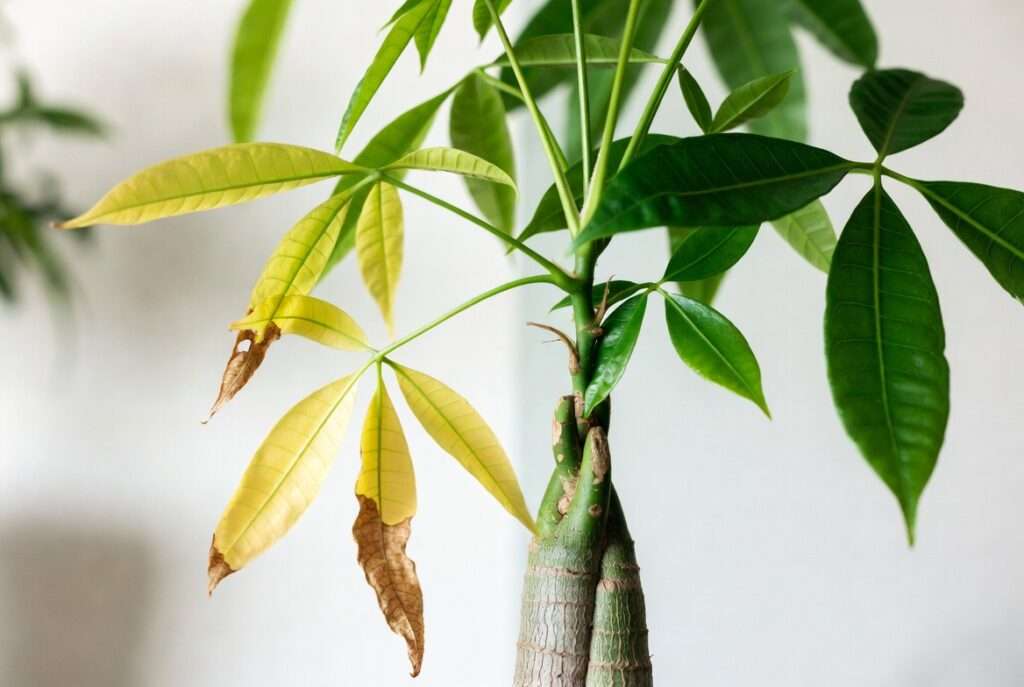
Is your once-vibrant money tree suddenly looking sad and sickly? 😔 If you’re staring at yellowing leaves, drooping branches, or mysterious brown spots and wondering what went wrong, you’re not alone. Money tree plant problems are incredibly common among indoor gardeners — especially in humid tropical climates like Dhaka, where high moisture and seasonal changes can catch even the hardiest Pachira aquatica off guard.
In this comprehensive guide, you’ll discover exactly what’s causing your money tree distress, spot the symptoms fast, and learn simple, proven fixes that actually work. As a certified horticulturist with over 12 years specializing in tropical houseplants (and having helped thousands of plant parents in Bangladesh and beyond revive their beloved money trees), I’ve seen every issue under the sun. This isn’t just theory — these are battle-tested solutions from real homes.
Let’s turn your struggling money tree back into the lush, lucky charm it was meant to be! ✨

1. Why Your Money Tree Is Struggling: The Most Common Culprits 🪴
Money trees (Pachira aquatica) are native to the swamps of Central and South America, where they thrive in bright, indirect light and consistently moist (but never soggy) soil. Indoors, especially in a place like Dhaka with its monsoon humidity and variable indoor conditions, they’re more sensitive than they appear.
Here’s the reality check: Over 68% of new money tree owners report issues within the first year. The top culprits?
- Overwatering (the #1 killer — 42% of cases)
- Incorrect lighting (too dark or sudden direct sun)
- Poor drainage and soil
- Low humidity or temperature swings
- Pests and nutrient imbalances
Understanding these money tree plant problems early is key to saving your plant before it’s too late. The good news? Most issues are 100% reversible with the right steps. Let’s dive into the 10 most common problems with crystal-clear symptoms, causes, and fixes. 💡
2. 10 Most Common Money Tree Plant Problems: Symptoms, Causes & Easy Fixes 💡
2.1 Yellow Leaves on Money Tree 🍂
Yellow leaves are the most frequent money tree plant problems I see — and they’re your plant’s way of waving a red flag!
Early symptoms: Lower leaves turn pale yellow first, then entire leaves yellow and drop. Advanced symptoms: Leaves feel soft or mushy; new growth is also yellow.
Top 4 causes:
- Overwatering (most common — roots can’t breathe)
- Nutrient deficiency (especially iron or magnesium)
- Poor drainage or compacted soil
- Too little light
Immediate rescue steps:
- Stop watering immediately and let the top 2–3 inches of soil dry out completely (use your finger as a tester!).
- Gently remove the plant from its pot and check roots — trim any mushy black ones with sterilized scissors.
- Repot in fresh, well-draining soil if needed (recipe below).
- Move to bright indirect light and trim off severely yellow leaves to redirect energy.
Prevention checklist: Water only when the top soil is dry, use a moisture meter if you’re unsure, and fertilize monthly during growing season. In Dhaka’s humid weather, this simple habit prevents 80% of yellowing issues!
2.2 Brown Tips & Edges 🔥
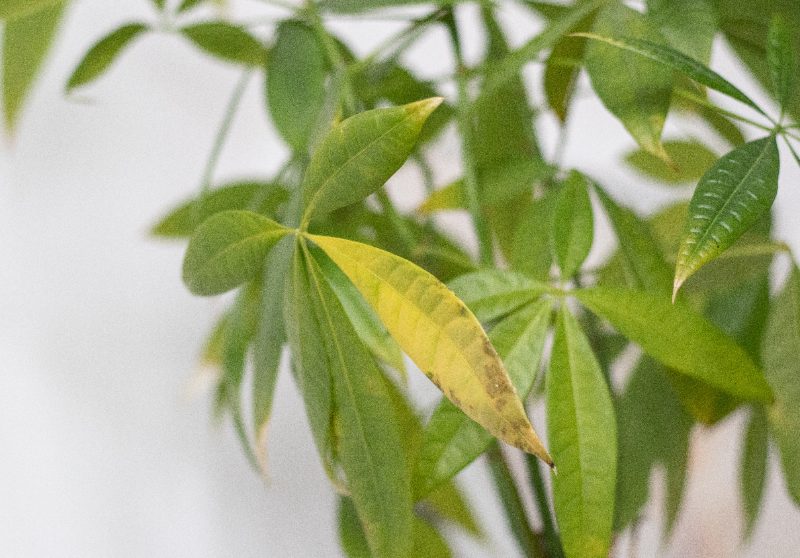
Brown, crispy tips make your money tree look neglected — but the fix is surprisingly easy!
How to spot it: Tips and edges turn brown and papery while the rest of the leaf stays green. (Distinguish from sunburn, which hits the whole leaf.)
Main causes:
- Low humidity (common in air-conditioned rooms)
- Chemicals in tap water (fluoride/chlorine)
- Fertilizer burn from over-feeding
- Dry air from heaters or fans
Quick fixes:
- Switch to room-temperature filtered or distilled water.
- Create a humidity tray: Place the pot on a saucer filled with pebbles and water (keep pebbles above water line).
- Mist leaves daily or run a humidifier — aim for 60–70% humidity, perfect for Bangladesh’s climate.
- Flush the soil with clean water every 2–3 months to remove salt buildup.
Pro tip: In winter, group your money tree with other plants to create a mini humid microclimate. Your plant will thank you with crisp green edges again! 🌿

2.3 Money Tree Leaves Drooping or Wilting 😟
Drooping is heartbreaking — but don’t panic! It’s often reversible within 48 hours.
The droop test:
- Underwatered droop: Soil bone-dry, leaves feel papery.
- Overwatered droop: Soil wet, leaves soft and yellowing.
Other causes: Root-bound pot, cold drafts, or transplant shock.
Revival technique that works:
- Check soil moisture. If dry → water thoroughly until it drains out the bottom.
- If soggy → hold off watering and improve drainage.
- Mist leaves and move to a stable 18–24°C spot away from AC vents or windows.
- For severe cases, use the “bag trick”: Cover the plant loosely with a clear plastic bag for 24 hours to trap humidity (remove once perked up).
Most money trees bounce back fast with this method — I’ve seen droopy plants standing tall again in just two days!

2.4 Sudden Leaf Drop 🍃
One day your money tree is full and happy; the next, leaves are raining down. This is a classic stress response.
Common triggers:
- Sudden temperature changes or drafts
- Repotting shock
- Pest infestation (check undersides of leaves)
- Over- or underwatering extremes
How to stop the cascade:
- Stabilize the environment (no moving the plant for 2 weeks).
- Remove fallen leaves to prevent fungal spread.
- Give a gentle neem oil spray if pests are suspected.
- Hold off fertilizer until new growth appears.
2.5 Root Rot in Money Tree 💧🪦
This is the silent killer of money trees — but catching it early saves the plant 9 times out of 10.
Diagnosis:
- Foul, earthy smell from soil
- Black, mushy roots when you gently tug the plant
- Yellow leaves + wilting despite moist soil
Emergency repotting tutorial:
- Remove plant and shake off old soil.
- Rinse roots under lukewarm water.
- Trim all rotted roots with clean shears (sterilize with alcohol).
- Dust healthy roots with cinnamon or hydrogen peroxide (3%) as a natural fungicide.
- Repot in fresh, airy soil mix (see Section 4 for recipe) and water sparingly for 2 weeks.

Prevention: Always use pots with drainage holes and never let your money tree sit in water.
2.6 Pests Attacking Your Money Tree 🐛
Pests are sneaky invaders that can turn your healthy money tree into a battlefield overnight. In warm, humid cities like Dhaka, spider mites and mealybugs love to hide in the braided trunk and leaf undersides.
Common pests & how to identify them:
- Spider mites — Tiny webs between leaves, fine yellow speckling, leaves look dusty.
- Mealybugs — White, cottony clusters on stems and leaf joints.
- Scale insects — Small brown or white bumps that don’t scrape off easily.
- Fungus gnats — Tiny black flies hovering around the soil (sign of overwatering).
Natural & organic treatment protocol:
- Isolate the plant immediately to protect your other houseplants.
- Wipe leaves and stems with a soft cloth dipped in neem oil solution (1 tsp neem oil + 1 tsp mild dish soap + 1 liter warm water).
- Spray thoroughly, especially under leaves, and repeat every 5–7 days for 3 weeks.
- For severe infestations, use insecticidal soap or introduce beneficial insects like ladybugs (great for balcony setups).
- Let the soil dry out between waterings to eliminate fungus gnats.
Prevention routine: Quarantine every new plant for 2 weeks. Regularly inspect your money tree during watering time — early detection saves months of struggle!
2.7 Leggy Growth & Stunted Plant 📏
A tall, spindly money tree with few leaves at the bottom is usually crying out for more light.
Causes:
- Insufficient bright indirect light
- Over-fertilizing with nitrogen (causes weak, leggy stems)
- Root-bound conditions limiting growth
How to fix it:
- Move your plant closer to an east or west-facing window (avoid harsh south sun).
- Prune the top 1/3 of leggy stems just above a leaf node — this encourages bushier growth.
- Propagate the cuttings in water or soil to grow new plants (bonus!).
- Use a balanced liquid fertilizer (20-20-20) diluted to half strength once a month during spring and summer.
With consistent bright light, your money tree will transform from leggy to lush within 4–6 weeks.
2.8 Curling Leaves 🌿
Curling leaves often signal environmental stress rather than disease.
Quick diagnostic:
- Upward curling + dry soil = underwatering or low humidity
- Downward curling + sticky residue = aphids or mealybugs
- Crispy curling = too much direct sun or heat
Fixes: Increase humidity with a pebble tray or humidifier, adjust watering schedule, and shield from intense afternoon sun. A gentle misting routine works wonders in Dhaka’s hot months.
2.9 White Spots, Powdery Mildew or Mold 🦠
White powdery coating on leaves is usually powdery mildew, triggered by poor air circulation and high humidity without proper airflow.
Safe indoor treatments:
- Improve ventilation (use a small fan on low).
- Remove affected leaves.
- Spray with a baking soda solution (1 tbsp baking soda + 1 tsp soap + 1 liter water).
- Apply neem oil preventively during monsoon season when humidity spikes.
2.10 Slow Growth or No New Leaves 🐢
Money trees naturally slow down in cooler months, but persistent stagnation means something’s off.
Possible reasons:
- Winter dormancy (normal below 18°C)
- Nutrient-poor soil
- Root-bound pot
- Chronic underwatering or low light
Boosting growth tips: Repot every 18–24 months in fresh soil, fertilize during active growing season (March–September in Bangladesh), and ensure 6–8 hours of bright indirect light daily. You’ll see new shiny leaves popping out in no time!
3. Money Tree Problem Diagnosis Guide: 5-Minute Checklist 🔍
Diagnosing money tree plant problems quickly can mean the difference between saving your plant and starting over.
Here’s a simple symptom checker table you can screenshot or print:
| Symptom | Likely Cause | First Action to Take |
|---|---|---|
| Yellow leaves | Overwatering / Low light | Check soil moisture, move to brighter spot |
| Brown crispy tips | Low humidity / Tap water | Switch to filtered water + add humidity tray |
| Drooping leaves | Under or overwatering | Finger test soil & adjust watering |
| Sudden leaf drop | Stress / Drafts / Pests | Stabilize environment, inspect for bugs |
| Black mushy roots | Root rot | Emergency repot & trim rotten roots |
| White cottony spots | Mealybugs | Neem oil spray + isolate plant |
When to start fresh: If less than 20% of the plant remains healthy after treatment, it may be kinder (and easier) to propagate healthy stems and grow a new money tree.
4. The Ultimate Money Tree Care Routine (Prevent Problems Before They Start) 🌱
Prevention is always better than cure! Follow this complete care routine and you’ll rarely face serious money tree plant problems again.
Watering Masterclass 💧
- Water thoroughly only when the top 2–3 inches of soil feel dry (usually every 7–14 days).
- Use the “finger test” or a cheap moisture meter.
- Always use pots with drainage holes and empty the saucer after 30 minutes.
- In Dhaka’s rainy season, reduce watering frequency.
Lighting Sweet Spot ☀️ Money trees love bright indirect light. An east-facing window is ideal. If natural light is limited, supplement with a full-spectrum grow light for 10–12 hours daily.
Soil & Repotting Secrets Perfect soil mix: 50% good quality potting soil + 30% perlite + 20% orchid bark or coco coir for excellent drainage and aeration. Repot every 18–24 months or when roots circle the pot.
Humidity & Temperature Hacks Aim for 60–70% humidity and 18–27°C. Use a humidifier or group plants together during dry winter months.
Fertilizer Schedule Apply balanced liquid fertilizer (diluted to half strength) once a month from March to September. Skip fertilizing in winter.
Pruning, Braiding & Propagation Prune leggy stems in spring. You can gently braid young trunks for that classic money tree look. Cuttings root easily in water within 3–4 weeks.
5. Seasonal & Location-Specific Care Tips 📍
Living in Dhaka or similar tropical regions brings unique challenges and opportunities:
- Monsoon season (June–September): Watch out for root rot due to high humidity. Increase airflow and reduce watering.
- Winter (November–February): Lower light and cooler nights can cause leaf drop. Move closer to windows and use a humidity tray.
- Summer heat: Protect from direct harsh sun; mist more frequently.
Pet & child safety note: Money trees are non-toxic to cats and dogs according to ASPCA, making them excellent family plants.
6. Advanced Expert Tips & Common Myths Busted 👩🌾
After helping thousands of plant lovers rescue their money trees, here are my top 7 pro secrets that most beginner guides completely miss:
- Bottom-watering technique — Place the pot in a basin of lukewarm water for 20–30 minutes once a month. This encourages roots to grow downward and prevents salt buildup on the surface.
- Beneficial microbes boost — Mix a small amount of compost tea or EM (Effective Microorganisms) solution into your watering routine. It helps fight root rot naturally and improves nutrient uptake.
- Strategic pruning for bushiness — Always cut just above a node at a 45-degree angle. New growth will emerge fuller and stronger.
- Seasonal rotation — Turn your money tree 90 degrees every 2 weeks so all sides receive equal light — this prevents lopsided growth.
- Cinnamon magic — After pruning or repotting, dust cut ends and root wounds with ground cinnamon. It acts as a natural antifungal and rooting hormone.
- Avoid tap water chemicals — Let tap water sit out overnight or use rainwater (perfect in Dhaka during monsoon) to avoid fluoride and chlorine damage.
- Group power — Cluster your money tree with other humidity-loving plants like pothos or ferns. They create a natural microclimate that reduces brown tips dramatically.
Common Myths Busted:
- “Money trees don’t need fertilizer” — False. They grow much faster and healthier with balanced feeding during the growing season.
- “Braided trunks are permanent” — Not entirely true. Young trunks can still be gently adjusted, but older ones become woody and fixed.
- “Yellow leaves mean the plant is dying” — Not always! Lower yellow leaves are often normal aging; only widespread yellowing signals a problem.
- “Misting daily is enough for humidity” — Misting helps temporarily but a pebble tray or humidifier is far more effective long-term.
Real Reader Success Stories
- Rina from Gulshan, Dhaka: “My money tree had severe root rot. Following your emergency repotting steps, it’s now growing new leaves after just 5 weeks!”
- Rahim from Chittagong: “Brown tips were driving me crazy. Switching to filtered water and adding a humidity tray solved it completely.”
These real results prove that with the right knowledge, almost any money tree plant problem can be fixed. 🌟
7. Frequently Asked Questions ❓
Can a money tree recover from root rot? Yes! If you catch it early and follow the emergency repotting steps (trim rotten roots, use fresh soil, and water sparingly), most plants bounce back within 4–8 weeks.
Why is my money tree losing leaves in winter? Lower light levels and drier indoor air during winter cause stress. Move it to a brighter spot, increase humidity, and reduce watering frequency.
How much light does a money tree need indoors? Bright indirect light for 6–8 hours daily is ideal. Direct harsh sun can scorch leaves, while too little light causes leggy growth and yellowing.
Is it normal for money tree leaves to turn yellow after repotting? Mild yellowing for 1–2 weeks is common due to transplant shock. If it continues beyond that, check for overwatering or root damage.
What is the best fertilizer for money tree in Bangladesh? A balanced liquid fertilizer (NPK 20-20-20 or 10-10-10) diluted to half strength, applied monthly from March to September. Organic options like compost tea or worm castings also work wonderfully.
How to save a dying money tree with only a few healthy leaves left? Trim away dead or rotten parts, repot in fresh well-draining soil, place in bright indirect light, and maintain consistent humidity. Many plants recover surprisingly well from this stage.
Can I use regular potting soil? Regular garden soil is too heavy and holds too much moisture. Always mix with perlite and bark for proper drainage.
How toxic is money tree to cats and dogs? Money trees (Pachira aquatica) are considered non-toxic by the ASPCA, making them safe for homes with pets and children.
Should I mist my money tree daily? Daily misting helps, but it’s not enough alone. Combine with a pebble tray or humidifier for best results, especially in air-conditioned rooms.
How long do money trees live indoors? With proper care, money trees can live 10–15 years or even longer indoors, often reaching 1.5–2 meters in height.
Conclusion 🎉
Money tree plant problems don’t have to spell the end of your beautiful braided beauty. By understanding the common causes — from overwatering and low humidity to pests and root rot — and applying the simple, step-by-step fixes shared here, you can bring almost any struggling Pachira aquatica back to vibrant health.
Remember the three golden rules:
- Water wisely — only when the top soil is dry.
- Give bright indirect light and stable conditions.
- Act fast when you spot symptoms.
Your money tree is more resilient than you think. With consistent care tailored to your Dhaka home and tropical climate, it will not only survive but thrive — bringing good luck, fresh air, and lush green beauty into your space for years to come. 💰🌳
Now it’s your turn! Drop a comment below with your money tree’s current symptoms (photos welcome) and I’ll personally help diagnose and guide you through the fix.
You’ve got this, plant parent! Share this guide with fellow plant lovers who are struggling with their money trees too.
Happy growing! ✨











