
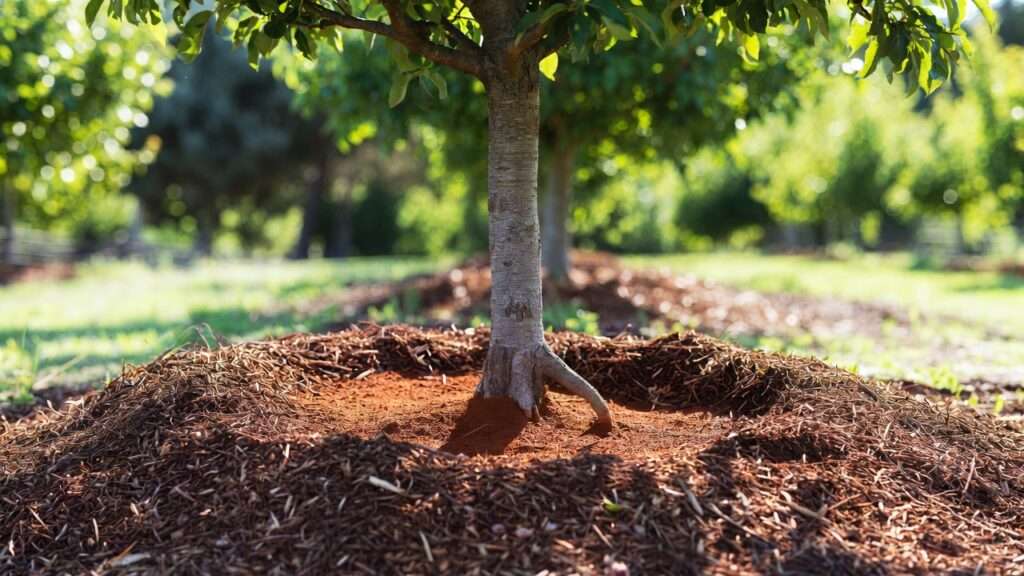
Have you ever poured your heart (and a mountain of mulch) into caring for your fruit trees, only to watch them struggle with mysterious trunk decay, pesky insects, or disappointing harvests? 😩 You’re not alone. Many well-meaning gardeners create what’s known as a “mulch volcano” — that dramatic pile of mulch heaped right up against the trunk — thinking it looks tidy and protective. Unfortunately, this common practice is one of the fastest ways to harm your trees.
Mulching around fruit tree trunks the right way can transform your orchard: conserving precious water, suppressing weeds, feeding the soil naturally, and leading to stronger trees and sweeter fruit. But get it wrong, and you risk rot, pests, and even shortened tree life. In this in-depth guide, we’ll cover everything you need to know — from the science behind proper mulching to step-by-step instructions — so you can give your apple, peach, citrus, or any fruit tree the healthy foundation it deserves. Let’s ditch the volcanoes and build thriving trees instead! 🌟
Why Mulch Fruit Trees? The Science-Backed Benefits 🌿💧
Mulching isn’t just cosmetic — it’s one of the most powerful, low-effort practices for fruit tree success. Here’s why experts from university extensions (like Penn State, University of Maryland, and UF/IFAS) recommend it enthusiastically:
- Conserves soil moisture and slashes watering needs — Mulch acts like a blanket, reducing evaporation by up to 50% in hot weather. This is a game-changer during dry spells or in warmer climates where fruit trees thirst for consistent hydration.
- Suppresses weeds effectively — A proper layer blocks sunlight, starving annual weeds and cutting competition for water and nutrients. Fewer weeds mean less hand-pulling and herbicide use!
- Moderates soil temperature — Keeps roots cooler in scorching summers (preventing stress) and warmer during chilly winters, promoting steady growth year-round.
- Improves soil structure and fertility — Organic mulches break down slowly, feeding beneficial microbes, earthworms, and adding organic matter that enhances water retention and nutrient cycling. Over time, this builds healthier, more resilient soil.
- Prevents soil compaction and erosion — Raindrops don’t pound bare soil, preserving crumbly structure and reducing runoff.
- Keeps fruit cleaner and cuts disease risk — Less soil splash means fewer fungal issues like early blight or fruit rot on low-hanging produce.
- Boosts overall tree vigor — Studies show mulched fruit trees often grow faster, produce larger fruit, and yield more reliably. In one Washington State University trial, wood chip mulching improved tree growth and fruit size in mature apple orchards.
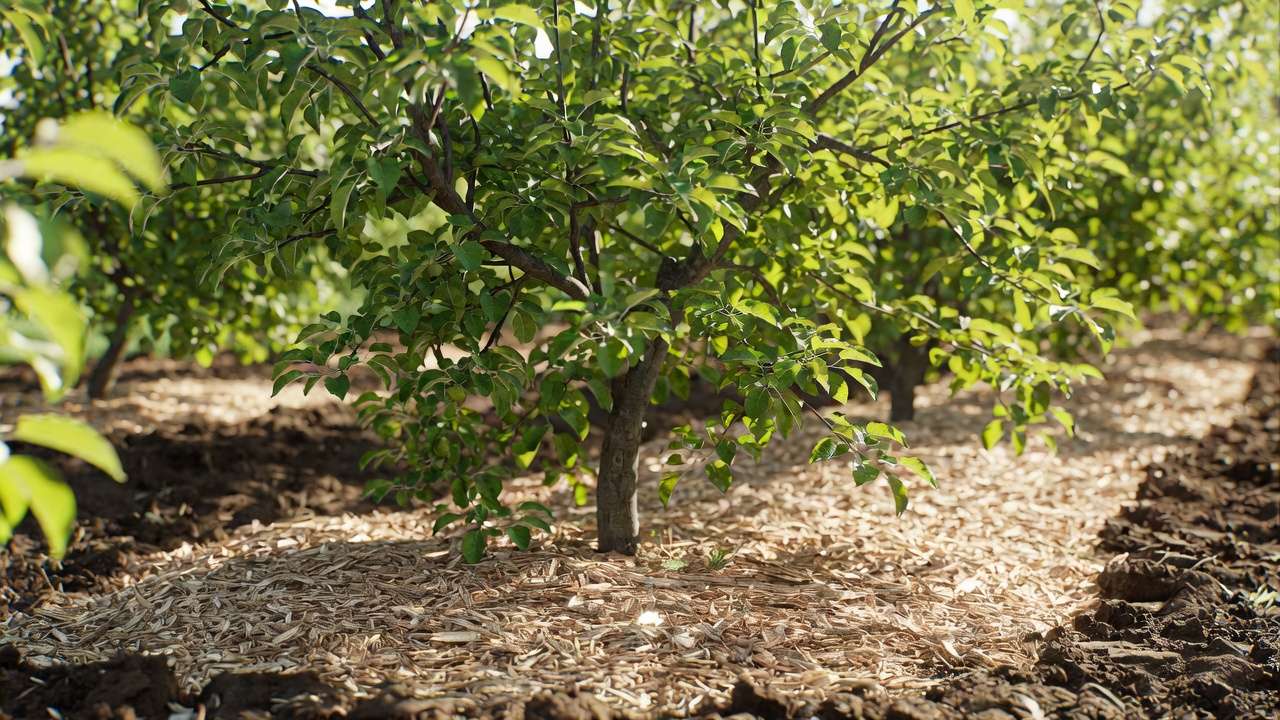
Proper mulching mimics nature’s forest floor, where leaves and debris naturally protect and nourish roots. When done correctly (key emphasis: away from the trunk), it delivers these perks without the downsides. 🍏
Common Mulching Mistakes That Harm Fruit Trees (and How to Spot Them) ⚠️🔥
The biggest enemy of fruit trees isn’t drought or pests — it’s often well-intentioned but improper mulching. Here are the top pitfalls and their telltale signs:
- The dreaded mulch volcano — Piling mulch in a cone shape right against the trunk (the most photographed mistake in home orchards!). This traps constant moisture against the bark, leading to rot, fungal infections, and entry points for borers or other insects. It also encourages “girdling roots” that wrap around the trunk, slowly choking the tree. Spot it: A mound looking like a mini volcano erupting from the base.
- Mulching too thick (over 4 inches) — Deep layers suffocate roots by blocking oxygen exchange and can cause “sour mulch” odors or excess heat during decomposition. Signs: Matted, compacted mulch or yellowing leaves from root stress.
- Mulching too close to the trunk — Even a thin layer touching bark invites decay and pests. University extensions unanimously advise keeping mulch several inches away to expose the root flare (where trunk widens at soil level).
- Using poor-quality or inappropriate mulches — Fresh grass clippings that mat and heat up, dyed mulches with potential chemicals, or black walnut (which releases growth-inhibiting juglone).
- Limiting mulch to a tiny circle — Feeder roots spread to the drip line (outer edge of branches), so small rings miss most benefits.
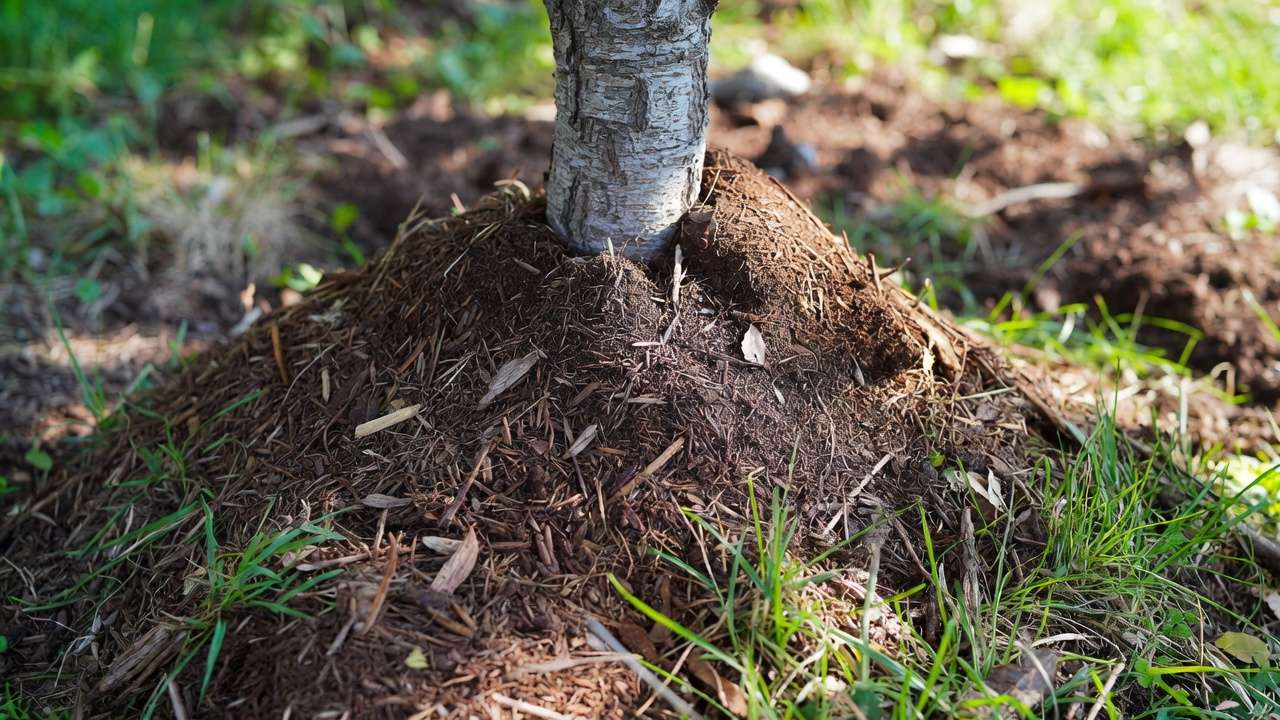
Real talk: Mulch volcanoes can shorten a tree’s productive life dramatically, turning a promising young apple into a declining stump in just a few years. But the fix is simple — and we’ll get to it next! 🛠️
Choosing the Best Mulch for Fruit Trees 🛠️🍂
Not all mulches are created equal. Organic options reign supreme for fruit trees because they decompose, enriching soil biology and releasing nutrients slowly.
- Top recommendations:
- Wood chips or shredded bark — Long-lasting (2–5 years), excellent moisture retention, and great for most fruit trees like apples, pears, and stone fruits. Free arborist chips (via services like ChipDrop) are a gardener’s gold!
- Straw or hay (weed-free certified) — Lightweight, nitrogen-rich as it breaks down, ideal for keeping fruit clean.
- Compost or aged manure — Nutrient powerhouse; use as a thin base layer topped with coarser mulch to avoid matting.
- Chopped leaves or leaf mold — Free backyard resource that boosts fungal networks and adds gentle fertility.
- What to avoid: Fresh clippings (they mat and rob nitrogen temporarily), walnut leaves/twigs (toxic to many plants), red-dyed mulches (possible chemical concerns), or rubber mulch (no nutrient benefit, potential toxins).
- Special notes:
- Acid-loving trees (blueberries, some citrus) thrive with pine needles or bark.
- Tropical fruits (mango, avocado) can handle thicker layers but still keep away from trunk.
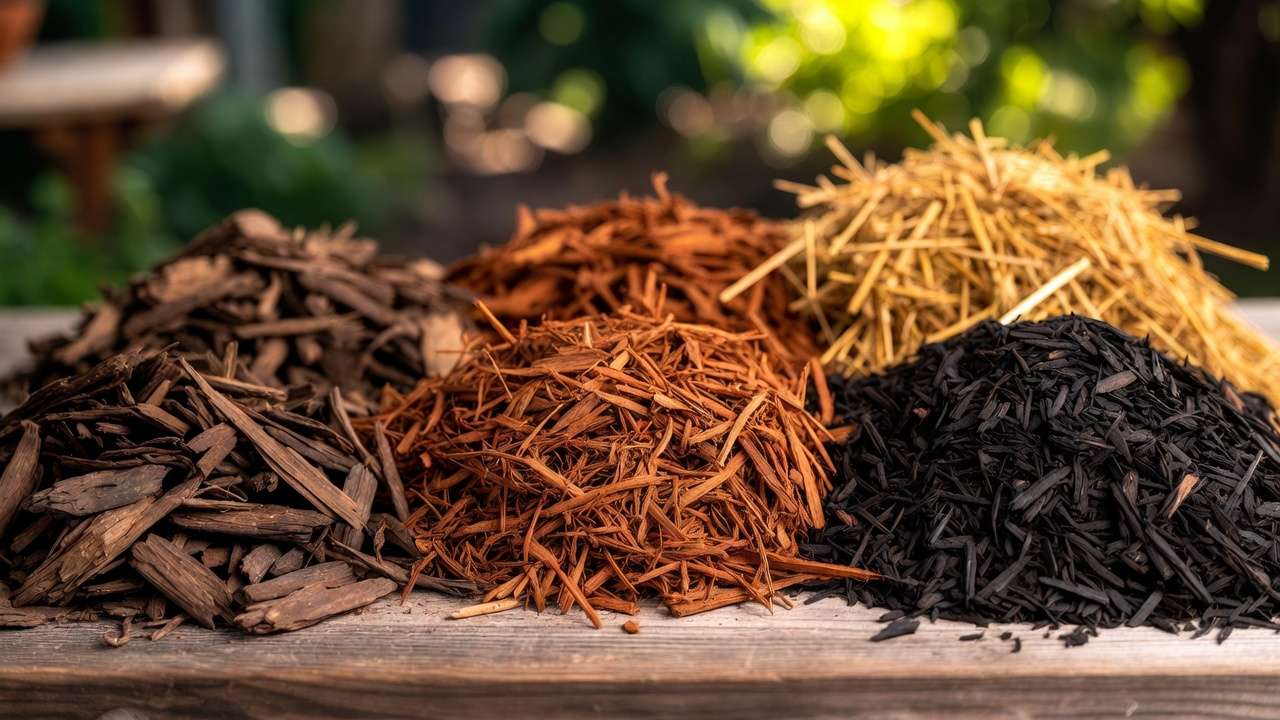
Prioritize organic, coarse-textured mulches for the best long-term soil health. Your trees will reward you with vigorous growth! 🌱
Step-by-Step Guide: How to Mulch Around Fruit Tree Trunks the Right Way 🛠️📋
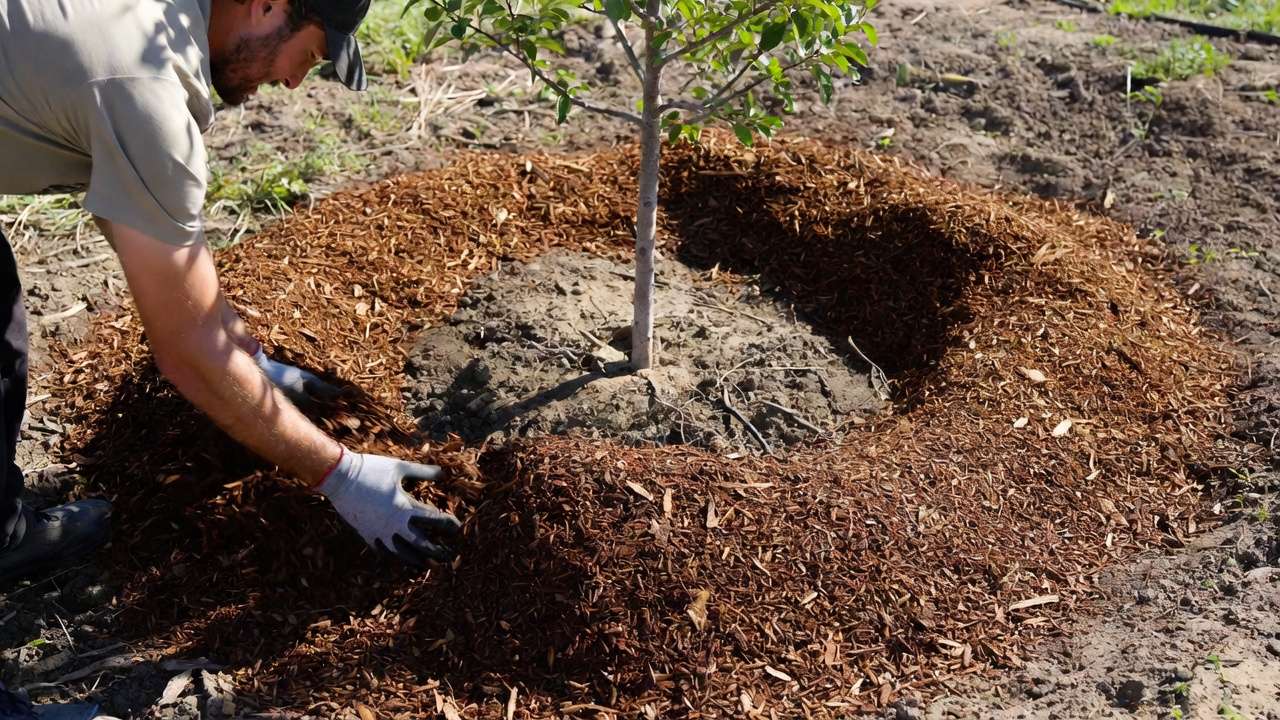
Ready to do it properly? Follow this expert-approved method for a “donut” of mulch that protects without harming. ⭕🌳
- Prepare the area — Clear weeds, grass, and debris in a circle out to the drip line (or at least 3–6 feet for young trees). Lightly loosen soil if compacted, but avoid damaging surface roots.
- Define the mulch zone — Aim for the full drip line radius where feeder roots thrive. For mature trees, this can be 8–15 feet across!
- Create the donut shape — Keep mulch 4–12 inches away from the trunk (expose the root flare for air circulation). No touching the bark!
- Apply the right depth — 2–4 inches is ideal (shallower on clay soils to prevent sogginess, deeper on sandy for moisture). Too thick = trouble.
- Feather and smooth — Taper edges thinner toward the outer rim; rake level for even coverage.
- Optional base layer — Lay cardboard or newspaper first for extra weed suppression, then top with mulch.
Timing tip: Apply in spring after soil warms or fall for winter protection. Refresh annually as it decomposes. Your finished look? A beautiful, flat ring with the trunk proudly visible in the center — no volcanoes allowed! 😄
Advanced Tips for Maximum Results & Long-Term Success 🌟🔬
Once you’ve mastered the basics, these pro-level strategies take your mulching game to the next level, ensuring your fruit trees stay resilient for decades.
- Young vs. mature trees — key differences Young trees (under 5–7 years) have shallower, more vulnerable root systems, so prioritize a wider mulch ring (at least 4–6 feet diameter) but keep depth at 2–3 inches to avoid smothering. Expose the root flare fully to encourage strong trunk development. For mature trees, you can extend mulch to the full drip line (often 10+ feet) and go slightly deeper (3–4 inches) on well-drained soils. Mature trees benefit hugely from expanded mulch zones that reduce lawn competition and feed extensive feeder roots.
- Seasonal adjustments for year-round protection
- Spring: Refresh mulch after the last frost — this locks in moisture for bloom and fruit set.
- Summer: Monitor for matting or excess heat; fluff if needed to maintain airflow.
- Fall/Winter: Add extra thickness (up to 4–6 inches in cold climates) for root insulation against freeze-thaw cycles. Pull mulch slightly farther from the trunk in late fall if rodents are active (more on that below). In wet regions, avoid heavy fall additions to prevent sogginess.
- Tropical/subtropical tweaks: For citrus, mango, or avocado, thicker layers (4–6 inches) work well due to consistent warmth, but always start 8–12 inches from the trunk to prevent girdling roots (UF/IFAS recommendation).
- Troubleshooting common issues
- If rot already appears: Gently pull back mulch, expose the trunk/base, remove any soft/decaying bark carefully, and improve drainage/airflow. Avoid fungicides unless severe — better prevention than cure. Re-mulch properly once healed.
- Over-mulched trees: Rake away excess to 2–3 inches; aerate soil lightly if compacted.
- Nitrogen drawdown myth with fresh wood chips: Fresh chips can temporarily tie up nitrogen during decomposition, but studies (e.g., from Penn State and OSU extensions) show this effect is minimal in established orchards. Add a light compost layer underneath or wait 6–12 months for chips to age — most gardeners see no issue.
- Rodent concerns: Thick mulch can shelter voles/mice, especially in winter. Keep mulch 4–6 inches from trunk in fall, use hardware cloth trunk guards for young trees, or pull mulch back entirely in rodent-prone areas (common advice from UMass and Penn State).
- Eco-friendly bonus: Source free arborist wood chips (via apps like ChipDrop) to recycle urban tree waste. This supports soil biology (mycorrhizal fungi love woody mulch) and reduces landfill contributions. Pair with cover crops in orchard rows for even better biodiversity and nutrient cycling.
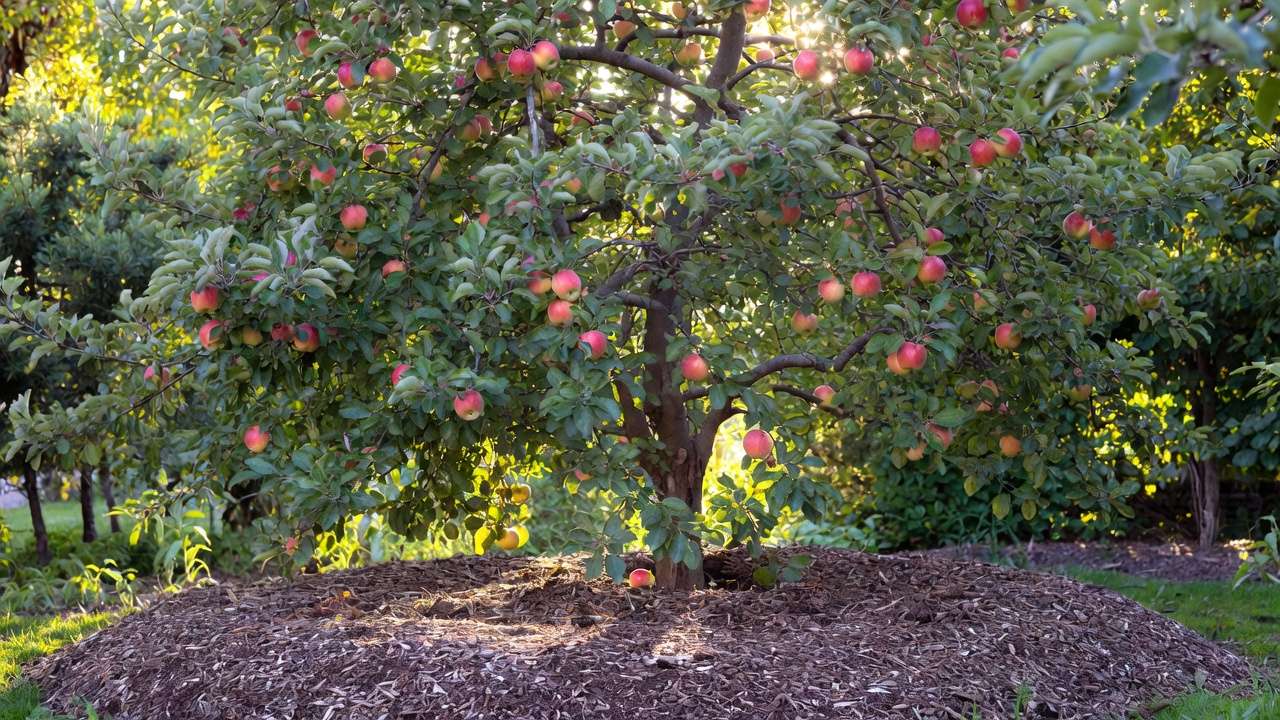
These tweaks, drawn from decades of extension research, turn good mulching into exceptional tree stewardship. Your trees will show it with better fruit set, disease resistance, and longevity! 🍑
Frequently Asked Questions (FAQs) ❓🍏
Here are answers to the most common questions home fruit growers ask about mulching around fruit tree trunks:
- How far from the trunk should mulch be? At least 4–12 inches away (ideally 6–8 inches for most trees) to expose the root flare and allow air circulation. This prevents rot, pests, and girdling roots — a universal rule from Penn State, UF/IFAS, and other extensions.
- Can I use fresh wood chips? Yes! Fresh chips are excellent and break down well. Any short-term nitrogen tie-up is minor; top with compost or fertilize lightly if concerned. Aged chips are fine too, but fresh ones from arborists are often free and effective.
- Is mulching good for citrus or stone fruit trees? Absolutely — citrus and stone fruits (peaches, plums, cherries) benefit from moisture retention and weed control. Use 3–6 inches, starting 8–12 inches from the trunk (especially important for citrus to avoid excess moisture decay). Straw or wood chips work great.
- How often should I reapply mulch? Annually or every 1–2 years, depending on decomposition rate. Wood chips last 2–5 years; straw/hay may need refreshing yearly. Check depth in spring and add to maintain 2–4 inches.
- Will mulch attract rodents or pests? It can provide habitat for voles/mice if piled against the trunk or too thick in winter. Mitigate by keeping mulch away from the trunk, using trunk guards on young trees, and pulling it back slightly in fall. Benefits far outweigh risks when done correctly.
- What’s the best mulch for apple vs. peach vs. tropical trees? Apples/pears: Wood chips or straw to the drip line. Peaches/stone fruits: Similar, but monitor for excess moisture. Tropicals (mango, avocado): Thicker wood chips or bark (4–6 inches) for heat/moisture balance, always away from trunk.
- Can I mulch over grass or weeds? Clear vegetation first for best results, or smother with cardboard/newspaper under mulch for weed suppression.
- Is dyed mulch safe for fruit trees? Skip it — potential chemicals aren’t worth the risk. Stick to natural, organic mulches.
These FAQs cover the real pain points gardeners face — now you’re equipped to mulch confidently! 🌟
Conclusion: Transform Your Fruit Trees Starting Today 🌳✨
Proper mulching around fruit tree trunks boils down to one golden rule: the “donut” method — 2–4 inches deep, extended to the drip line (or beyond), and kept several inches away from the trunk to expose the root flare. No volcanoes, no touching bark — just a flat, protective ring that conserves water, feeds soil life, suppresses weeds, and shields roots from extremes.
When you mulch the right way, your trees respond with vigorous growth, better drought tolerance, cleaner fruit, and higher yields. It’s one of the simplest, highest-impact steps you can take for a thriving home orchard.
Ready to upgrade your trees? Grab some organic mulch, follow the steps, and watch the difference next season. Share your before-and-after photos in the comments — we’d love to see your beautiful donut mulching success stories!
Happy gardening, and here’s to sweeter harvests ahead! 🍎🌱











