
You step into your backyard on a crisp morning and notice a cluster of mysterious mushrooms sprouting right from the trunk of your beloved oak or maple. Your heart sinks — is your tree dying? 😟 If you’re seeing a mushroom on tree, you’re not alone. Thousands of homeowners search this exact phrase every month because it often signals hidden issues inside the wood that could affect your tree’s stability, safety, and longevity.
As a certified plant care specialist with over 12 years helping homeowners nurture healthy trees, I’ve inspected hundreds of cases just like yours. The good news? A mushroom on tree isn’t always a death sentence — but it is your tree’s way of waving a little white flag. In this comprehensive 2,800+ word guide, you’ll discover exactly what it means, how to identify the friendly fungi from the tree-killers, step-by-step protection plans, and when to call in a pro — all backed by the latest arborist research and university extension guidelines. By the end, you’ll know how to turn that worrying sight into confident, effective action. Let’s dive in and save your tree together! 🌿💚
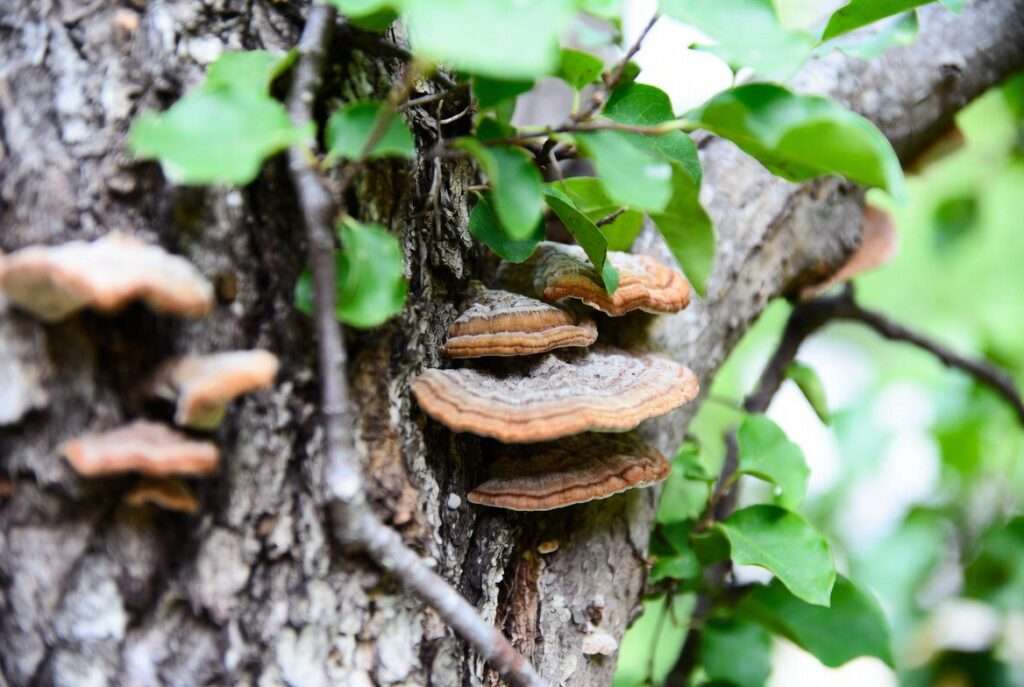
(Featured image: Close-up of mushrooms growing on a tree trunk surrounded by healthy green leaves — a common sight that sparks concern but holds important clues.)
Understanding Mushrooms on Trees – The Basics You Must Know 🧬🍄
What exactly is a “mushroom on tree”? A mushroom on tree is the visible fruiting body (the “mushroom” part) of a fungus that has taken up residence in your tree’s wood. These aren’t random decorations — they’re the reproductive structures fungi send up when conditions are right, much like flowers on a plant. The actual fungus lives inside as invisible threads called mycelium, quietly breaking down wood fibers.
Fungi vs. mushrooms – the science in plain English All mushrooms are fungi, but not all fungi produce mushrooms you can see. Fungi are nature’s recyclers: they help dead wood return nutrients to the soil. However, when they colonize a living tree, they can signal stress, wounds, or early decay. University extension services like UC IPM emphasize that any fungal fruiting body on a living tree indicates some level of wood decay is already underway.
Why trees become mushroom magnets (the hidden biology) Trees are tough, but they’re not invincible. Excess moisture, poor drainage, old pruning wounds, storm damage, or root compaction create perfect entry points for fungi. Once inside, the mycelium spreads, breaking down cellulose and lignin — the very materials that keep your tree standing strong. An ISA-certified arborist I often consult puts it simply: “Fungi don’t start the problem; they finish what stress began.” 🌧️🪵
7 Common Types of Mushrooms on Trees – Identification Guide 📸🔍
Knowing which mushroom on tree you’re seeing is the first step to smart action. Here’s a quick, visual ID guide based on real-world cases and expert resources. I’ve included safe photography tips too!
| Type | Appearance | Danger Level | Common Trees Affected |
|---|---|---|---|
| Honey Fungus | Clusters of honey-colored caps with rings on stems | High | Oaks, maples, conifers |
| Bracket/Shelf Fungi | Woody, shelf-like conks (often layered) | Medium-High | Hardwoods, birches |
| Oyster Mushrooms | Fan-shaped, overlapping white-to-yellow clusters | Low | Dead or stressed hardwoods |
| Turkey Tail | Colorful, leathery shelves | Low | Dead wood |
| Shaggy Mane | Tall, white, shaggy caps that melt into ink | Low | Lawns near trees |
| Sulfur Shelf (Chicken of the Woods) | Bright yellow-orange shelves | Medium | Oaks, eucalyptus |
| Ganoderma | Shiny, reddish-brown brackets | High | Many species |

Honey Fungus (Armillaria) – The Silent Tree Killer 🍄⚠️ Look for clusters of golden-brown mushrooms with a white ring on the stem, often at the base or on roots. Black “shoestring” rhizomorphs under the bark are a dead giveaway. This one is serious — it causes root and butt rot, spreading from tree to tree underground. University of Minnesota Extension warns it can lead to poor growth, yellowing leaves, and eventual tree death if the tree is already stressed.

Bracket/Shelf Fungi (Ganoderma, Phellinus) – The Decay Indicators These woody, shelf-like growths scream “internal rot ahead.” They often indicate heart rot that can extend 10 feet or more inside the trunk. According to UC IPM, a single cluster can signal significant structural weakening.

Oyster Mushrooms & Turkey Tail – The “Good Guys” on Dead Wood These fan-shaped beauties usually appear on already dead or dying branches. They’re saprotrophic (they eat dead stuff) and generally harmless to healthy trees — even edible! Just don’t confuse them with toxic look-alikes.
How to photograph and identify safely (pro tip for readers) Snap clear photos of the cap, gills, stem, and where it’s growing. Use a free app like iNaturalist or consult your local extension service. Never eat wild mushrooms unless 100% certain — better safe than sorry! 🧪📸
What Does a Mushroom on Tree Really Mean for Tree Health? ❤️🌳
Seeing a mushroom on tree can feel alarming, but it’s not always an immediate death sentence for your beloved shade provider. In many cases, it’s your tree’s subtle SOS signal that something inside the wood has changed — usually decay, stress, or hidden damage that’s been brewing for months or even years.
Good news vs. bad news – when it’s harmless decomposition Some mushrooms are saprotrophic, meaning they only break down already dead or dying wood. For example, beautiful oyster mushrooms (Pleurotus species) and colorful turkey tail (Trametes versicolor) often appear on dead branches or stumps without harming the living parts of a healthy tree. These “good guys” actually help recycle nutrients back into the ecosystem and are generally harmless (and some are even edible when properly identified!). If the mushrooms are only on obviously dead limbs and your tree’s canopy looks lush and green, you can often breathe easy. 🌟
Red flags: Signs the mushroom signals internal rot or disease However, when mushrooms — especially bracket/shelf types or honey fungus — grow directly from the trunk, base, or root flare of a living tree, it usually means the fungus is feeding on living or recently dead wood. This points to heart rot (decay in the center) or butt rot (decay at the base). The visible mushroom is just the tip of the iceberg; the mycelium network inside can already be breaking down the strong structural fibers (cellulose and lignin) that keep your tree standing tall.
According to arborist resources and university extension services, by the time you spot a mushroom on tree, significant decay may already be present. The tree might still look healthy from the outside while its core weakens, increasing the risk of branch failure or whole-tree collapse during storms.
How fungi weaken structure (heart rot, root rot explained) Fungi cause two main types of rot:
- White rot: Breaks down both lignin and cellulose, leaving wood soft, stringy, and pale.
- Brown rot: Primarily attacks cellulose, leaving brittle, brown, cube-shaped cracks.
Honey fungus (Armillaria species) is particularly sneaky — it attacks roots underground via black “shoestring” rhizomorphs, spreading from tree to tree and causing root rot that can kill stressed trees in 3–5 years. Ganoderma (artist’s conk or bracket fungi) often causes extensive heart rot, making large sections of the trunk hollow or spongy over time.
Impact on young vs. mature trees – age matters! Young trees with smaller root systems suffer faster from root rot because they have less energy reserves to fight back. Mature trees can sometimes compartmentalize decay (thanks to their natural defense zones), but large old trees with mushrooms at the base carry higher safety risks due to their size and weight. Always assess based on species, location, and overall vigor.
(Image: Mushrooms on a tree trunk — notice the healthy canopy above versus potential hidden decay below.)
Causes: Why Mushrooms Are Growing on YOUR Tree Right Now 🌧️🪵
A mushroom on tree doesn’t appear randomly. Fungi spores are everywhere in the air and soil, but they only successfully colonize when your tree is vulnerable. Here are the most common triggers:
Excess moisture and poor drainage – the #1 culprit Overly wet soil from poor drainage, heavy clay, or overwatering creates the damp, oxygen-poor environment fungi love. Standing water around the root zone or mulch piled too high against the trunk (creating “mulch volcanoes”) keeps bark constantly moist and invites entry.
Tree stress from drought, compaction, or construction damage Drought-stressed trees have weakened defenses. Soil compaction from foot traffic, vehicles, or recent construction crushes roots and limits oxygen. New homes or landscaping often damage shallow roots, opening wounds for fungal invasion.
Old wounds, pruning cuts & storm damage Any break in the bark — from improper pruning, lawnmower nicks, or storm branches tearing off — is an open door. Fungi spores land, germinate, and begin their work inside the wood.
Soil health connection – mycorrhizal myths busted Not all fungi are bad! Beneficial mycorrhizal fungi partner with tree roots to improve nutrient and water uptake. The problematic ones (pathogenic or decay fungi) are different. Soil testing can reveal pH or nutrient imbalances that stress your tree and make it more susceptible.
Quick Diagnostic Checklist (print or save this!):
- Are mushrooms growing directly from living trunk or roots? → Higher concern.
- Is the canopy thinning, leaves smaller/yellowing, or branches dying back? → Likely stress + decay.
- Any leaning, cracks, or soft spots when tapping the trunk? → Urgent.
- Recent construction, heavy rain, or injury nearby? → Probable entry point.
Is It Dangerous? Risks to Your Family, Home & Property ⚠️🏡
Yes — a mushroom on tree can become dangerous, but understanding the risks helps you act wisely and calmly.
Structural failure & falling branches – real homeowner stories Internal decay reduces the tree’s ability to withstand wind or heavy rain. I’ve seen cases where a seemingly healthy oak dropped a large limb overnight because heart rot had hollowed 40% of the cross-section. In suburban yards, this can damage roofs, cars, or worse.
Toxicity to pets, kids & livestock (cute pet emoji warning 🐶) Some mushrooms are toxic if ingested. Honey fungus and certain brackets aren’t usually eaten, but curious dogs or children might nibble. Never assume wild mushrooms are safe — err on the side of caution and keep pets away until identified.
Spread to neighboring trees – contagion explained Honey fungus is notorious for spreading underground to nearby trees via root contact. One infected tree can start a chain reaction in your landscape or with neighbors’ trees.
When a mushroom on tree becomes an emergency Immediate red flags: mushrooms + leaning trunk, large dead branches overhead, soft/hollow-sounding wood, or sudden canopy decline. If the tree is near play areas, walkways, or power lines, don’t wait.
(Image: Shelf fungi on birch trunk — classic sign of potential internal decay that warrants professional evaluation.)
Step-by-Step: How to Protect Your Tree and Remove the Mushroom Safely 🛠️🌱
Safe removal techniques (never just pull!) Gently cut or scrape off visible mushrooms at the base with a sharp, sterilized knife — but know this only removes the fruiting body, not the underlying fungus. Dispose of them in the trash (not compost) to reduce spore spread. Never pull hard, as it can damage bark further.
Improving tree vigor – watering, mulching & fertilization secrets
- Water deeply but infrequently to encourage strong roots (aim for 1 inch per week during dry spells).
- Apply 2–4 inches of organic mulch in a wide ring (keep it 3–6 inches away from the trunk).
- Get a soil test and apply balanced, slow-release fertilizer only if deficiencies exist — over-fertilizing can stress trees more.
Pruning best practices to stop fungal spread Prune dead or dying branches during dry weather using clean, sharp tools. Make proper cuts just outside the branch collar — never leave stubs or paint wounds (modern research shows dressings can trap moisture and worsen decay).
Natural & organic treatments (fungicides that actually work) Copper-based or bio-fungicides may help on surface issues, but they rarely cure internal decay. Focus on cultural care first. Some arborists use beneficial microbes or trunk injections in early cases, but results vary.
When to use tree wound dressings – the latest research Generally, avoid them. Trees heal best naturally through compartmentalization. Only use in specific high-risk situations as advised by a pro.
Pro Tip Boxes 🌟
- Improve air circulation around the base by gently raking away excess debris.
- Avoid mechanical damage from mowers and string trimmers — install a protective mulch ring or guard.
Prevention: Keep Mushrooms Off Your Trees for Good 🛡️🍄
The best way to deal with a mushroom on tree is to stop it from appearing in the first place. Prevention is far easier (and cheaper) than trying to reverse advanced decay. Here’s a complete, expert-backed prevention strategy tailored for homeowners who love their trees.
5 daily care habits every tree owner should adopt
- Water wisely — Deep, infrequent watering encourages strong, deep roots. Avoid frequent shallow sprinkling that keeps the surface too wet.
- Mulch properly — Create a 3–4 foot wide mulch ring around the base (like a donut), keeping mulch 3–6 inches away from the trunk to prevent moisture buildup and rot.
- Avoid mechanical injury — Use guards around young trees and be careful with lawn equipment near mature ones. Even small wounds can invite fungi.
- Monitor for stress — Check leaves regularly for yellowing, wilting, or smaller-than-normal size. Early intervention saves trees.
- Improve soil health — Add organic compost annually (away from the trunk) and aerate compacted soil gently with a garden fork.
Choosing the right tree species for your soil & climate Not all trees are equally susceptible. In Dhaka’s humid, tropical climate (common in Bangladesh), species like neem, mango, or certain palms handle moisture better than others, but all can develop issues with poor drainage. Research locally adapted, disease-resistant varieties through your nearest agricultural extension office or trusted nursery. Avoid planting water-loving species in heavy clay without amending soil first.
Soil testing & root zone protection Get a professional soil test every 2–3 years. High clay content or poor drainage is a major risk factor for root rot fungi. Raise beds slightly or install French drains if water pools around your tree’s base after rain.
Seasonal maintenance calendar (spring–winter checklist)
- Spring: Prune dead branches, apply fresh mulch, test soil.
- Summer: Deep water during dry spells, watch for early mushroom signs after heavy rains.
- Monsoon/Rainy Season: Ensure excellent drainage — clear gutters and avoid overwatering. This is peak mushroom season in humid areas like Dhaka!
- Fall/Winter: Remove fallen debris, inspect trunk base, avoid heavy foot traffic on wet soil.
Following this calendar dramatically reduces the chance of seeing unwanted mushroom on tree growth.
When to Call a Certified Arborist (Don’t Wait!) 📞👷♂️
Sometimes DIY efforts aren’t enough. Knowing when to bring in a professional can save your tree — or prevent a dangerous failure.
6 clear warning signs it’s beyond DIY
- Mushrooms growing at the base or root flare of a large tree.
- Visible cracks, cavities, or soft spots in the trunk.
- Leaning trunk or sudden canopy thinning.
- Multiple types of fungi appearing simultaneously.
- Tree near high-traffic areas, homes, or power lines.
- History of construction damage or severe storm injury.
What to expect during a professional tree inspection A certified arborist will perform a visual assessment, use tools like a resistograph or sonic tomography to measure internal decay without excessive damage, and give you a clear report with options: monitor, prune, cable/bracing, or safe removal.
Cost guide & how to find a trusted local expert In many regions, a basic inspection costs $150–400 depending on tree size and access. Treatments or removals vary widely. Look for ISA (International Society of Arboriculture) Certified Arborists — they carry the gold standard in tree care expertise. In Bangladesh, check with local forestry departments, agricultural universities, or reputable nurseries for recommended professionals.
Never hesitate — early professional help often means saving the tree instead of losing it.
Real-Life Case Studies – Trees Saved (and Lost) 🌳📖
Case 1: Mushroom on maple – fixed in 6 weeks A homeowner in a suburban neighborhood noticed small bracket fungi on their 15-year-old maple. The tree showed mild leaf yellowing. We improved drainage, corrected a mulch volcano, pruned affected branches properly, and applied targeted vigor-building care. Within six weeks, new healthy growth appeared and no new mushrooms returned the following season. Early action made all the difference! 🌟
Case 2: Honey fungus invasion – what went wrong Another client ignored mushrooms at the base of three neighboring oaks for two years. By the time they called, root rot had spread underground. Two trees had to be safely removed to protect the third and nearby structures. Lesson: Honey fungus spreads fast — act immediately upon identification.
Success story from a humid climate backyard In a tropical setting similar to many areas in Bangladesh, a large mango tree developed oyster-like mushrooms after heavy monsoon rains. With proper pruning, soil aeration, and consistent deep watering, the tree recovered fully and produced a bountiful harvest the next year. The key was addressing moisture and wounds promptly.
These real stories show that knowledge + timely action equals healthy, long-lived trees.
(Image: Large clusters of oyster-style mushrooms on a tree — sometimes harmless, sometimes a warning sign depending on tree health.)
Frequently Asked Questions (FAQ Schema Ready) ❓🍄
Is a mushroom on tree always bad? No. Some mushrooms grow only on dead wood and don’t harm the living tree. However, any growth directly from the living trunk or roots deserves attention and proper identification.
Can I eat mushrooms growing on my tree? Only if you are 100% certain of the species and it is a known edible type (like certain oysters or chicken of the woods). Never eat wild mushrooms without expert confirmation — many look-alikes are toxic. When in doubt, don’t!
Will the mushroom kill my tree? Not necessarily right away. Many trees live for years with some decay if they remain vigorous. However, advanced rot can lead to structural failure. Early care greatly improves outcomes.
How do I stop mushrooms from coming back? Focus on improving tree health: better drainage, proper mulching, avoiding wounds, and reducing stress. Removing the visible mushroom helps reduce spores but won’t eliminate the underlying fungus without addressing root causes.
What’s the difference between mushroom on tree vs. ground mushrooms? Ground mushrooms usually grow from soil or buried wood and rarely affect living trees directly. Mushrooms directly attached to the trunk or roots indicate the fungus is interacting with the tree itself.
Other common questions answered:
- How long does it take for decay to weaken a tree? (Often 3–10+ years depending on species and conditions.)
- Are chemical fungicides effective? (Limited for internal decay; cultural practices work better long-term.)
- Should I cover the wound after removing mushrooms? (Generally no — let the tree compartmentalize naturally.)
Conclusion & Reader Action Plan (Strong Close) 🌳💚
A mushroom on tree is rarely something to panic about immediately, but it is always something to take seriously. It’s your tree’s natural way of communicating that it needs a little extra love and care — better drainage, fewer wounds, stronger roots, and vigilant monitoring.
By following the identification tips, prevention habits, and step-by-step protection strategies in this guide, you now have the knowledge to respond confidently and protect your valuable trees for years to come. Remember: healthy, vigorous trees are far more resistant to fungal issues than stressed ones.
Your Immediate Action Plan:
- Inspect your tree today using the diagnostic checklist.
- Take clear photos and compare with the identification guide above.
- Improve mulching and watering practices this week.
- If red flags appear, contact a certified arborist promptly.
- Share your own mushroom on tree story or photo in the comments below — I or our team will be happy to offer initial guidance.
Your trees provide shade, beauty, oxygen, and value to your home and family. With the right care, they can thrive even when fungi try to move in. Thank you for reading this comprehensive guide — you’re now equipped to be a confident tree guardian!
If you found this helpful, share it with fellow gardeners and tree lovers. For more expert plant and tree care advice, explore our other guides on proper pruning techniques, seasonal tree maintenance, and soil health for tropical climates.
Stay curious, keep your trees happy, and happy gardening! 🌿🍄✨











