
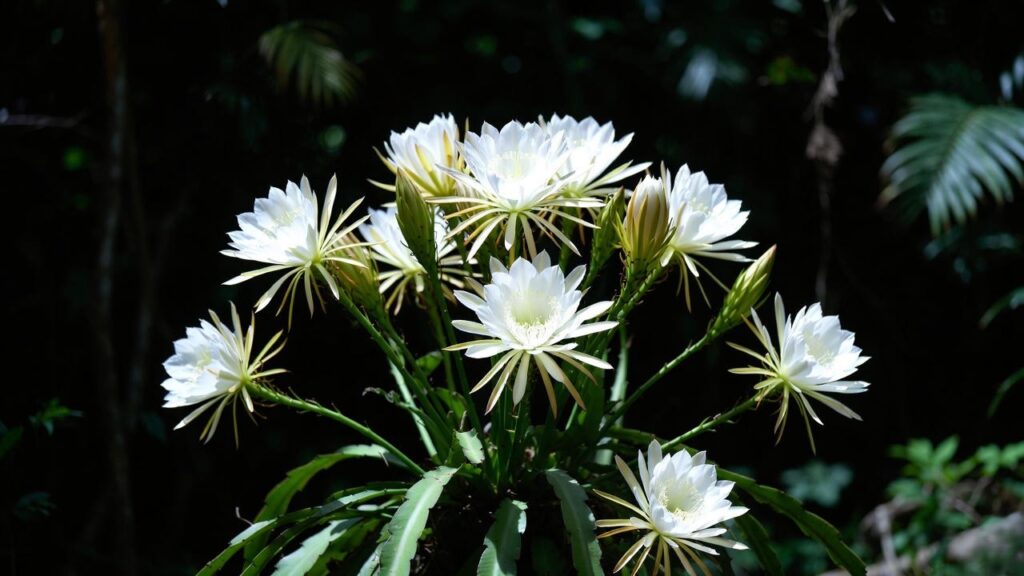
Imagine staying up late on a warm summer night, the air thick with anticipation, only to witness an unassuming, scraggly cactus-like plant suddenly erupt into massive, luminous white flowers that unfurl like magic under the moonlight. The fragrance—sweet, intoxicating, and pervasive—fills your entire home or garden, turning an ordinary evening into an unforgettable spectacle. This is the allure of the night blooming cereus plant care enthusiasts chase: mastering the art of cultivating the Queen of the Night to reliably produce those jaw-dropping, ephemeral blooms 🌸.
For many plant lovers, the night blooming cereus (most commonly Epiphyllum oxypetalum) remains a frustrating enigma. It looks plain and leggy most of the year, yet holds the promise of one of nature’s most dramatic floral displays. The problem? Many owners wait years—sometimes decades—without seeing a single flower, often due to subtle care mistakes like improper lighting, overwatering, or missing the crucial winter rest period. In this ultimate, expert-backed guide, we’ll solve that exact need: providing you with proven, step-by-step night blooming cereus plant care strategies to grow a healthy specimen and trigger abundant, spectacular night blooms reliably. Drawing from horticultural science, real grower experiences, and decades of cultivation knowledge, this comprehensive resource goes beyond basic advice to deliver skyscraper-level insights. Let’s unlock the magic together! 🏡🌵
:max_bytes(150000):strip_icc()/night-blooming-cereus-example-big-9c185b9856e14bddaaca022d38a70fb3.jpg)
What Is Night Blooming Cereus? Understanding This Unique Cactus 🌵
The term “night blooming cereus” is a captivating but somewhat loose common name applied to several cactus species renowned for their large, fragrant flowers that open exclusively at night. These nocturnal bloomers evolved this trait to attract moth and bat pollinators in their native tropical habitats 🌕.
Common Names and Varieties
- Queen of the Night, Princess of the Night, Lady of the Night, or Dutchman’s Pipe Cactus.
- The most popular houseplant form is Epiphyllum oxypetalum, an epiphytic cactus (growing on trees in the wild, not parasitically).
- Related species include Selenicereus grandiflorus (true scented night-blooming cereus), Hylocereus undatus (dragon fruit plant, which also blooms at night), and the desert-dwelling Peniocereus greggii.
- Hybrids known as “orchid cacti” (Epiphyllums) offer similar care but sometimes daytime or colored blooms.
For night blooming cereus plant care purposes, we’ll focus primarily on Epiphyllum oxypetalum, as it’s the most commonly grown indoors and the one most searched for blooming tips.
Plant Characteristics
Native to Central and South American rainforests, this epiphytic cactus features long, flattened, leaf-like stems (actually modified branches) that are spineless and scalloped. In ideal conditions, stems can trail or climb 10–20 feet, making it perfect for hanging baskets or trellises.
The flowers are the star: up to 12 inches across, pure white with layered petals, and exuding a powerful, vanilla-like fragrance. Each bloom lasts only one night—opening around dusk, peaking at midnight, and wilting by morning—but mature plants can produce dozens in waves over several weeks.
Why the nighttime show? In the wild, it’s an adaptation for pollination by nocturnal creatures. This rarity makes successful night blooming cereus plant care incredibly rewarding! 🌺

Ideal Growing Conditions for Healthy Growth ☀️💧
Mimicking the plant’s tropical epiphytic origins is key to robust growth and future blooming.
Light Requirements
Bright, indirect light is non-negotiable for night blooming cereus plant care. In nature, it perches on tree branches under dappled canopy.
- Indoors: Place near an east- or north-facing window for gentle morning sun. South or west windows work if filtered with sheer curtains to prevent scorching.
- Outdoors (summer only in cooler zones): Dappled shade or morning sun; avoid harsh afternoon rays.
- Expert insight: Insufficient light leads to weak, etiolated growth and zero blooms. Too much direct sun causes yellowing or reddish burns. Aim for 4–6 hours of bright indirect light daily—many growers supplement with grow lights in winter for 12–14 hours.
Temperature and Humidity
- Preferred daytime temps: 65–80°F (18–27°C).
- Nighttime: A natural drop to 55–65°F encourages bud formation.
- Winter rest: Cooler 50–60°F nights are crucial for blooming (more on this later).
- Humidity: 50–70% ideal; mimic with pebble trays, humidifiers, or grouping plants. Dry air causes stem tips to brown.
Soil and Potting Mix
As an epiphyte, it hates soggy roots—excellent drainage prevents the #1 killer: root rot.
- Recommended mix: 1 part orchid bark, 1 part perlite/pumice, 1 part peat moss or coco coir. Commercial cactus/epiphyllum mixes work well.
- Avoid heavy garden soil or standard potting mix alone.
- Pro tip: Night blooming cereus thrives slightly root-bound, which actually promotes flowering. Repot only every 3–5 years or when roots escape drainage holes.

Watering and Feeding Schedule 🚰🍽️
Overwatering is the most common mistake in night blooming cereus plant care—treat it like a succulent, not a typical houseplant.
Watering Guidelines
- Rule of thumb: Water thoroughly only when the top 2–3 inches of soil are completely dry.
- Active season (spring–summer): Every 7–14 days, depending on heat/humidity.
- Fall/winter: Dramatically reduce to every 4–6 weeks—barely moist, mimicking dry season dormancy.
- Signs of issues: Yellow, mushy stems = overwatering/root rot; shriveled stems = underwatering.
Always use pots with drainage holes and empty saucers to prevent standing water.
Fertilizing for Blooms
Fuel growth sparingly—too much nitrogen produces lush stems but no flowers.
- Growing season: Monthly with diluted balanced fertilizer (e.g., 10-10-10 at half strength).
- Pre-bloom boost (late spring): Switch to phosphorus-heavy “bloom booster” (e.g., 5-10-10 or 7-9-5).
- Winter: Zero fertilizer during rest period.
Organic options like worm castings tea provide gentle nutrients many experts prefer.
How to Encourage Spectacular Night Blooms: Proven Expert Strategies 🌺🔥
This is the section most night blooming cereus owners desperately seek—because let’s face it, the ultimate goal of perfect night blooming cereus plant care is witnessing those ethereal, fragrant flowers. Many frustrated growers report owning their plant for 5–10 years without a single bloom. The good news? Blooming is not random luck; it’s triggered by specific environmental cues that mimic the plant’s natural tropical cycles. Follow these evidence-based strategies, and you’ll dramatically increase your chances of success.
Maturity and Patience
First, understand that night blooming cereus must reach maturity before flowering. Young plants propagated from cuttings typically need 4–7 years (or more) to build enough energy reserves. Larger, older specimens with extensive stem growth produce the most blooms—sometimes 20–50+ in a single season!
Expert observation: Plants over 10 feet in total stem length are prime bloomers. If yours is still small, focus on healthy vegetative growth first.
Stress for Success (the Good Kind)
Controlled “stress” signals the plant it’s time to reproduce:
- Slightly root-bound: These epiphytes naturally grow in cramped tree crotches. Repot sparingly—only when roots are circling densely.
- Nutrient moderation: Over-fertilizing (especially nitrogen) promotes leaves/stems at the expense of flowers.
Seasonal Care Cycle: The Bloom Blueprint
The most critical factor in night blooming cereus plant care for flowering is providing a distinct winter rest period, followed by renewed growth in spring.
- Winter dormancy (November–February): Move to a cool spot (50–60°F/10–15°C), reduce watering to minimal (soil almost dry), withhold fertilizer, and provide shorter daylight (natural or 8–10 hours). This “chill” mimics dry season and initiates bud formation.
- Spring awakening: Gradually increase warmth, light, and water as days lengthen. Buds often appear in late spring/early summer.
- Summer peak: Full indirect light, regular watering/feeding—buds elongate rapidly.
Many successful growers report that skipping winter rest is the #1 reason for no blooms.
Additional Bloom Triggers
- Uninterrupted darkness: During bud set (spring), ensure 12–14 hours of complete darkness nightly. Street lights or indoor lamps can inhibit flowering—cover or move the plant if needed.
- Stability: Once buds form (long, fuzzy pods), avoid relocating the plant. Even slight jostling can cause bud drop.
- Summer outdoors: In zones 9–11, placing outside in filtered shade boosts vigor and bloom count. Acclimate gradually to prevent sunburn.
- Group effect: Interestingly, multiple plants (or nearby epiphyllums) often synchronize blooming—perfect for hosting “bloom watch” parties! 🎉
Real grower insight from horticultural forums and botanical gardens: Hand-pollinating flowers (using a soft brush to transfer pollen) can lead to edible fruit development, further encouraging the plant.
Propagation: Easy Ways to Multiply Your Plant ✂️🌱
One of the joys of night blooming cereus plant care is how readily it propagates—perfect for sharing the magic with friends or expanding your collection.
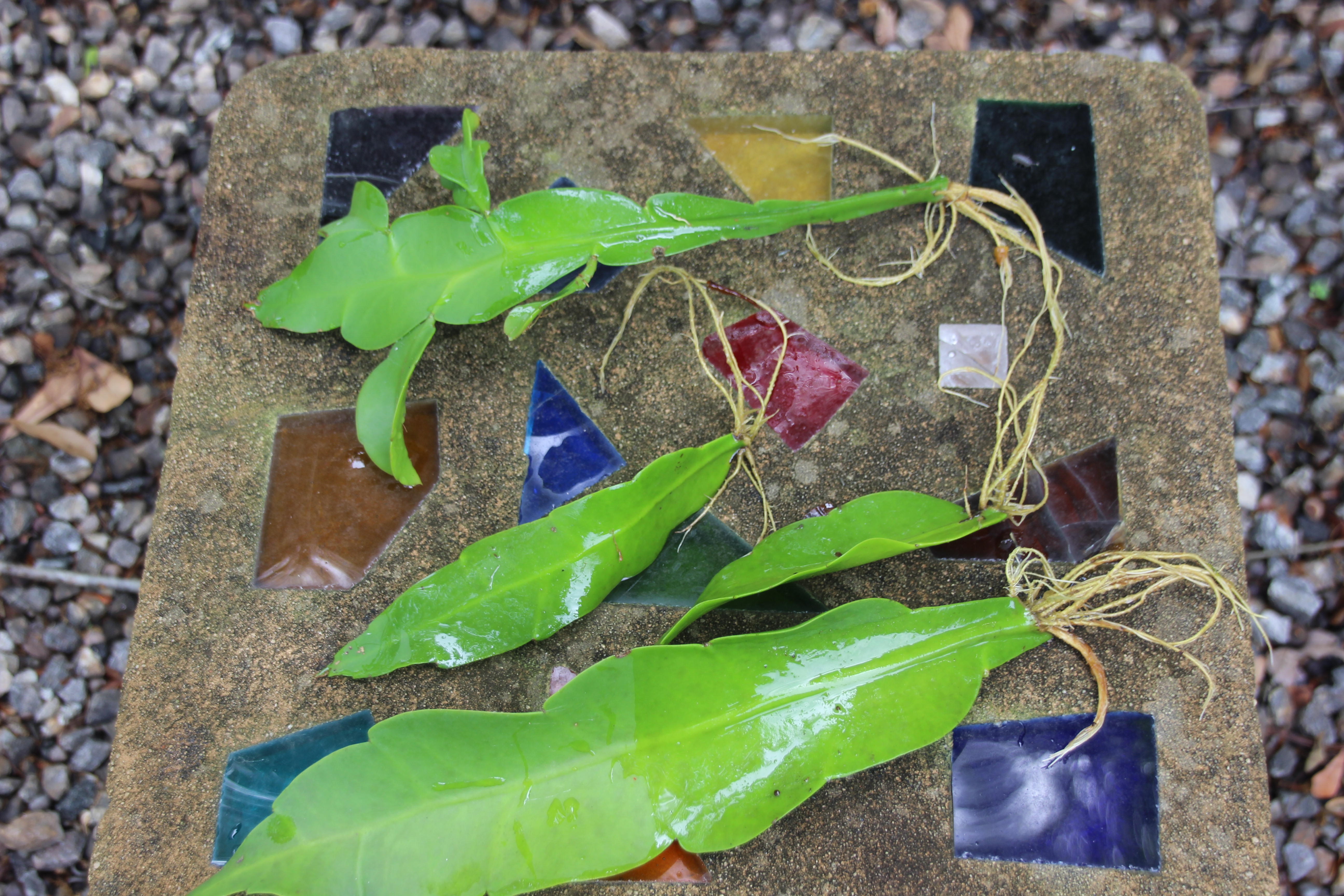
Stem Cuttings (Easiest Method)
This method boasts near-100% success rate when done correctly.
- In spring or early summer, select healthy, mature stems (not new growth).
- Cut 6–12 inch segments with clean, sharp pruners.
- Allow cut ends to callus (dry and harden) for 7–14 days in shade to prevent rot.
- Plant callused end 1–2 inches deep in well-draining epiphyllum mix.
- Water sparingly until roots form (4–8 weeks)—keep humid but not wet.
- Provide bright indirect light; new growth signals success.
Pro tip: Larger cuttings root faster and bloom sooner than tiny ones.
Offsets and Division
Mature plants sometimes produce basal pups—simply separate and pot independently.
Pruning, Support, and Maintenance ✂️🪜
- Pruning: After blooming or in early spring, trim leggy or damaged stems to encourage bushier growth. Cuts also provide propagation material.
- Support: Trailing stems benefit from hanging baskets, trellises, or stakes—heavy blooms can snap unsupported branches.
- Repotting: Every 3–5 years max, in spring. Use fresh mix and a slightly larger pot only if necessary.
:max_bytes(150000):strip_icc()/night-blooming-cereus-red-orchid-cactus-big-096cbc80e10641129e60ea83872e0712.jpg)
Common Problems and Solutions: Troubleshooting Guide ⚠️
Even with the best night blooming cereus plant care, issues can arise—especially for beginners. Early detection and correction keep your Queen of the Night thriving. Here’s a comprehensive troubleshooting guide based on common grower reports and horticultural expertise.
Root Rot and Overwatering
The #1 killer of epiphytic cacti like the night blooming cereus. Excess moisture leads to fungal infections (often Fusarium or Pythium) that destroy roots and climb stems.
- Symptoms: Base stems turn yellow, soft, mushy, or black; wilting despite wet soil; foul odor from roots.
- Causes: Poor drainage, overwatering (especially in winter), heavy soil.
- Solutions:
- Immediately unpot and inspect roots—trim all black/mushy parts with sterilized pruners.
- Let the plant dry out completely for several days.
- Repot in fresh, well-draining epiphyllum mix.
- Resume watering sparingly only when new growth appears.
- Prevention: Always check soil dryness before watering; use terracotta pots for better evaporation.

Pests
Night blooming cereus is relatively pest-resistant but can attract common houseplant invaders, especially in low-airflow conditions.
- Mealybugs: White, cottony masses in stem crevices; sap-sucking weakens plant.
- Treatment: Dab with 70% isopropyl alcohol on a cotton swab; follow with neem oil or insecticidal soap sprays weekly until gone.
- Scale: Small brown bumps on stems.
- Treatment: Scrape off manually; treat with horticultural oil.
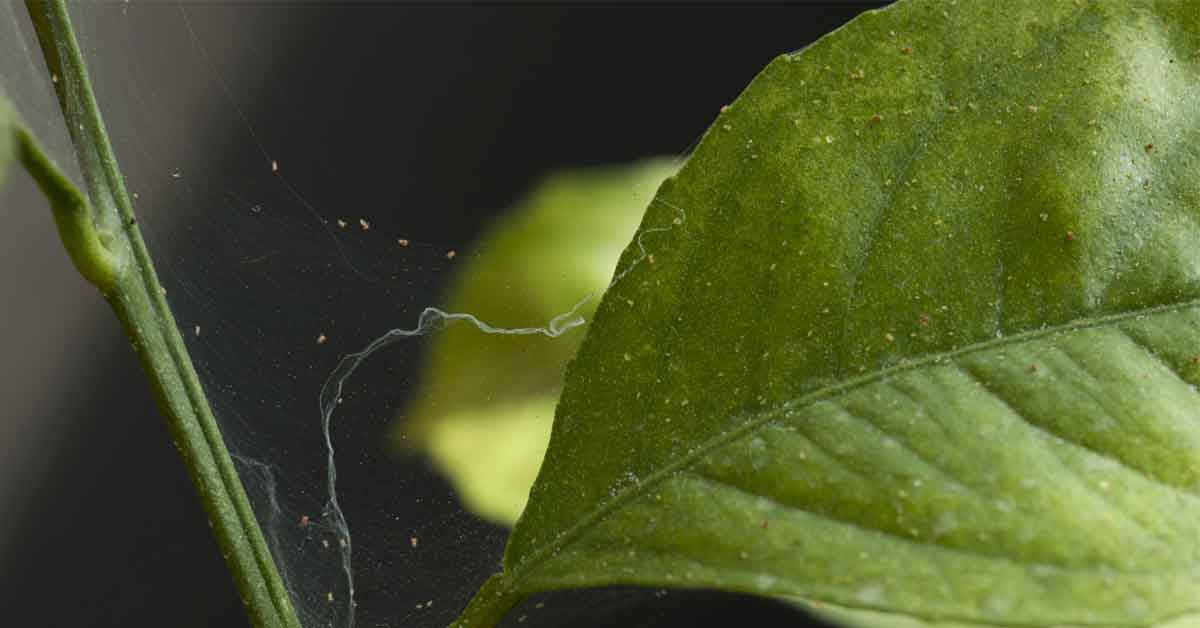
- Spider Mites: Tiny webs, stippled/yellowed stems (worse in dry air).
- Treatment: Increase humidity; rinse plant under lukewarm shower; apply miticide or neem.
Prevention for all pests: Quarantine new plants, maintain good airflow, inspect regularly. Many experts swear by monthly preventive neem sprays during growing season.
No Blooms
The most heartbreaking issue—here’s a quick diagnostic checklist:
- Too young/small → Wait and grow larger.
- Insufficient winter rest → Provide cool, dry, shorter days.
- Wrong light → Not enough bright indirect → move closer to window or add grow light.
- Over-fertilizing nitrogen → Switch to bloom booster.
- Too much water/fertilizer in winter → Reduce drastically.
Other Issues
- Sunburn: Sudden exposure to direct sun causes permanent reddish-brown scars.
- Prevention: Acclimate gradually when moving outdoors.
- Drooping or shriveled stems: Usually underwatering or extreme temperature swings.
- Bud drop: Stress from moving plant, temperature fluctuations, or drafts once buds form.
Advanced Tips from Experienced Growers 🌟
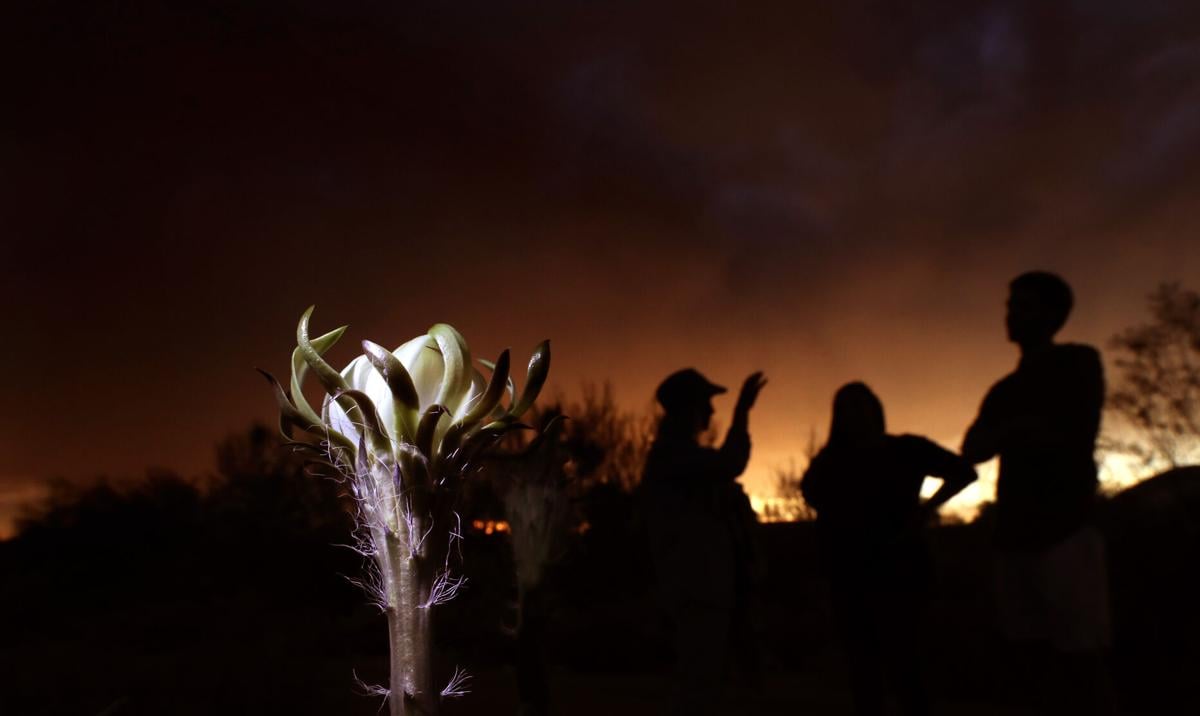
- Host a midnight bloom party: The fragrance is strongest at peak opening—many botanical gardens and private growers host “bloom nights” where friends gather under moonlight to witness the magic. Your mature plant could be the star of such an event! 🎉
- Display creatively: Use hanging baskets or tall trellises to showcase trailing stems—adds dramatic flair to patios or living rooms.
- Explore hybrids: Modern Epiphyllum hybrids offer daytime blooms in vibrant colors while sharing similar care needs.
- Fruit bonus: Hand-pollinate open flowers at night—successful pollination yields edible, pitaya-like fruit (related to dragon fruit!).
Frequently Asked Questions (FAQs) ❓
How long do the flowers last? Each individual bloom opens for one spectacular night only (dusk to dawn), but a healthy mature plant can produce sequential waves over 4–8 weeks.
Is night blooming cereus toxic to pets or humans? Generally considered non-toxic to cats, dogs, and humans (ASPCA lists related species as safe). However, ingesting large amounts may cause mild stomach upset—keep out of reach of curious pets.
Can I grow it outdoors year-round? Yes, in USDA zones 10–12 (frost-free). In cooler climates, treat as a summer patio plant and bring indoors before temperatures drop below 50°F.
Why is my plant not blooming after 7+ years? Revisit the bloom triggers: most often missing winter chill period, insufficient light, or excessive nitrogen. Implement strict seasonal cycles for next year.
How often should I repot? Only every 3–5 years—these plants bloom better when slightly pot-bound.
Does it need direct sunlight? No—bright indirect or filtered light only. Direct sun scorches stems permanently.
Conclusion: Unlock the Magic Tonight 🌙
Mastering night blooming cereus plant care is truly rewarding: a seemingly ordinary plant that delivers one of nature’s most extraordinary displays. By providing bright indirect light, careful watering, well-draining soil, a proper winter rest, and a little patience, you’ll transform your Queen of the Night from leggy houseguest to blooming superstar.
The effort is worth it—few plants offer such drama, fragrance, and conversation-starting beauty. Implement these expert strategies today, watch for those telltale fuzzy buds in summer, and prepare for a night you’ll never forget. Your spectacular nocturnal blooms are closer than you think! 🌸✨
Happy growing—share your bloom successes (and photos!) in the comments. We’d love to celebrate with you! 🏡🌵











