
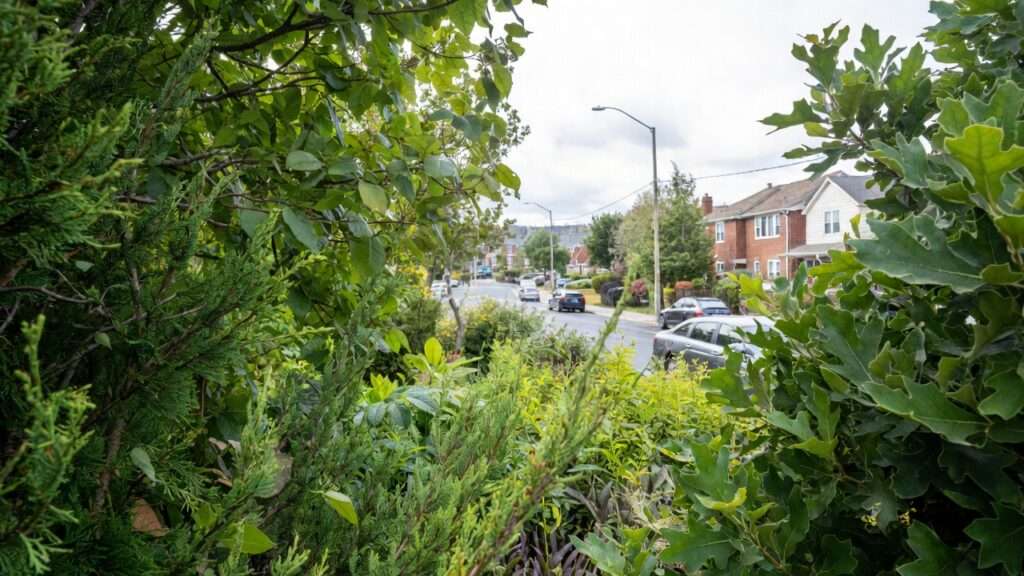
Imagine stepping onto your balcony or opening your window in a bustling city neighborhood, only to be greeted not by peaceful birdsong or a gentle breeze, but by the relentless roar of traffic, honking horns, construction clatter, or noisy neighbors. 😩 For millions living in urban areas, this constant background din isn’t just annoying—it’s a serious health concern. According to the World Health Organization (WHO), environmental noise contributes to stress, sleep disturbances, cardiovascular issues like hypertension, and even impacts mental well-being. In fact, chronic exposure to high noise levels is linked to thousands of premature health issues annually across urban populations worldwide.
The good news? You don’t need expensive soundproof windows or massive concrete barriers to fight back. Noise reduction with urban landscaping offers a natural, beautiful, and multi-benefit solution: strategic planting of trees, shrubs, and other vegetation can meaningfully dampen unwanted sounds while improving air quality, boosting privacy, supporting local wildlife, and enhancing your property’s appeal. 🌳🏡
In this comprehensive guide, we’ll dive deep into proven, science-backed strategies drawn from arboriculture research, urban forestry studies (including USDA Forest Service findings and academic reviews), and real-world applications. Whether you have a small balcony, a modest backyard, or a larger urban lot, you’ll discover how to design effective plant-based noise buffers that deliver 5–10 dB reductions (often perceived as halving the noise intensity) — and sometimes more when layered cleverly. Let’s turn your noisy city home into a calmer, greener sanctuary! 🍃
Why Urban Noise Is a Growing Problem — And How Plants Help (Science Basics) 🔬
Urban noise pollution has escalated with growing cities, denser traffic, and constant construction. Common culprits include road traffic (often 70–85 dB), airplanes, trains, and even amplified voices or music from nearby sources. The health toll is significant: WHO reports link prolonged exposure above 55–65 dB to increased risks of heart disease, sleep disruption (affecting recovery and mood), elevated stress hormones, and reduced cognitive performance in children.
So, how exactly does vegetation combat this? Plants reduce noise through several mechanisms:
- Absorption: Soft, dense foliage (leaves, needles, branches) converts sound energy into tiny vibrations and heat, especially effective for higher-frequency sounds like voices, horns, or tire hiss. 🍂
- Deflection and Scattering: Irregular surfaces bounce sound waves in multiple directions, diffusing their intensity.
- Refraction: Sound bends slightly around dense plant masses.
- Masking: Gentle rustling leaves create pleasant “white noise” that psychologically masks harsher urban sounds, making the environment feel quieter even if physical dB drops are modest. 😌
Realistic expectations matter. Studies (e.g., from USDA and various urban forestry reviews) show dense vegetation belts 15–30 meters wide can achieve 5–10 dB reductions — a 10 dB drop feels like roughly half the loudness to the human ear. Wider or layered plantings combined with earth berms can push this to 6–15 dB. Evergreens provide consistent year-round protection, while broadleaf species excel seasonally but lose leaves in winter.
Importantly, plants also deliver psychological noise reduction: Research indicates people perceive environments with greenery as quieter, even beyond measurable dB changes, thanks to biophilic benefits that lower stress responses.
Limitations exist — vegetation isn’t as effective against low-frequency rumbles (like heavy trucks) as solid barriers, and sparse or single-row plantings offer minimal physical impact (often <3 dB). But when designed thoughtfully, urban landscaping outperforms expectations for moderate noise sources.
How Noise Reduction with Urban Landscaping Actually Works (Key Principles) ⚙️
Success depends on several interconnected factors:
- Density and Width: The thicker and wider the planting, the better. Aim for multi-row, staggered arrangements with no gaps — ideally 15–30+ meters deep for noticeable effects, though even 5–10 meters helps in smaller spaces.
- Height and Placement: Plant closest to the noise source (e.g., near the street) for maximum interception. Tall trees (10–20m+) block line-of-sight sound paths; low-branching shrubs fill ground-level gaps.
- Plant Structure: Dense foliage from ground up is ideal. Evergreens maintain winter performance 🌲, while deciduous trees with large leaves scatter sound well in growing seasons.
- Frequency Targeting: Plants absorb high frequencies (annoying sharp sounds) best; low frequencies penetrate more, so combine with berms or walls for broader coverage.
- Seasonal vs. Year-Round: In temperate climates, mix evergreens for consistency with deciduous for summer density and visual interest.
- Synergies: Pair plants with mounds (berms 1–3m high), existing fences, or green walls — this can amplify reductions significantly (up to 10–15 dB total).
Pro tip: Measure your noise source distance and levels (using free smartphone apps) to tailor your plan realistically.
Best Trees and Plants for Maximum Noise Reduction in Cities (Top Recommendations) 🌱🌳
Selecting the right species is crucial — prioritize dense foliage, pollution tolerance, fast growth (for quicker results), and suitability to urban conditions like compacted soil or limited space.
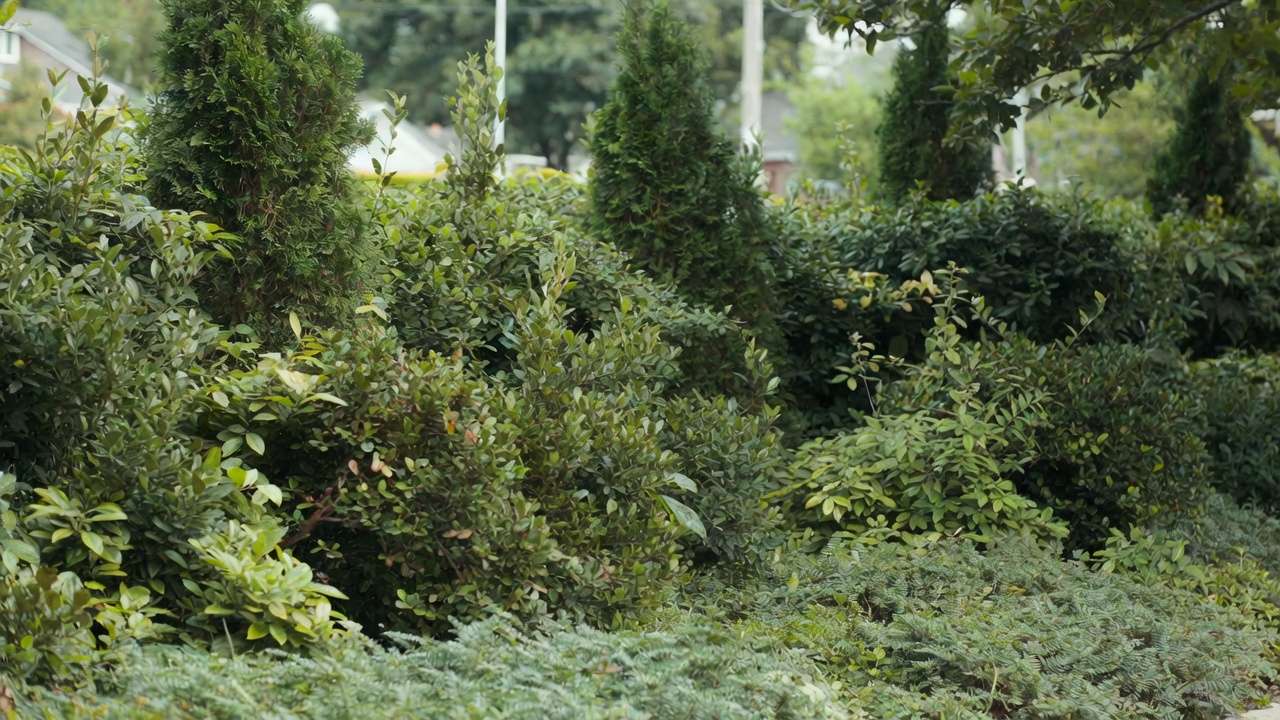
Evergreen Trees & Conifers (Year-Round Heroes) 🌲
These provide consistent protection, even in winter:
- Thuja Green Giant or Emerald Green Arborvitae: Fast-growing (up to 1m/year), dense pyramidal form, excellent for hedges or screens. Mature height 10–20m; highly effective for traffic noise.
- Leyland Cypress: Ultra-fast (1–1.5m/year), thick branching; great for quick barriers but needs pruning.
- Pines, Spruces, Cedars (e.g., Eastern White Pine or Norway Spruce): Needle foliage absorbs sound well; tolerant of urban pollution.
Broadleaf & Deciduous Trees (Seasonal Powerhouses) 🍁
Large leaves diffuse sound effectively during leaf-on periods:
- Oaks, Maples, Beeches: Broad canopies and dense branching; Oaks often top lists for noise attenuation.
- Hybrid Poplars or Willows: Very fast growers for initial quick coverage, though shorter-lived.
Shrubs & Hedges (Lower-Level Filling) 🪴
Essential for ground-to-mid height density:
- Holly (e.g., Nellie R. Stevens), Privet, Laurel, Boxwood: Thick, evergreen growth from base up; ideal layered with trees.
- Junipers or Yews: Compact, pollution-resistant evergreens for narrow spaces.
Bonus: Vines & Ground Covers
- Ivy or climbing plants on walls/fences add extra absorption layers.
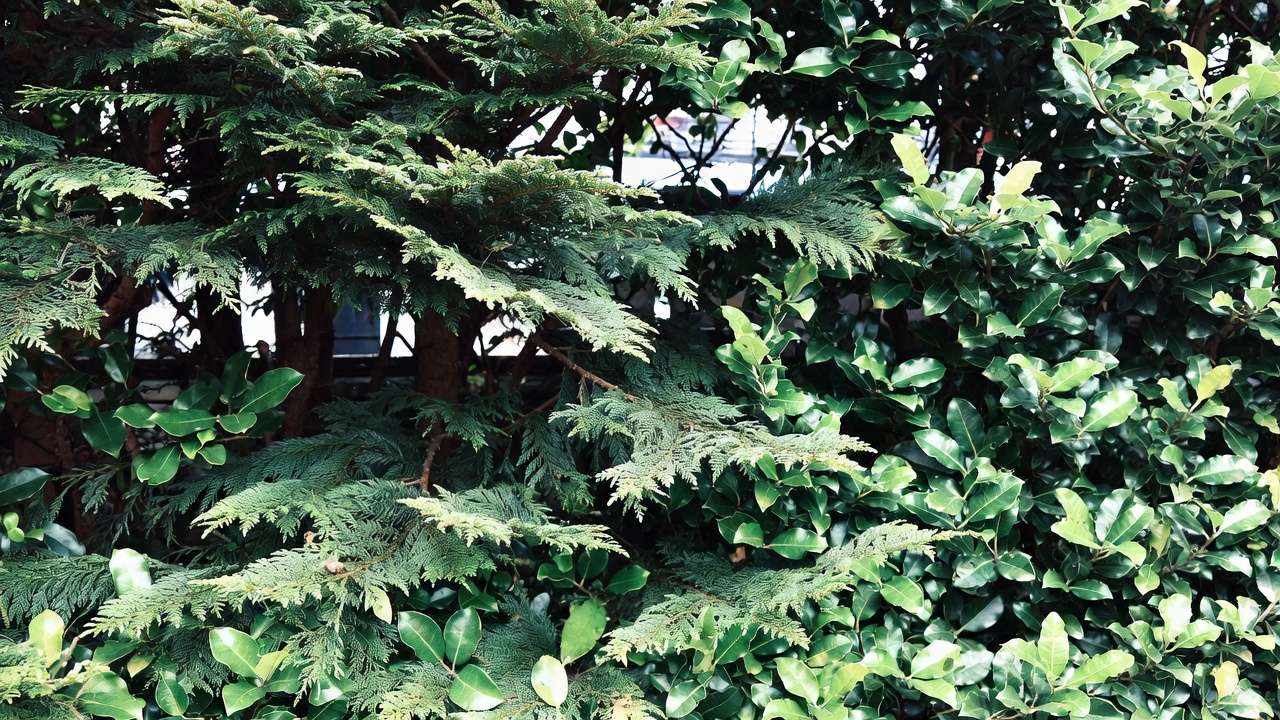
Quick Comparison Table (based on common urban performance):
| Plant Type | Growth Rate | Mature Height | Approx. dB Potential (Dense Belt) | Urban Suitability Notes |
|---|---|---|---|---|
| Thuja Green Giant | Fast | 15–20m | High (6–10 dB) | Pollution-tolerant, low maintenance |
| Leyland Cypress | Very Fast | 15–25m | High | Quick results, needs space |
| Holly Shrubs | Medium | 3–6m | Medium-High | Dense, berries for wildlife |
| Oaks/Maples | Medium | 15–30m | Medium (seasonal) | Large leaves, shade benefits |
| Junipers | Slow-Medium | 2–5m | Medium | Narrow spaces, drought-tolerant |
Choose natives or adapted species for your region to ensure longevity and eco-benefits.
Step-by-Step Design Strategies for Your Urban Space (Practical Implementation) 🛠️
Creating an effective noise-reducing landscape starts with smart planning tailored to your specific site. Here’s a step-by-step expert approach based on urban forestry best practices:
- Assess Your Noise Problem Use a free smartphone decibel meter app (like NIOSH Sound Level Meter or Decibel X) to measure current noise levels at different times of day. Identify the primary source (e.g., street traffic at 70–80 dB, neighbor chatter). Note the distance to the source and line-of-sight paths. This helps set realistic goals — aim for 5–8 dB reduction in most small-to-medium urban setups.
- Evaluate Your Space Measure available planting area, soil type (test pH and drainage), sunlight exposure, wind direction, and any restrictions (HOA rules, utilities). In tight city lots or balconies, focus on vertical and container solutions. For yards, prioritize space near the noise source.
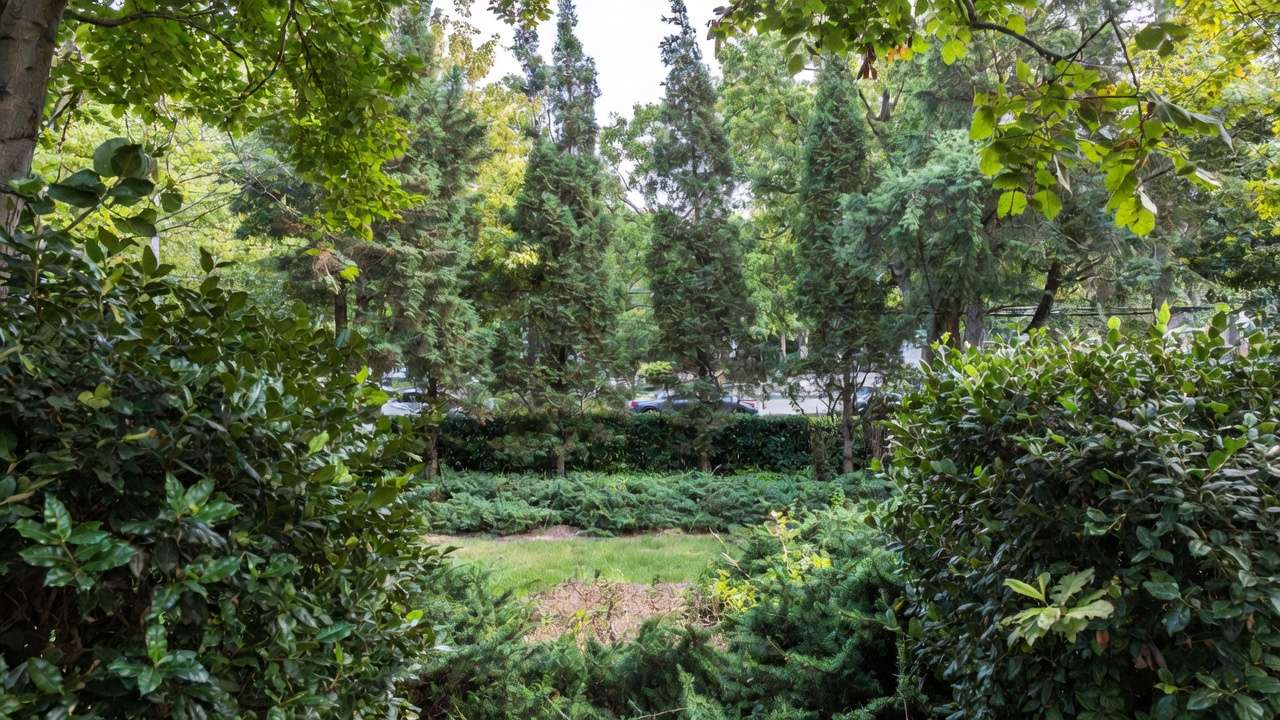
- Design Layered Planting (The Golden Rule) 🍃
- Layer 1 (Closest to source): Dense evergreen shrubs or low-branching conifers (e.g., Holly, Junipers) to block ground-level sound.
- Layer 2 (Middle): Medium-height evergreens or broadleaf trees (e.g., Thuja Green Giant, Leyland Cypress) for mid-level absorption.
- Layer 3 (Farthest/near home): Taller trees with dense canopies (e.g., Oaks, Maples) to scatter higher sounds. Stagger rows to eliminate sightlines — no straight gaps! A 10–20 meter deep multi-layer belt often yields the best results.
- Incorporate Hardscape Boosters Build a 1–2 meter high berm (earthen mound) planted with grass or ground cover, then add vegetation on top — this combo can add 3–6 extra dB reduction. Use existing fences or walls as backdrops for climbing vines (e.g., English Ivy) to increase density without taking floor space.
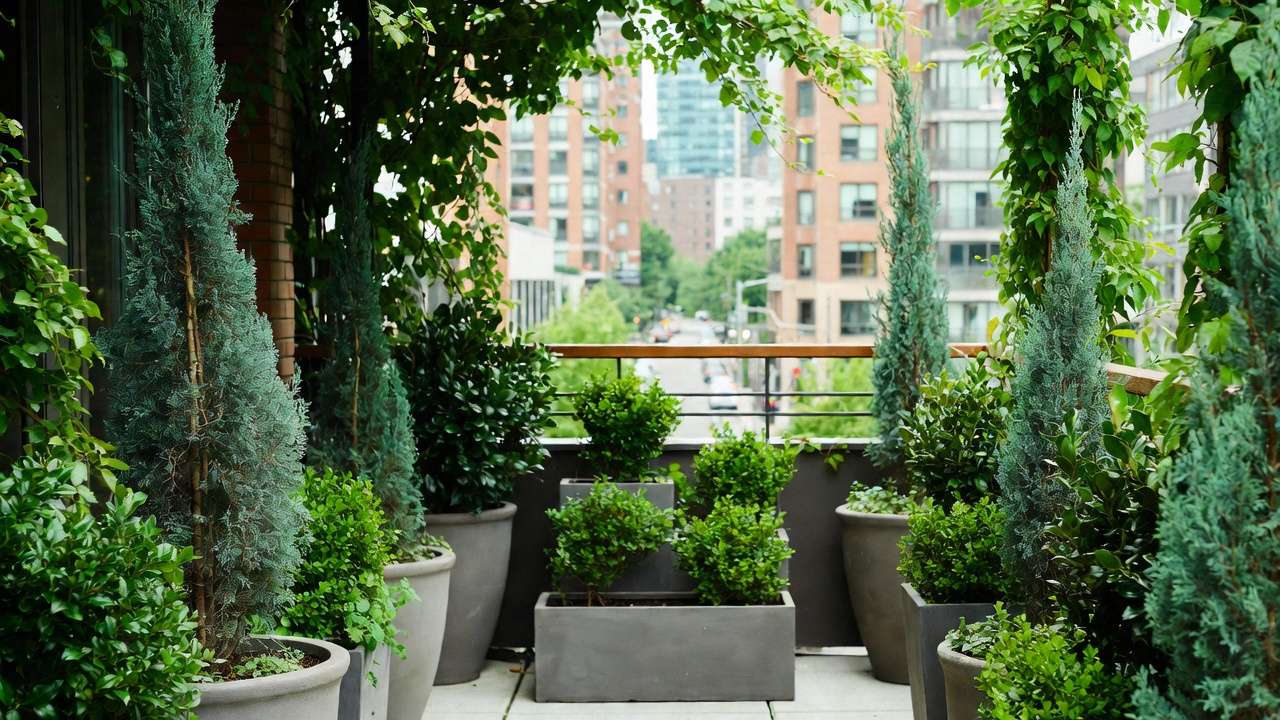
- Small-Space & Balcony Hacks 🏙️
- Line railings with tall container evergreens (Arborvitae in large pots).
- Install living green walls or vertical planters with dense foliage plants.
- Add potted shrubs in tiers for layered effect — even 2–3 meters of dense planting can cut high-frequency noise noticeably.
- Planting & Maintenance Tips
- Plant densely (spacing 50–70% of mature width for quick closure).
- Water deeply during establishment; mulch to retain moisture.
- Prune annually to maintain density from ground up.
- Monitor for urban pests (scale, aphids) common in polluted areas.
With these steps, many homeowners report noticeable calm within 2–5 years as plants mature.
Real-World Examples and Case Studies (Proof It Works) 📊
Science and on-the-ground results back these strategies:
- USDA Forest Service & Agroforestry Studies: Dense tree/shrub belts 30+ meters wide with evergreens reduce traffic noise by 5–10 dB year-round; narrower belts (10–15m) still achieve 3–6 dB when layered.
- European Urban Research: In cities like Poznań (Poland), targeted green belts along roads cut perceived noise significantly, with psychological benefits amplifying physical drops.
- Residential Success Stories: Homeowners near highways planting Thuja Green Giant hedges + berms report 6–12 dB reductions (measured via apps), turning “unbearable” traffic into background hum.
- City-Scale Wins: Municipal plantings in noisy districts (e.g., roadside buffers in the UK and US) show consistent 5–8 dB drops, plus added air quality and wildlife perks.
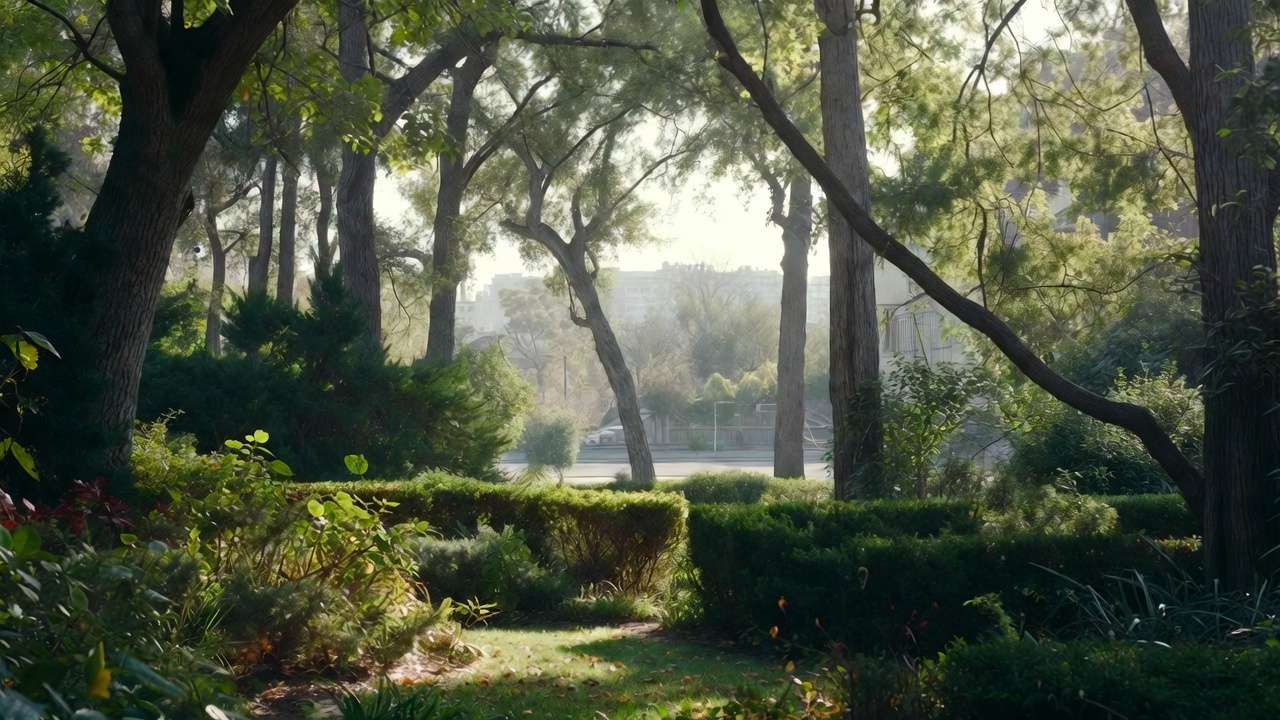
Before/after example: A backyard facing a busy street planted with staggered Leyland Cypress (front), Holly (middle), and Oaks (rear) saw daytime noise drop from ~75 dB to ~65–68 dB — a perceived halving of loudness! 😌
Additional Benefits Beyond Noise Reduction (Value Boost) 🌟
Noise buffers are multi-taskers:
- Air Quality: Leaves trap particulate matter and absorb pollutants.
- Temperature Regulation: Shade and evapotranspiration cool microclimates by 2–5°C in summer.
- Biodiversity & Wildlife: Attract birds, pollinators — turning noise into nature sounds.
- Mental Health & Property Value: Greener spaces lower stress; studies show landscaped homes sell faster/higher.
- Sustainability: Natural alternative to concrete walls, with carbon sequestration.
Common Mistakes to Avoid (Expert Warnings) ⚠️
- Planting too sparsely or in single rows — minimal impact (<2–3 dB).
- Choosing high-canopy trees only (gaps at ground level let sound through).
- Ignoring climate/soil fit — stressed plants thin out and lose effectiveness.
- Planting too far from source — interception drops sharply with distance.
- Neglecting maintenance — overgrown or dead spots create weak points.
FAQs (Quick Answers for SEO & User Intent) ❓
How much noise can plants realistically reduce in dB? In urban settings, dense layered plantings achieve 5–10 dB (perceived as ~50% quieter); with berms, up to 6–15 dB for moderate sources.
Do evergreens work better than deciduous trees? Yes, for year-round protection — evergreens maintain density in winter when deciduous drop leaves.
What’s the fastest-growing option for quick results? Leyland Cypress or Hybrid Poplars (1–1.5m/year); Thuja Green Giant follows closely.
Can balcony/container plants make a difference? Yes, especially for high-frequency sounds — dense potted evergreens + vines can cut 3–6 dB in small spaces.
How to combine plants with other noise solutions? Layer with double-pane windows, white-noise machines, or acoustic fencing for compounded quiet.
Conclusion & Next Steps (Call to Action) 💚
Noise reduction with urban landscaping isn’t a miracle cure, but it’s one of the most beautiful, eco-friendly, and effective ways to reclaim peace in city living. By choosing dense, layered, pollution-tolerant plants and designing thoughtfully, you can create a noticeably calmer home environment that also nurtures health, nature, and beauty.
Start small: Plant a privacy hedge this season or add balcony evergreens. Track progress with your decibel app and watch (and hear!) the transformation. 🌳
Have you tried plant-based noise solutions? Share your experiences in the comments — I’d love to hear what worked for you! For more tree care tips, check our guides on [evergreen maintenance] or [urban soil improvement]. Stay green and peaceful! 🍃✨











