
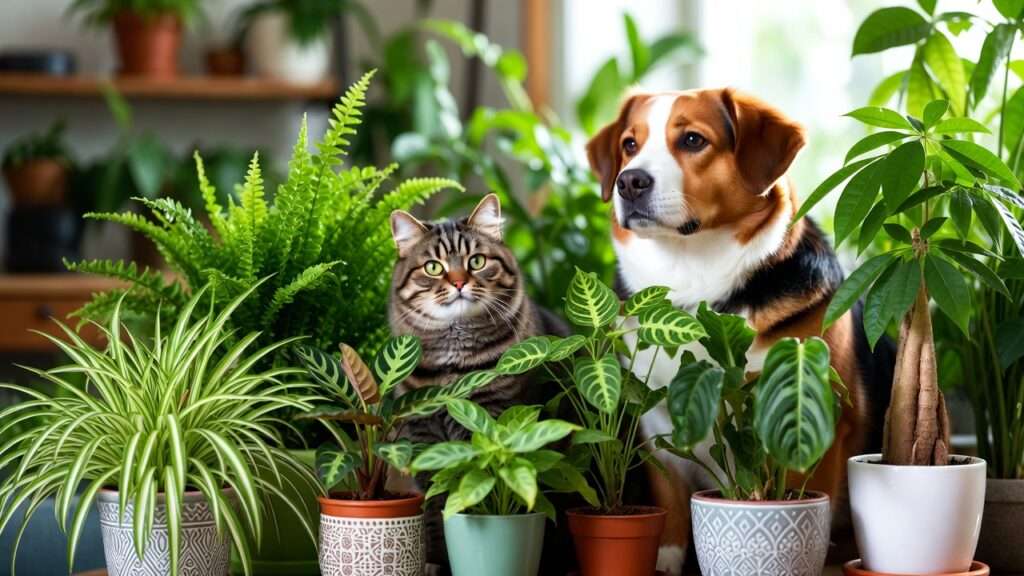
Picture this: You walk into your living room, greeted by lush, vibrant greenery that instantly lifts your mood and freshens the air. Your curious cat lounges nearby, batting at a dangling leaf, while your playful dog sniffs around the pot — but there’s no panic, no rush to the vet. That’s the peace of mind that comes with choosing non-toxic houseplants for cats and dogs.
Many beloved houseplants, like lilies, pothos, and sago palms, pose serious risks to pets, causing everything from mild irritation to life-threatening issues. As a plant care expert who’s helped countless pet owners create safe, beautiful indoor jungles, I know how frustrating (and scary) this can be. The good news? There are plenty of stunning, pet-safe alternatives that thrive indoors, purify the air, and add that natural charm without the worry.
In this in-depth guide, we’ll explore over 15 verified non-toxic houseplants for cats and dogs (cross-referenced with the ASPCA’s trusted toxicity database), share expert care tips, highlight plants to strictly avoid, and offer practical advice to keep both your greenery and furry family happy. Whether you’re a beginner plant parent or a seasoned green thumb with a multi-pet household, you’ll find everything you need for a worry-free, pet-friendly home. Let’s dive in! 🌱✅
Why Pet Owners Need Non-Toxic Houseplants ❤️
Bringing plants into your home isn’t just about aesthetics — it’s about health and happiness for everyone, including your pets. Indoor plants can remove toxins like formaldehyde and benzene from the air (thanks to studies like NASA’s Clean Air Study), increase humidity, reduce stress, and even boost productivity. For pet owners, the stakes are higher: according to the ASPCA Animal Poison Control Center, thousands of calls each year involve plant ingestions, with some leading to emergency vet visits.
The problem? Popular houseplants often contain compounds harmful to cats and dogs — calcium oxalate crystals cause oral burning, while others lead to kidney failure or liver damage. Choosing pet-safe options solves this real problem: you get all the benefits of indoor greenery without risking your companion’s health. This guide focuses on plants confirmed non-toxic by the ASPCA (meaning no serious systemic effects, though mild GI upset is possible if overeaten — moderation matters!). Always verify the latest on ASPCA.org, as individual reactions vary.
Common Toxic Houseplants to Avoid ⚠️
Before we get to the safe picks, let’s clear the danger zone. Here are some of the most common toxic houseplants that frequently cause issues for cats and dogs:
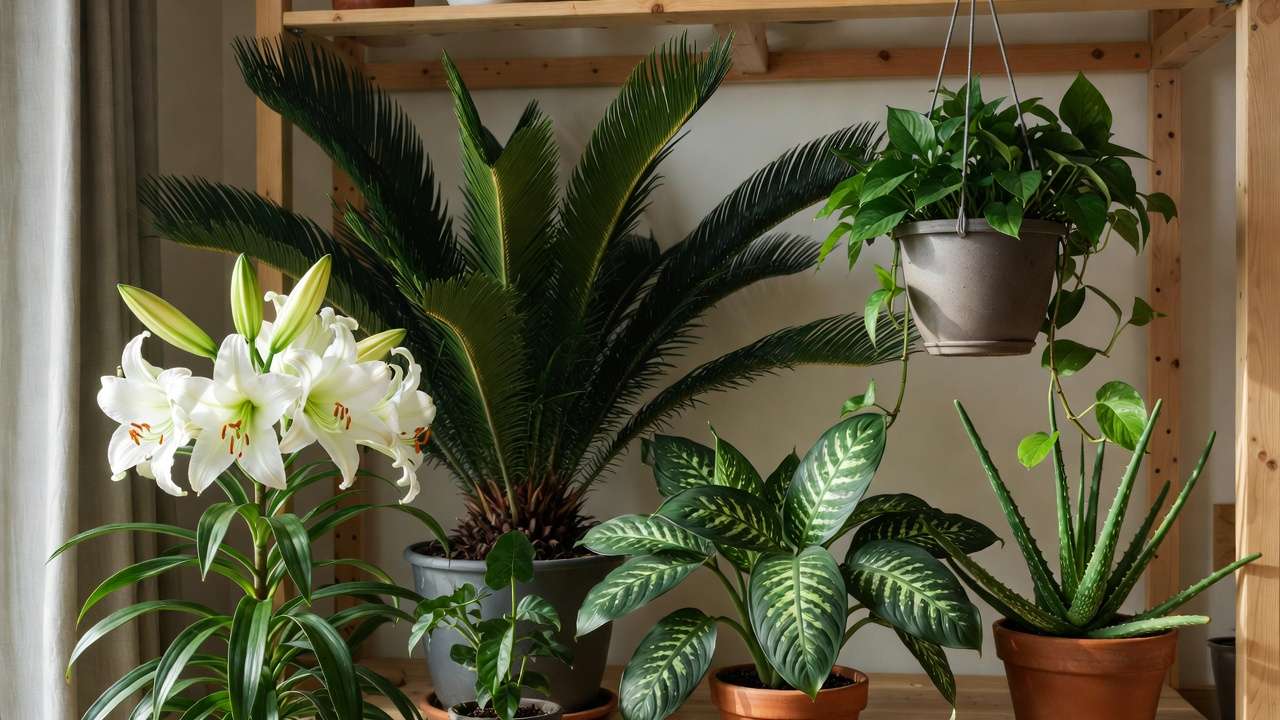
- Lilies (especially true lilies like Easter lilies) 🌸 — Extremely toxic to cats; even a small nibble can cause acute kidney failure. Dogs are less affected but still at risk.
- Sago Palm 🌴 — All parts are highly toxic, leading to severe vomiting, liver failure, and potentially death in both cats and dogs.
- Pothos / Devil’s Ivy (Epipremnum aureum) 🪴 — Contains insoluble calcium oxalate crystals; causes intense oral irritation, drooling, and swelling.
- Dieffenbachia (Dumb Cane) & Philodendron — Similar oxalate issues; pets experience burning mouth, difficulty swallowing, and vomiting.
- Aloe Vera — The gel can cause diarrhea and vomiting if ingested in large amounts.
- Snake Plant (Sansevieria), ZZ Plant, Jade Plant — Often mild but can lead to nausea and lethargy.
Quick Symptoms Table:
- Drooling, pawing at mouth → Oxalate plants
- Vomiting, lethargy → Many toxins
- Kidney issues (increased thirst/urination) → Lilies, sago palm
If you suspect ingestion, contact ASPCA Poison Control immediately at (888) 426-4435 or your vet. Prevention is key — keep toxic plants out of reach or replace them with safe alternatives.
(Here are some visuals of common toxic plants to help you identify and avoid them — note these are NOT safe!)
(These show lilies, pothos, and sago palm for reference.)
Top 15+ Non-Toxic Houseplants for Cats and Dogs 🌟
Here’s the heart of the guide: a comprehensive list of ASPCA-approved, pet-safe houseplants. I’ve selected varieties that are beautiful, relatively easy to care for, and popular among pet owners. Each includes why it’s safe, key care tips, and fun facts.
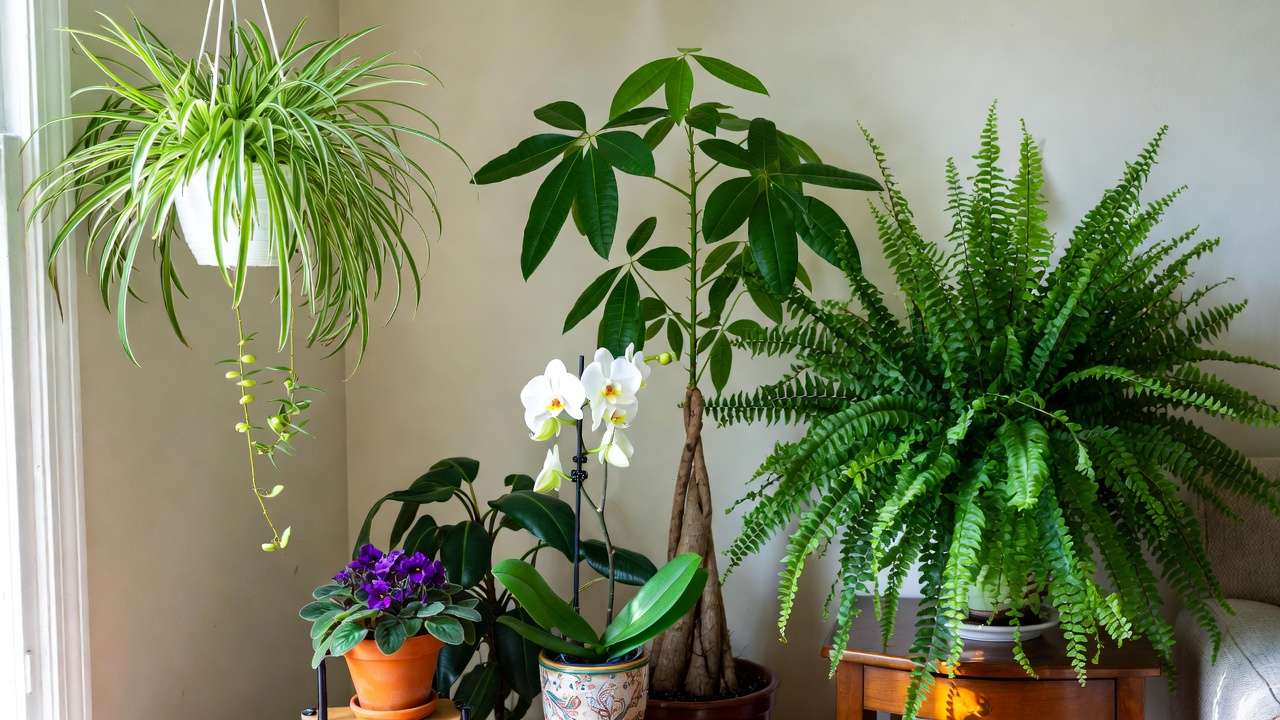
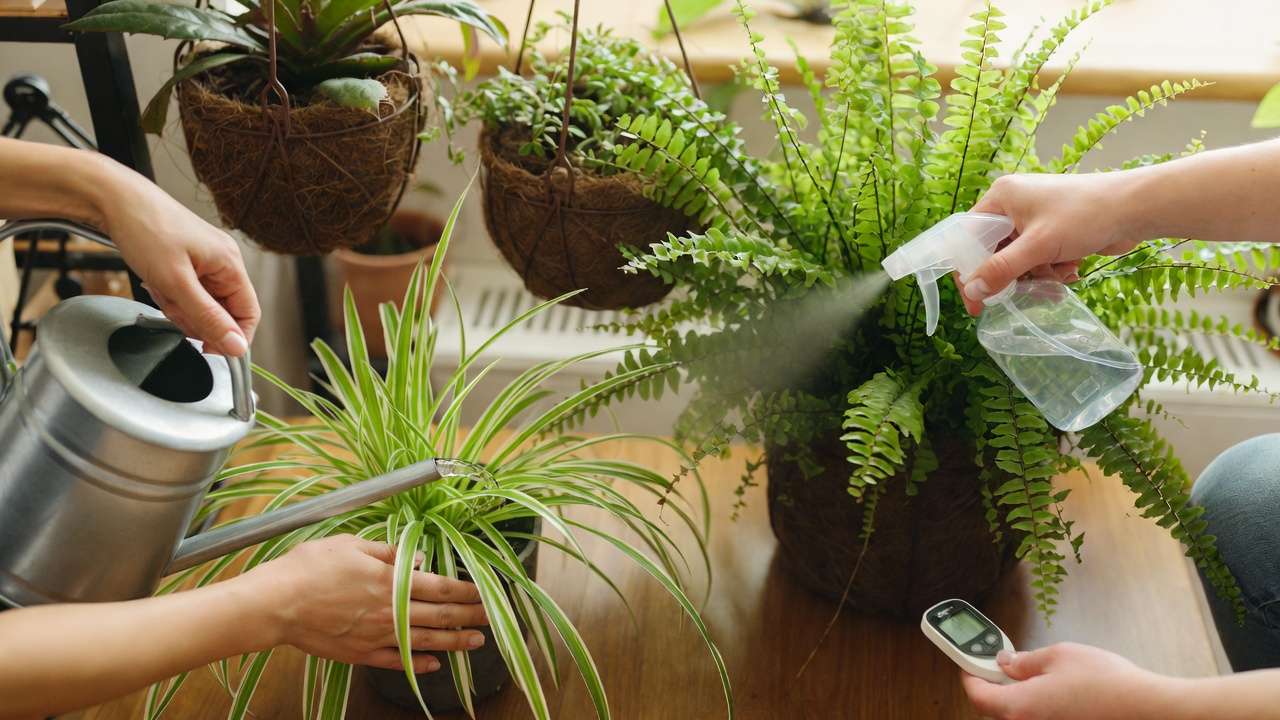
- Spider Plant (Chlorophytum comosum) 🕸️ One of the most popular pet-safe plants — non-toxic to cats and dogs, and excellent at purifying air (removes formaldehyde and xylene). It produces “pups” (baby plants) that dangle playfully, often attracting curious pets without harm. Care: Bright indirect light, water when top inch of soil is dry. Easy beginner plant! Pros: Air-purifying, propagates easily. Cons: Can brown in low humidity.
- Boston Fern (Nephrolepis exaltata) 🌿 Lush, feathery fronds add tropical vibes. Non-toxic and loves humidity — perfect for bathrooms. Care: Medium to bright indirect light, keep soil consistently moist. Mist regularly. Pros: Air-purifying, elegant. Cons: Needs high humidity.
- Areca Palm / Parlor Palm (Dypsis lutescens / Chamaedorea elegans) 🏝️ Graceful, feathery leaves; great for low-light corners. Both are ASPCA-safe. Care: Bright indirect to low light, moderate water. Pros: Tall and statement-making. Cons: Slow grower.
- Money Tree (Pachira aquatica) 💰 Braided trunk for feng shui appeal; non-toxic and forgiving. Care: Bright indirect light, water when dry. Pros: Symbolic prosperity. Cons: Overwatering leads to root rot.
- Phalaenopsis Orchid (Moth Orchid) 🌸 Elegant blooms last weeks; completely safe for pets. Care: Bright indirect light, water weekly (bark mix). Pros: Long-lasting flowers. Cons: Sensitive to cold.
- African Violet (Saintpaulia) 💜 Compact, colorful blooms; thrives in low light. Care: Bright indirect, bottom-water to avoid leaf spots. Pros: Constant flowers. Cons: Fussy with water on leaves.
- Cast Iron Plant (Aspidistra elatior) 🏋️ Tough as its name — survives neglect and low light. Care: Low to medium light, infrequent water. Pros: Extremely hardy. Cons: Slow growth.
- Christmas Cactus (Schlumbergera) 🎄 Holiday bloomer with trailing stems; pet-safe. Care: Bright indirect, water when dry. Pros: Seasonal flowers. Cons: Needs cooler nights to bloom.
- Peperomia (various, e.g., Watermelon Peperomia) 🍉 Cute, compact leaves; many varieties safe. Care: Medium light, allow soil to dry. Pros: Small and colorful. Cons: Overwatering risk.
- Prayer Plant (Maranta leuconeura) 🙏 Leaves fold at night like praying hands — mesmerizing! Care: Medium indirect light, high humidity. Pros: Moving foliage. Cons: Humidity lover.
- Calathea (e.g., Rattlesnake Plant) 🐍 Stunning patterned leaves; pet-safe family. Care: Low to medium light, moist soil. Pros: Gorgeous patterns. Cons: Prone to spider mites.
- Hoya (Wax Plant) 🌟 Trailing vines with waxy flowers; sweet-scented. Care: Bright indirect, infrequent water. Pros: Long-lived. Cons: Slow to bloom.
- Baby Rubber Plant (Peperomia obtusifolia) 🍼 Thick, glossy leaves; compact and forgiving. Care: Medium light, moderate water. Pros: Low-maintenance. Cons: Can get leggy.
- Ponytail Palm (Beaucarnea recurvata) 🐴 Unique swollen base; drought-tolerant. Care: Bright light, infrequent water. Pros: Architectural. Cons: Slow growth.
- Air Plants (Tillandsia) ✈️ No soil needed — mount or soak! Super safe. Care: Bright indirect, soak weekly. Pros: Versatile display. Cons: Needs consistent humidity.
Bonus Picks: Bromeliads, Staghorn Fern — all ASPCA non-toxic and add unique flair.
(Visuals of some safe stars to inspire you!)
(Spider Plant, Boston Fern, and Phalaenopsis Orchid shown.)
How to Choose the Right Pet-Safe Plant for Your Home 🏡
Selecting from the many non-toxic houseplants for cats and dogs comes down to matching the plant to your lifestyle, home environment, and pet habits. Here’s expert guidance to make the best choice:
- Assess Your Lighting Conditions ☀️: Low-light homes suit Cast Iron Plant, Prayer Plant, or African Violet perfectly. Bright indirect light? Go for Spider Plant, Boston Fern, or Money Tree. Avoid placing light-hungry plants like Phalaenopsis Orchids in dim corners — they’ll sulk and drop buds.
- Consider Humidity Levels 💦: Bathrooms or kitchens with higher humidity are ideal for Boston Fern, Calathea, or Prayer Plant (they love misting!). In drier spaces, opt for drought-tolerant picks like Ponytail Palm, Peperomia, or Hoya.
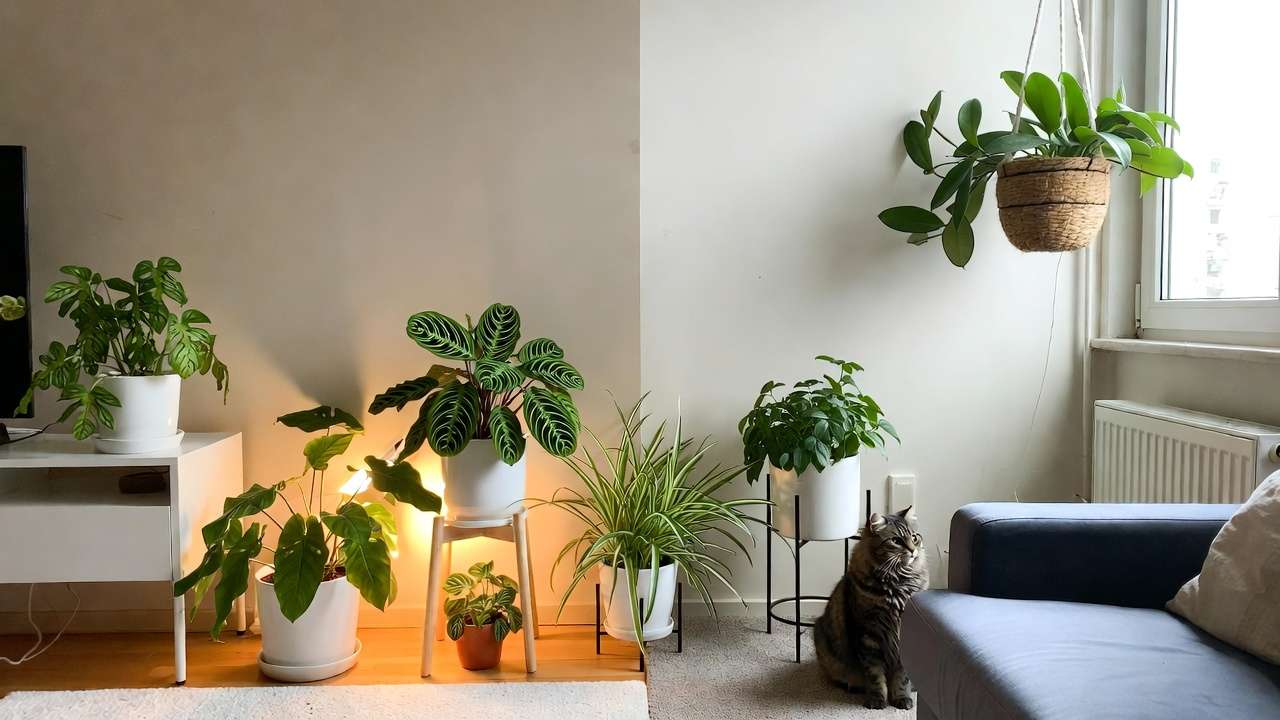
- Factor in Pet Behavior 🐾: If your cat loves to climb or bat at dangling leaves, choose upright plants like Parlor Palm or Money Tree, or hang trailing ones (Spider Plant pups are fun but safe!). For diggers like dogs, elevate pots on sturdy stands or use hanging macramé planters.
- Space and Size 📏: Small apartments benefit from compact options like African Violet, Peperomia, or Baby Rubber Plant. Larger rooms can handle statement pieces like Areca Palm or Ponytail Palm.
- Care Commitment 🌱: Beginners should start with ultra-forgiving plants like Cast Iron Plant or Spider Plant. If you’re experienced, try more finicky but rewarding ones like Calathea or Phalaenopsis Orchid.
Pro tip: Start small with 2–3 plants to see how your pets interact — most will ignore them, but some curious kitties might need gentle redirection!
(Here’s a visual of a pet-safe setup with hanging Spider Plants and elevated Boston Ferns for inspiration!)
Care Tips for Keeping Pet-Safe Plants Thriving 💧☀️
These pet-friendly houseplants are generally low-maintenance, but proper care keeps them lush and healthy (and less appealing for excessive chewing).
- Watering Wisdom 💦: Always check the top 1–2 inches of soil — most prefer to dry out slightly between waterings. Overwatering is the #1 killer! Use room-temperature water and ensure pots have drainage holes to prevent root rot.
- Light & Placement ☀️: Bright indirect light is the sweet spot for most (east or west windows). Rotate plants every few weeks for even growth.
- Soil & Feeding 🌿: Use well-draining potting mix (add perlite for extra aeration). Fertilize sparingly during growing season (spring/summer) with a balanced, diluted houseplant fertilizer.
- Pet-Proofing Strategies 🛡️:
- Hang trailing plants or use tall shelves.
- Apply pet-safe bitter sprays (like citrus-based ones) if needed.
- Offer cat grass or wheatgrass as a safe distraction — many cats prefer it!
- Train gently: Redirect with toys when they approach plants.
- Common Issues & Fixes ⚕️:
- Yellow leaves? Usually overwatering or poor drainage.
- Brown tips? Low humidity or fluoride in tap water — use filtered water or mist.
- Pests? Treat with neem oil or insecticidal soap (pet-safe when dry).
Bonus: Many of these (Spider Plant, Peperomia) propagate easily in water — free new plants for friends or to expand your collection!
Bonus: Air-Purifying & Low-Maintenance Superstars 🌬️
Several of our safe picks double as NASA-approved air purifiers, removing VOCs like formaldehyde and benzene — great for pet households where clean air matters.
Top performers:
- Spider Plant — Removes xylene, toluene, and more; super easy!
- Boston Fern — Excellent humidifier and air cleaner.
- Areca Palm — Filters toxins and adds tropical vibes.
- Money Tree — Moderate purifier with lucky charm bonus.
These plants help create a healthier indoor environment for both you and your pets — win-win! 🌿❤️
Expert Insights & Vet Recommendations 🩺
As someone who’s consulted with veterinarians and referenced the ASPCA extensively, here’s the straight talk: Even non-toxic houseplants for cats and dogs aren’t 100% risk-free. Large ingestions can cause mild gastrointestinal upset (vomiting, diarrhea) simply from plant fiber — think of it like eating too much salad!
Key vet advice:
- Monitor for signs: Excessive drooling, vomiting, lethargy, or changes in appetite.
- If symptoms appear, contact your vet or ASPCA Animal Poison Control (888-426-4435) immediately — better safe than sorry.
- “Moderation is key,” says many vets. Most pets nibble once and learn it’s not tasty.
- Source ethically: Buy from reputable nurseries to avoid pesticide-treated plants that could irritate pets.
Always cross-check the latest on ASPCA.org — plant classifications can update with new research.
Frequently Asked Questions (FAQs) ❓
Are all succulents safe for pets? No — avoid Aloe Vera, Jade Plant (Crassula), and Echeveria lookalikes that might be toxic. Stick to safe ones like Haworthia or Burro’s Tail (if confirmed non-toxic in your checks).
Can pets still get sick from non-toxic plants? Yes, mildly — from overeating or choking hazards. Keep portions small and plants out of reach if your pet is a heavy chewer.
Best plants for low-light apartments? Cast Iron Plant, ZZ Plant alternatives like Peperomia, African Violet, or Prayer Plant thrive with minimal light.
How do I stop cats from chewing plants? Use hanging baskets, bitter apple spray (pet-safe), or provide catnip/ grass alternatives. Some owners use aluminum foil around bases — cats hate the texture!
Are outdoor plants different for pet safety? Many overlap, but outdoor risks include fertilizers/pesticides. Safe crossover picks: Boston Fern (shady spots), Spider Plant (containers).
Conclusion 🎉
You don’t have to choose between a beautiful, green home and the safety of your beloved cats and dogs. With these non-toxic houseplants for cats and dogs — from the resilient Spider Plant to the elegant Phalaenopsis Orchid — you can enjoy lush indoor greenery, better air quality, and total peace of mind.
Start simple: Pick 2–3 easy-care options like Spider Plant or Cast Iron Plant, place them thoughtfully, and watch your space (and mood) transform. Always verify with ASPCA.org for the most current info, and consult your vet if concerns arise.
Happy planting — and happy, healthy pets











