
Imagine watching your delicate Japanese maple bonsai burst into vibrant spring greens after a long winter dormancy… only to see those tender leaves scorch in summer heat or suffer root damage from an unexpected freeze. 😔 Many outdoor bonsai enthusiasts lose precious trees not from neglect, but because seasonal care isn’t adapted properly to the changing weather cycles.
Outdoor bonsai care through seasons is essential for temperate species like maples, junipers, pines, and elms — these living artworks thrive when they experience full natural cycles: cold dormancy for bud set, spring awakening for vigorous growth, summer hardening, and fall preparation. Skipping or mismanaging any phase leads to weak ramification, poor nebari development, pest vulnerability, or outright loss.
As a bonsai enthusiast with over 15 years nurturing outdoor collections in varied climates (from humid subtropics to cooler zones), I’ve learned that consistent, observant seasonal management turns average trees into stunning, long-lived specimens. This complete year-round guide delivers the detailed, practical roadmap you need — checklists, species tips, common pitfalls, and pro insights — to keep your outdoor bonsai healthy and beautiful no matter the season. Let’s dive in! 🌳
Understanding Outdoor Bonsai vs. Indoor: Why Seasons Matter 🌤️
Unlike tropical indoor bonsai (ficus, jade, serissa) that prefer stable warmth year-round, true outdoor bonsai are temperate species requiring genuine seasonal changes. Cold winters trigger physiological dormancy — halting growth, setting buds, and building resilience. Without it, trees produce weak, leggy shoots and fail to develop dense branching or intense fall color.
Benefits of keeping bonsai fully outdoors include:
- Natural compact growth and smaller internodes
- Vibrant seasonal foliage changes (especially in maples and elms)
- Stronger root systems and nebari from temperature fluctuations
- Better pest and disease resistance through natural hardening
Popular beginner-friendly outdoor species include:
- Trident maple (Acer buergerianum) — stunning fall color, forgiving
- Juniper procumbens ‘nana’ or shimpaku — hardy, great for deadwood
- Japanese black pine — classic rugged look, needs full sun
- Chinese elm (Ulmus parvifolia) — fast-growing, responds well to pruning
Always match species to your USDA hardiness zone (most outdoor bonsai thrive in zones 5–9). In warmer climates, provide more shade; in colder ones, prioritize winter protection.

General Year-Round Essentials Before Diving into Seasons ⚙️
Before seasonal specifics, master these foundations:
Soil & Drainage — Use well-aerating inorganic mix: 50% akadama, 25% pumice, 25% lava rock (or similar). This prevents root rot while retaining just enough moisture. Repot every 1–3 years depending on species and growth.
Pot & Placement — Unglazed pots for conifers, glazed for deciduous. Elevate on stands for airflow and aesthetics. Choose spots with morning sun + protection from harsh afternoon winds or full midday blast in hot areas.
Essential Tools 🛠️
- Concave cutters for clean pruning
- Aluminum/copper wire for shaping
- Frost cloth or burlap for winter
- Neem oil/insecticidal soap for pests
- Moisture meter or finger-test habit for watering
Weekly inspections catch issues early — look for webbing (spider mites), scale, or yellowing.
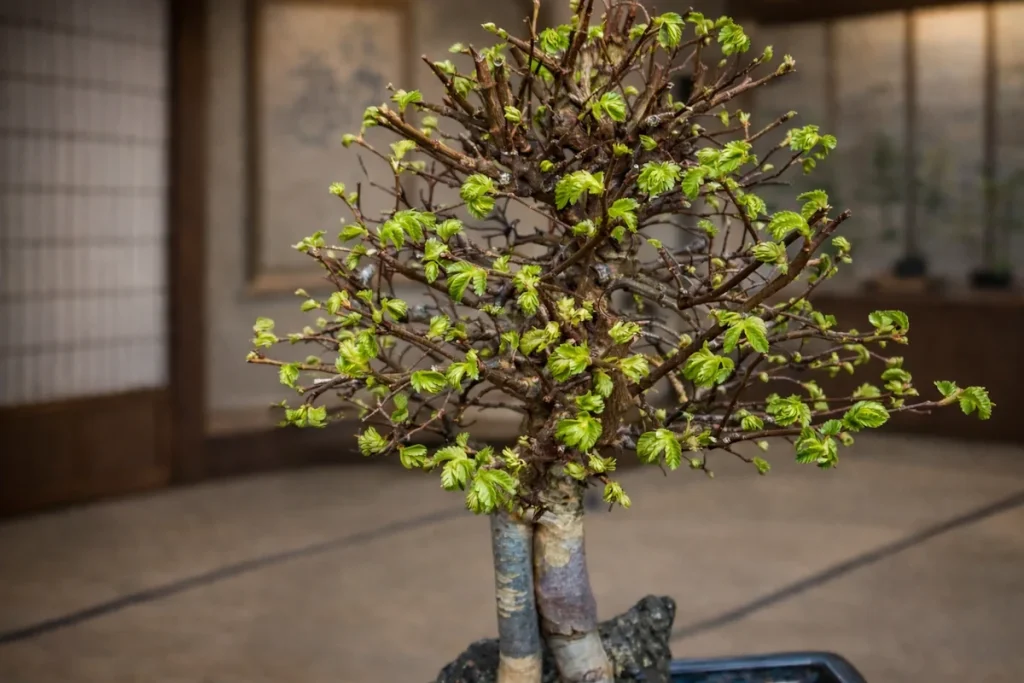
Spring Care: Awakening & Explosive Growth Season 🌷
Spring is magic: buds swell, leaves emerge, and energy surges! Timing varies by location — watch for swelling buds as your cue (usually March–May in temperate zones).
Key Tasks
- Repotting — The golden window! Root-prune carefully (remove 1/3–1/2 circling roots), tease out old soil, repot in fresh mix. Deciduous trees like maples tolerate aggressive pruning; conifers gentler. Water thoroughly post-repot.
- Pruning & Pinching — Cut back new shoots to 2–4 leaves to encourage ramification. Pinch candles on pines when they elongate.
- Wiring — Apply to young, flexible growth for shaping — remove before it scars (usually by late spring/summer).
Watering — Increase as temperatures rise; keep soil evenly moist but never soggy.
Fertilizing — Start balanced organic (e.g., Biogold cakes or liquid fish emulsion) once leaves fully expand.
Sun & Protection — Gradually introduce full sun; use shade cloth if late frosts threaten new growth.
Common mistake: Repotting after full leaf-out — stresses the tree.
Spring Checklist 📋
- Inspect for winter damage
- Repot if needed
- Prune/pinch new growth
- Begin fertilizing
- Monitor for aphids
:max_bytes(150000):strip_icc()/growing-japanese-maple-bonsai-5085314_02-d3f41f2a659e4d1ba5d1eb2b53978277.jpg)
Summer Care: Peak Growth & Heat Management ☀️
Summer turns your outdoor bonsai into a growth powerhouse — but it’s also the season of highest stress from intense sun, rapid evaporation, and pests. In hot, humid regions like parts of Bangladesh or tropical/subtropical zones, afternoon scorch and root overheating are common killers if not managed carefully.
Placement & Sun Protection Most temperate bonsai crave full sun for dense branching and strong vigor, but midday rays above 35°C (95°F) can burn leaves, especially on freshly pruned or young foliage.
- Provide morning sun (4–6 hours) + dappled or filtered afternoon shade.
- Install 30–50% shade cloth over your collection during heatwaves — this cuts evaporation dramatically and prevents leaf scorch.
- Elevate pots on benches or gravel for better airflow and cooler root zones.

Watering 💧 Daily checks become non-negotiable — soil can dry out in hours during peak heat.
- Water deeply in the early morning so foliage dries before evening (reduces fungal risk).
- In extreme heat, a second light watering or misting in late afternoon helps.
- Use the finger-test: If top 2–3 cm feels dry, water thoroughly until it runs from drainage holes.
- Mulch the soil surface with sphagnum moss or fine gravel to retain moisture longer.
- Avoid cold tap water shocks — let it sit to room temperature.
Fertilizing Early summer: Continue balanced or slightly high-nitrogen fertilizer to fuel growth. Mid-to-late summer: Switch to lower-nitrogen, higher-potassium formulas (e.g., 5-10-10 or organic slow-release) to harden off new wood and prepare for fall. Overfeeding late causes soft, frost-vulnerable growth.
Pruning & Maintenance
- Structural pruning early in summer while wood is still flexible.
- For maples or elms, consider partial defoliation (remove 50–70% of leaves) in mid-summer to force smaller, denser back-budding — but only on healthy, vigorous trees.
- Pinch ongoing candles on pines to control length.
Pest & Disease Watch 🐛 Heat + humidity = aphid explosions, spider mites (fine webbing on undersides), scale, and fungal issues.
- Inspect weekly; hose off mites with strong water spray.
- Use organic neem oil or insecticidal soap sprays (apply evenings to avoid leaf burn).
- Good airflow prevents powdery mildew.
Pro Insight — Spotting summer stress early: Wilting in afternoon but recovering at night = underwatering. Persistent droop + yellowing = root issues from overwatering or poor drainage. Act fast!
Summer Checklist 📋
- Daily watering checks
- Shade cloth during 30°C+ days
- Pest inspections + organic treatments
- Fertilizer adjustment mid-season
- Prune/pinch as needed
- Mist foliage in extreme dry heat

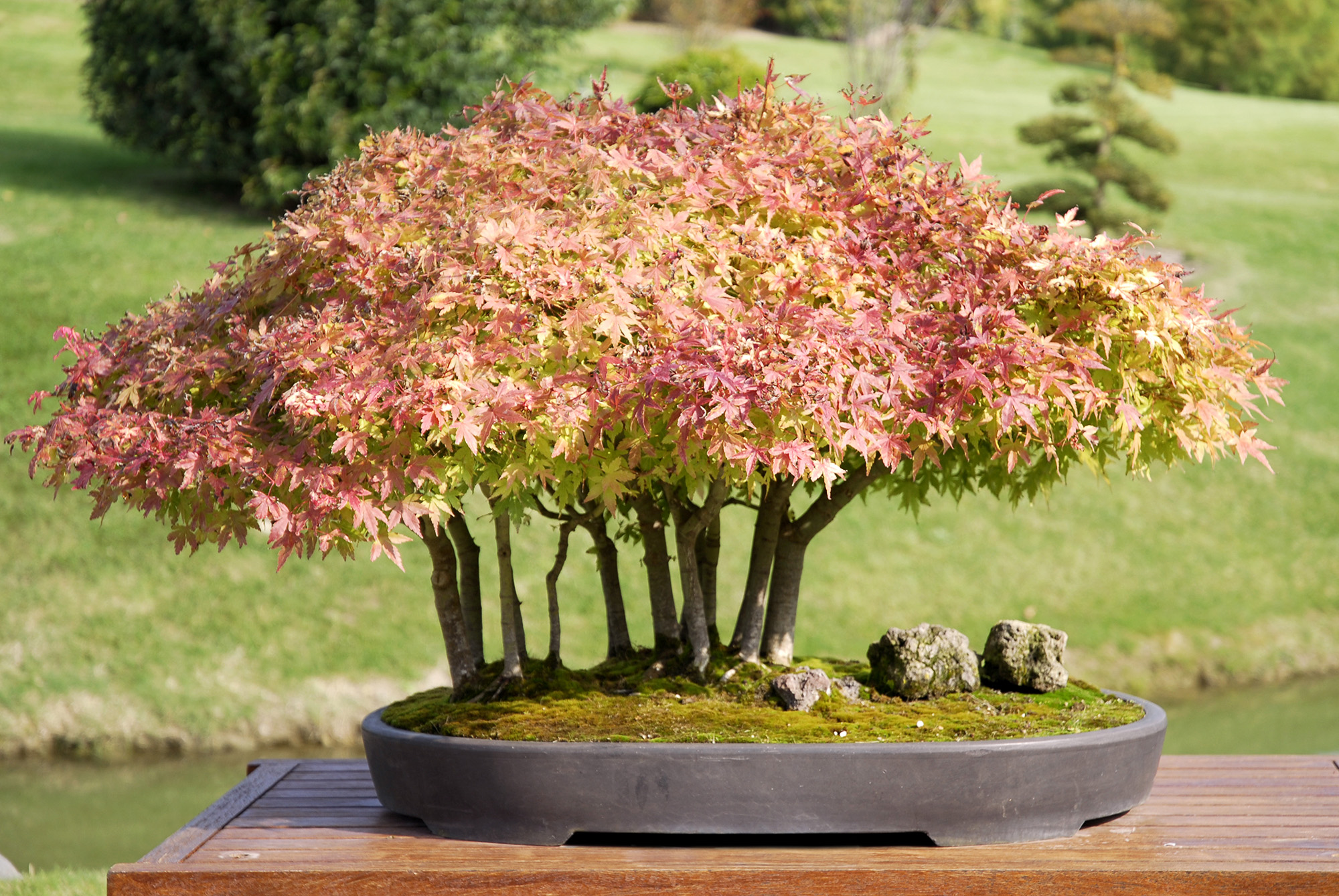
Fall Care: Slowing Down & Preparing for Rest 🍁
As days shorten and nights cool (typically September–November in temperate zones), your outdoor bonsai signals the end of active growth. Leaves on deciduous species turn brilliant reds, oranges, and yellows — a reward for proper seasonal care — while conifers harden their needles. Fall is about consolidation: storing energy in roots and buds for next spring while avoiding actions that promote tender new growth vulnerable to frost.
Key Activities
- Watering Reduction — Gradually cut back frequency as temperatures drop and tree uptake slows. Let soil dry slightly more between waterings to prevent root rot in cooler, wetter conditions.
- Fertilizing Stop — Cease all feeding by early to mid-fall. Continuing nutrients encourages soft growth that won’t harden before winter — a common cause of winter dieback.
- Light Pruning — Remove only crossing branches, dead wood, or excessive extension on deciduous trees. Avoid heavy structural work; save major pruning for late winter/early spring when the tree is dormant.
- Leaf Cleanup — Rake fallen leaves promptly from soil surface and around pots to reduce fungal spores (especially black spot on maples or needle cast on pines).
- Wiring Removal — If you wired in spring/summer, check and remove any that is biting in or scarring bark before winter sets in.
- Early Frost Protection — In zones prone to sudden dips below 0°C (32°F), move pots to a sheltered spot or cover with light frost cloth on cold nights.
Fall Color Enhancement Tips (for maples, elms, hornbeams) 🌟
- Ensure full sun in late summer/early fall to build sugars that intensify color.
- Avoid excess nitrogen earlier in the year — it dulls autumn hues.
- Some growers use potassium-rich fertilizers in late summer for brighter reds.
Common Fall Error — Treating it like summer: heavy watering + fertilizing = lush but weak buds that freeze easily. Observe your tree: yellowing and leaf drop are natural signals to ease up.
Fall Checklist 📋
- Reduce watering & stop fertilizing
- Clean fallen leaves daily
- Light structural cleanup pruning
- Remove biting wires
- Prepare frost protection gear
- Enjoy & photograph the seasonal display!
Winter Care: Protection, Dormancy & Planning ❄️
Winter is the most critical season for outdoor bonsai — roots in small pots freeze faster than in-ground trees, and drying winds can desiccate even dormant foliage. Proper protection prevents catastrophic losses while allowing true dormancy (essential for bud quality and spring vigor).
Protection Methods (ranked by effectiveness for most climates):
- In-Ground Burial — Dig a trench, bury pots up to rim, mulch heavily with straw, leaves, or pine needles. Most reliable for zones 5–7.
- Cold Frame or Unheated Greenhouse — Provides insulation + wind protection; ventilate on mild days to prevent mold.
- Insulated Boxes/Groupings — Cluster pots together on ground, surround with bubble wrap, straw bales, or wooden boxes filled with mulch. Top with frost cloth or burlap.
- Sheltered Location — Against south-facing wall, under evergreen overhang, or on ground with windbreaks.
Never bring temperate bonsai indoors for extended periods — warm air breaks dormancy prematurely, leading to weak growth when returned outside.
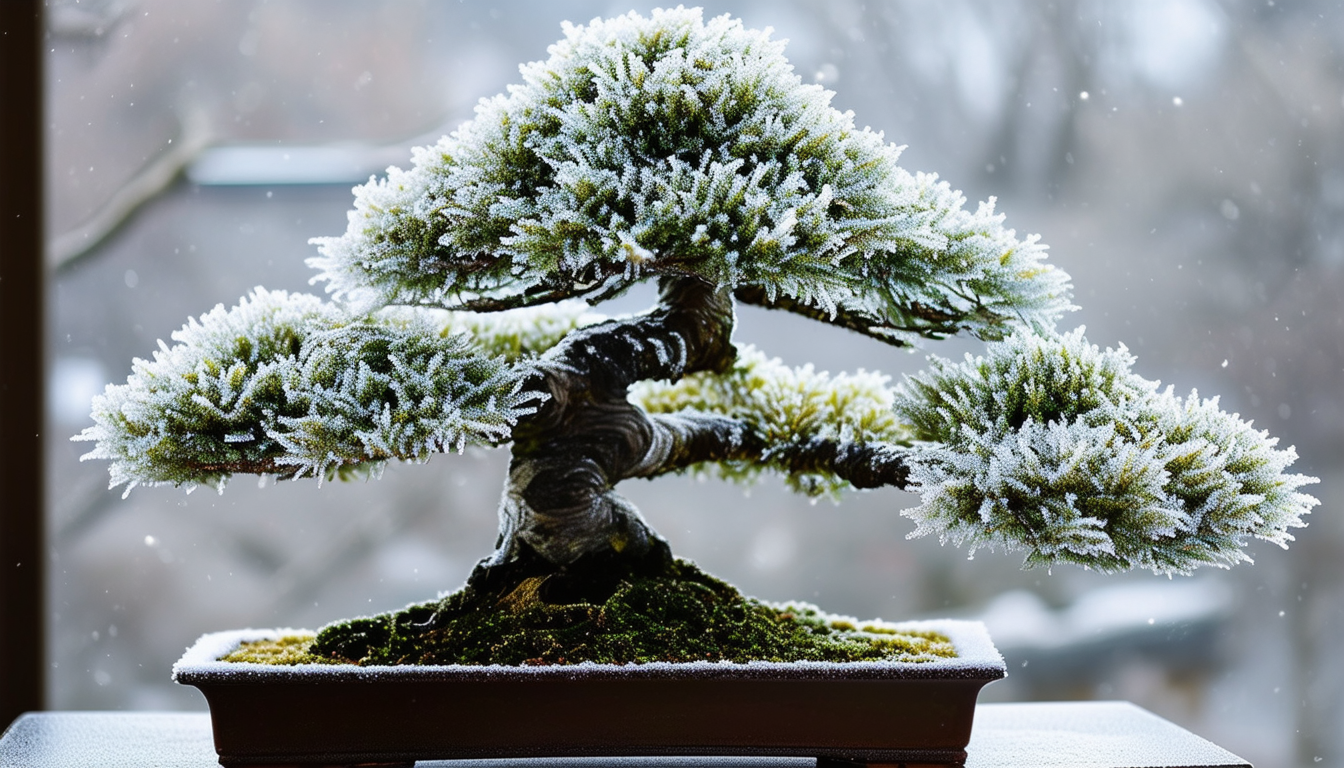
Watering in Winter Minimal! Check soil only when it thaws slightly on warmer days. Water sparingly (just enough to moisten if dry) to avoid ice formation around roots. Overwatering in cold = deadly root rot.
Fertilizing & Pruning None during deep dormancy. Late winter (February–March, before buds swell) is ideal for major structural pruning on deciduous species when you can clearly see branch structure.
Pest/Monitoring Watch for vole/mouse damage under mulch (they chew bark in search of food). Use hardware cloth barriers if needed. Check for desiccation (brown, dry tips) from wind — increase wind protection if spotted.
Species Notes
- Hardy junipers, pines, spruces: Often fine with basic mulching in zones 6+.
- Maples, elms, hornbeams: Need deeper protection in zones 6 and below.
- Azaleas/Satsuki: Extra sensitive; prefer cold frame.
Winter Checklist 📋
- Apply protection method before first hard freeze
- Minimal watering only on thaw days
- Rodent barriers if buried
- Late-winter pruning prep
- Plan spring repotting
Advanced Seasonal Techniques & Species-Specific Tips 🌟
To elevate your outdoor bonsai from healthy survivor to show-quality masterpiece, layer in these advanced practices tailored to seasons. These go beyond basics and reflect years of trial, observation, and refinement in real collections.
Month-by-Month Calendar Summary (Quick-Reference Table)
| Month | Focus | Key Actions | Watch For |
|---|---|---|---|
| Jan–Feb | Deep dormancy & late-winter prep | Major pruning (deciduous), protection check | Rodent damage, desiccation |
| Mar–Apr | Spring awakening | Repotting, first fertilizing, bud pinch | Late frosts, aphids |
| May–Jun | Early vigorous growth | Wiring, structural pruning, full sun transition | Overwatering post-repot |
| Jul–Aug | Peak summer & hardening | Shade cloth, defoliation (select), pest control | Heat stress, spider mites |
| Sep–Oct | Fall consolidation | Reduce water/fertilizer, leaf cleanup, wire off | Early frosts, fungal spots |
| Nov–Dec | Pre-winter protection | Mulch/bury pots, minimal water, plan next year | Wet feet in cold, wind burn |
Adapt dates ±2–4 weeks based on your local climate (e.g., Barisal’s subtropical/monsoon influence means earlier spring start and extended summer heat/humidity).
Regional Adaptations for Humid Subtropical Climates (e.g., Bangladesh, zones 9–10 equivalent)
- Monsoon Season (Jun–Sep): Excellent natural humidity but watch for waterlogging — ensure superb drainage and elevate pots during heavy rains. Reduce fertilizer during constant wet periods to avoid lush but weak growth.
- Dry Winter (Dec–Feb): Nighttime lows rarely freeze, but dry northerly winds cause desiccation. Group pots and mist occasionally; light frost cloth suffices on rare cold snaps.
- Heat Spikes: April–May pre-monsoon can hit 38–40°C — mandatory shade cloth + twice-daily watering for maples and elms.
Troubleshooting Seasonal Problems
- Yellow leaves in spring/summer → Overwatering, poor drainage, or iron deficiency (add chelated iron in acidic mix for maples/azaleas).
- Needle drop (pines/juniper) → Natural inner needle shed in fall; excessive = underwatering or root issues.
- Dieback tips in winter/spring → Wind desiccation or freeze damage — improve windbreaks next year.
- Weak back-budding → Insufficient sun, over-pruning, or skipped dormancy cycle.
Expert Insights
- Wiring Timing: Aluminum wire in spring/early summer for deciduous (flexible growth); copper for conifers year-round (stronger hold, slower bite-in). Remove deciduous wire within 2–4 months.
- Deadwood Development: Carve or jin/shari pines and junipers in late winter/early spring when sap flow is low — less risk of rot.
- Show Preparation: For late-fall or early-spring exhibits, use fall color enhancement (potassium boost) and late-winter cleanup pruning.
- Long-Term Health: Rotate pot position every 1–2 years for even sun exposure; this prevents lopsided growth over decades.
Common Mistakes in Outdoor Bonsai Care Through Seasons & How to Avoid Them 🚫
- Ignoring winter protection → Roots freeze solid even if trunk survives → Bury pots or use cold frame starting in late fall.
- Inconsistent watering → Especially summer → Set phone reminders or use moisture meters.
- Repotting at wrong time → Late spring/early summer → Stick to bud-swelling window.
- Over-fertilizing late season → Soft growth freezes → Stop feeding by mid-September.
- Bringing trees indoors “just for a few days” → Breaks dormancy → Resist temptation; use proper outdoor protection instead.
- Neglecting pests early → Spider mites explode in heat → Weekly inspections + prompt organic treatment.
- Poor drainage mix → Root rot year-round → Refresh inorganic soil every 1–3 years.
- Forcing tropical care on temperate species → No dormancy = weak trees → Commit to full outdoor life.
Real recovery example: A client’s trident maple showed 40% dieback after one unprotected winter. We buried it the next season, pruned back hard in late winter, and within two years it regained full vigor with improved ramification.
Frequently Asked Questions (FAQ) ❓
Can I keep outdoor bonsai in pots all year? Yes — pots are standard for bonsai — but they need extra winter insulation since roots lack ground thermal mass.
What if I live in a very humid/monsoon climate like Bangladesh? Focus on superb drainage, shade during peak heat, and fungal prevention (good airflow, leaf cleanup). Winter protection is lighter — mulch and grouping usually suffice.
How do I know if my bonsai is getting enough winter protection? Check soil temperature (should not drop below –5°C for most species), look for no shriveled buds or dried tips by spring, and ensure no prolonged wet/frozen roots.
Is it okay to bring my outdoor bonsai inside temporarily? Only for a few hours (e.g., emergency frost) — prolonged warmth breaks dormancy and causes weak, etiolated spring growth.
Best beginner outdoor species for seasonal care? Trident maple (forgiving, beautiful color), Juniper procumbens ‘nana’ (very hardy), Chinese elm (fast response to pruning).
Conclusion: Your Path to Year-Round Bonsai Mastery 🌳
Outdoor bonsai care through seasons is not about rigid rules — it’s about learning to read your trees, adapting to your local microclimate, and staying consistent. Observe daily, adjust as needed, and celebrate the small victories: the first spring bud swell, the fiery fall display, the quiet satisfaction of a tree safely through winter.
With this comprehensive guide, you now have the tools to move beyond survival to true mastery. Your bonsai won’t just endure the seasons — they’ll express them beautifully, becoming living heirlooms that improve with every cycle.
Ready to put this into practice? Start by checking your current protection setup (especially if you’re in a variable climate), then bookmark this guide for each seasonal shift. Share your seasonal progress in the comments or join bonsai communities — we all learn from each other’s trees.
Here’s to thriving bonsai and many more seasons of joy! 🌸🍂☀️











