
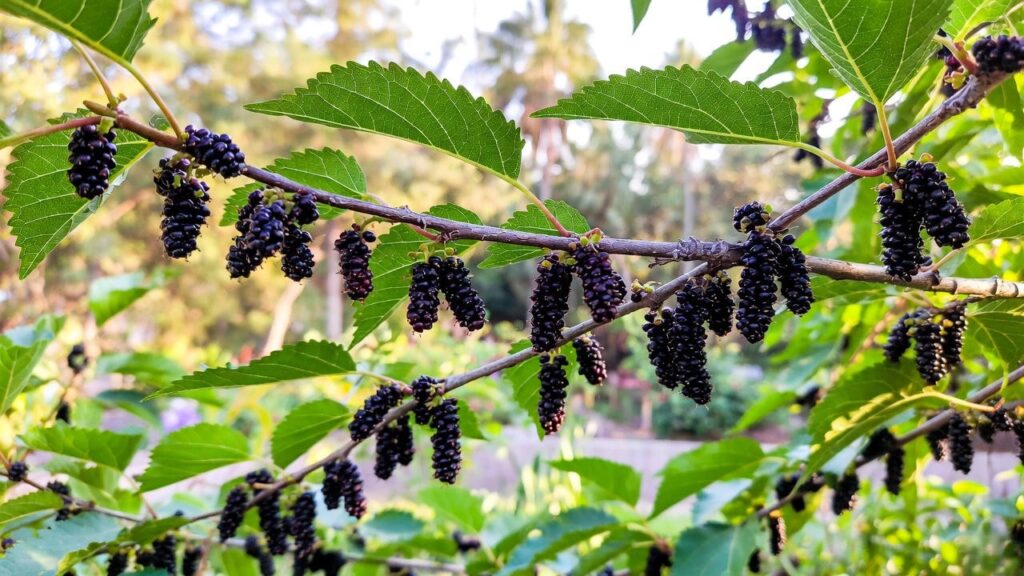
Imagine stepping into your backyard on a warm summer morning and plucking handfuls of incredibly long, sweet berries that look like elongated blackberries and taste like a heavenly mix of raspberry and blackberry—juicy, firm, and utterly addictive. If you’ve been searching for the Pakistan mulberry plant, you’re in for a treat: this remarkable variety (Morus macroura, also known as Shahtoot or Himalayan mulberry) produces some of the largest and most flavorful mulberries available, with fruits often reaching 3–6 inches long! Unlike messy common mulberries that stain everything in sight, these gems have firmer skin, minimal staining, and an extended harvest season that can last 6–8 weeks. Whether you’re a novice gardener dreaming of homegrown fruit or an experienced grower seeking a high-yield, low-maintenance tree, this ultimate guide will equip you with expert tips to cultivate a thriving Pakistan mulberry plant and enjoy bountiful, juicy harvests year after year. Let’s unlock the secrets to success! 🍓✨
What Makes the Pakistan Mulberry Plant So Special? ✨
The Pakistan mulberry plant stands out in the world of fruit trees for its unique origins, impressive fruit qualities, and ease of growth in suitable climates. Native to the Himalayan foothills, including regions in Pakistan, India, and southwestern China, this deciduous tree has been prized for centuries in Central Asia and the Middle East under names like Shahtoot (meaning “king of mulberries” in Persian).
Botanical Background and Unique Characteristics 🌿
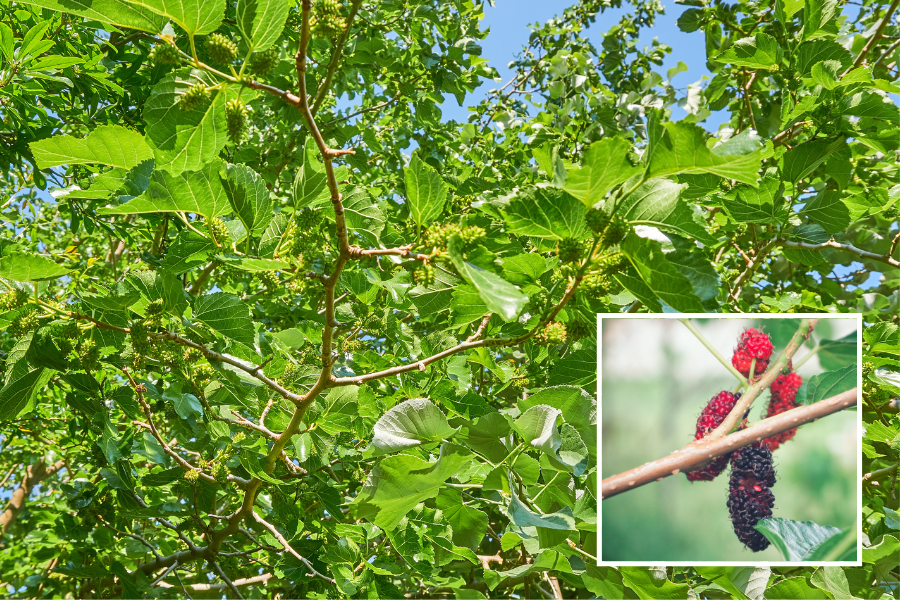
Botanically classified as Morus macroura, the Pakistan mulberry is distinct from common white (Morus alba), red (Morus rubra), or black (Morus nigra) mulberries. It’s a fast-growing, vigorous tree that typically reaches 15–30 feet in height (though it can grow taller in ideal conditions, up to 50–70 feet if left unpruned). The tree features broad, heart-shaped, glossy green leaves that turn golden-yellow in fall, providing excellent shade and ornamental value. Its bark is smooth and light orange when young, becoming furrowed with age.
What truly sets it apart is its productivity: established trees can yield 15–25 pounds (or more) of fruit annually, often starting just 2–3 years after planting. It’s self-fertile, meaning you only need one tree for pollination—no companion required!
Fruit Profile: Flavor, Size, and Ripening 🍇
The star of the show is undoubtedly the fruit. Pakistan mulberries are elongated and cylindrical, resembling oversized blackberries but with a smoother, pebbled texture. They ripen progressively from ruby red to deep purple-black:
- Size: 3–6 inches long (far larger than standard mulberries at 1–2 inches).
- Flavor: Exceptionally sweet with complex raspberry-blackberry notes, low acidity, and a juicy yet firm texture. Many describe it as the “king of mulberries” for its balanced sweetness and subtle honey-like undertones.
- Ripening Season: Early to mid-summer (June–September, depending on climate), with an extended harvest over 1–2 months as berries ripen in waves.
- Bonus: Firmer skin means less mess and staining compared to juicier varieties, plus they hold up well for fresh eating or shipping.
Nutritionally, these berries are powerhouses: rich in vitamin C, iron, potassium, antioxidants (like anthocyanins), and fiber—perfect for boosting immunity and heart health.

Visual Highlights of the Pakistan Mulberry Plant 📸
Nothing captures the allure quite like seeing those long berries dangling from lush branches. The contrast of deep purple fruits against vibrant green foliage is stunning, and the tree’s tropical-looking leaves add year-round interest.
Pakistan Mulberry vs. Other Varieties: Why Choose This One? 🆚
With so many mulberry types available, why opt for the Pakistan variety? Here’s a detailed comparison to help you decide:
Comparison Table for Quick Reference
| Variety | Fruit Size | Flavor Profile | Hardiness (USDA Zones) | Staining/Mess | Yield & Season | Best For |
|---|---|---|---|---|---|---|
| Pakistan | 3–6 inches | Sweet, raspberry-blackberry, complex | 7–10 (some to 6b with protection) | Low | High, extended summer | Flavor enthusiasts, fresh eating |
| Black Mulberry (M. nigra) | Medium (1–2 inches) | Rich, tart-sweet, intense | 6–9 | High | Moderate, mid-summer | Jams, pies, traditional uses |
| White Mulberry (M. alba) | Small–medium | Mildly sweet, less complex | 4–8 | Low | High, early summer | Wildlife, silkworm feed, drought tolerance |
| Red Mulberry (M. rubra) | Medium | Sweet-tart | 4–9 | Medium | Moderate | Native landscaping |
| Dwarf Everbearing | Small | Sweet but simpler | 5–10 | Medium | Prolonged but smaller | Containers, small spaces |
The Pakistan mulberry excels in fruit size, flavor depth, and low mess—ideal if you want “wow-factor” berries for snacking without the cleanup hassle of black mulberries. It’s more heat-tolerant than black varieties and less invasive than some white mulberries. However, it’s slightly less cold-hardy, making it perfect for warmer climates.
Ideal Growing Conditions for Success ☀️💧
Success with the Pakistan mulberry plant starts with mimicking its native Himalayan environment: warm summers, moderate winters, and good drainage.
Climate and Hardiness Zones 🗺️
This variety thrives in USDA Zones 7–10, with some reports of success in Zone 6b with protection (e.g., mulching roots or siting in sheltered spots). It requires around 200 chill hours for reliable fruiting but is sensitive to late spring frosts—young trees may need covering during unexpected cold snaps. Hot, humid summers are ideal, and it’s drought-tolerant once established.
Sunlight Requirements 🌞
Full sun is non-negotiable for abundant fruit: aim for 6–8+ hours daily. Partial shade may result in leggy growth and reduced yields, with smaller, less sweet berries.
Soil Preferences 🪴
Pakistan mulberries are adaptable but prefer well-drained, loamy soil with a pH of 6.0–7.5. They tolerate poorer soils better than many fruit trees but avoid heavy clay or waterlogged areas to prevent root rot. Amend with organic compost for optimal nutrition.
Planting Your Pakistan Mulberry Plant Step-by-Step 🛠️
Getting your Pakistan mulberry plant off to a strong start is crucial for long-term health and productivity. Follow these expert steps, refined from years of working with fruit trees in diverse climates, to ensure success.
Choosing and Preparing the Site
Select a permanent location carefully—mulberries have extensive, aggressive roots that can spread 2–3 times the canopy width. Plant at least 20–30 feet away from foundations, septic systems, sidewalks, or driveways to avoid future issues. For multiple trees, space them 25–40 feet apart for full-sized growth or closer (15 feet) if pruning to maintain smaller sizes.
Choose a spot with excellent air circulation to reduce disease risk. South-facing slopes or sheltered areas work well in cooler zones for extra warmth.
Best Planting Time and Techniques 🌱
The ideal time to plant is early spring (after the last frost) in cooler climates or fall (6–8 weeks before first frost) in warmer areas, allowing roots to establish before summer heat or winter dormancy.
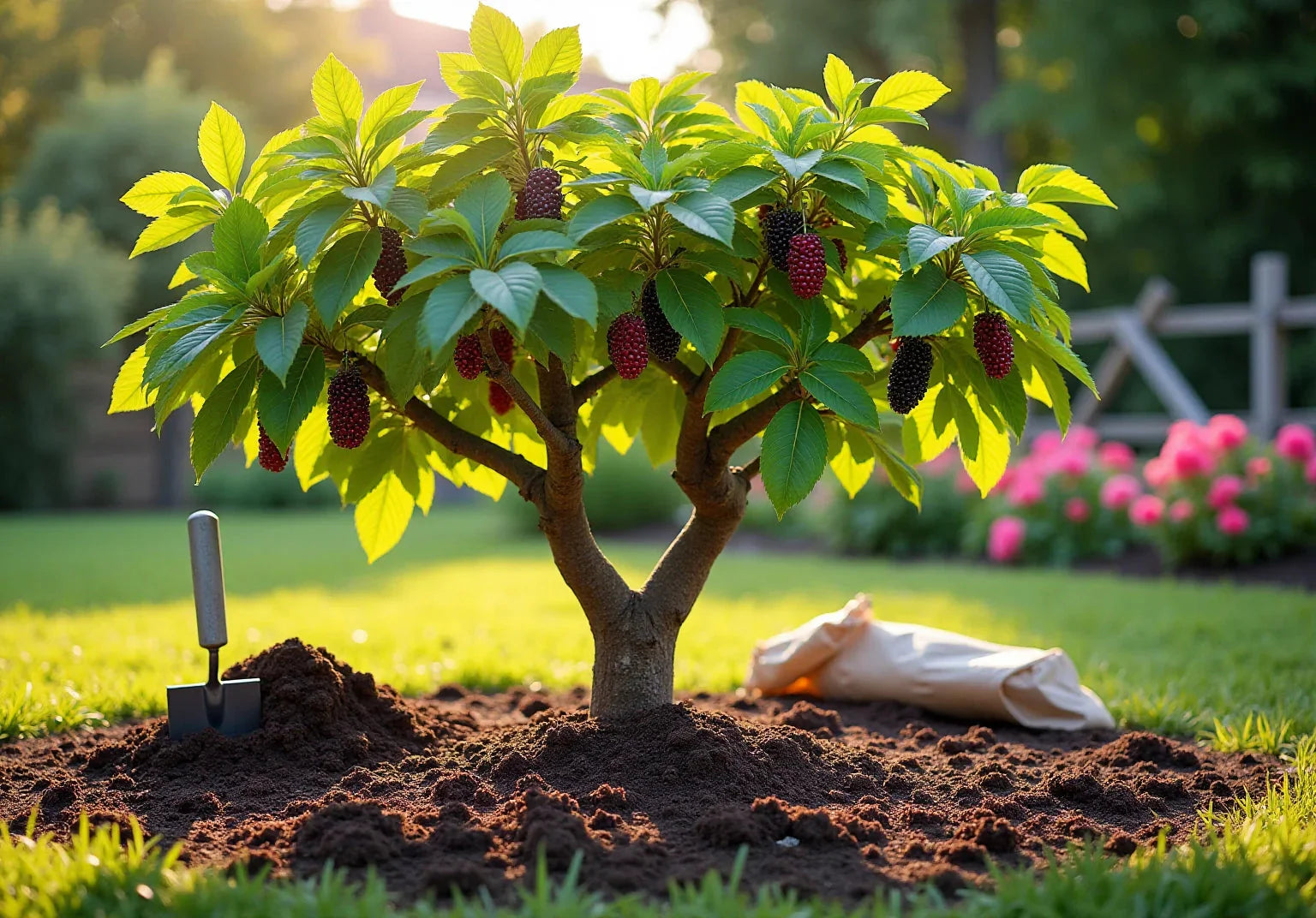
- Dig the hole: Make it twice as wide as the root ball and only as deep—wide holes encourage lateral root growth.
- Amend the soil: Mix native soil with 20–30% organic compost or well-rotted manure. Avoid heavy fertilization at planting to prevent root burn.
- Position the tree: Place so the graft union (if grafted) is 2–4 inches above soil level. Spread roots evenly.
- Backfill and water: Fill halfway, water deeply to settle soil, then complete filling. Create a small berm around the edge for a watering basin.
- Mulch generously: Apply 3–4 inches of organic mulch (wood chips, straw) in a 3-foot circle, keeping it away from the trunk to prevent rot.
Stake young trees only if necessary in windy areas—remove stakes after 1 year to encourage strong trunk development.
Container Growing Option (For Smaller Spaces or Colder Zones) 🪣
Don’t have yard space? The Pakistan mulberry excels in containers, especially dwarf or aggressively pruned specimens. This is perfect for patios, balconies, or zones below 7 where pots can be moved indoors during harsh winters.
- Choose a large pot: Minimum 20–30 gallons (24–36 inches diameter) with excellent drainage holes.
- Use premium potting mix amended with compost and perlite for drainage.
- Repot every 3–5 years or root-prune to control size.
- Water more frequently (containers dry out faster) and fertilize regularly during the growing season.
Many growers keep container Pakistan mulberries at 6–10 feet tall with annual pruning, producing impressive yields for their size.

Ongoing Care: Watering, Fertilizing, and Maintenance 💦🌱
Once established (after 2–3 years), the Pakistan mulberry is remarkably low-maintenance and drought-tolerant. However, consistent care in the early years maximizes growth and future fruit production.
Watering Schedule
- First year: Deep watering 1–2 times weekly (10–15 gallons), depending on rainfall and soil type. Aim for moist but not soggy soil.
- Years 2–3: Weekly deep watering during dry spells.
- Established trees: Supplemental watering only during prolonged drought—mulberries prefer moderate stress for sweeter fruit.
Use drip irrigation or soaker hoses for efficiency, and always water at the base to keep foliage dry.
Fertilization Tips
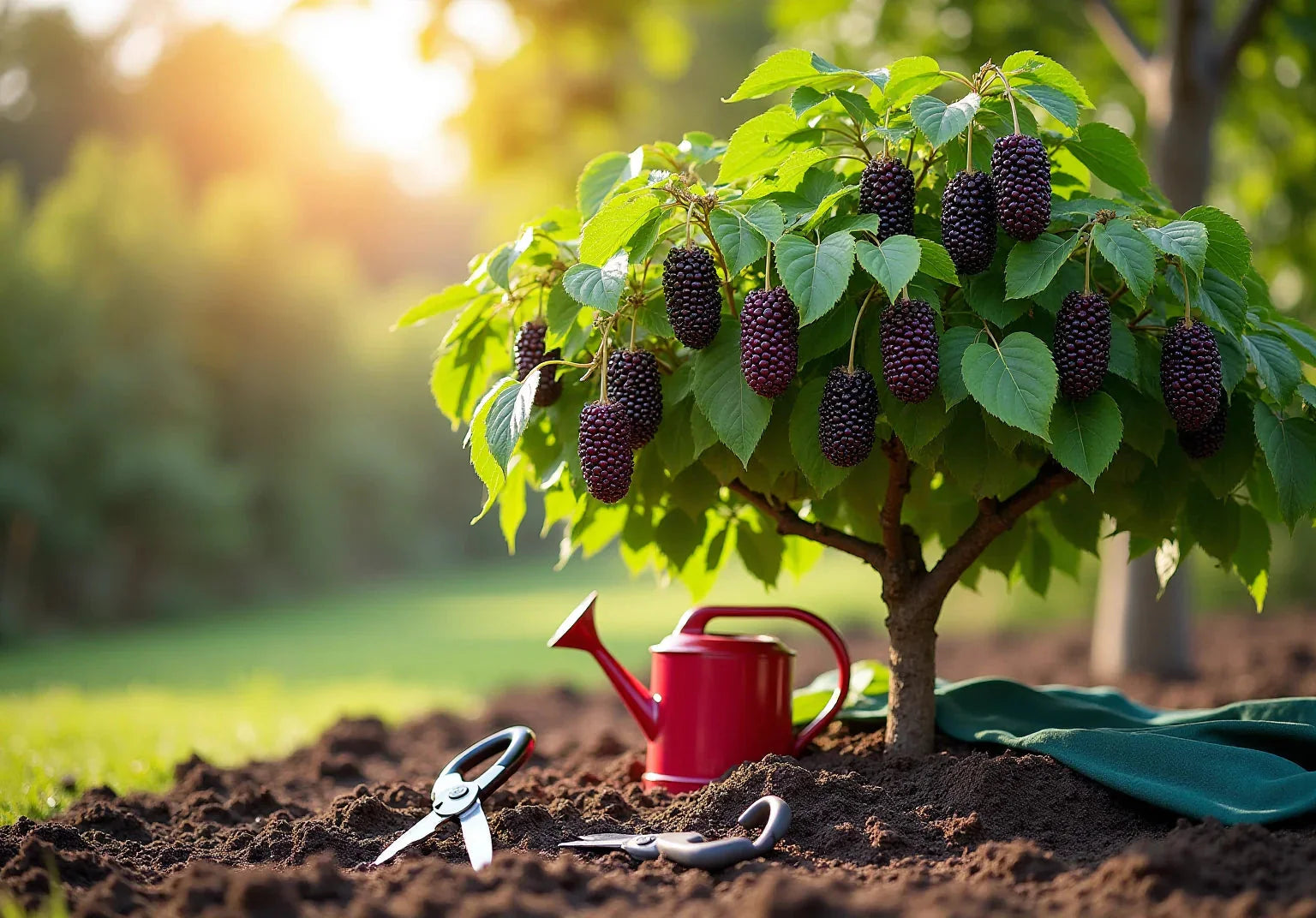
Pakistan mulberries aren’t heavy feeders. Over-fertilizing leads to excessive vegetative growth at the expense of fruit.
- Apply a balanced organic fertilizer (e.g., 10-10-10) or compost in early spring.
- For young trees: 1–2 pounds annually, increasing gradually.
- Avoid late-season nitrogen to prevent tender growth susceptible to frost.
- Soil test every 3 years to address deficiencies (common: iron in alkaline soils).
Mulching and Weed Control
Maintain a 3–4 inch mulch layer year-round to conserve moisture, moderate soil temperature, and suppress weeds. Replenish annually. Hand-pull weeds near the trunk to avoid root damage.
Pruning and Training for Maximum Yields ✂️
Proper pruning is the secret to controlling size, improving air circulation, and boosting fruit quality on your Pakistan mulberry plant.
When and Why to Prune
Prune during late winter or early spring while dormant—this minimizes sap bleeding (mulberries are notorious “bleeders”) and allows healing before new growth.
Pruning encourages fruiting on new wood, removes dead/diseased branches, and maintains desired shape.
Techniques for Bushy Growth or Espalier
- Open center/vase shape: Ideal for full-sized trees—remove central leader young, encourage 4–6 main scaffolds.
- Bush form: For easier harvesting, keep at 8–12 feet by cutting back leaders annually.
- Espalier or fan training: Great for walls or fences in small spaces—tie branches horizontally.
Remove suckers and water sprouts regularly throughout summer.

Expert Tip: Prune Lightly for Best Fruit Quality 🍒
Heavy pruning reduces yields the following season—aim for 20–30% removal annually. Focus on thinning crowded areas for better light penetration and larger berries.
Harvesting and Enjoying Your Bountiful Crop 🧺
The reward for your care: weeks of fresh, long mulberries!
Signs of Ripeness and Picking Methods
Berries ripen sequentially over 6–8 weeks. Pick when fully colored (deep purple-black) and slightly soft—they should come off easily with a gentle tug.
Spread sheets or tarps under the tree to catch falling fruit, or hand-pick for premium quality. Harvest every 2–3 days during peak.
Storage, Uses, and Recipes
Fresh berries last 3–5 days refrigerated. Freeze for smoothies, make jam, syrup, or wine. Dried mulberries are a healthy snack.
Quick Recipe Idea: Pakistan Mulberry Smoothie – Blend with yogurt, banana, and honey for a nutrient-packed treat! 🥤
Yield Expectations
Expect light fruiting in year 2–3, with full production (15–50+ pounds) by year 5–7 on well-cared trees.

Common Problems and Solutions: Keep Your Plant Healthy 🛡️
The Pakistan mulberry plant is remarkably resilient and disease-resistant compared to other fruit trees, often thriving with minimal intervention once established. However, like any plant, it can face occasional challenges. Drawing from extensive experience with mulberry cultivation across various climates, here are the most common issues and proven solutions to keep your tree vigorous and productive.
Pests and Diseases (Rare but Manageable) 🐛
Pakistan mulberries are generally pest-resistant, but in humid or stressed conditions, a few culprits may appear:
- Aphids and Scale Insects: Soft-bodied insects that suck sap, causing curled leaves or honeydew/sooty mold. Solution: Hose off with strong water spray; introduce ladybugs or apply insecticidal soap/neem oil. Avoid broad-spectrum pesticides to preserve beneficial insects.

- Webworms or Caterpillars: Larvae that web leaves together. Solution: Prune affected branches; use Bt (Bacillus thuringiensis) for organic control.

- Fungal Diseases (e.g., Powdery Mildew or Leaf Spot): Rare, but possible in wet conditions. Solution: Improve air circulation via pruning; apply sulfur-based fungicides if needed.
Overall, healthy trees rarely need chemical interventions—focus on prevention through proper care.
Environmental Issues ⚠️
- Root Rot from Poor Drainage: Symptoms include yellowing leaves, wilting, and stunted growth. Solution: Plant in well-drained soil; avoid overwatering. For established trees, aerate soil or install drainage.

- Frost Damage in Marginal Zones: Young shoots blacken after late frosts. Solution: Cover with frost cloth; site in protected microclimates.
- Invasive Roots: Can lift pavement or invade pipes. Solution: Install root barriers at planting; choose sites away from structures.
Troubleshooting Tips 🔧
- Yellow Leaves: Often overwatering, nutrient deficiency (iron chlorosis in alkaline soils), or poor drainage. Test soil and adjust.
- No Fruit: Common causes—too much shade, excessive nitrogen, young tree (wait 2–3 years), or lack of chill hours.
- Small/Dull Fruit: Insufficient sun or water stress—ensure full sun and consistent moisture.
Early intervention keeps problems minor!
Propagation: Multiply Your Pakistan Mulberries! 🌱✨
One of the joys of growing the Pakistan mulberry is how easily it propagates, allowing you to expand your orchard or share with friends.
From Cuttings, Grafting, or Seeds
- Semi-Hardwood Cuttings (Easiest for Beginners): Take 6–8 inch cuttings in late summer, dip in rooting hormone, and plant in moist potting mix. Roots form in 4–8 weeks—success rates often exceed 80%!

- Grafting: For true-to-type reproduction on hardy rootstock (e.g., white mulberry for colder zones). Chip budding or bark grafting in spring works well.
- Seeds: Possible but variable—fruits aren’t always true-to-type. Stratify seeds in fridge for 3 months before sowing.
Air layering is another reliable method for large branches.
Expert Insights and Pro Tips from Seasoned Growers 👩🌾
“In hot, subtropical climates like Florida or Southern California, the Pakistan mulberry outperforms every other variety—bigger fruits, longer season, and incredible heat tolerance,” notes many commercial nurseries and home growers alike.
- Pro Tip: Net branches during peak ripeness to protect from birds (they love these berries as much as we do! 🐦).
- Bonus: The lush canopy provides excellent summer shade, cooling your garden while producing fruit.
- For maximum sweetness: Allow slight drought stress late in ripening—berries concentrate sugars beautifully.

Frequently Asked Questions (FAQs) ❓
Q: How long until my Pakistan mulberry plant fruits? A: Typically 2–3 years from planting a grafted tree; sometimes light fruit in year 1–2 with optimal care.
Q: Is it self-fertile? A: Yes! A single tree produces plenty—no need for pollinators.
Q: Can I grow it in pots? A: Absolutely—use large containers and prune annually. Great for patios or colder zones (move indoors in winter).
Q: Does it stain like other mulberries? A: Much less! The firmer skin and lower juice content make it far cleaner.
Q: What’s the mature size? A: 20–30 feet tall and wide if unpruned; easily kept smaller (8–15 feet) with regular pruning.
Q: How much fruit can I expect? A: Mature trees often yield 20–50+ pounds annually, with harvests spread over weeks.
Q: Is it invasive? A: Roots can be aggressive, but less seedling-spread than white mulberries. Plant responsibly.
Conclusion: Start Your Pakistan Mulberry Journey Today! 🚀
With its extraordinary long, juicy fruits, rapid growth, low maintenance, and adaptability, the Pakistan mulberry plant is truly a standout choice for home gardeners seeking abundant, delicious harvests. By following this comprehensive guide—from site selection and planting to pruning, troubleshooting, and propagation—you’re equipped to grow a thriving tree that rewards you with shade, beauty, and pounds of superior berries for decades.
Whether you’re savoring fresh Shahtoot straight from the branch, blending them into smoothies, or sharing cuttings with neighbors, the satisfaction of homegrown mulberries is unmatched. Plant one today and transform your landscape into a fruitful paradise! 🌳🍇✨











