
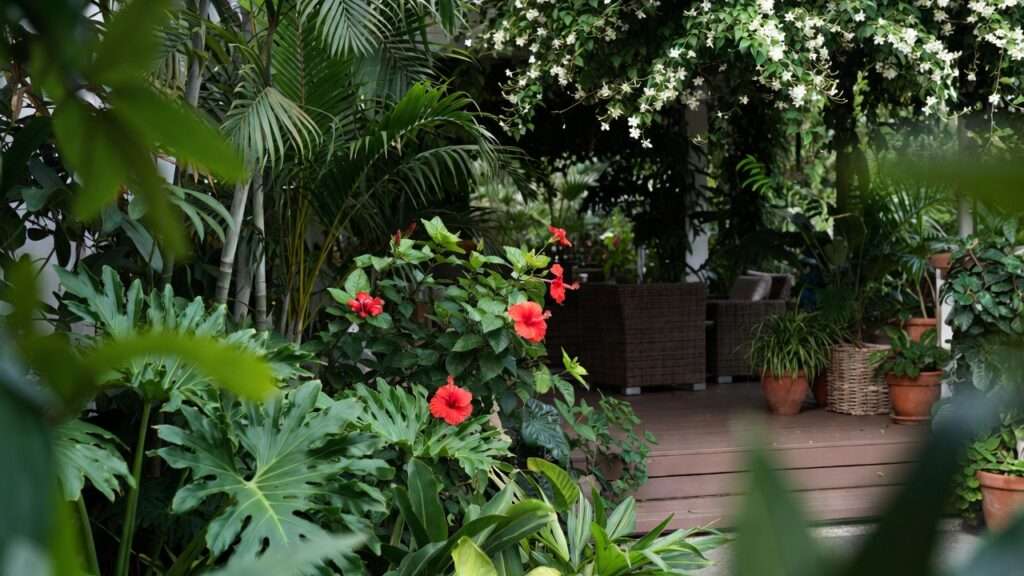
Imagine stepping onto your patio each morning with a warm cup of cha in hand, surrounded by lush green leaves rustling gently in the breeze, vibrant hibiscus blooms greeting you, and the subtle fragrance of jasmine filling the air — all without spending hours on upkeep. ☕🌸 In places like Mathba, Barisal Division, where the tropical heat and humidity make outdoor spaces feel alive yet challenging, many homeowners stare at their plain concrete patios wishing for more life, color, and relaxation. The good news? With smart patio garden design tips, you can turn that underused area into a beautiful, low-maintenance oasis using container plants that thrive in our hot, humid climate.
As a horticulturist with over 15 years of experience helping tropical homeowners in Bangladesh create thriving gardens (from small balconies in urban Barisal to family courtyards), I’ve seen firsthand how the right plants and design principles solve common problems: limited space, water management during monsoons, intense summer heat, and the desire for low-effort beauty. This guide goes beyond basic advice — it’s packed with region-adapted recommendations, 2026 trends like “patio culture” (making your patio an extension of your living room), pollinator-friendly choices, and practical steps to create a space that boosts mental well-being, attracts butterflies, and even provides fresh herbs. Let’s transform your patio today! 🌱
Why Patio Gardens Are Perfect for Modern Living 🏡💚
Patio gardens shine in today’s fast-paced world, especially in tropical regions like ours. They offer:
- Privacy and serenity — Dense foliage acts as a natural screen from neighbors or street views.
- Pollinator attraction — Plants draw bees, butterflies, and birds, enhancing biodiversity.
- Mental health boost — Greenery reduces stress; studies show even small green spaces improve mood.
- Fresh edibles — Grow herbs or compact veggies right outside your door for easy cooking.
- Increased home value — A well-designed patio adds curb appeal and usable outdoor living space.
Best of all, containers make them renter-friendly and movable — perfect for apartments or homes with limited ground space. They tie directly into plant and tree care: focus on healthy roots, proper watering, and seasonal tweaks keep everything thriving with minimal effort. In our humid climate, low-maintenance selections prevent constant battles with pests or overwatering.
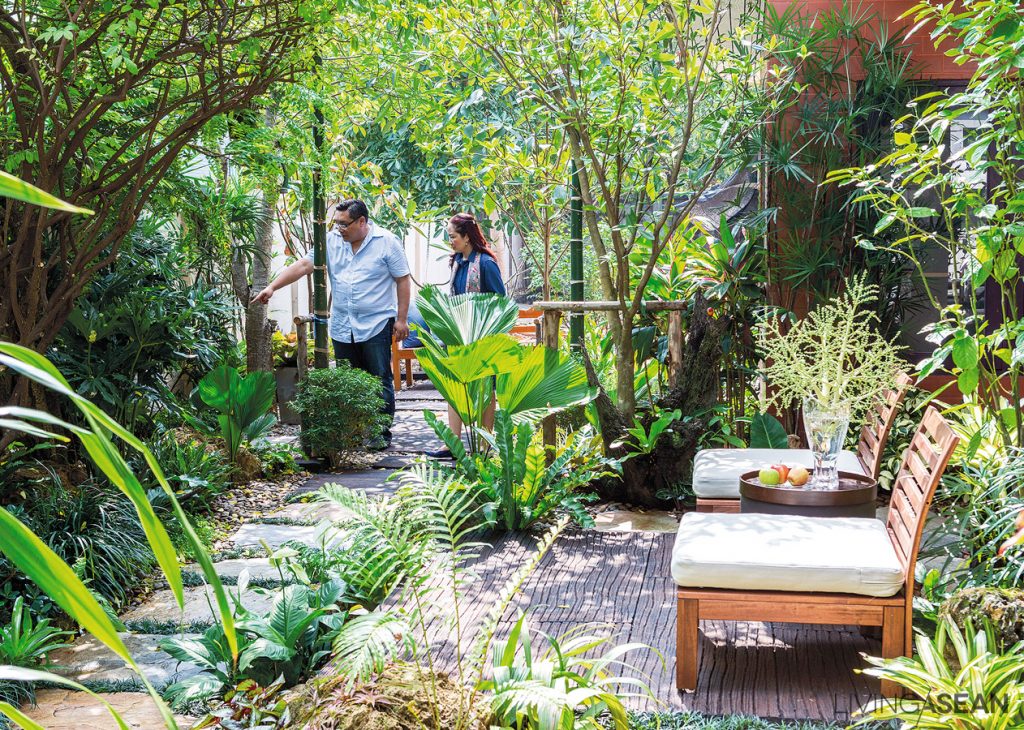
This lush tropical patio example shows how layered greenery creates an inviting retreat — notice the mix of tall palms and ground-level plants for depth.
Step 1: Assess Your Patio Space Before Planting 🌤️📏
Success starts with understanding your space — skip this, and even the best plants struggle.
- Sunlight evaluation — Track hours of direct sun (use a phone app or note shadows). Full sun (6-8+ hours) suits bougainvillea or lantana; partial shade works for ferns or caladiums. In Barisal’s intense sun, reflected heat from walls can make spots hotter.
- Size and layout — Measure your patio (small 10×10 ft? Larger family area?). Note wind patterns, drainage slopes, and nearby structures/trees that cast shade.
- Microclimate check — Monsoon rains can waterlog pots; summer heat dries them fast. Concrete floors heat up, stressing roots.
- Soil and floor — Most patios are concrete — ensure pots have drainage holes and saucers to avoid root rot.
Expert tip: Spend a week journaling sun and rain patterns. This prevents common failures like sun-scorched shade lovers or leggy plants in too much shade.
Step 2: Choose the Right Containers and Layout for Maximum Impact 🪴🗺️
Containers are the foundation of patio success — choose wisely for health and aesthetics.
- Container types — Larger pots (at least 12-18 inches wide/deep) retain moisture better in heat. Terra cotta breathes but dries fast (great for succulents); glazed ceramic or plastic holds water longer for humid tropics.
- Drainage essentials — Always add holes + saucers. Elevate pots on feet or bricks to prevent standing water during monsoons.
- Layout strategies — Cluster pots for cohesion; vary heights (tall in back, short in front) for visual depth. Create zones: seating area with fragrant plants, dining spot with edibles.
- Vertical gardening — Use wall planters, trellises, or hanging baskets to maximize small spaces — ideal for balconies or narrow patios.
- Material mix — Combine natural stone, wood, and colorful ceramics for timeless appeal that complements tropical vibes.
Pro insight: In 2026 trends, “one-plant pots” (a single bold specimen) are rising for low-maintenance elegance.
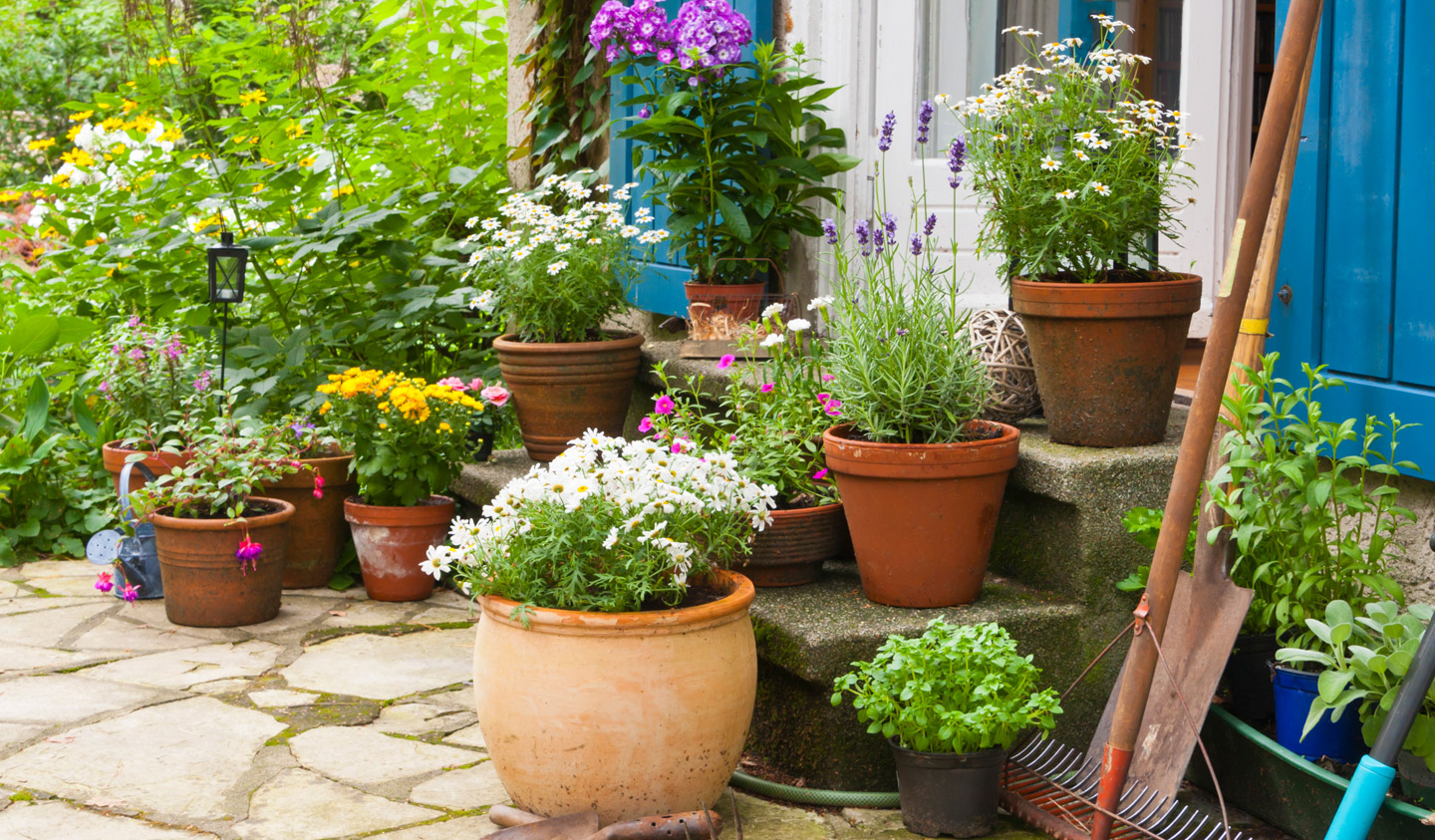
See how grouped terracotta pots create a cozy, colorful entryway — easy to rearrange!
Step 3: Select Beautiful, Low-Maintenance Plants That Thrive on Patios 🌱💚
The heart of any great patio garden is plant selection — especially in our tropical Bangladeshi climate with high humidity, heavy monsoons, and hot dry spells. Prioritize drought-tolerant, pest-resistant varieties that handle container life well and need minimal fuss.
Sun-loving stars (6+ hours direct sun):
- Bougainvillea — Explosive color in pink, purple, red; climbs or trails beautifully. Prune lightly after blooms; thrives in heat.
- Lantana — Clusters of multicolored flowers attract butterflies; very drought-tolerant once established.
- Hibiscus (local favorite!) — Large, showy blooms year-round; choose compact varieties for pots.
- Lantana camara or ornamental grasses like fountain grass — add movement and texture.
Partial shade/part-sun picks (4-6 hours):
- Ferns (Boston or maidenhair) — Lush, green fillers that love humidity.
- Caladiums — Heart-shaped leaves in stunning patterns; perfect for tropical flair.
- Impatiens or wax begonias — Easy color pops that bloom continuously.
Edible heroes for fresh picks:
- Herbs — Basil (tulsi too!), mint (grows like crazy in shade), rosemary (drought-tolerant), lemongrass — ideal for Bangladeshi cooking.
- Compact veggies — Cherry tomatoes (use cages for support), chili peppers, dwarf eggplant, or kale in deep pots.
Small trees/shrubs for structure:
- Dwarf citrus (lime or kumquat) — Fragrant blooms + fruit; protect from heavy rain.
- Bay laurel or potted ixora — Evergreen interest with bright flowers.
Region-adapted natives/low-care gems: In Mathba/Barisal, go for hibiscus, marigold (genda), ixora, or jasmine — they attract pollinators, handle our soil/water conditions, and require little beyond occasional pruning.
2026 trend spotlight: Multi-functional plants (edible + ornamental + wildlife-friendly) are huge — think basil that repels pests or lantana that draws bees while looking stunning.

This vibrant tropical patio bursts with banana leaves, palms, and colorful blooms — pure inspiration for humid climates! 🌴

Layered greenery on a balcony patio: notice the tall palms and ground-level pots for that lush oasis feel. ☁️
Step 4: Design Principles for a Cohesive, Eye-Catching Patio Garden 🎨✨
Great design makes your patio feel intentional and inviting.
- Color schemes — Go harmonious (greens + white for calm) or bold (reds/oranges from hibiscus/lantana for energy).
- Texture & height layering — Use the “thriller-filler-spiller” rule: tall uprights (bougainvillea on trellis), mid-level fillers (ferns/caladiums), trailing spillers (sweet potato vine or ivy).
- Focal points — One statement pot (large hibiscus), small water fountain, or sculptural grass clump draws the eye.
- Seasonal interest — Mix evergreens (ixora) with rotating annuals (marigolds in winter) for year-round appeal.
- Biophilic elements — Add fragrance (jasmine at night), rustling grasses for sound, and pollinator plants to connect with nature.
Vertical elements maximize small spaces — wall pockets or hanging baskets turn blank walls into living art.
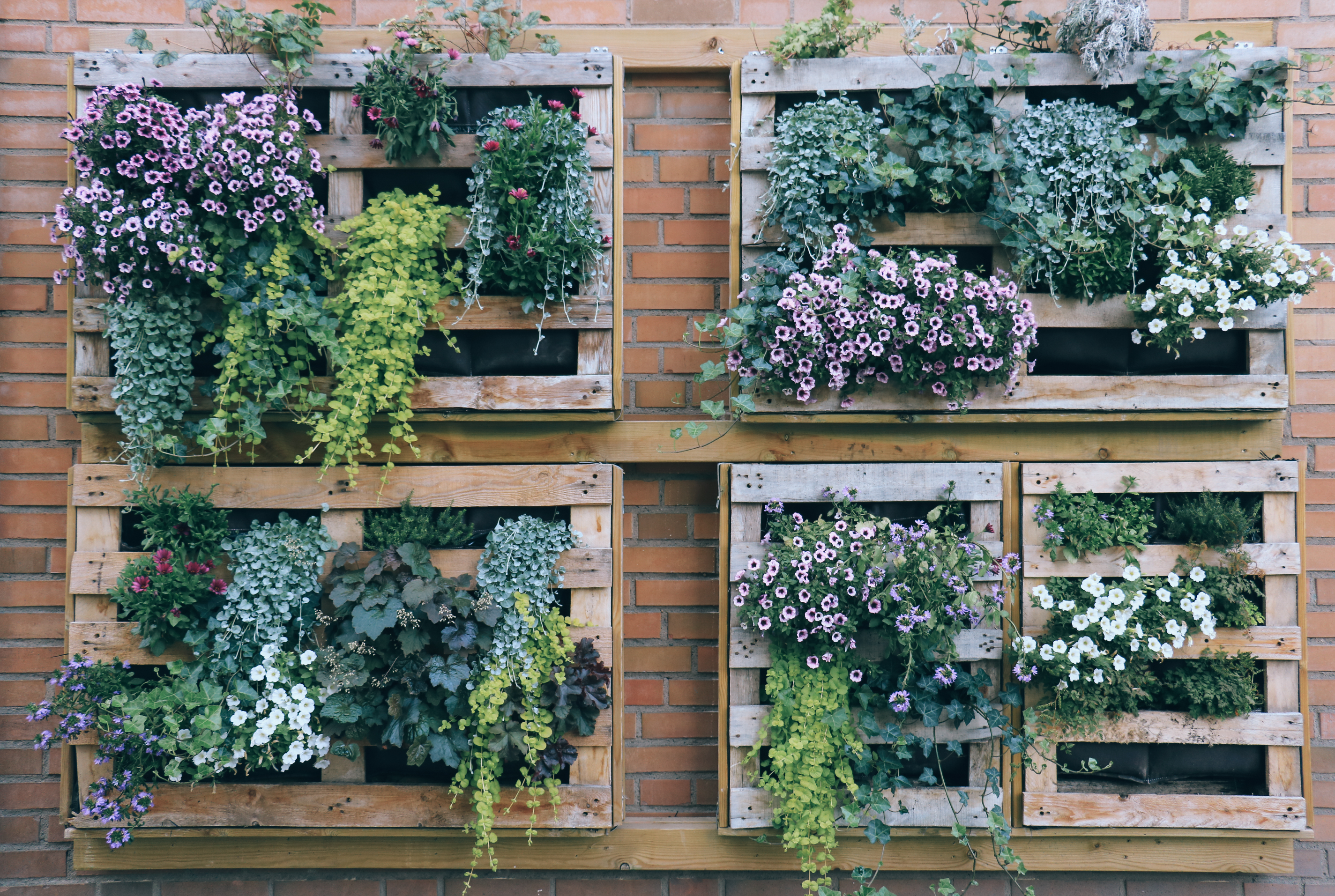
Vertical pallet garden idea — colorful flowers and trailing vines make use of every inch! 🌈
:strip_icc()/double-dish-succulent-garden-b3188f14-08c6cfd53ecf4f809ae6ba9508781cab.jpg)
Succulent container grouping — low-water beauty with varied textures for sunny patios. 🌵
Step 5: Essential Care Tips to Keep Your Patio Garden Thriving All Year 🌧️🛠️
Even low-maintenance plants need consistent (but simple) care — especially in our tropical Bangladeshi climate where humidity, heavy rains, and heat swings can challenge container gardens.
Watering wisely Water deeply but infrequently — check the top 2–3 inches of soil with your finger: dry? Water thoroughly until it drains out the bottom. In summer heat, this might mean every 2–4 days; during monsoons, much less (or none if pots stay soggy). Morning watering is best — it gives foliage time to dry and reduces fungal issues common in humid areas. Mulch every pot with 1–2 inches of coconut coir, bark, or dried leaves to retain moisture, suppress weeds, and keep roots cooler.
Fertilizing for steady growth Use slow-release granular fertilizer (balanced 10-10-10 or organic options like vermicompost) at planting, then every 2–3 months. For blooming plants like hibiscus or bougainvillea, switch to a bloom-booster (higher phosphorus) during flowering season. Avoid over-fertilizing — it causes salt buildup in pots; flush soil with plain water monthly.
Pruning, deadheading & pest control Snip off faded flowers (deadheading) on lantana, hibiscus, and marigolds to encourage more blooms. Lightly prune leggy growth after monsoons or in early spring for bushier shape. Pests like aphids or mealybugs love humidity — spray neem oil solution (1 tsp neem + few drops dish soap per liter water) weekly as prevention. For fungal issues (powdery mildew on some herbs), improve air circulation and avoid evening watering.
Seasonal adjustments Monsoon (June–October): Elevate pots, use well-draining mix, remove saucers if heavy rain floods them. Winter (December–February): Reduce watering; protect tender plants from rare cold snaps with burlap wraps. Summer: Shade cloth over sensitive plants during peak afternoon heat (especially in Barisal’s intense sun).
Quick troubleshooting Yellow leaves? Usually overwatering or poor drainage. Brown tips? Too much sun or underwatering. No blooms? Check light and fertilize appropriately.
Follow these habits, and your patio garden will look vibrant with minimal weekly effort — often just 15–30 minutes.
Inspiring Patio Garden Styles to Suit Your Taste 🏡🌺
Match your personality and space with these low-maintenance styles:
Tropical Retreat — Lush and colorful: tall banana or bird-of-paradise as focal points, surrounded by hibiscus, ixora, caladiums, and trailing jasmine. Perfect for Mathba’s humid vibe.
Edible Urban Farm — Functional beauty: group pots of lemongrass, basil, mint, cherry tomatoes, and chilies near your kitchen door. Add marigolds to deter pests naturally.
Modern Minimalist — Clean lines: succulents, sansevieria, and ornamental grasses in sleek black or white glazed pots. One large statement planter + a few small clusters.
Cottage Charm — Romantic and relaxed: mix ferns, impatiens, petunias, and sweet potato vine spilling over edges. Use vintage terracotta and wooden crates.
Mediterranean Oasis — Drought-tolerant elegance: bougainvillea climbing a trellis, lavender, rosemary, and lantana in terracotta pots. Feels cool even in heat.
Pick one style as your starting point — you can always blend elements later!
Common Mistakes to Avoid (and How to Fix Them) 🚫🔧
- Too-small pots → Roots get cramped, soil dries too fast. Solution: Start with at least 12–18 inch diameter pots.
- Wrong plant for light → Sun-lovers in shade become leggy; shade plants scorch. Solution: Observe and match plants to actual conditions.
- Ignoring drainage → Root rot kills fast in monsoons. Solution: Always add holes + saucers + elevated feet.
- Overcrowding → Plants compete for light/water/nutrients. Solution: Give each plant its space; thin as needed.
- Forgetting to rotate pots → Uneven growth from one-sided sun. Solution: Turn pots every 1–2 weeks.
Avoid these, and you’ll save time, money, and frustration.
FAQs About Patio Garden Design 🌟❓
What are the best beginner patio plants in Bangladesh? Hibiscus, marigold, lantana, basil, and mint — forgiving, colorful, and locally adapted.
How much does a nice patio garden cost to start? Budget version: ৳5,000–10,000 (5–8 pots, soil, basic plants). Mid-range: ৳15,000–30,000 for larger pots and premium varieties.
Are there pet-safe options? Yes — most herbs (basil, mint, rosemary), ferns, marigolds, and spider plants are generally safe. Avoid toxic lilies or oleander.
Can I grow fruit trees on a patio? Absolutely — dwarf citrus (lime, lemon), guava, or pomegranate in large pots work well with good drainage and sun.
How do I protect plants during heavy monsoon rains? Move smaller pots under cover, use pot feet to elevate, and ensure excellent drainage. Group pots to create windbreaks.
What if my patio gets very little sun? Focus on shade lovers: ferns, caladiums, impatiens, peace lilies, and hostas. Add reflective surfaces (white walls/pots) to brighten the area.
Conclusion: Start Your Patio Transformation Today! 🚀🌿
You now have a complete roadmap: assess your space, choose smart containers and plants suited to our tropical climate, apply proven design principles, and follow simple care routines that fit busy lives. Your plain patio can become a personal sanctuary — a place for morning tea, evening relaxation, family chats, and even home-grown herbs for dinner.
Start small: Pick just one corner, one pot, or one new plant this week. Watch how quickly it changes the feel of your home. I’d love to hear your progress — drop a comment with your style choice or a photo of your first step!
Happy planting, Shuvo — may your patio bloom beautifully all year long! 🌺❤️











