
Imagine stepping outside on a crisp spring morning to find your neighborhood transformed — soft pink and white petals drifting like gentle snow, branches heavy with vibrant blooms that make every photo look magazine-worthy 📸. That magical moment is peak bloom, when flowering trees burst into full glory, turning ordinary landscapes into breathtaking spectacles. But here’s the catch: timing is everything. Miss it by just a week, and you might catch only buds or fading petals carried away by wind and rain 🌧️.
For gardeners, homeowners, photographers, and nature lovers, knowing peak bloom times by region solves a real frustration — planning the perfect viewing trip, timing your tree planting or pruning, or simply enjoying the show without disappointment. In 2025-2026, with weather patterns influenced by a variable winter (including some colder stretches in parts of the U.S.), blooms are shifting slightly from historical averages. This ultimate guide draws from trusted sources like the National Park Service (NPS), university extension services, and horticultural forecasts to deliver the most accurate, region-by-region calendar available 🌿.
Whether you’re in the South hoping for early color, the Northeast waiting for that classic April display, or anywhere in between, this comprehensive resource helps you plan smarter, care better, and appreciate these fleeting beauties more deeply. Let’s dive in and make sure you never miss peak bloom again! 🌷
What “Peak Bloom” Really Means and Why Timing Matters 🌟
Peak bloom isn’t just when flowers start appearing — it’s the magical sweet spot when roughly 70% or more of the blossoms on a tree (or in a grove) are fully open, creating that iconic, dense canopy of color. For Yoshino cherries (the stars of Washington, D.C.’s Tidal Basin), the NPS defines it precisely this way. Once reached, the display usually lasts 7–14 days, though heavy rain, strong winds, or sudden heat can shorten it to just a few magical days 😔.
Why does this matter for tree care enthusiasts? Timing affects everything:
- Pruning: Heavy cuts during bloom stress the tree and reduce next year’s flowers. Best to prune in late winter/early spring dormancy.
- Fertilizing & Watering: Feed in early spring before buds swell for stronger blooms; consistent moisture during bud break prevents drop-off.
- Planting New Trees: Fall is ideal, giving roots time to establish before spring energy goes to flowers.
- Photography & Viewing: Knowing the window means booking trips, family outings, or garden tours at the right moment.
Climate trends add excitement (and unpredictability): Recent years show earlier averages in many areas due to warmer winters, but 2026 forecasts reflect a cooler pattern in some regions, pushing dates slightly later than recent norms ❄️→🌸.
Factors That Influence Peak Bloom Times 🌡️
Bloom timing hinges on a few key elements:
- Chill Hours ❄️: Many flowering trees (like cherries, dogwoods, and crabapples) need a certain number of cold hours below 45°F (7°C) in winter to break dormancy properly. Too few = delayed or sparse blooms.
- Weather Triggers: Warm spells in late winter/early spring speed bud swelling; late frosts can damage early openers.
- Regional Microclimates & USDA Zones: Urban heat islands push blooms earlier; higher elevations delay them. Southern zones bloom weeks ahead of northern ones.
- 2025-2026 Outlook: After a colder-than-average winter in parts of the East and Midwest, expect slightly delayed peaks compared to the early 2020s trends. Monitor local weather closely — a warm March can still accelerate things!
Peak Bloom Times by Region: 2025-2026 Calendar 📅
Here’s the heart of the guide — approximate peak windows for major flowering trees, based on historical data, extension service reports, and current 2026 forecasts (e.g., NPS for D.C., regional patterns from Martha Stewart, AccuWeather, and local arboretums). Always check local updates closer to spring!
Northeast & New England 🌳
Typical: Mid-April to early May 2026 Notes: Cooler northern chill likely keeps things on the later side. Key Trees & Peaks:
- Eastern redbud: Mid-April
- Flowering dogwood: Late April
- Crabapple: Late April–early May
- Serviceberry: Early–mid April (earliest color!)
Best spots: Boston Public Garden, New York’s Central Park, or coastal Maine arboretums.
Mid-Atlantic (including Washington, D.C.) 🌸
Typical: Late March to mid-April 2026 Forecast: NPS predicts Yoshino cherry peak March 29–April 1 (with some sources like Capital Weather Gang suggesting April 3–7 due to cold winter carryover). Blooms last 7–10 days post-peak. Key Trees & Peaks:
- Yoshino cherry: Late March–early April
- Saucer magnolia: Mid–late March (often first big show)
- Flowering quince & forsythia: Early–mid March
Iconic viewing: Tidal Basin, National Mall — expect crowds for America’s 250th anniversary celebrations!
(Image: Stunning pink Yoshino cherry blossoms framing the Jefferson Memorial in Washington, D.C. during peak bloom — a classic Mid-Atlantic spring scene 🌸)

South & Southeast 🌺
Typical: Mid-March to early April (earliest U.S. region) 2026 Notes: Mild winters push some even earlier; watch for variability. Key Trees & Peaks:
- Dogwood & redbud: Mid–late March
- Southern magnolia varieties (early bloomers): Late March
- Cherry (in GA, TN, TX): 1–2 weeks before D.C.
Prime areas: Atlanta’s Piedmont Park, Charleston gardens, or Smoky Mountains trails.
Midwest 🌷
Typical: Late March (south) to early May (north) 2026 Notes: Southern areas earlier; northern delayed by lingering cold. Key Trees & Peaks:
- Crabapple (e.g., Missouri): Late March–April
- Redbud (Illinois/Indiana): Mid-April
- Dogwood: April
Don’t miss Chicago’s Jackson Park cherries or Ohio’s statewide displays.
Pacific Northwest & West Coast 🌲
Typical: Late March (coastal) to mid-May (inland/north) 2026 Notes: Portland/Seattle Yoshino cherries around late March–early April; UW Quad in Seattle forecasting ~March 20 peak this year. Key Trees & Peaks:
- Flowering plum & cherry: Late March–April
- Dogwood: April–May
Highlights: University of Washington Quad, Portland Japanese Garden.
(Image: Delicate white and pink cherry blossoms arching over a pathway in Seattle’s University of Washington Quad — pure Pacific Northwest magic 🌸)
Southwest & California ☀️
Typical: Early March (southern lowlands) to May (higher elevations) 2026 Notes: Desert wildflowers and ornamentals early; coastal delayed slightly. Key Trees & Peaks:
- Ornamental pear & plum: Early–mid March
- Magnolias (SF Botanical Garden): February–March
- Jacaranda (later, May): Purple follow-up
Look for Death Valley wildflower tie-ins or LA rose gardens.
For a quick comparison:
- Tree | Region | Approx. Peak 2026 | Best Viewing Tip
- Yoshino Cherry | Mid-Atlantic | Mar 29–Apr 1 | Tidal Basin sunrise
- Eastern Redbud | Southeast/Midwest | Mid-Mar–Mid-Apr | Woodland edges
- Flowering Dogwood | South/Northeast | Late Mar–Late Apr | Understory shade
- Crabapple | Widespread | Apr–May | Ornamental landscapes
Top Flowering Trees: Detailed Profiles & Care Tips 🌺
To help you choose, grow, and enjoy the best performers in your area, here are in-depth looks at the most beloved flowering trees. Each includes bloom characteristics, ideal USDA zones, planting advice, and expert-level care timed to peak bloom windows.

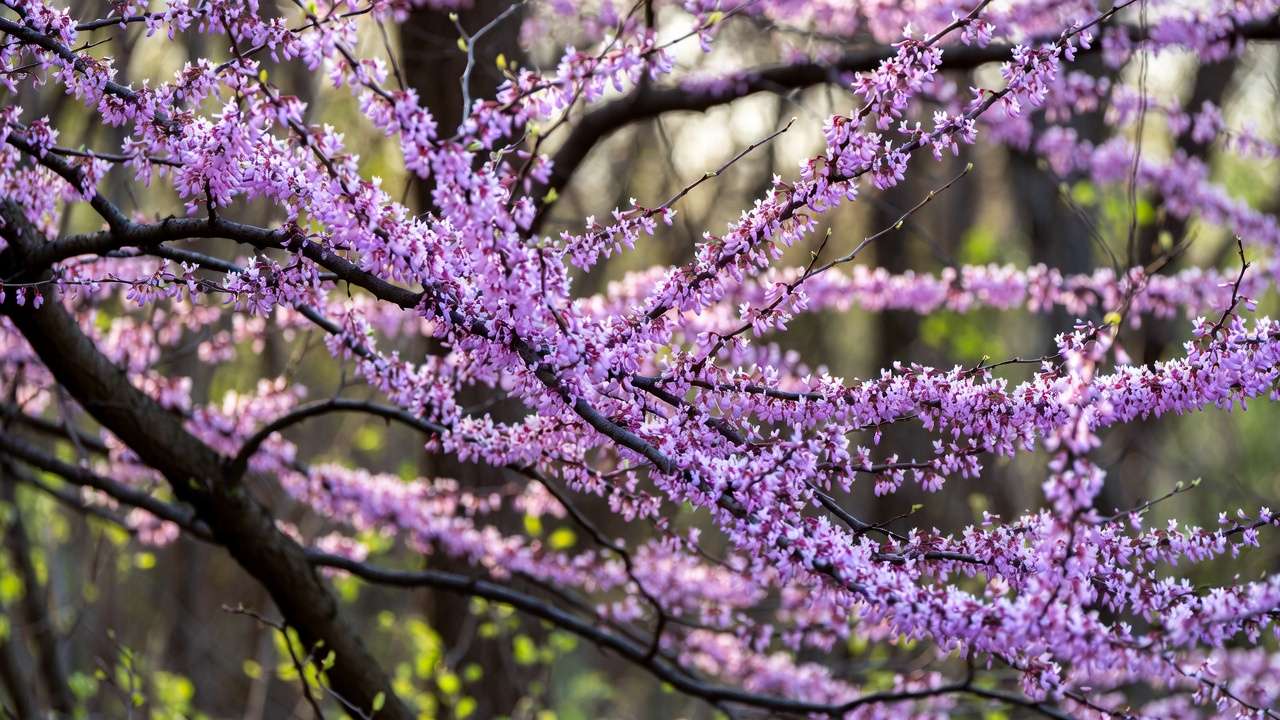
Eastern Redbud (Cercis canadensis) This native beauty explodes with vivid pink-purple flowers directly on bare branches before leaves emerge — a true harbinger of spring! 🌷
- Peak bloom: Mid-March (South) to mid-April (Northeast/Midwest)
- Zones: 4–9
- Care tips: Plant in fall for best root establishment. Prune lightly after bloom (late spring) to shape; avoid summer cuts as it stresses the tree. Provide well-drained soil and partial shade in hotter regions. Watch for canker — mulch to retain moisture and reduce stress.
- Pro tip: Pair with dogwoods for layered woodland effects.
Flowering Dogwood (Cornus florida) Iconic white or pink bracts (not true petals) surround tiny flowers, creating that classic understory glow. 🍃
- Peak bloom: Late March (South) to late April (Northeast)
- Zones: 5–9
- Care tips: Thrives in acidic, well-drained soil with morning sun/afternoon shade. Water deeply during dry spells in early spring before bloom; fertilize sparingly with acid-loving plant food post-bloom. Prune only to remove dead wood — best in winter. Protect young trees from late frosts with burlap wraps if needed.
- Fun fact: Dogwoods support local pollinators and birds love the berries!
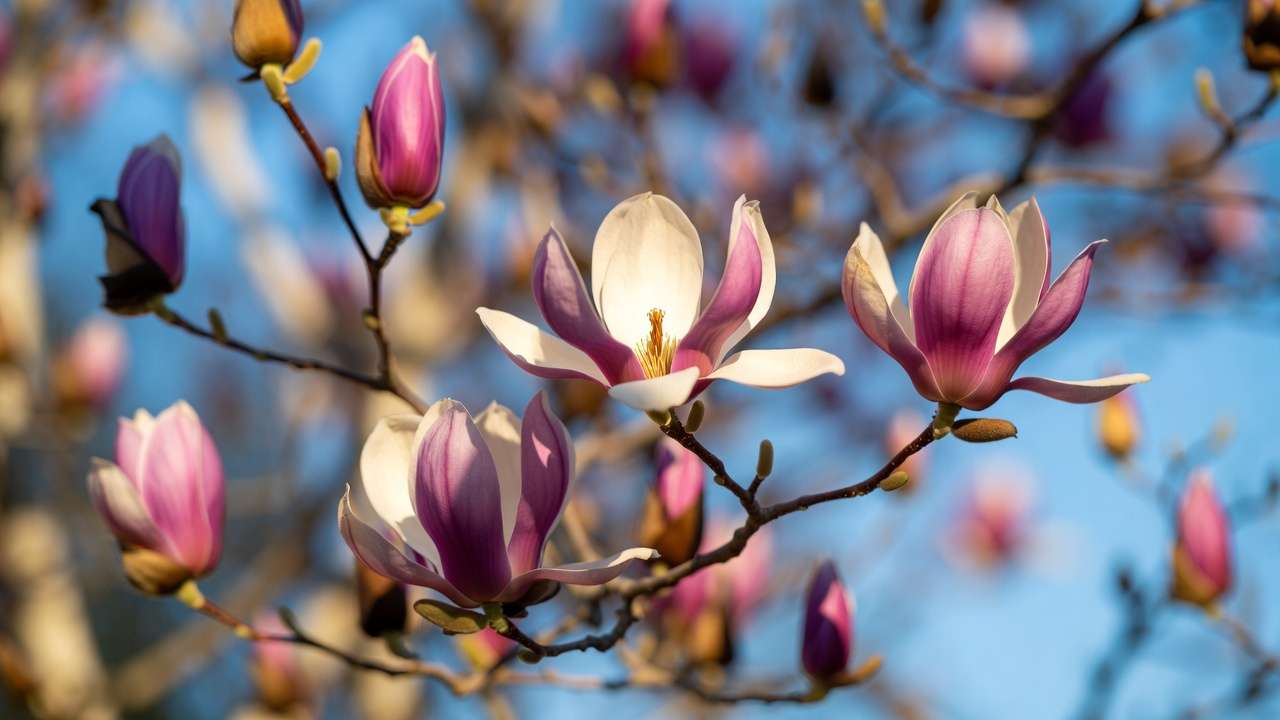
Saucer & Star Magnolia (Magnolia × soulangeana & Magnolia stellata) Early showstoppers with huge, fragrant cup-shaped (saucer) or star-like (star) blooms in white to pink-purple. 🌼
- Peak bloom: Mid–late March (Mid-Atlantic/South) to early April (North)
- Zones: 4–9 (star more cold-hardy)
- Care tips: Plant in sheltered spots to avoid frost damage to early buds. Mulch heavily to keep roots cool/moist. Prune right after flowering to maintain shape — never during bloom! Avoid high-pH soils; use ericaceous amendments if needed.
- Expert note: Magnolias hate root disturbance — choose location carefully.
Crabapple (Malus spp.) Versatile ornamental with clouds of white/pink flowers, followed by colorful fruit birds adore. 🍎
- Peak bloom: Late March (South) to May (North)
- Zones: 4–8
- Care tips: Full sun for best blooms. Prune in late winter to open canopy and reduce disease. Fertilize early spring; water consistently through bloom. Choose fire blight-resistant varieties (e.g., ‘Prairifire’) in humid areas.
- Bonus: Fall color + winter interest from persistent fruit.
Yoshino & Kwanzan Cherry (Prunus × yedoensis & Prunus serrulata ‘Kwanzan’) Yoshino offers soft single pink-white blooms; Kwanzan doubles in richer pink for longer show. 🌸
- Peak bloom: Late March–early April (Mid-Atlantic); varies regionally
- Zones: 5–8
- Care tips: Full sun, well-drained soil. Prune after bloom to encourage structure. Avoid over-fertilizing — too much nitrogen reduces flowers. Monitor for pests like aphids; use horticultural oil in dormancy.
- 2026 highlight: D.C. Yoshino peak forecasted March 29–April 1 per NPS!
(Image: Close-up of vibrant pink flowering dogwood bracts against a blue sky, showcasing the layered beauty ideal for southern and eastern gardens 🌸)
How to Use This Guide for Better Tree Care & Enjoyment 🛠️
This isn’t just a calendar — it’s your roadmap to smarter decisions:
- Planning Viewing Trips or Photography Sessions 📷: Book accommodations or flights around predicted peaks (e.g., D.C. late March 2026). Arrive 3–5 days early; use apps like Cherry Blossom Watch for real-time updates. Sunrise shoots capture petal glow without crowds!
- When to Plant New Flowering Trees: Fall (September–November) is prime — roots establish over winter without competing with bloom energy. Spring planting works but avoid hot/dry periods.
- Pruning Calendar: Dormant season (late winter/early spring before buds swell) for major shaping. Light touch-ups post-bloom only. Never prune during or right before peak — it removes next year’s flower buds!
- Fertilizing & Watering for Better Blooms: Apply balanced slow-release fertilizer in early spring as buds swell. Deep water weekly during bud break to prevent drop. Mulch 2–3 inches to retain moisture and suppress weeds.
- Protecting from Late Frosts: Cover small trees with frost cloth if temps dip below 28°F during bud swell. Choose later-blooming varieties in frost-prone spots.
Expert Insights & Pro Tips 🧑🌾
From years working with extension services and arboretums:
- “Always monitor local weather stations and soil temps — micro-adjustments can shift peak by 7–10 days regionally.” — Adapted from university horticulturists
- Common mistakes: Over-pruning in bloom season (reduces future flowers) or planting wrong zone variety (sparse blooms).
- Climate adaptation: Opt for resilient cultivars like disease-resistant crabapples or heat-tolerant redbuds. With variable winters, track chill hours via local ag extensions.
- Bonus tip: Join citizen science projects (e.g., USA National Phenology Network) to report your local blooms — contribute to better future forecasts!
FAQs ❓
When is peak bloom in [specific region/tree] for 2026? Check regional sections above; for D.C. Yoshino cherries, NPS forecasts March 29–April 1. Always verify closer to spring via official sources like NPS or local extensions.
How long do flowering tree blooms last? Typically 7–14 days at peak, shortened by rain, wind, or heat. Individual trees may stagger slightly for extended color.
What if I miss peak bloom — are there second chances? Yes! Many trees (e.g., Kwanzan cherries, crabapples) have prolonged or later phases. Focus on succession planting — early magnolias, mid dogwoods, late crabapples.
How does climate change affect bloom times? Trends show earlier averages in many areas due to warmer winters, but extreme cold snaps (like parts of 2025–2026) can delay. Variability is increasing — plan flexibly!
Best apps/sites for real-time updates? NPS Bloom Watch, Cherry Blossom Watch, local university extensions, USA-NPN.org, or apps like iNaturalist for community reports.

Conclusion 🌟
There’s nothing quite like the joy of standing under a canopy of blooming flowers — petals drifting, bees humming, spring fully alive. By understanding peak bloom times by region for 2025-2026, you’re equipped to plan trips, plant thoughtfully, prune at the right time, and nurture healthier trees for years of spectacular displays.
Bookmark this guide, check back for updates as weather evolves, and share your region’s bloom photos in the comments — we’d love to hear (and see!) your experiences! Whether you’re in Dhaka dreaming of a future U.S. visit or stateside ready for spring, happy blooming season ahead. Plant one more tree this fall — future you (and pollinators) will thank you 🌿🐝











