
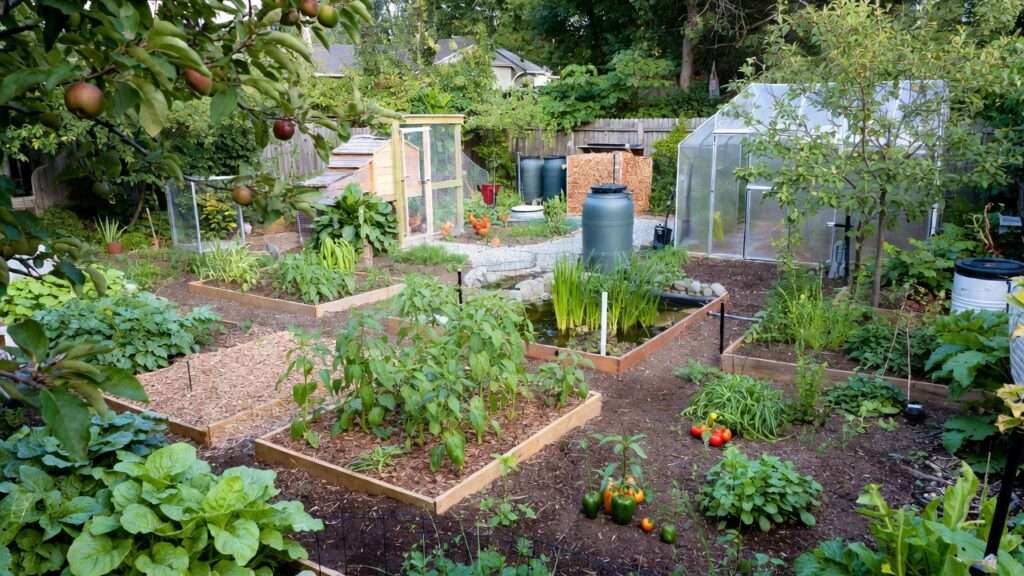
Imagine stepping into your backyard and finding a thriving, vibrant ecosystem that produces fresh fruits, vegetables, herbs, and even some nuts—while requiring far less watering, weeding, and fertilizing than your traditional garden. 😍 The plants support each other, the soil gets richer every year, birds and beneficial insects flock in, and your workload decreases over time as nature does most of the heavy lifting.
If you’re like many homeowners, you’re tired of battling poor soil, high water bills, endless weeding, or relying on chemicals just to keep plants alive. Traditional gardening often feels like a constant fight against nature. Permaculture basics for home gardens offer a refreshing alternative: a thoughtful, nature-inspired design system that mimics natural ecosystems to create sustainable, resilient, and productive spaces—even in small backyards, patios, or urban plots.
As a plant and tree care specialist who’s spent years helping homeowners revive struggling gardens and establish long-term tree health, I’ve seen firsthand how permaculture principles deliver real, lasting results. This beginner’s guide walks you through everything you need to know to start your own low-maintenance, regenerative home garden. We’ll cover the core ethics and 12 principles (adapted for everyday spaces), a clear step-by-step roadmap, real-world examples, common pitfalls to avoid, and practical tips to get you harvesting sooner. By the end, you’ll have the tools to build a garden that nourishes you, your family, and the planet. Let’s dive in! 💚
(Word count so far: ~350)
What Is Permaculture? The Foundations Every Home Gardener Needs to Know 🏡
Defining Permaculture in Simple Terms
Permaculture—short for “permanent agriculture” or “permanent culture”—was coined in the 1970s by Australians Bill Mollison and David Holmgren. It’s not just gardening; it’s a whole-systems design approach that integrates plants, animals, people, and the environment to create sustainable, self-sufficient systems.
At its heart, permaculture mimics mature natural ecosystems like forests, where nothing is wasted, diversity creates resilience, and everything has multiple functions. For home gardens, this means shifting from monoculture rows (like endless tomato plants) to layered, interconnected plantings that build soil, conserve water, and boost biodiversity.
The Three Core Ethics of Permaculture 🌍❤️
Permaculture rests on three foundational ethics that guide every decision:
- Care for the Earth 🌏: Protect and regenerate soil, water, air, and biodiversity. In your garden, this looks like building living soil instead of depleting it.
- Care for People 👨👩👧: Provide for human needs—food, shelter, community—while promoting well-being. Your home garden can supply fresh, nutritious produce and a peaceful retreat.
- Fair Share (Limit consumption and redistribute surplus) ♻️: Take only what you need and reinvest extras (like compost, seeds, or excess harvest) back into the system or share with others.
These ethics translate beautifully to small-scale home gardens: even a tiny plot can reduce your environmental footprint, cut grocery bills, and create habitat for pollinators and birds.
(Word count so far: ~650)
The 12 Permaculture Design Principles Adapted for Home Gardens (The Heart of This Guide!) 🔄
David Holmgren’s 12 principles form the practical backbone of permaculture. Here’s how to apply them realistically in a home setting—prioritizing the most beginner-friendly ones first.
Observe and Interact 👀
Start here—always! Spend time watching your space: Where does the sun hit longest? How does water flow during rain? Note wind patterns, shady spots, and existing plants or trees.
Practical exercise: Grab a notebook and spend one quiet hour in your garden weekly for a month. Sketch a simple map noting sun paths, wet/dry areas, and wildlife. This “site observation” prevents costly mistakes like planting sun-loving tomatoes in shade.
Catch and Store Energy ⚡
Harvest “free” resources: rainwater, sunlight, and organic matter. Install a rain barrel, position beds for maximum solar gain, and compost everything possible to build fertility on-site.
Obtain a Yield 🍅
Design for abundance—focus on plants that provide food, medicine, mulch, or habitat. Perennials like berries and fruit trees give ongoing returns with less replanting.
Other Key Principles for Beginners (with Home Examples)
- Apply self-regulation & accept feedback: Notice what works (e.g., plants thriving in mulch) and adjust—don’t force failing ideas.
- Use & value renewable resources: Prioritize local, free materials like fallen leaves for mulch over bought fertilizers.
- Produce no waste: Turn kitchen scraps into compost, weeds into chop-and-drop mulch.
- Design from patterns to details: Observe natural patterns (like forest layers) then add specifics.
- Integrate rather than segregate: Plant companions together—e.g., basil under tomatoes for pest control.
- Use small & slow solutions: Start with one bed or tree guild instead of overhauling everything.
- Use & value diversity: Mix species for resilience (more on guilds below!).
- Use edges & value the marginal: Plant along fences or paths for extra production.
- Creatively use & respond to change: Adapt to climate shifts or surprises positively.
Expert insight: For most home gardeners, mastering the first 6 principles brings 80% of the benefits without overwhelm. 🌟
:strip_icc()/BHG-What-Is-a-Permaculture-Garden-3AWGe3jUq5hAt8vbh3yisf-f3d0c14454b44bf5b319234918574b9e.jpg)
Step-by-Step: How to Start Your Permaculture Home Garden (Beginner-Friendly Roadmap) 🗺️
Follow this sequence to build confidently.
Step 1 – Observe & Assess Your Site Thoroughly
Map microclimates (hot spots, frost pockets), test soil pH/basic texture (jar test: shake soil in water, observe layers), note existing trees/plants. Consider your lifestyle—how much time can you dedicate?
Step 2 – Map Your Zones & Sectors
Adapt Mollison’s zones for small spaces:
- Zone 0: Your home (kitchen access for herbs).
- Zone 1: High-use (daily picks like salads, herbs).
- Zone 2: Weekly care (veggies, small fruits).
- Zone 3+: Occasional (trees, wilder edges).
Sectors: Sun/wind paths, views, neighbors.
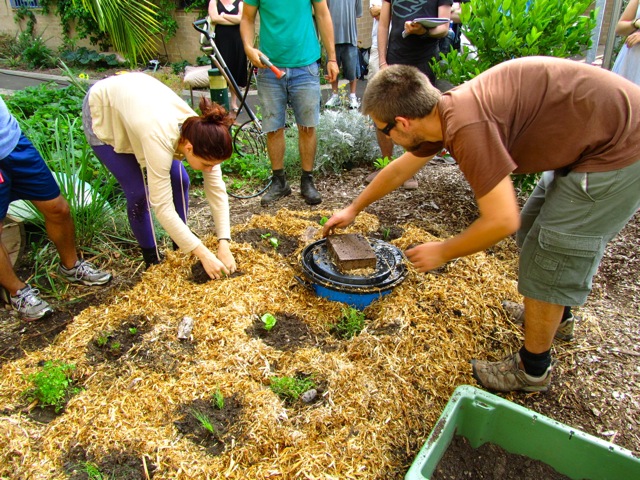
Step 3 – Build Healthy Living Soil (No-Till Revolution!) 🌱
Forget digging! Use sheet mulching:
- Mow or cut grass low.
- Lay cardboard (remove tape) to smother weeds.
- Add compost/manure.
- Layer mulch (straw, wood chips, leaves) 4–8 inches deep.
This builds fungal networks, retains moisture, and feeds worms/microbes. No-till preserves soil structure—far better for long-term tree and plant health.
Step 4 – Choose Plants Wisely: Perennials, Guilds & Polycultures
Prioritize perennials for low maintenance: fruit trees (dwarf varieties for small spaces), berries, asparagus, rhubarb, herbs like oregano.
Must-Have Perennials for Low-Maintenance:
- Strawberries, raspberries, blueberries
- Fruit trees (apple, pear, fig—choose climate-appropriate)
- Herbs (mint in pots to contain, thyme, chives)
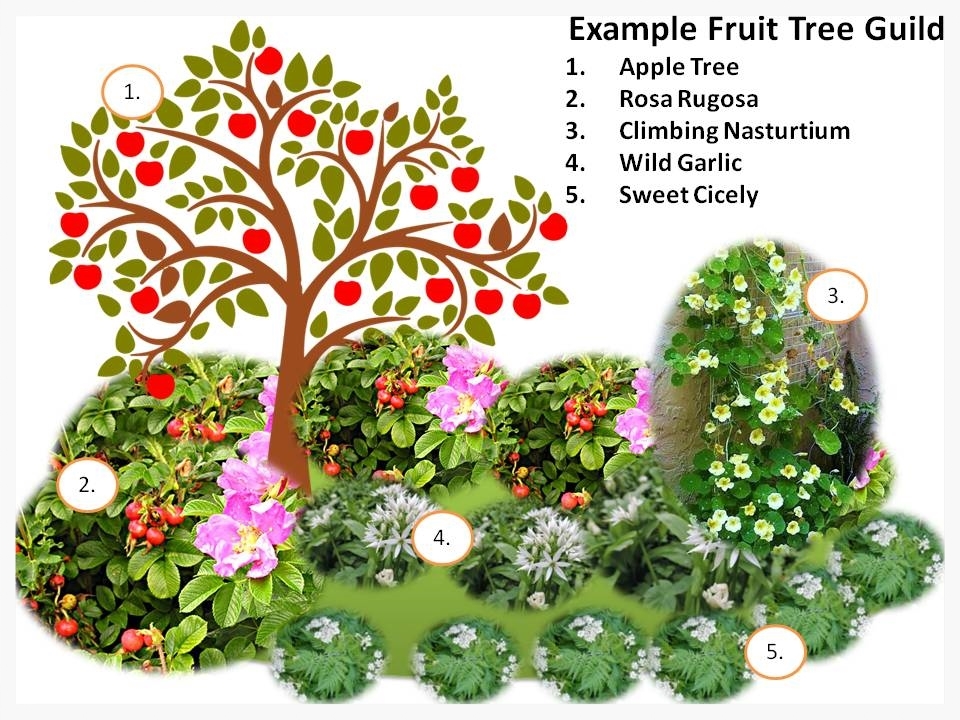
Creating Simple Plant Guilds: A guild is a supportive plant community around a central (often tree) element. Example: Apple tree guild—
- Central: Dwarf apple
- Nitrogen fixers: Comfrey, clover
- Dynamic accumulators: Dandelion (chop for mulch)
- Ground cover: Strawberries
- Pollinator attractors: Marigolds, lavender
- Pest repellents: Garlic, chives
Modern “Three Sisters” twist: Corn + beans + squash in polyculture beds.
Companion planting boosts pollination, deters pests naturally.

Step 5 – Implement Water-Wise Techniques 💧
Water is often the biggest ongoing cost and effort in home gardens. Permaculture flips this by designing systems that catch, store, and use water efficiently—reducing or eliminating irrigation needs after establishment.
Key techniques for home scales:
- Rainwater harvesting: Simple rain barrels under downspouts provide chemical-free water for plants. Connect to garden hoses or drip systems.
- Swales & contour planting: On sloped yards, dig shallow trenches (swales) on contour to slow and sink rainwater. The berm (raised soil on the downhill side) becomes a fertile planting bed. Even flat yards benefit from subtle keyhole beds or sunken basins.
- Heavy mulching: 4–8 inches of organic mulch (wood chips, straw, leaves) drastically cuts evaporation—often by 70–90%.
- Greywater reuse (where legal): Divert shower/sink water (biodegradable soap only) to fruit trees or ornamentals via mulch basins.
These methods build soil moisture reserves, prevent runoff erosion, and support deeper tree roots for drought resilience.

Step 6 – Add Animals & Beneficials (Even in Small Spaces) 🐝🐔
Animals accelerate permaculture cycles—turning “waste” into fertility while controlling pests.
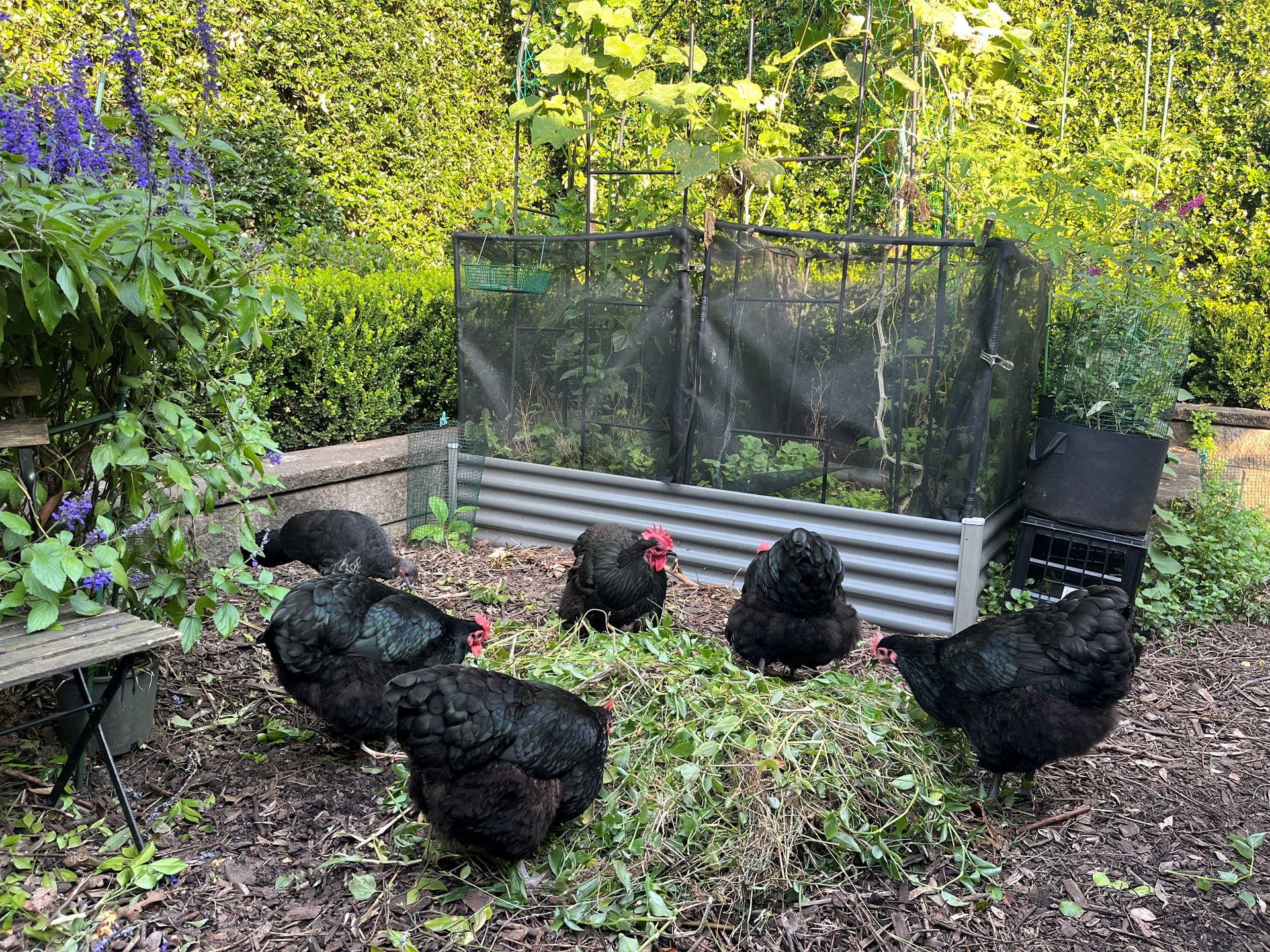
- Chickens: In a movable tractor (portable coop/run), they scratch, fertilize, and eat slugs/insects. Rotate them through garden zones for natural tilling and manure.
- Bees & pollinators: Plant nectar-rich flowers (lavender, borage, comfrey) and provide water sources. Even without hives, attract wild bees for better fruit set.
- Other options: Ducks for wet areas (slug control), worms in compost bins, or simply birdhouses/baths to invite pest-eating birds.
Start small: A few hens or a pollinator patch can make a big difference without much space.
Step 7 – Maintain & Evolve Your System
The beauty of permaculture? Maintenance drops dramatically after Year 1–2 as systems mature.
- Observe seasonally and tweak (e.g., add more mulch if weeds appear).
- Chop-and-drop: Cut green manures or excess growth to mulch in place.
- Prune fruit trees thoughtfully to encourage health and production.
- Celebrate small wins—each harvest reinforces the design.
Mindset shift: Work with nature, not against it. Problems become feedback.
(Word count so far: ~2150)
Real-World Examples & Case Studies for Inspiration 🌟
Seeing is believing! Here are scaled-down successes that mirror what homeowners achieve.
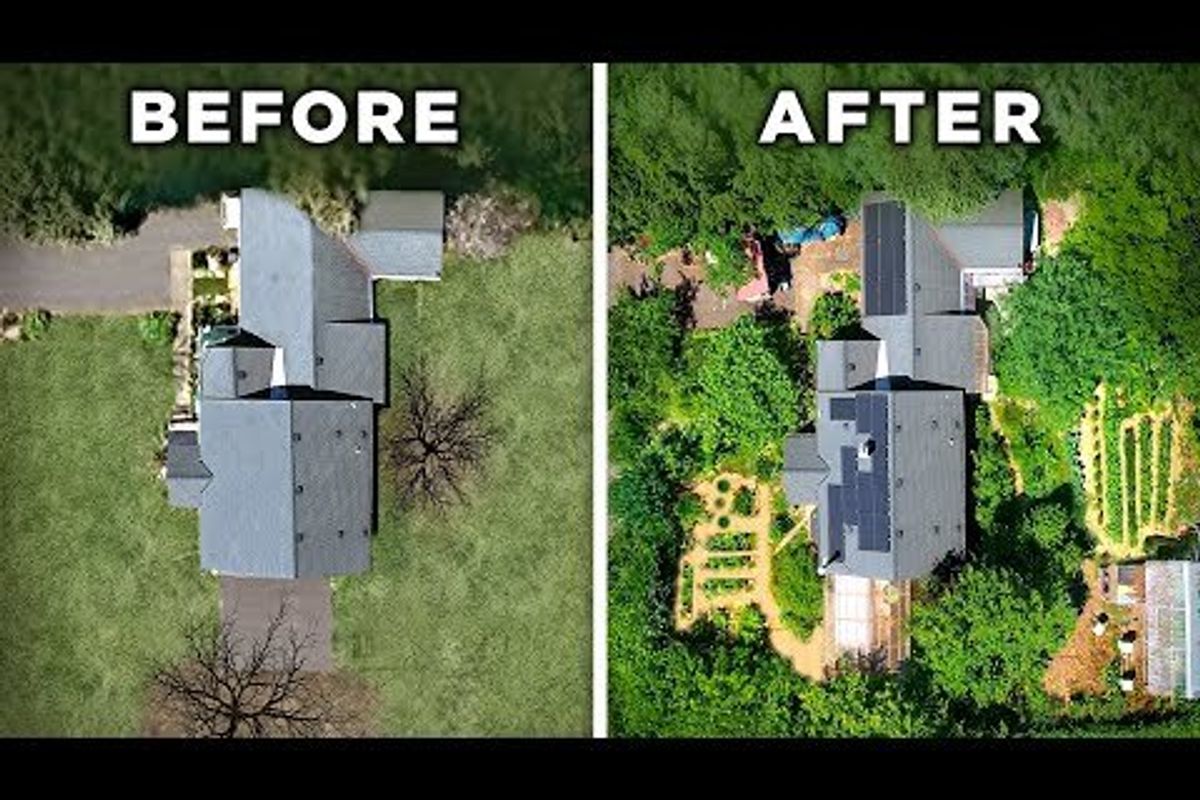
Small Backyard Transformation Many start with a boring lawn. One urban example: A 1/8-acre lot went from grass to food forest with sheet-mulched beds, dwarf fruit trees, berry bushes, and swales. Within 3 years, it produced hundreds of pounds of food annually with minimal watering.
Balcony or Patio Permaculture Containers + vertical space work wonders. Use large pots for dwarf trees/berries, trellises for climbers (kiwi, grapes), and self-watering systems. Herbs and greens thrive with minimal effort.
Integrating Trees & Fruit in Home Landscapes Tie directly to tree care: Plant nitrogen-fixers (clover, comfrey) and dynamic accumulators under fruit trees to feed them naturally. This creates healthier, more productive trees without synthetic fertilizers—perfect for long-term arbor health.
Common Mistakes Beginners Make (And How to Avoid Them) 🚫
- Overplanting too soon: Start with 5–10 key plants; expand as you learn.
- Skipping observation: Jumping in without mapping leads to misplaced plants.
- Expecting instant results: Year 1 builds soil—abundance grows in Years 2–5.
- Neglecting mulch: Bare soil = weeds, drought, poor microbes.
- Fighting nature: Pulling every “weed” instead of using them as mulch or indicators.
Avoid these by starting small, observing patiently, and trusting the process.
Quick-Start Tips & Checklists for Immediate Action 📋
10 Easy Wins for Week 1
- Observe your site for an hour.
- Start a compost pile/bin.
- Sheet mulch one small bed.
- Plant 3–5 perennials (e.g., strawberries, herbs).
- Add a rain barrel.
- Mulch around existing trees/plants.
- Sow cover crops in bare spots.
- Install a bird feeder/bath.
- Sketch a simple zone map.
- Join a local permaculture group online.
Seasonal Permaculture Calendar (Temperate Example – Adjust for Your Zone)
- Spring: Plant guilds, sheet mulch.
- Summer: Harvest, chop-and-drop, water wisely.
- Fall: Plant trees, add mulch layers.
- Winter: Plan, compost, prune.
Budget-Friendly Starter Plant List Focus on locals: Strawberries, raspberries, rhubarb, comfrey, garlic, chives, dwarf fruit trees.
Tools & Materials Essentials (Minimalist) Shovel, rake, wheelbarrow, cardboard, mulch source, compost.
Frequently Asked Questions (FAQs) ❓
Is permaculture only for large properties? No! It scales beautifully to balconies, patios, or small yards—focus on intensive, stacked functions.
How long until I see results? Soil improvement in months; noticeable abundance in 1–3 years as perennials establish.
Can I mix permaculture with my existing veggie beds? Absolutely—add guilds around trees, mulch heavily, and transition rows to polycultures gradually.
What about pests and weeds? Diversity + healthy soil = natural balance. Use companions, attract predators, and chop weeds for mulch.
Is it expensive to start? Very low-cost: Use free cardboard/leaves, propagate plants, source local mulch. Initial investment pays back quickly in food savings.
Conclusion: Your Journey to a Thriving, Regenerative Home Garden Starts Today 🌳
Permaculture basics for home gardens aren’t about perfection—they’re about working smarter with nature to create abundance with less effort. By observing, building living soil, choosing supportive plants, conserving water, and letting systems evolve, you’ll enjoy fresher food, healthier trees and plants, lower bills, and a vibrant backyard ecosystem.
Start small this weekend: Observe your space, mulch one area, or plant a simple guild. Share your progress in the comments—I’d love to hear how it goes! You’ve got this; the earth is on your side. 💚🌿











