
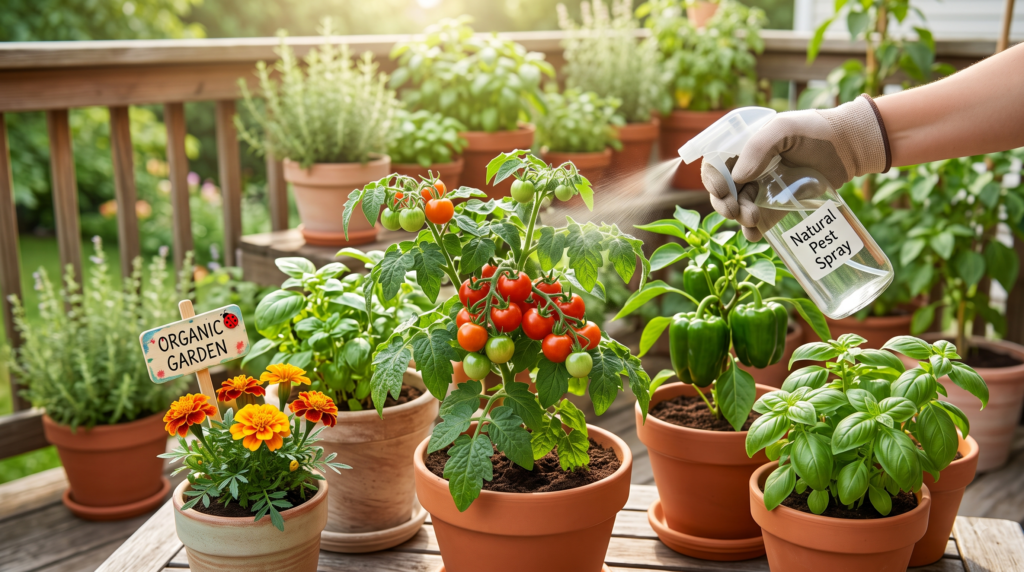
Picture this: You step out onto your sunny patio, coffee in hand, ready to admire the fruits of your labor. You reach for that perfectly plump, ruby-red cherry tomato you’ve been watching ripen all week. But as your fingers brush the leaves, a cloud of tiny white insects erupts into the air, and you notice the stems are crawling with sticky green bugs. Your heart sinks.
If you grow food in containers, this scenario is probably all too familiar. Figuring out safe, effective pest control in potted vegetables is one of the biggest hurdles container gardeners face. When you are growing food that you intend to put directly on your dinner plate, reaching for harsh chemical pesticides is simply not an option. You need solutions that protect your harvest without compromising your health or the local ecosystem.
Container gardening offers incredible convenience, allowing anyone with a balcony, windowsill, or patio to grow fresh food. However, these enclosed mini-ecosystems can quickly become a breeding ground for pests if left unmonitored. In this comprehensive guide, we will break down exactly how to identify garden invaders, eradicate them using 100% natural and organic methods, and prevent them from ever coming back.
Author’s Note: As a horticulturist and avid container gardener with over a decade of experience, I have tested countless organic pest management strategies on my own balcony crops. The methods detailed in this article are the exact, field-tested protocols I use to ensure a safe, vibrant, and edible harvest year after year. 👩🌾
Why Potted Vegetables Are Vulnerable to Pests 🪴
Before we can defeat the enemy, we have to understand why they are attracted to our container gardens in the first place. Potted plants face unique environmental stressors that make them a prime target for infestations.
-
The Container Microclimate: Pots heat up much faster than in-ground garden beds. This increased soil temperature can accelerate the breeding cycles of certain insects, turning a small pest problem into a severe infestation in a matter of days.
-
Lack of Natural Predators: If you are growing on a high-rise balcony, a screened-in porch, or indoors, natural predators like ladybugs, lacewings, and parasitic wasps simply cannot reach your plants to keep the pest population in check.
-
Plant Stress: Bugs are nature’s opportunists. They are naturally drawn to weak or stressed plants. Because potted vegetables rely entirely on you for moisture and nutrients, they are highly susceptible to under-watering, over-watering, or root-bound conditions—all of which send out chemical distress signals that pests can literally smell.
-
Contaminated Potting Soil: Sometimes, the threat comes from within. Many commercial potting mixes, especially if they have been sitting damp in a garden center, harbor dormant eggs of pests like fungus gnats. Once introduced to the warmth of your home or patio, they hatch.
Identifying Common Pests in Container Gardens 🐛
Accurate identification is the foundation of effective organic pest management. Treating a plant for the wrong bug is not only a waste of time but can also cause further stress to your vegetables. Here is exactly what to look for.
The Infamous Aphid 🟢
Aphids are the bane of the container gardener’s existence. These soft-bodied, pear-shaped insects multiply at an astonishing rate.
-
Appearance: They are tiny (about 1/8 inch long) and can be pale green, black, yellow, or peach-colored. They tend to cluster thickly on the tender new growth at the tips of stems.
-
Signs of Damage: Aphids suck the sap right out of your vegetable plants. You will notice curled, yellowing, or distorted leaves. They also excrete a sticky substance called “honeydew,” which can attract ants and lead to a black, powdery fungus known as sooty mold.

The Stealthy Spider Mite 🕸️
Spider mites are not actually insects; they are tiny arachnids. Because they thrive in hot, dry conditions, they absolutely love sun-baked potted plants like peppers and eggplants.
-
Appearance: They are nearly microscopic. To the naked eye, they look like moving specks of red or brown dust on the undersides of leaves.
-
Signs of Damage: The most obvious sign is fine, silky webbing stretching between leaves and stems. Before the webs appear, you will see “stippling”—tiny yellow or white dots on the foliage where the mites have pierced the plant cells to feed. Eventually, the whole leaf will turn yellow, dry out, and drop off.
The Annoying Whitefly ☁️
Whiteflies are a common nuisance, particularly for potted tomatoes and cucumbers.
-
Appearance: These look like minuscule white moths. They congregate on the undersides of leaves. When you brush against or shake the plant, they will flutter up in a distinctive “cloud” before quickly settling back down.
-
Signs of Damage: Like aphids, whiteflies are sap-suckers that cause stunted growth, leaf yellowing, and honeydew production, which subsequently causes sooty mold.
The Soil-Dwelling Fungus Gnat 🪰
If you grow vegetables in containers indoors or in heavily shaded patio corners, you will likely encounter fungus gnats.
-
Appearance: Small, dark, mosquito-like flies that hover erratically just above the surface of the potting soil.
-
Signs of Damage: The adult flying gnats are annoying but harmless. The real danger lies in their larvae, which live in the damp topsoil. If the population grows large enough, these tiny white worms will start feeding on the tender roots of your vegetable seedlings, causing the plant to wilt inexplicably despite being watered.
Quick Pest Identification Cheat Sheet 📋
5 Proven Natural Pest Control Methods for Potted Veggies 🛡️
Now that you know what you are fighting, it is time to fight back. Because you are growing edibles, chemical pesticides are off the table. Here are five 100% natural, food-safe methods to keep your harvest bug-free.
1. The Mechanical Approach: Hand-Picking and Water Blasting 🚿
Sometimes the simplest solution is the best. Mechanical pest control involves physically removing the bugs from your plants.
-
Hand-Picking: For larger pests like the tomato hornworm, cabbage loopers, or slugs, put on a pair of gardening gloves and manually pluck them off. Drop them into a bucket of soapy water to dispatch them instantly.
-
The Water Blast Method: For aphids and spider mites, a strong jet of water is highly effective. Take your potted plant to the lawn or shower. Support the main stem with one hand, and use a hose with a spray nozzle to blast the foliage—paying special attention to the undersides of the leaves. The water pressure knocks the pests off, and most soft-bodied insects are unable to climb back up. Do this early in the morning so the foliage can dry before nightfall, preventing fungal diseases.

2. The Power of Neem Oil and Horticultural Oils 🌿
Neem oil is a holy grail for organic gardeners. Pressed from the seeds of the neem tree, it is a naturally occurring pesticide.
-
How it Works: Neem oil contains an active compound called Azadirachtin. When insects ingest it, it disrupts their hormones, causing them to forget to eat, mate, or lay eggs, eventually breaking their life cycle. It also lightly coats the leaves, smothering eggs and mites.
-
Application Rules: Never apply neem oil in the heat of the day or in direct sunlight, as the oil will literally fry your vegetable leaves. Spray thoroughly in the late evening. Mix 1 tablespoon of cold-pressed, 100% pure neem oil and 1 teaspoon of mild liquid soap (as an emulsifier) into a gallon of water. Shake well and spray every 7 days until the infestation clears.
3. DIY Insecticidal Soap Sprays 🧼
If you don’t have neem oil on hand, a simple homemade soap spray is incredibly effective against soft-bodied pests like aphids, whiteflies, and thrips.
-
How it Works: The fatty acids in the soap break down the protective outer cuticle of the insects, effectively dehydrating and smothering them on contact.
-
The Recipe: Mix 1 tablespoon of pure, liquid castile soap (like Dr. Bronner’s unscented) into one quart of water.
-
Crucial Warning: Do not use harsh chemical dishwashing detergents (like Dawn or Fairy). These are degreasers designed to strip oils, and they will strip the protective natural waxes right off your tomato and pepper leaves, severely damaging the plant. Always stick to pure, natural soap.
4. Recruiting Beneficial Insects 🐞
If you have an outdoor container garden, you can fight nature with nature.
-
Ladybugs: You can purchase live ladybugs from garden centers or online. Release them onto your potted vegetables at dusk (so they don’t immediately fly away toward the sun). A single ladybug can eat up to 50 aphids a day!
-
Green Lacewings: Often considered even more effective than ladybugs, lacewing larvae are voracious predators, earning them the nickname “aphid lions.” They will eagerly consume aphids, spider mites, and whitefly eggs.
5. Container Companion Planting 🌼
You can use the natural oils and scents of certain plants to create a forcefield around your vegetables.
-
Marigolds: Plant a small marigold in the same pot as your tomatoes. They release a scent that confuses and repels whiteflies and certain beetles, while their roots deter microscopic nematodes in the soil.
-
Aromatic Herbs: Intermingle pots of basil, rosemary, and mint among your vegetables. The strong volatile oils in these herbs mask the scent of your vegetables, making it much harder for pests to locate their favorite snacks.
Expert Prevention Strategies: Stop Pests Before They Start 👩🌾
The best pest control is prevention. A robust, thriving plant has natural defenses against bugs.
Expert Tip: “A healthy vegetable plant is its own best defense. Pests are opportunists that target stressed, thirsty, or malnourished plants. Master your watering schedule, and you will eliminate half of your pest problems.”
Mastering Soil and Moisture 💧
Overwatering is the number one cause of fungus gnats and root rot. Employ the “soak and dry” method: water your pots deeply until moisture runs out the drainage holes, and then do not water again until the top two inches of soil feel completely dry to the touch. To further deter soil-dwelling pests, top-dress your potting soil with a half-inch layer of coarse sand or decorative gravel. This prevents gnats from reaching the damp soil to lay their eggs.
Quarantine Protocols for New Plants 🛑
Never bring a newly purchased nursery plant and immediately set it next to your established vegetables. Nurseries are notorious for harboring hidden pests. Keep new purchases quarantined in a separate room or at the far end of the patio for 7 to 14 days. Monitor them closely for any signs of webbing, spots, or bugs before integrating them into your garden space.
Proper Spacing and Airflow 🌬️
It is tempting to cram as many pots onto your balcony as possible, but this is a mistake. Crowded plants create a stagnant, humid microclimate—an absolute paradise for whiteflies, spider mites, and powdery mildew. Space your pots out so that the leaves of neighboring plants are not touching. This ensures proper airflow, allowing foliage to dry quickly and making it difficult for pests to jump from plant to plant.
When to Make the Tough Call: Tossing the Plant 🗑️
As gardeners, we become emotionally attached to our plants. We nurture them from tiny seeds and want to save them at all costs. However, part of expert container gardening is knowing when to cut your losses.
If you have an eggplant that is 90% covered in spider mite webbing, or a kale plant completely smothered in aphids that haven’t responded to neem oil, it is time to make the tough call. Sacrificing one heavily infested plant is often the only way to save the rest of your balcony garden.
-
How to Dispose Safely: Do not compost heavily infested plants, as the pests can survive in the pile. Place the entire plant, soil and all, directly into a sealed garbage bag and throw it away. Scrub the empty container thoroughly with a mixture of one part bleach to ten parts water to sanitize it before replanting.
Frequently Asked Questions (FAQs) ❓
Is it safe to eat vegetables that have been sprayed with neem oil?
Yes, neem oil is organic and non-toxic to humans and mammals. However, you should stop applying it about three to four days before harvesting. Always wash your vegetables thoroughly under warm water before eating them to remove any lingering oily residue or dead bugs.
Can I use baking soda for pest control?
There is a common misconception that baking soda kills bugs. Baking soda is actually a mild fungicide. It is excellent for treating powdery mildew and black spot on your vegetable leaves, but it will do practically nothing to stop an insect infestation. Stick to insecticidal soap or neem oil for bugs.
Why are bugs only attacking one specific pot in my garden?
Insects target weakness. If only one tomato plant out of three is being attacked by aphids, inspect that specific pot closely. It might have a blocked drainage hole causing root rot, it might be in a drafty spot, or the soil might be depleted of nutrients. Address the root cause of the plant’s stress to help it fight off the invaders.
Conclusion: Enjoying the Fruits (and Veggies) of Your Labor 🥗
Dealing with pests is simply a rite of passage for every gardener. While discovering bugs on your precious potted crops can be incredibly frustrating, it doesn’t mean your harvest is doomed. By understanding how to identify common invaders, utilizing natural tools like insecticidal soaps and beneficial insects, and maintaining excellent plant hygiene, you can absolutely achieve effective pest control in potted vegetables.

Remember, the goal isn’t necessarily a 100% sterile, bug-free environment—nature will always find a way. The goal is to manage the populations so that your plants can thrive, bloom, and produce a heavy, delicious yield. Stay vigilant, check under those leaves regularly, and soon enough, you’ll be enjoying a clean, homegrown, pest-free harvest straight from your container garden. Happy growing! 🌱











