
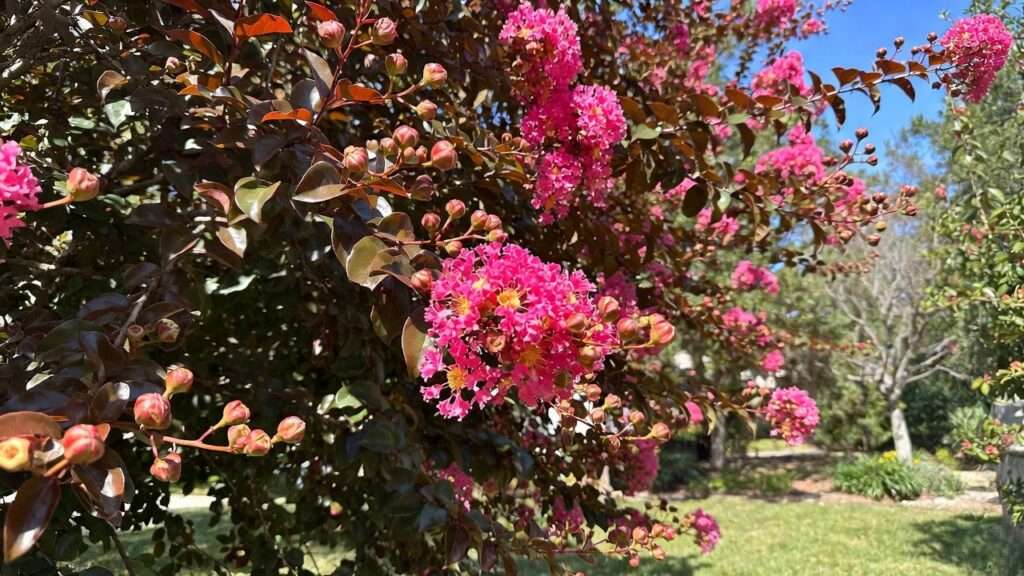
Imagine stepping into your garden on a warm summer day and being greeted by a stunning display of hot-pink, crepe-paper-like flowers dancing against a backdrop of deep burgundy foliage that transitions to rich purplish-green. That’s the magic of the Pink Velour Crape Myrtle tree (Lagerstroemia indica ‘Whit III’), a semi-dwarf cultivar that’s capturing the hearts of gardeners across the U.S. This standout variety isn’t just beautiful—it’s bred for toughness, boasting exceptional resistance to powdery mildew, drought tolerance once established, and multi-season interest that keeps your landscape vibrant year-round. Whether you’re a beginner looking for low-maintenance color or an experienced horticulturist seeking a reliable performer, the Pink Velour Crape Myrtle tree delivers explosive blooms, dramatic foliage, and effortless elegance. In this ultimate guide, we’ll dive deep into everything you need to know to grow and care for this gem successfully.
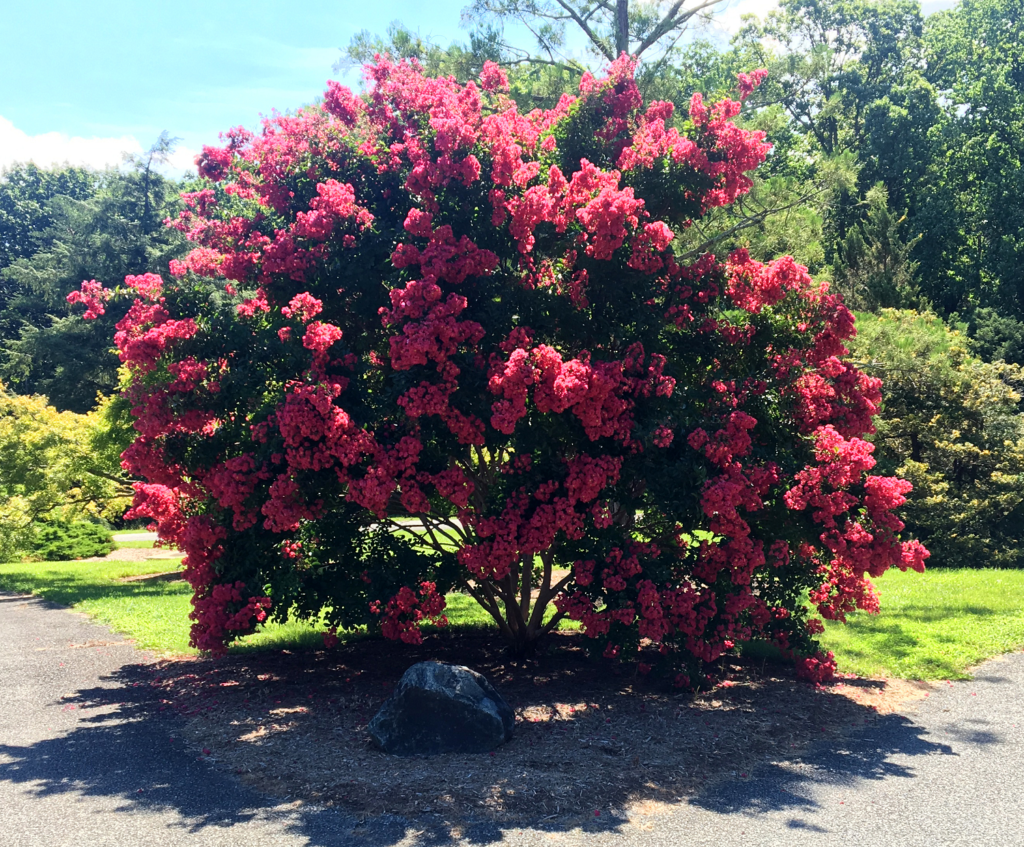
What Makes Pink Velour Crape Myrtle Special? ✨
The Pink Velour Crape Myrtle stands out in the world of Lagerstroemia indica cultivars for its perfect blend of bold aesthetics and practical resilience. Bred by renowned plantsman Dr. Carl Whitcomb and patented as PP10319, this variety was developed to address common issues with older crape myrtles while amplifying their natural beauty.
Unique Features and Characteristics 🌿
- Dramatic Foliage: New growth emerges in a striking wine-red to burgundy hue in spring, creating a velvet-like texture that inspired its name. As leaves mature, they shift to dark purplish-green, providing a sophisticated contrast to the flowers. In fall, expect orange-red to bronze tones for added autumn appeal.
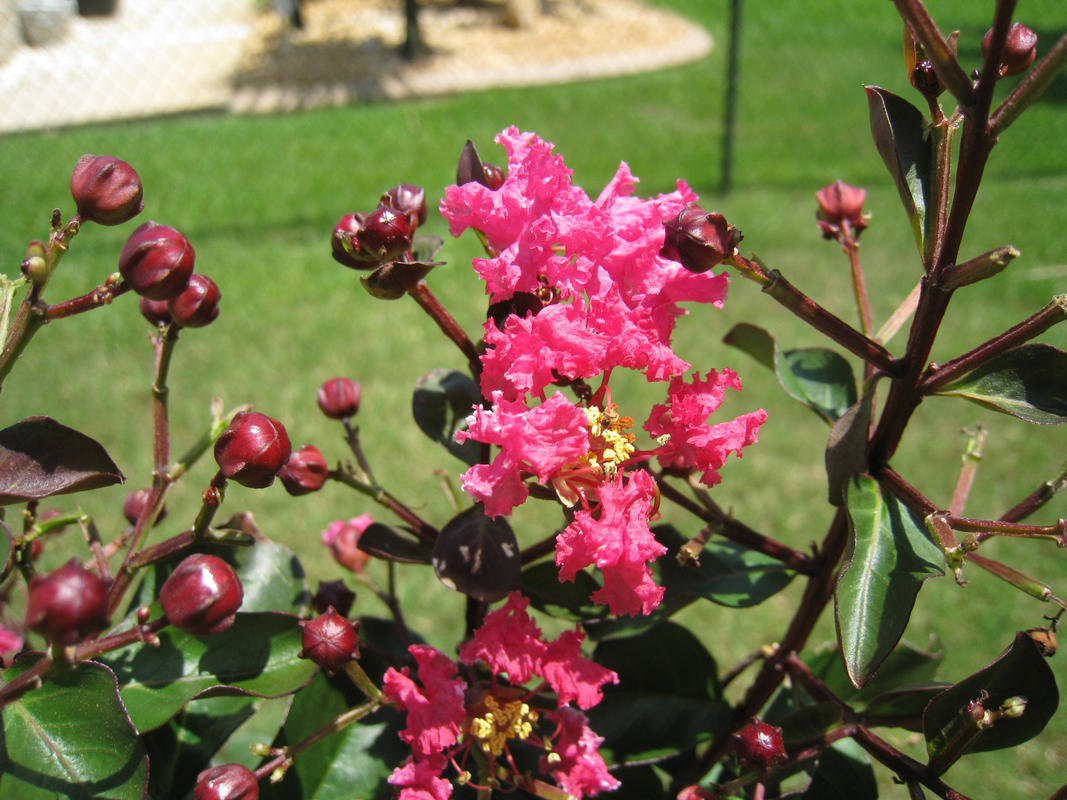
- Vibrant Blooms: Large panicles of hot-pink to magenta flowers resemble crinkled crepe paper, blooming profusely from mid-summer through early fall—often for 100-120 days. This extended bloom period outshines many other shrubs.
- Exfoliating Bark: As the tree matures, its smooth, mottled cinnamon-brown to grayish bark peels away in thin layers, revealing lighter tones underneath. This provides exceptional winter interest when leaves drop.

- Compact Size: Reaching a mature height of 8-12 feet (sometimes up to 15 feet in ideal conditions) with a spread of 6-10 feet, it’s ideal for smaller gardens, urban landscapes, or containers—unlike taller traditional crape myrtles that can exceed 20-30 feet.
Why Choose Pink Velour Over Other Varieties? 🏆
In my years working with ornamental trees, I’ve seen countless crape myrtles struggle with powdery mildew in humid climates or fail to deliver consistent color in tougher soils. Pink Velour changes that. Its superior mildew resistance (one of the best among hybrids) means healthier foliage and more energy directed toward blooms rather than fighting disease.
It’s also highly drought-tolerant once established, heat-loving, and adaptable to a range of soils. As a pollinator magnet, it draws butterflies, bees, and hummingbirds 🦋🐝, enhancing biodiversity in your yard. Expert breeders like Dr. Whitcomb selected it for intense color and vigor, making it a modern upgrade over classic varieties like ‘Natchez’ (white blooms, taller) or ‘Tuscarora’ (coral-pink, larger).
For visual inspiration, here’s how Pink Velour shines in real gardens:

Ideal Growing Conditions ☀️
To unlock the full potential of your Pink Velour Crape Myrtle tree, start with the right site selection. This variety thrives in conditions mimicking its Asian origins—hot, sunny, and well-drained.
USDA Hardiness Zones and Climate Suitability 🌍
Pink Velour is reliably hardy in USDA Zones 7-10, with some success in protected Zone 6 locations (using winter mulch for root protection). It excels in the South and Southeast, loving hot, humid summers, but its cold tolerance (down to about 0°F when mature) allows northern gardeners to enjoy it too. Avoid extreme northern exposures without protection.
Sunlight Requirements 🌞
Full sun is non-negotiable—at least 6-8 hours of direct sunlight daily. This ensures maximum flower production, intense foliage color, and disease resistance. In partial shade, you’ll see reduced blooming, leggy growth, and higher mildew risk. Pro tip from experience: Morning sun with afternoon shade in the hottest regions can prevent leaf scorch.
Soil Preferences 🪴
Well-drained soil is key; Pink Velour tolerates average to poor soils but prefers loamy, slightly acidic to neutral (pH 5.5-7.0). It handles clay if amended with organic matter, but avoid constantly wet or heavy soils to prevent root rot. In alkaline soils (above pH 7.5), chlorosis (yellowing leaves) may occur—test your soil and amend with sulfur if needed.
Planting Your Pink Velour Crape Myrtle 🚀
Timing and technique make all the difference for strong establishment.
Best Time to Plant 📅
Spring or fall are ideal, allowing roots to settle before extreme heat or cold. In warmer zones, fall planting gives a head start on root growth during mild winters.
Step-by-Step Planting Guide 👣
- Select a site with full sun and excellent air circulation to minimize disease.
- Dig a hole twice as wide as the root ball but no deeper—planting too deep is a common mistake.
- Mix native soil with compost (20-30%) for nutrients and drainage.
- Position the tree so the root flare (where roots meet trunk) is at soil level.
- Backfill, gently firm the soil, and create a watering basin.
- Water deeply (10-15 gallons) and apply 2-3 inches of organic mulch (pine bark or shredded leaves), keeping it 4 inches from the trunk to prevent rot.
Spacing Recommendations 📏
For single specimens: 8-10 feet from structures. As hedges: 5-8 feet apart. In containers: Use a large pot (at least 18-24 inches) with drainage holes.
Ongoing Care for Thriving Growth 💧
Proper ongoing maintenance is where many gardeners see their Pink Velour Crape Myrtle tree truly excel—or falter. With the right approach, this variety rewards you with minimal effort for maximum impact.
Watering Schedule 💦
In the first growing season, water deeply once or twice a week, providing about 1-2 inches of water each time (roughly 10-15 gallons for a young tree). This encourages deep root development. Once established (usually after 1-2 years), Pink Velour is remarkably drought-tolerant, often thriving on natural rainfall in most regions.
However, during prolonged dry spells (2+ weeks without rain) in summer, supplemental watering helps maintain bloom production. Always water at the base to keep foliage dry, reducing disease risk. Expert tip: Use a soaker hose or drip irrigation for efficient, root-targeted hydration. Overwatering is a bigger threat than underwatering—soggy soil leads to root rot.
Fertilizing Tips 🌱
Feed sparingly—crape myrtles like Pink Velour perform best in moderately fertile soil without heavy nitrogen. In early spring (as new growth emerges), apply a slow-release balanced fertilizer formulated for trees and shrubs (e.g., 10-10-10 or 8-8-8) or one for acid-loving plants if your soil is alkaline.
Broadcast around the drip line (not against the trunk) and water in well. A second light application in late spring can boost blooms, but stop fertilizing by mid-summer to avoid tender new growth vulnerable to frost. Organic options like compost tea or well-rotted manure work wonders too. Over-fertilizing leads to lush foliage at the expense of flowers, so err on the side of less.
Pruning Best Practices ✂️
Pruning is crucial for shape, health, and bloom abundance, as crape myrtles flower on new wood.
When and Why to Prune ⏰
The ideal time is late winter or early spring, before new growth starts (typically February to early March in zones 7-9). Pruning then directs energy to strong new shoots for summer flowers. Light pruning also improves air circulation, reducing any potential disease.
Avoid fall pruning, which can stimulate growth susceptible to winter damage.
How to Prune Properly (Avoid “Crape Murder”!) ❌
“Crape murder”—the unfortunate practice of severely topping crape myrtles into knobby stumps—is all too common and weakens the tree over time, producing weak, whip-like growth and fewer flowers.
Instead, follow these professional techniques:
- Remove suckers (basal shoots) and water sprouts (vertical shoots from trunk).
- Cut out dead, damaged, or diseased branches.
- Thin crossing or inward-growing branches for better airflow.
- For shaping, selectively shorten branches by 1/3 if needed, cutting back to an outward-facing bud.
- On mature trees, remove lower branches gradually to create a tree form if desired.
Here’s a visual comparison of proper pruning versus “crape murder”:
Deadheading spent flower panicles during summer encourages reblooming waves.
Seasonal Maintenance Calendar 📆
- Spring: Fertilize, mulch, and prune as needed. Watch for new burgundy growth.
- Summer: Water during droughts, deadhead for more blooms, enjoy the show!
- Fall: Admire changing foliage colors (orange-red hues) and exfoliating bark reveal.
- Winter: Minimal care; mulch roots in colder zones and protect young trees with burlap if temperatures dip below 0°F.
Common Problems and Solutions 🛠️
Pink Velour is one of the toughest crape myrtles, but no plant is invincible. Here’s how to troubleshoot.
Powdery Mildew Resistance and Prevention 🦠
This variety’s standout feature is its excellent powdery mildew resistance—bred specifically to combat the white fungal coating that plagues older cultivars in humid areas. With proper siting (full sun, good airflow), issues are rare.
Prevention: Avoid overhead watering and evening sprinkles; plant with adequate spacing.
Other Potential Issues 🐛
- Aphids: Small insects causing curled leaves and honeydew. Blast with water or use insecticidal soap.
- Scale: Armored pests on stems. Treat with horticultural oil in dormant season.
- Sooty Mold: Black coating on leaves from pest honeydew—control the pests.
- Winter Dieback: In zone 6 push, tips may brown; prune out in spring.
- Few Blooms: Usually due to insufficient sun, improper pruning, or over-fertilization.
Troubleshooting Table for Quick Reference
| Issue | Symptoms | Causes | Solution |
|---|---|---|---|
| Few or No Blooms | Sparse flowers despite healthy growth | Too much shade, over-fertilizing, severe pruning | Move to full sun if possible; adjust feeding; prune correctly |
| Yellow Leaves (Chlorosis) | Pale or yellow foliage with green veins | Alkaline soil, poor drainage | Soil test; apply chelated iron or sulfur |
| Powdery Mildew | White powder on leaves | Rare on Pink Velour; poor airflow | Improve circulation; fungicide if needed (rare) |
| Pest Damage | Sticky leaves, curled growth | Aphids, scale | Hose off or neem oil spray |
| Leggy Growth | Tall, sparse branches | Insufficient light | Relocate or prune for density |
Landscaping Ideas and Companion Plants 🎨
The compact size and multi-season appeal make Pink Velour incredibly versatile.
Creative Uses in Your Garden 🏡
- Specimen Tree: Plant as a focal point in lawns or beds for dramatic color.
- Hedge or Screen: Space 5-7 feet apart for a vibrant informal hedge.
- Container Growing: Thrives in large pots on patios—use quality potting mix and fertilize regularly.
- Mixed Borders: Fronted by perennials for layered interest.
Real-world examples of Pink Velour in stunning landscapes:
Best Companion Plants 🌼
Pair for contrast and harmony:
- Evergreens: Boxwood or holly for winter structure.
- Perennials: Lavender, salvia, or coneflowers for pollinator synergy.
- Grasses: Ornamental types like muhly grass for texture.
- Other Crapes: White or red varieties for a rainbow effect.
Frequently Asked Questions (FAQs) ❓
Q: How tall and wide does Pink Velour Crape Myrtle grow? A: Typically 8-12 feet tall and 6-10 feet wide, though it can reach 15 feet in optimal conditions. Its semi-dwarf habit makes it perfect for smaller spaces 🌳.
Q: Is Pink Velour really resistant to powdery mildew? A: Absolutely—it’s one of the most resistant cultivars available, rarely showing symptoms with good cultural practices 🛡️.
Q: When does the Pink Velour Crape Myrtle bloom? A: From mid-summer (July) through early fall (September/October), often 100+ days of hot-pink flowers 🌸.
Q: Can I grow Pink Velour in a container? A: Yes! Choose a large pot (20+ gallons), use well-draining soil, and water/fertilize more frequently 🪴.
Q: Does it attract wildlife? A: Definitely—nectar-rich blooms draw butterflies, bees, and hummingbirds all season 🦋🐝.
Q: Why is my tree not blooming well? A: Common causes: insufficient sun, improper pruning, or nutrient imbalance. Ensure 6+ hours direct sun and follow pruning guidelines.
Q: How do I protect it in colder zones? A: Mulch heavily around roots and wrap trunk for young trees in zone 6.
Conclusion: Unlock Year-Round Beauty with Pink Velour 🌟
The Pink Velour Crape Myrtle tree combines breathtaking hot-pink blooms, velvety burgundy foliage, exfoliating bark, and unbeatable resilience into one low-maintenance package. By following this comprehensive guide—from site selection and planting to pruning and troubleshooting—you’ll cultivate a healthy, vibrant specimen that elevates your garden for years to come.
Whether you’re battling small spaces, tough climates, or disease-prone varieties, Pink Velour delivers reliable wow-factor with minimal fuss. Plant one today and enjoy the compliments as neighbors admire your thriving, colorful oasis. Happy gardening! 🌿✨











