
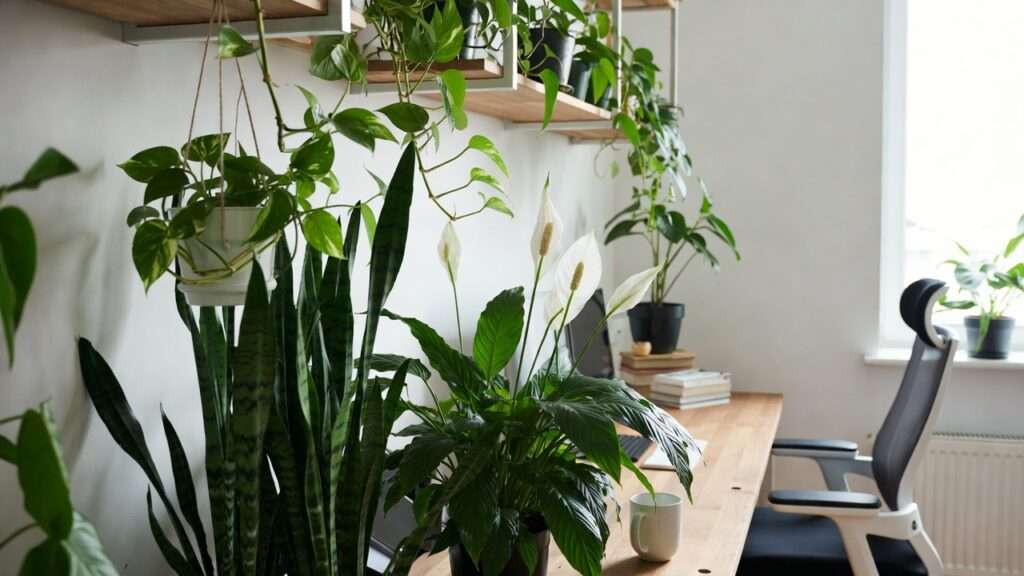
Imagine this: It’s 3 PM, your eyes are burning from hours of screen time, your neck feels stiff, and a wave of mental fog makes every email feel like a mountain. Sound familiar? 😩💻 For millions of remote workers and home office warriors, this daily grind leads to burnout, reduced focus, and creeping stress that spills into evenings and weekends.
But what if the antidote was as simple as adding a few green companions to your desk? Enter plant therapy in home offices — the science-backed practice of using indoor plants (also called horticultural therapy) to naturally calm your mind, sharpen concentration, and transform your workspace into a serene, productive haven. 🌱
Research shows that even a single desk plant can lower anxiety, boost mood, and improve air quality — helping you feel more balanced during long workdays. In one landmark study from the University of Exeter, enriching “lean” offices with plants increased productivity by up to 15%. Japanese research found that gazing at a small plant reduced stress levels significantly, even in real office settings. And NASA’s famous Clean Air Study highlighted how certain houseplants remove toxins like benzene and formaldehyde from indoor air.
In this comprehensive guide, we’ll dive deep into why plant therapy works wonders for home offices, share the best low-maintenance plants to choose, offer practical setup and care tips from real plant experts, and provide actionable steps to build your own calming green workspace. Whether you’re battling Zoom fatigue, poor air circulation in a windowless room, or just craving more nature during work hours, these strategies deliver genuine relief and lasting benefits. Ready to green up your workday? Let’s grow! 🏡🌿
What Is Plant Therapy and Why Does It Work So Well in Home Offices? 🧠🌿
Understanding Plant Therapy: Nature’s Built-in Stress Buster Plant therapy, often interchangeable with horticultural therapy, involves intentional interaction with plants to promote mental, emotional, and physical well-being. It’s rooted in the biophilia hypothesis — our innate human affinity for nature — which explains why being around greenery feels so restorative.
In home offices, where we spend 8+ hours daily isolated from outdoor nature, plants bridge that gap. Simply viewing or tending to them activates the parasympathetic nervous system (your “rest and digest” mode), lowering cortisol (stress hormone) levels and promoting relaxation. 😌
The Science Behind Plants in Workspaces (With Key Studies) 📊 Decades of research back these effects:
- A University of Exeter field study (2014) found that adding plants to previously barren offices boosted productivity by 15%, improved concentration, and enhanced workplace satisfaction.
- Japanese researchers (University of Hyogo, 2020) showed that even one small desk plant reduced office workers’ stress and anxiety, with participants reporting lower tension after just viewing greenery.
- A Dutch multi-organization study (2023) linked indoor plants to fewer complaints about dry air, higher privacy perception, greater workspace attractiveness, and reduced health issues at work.
- NASA’s 1989 Clean Air Study demonstrated that plants like snake plants and peace lilies filter volatile organic compounds (VOCs) such as benzene, formaldehyde, and trichloroethylene — common in home offices from furniture, printers, and carpets.
- Meta-analyses and reviews confirm broad benefits: reduced blood pressure, better cognitive function, fewer sick days, and improved mood.
For home offices specifically, prolonged screen time and limited natural light amplify these perks. Plants combat “sick building syndrome” symptoms like headaches, dry eyes, and fatigue — making them a practical upgrade for remote professionals.
Top Benefits of Plant Therapy in Home Offices 🌟
Mental Health & Stress Reduction Benefits 😌 Plants act as natural mood boosters. Studies show they lower anxiety, combat burnout, and build emotional resilience. Gazing at greenery provides quick “micro-breaks” that reset your mind — far more effective than scrolling social media. Workers report feeling calmer and more content, reducing the emotional toll of deadlines and isolation.
Enhanced Focus, Productivity, and Creativity ⚡ Forget distractions — plants sharpen attention and memory. The Exeter study noted better task performance, while others link greenery to 15–38% productivity gains when workers personalize spaces with plants. Creativity surges too, as nature inspires fresh thinking during brainstorming or problem-solving.
Physical Health Perks for Desk-Bound Workers 💪 Beyond mental wins, plants improve air quality by removing toxins and boosting humidity (countering dry AC/heat). This means fewer headaches, less eye strain, and better breathing. Some even produce oxygen at night (like snake plants), enhancing sleep recovery after long days.
Top 10 Recommended Plants for Stress Relief & Focus 🪴💚
Here are the absolute best indoor plants for plant therapy in home offices. These selections prioritize low maintenance (perfect for busy professionals), proven air-purifying abilities, aesthetic calm, and proven psychological benefits. All thrive in typical home office conditions — from bright windows to lower-light corners.
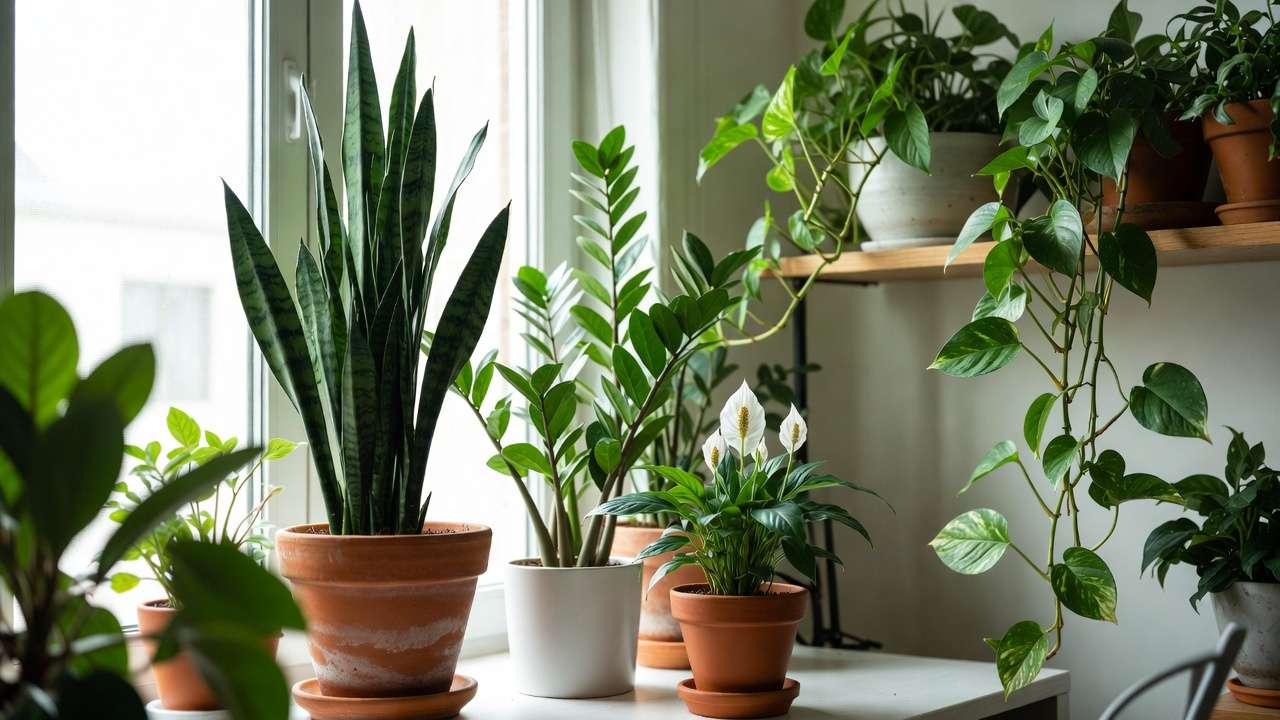
Snake Plant (Sansevieria / Mother-in-Law’s Tongue) 🐍 This architectural beauty is practically indestructible — it tolerates low light, irregular watering, and neglect like a champion. NASA ranks it among the top air purifiers, removing benzene, formaldehyde, and xylene while releasing oxygen at night (great for better sleep after late work sessions). Its upright, sword-like leaves create a sense of order and focus on your desk. Light: Low to bright indirect Water: Every 2–6 weeks Why perfect: Zero-fuss stress relief + nighttime air cleaning 🌙
Pothos (Devil’s Ivy) 💚 The ultimate beginner-friendly trailing plant. Its heart-shaped leaves in lush green (or variegated gold) bring soft, flowing energy that feels instantly calming. Excellent at removing toxins and very forgiving if you forget to water. Hang it or let it trail from a shelf to soften harsh office corners. Light: Low to medium Water: Every 1–2 weeks Why perfect: Instant jungle vibe with minimal effort 😍
ZZ Plant (Zamioculcas zamiifolia) The “plant that can’t die” — seriously. Thick, glossy leaves store water like a succulent, so it survives weeks without attention. Thrives in very low light (ideal for basement or north-facing home offices) and purifies air quietly in the background. Its deep green color promotes grounded, focused energy. Light: Low to medium Water: Every 3–4 weeks Why perfect: Set-it-and-forget-it reliability for high-stress days
Peace Lily (Spathiphyllum) ☮️ Elegant white blooms rise above dark green leaves, signaling when it needs water by dramatically drooping (then perking right back up after a drink — foolproof!). One of NASA’s top toxin removers and a natural humidifier, helping combat dry office air and irritated eyes. Light: Low to medium Water: Weekly (keep soil lightly moist) Why perfect: Beautiful reminder to pause and breathe 🌸
Spider Plant (Chlorophytum comosum) 🕷️ Fast-growing, arching baby “spiderettes” dangle playfully, adding movement and life. Extremely efficient at filtering formaldehyde and xylene; also pet-safe. NASA listed it as a superstar air cleanser. Light: Bright indirect to medium Water: Every 1–2 weeks Why perfect: Cheerful, forgiving, and multiplies easily for free new plants! 🎉
Rubber Plant (Ficus elastica) 🌳 Large, glossy dark-green (or burgundy) leaves bring a luxurious, grounding presence. Excellent at humidifying air and removing airborne toxins. Grows tall as a statement floor plant or stays compact on a desk. Light: Bright indirect Water: Every 1–2 weeks Why perfect: Sophisticated calm for professional video-call backgrounds
Lavender (English Lavender – dwarf varieties indoors) 🌸 The aromatherapy MVP. Its soothing scent reduces anxiety and promotes relaxation (backed by clinical studies on lavender inhalation). Needs more light than most on this list but rewards you with fragrance therapy. Light: Bright direct or strong indirect Water: Let soil dry between waterings Why perfect: Natural calming essential oil right on your desk
Philodendron (especially Heartleaf or Brasil varieties) ❤️ Classic heart-shaped leaves in rich green (or variegated) create gentle, nurturing energy. Super adaptable and forgiving — great for hanging or climbing. Excellent air purifier and humidity booster. Light: Low to bright indirect Water: Every 1–2 weeks Why perfect: Cozy, mood-lifting greenery that feels like a hug
(Quick tip: Start with 2–3 of these based on your light levels and personality. A mix of upright + trailing plants creates visual balance and layered biophilic benefits 🌿✨)
Quick-Comparison Table (for easy decision-making)
| Plant | Light Needs | Water Frequency | Key Benefit | Maintenance Level | Emoji Rating |
|---|---|---|---|---|---|
| Snake Plant | Low–Bright | Every 2–6 weeks | Nighttime oxygen + toxin removal | Very Low | 🐍🔥 |
| Pothos | Low–Medium | Every 1–2 weeks | Trailing calm + beginner-friendly | Low | 💚😍 |
| ZZ Plant | Low–Medium | Every 3–4 weeks | Indestructible + low-light champ | Very Low | 🛡️ |
| Peace Lily | Low–Medium | Weekly | Blooms + humidity + air cleaning | Medium | ☮️🌸 |
| Spider Plant | Medium–Bright | Every 1–2 weeks | Fast-growing + pet-safe purifier | Low | 🕷️🎉 |
| Rubber Plant | Bright Indirect | Every 1–2 weeks | Luxe look + big air cleaning | Medium | 🌳✨ |
| Lavender | Bright | Let dry out | Aromatherapy stress relief | Medium | 🌸🧘♀️ |
| Philodendron | Low–Bright | Every 1–2 weeks | Heart-shaped cozy vibes | Low | ❤️🌿 |
How to Incorporate Plants into Your Home Office Setup 🏠✨
Strategic Placement for Maximum Plant Therapy Benefits Placement isn’t random — science shows proximity and visibility matter:
- Desk-level plants (snake, pothos, peace lily) offer the strongest immediate calming effect when you glance up from your screen.
- Mid-level shelves or side tables → rubber plants or taller snake plants create a soothing green backdrop.
- Hanging plants (spider, pothos) save precious desk space and draw the eye upward, making small rooms feel larger and airier.
- Near (but not in) direct sun → place light-lovers like lavender or spider plants by windows.
- Low-light corners → ZZ or snake plants thrive here and still deliver biophilic benefits.
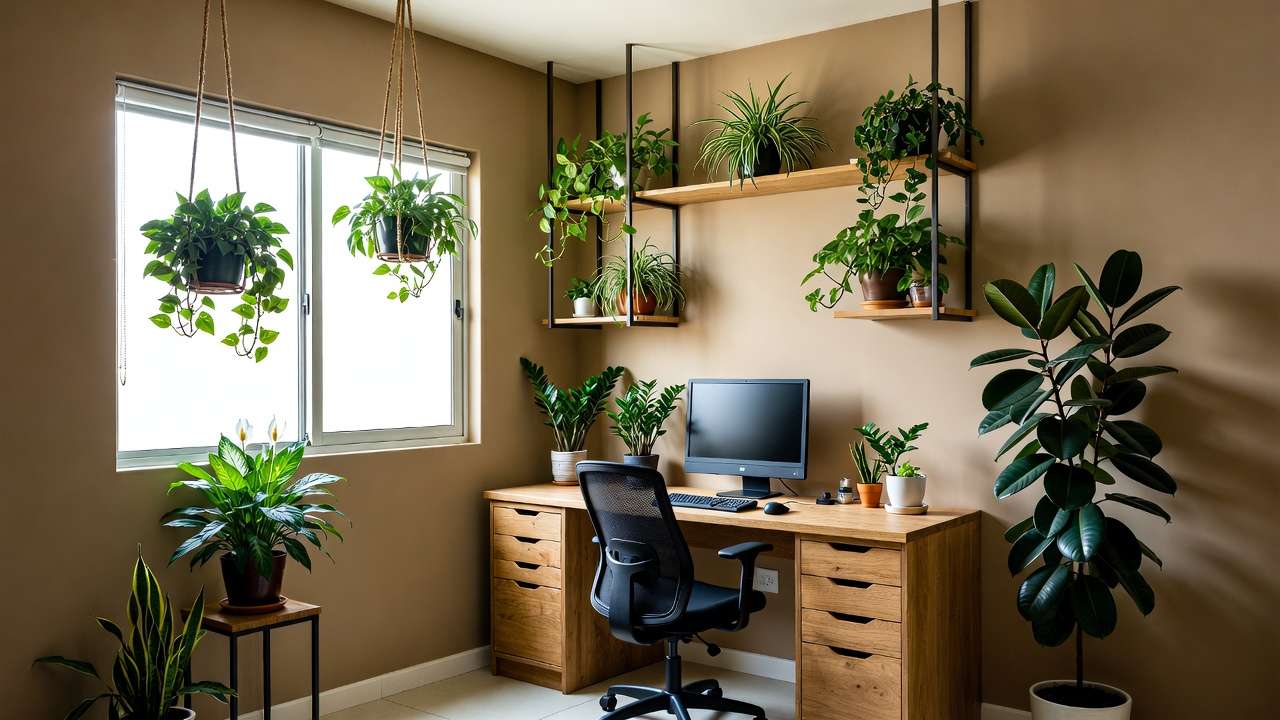
Rule of thumb: Aim for at least one plant within 3–6 feet of your main working position for noticeable mood and focus improvement.
Design Ideas to Make Your Workspace Feel Serene
- Minimalist Zen corner: One large rubber plant + small snake plant duo = clean, focused energy.
- Lush jungle vibe: Mix trailing pothos + spider plant babies cascading from shelves.
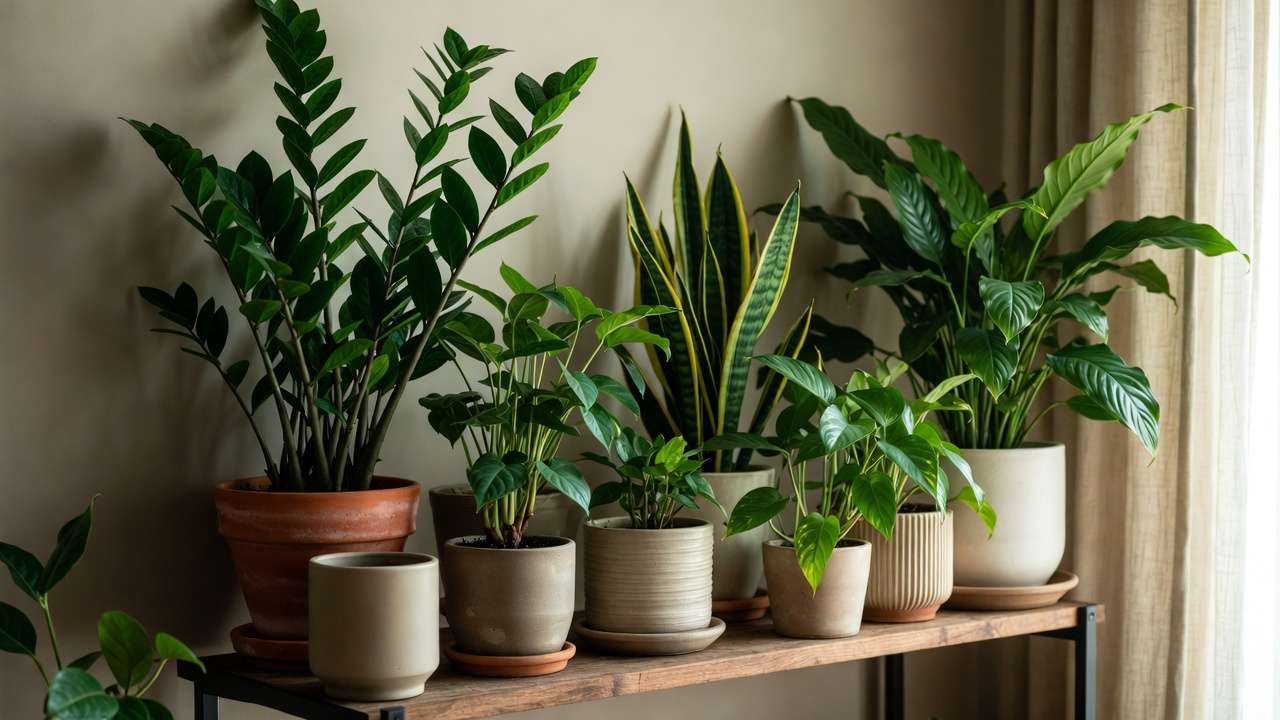
- Floating shelf gallery: Cluster 3–5 small pots (ZZ, philodendron, peace lily) at different heights.
- Video-call upgrade: Place a peace lily or rubber plant slightly behind and to the side — subtle professional greenery without clutter.
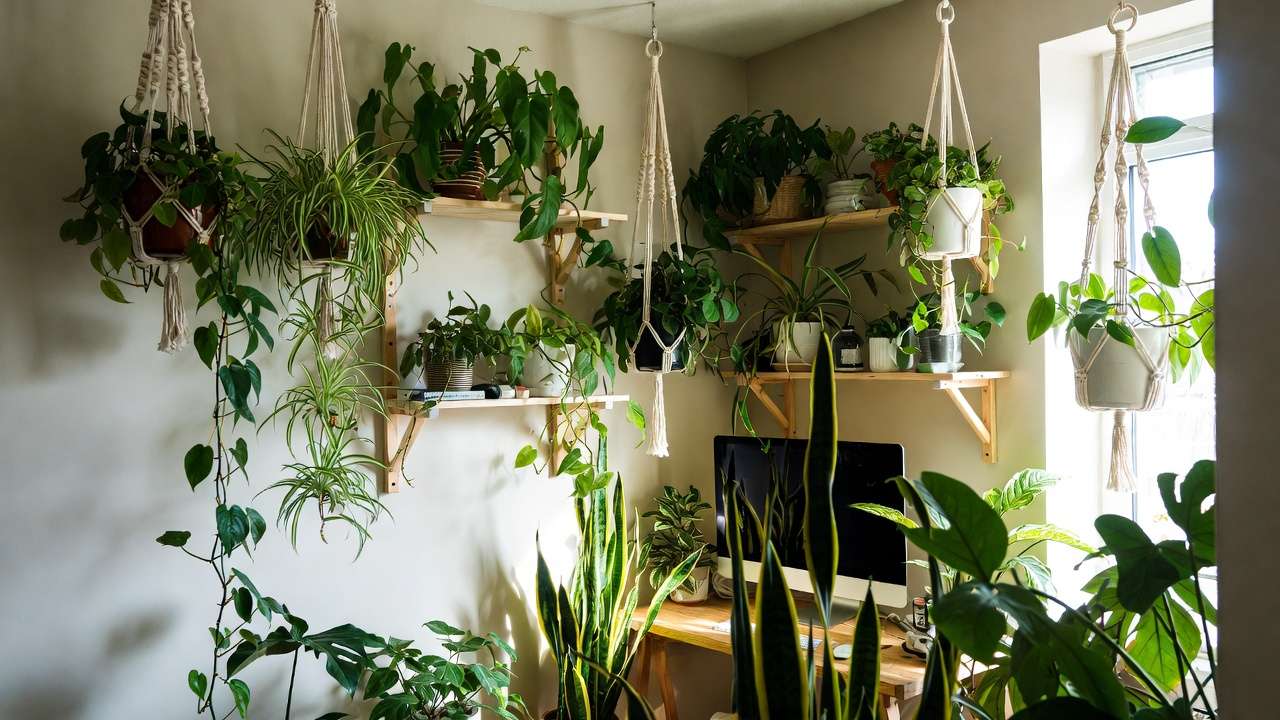
Pro tip: Use ceramic or concrete pots in neutral tones for a modern look that complements most home office aesthetics.
Practical Plant Care Tips for Busy Professionals 🌱📅
Essential Care Guide to Keep Your Office Plants Thriving The beauty of the plants recommended earlier is that they’re low-maintenance — but a little consistent care goes a long way toward maximizing their plant therapy benefits. Here’s a streamlined routine that fits into even the busiest remote-work schedule:
- Watering Wisely 💧 Overwatering kills more indoor plants than underwatering. Always check the top 1–2 inches of soil with your finger: if it’s dry, water thoroughly until it drains out the bottom. Use room-temperature water (cold shocks roots). Pro tip: Water in the morning so excess moisture evaporates during the day. Most of the top picks (snake, ZZ, pothos) prefer to dry out almost completely between waterings — set a calendar reminder every 10–14 days and adjust based on your home’s humidity.
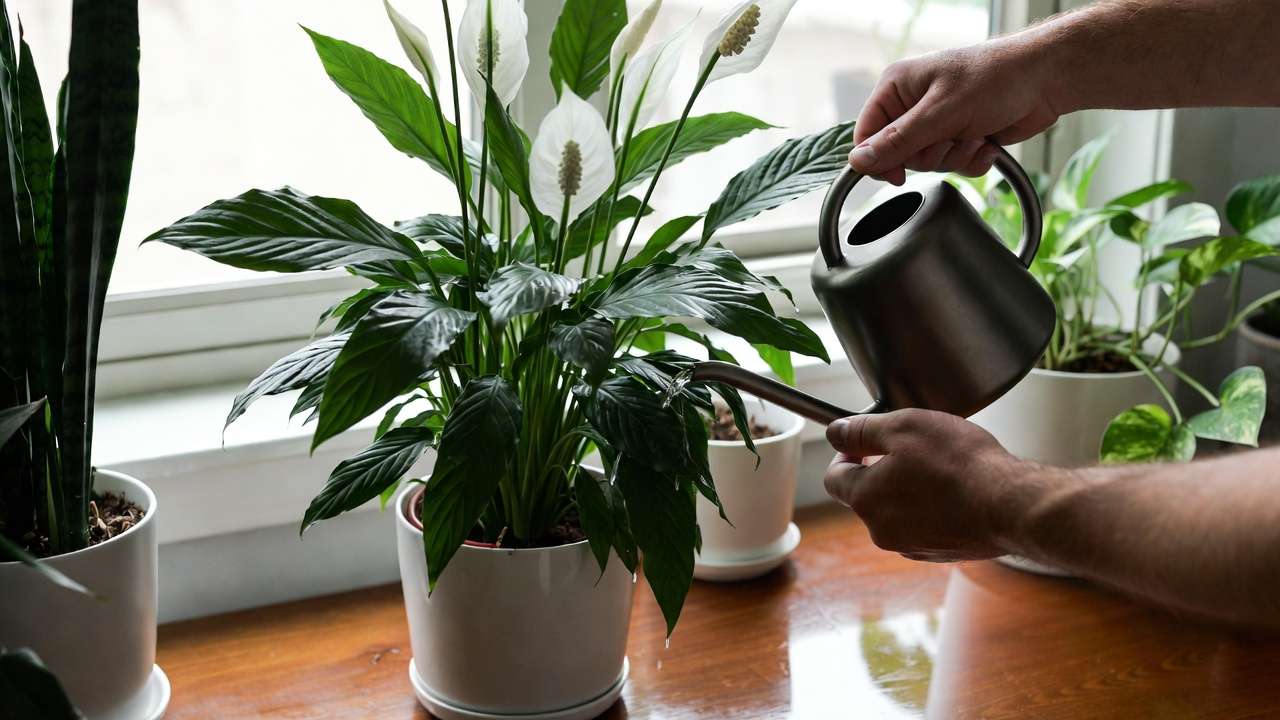
- Lighting Hacks for Windowless or Low-Light Offices ☀️ No south-facing window? No problem.
- Place light-loving plants (lavender, spider plant) as close to the brightest window as possible.
- Use full-spectrum LED grow lights (10–12 hours/day on a cheap timer) for corners or basement setups — they mimic natural daylight and keep plants happy.
- Rotate plants every 2–4 weeks so all sides get even light and growth stays balanced.
- Soil, Pots, and Fertilizing Basics 🪴 Use well-draining potting mix (add perlite or orchid bark for extra drainage). Terracotta or ceramic pots with drainage holes prevent root rot. Fertilize sparingly: once every 6–8 weeks in spring/summer with a balanced, diluted liquid houseplant fertilizer (e.g., 10-10-10 or organic seaweed extract). Skip winter feeding — plants rest.
- Humidity & Temperature 🌡️ Most home offices run 40–60% humidity — perfect for these plants. If your space is very dry (common with heating/AC), group plants together (they create a mini microclimate) or place a small tray of pebbles + water nearby (evaporative humidity without misting).
Troubleshooting Common Issues ⚠️ Even hardy plants can signal distress — here are quick fixes:
- Yellowing lower leaves → Usually overwatering or poor drainage. Let soil dry out fully, trim affected leaves, and improve airflow.
- Brown leaf tips → Low humidity or fluoride in tap water. Use filtered/distilled water or let tap water sit 24 hours before using.
- Leggy, stretched growth → Not enough light. Move closer to a window or add a grow light.
- Pests (tiny webs, sticky residue, white spots) → Spider mites, mealybugs, or scale. Wipe leaves with neem oil + water solution weekly until gone. Isolate the plant during treatment.
- Drooping → Thirsty (peace lily’s classic “I’m thirsty” droop) or overwatered roots. Check soil moisture immediately.
With these habits, your green teammates will stay lush and keep delivering stress relief and focus support for years.
Bonus: Advanced Plant Therapy Techniques & Enhancements 🌿🔮
Mindful Interactions to Amplify Benefits 🧘♀️ Take plant therapy to the next level with intentional engagement:
- 2-Minute Plant Breaks — Every 60–90 minutes, pause work to gently touch leaves, mist lightly, or simply observe new growth. This micro-mindfulness practice lowers heart rate and resets attention (similar to forest bathing indoors).
- Plant Journaling 📓 — Note how you feel before and after tending plants. Many people report clearer thinking and reduced afternoon slumps after consistent interaction.
- Scent Layering — Pair lavender or a scented geranium with deep breathing exercises for double aromatherapy + visual calm.
Scaling Up: Small to Large Green Setups
- Beginner (1–3 plants): Desk duo (snake + pothos) for instant impact.
- Intermediate (4–8 plants): Add shelves + hanging pots for immersive biophilia.
- Advanced jungle office: Floor plants (rubber, tall snake) + vertical wall pockets → near-full nature immersion that rivals outdoor breaks.
Studies show the more plants (and the greater variety), the stronger the cognitive and emotional benefits — so grow at your own pace!
Frequently Asked Questions (FAQs) ❓
How many plants do I need to notice real benefits? Even 1–2 well-placed desk plants deliver measurable stress reduction and mood improvement. For stronger air quality and productivity effects, aim for 1 plant per 10–15 m² of space (roughly 4–6 medium plants in a typical home office).
Are there pet-safe options for home offices? Yes! Spider plant, Boston fern (bonus honorable mention), areca palm, parlor palm, and most pothos varieties are non-toxic to cats and dogs. Avoid peace lily, philodendron, and rubber plant if pets chew leaves.
Can plants really improve my focus during Zoom calls? Absolutely. Greenery behind you reduces mental fatigue and makes the background feel more natural and calming — both for you and viewers. Research shows visible plants improve perceived workplace attractiveness and concentration.
What if my home office has no natural light at all? ZZ plant, snake plant, and pothos thrive in very low light. Supplement with affordable full-spectrum LEDs if you want more variety (lavender and spider plants especially appreciate them).
Do plants help with screen-induced eye strain? Yes — by increasing humidity and providing a visual “20-20-20” break (look at a plant 20 feet away for 20 seconds every 20 minutes), they ease dry eyes and fatigue.
How do I keep plants alive when I travel for work? Group them, water thoroughly before leaving, and use self-watering pots or wick systems for trips up to 2 weeks. ZZ and snake plants can survive 3–4 weeks without water.
Conclusion: Start Your Plant Therapy Journey Today 🌿💚
You don’t need a complete office overhaul to feel calmer, more focused, and less stressed during work hours. Plant therapy in home offices is one of the simplest, most evidence-backed upgrades available — combining cleaner air, natural beauty, and gentle biophilic healing that science continues to validate.
Pick just 2–3 plants from the list this week (start with a snake plant and pothos — they’re nearly foolproof). Place them where you’ll see them often, give them basic care, and notice how your energy, mood, and productivity shift over the next few weeks.
Your calmer, greener, more joyful workspace is waiting — and it starts with a single pot of green. 🌱✨
You’ve got this. Happy planting!











