
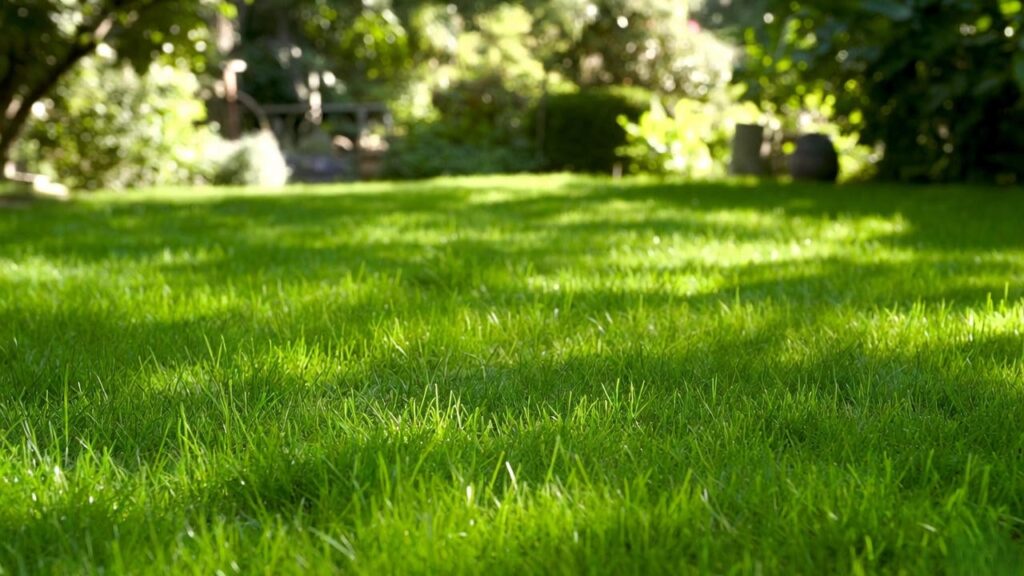
Picture this: Your lawn stays a vibrant emerald green all winter long, even as neighboring yards turn brown and barren, or your garden soil remains protected from harsh erosion while quietly building fertility for next season’s crops. That’s the magic of successfully planting annual ryegrass seed—a simple, affordable step that delivers dramatic results for homeowners and gardeners alike.
Annual ryegrass (Lolium multiflorum), often called Italian ryegrass, is a cool-season grass that’s prized for its lightning-fast germination (as quick as 3-10 days) and rapid establishment. Whether you’re overseeding a dormant warm-season lawn like Bermudagrass or Zoysia to maintain year-round color in southern regions, or using it as a winter cover crop to prevent soil erosion and scavenge nutrients, this versatile plant solves real problems like bare winter lawns, nutrient leaching, and compacted soil.
In this expert guide, backed by insights from agricultural extensions, university research (such as from Pennington Seed, Noble Research Institute, and Midwest Cover Crops Council), and proven field practices, we’ll cover everything you need for success. From timing and preparation to maintenance and termination, you’ll gain the knowledge to achieve a lush, healthy stand that enhances your landscape or garden.

What Is Annual Ryegrass and Why Plant It? 🌾
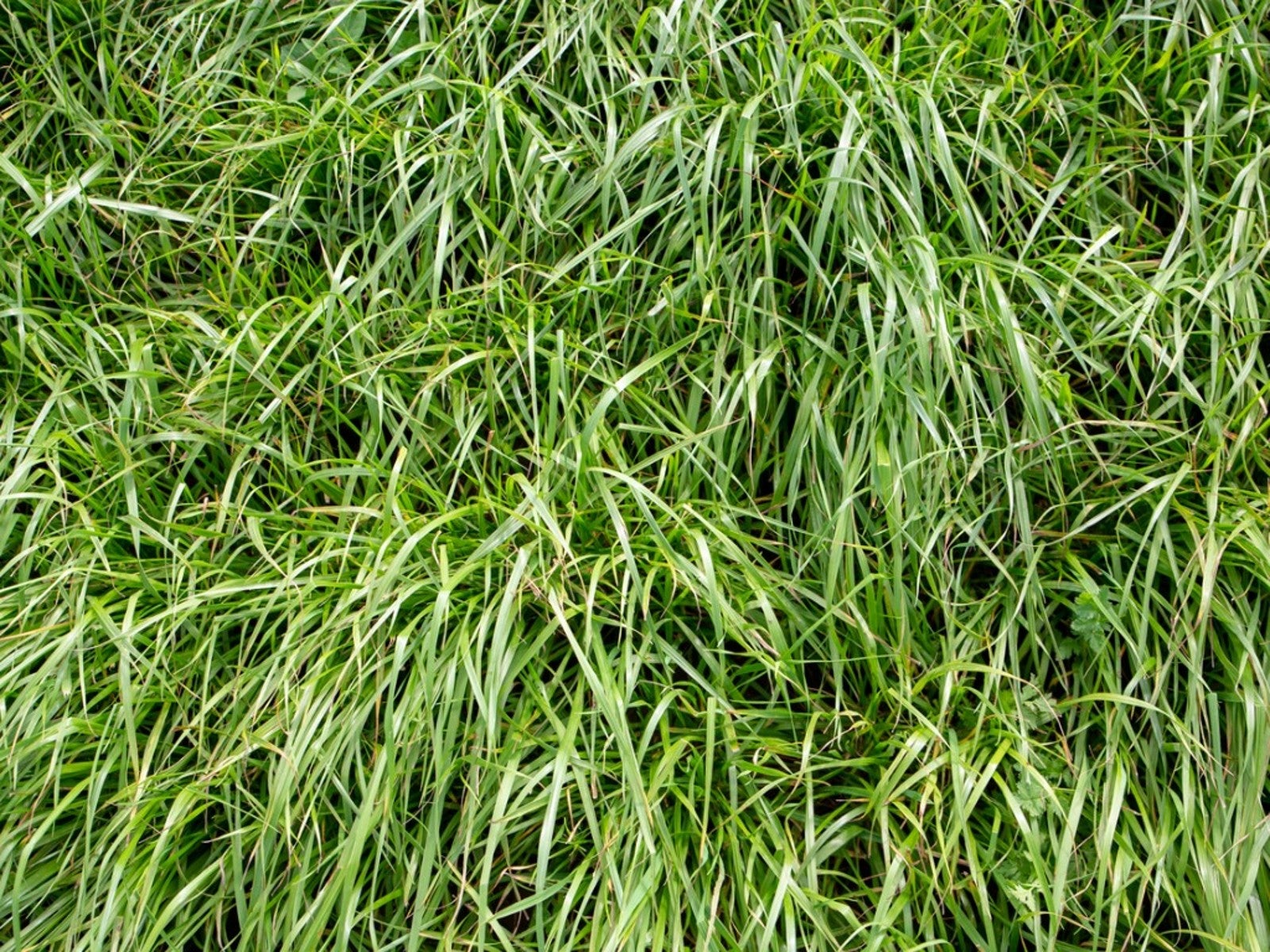
Annual ryegrass is a bunch-type cool-season grass native to southern Europe but widely adapted across temperate regions. It completes its life cycle in one year (or sometimes acts as a biennial in mild climates), growing vigorously in fall and spring before naturally dying off in summer heat.
Key Differences: Annual vs. Perennial Ryegrass ⚖️
While both are cool-season grasses, annual ryegrass is coarser in texture, lighter in color, and faster-establishing than perennial ryegrass. Perennial varieties return year after year and are often used for permanent northern lawns, whereas annual ryegrass excels in temporary roles like winter overseeding or cover cropping. Annual types are more affordable and produce more biomass quickly, making them ideal for soil-building projects.
Top Benefits of Annual Ryegrass 🌟
- Rapid Germination and Establishment: Emerges in 3-10 days, providing quick ground cover to prevent erosion on slopes or bare areas.
- Winter Overseeding Superstar: Keeps southern lawns (Bermudagrass, Zoysia) green during dormancy, tolerating light traffic and offering a playable surface.
- Superior Cover Crop Performance: Fibrous roots penetrate deeply (up to 3-4 feet in some cases), breaking compaction, scavenging excess nitrogen (preventing leaching), suppressing weeds, and adding organic matter when terminated.
- Soil Health Booster: Improves structure, increases water infiltration, and can recycle 30-90 lbs of nitrogen per acre for the next crop.
- Forage Option: High-quality grazing or hay for livestock in cool seasons.
Expert-backed evidence from the Noble Research Institute and SARE (Sustainable Agriculture Research and Education) highlights how annual ryegrass can produce significant root biomass, often outperforming other covers in wet soils and providing erosion control comparable to mechanical methods.
Best Time to Plant Annual Ryegrass Seed 🗓️
Timing is everything—plant at the optimal window for strong root development before winter stress.
Ideal Planting Windows 📅
Fall planting is preferred for most applications, allowing 45-60 days of growth before the first hard frost. Soil temperatures of 50-65°F trigger best germination.
- Northern/Midwest Regions: Mid-August to late September (post-harvest for cover crops).
- Southern/Transition Zones: Early September to late October for overseeding dormant warm-season grasses.
- Mild Coastal Areas: Up to mid-November if winters are gentle.
Spring planting is possible in cooler areas (March-April) for short-term cover, but fall yields better winter performance.
Pro Tip: Check local frost dates and soil temps—avoid hot summer planting (above 80°F) or deep winter (risk of winterkill without snow cover) ❄️. In 2025, with variable weather patterns, monitor forecasts closely for late fall opportunities.
Preparing Your Soil for Success 🛠️
Skipping prep leads to patchy stands—invest time here for professional results.
Step 1: Test Your Soil 🧪
Annual ryegrass thrives at pH 6.0-7.0 (tolerates 5.5-7.5). Test kits or lab analysis reveal needs; amend acidic soils with lime (fall application for spring reaction) or alkaline with sulfur.
Step 2: Clear and Till the Area 🚜
Remove debris, weeds, and residues. For new areas: Lightly till 4-6 inches. For overseeding: Mow low (1-1.5 inches), dethatch, and aerate to ensure seed-to-soil contact.
Step 3: Apply Starter Fertilizer 🌱
Use a balanced starter like 10-20-10. Incorporate 30-50 lbs/acre nitrogen for vigorous fall growth on low-fertility soils. Soil tests guide exact rates to avoid excess.
Step-by-Step Guide to Planting Annual Ryegrass Seed 👣
Now that your soil is prepped, it’s time for the main event: planting. Follow these proven steps for even distribution and optimal seed-to-soil contact—the foundation of a thick, healthy stand.
Choosing Quality Seed 🛒
Not all annual ryegrass seed is equal. Opt for certified, endophyte-free varieties to avoid disease issues. Modern tetraploid cultivars (like ‘Marshall’, ‘Koga’, or ‘Gulf’) offer improved disease resistance, better winter hardiness, and higher yields compared to older diploids. Check for high germination rates (85%+) on the label and recent test dates. Sources like Pennington, Barenbrug, or local co-ops provide reliable options.
For overseeding lawns, choose finer-textured blends; for cover crops, select high-biomass types.
Seeding Rates 📏
- New Establishments or Cover Crops: 20-40 lbs per acre (8-10 lbs per 1,000 sq ft for lawns).
- Overseeding Existing Lawns: 5-15 lbs per 1,000 sq ft—higher rates for thicker winter color.
- Large Fields: 25-35 lbs/acre drilled; up to 40 for broadcast.
Adjust higher in poor soils or for quicker cover; lower for cost savings in good conditions.
Planting Methods 🔧
Several methods work well—choose based on your scale and equipment.
- Drilling: The gold standard for precision. Use a grain drill set to ¼-½ inch depth. Provides uniform placement and excellent germination.
- Broadcast Seeding: Spread seed evenly with a spreader, then lightly rake or drag for incorporation. Follow with rolling for firm contact.
- No-Till/Aerial: Great for cover cropping into standing residue—use specialized equipment for interseeding.
Here’s a visual of broadcast overseeding in action:

Depth and Coverage Rules 📐
Plant shallow—¼ to ½ inch max. Deeper than ¾ inch drastically reduces emergence. After spreading, ensure good seed-to-soil contact by rolling, cultipacking, or light raking. This step is crucial; poor contact leads to drying out and failure.
Immediately water lightly to settle seed and initiate germination 💧.
Post-Planting Care: Watering, Mowing, and Fertilizing 💦
Establishment doesn’t end at planting—consistent care ensures lush growth.
Watering Schedule 🚿
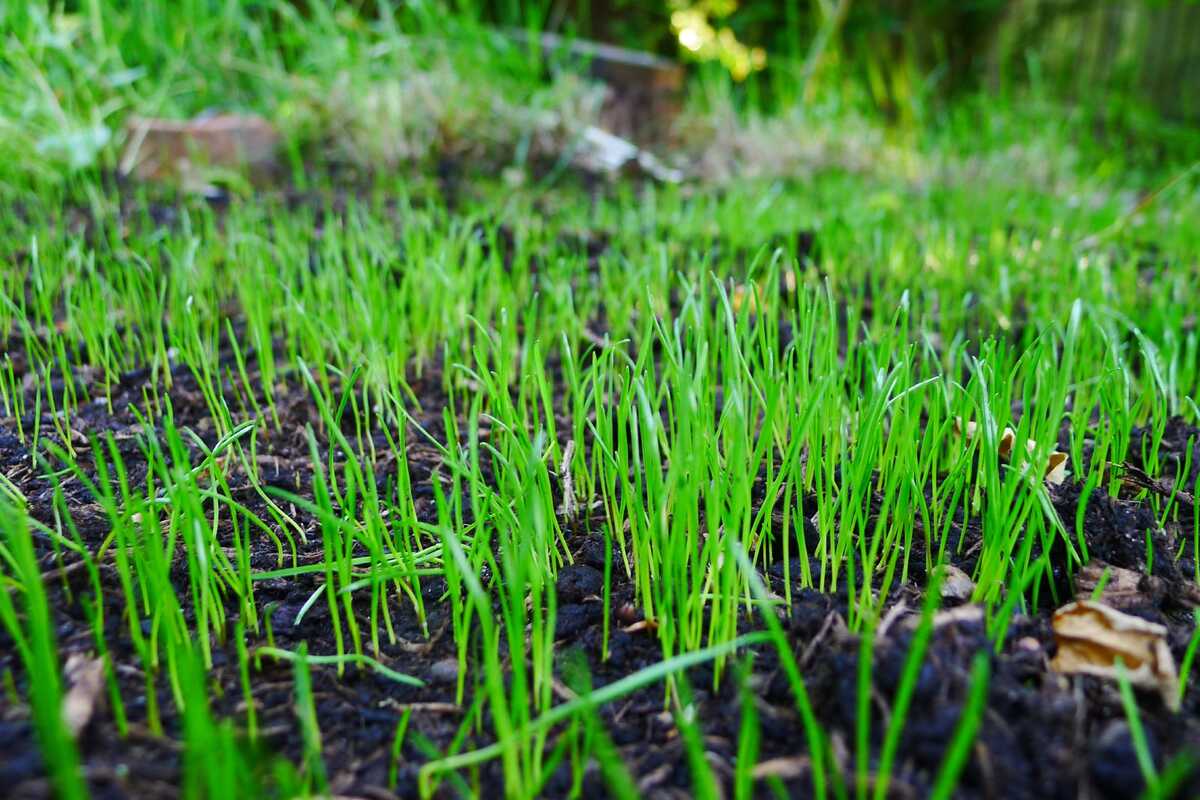
- Pre-Germination: Keep the top ½ inch moist with light, frequent watering (1-2 times daily if no rain). Avoid puddling.
- After Emergence (7-14 days): Reduce to deeper, less frequent sessions (½-1 inch weekly) to encourage root depth.
- Established Stand: 1 inch per week, supplemented during dry spells.
In hot fall weather, monitor closely—drought stress kills young seedlings fast.
Mowing Tips ✂️
Wait until grass reaches 4-5 inches before first mow—cut to 3 inches. Maintain at 2-3 inches for dense growth. Sharp blades prevent tearing. For overseeded lawns, mow regularly to promote tillering.

Fertilization Plan 🌿
- At Planting: Incorporate starter fertilizer.
- 4-6 Weeks Post-Emergence: Apply ½-1 lb nitrogen per 1,000 sq ft for fall/winter boost.
- Spring: Light nitrogen if needed, but taper off to avoid excessive growth that competes with permanent grass.
Always base rates on soil tests to prevent runoff.
Using Annual Ryegrass as a Cover Crop vs. Overseeding Lawn 🌳
Annual ryegrass shines in two primary roles—understanding the nuances maximizes success.
As a Cover Crop 🌍
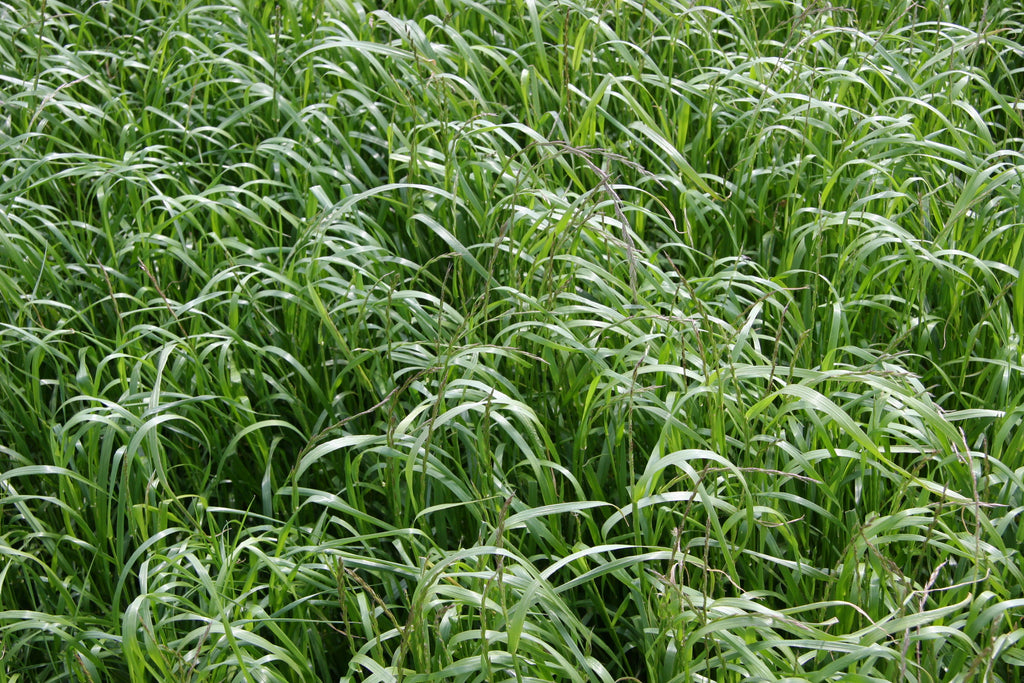
Plant after cash crop harvest to hold soil over winter. It excels in wet conditions where other covers struggle, with deep roots alleviating compaction. In spring, terminate before it heads out (typically April-May) using glyphosate, tillage, or roller-crimping for no-till systems. This releases nutrients for the following crop.
Overseeding Dormant Lawns 🏡
In southern climates, scalp warm-season grass (Bermuda, Zoysia) to ½-1 inch before seeding. Ryegrass provides vibrant winter color and light playability. In spring, gradually lower mowing height as temperatures rise to encourage dormancy break and transition back.

Common Mistakes to Avoid (And How to Fix Them) ⚠️
Even experienced growers slip up—here’s how to sidestep pitfalls:
- Planting Too Deep: Seeds buried >½ inch fail to emerge. Fix: Reseed shallowly in thin areas.
- Poor Timing: Too late risks winterkill; too early invites heat stress. Fix: Use local extension frost maps.
- Inadequate Seed Contact: Broadcast without rolling leads to bird loss/drying. Fix: Always firm the seedbed.
- Over-Fertilizing: Excess nitrogen causes rank growth and disease. Fix: Follow soil test recommendations.
- Allowing Seed Set: Mature plants reseed aggressively, becoming weedy. Fix: Terminate before heading.
Troubleshooting Problems 🛠️
- Slow/Patchy Germination: Often moisture or temperature issues. Reseed thin spots and improve watering.
- Yellowing: Nitrogen deficiency—apply light feed.
- Disease (e.g., Gray Leaf Spot, Crown Rust): Choose resistant varieties; improve air circulation with proper mowing.
- Weed Invasion: Dense ryegrass suppresses most, but pre-emergent herbicides (safe ones) help if needed.
Expert Tips for Maximum Success ⭐
- Mix with crimson clover or hairy vetch for nitrogen fixation and biodiversity.
- Use on slopes for superior erosion control—roots hold soil better than many covers.
- For livestock, graze rotationally once established (8-10 inches tall).
- Monitor spring growth: Terminate at jointing stage for easiest kill.
When and How Annual Ryegrass Dies Off ☀️
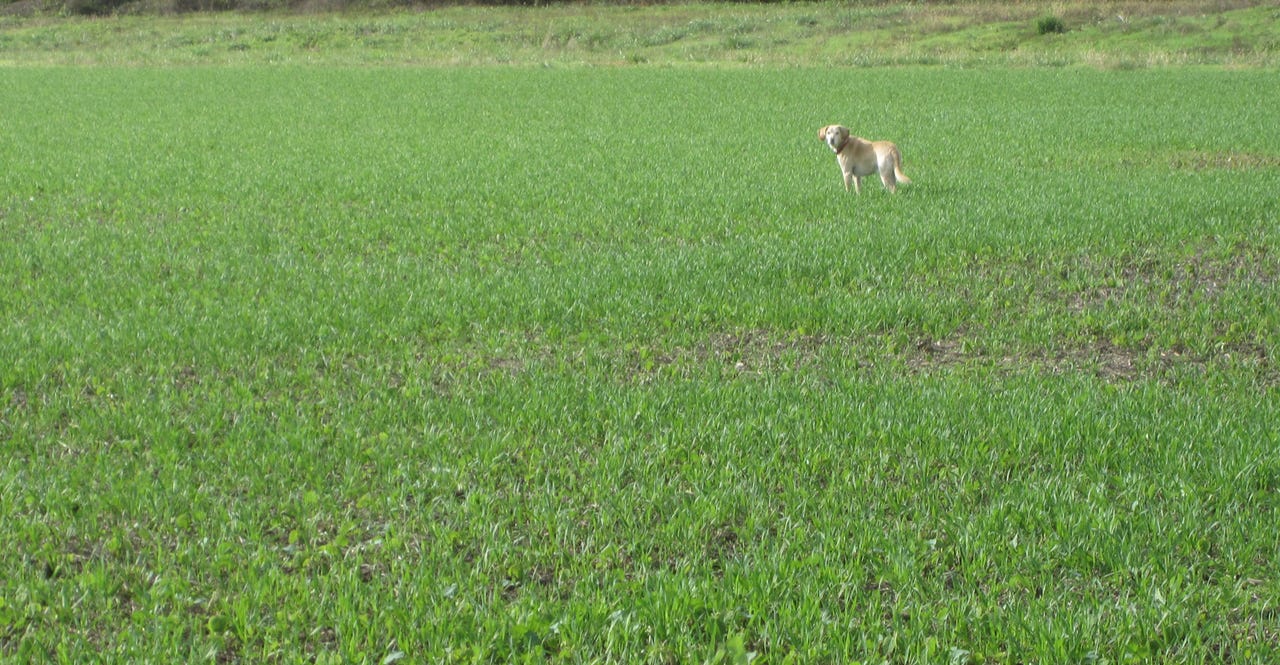
As a true annual, it naturally senesces when daytime temps consistently exceed 85-90°F (usually May-June in most regions). Stems yellow and die back. For overseeded lawns, this allows warm-season grass recovery—aid by low mowing and light fertilization of the base turf.
Frequently Asked Questions (FAQs) ❓
Can annual ryegrass become invasive or weedy? Yes, if allowed to mature and set seed. Always terminate before heading to prevent volunteers.
Is annual ryegrass safe for pets and livestock? Generally yes—it’s non-toxic and nutritious for grazing. Avoid fields with ergot fungus (rare in modern seed).
How long does a stand last? One full season: vigorous fall-spring growth, natural die-off in early summer heat.
What’s the best variety for my area? Consult local extension services; late-maturing, winter-hardy tetraploids perform best in most zones.
Can I plant in spring? Possible for short-term cover in cool regions, but fall planting yields superior results.
Conclusion: Grow Lush and Healthy with Annual Ryegrass! 🌱
Mastering planting annual ryegrass seed unlocks year-round lawn beauty or powerful soil protection with minimal effort and cost. By following this detailed, research-backed guide—from optimal timing and preparation to careful maintenance and timely termination—you’ll achieve professional-level results that enhance your landscape’s health and appearance.
Whether battling winter brown patches or building better garden soil, annual ryegrass delivers reliable, impressive performance. Start planning your planting today, and enjoy that lush green reward all season long. Happy growing! 🍀🌿











