
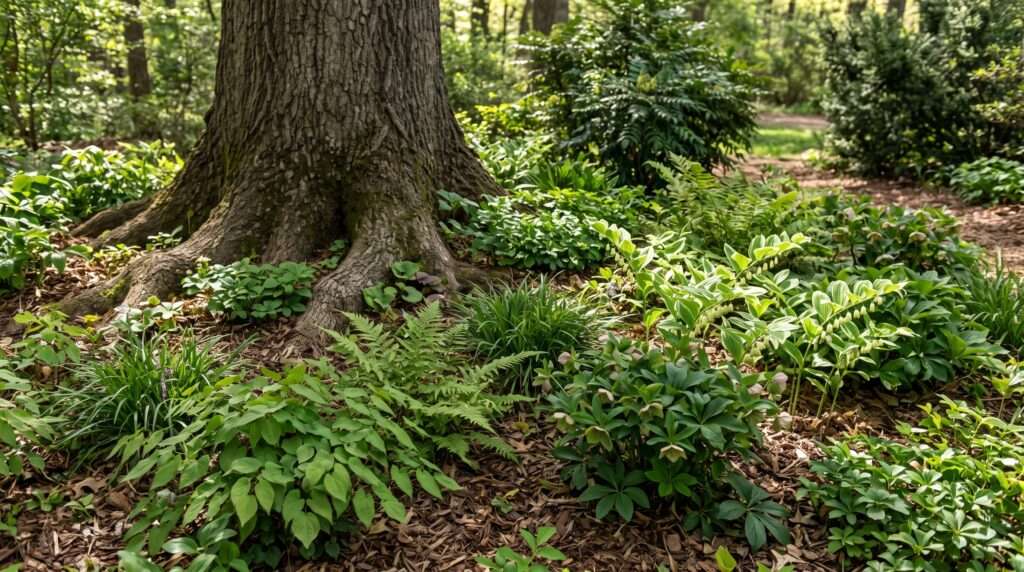
If you have a large, mature tree in your yard, you are likely intimately familiar with the dreaded garden “dead zone.” It’s that dusty, barren patch of earth directly beneath the canopy where grass refuses to grow, and expensive nursery finds wither within a matter of weeks. You water, you fertilize, and you hope for the best—but nothing seems to survive.
Don’t give up on your landscape just yet. Finding plants for dry shade is the ultimate gardening challenge, but it is far from impossible.
The secret isn’t fighting the tree; it’s choosing resilient, adaptive species that are naturally engineered to handle extreme root competition and low moisture. In this comprehensive guide, we will break down the horticultural science of why these dead zones occur, how to safely prep the soil without harming your trees, and provide you with a curated list of 15 battle-tested, unkillable plants that will transform your dusty yard into a lush, low-maintenance woodland oasis. ✨
Understanding Dry Shade: Why It Happens & How to Work With It 🍂
Before planting a single root ball, it is critical to understand the environment you are working with. Dry shade is widely considered the most difficult microclimate in landscaping because it hits plants with a brutal double-whammy: lack of sunlight and lack of water.
The “Umbrella Effect” ☔
Dense tree canopies—particularly those of evergreens, maples, and oaks—act like giant structural umbrellas. When it rains, the broad leaves and thick branches catch the precipitation, causing it to evaporate or run off the outer drip line of the tree rather than soaking into the soil near the trunk. As a result, the soil underneath a mature tree may receive less than 20% of natural rainfall compared to the rest of your garden.
Fierce Root Competition 🌲
Even if water does reach the ground, your new plants have to fight a losing battle against the tree itself. Large trees have extensive, shallow networks of fibrous feeder roots. These aggressive roots sit right near the soil surface, rapidly siphoning away every drop of moisture and every ounce of available nutrients, leaving nothing behind for delicate ornamental plants.
Expert Insight Box 💡 Horticultural Best Practice: Stop treating dry shade like a flaw in your landscape that needs to be “fixed.” Instead, treat it as a specific, naturally occurring ecosystem. By shifting your mindset and selecting woodland-native or deeply adaptive understory species, you can build a resilient shade garden that thrives on neglect.
Ground Rules: Prepping Soil Under Mature Trees Without Causing Harm 🌱
A major mistake many gardeners make is trying to radically change the soil under a tree to accommodate new plants. This usually results in severely damaging—or even slowly killing—the mature tree. To maintain strong E-E-A-T (Experience, Expertise, Authoritativeness, and Trustworthiness) in your gardening practices, follow these strict ground rules:
1. The “No-Till” Rule 🛑
Never, under any circumstances, use a rototiller under the canopy of an established tree. Because 80% of a tree’s feeder roots reside in the top 12 to 18 inches of soil, tilling will violently sever these lifelines. This can lead to tree stress, canopy dieback, and an increased susceptibility to pests and diseases like root rot and fungal infections.
2. Topdressing Safely 🍂
If the soil is dusty and nutrient-depleted, you can improve it by “topdressing.” Gently spread a layer of high-quality organic matter—such as aged compost, leaf mold, or finely shredded pine bark—over the soil surface.
-
The Golden Rule: Never add more than 2 to 3 inches of new soil or compost over the tree’s root zone. Piling thick layers of soil over roots, especially near the trunk (the root flare), will suffocate the tree by cutting off oxygen exchange.
3. Creating “Planting Pockets” 🕳️
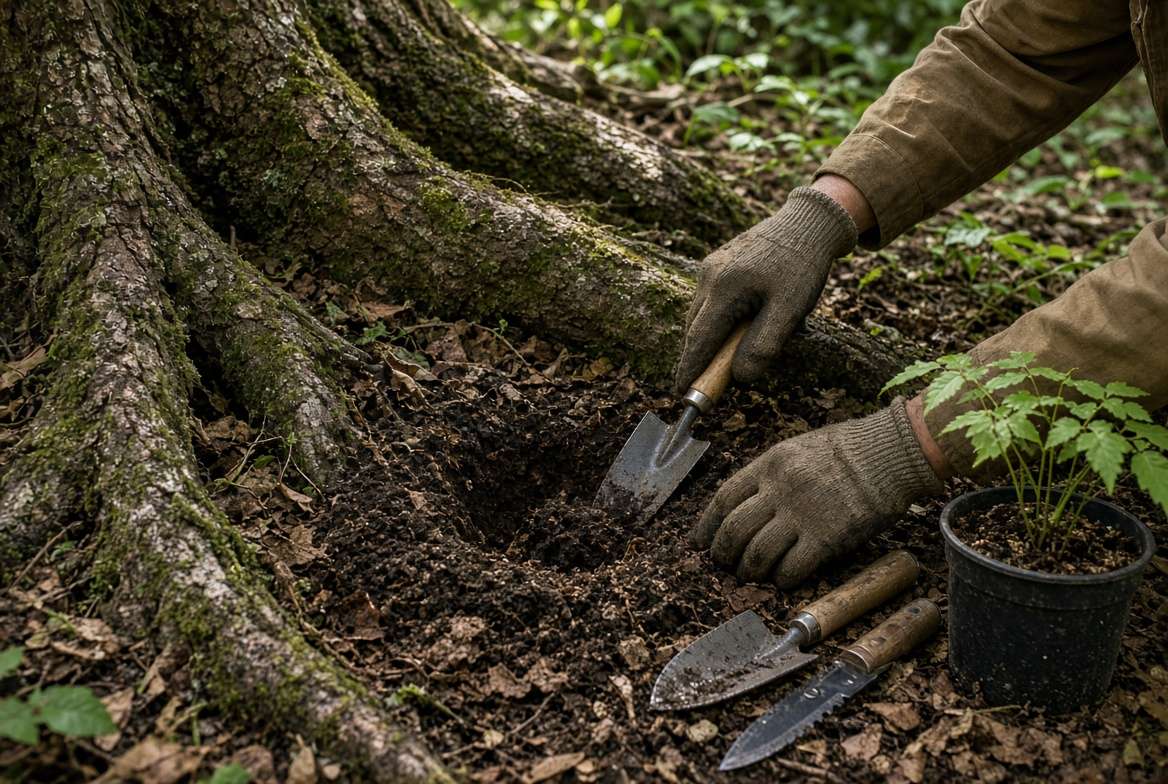
Instead of trying to dig a continuous, deep garden bed, create strategic “planting pockets.” Using a hand trowel or a soil knife (Hori Hori), gently probe the soil between the thick, woody tree roots. When you find a natural gap, dig a small hole just large enough for your new plant. If you encounter a root larger than two inches in diameter, do not cut it; simply move your planting pocket a few inches over.
The Top 15 Unkillable Plants for Dry Shade 🌿
Now that your soil is prepped and your tree is safe, it’s time to select the right flora. These 15 plants have been chosen for their extreme drought tolerance, shade adaptability, and ability to hold their own against aggressive tree roots.
Category 1: Aggressive & Evergreen Groundcovers 🍃
When you want to replace a struggling lawn or cover a large, dusty expanse quickly, these vigorous groundcovers are your best line of defense.
1. Epimedium (Barrenwort) 🧚♀️
-
Hardiness Zones: 4-9
-
Light Requirements: Dappled to full shade
-
Why it Works: Epimedium is the undisputed champion of dry shade. While it looks delicate with its wiry stems and heart-shaped foliage, it is actually as tough as nails. The rhizomatous root system pushes right through dense tree roots. In early spring, it produces stunning, fairy-like flowers in shades of yellow, pink, or white. Once established, it requires practically zero supplemental watering.
2. Liriope spicata (Creeping Lilyturf) 🌾
-
Hardiness Zones: 4-10
-
Light Requirements: Part sun to heavy shade
-
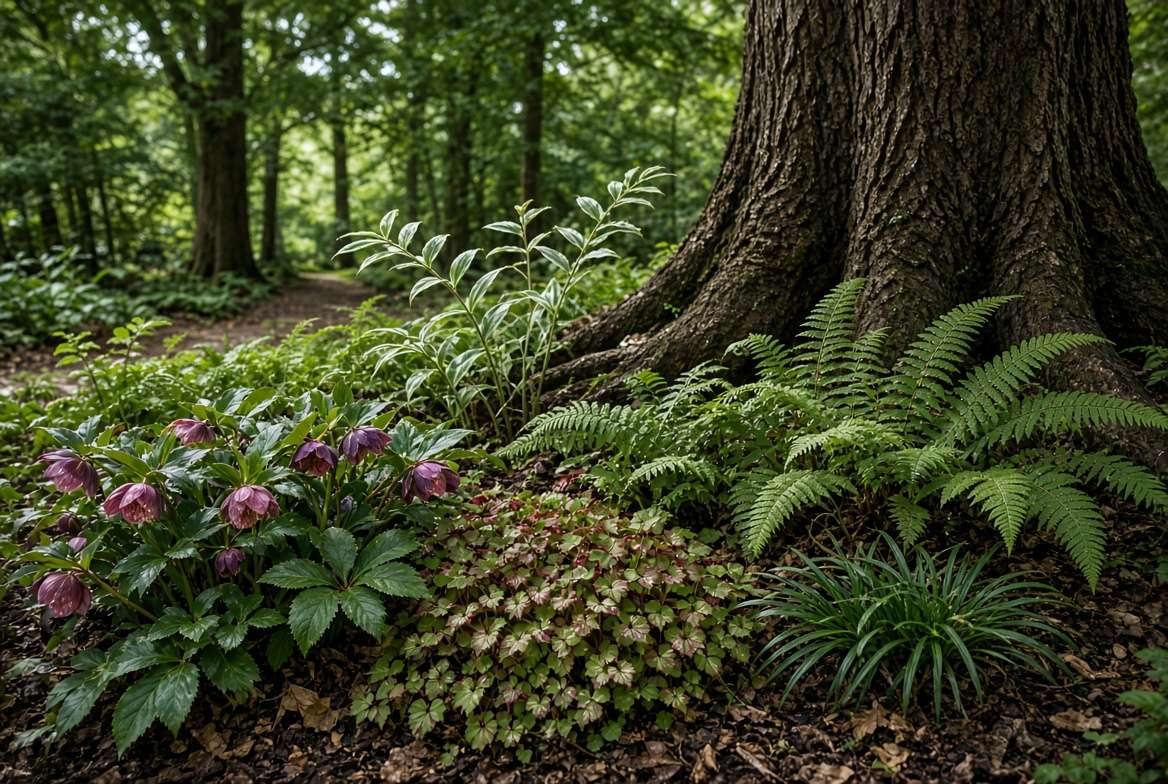
Why it Works: If you want a grass-like texture without the hassle of turfgrass, Liriope is the answer. It forms a dense, weed-blocking mat that holds soil in place and prevents erosion. It spreads via underground runners, making it highly effective at weaving through difficult tree roots. It also produces charming spikes of purple flowers in late summer.
3. Vinca minor (Periwinkle) 🌸
-
Hardiness Zones: 4-9
-
Light Requirements: Part shade to full shade
-
Why it Works: Vinca minor is a trailing, evergreen vine that creates a lush, dark-green carpet year-round. It roots at the leaf nodes, allowing it to easily scramble over uneven ground and exposed tree roots. In early spring, it bursts into a blanket of beautiful, star-shaped purple or blue blooms. It is highly drought-tolerant and naturally deer-resistant.
4. Pachysandra terminalis (Japanese Spurge) 🌿
-
Hardiness Zones: 4-8
-
Light Requirements: Part shade to full shade
-
Why it Works: This is the classic, architectural groundcover favored by professional landscape designers for planting under large evergreen trees (like pines or spruces). It features glossy, jagged-edged green leaves that look pristine even in the deepest shade. It spreads via underground stems to form a thick, uniform colony that completely outcompetes weeds.
5. Asarum europaeum (European Wild Ginger) 🪷
-
Hardiness Zones: 4-8
-
Light Requirements: Full shade
-
Why it Works: For a high-end, polished look, European Wild Ginger is unmatched. It features highly reflective, glossy, kidney-shaped leaves that instantly brighten up dark corners of the yard. While it grows a bit slower than Vinca or Liriope, it creates a stunning, low-growing mat that tolerates parched soil brilliantly once its root system is settled.
Category 2: Structural & Flowering Perennials 🌺
Groundcovers are excellent for creating a base layer, but a truly dynamic landscape requires height, texture, and seasonal interest. These tough perennials bring architectural structure and beautiful blooms to your dry shade beds without demanding extra moisture.
6. Helleborus (Lenten Rose) 🥀
-
Hardiness Zones: 4-9
-
Light Requirements: Part shade to full shade
-
Why it Works: Hellebores are a staple of E-E-A-T-compliant woodland garden designs, and for good reason. They boast thick, leathery, evergreen leaves that expertly conserve water, allowing them to shrug off drought conditions. Even better, they bloom incredibly early—often while snow is still on the ground in late winter or early spring—providing beautiful cup-shaped flowers in shades of plum, white, pink, and pale green when the rest of the garden is entirely dormant.
7. Dryopteris marginalis (Marginal Wood Fern) 🪴
-
Hardiness Zones: 3-8
-
Light Requirements: Part shade to full shade
-
Why it Works: When most people think of ferns, they imagine water-loving bog plants. The Marginal Wood Fern, however, breaks all the rules. Native to rocky, shaded crevices, this fern actually prefers excellent drainage and tolerates surprisingly dry soils once established. Its elegant, arching, blue-green fronds add a soft, feathery texture that contrasts beautifully with broad-leafed perennials.
8. Symphytum grandiflorum (Large-flowered Comfrey) 🌼
-
Hardiness Zones: 4-8
-
Light Requirements: Part shade to full shade
-
Why it Works: This rugged, sprawling perennial features heavily textured, bristly leaves that are highly effective at suppressing weeds around tree bases. It is equipped with a deep taproot that allows it to mine for moisture far below the shallow, competitive roots of canopy trees. In spring, it produces lovely clusters of nodding, tubular yellow or creamy-white flowers that attract early pollinators.
9. Bergenia cordifolia (Pigsqueak) 🐷
-
Hardiness Zones: 3-8
-
Light Requirements: Part sun to full shade
-
Why it Works: Bergenia acts almost like a hardy succulent for your shade garden. It utilizes its large, thick, cabbage-like leaves to store water, providing immense resilience during dry spells. The glossy green foliage turns a stunning purplish-bronze in the fall and winter, and bright pink flower stalks emerge in early spring. Its bold texture makes it a fantastic structural accent plant.
10. Polygonatum odoratum (Variegated Solomon’s Seal) 🎋
-
Hardiness Zones: 3-9
-
Light Requirements: Part shade to full shade
-
Why it Works: This elegant perennial features graceful, arching stems lined with attractive green leaves edged in crisp white. In late spring, delicate, bell-shaped white flowers dangle beneath the stems. Solomon’s Seal spreads slowly via thick rhizomes that store nutrients and moisture, allowing it to easily navigate through difficult, root-filled soil.
Category 3: Tough, Drought-Tolerant Shrubs 🌳
To complete a well-layered woodland design, you need an understory layer. These rugged shrubs provide vital winter structure, privacy screening, and wildlife value, all while surviving on minimal rainfall.
11. Aucuba japonica (Gold Dust Plant) ✨
-
Hardiness Zones: 6-10
-
Light Requirements: Part shade to full shade
-
Why it Works: If the area under your tree looks like a gloomy black hole, the Gold Dust Plant will instantly illuminate it. Its large, glossy evergreen leaves are heavily speckled with bright yellow variegation that reflects whatever ambient light is available. It is incredibly tolerant of poor soil, air pollution, and severe root competition, making it a favorite for urban dry shade environments.
12. Mahonia aquifolium (Oregon Grape) 🍇
-
Hardiness Zones: 5-9
-
Light Requirements: Part shade to full shade
-
Why it Works: This broadleaf evergreen shrub features spiky, holly-like leaves that deer won’t touch. It is exceptionally drought-tolerant once established. Mahonia offers incredible multi-season interest: bright yellow, fragrant flower spikes in early spring, followed by dusty blue berries in summer, and foliage that often turns a rich burgundy hue in the winter.
13. Taxus baccata (Yew – specifically spreading varieties) 🌲
-
Hardiness Zones: 5-7
-
Light Requirements: Sun to full shade
-
Why it Works: Yews are the workhorses of structural landscaping. While upright varieties make great hedges, the low, spreading varieties (like ‘Repandens’) are perfect for dry shade. They offer deep, dark green evergreen needles that create a sophisticated backdrop for lighter-colored perennials. They are famously adaptable to a wide range of soil conditions, including dry, root-filled zones.
14. Symphoricarpos albus (Snowberry) ❄️
-
Hardiness Zones: 3-7
-
Light Requirements: Part shade to full shade
-
Why it Works: Snowberry is a tough-as-nails native deciduous shrub that actively colonizes difficult, dry banks and heavily shaded slopes. While its small pink summer flowers are unassuming, it steals the show in autumn and winter when it produces clusters of striking, pure-white, plump berries that persist on the bare stems long after the leaves have fallen.
15. Kerria japonica (Japanese Kerria) 🌼
-
Hardiness Zones: 4-9
-
Light Requirements: Part shade to full shade
-
Why it Works: Many shade shrubs lack vibrant floral displays, but Japanese Kerria is an exception. It bursts into a profusion of bright, golden-yellow flowers in mid-spring, resembling tiny roses. Even better, its arching stems remain a vibrant grassy-green all winter long, providing gorgeous color against the snow under large deciduous trees.
The “First-Year Rule”: How to Establish Dry Shade Plants 💧
Here is a critical piece of landscaping truth that separates novices from experts: “Drought-tolerant” does not mean “no watering ever.”
When you purchase a plant from a nursery, it has lived its entire life in a pampered greenhouse environment, receiving daily irrigation and premium potting soil. If you drop it into a bone-dry, root-filled hole under an oak tree and walk away, it will go into severe shock and die. You must guide these plants through their transition phase.
The Watering Schedule 🚿
For the first 12 months (the establishment period), you must water your dry shade plants deliberately.
-
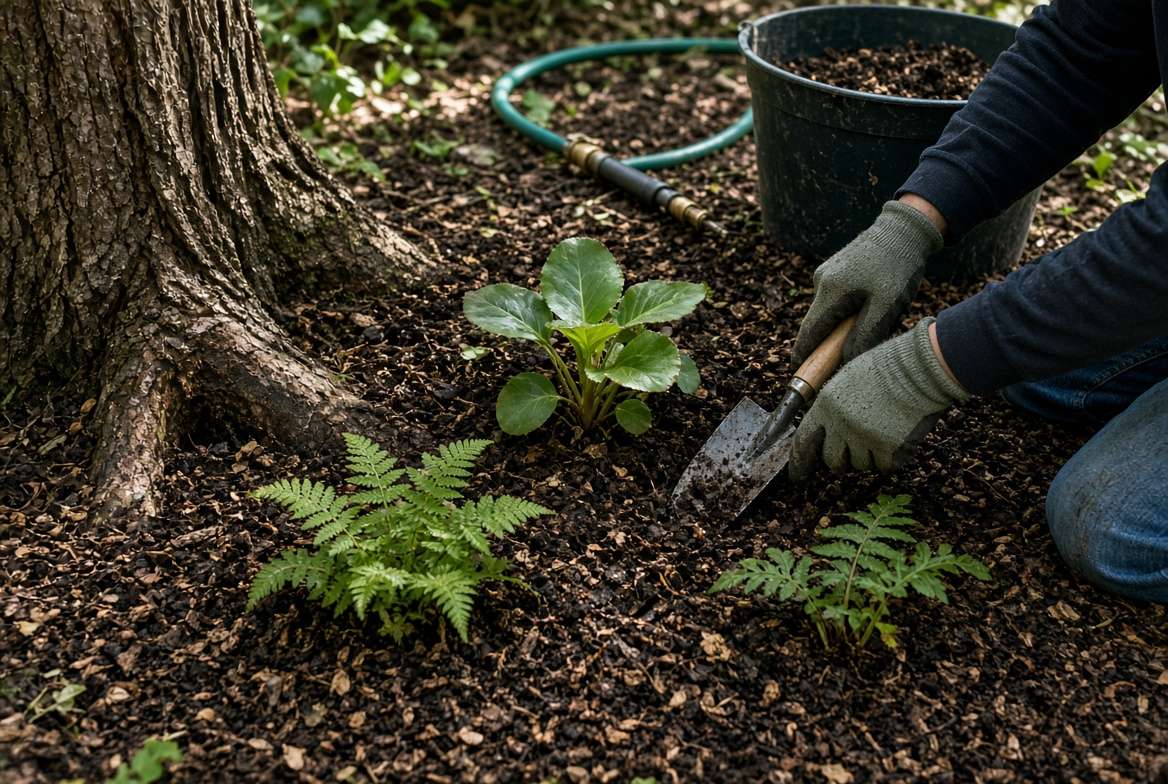
Deep, Infrequent Soaking: Do not rely on quick daily sprinkles from a hose. Instead, provide a slow, deep soaking right at the base of the new plant once or twice a week. This encourages the roots to grow downward rather than staying dangerously close to the dry surface.
Mulching Magic 🍂
Mulch is your ultimate secret weapon in the fight for soil moisture. Immediately after planting, apply a 2 to 3-inch layer of organic mulch, such as shredded hardwood bark, leaf mold, or pine straw, over the root zone of your new plants.
-
Why it Matters: Mulch acts as an insulating blanket, dramatically reducing soil temperature and preventing water from evaporating into the air. Ensure you keep the mulch pulled a few inches away from the actual stems or crowns of the plants to prevent stem rot.
Advanced Design Tips for Landscaping Under Trees 🎨
Transforming a barren patch into an aesthetic masterpiece requires more than just picking tough plants. Use these professional landscape design principles to elevate your dry shade garden:
Embrace the Container Garden 🪴
Sometimes, the tree roots are simply too massive and dense to dig even small planting pockets. Rather than risking damage to the tree, utilize low-profile, wide planters. Fill these containers with a high-quality, moisture-retaining potting soil mix and plant shade-loving annuals like Begonias, Coleus, or Impatiens. Nestling these pots right into the groundcover layer provides an instant pop of color without fighting the tree roots.
Use Light-Reflecting Colors ⚪🟡
Deep shade visually shrinks a space. To make the area under your tree feel larger and more inviting, heavily feature plants with variegated foliage (whites, creams, and yellows). Plants like Aucuba japonica or Polygonatum odoratum act like garden mirrors, catching and amplifying the ambient light.
Layering for Depth 🌲
Replicate the natural structure of a forest edge by utilizing the “Rule of Three Layers.”
-
The Canopy Layer: Your existing mature tree.
-
The Understory Layer: A few well-placed structural shrubs (like Mahonia or Yew) to provide height and winter interest.
-
The Carpet Layer: A sweeping mass of groundcovers (like Epimedium or Vinca) to tie the design together and suppress weeds.
Frequently Asked Questions (FAQs) About Dry Shade Gardening ❓
Can I grow grass in dry shade? While turfgrass generally performs poorly under mature trees, fine fescues (like creeping red fescue or Chewings fescue) are the most shade-tolerant grass varieties available. However, they will still require supplemental watering during dry spells. For a truly low-maintenance solution, replacing grass with an evergreen groundcover like Pachysandra or Liriope is vastly superior.
Do Hostas grow well in dry shade? This is a common misconception. While Hostas are famously shade-tolerant, the vast majority of them require consistently moist, rich soil to look their best. If planted in dry, root-filled soil under a tree, their leaves will likely brown and crisp at the edges. If you love the look of Hostas, consider planting them in containers instead.
How do you fix acidic soil under a pine tree? It is a widespread myth that pine needles make the soil highly acidic and toxic to other plants. While fresh needles are slightly acidic, they neutralize as they break down. The real reason plants fail under pine trees is the intense, year-round dry shade and the dense, shallow root system. By choosing the resilient plants on this list and topdressing with compost, you can successfully garden under evergreens.
Ready to Transform Your Shady Spots? 🌻
Landscaping under mature canopy trees doesn’t have to be a frustrating cycle of trial, error, and wasted money. By understanding the unique microclimate of the garden “dead zone,” protecting the root zone of your existing trees, and selecting rugged, adaptive species, you can create a gorgeous, multi-layered garden that genuinely thrives on neglect.
Your Next Step: You don’t have to overhaul your entire yard in one weekend. Start small! Pick one aggressive groundcover and one structural perennial from the list above, dig a couple of careful planting pockets, and watch how they perform in your landscape this season.
Which unkillable plant are you most excited to try in your dry shade garden?











