
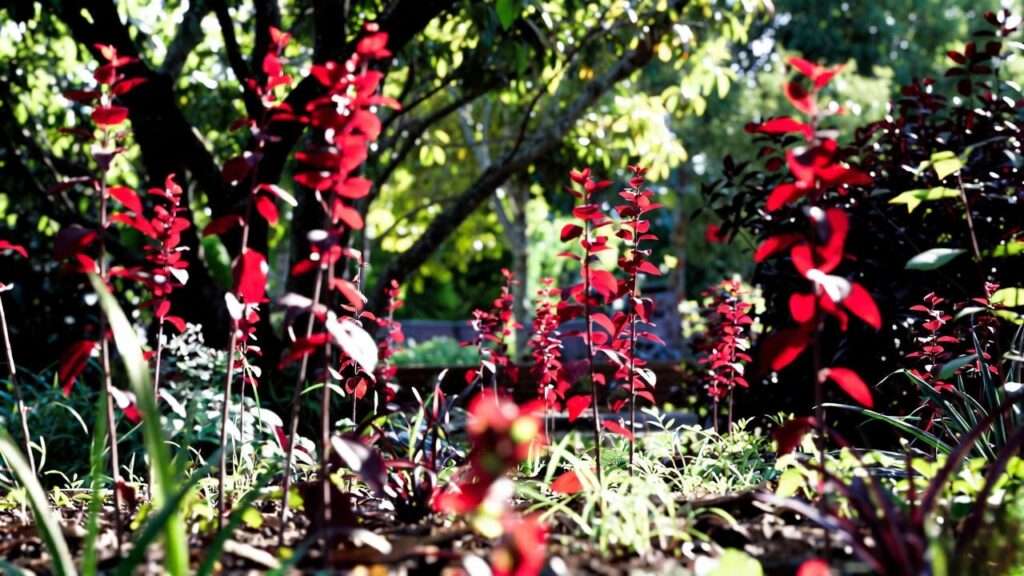
Imagine walking into your garden in the middle of winter and being greeted by vibrant crimson, burgundy, and ruby-red leaves that glow against the snow or grey skies. That’s the magic of plants with red foliage—they deliver jaw-dropping color year-round, not just during fleeting fall displays. Whether you’re a beginner gardener wanting more excitement in your yard or an experienced landscaper designing show-stopping borders, red-leaved plants are the secret weapon for creating drama, contrast, and interest in every season.
In this comprehensive guide, I’ll share my 20+ years of horticultural experience to help you choose, grow, and design with the best plants with red foliage. You’ll discover top varieties for every climate, expert care tips to keep that red color intense, creative landscaping ideas, and solutions to common problems. By the end, you’ll have everything you need to transform your garden into a living masterpiece of fiery color. Let’s dive in! 🌱✨
Why Choose Plants with Red Foliage? (The Real Benefits) 🌹
Red foliage isn’t just pretty—it’s powerful. Psychologically, red tones energize and stimulate, making your outdoor space feel more alive and inviting. In the garden, these plants extend the “color season” far beyond spring flowers or autumn leaves. While most gardens fade to green in summer and brown in winter, well-chosen red foliage plants keep the drama going 365 days a year.
From an ecological perspective, many red-leaved varieties are excellent at deterring certain pests (aphids and some caterpillars dislike strong red pigments), attract beneficial insects and birds, and thrive in hot, sunny spots where green foliage might scorch. Plus, the anthocyanins that create those gorgeous reds act as natural sunscreens, helping plants tolerate intense light and heat.
Compared to standard green foliage, red leaves often photosynthesize more efficiently in partial shade and can even improve the overall energy balance of your garden. In short: red foliage = more color, more interest, and more resilience. 🌞🍂
Top 25+ Stunning Plants with Red Foliage (Best Varieties for Every Garden) 🌟
Here are my hand-picked favorites, organized by type and season of peak color. I’ve included USDA hardiness zones, mature size, and why each one is a standout.
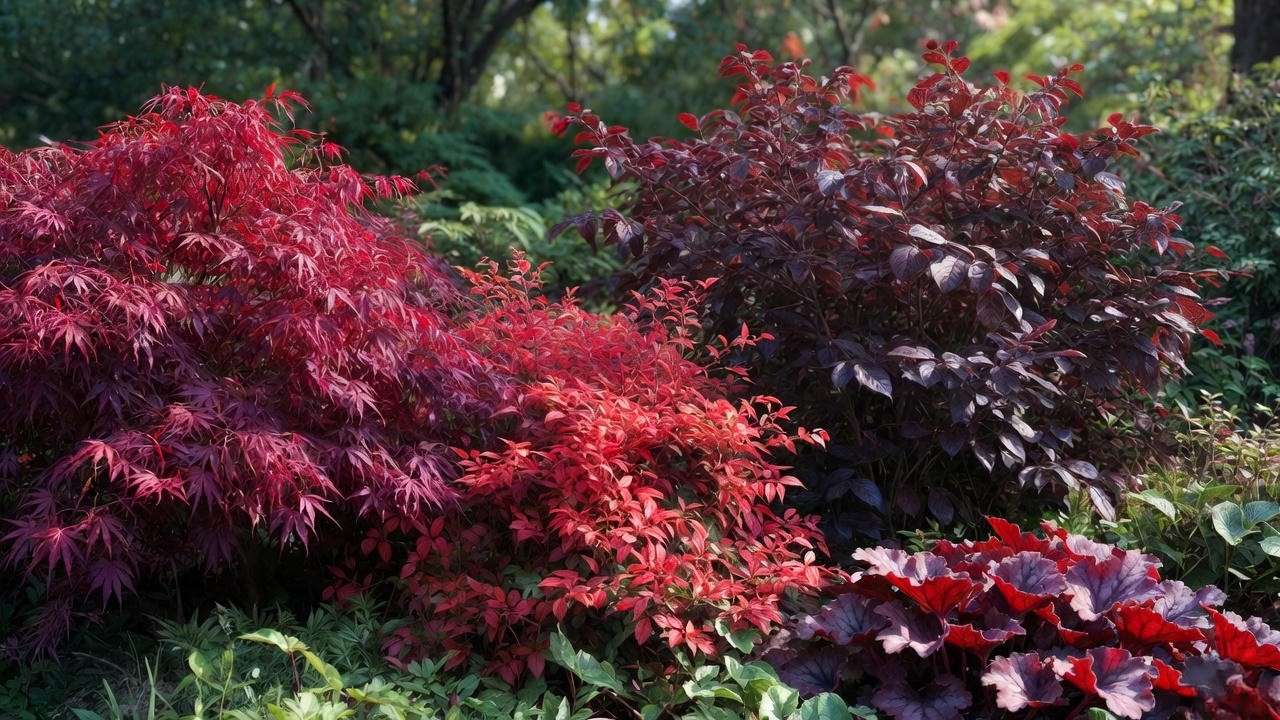
Evergreen Shrubs & Trees with Red Leaves (Year-Round Color) 🌲
- Photinia × fraseri ‘Red Robin’ Zones 7–9 | 10–15 ft tall | The classic “red-tip” shrub. New growth emerges brilliant scarlet before maturing to glossy green. Perfect for hedges or screens. Prune regularly to maintain maximum red.
- Pieris japonica ‘Forest Flame’ Zones 5–8 | 6–10 ft | Stunning spring growth in shades of orange-red, pink, and cream. Drooping white flowers add bonus spring interest.
- Nandina domestica ‘Fire Power’ & ‘Gulf Stream’ Zones 6–10 | 2–4 ft | Compact, low-maintenance, and perfect for containers. ‘Fire Power’ turns fiery red in fall and winter.
- Japanese Maple ‘Red Dragon’ & ‘Bloodgood’ Zones 5–8 | 6–12 ft | ‘Red Dragon’ has lacy, deeply dissected burgundy-red leaves that hold color all season. ‘Bloodgood’ offers larger, classic palmate leaves in deep crimson.
- Leucothoe ‘Rainbow’ Zones 5–8 | 3–5 ft | Evergreen with new growth in pink, red, orange, and cream—truly a living rainbow.
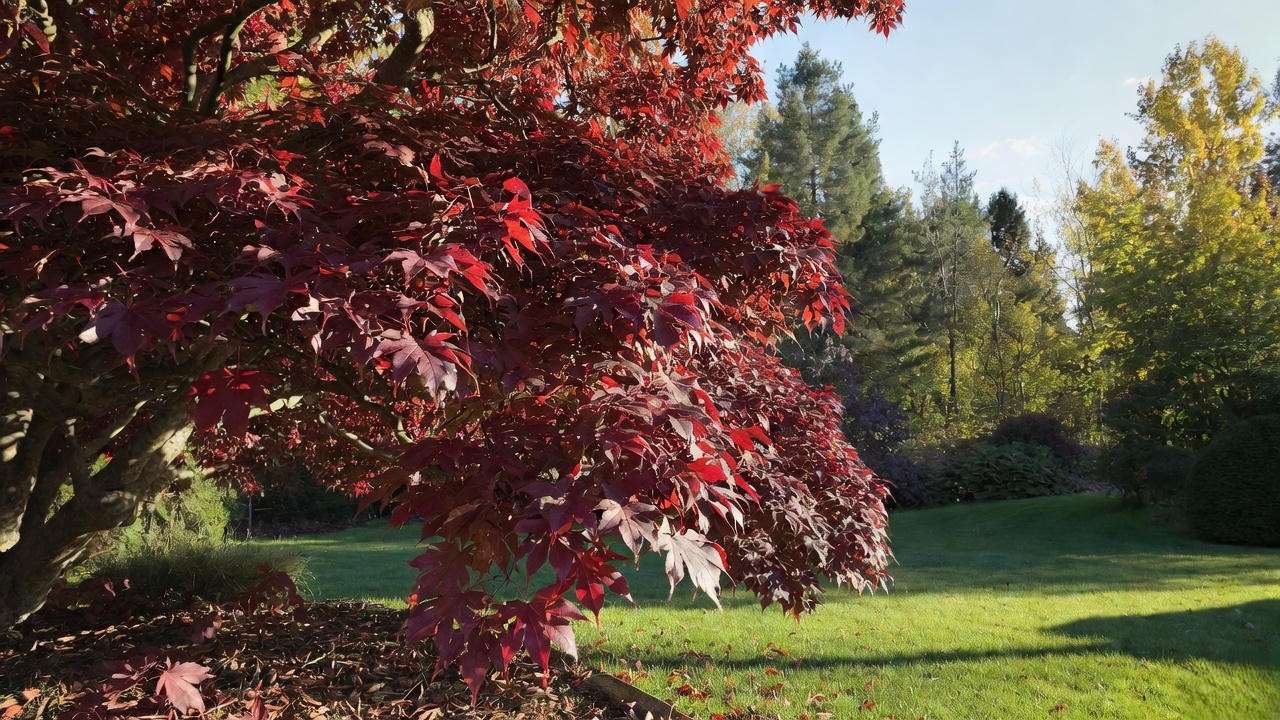
Deciduous Shrubs & Trees with Dramatic Red Fall & Spring Color 🍁
- Acer palmatum ‘Osakazuki’, ‘Emperor I’, ‘Fireglow’ Zones 5–8 | 10–20 ft | These maples are fall superstars, turning brilliant scarlet-orange.
- Cotinus coggygria ‘Royal Purple’ (Smokebush) Zones 4–8 | 8–15 ft | Smoky purple-red foliage all season plus cloud-like pink blooms in summer.
- Physocarpus opulifolius ‘Diabolo’, ‘Coppertina’, ‘Amber Jubilee’ Zones 3–7 | 6–10 ft | ‘Diabolo’ has dark burgundy leaves; ‘Amber Jubilee’ starts golden-orange and matures to red.
- Cercis canadensis ‘Forest Pansy’ (Redbud) Zones 5–9 | 20–30 ft | Heart-shaped purple-red leaves and stunning pink spring flowers.
- Fagus sylvatica ‘Purpurea’ (Copper Beech) Zones 4–7 | 50–80 ft | Large, glossy purple-red leaves that turn copper in fall. A majestic specimen tree.
Perennials & Groundcovers with Red Foliage 🌸
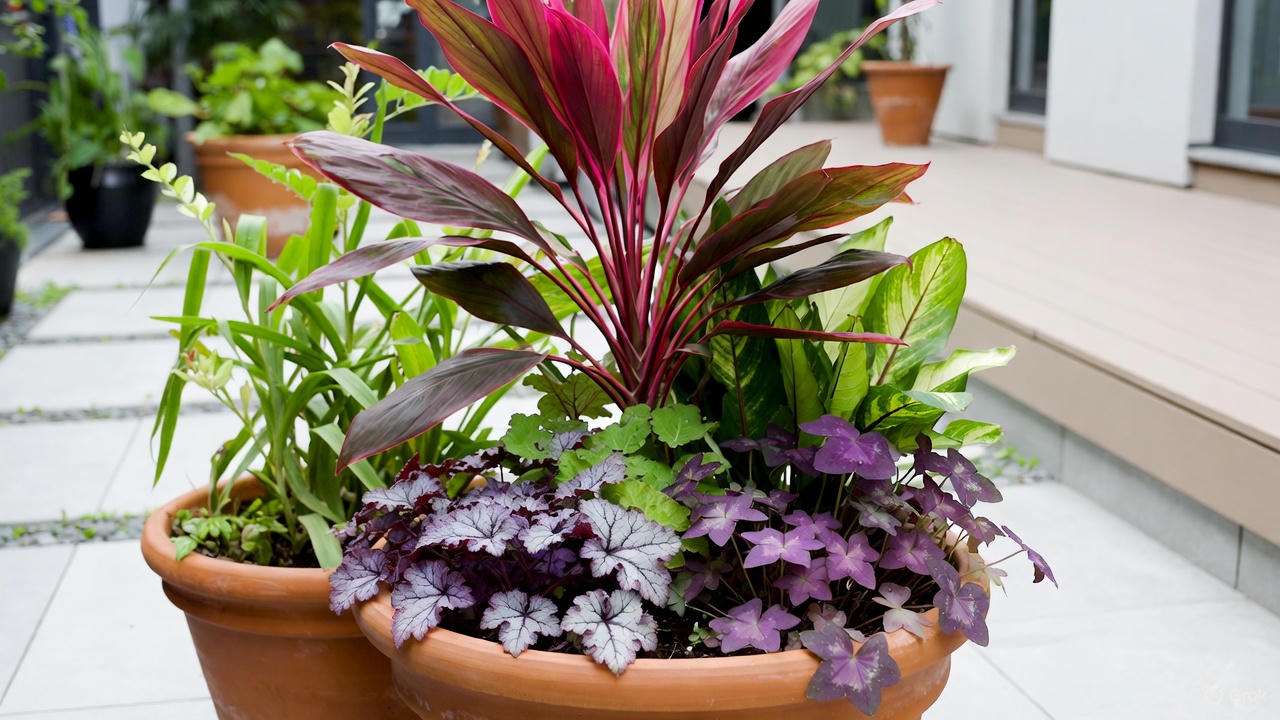
- Heuchera (Coral Bells) – ‘Forever Red’, ‘Plum Pudding’, ‘Obsidian’ Zones 4–9 | 8–12 in | Evergreen foliage in deep reds and purples; tiny bell-shaped flowers in summer.
- Euphorbia ‘Black Pearl’ & ‘Ascot Rainbow’ Zones 6–9 | 2–3 ft | ‘Ascot Rainbow’ has variegated red, green, and yellow leaves that glow.
- Oxalis triangularis (Purple Shamrock) Zones 8–11 or houseplant | 12 in | Deep purple-red clover-like leaves that fold at night.
- Ajuga reptans ‘Burgundy Glow’ Zones 3–9 | 6 in | Creeping groundcover with purple-red and cream variegated leaves.
Tropical & Houseplant Options with Red Leaves 🏡
- Cordyline fruticosa ‘Red Sister’ & ‘Electric Pink’ Zones 10–11 or container | 6–10 ft | Bold, sword-like red foliage—perfect for tropical vibes.
- Croton (Codiaeum variegatum) varieties like ‘Petra’ and ‘Mammy’ Zones 10–11 or houseplant | 3–6 ft | Wild color combinations of red, yellow, orange, and green.
- Calathea ‘Medallion’ & ‘Ruby’ Houseplant | 12–18 in | Stunning red undersides and intricate patterns.
- Philodendron ‘Prince of Orange’ & ‘Pink Princess’ Houseplant | 2–4 ft | New growth emerges bright orange-red or pink before maturing.
How to Choose the Right Red Foliage Plants for Your Garden 🧭
The secret to vibrant red foliage lies in selecting varieties that match your conditions:
- Hardiness zones & climate: Always check USDA zones. Many red-leaved plants (e.g., Japanese maples, Heuchera) are surprisingly cold-hardy.
- Sun vs. shade: Most red foliage needs full sun to maintain intensity. In too much shade, leaves often revert to green.
- Mature size & growth rate: Dwarf varieties like Nandina ‘Fire Power’ suit small gardens; giants like Copper Beech need space.
- Soil pH & type: Acid-loving plants (Pieris, Leucothoe) need pH 5.5–6.5 for best color. Neutral to slightly alkaline soils suit others.
Pro tip: If your soil is alkaline, choose plants that tolerate it (Photinia, Nandina) or amend with sulfur to lower pH for acid-loving reds. 🌱
Expert Care Tips for Healthy, Vibrant Red Foliage Year-Round 🌱💧
The most common reason red foliage plants disappoint is not poor varieties—it’s improper care. Follow these proven techniques to keep those leaves glowing crimson from spring through winter.
Planting & Soil Preparation
The best planting times are early spring (before new growth) or early fall (6–8 weeks before first frost). This gives roots time to establish without summer heat stress.
- Dig a hole twice as wide as the root ball but no deeper.
- Mix in 30–40% organic matter (compost or aged pine bark) to improve drainage and acidity for most red-leaved plants.
- Test your soil pH—most red foliage plants perform best at 5.5–6.5. If it’s above 7.0, add elemental sulfur or aluminum sulfate to lower it gradually.
Watering & Fertilizing
Red-leaved plants often need consistent moisture but hate wet feet. Water deeply once or twice a week during the first year, then reduce to every 7–10 days once established (more often in hot, dry climates).
- Use the “finger test”: water when the top 2 inches of soil feel dry.
- Mulch with 2–3 inches of organic mulch (pine needles or shredded bark) to retain moisture and moderate soil temperature.
Fertilizing tip: Avoid high-nitrogen fertilizers—they promote green growth and dilute red pigments. Instead, use a balanced slow-release fertilizer in early spring (e.g., 10-10-10) or one formulated for acid-loving plants (e.g., 15-10-10 for azaleas/rhododendrons). Apply a second light feeding in early summer if needed.
Pruning & Maintenance
Pruning encourages bushier growth and more colorful new leaves.
- For evergreen red-tip shrubs (Photinia, Pieris): Prune in late spring after the first flush of new growth to promote a second flush of red.
- For deciduous trees and shrubs (Japanese maples, smokebush): Prune in late winter or early spring before buds swell.
- Remove any dead, damaged, or crossing branches to maintain airflow and reduce disease.
Seasonal checklist:
- Spring: Fertilize, prune, and mulch
- Summer: Water consistently, watch for pests
- Fall: Reduce watering, apply winter mulch
- Winter: Protect tender plants with burlap or anti-desiccant spray
Winter Protection & Cold-Hardy Choices ❄️
Even hardy red foliage plants can suffer winter burn (leaf scorch) from drying winds and frozen soil.
- Mulch heavily around the base (4–6 inches).
- For young trees, wrap trunks with tree guards or burlap.
- Apply an anti-desiccant spray in late fall to reduce moisture loss.
Top cold-hardy red foliage picks for USDA zones 4–6:
- Japanese maple ‘Red Dragon’
- Ninebark ‘Diabolo’
- Smokebush ‘Royal Purple’
- Heuchera ‘Forever Red’
- Nandina ‘Gulf Stream’
Landscaping Ideas: Designing with Plants with Red Foliage 🎨
Red foliage shines when paired thoughtfully with contrasting colors and textures. Here are proven design strategies:
Creating Focal Points and Contrast
- Use a single bold specimen (Copper Beech or ‘Bloodgood’ Japanese maple) as a centerpiece.
- Pair red foliage with cool tones: blue fescue, silver Artemisia, or white variegated hostas for dramatic contrast.
- Combine with yellow or chartreuse (e.g., golden Japanese forest grass) for high-energy pops.
Seasonal Color Schemes
- Spring: Red-tipped Pieris + pink azaleas + white dogwood
- Summer: Burgundy ninebark + orange daylilies + purple salvia
- Fall: Red Japanese maples + golden ginkgo + purple smokebush
- Winter: Evergreen Nandina ‘Fire Power’ + red winterberries + snow
Small-Space Solutions
- Containers: Plant Cordyline ‘Red Sister’ or Heuchera in pots with trailing ivy for instant drama.
- Balconies & patios: Use dwarf Nandina or compact Japanese maples in large planters.
- Narrow borders: Alternate Photinia ‘Red Robin’ with blue-flowering salvia.
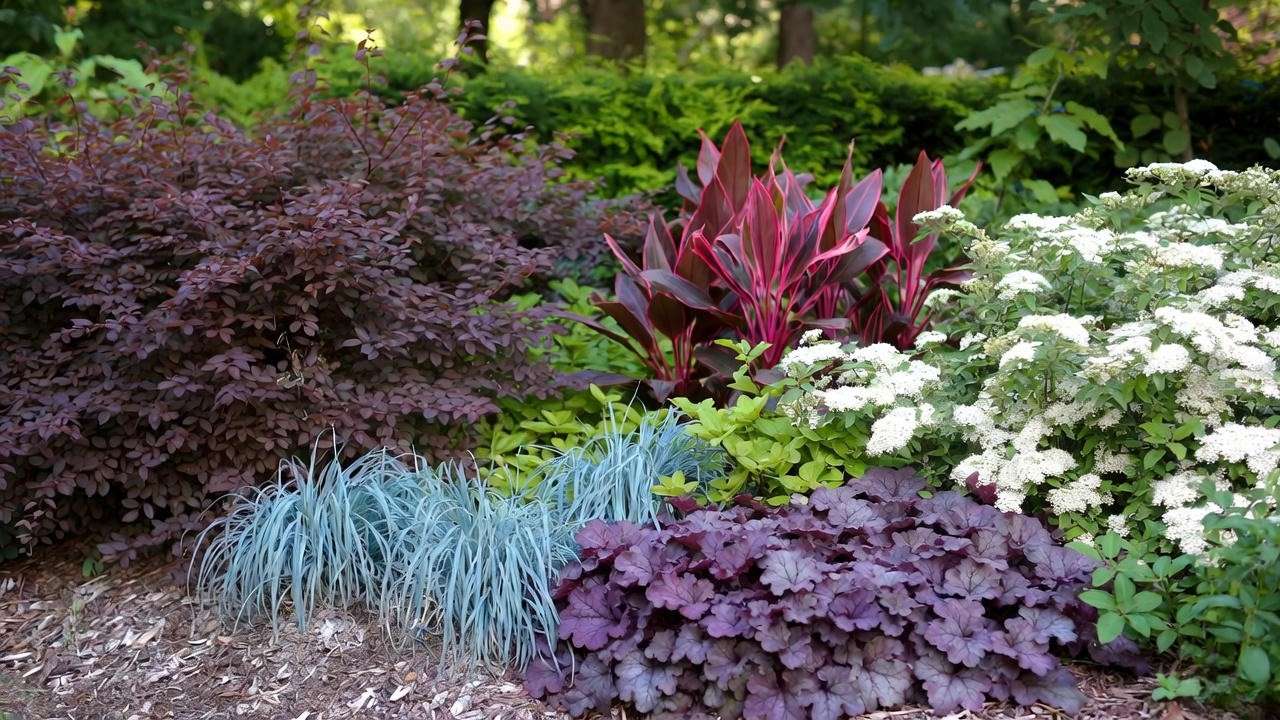
10 Inspiring Plant Combinations
- ‘Bloodgood’ Japanese maple + blue spruce + white hydrangea
- Smokebush ‘Royal Purple’ + golden barberry + purple fountain grass
- ‘Diabolo’ ninebark + orange tiger lilies + silver artemisia
- ‘Forest Pansy’ redbud + yellow tulips + white snowdrops
- Heuchera ‘Obsidian’ + chartreuse sweet potato vine + blue lobelia
- Pieris ‘Forest Flame’ + pink rhododendron + variegated hosta
- Nandina ‘Fire Power’ + dwarf conifers + winter pansies
- Croton ‘Petra’ + elephant ears + pink caladium (tropical look)
- ‘Red Dragon’ Japanese maple + blue fescue + white astilbe
- Copper beech + golden yew + purple smokebush (grand estate style)
Common Problems & Solutions for Red Foliage Plants ⚠️
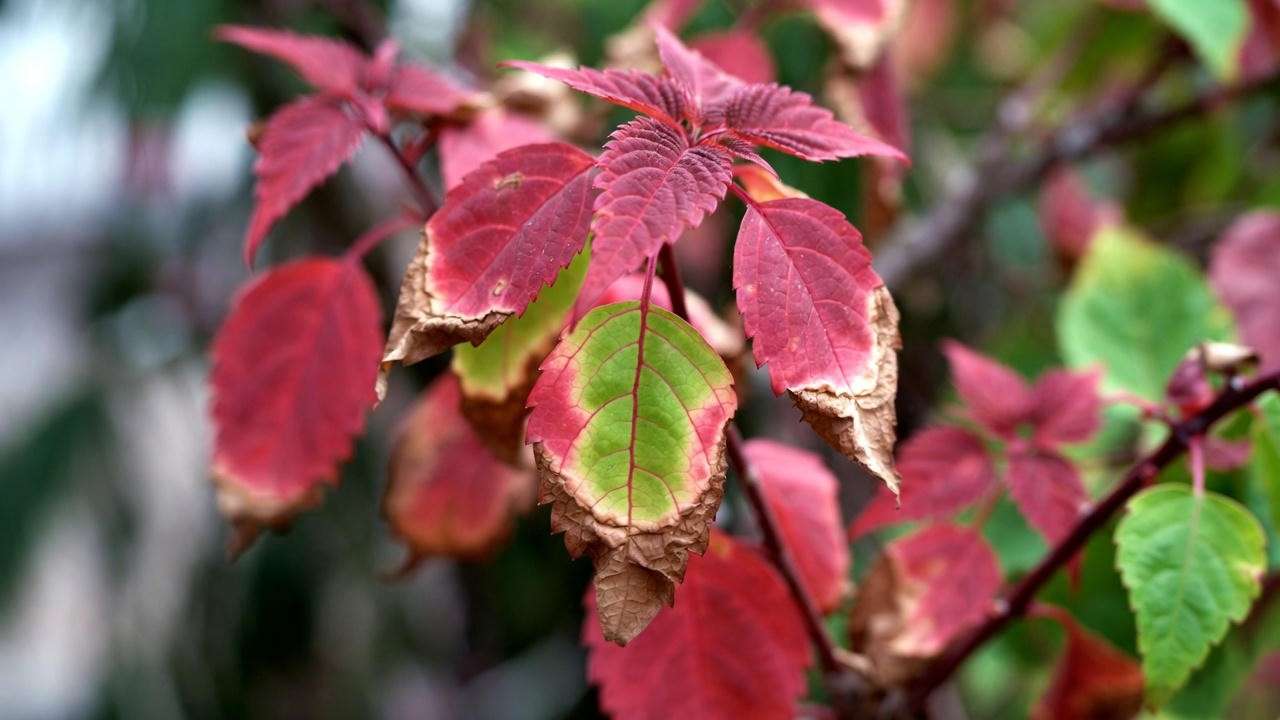
Why Leaves Turn Green Instead of Red
Most common cause: too much shade or excess nitrogen. Solution: Move to full sun (6+ hours) and switch to low-nitrogen fertilizer.
Leaf Scorch & Sunburn
Symptoms: Brown, crispy edges. Solution: Water more frequently during heat waves and apply light afternoon shade in extremely hot climates.
Fungal Diseases (Powdery Mildew, Leaf Spot)
Solution: Improve air circulation, avoid overhead watering, and treat with neem oil or sulfur-based fungicide.
Pests (Aphids, Spider Mites, Scale)
Solution: Hose off aphids, use insecticidal soap for mites, and apply horticultural oil in early spring for scale.
Nutrient Deficiencies (Yellowing or Dull Color)
- Iron deficiency (common in alkaline soils): Apply chelated iron.
- Magnesium deficiency: Use Epsom salts (1 tbsp per gallon of water).
Expert Insights & Pro Tips from Horticulturists 🌟
- To maximize red intensity: Choose varieties bred for color retention (e.g., ‘Forever Red’ Heuchera holds color better than older cultivars).
- Companion planting secret: Plant red foliage next to plants with silver or blue leaves—contrast makes both colors pop more.
- Sustainable choice: Many red-leaved plants (ninebark, smokebush) are native or near-native and support local wildlife.
- Pro trick: In spring, lightly shear evergreen red-tip shrubs to encourage a second flush of brilliant new growth.
Frequently Asked Questions (FAQs) ❓
What are the best red foliage plants for full sun? Photinia ‘Red Robin’, Nandina varieties, smokebush, ninebark, and most Japanese maples thrive in full sun.
Do red foliage plants need more water than green ones? Not necessarily, but they often need consistent moisture to prevent leaf scorch—especially in hot sun.
Can I grow red foliage plants in pots indoors? Absolutely! Cordyline, croton, Calathea, and Philodendron varieties make stunning houseplants.
Why is my red plant losing its color? Usually too much shade, excess nitrogen, or alkaline soil. Adjust light and fertilizer accordingly.
Are there any toxic red foliage plants I should avoid? Yes—some crotons and certain Euphorbia varieties can be irritating to skin or toxic if ingested. Keep them away from pets and children.
How long do red foliage plants stay colorful? Evergreen varieties provide year-round color; deciduous ones give spring/summer red plus fall fire.
Final Thoughts & Next Steps 🌿❤️
Adding plants with red foliage is one of the easiest ways to create a garden that feels alive and exciting all year long. Start with just one or two favorites—perhaps a compact Nandina ‘Fire Power’ for a container or a ‘Bloodgood’ Japanese maple as a focal point—and watch how they transform your space.
I’d love to see your red foliage garden! Share photos in the comments below or tag me on social media. Your next vibrant garden is just a few plants away. Happy gardening! 🌺✨











