
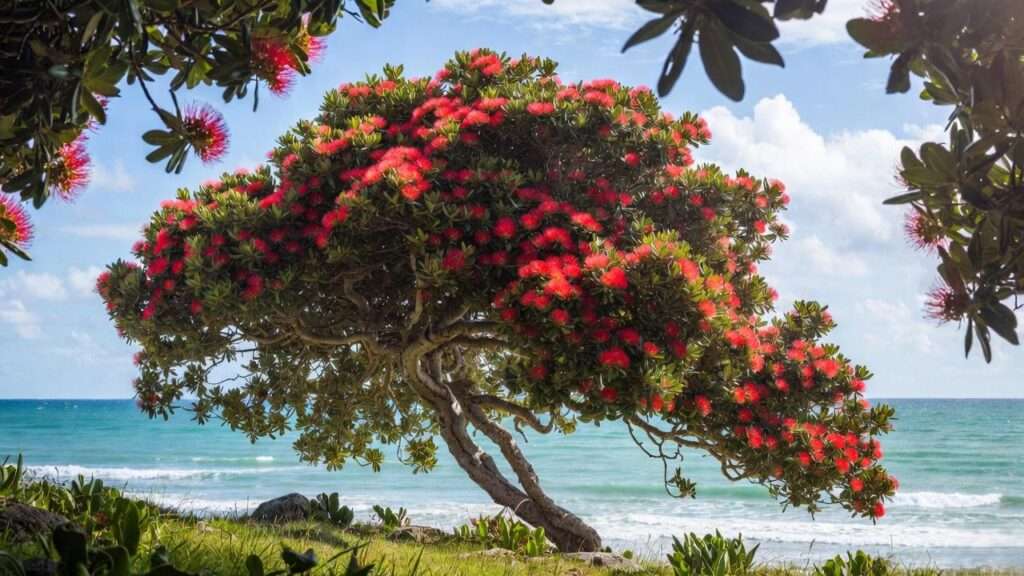
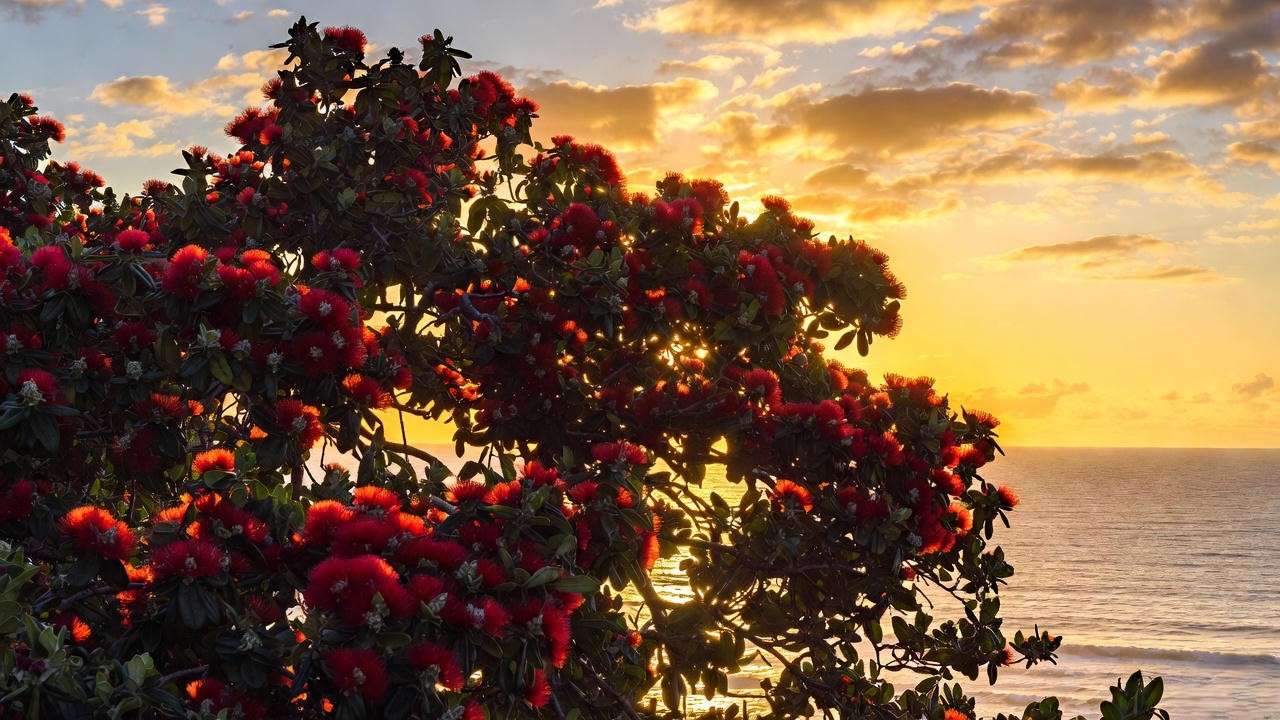
Imagine standing on a sunny New Zealand beach in December, surrounded by fiery crimson blooms that look like the tree itself is celebrating Christmas. That breathtaking sight is the pohutukawa plant in full glory—the iconic “New Zealand Christmas Tree” that has captured hearts worldwide.
As a horticulturist with over 20 years of experience growing native trees in coastal and temperate climates, I can confidently say the pohutukawa (Metrosideros excelsa) is one of the most rewarding trees you can plant. Its brilliant red flowers, gnarled trunks, and incredible resilience make it a true garden showstopper. Whether you’re a beginner gardener or a seasoned landscaper, this ultimate pohutukawa plant care guide will show you exactly how to grow, nurture, and enjoy this stunning tree for decades.
From choosing the perfect location to troubleshooting common problems, we’ll cover everything you need to succeed—even in regions outside New Zealand. Let’s bring the magic of the pohutukawa to your garden! 🌳✨
What Is the Pohutukawa? Facts, History, and Cultural Significance 📜
The pohutukawa is an evergreen tree belonging to the Myrtaceae family, native to the coastal regions of New Zealand’s North Island and some offshore islands. It typically reaches heights of 15–25 metres (50–80 ft) with a broad, spreading canopy that can span 20 metres or more.
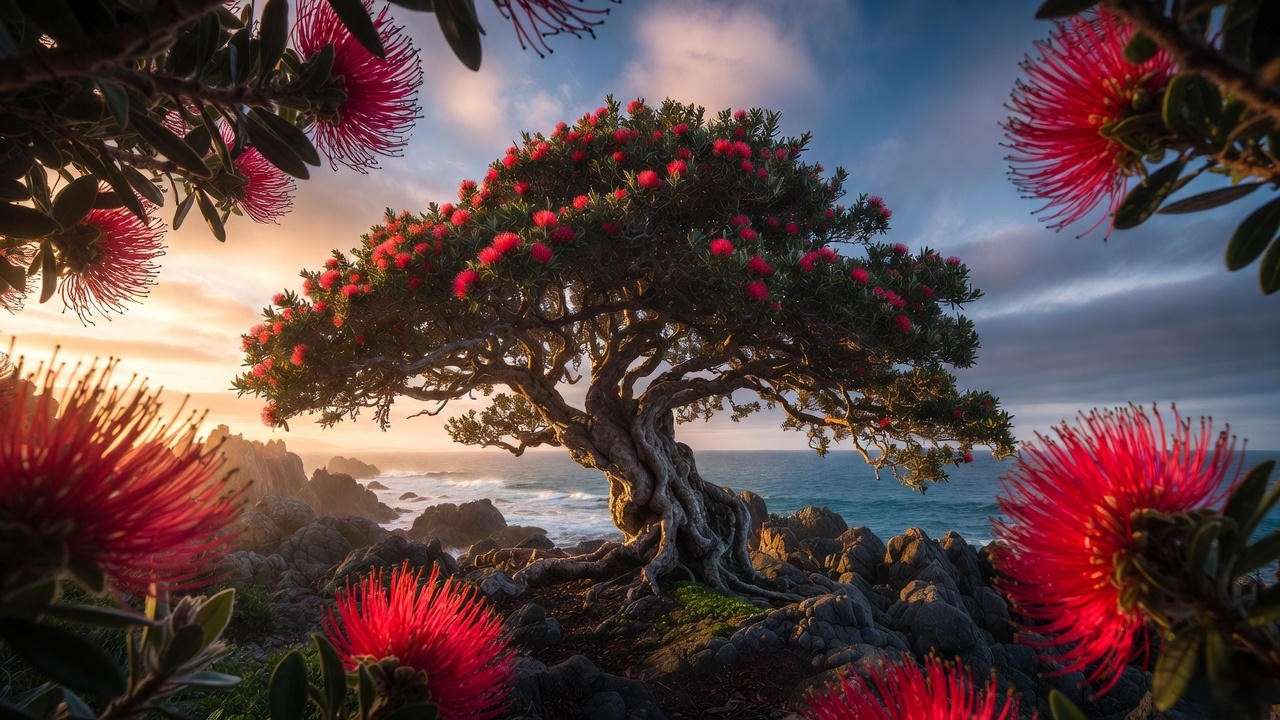
Its most famous feature is the spectacular clusters of bright red, bottlebrush-shaped flowers that appear in early summer (December–January in the Southern Hemisphere), earning it the nickname “New Zealand Christmas Tree.” Some cultivars produce pink, orange, or even yellow blooms, adding extra variety.
In Māori culture, the pohutukawa is considered a chiefly tree (rākau rangatira) and holds deep spiritual significance. One of the most famous specimens grows at Cape Reinga (Te Rerenga Wairua), where it is believed the spirits of the deceased depart Aotearoa for the afterlife.
Unfortunately, coastal development, invasive species, and myrtle rust have caused wild pohutukawa populations to decline dramatically—some estimates suggest a 90% loss in certain areas. Planting and caring for pohutukawa trees is now an important act of conservation as well as gardening joy. 🌍💚
Choosing the Right Variety for Your Space 🌈
Not all pohutukawa are giants! Modern breeding has produced excellent compact and dwarf cultivars perfect for smaller gardens, courtyards, or containers.
- Classic Pohutukawa (Metrosideros excelsa) – The traditional large tree, ideal for coastal properties or large lawns.
- ‘Tahiti’ – A compact, rounded form reaching only 4–5 m (13–16 ft) tall—perfect for small gardens or pots.
- ‘Gala’ – Another dwarf selection with intense red flowers.
- ‘Aurea’ – Striking golden-yellow foliage and red blooms.
- ‘Vibrance’ – One of the most vivid red-flowering cultivars.
- ‘Scarlet Pimpernel’ – A semi-dwarf with orange-red flowers.
If you live in a cooler climate, consider related species such as the northern rata (Metrosideros robusta) or southern rata (Metrosideros umbellata), which offer similar beauty with slightly better frost tolerance.
Where to Plant: Ideal Location and Climate Requirements 🌞
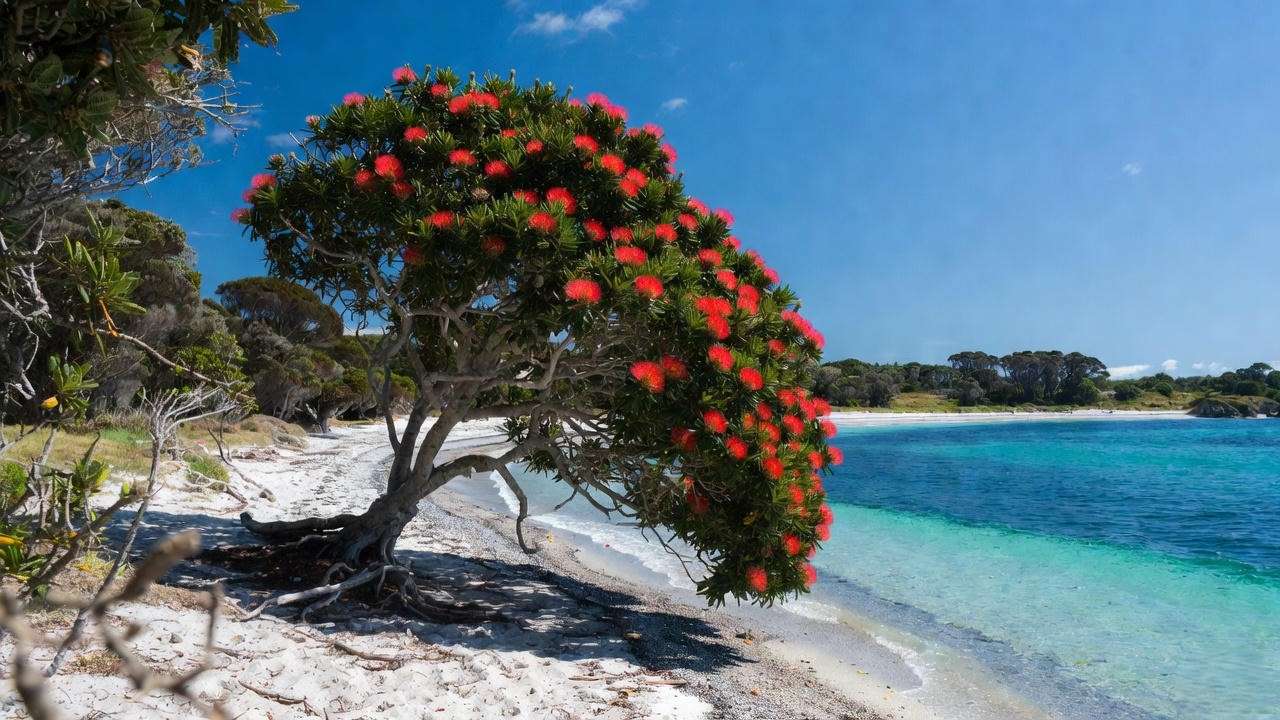
Pohutukawa thrives in USDA hardiness zones 9–11 (or equivalent mild, coastal climates). It loves full sun—at least 6–8 hours of direct sunlight daily—and tolerates strong winds, salt spray, and drought once established.
Key planting tips:
- Choose a well-drained site; avoid heavy clay or waterlogged soil.
- Plant at least 5–10 metres from buildings, pipes, or paths—the roots can spread widely and aerial roots may drop from branches.
- Coastal gardens are perfect; inland locations work well as long as frost is rare or light.
In cooler regions (zone 8 or marginal zone 9), plant against a warm north-facing wall or use frost protection for young trees.
How to Plant Your Pohutukawa Step-by-Step 🪴
Planting at the right time and in the right way sets your tree up for a lifetime of success.
- Best planting time Autumn (March–May) or early spring (September–October) in the Southern Hemisphere. Avoid summer heat or winter frosts.
- Prepare the site Dig a hole twice as wide as the root ball and the same depth. Mix in plenty of well-rotted compost or native plant potting mix.
- Planting Remove the tree from its pot, tease out any circling roots, and place it so the top of the root ball is level with the surrounding soil. Backfill, firm gently, and water thoroughly.
- Mulch & stake Apply 5–10 cm of bark mulch or compost (keep it away from the trunk). Stake young trees in windy areas for the first 1–2 years.
- Watering after planting Water deeply once or twice a week for the first 6–12 months until established.
Watering and Soil Needs 💧
- Young trees – Water deeply but infrequently (every 7–10 days in summer, less in winter).
- Established trees – Highly drought-tolerant; only water during prolonged dry spells.
- Soil type – Well-drained, sandy, or loamy is ideal. Slightly acidic to neutral pH (6.0–7.5) works best.
- Avoid – Waterlogged or heavy clay soils, which can cause root rot.
Fertilizing for Healthy Growth and Spectacular Blooms 🌱
Pohutukawa is naturally low-maintenance and doesn’t need heavy feeding. Over-fertilizing can lead to excessive leafy growth at the expense of flowers.
- Spring application – Apply a slow-release native or low-phosphorus fertilizer (e.g., 8-4-8 or similar) around the drip line in early spring.
- Organic option – Top-dress with well-rotted compost or seaweed mulch annually.
- Avoid – High-nitrogen fertilizers that encourage soft, leggy growth.
Pruning and Shaping Your Tree ✂️
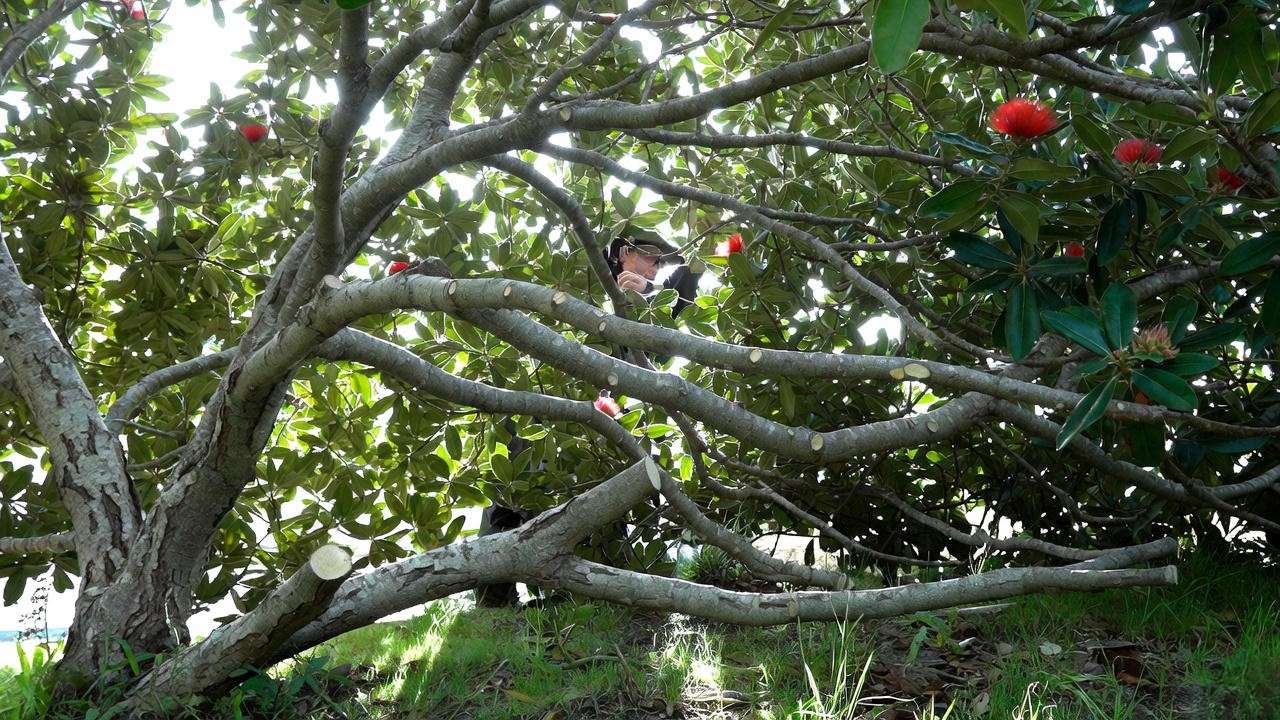
Pruning is minimal and should be done lightly to maintain health and shape.
- Best time – Immediately after flowering (late summer/early autumn).
- What to remove – Dead, damaged, or crossing branches.
- Shaping – For a single-trunk tree, remove lower branches gradually. For a bushy form, tip-prune new growth in spring.
- Hedges or screens – Trim 10–15% of new growth twice a year (spring and late summer).
Never remove more than 20–25% of the canopy at once—pohutukawa heals slowly.
Propagation: Grow More Pohutukawa from Seeds or Cuttings 🌱
- Seeds – Fresh seeds germinate quickly (2–4 weeks) in spring. Sow in a well-drained seed mix, keep moist, and provide bright light.
- Semi-hardwood cuttings – Take 10–15 cm cuttings in late summer. Dip in rooting hormone, plant in a gritty mix, and keep humid.
- Air-layering – Ideal for propagating larger branches or established trees.
Seedlings can take 5–15 years to flower, while grafted cultivars bloom much sooner.
Common Problems and How to Fix Them 🛠️
- Myrtle rust (Austropuccinia psidii) – Serious fungal disease. Prune affected parts, apply copper-based fungicide, and avoid overhead watering.
- Pests – Possums, aphids, scale, or leaf beetles. Use organic sprays (neem oil, insecticidal soap) or encourage natural predators.
- No flowers – Common causes: too much shade, immaturity (wait 5–15 years), drought stress, or excessive nitrogen.
- Root rot – Improve drainage immediately; remove affected roots if possible.
- Yellowing leaves – Often nutrient deficiency or poor drainage—test soil and adjust accordingly.
Advanced Tips for Spectacular Results ✨
- Companion planting – Pair with native flax (Phormium), cabbage trees (Cordyline), or pōhutukawa-friendly ground covers like prostrate rosemary.
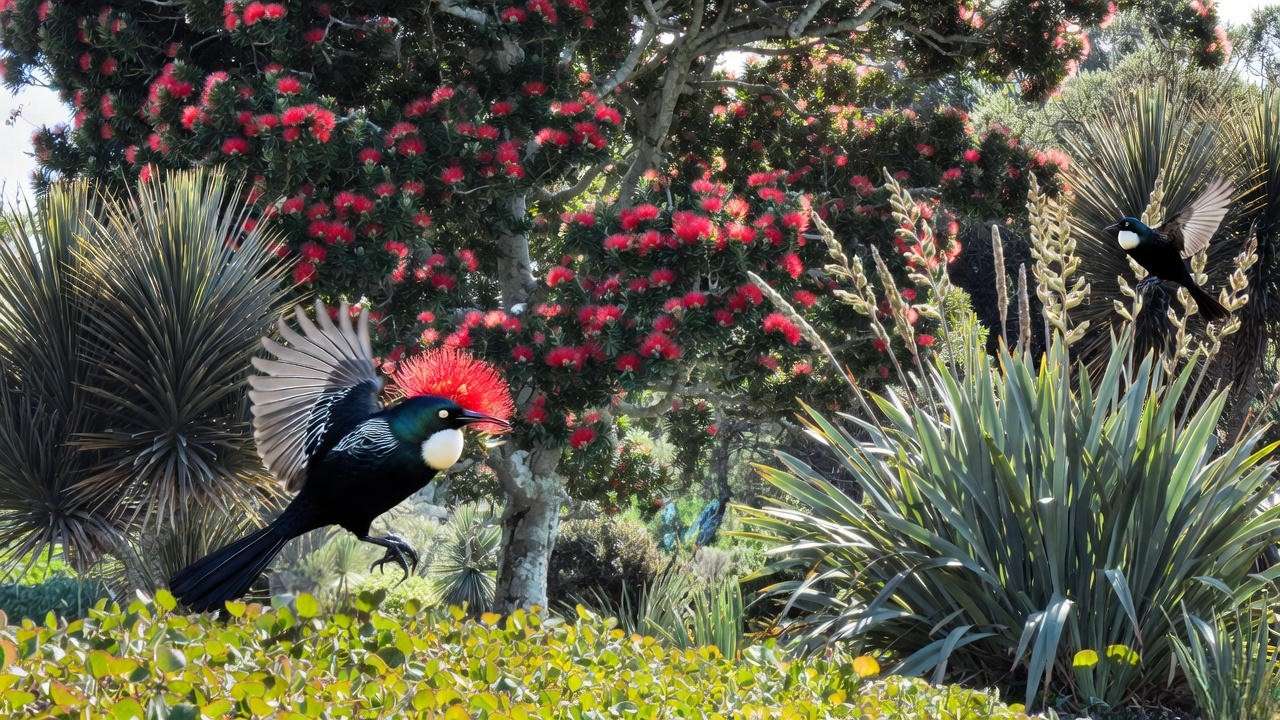
- Wildlife attraction – The flowers are a magnet for tūī, bellbirds, and bees—plant in groups for maximum impact.
- Container growing – Dwarf cultivars in large pots (minimum 60 cm diameter) make stunning patio features. Use high-quality potting mix with excellent drainage.
- Coastal planting – Plant in groups or as windbreaks to protect other garden plants from salt-laden winds.
FAQs About Growing Pohutukawa Trees ❓
How long until my pohutukawa flowers? Seedlings typically flower in 5–15 years; grafted cultivars often bloom within 3–7 years.
Can pohutukawa grow in pots? Yes—dwarf varieties thrive in large containers with good drainage.
Is pohutukawa frost-tolerant? Mature trees handle light frosts (down to –2°C/28°F), but young trees need protection in colder areas.
Why do some pohutukawa have pink or yellow flowers? These are selected cultivars such as ‘Aurea’ (yellow foliage/red flowers) or natural variants.
Is pohutukawa toxic to pets? Generally safe, though large quantities of seeds or leaves may cause mild stomach upset.
Conclusion: Bring the Magic of New Zealand’s Christmas Tree to Your Garden 🎄
With its dazzling red blooms, cultural heritage, and remarkable toughness, the pohutukawa plant is truly a garden treasure. By following this comprehensive guide—from choosing the right variety to protecting against pests—you’ll soon enjoy your own stunning display of New Zealand Christmas magic.
Happy planting, and may your pohutukawa bloom brilliantly for generations to come! 🌺🌟











